27 Face-Framing Curly Hair Ideas That Will Transform Your Entire Look
You get the products right, the diffuser is warmed up, and still your curls look heavy and shapeless around your face. The sides are full, the back has volume, but the front sits flat against your cheeks like nothing you do makes a difference. That frustration is exactly why face-framing curly hair has become one of the most searched curl cutting techniques right now.
Most people assume the right product will fix a flat or unbalanced curl shape. They buy another gel, try a new cream, and keep getting the same result. The product is never the problem. The shape of the cut is.
The real cause is weight distribution. Curly hair grows outward and downward at the same time, and without layers placed at the correct points near the face, that weight presses the curl pattern flat at the front. The curls bunch at the sides and your features disappear behind them.
Having studied curl cutting methods including Deva-certified dry cutting and razor-based shag techniques, one pattern appears every single time. Clients who finally love their curly hair all have the same thing in common. The front of their cut was handled with intention, and everything else followed from that.
This article walks you through 27 specific face-framing ideas, each matched to a different curl type, length, and face shape. Every item includes the exact words to use in the salon so you walk out with what you actually wanted.
By the end you will have a clear, actionable plan for getting a face-framing curly hair cut that works with your curl pattern, fits your lifestyle, and highlights your features every single day.
The single most important rule in curly hair cutting right now is this. Always request dry cutting for your face-framing layers. Curl shrinkage means wet cutting almost always leaves the front pieces shorter than intended. More curl specialists in 2026 are offering dry consultations as their default, which means you have more leverage than ever to ask for it specifically.
Face-Framing Curly Hair Ideas
Layered Curls for Maximum Volume
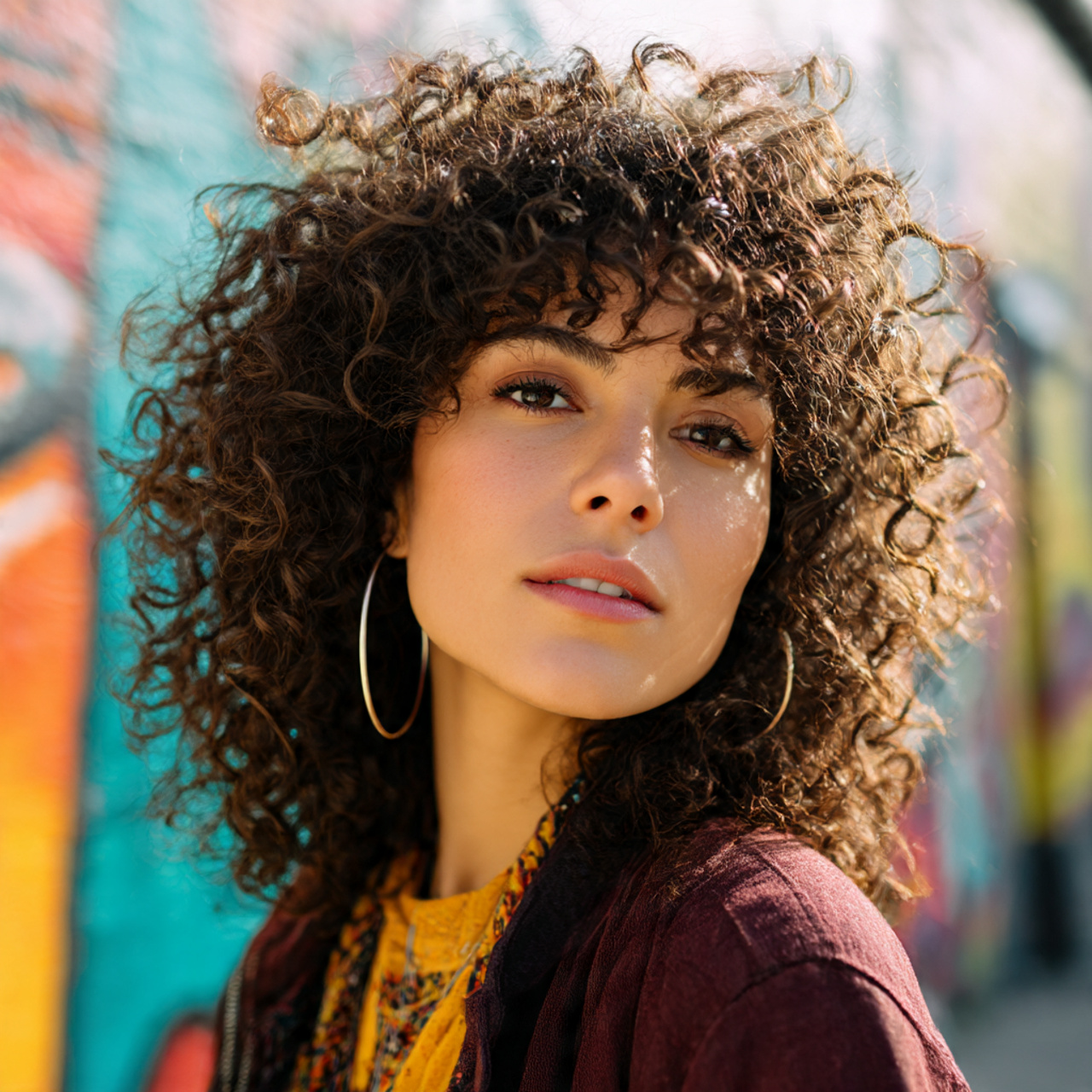
Volume in curly hair comes from removing weight, not adding product. Layering through the body of the cut allows each curl section to move independently instead of being compressed by the mass above it. The shape that results looks full and rounded from every angle.
For this to work at the face, the front layers must connect to the interior layers. A skilled curl stylist will blend the face-framing pieces into the body of the cut so volume reads consistently from front to back.
Best for: Fine to medium curls that go flat by midday Product: DevaCurl SuperCream Coconut Curl Styler Barber language: “I want layers throughout the entire cut with the shortest ones framing my face. The goal is a full, rounded shape with visible contrast between the front and back sections.” Face shape: Ideal for long and oblong faces that need added width Pro tip: After diffusing, flip your hair forward and shake the roots gently before flipping back to separate the layers and add a burst of instant volume.
Face-Framing Bangs on Curly Hair

Curly bangs behave completely differently from straight ones. They must be cut dry, left longer than they appear to need, and angled so they blend naturally into the face-framing layers on either side. Cutting curly bangs wet is one of the most common mistakes made in salons and leads to a front section that sits far too short after the first wash.
When done correctly, curly bangs fall softly around the eyes and bring immediate attention to the face. They look natural and easy because they follow the curl pattern rather than fighting it.
Best for: People wanting a fresh style update without a full haircut change Product: Aveda Be Curly Style Prep Barber language: “Please cut my bangs dry, leave them longer than you think they need to be, and angle them so they blend into my face-framing layers. I do not want a blunt straight line.” Face shape: Best for oval and heart-shaped faces Pro tip: Twist the bang section loosely with a small amount of gel before diffusing to prevent curly bangs from separating into single wispy strands.
The Best Cut for 3A Curl Type

3A curls are large-diameter spirals with a defined pattern and moderate density. They respond best to light layering that preserves the natural curl groupings rather than breaking them apart. Too many layers on 3A hair disrupts the clumping and creates frizz concentrated right at the front of the face.
Face-framing on 3A hair works best when the shortest layer starts at the chin or just below. This creates shape around the face while keeping curl clusters intact through the rest of the length.
Best for: Loose spiral curls with medium density wanting shape without added frizz Product: SheaMoisture Coconut and Hibiscus Curl Enhancing Smoothie Barber language: “I have 3A curls and I want face-framing layers starting at chin length. Please keep the layers soft and do not take too much weight from the interior.” Face shape: Flattering on round and square faces Pro tip: Rake SheaMoisture Curl Enhancing Smoothie through the face-framing sections before scrunching to keep curl groups together and prevent front pieces from separating.
Enhancing 4C Coils with Shape
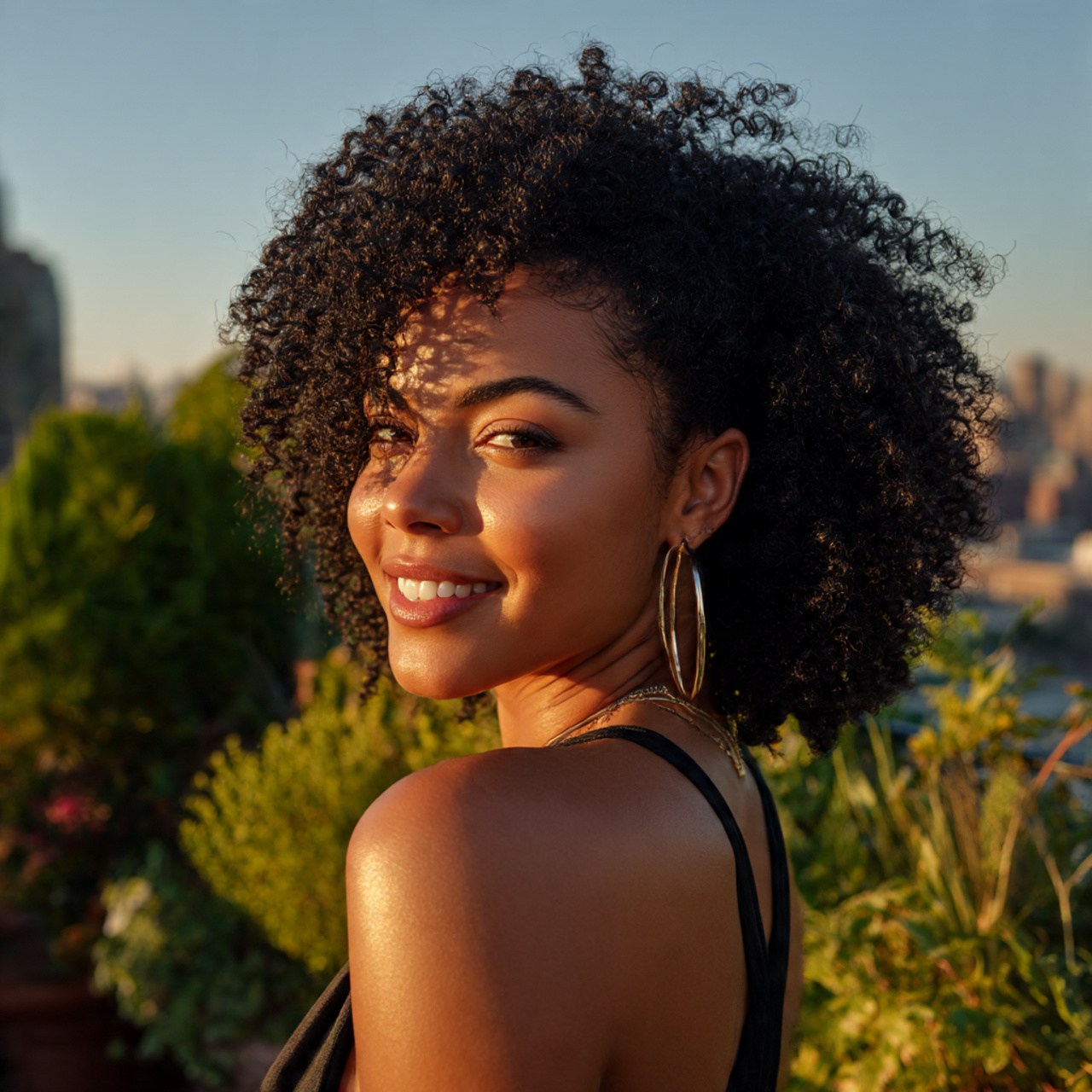
4C coils shrink significantly after washing, so length is never what it appears to be when dry. Face-framing on 4C hair is less about achieving a specific length and more about intentional perimeter shaping. The goal is a visible outline that frames the face even through maximum shrinkage.
Shaping the front coils into a rounded perimeter adds definition and makes wash-and-go styles look intentional rather than unshaped. It also helps updos and twist-outs show off the front of the face more clearly.
Best for: Tight 4C coils wanting a defined, shaped front perimeter Product: Mielle Organics Rosemary Mint Strengthening Hair Masque Barber language: “I have 4C hair and I want the front shaped into a rounded frame. Please work with the shrinkage rather than against it, and cut dry if possible.” Face shape: Works beautifully on oval and heart-shaped faces Pro tip: Apply Mielle Organics Rosemary Mint Hair Masque as a pre-poo treatment before wash day so the front coils have maximum moisture and elasticity when styled.
Long Curly Hair with Face-Framing
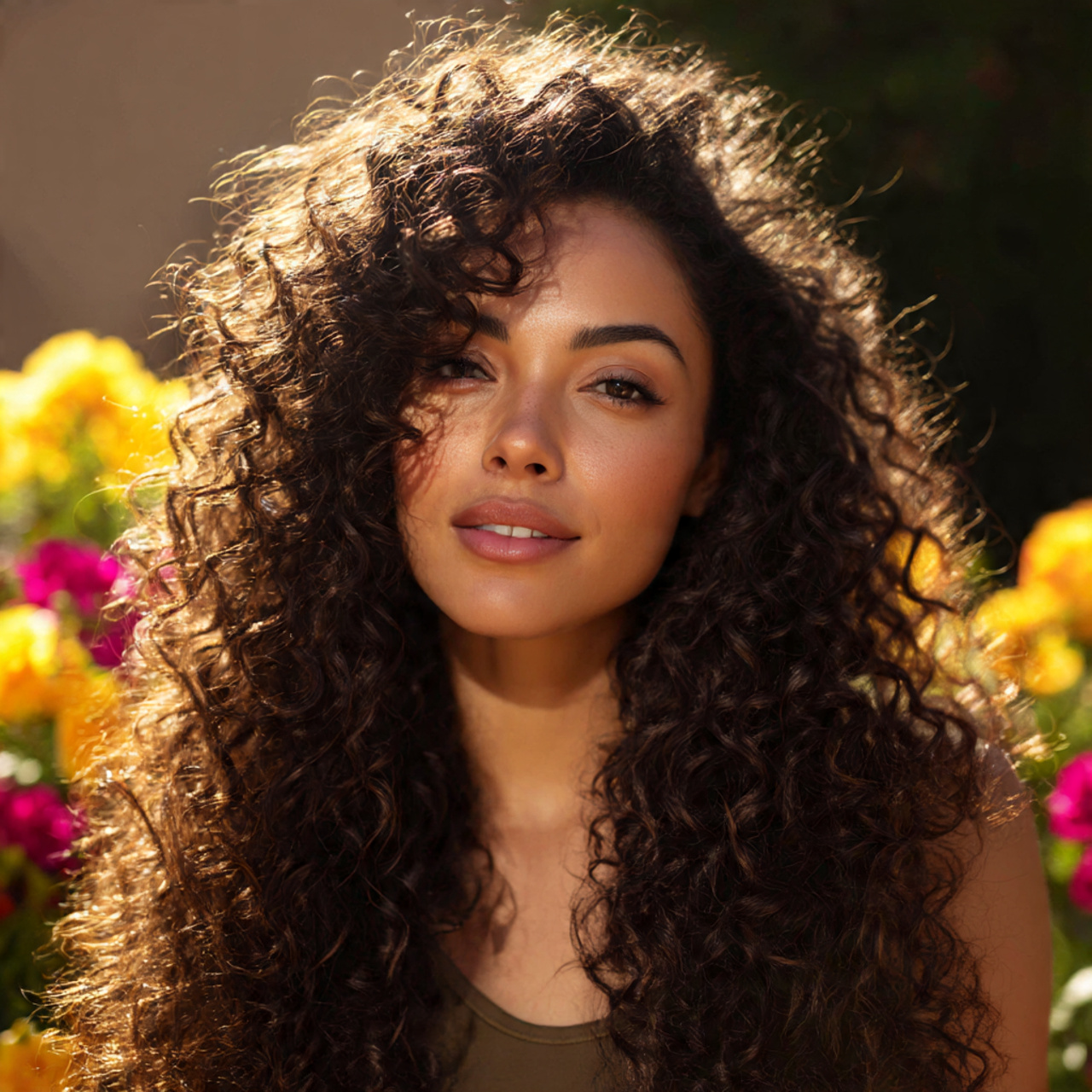
Long curly hair can have front layers starting at the cheekbone or chin while the rest reaches mid-back. Length and face-framing are not in conflict. The transition simply needs careful blending so the layers flow naturally rather than stepping down in an obvious line.
The lighter front layers on long curly hair create movement that otherwise gets lost when the full weight hangs flat. Many clients find that adding face-framing layers actually makes their long hair appear even longer because it draws the eye inward and downward.
Best for: Long curly hair that feels heavy at the roots and flat around the face Product: Cantu Shea Butter Moisturizing Curl Activator Cream Barber language: “I want to keep my full length but add face-framing layers starting around the chin. Please blend them carefully so there are no sudden visible jumps in the cut.” Face shape: Works best for round and square faces that benefit from added visual length Pro tip: Apply Cantu Curl Activator Cream to the front layers only after finishing the rest of your product application to create a definition contrast that highlights the framing.
Short Bobs with Curly Face-Framing

A curly bob without face-framing reads as boxy. The hair sits at one length all around and creates a rounded silhouette that adds width rather than structure. Adding longer front pieces to a curly bob immediately changes the entire feeling of the cut.
The longer face-framing pieces on a bob create a soft point toward the chin that draws the eye downward. This gives the face more length and makes the bob look intentional rather than overgrown.
Best for: Medium to thick curly hair at chin length wanting a polished bob shape Product: Bumble and bumble Curl Defining Creme Barber language: “I want a curly bob with the back shorter and the front pieces longer so they frame my face. Keep it blended and avoid a hard straight line at the front.” Face shape: Ideal for round faces that need visual elongation Pro tip: Diffuse your bob with the front pieces pinned forward against your face so they dry in a forward-curling direction instead of falling flat or flipping outward.
Medium-Length Curly Hair Layering

Medium curly hair sits in a difficult zone. It is long enough to feel heavy at the shoulders but short enough that aggressive layering can thin the ends. The shoulder flip that happens at this length is one of the most common complaints among curl clients, and face-framing layers are the direct fix.
Layers at the front break the weight at the shoulder and redirect the curl pattern so pieces fall at different lengths. This creates a natural cascade instead of a single outward flip at one uniform level.
Best for: Curly hair sitting between the chin and collarbone with a shoulder flip issue Product: Moroccanoil Curl Defining Cream Barber language: “I have shoulder-length curly hair that flips outward at the ends. I want face-framing layers and interior layers to break the weight and correct the flip.” Face shape: Suits all face shapes with layer placement adjusted per individual proportion Pro tip: Work Moroccanoil Curl Defining Cream through the front sections in downward strokes to encourage curls to fall rather than flare outward at shoulder level.
Deep Side Part for Curly Hair

A deep side part requires no cutting and costs nothing, but it completely changes the energy of a face-framing cut. Parting curly hair deeply to one side redistributes volume and makes front layers appear more dramatic. The side that falls forward becomes a sweeping curtain of curls along the jawline.
This technique works especially well for people who want variety between salon visits. A different part placement alone can make a face-framing cut look entirely new without any scissors involved.
Best for: Anyone wanting to refresh their look between cuts using only a comb Product: Kenra Platinum Silkening Mist Barber language: “I want my cut to support a deep side part. Please make sure the face-framing layers read well on whichever side I choose to part from.” Face shape: Great for round faces wanting to create asymmetry and a lengthening effect Pro tip: Use a wide-tooth comb on freshly conditioned hair to set the deep part before applying any product so the curl pattern dries and sets in the correct direction from the root.
Curly Shag Haircut with Face-Framing

The curly shag has been one of the highest-demand curl cuts for the past two years and it continues to grow in popularity. It uses short layers at the crown, longer layers through the mid-section, and face-framing pieces at the front that give the entire cut its structure and intentionality.
The quality of the face-framing pieces is what separates a great curly shag from a chaotic one. When those front layers are placed and blended correctly, they anchor the entire shape and prevent the style from reading as simply overgrown.
Best for: Wavy to curly hair wanting maximum texture and layered movement Product: Not Your Mother’s Curl Talk Frizz Control Sculpting Gel Barber language: “I want a curly shag with long face-framing pieces or curtain bangs. Short layers at the crown blending into longer layers at the bottom, and please cut it dry.” Face shape: Oval and heart-shaped faces carry this cut best Pro tip: Apply Not Your Mother’s Curl Talk Gel only to the crown and face-framing sections after styling so those layers stay defined without the rest of the hair going stiff.
Enhancing Cheekbones with Curls

When the shortest face-framing layer sits at cheekbone height, it acts as a natural highlighter. The curls curve around that area and create a gentle lifting effect that draws attention upward. Editorial curl stylists use this placement deliberately on clients who want to highlight their cheekbones without any contouring product.
The layer must have enough body to maintain its curve at that height. An over-thinned or flat curl at cheekbone level loses the lifting effect entirely. Density in that section matters as much as placement.
Best for: Anyone wanting a lifting effect at the cheekbones without cosmetics Product: Curl Smith Curl Defining Styling Souffle Barber language: “I want my shortest face-framing layer placed at cheekbone level. The goal is for the curls to curve around that area and create lift. Please cut dry.” Face shape: Especially effective for long and oblong faces that need added width at the mid-face Pro tip: Use Curl Smith Curl Defining Styling Souffle on just the cheekbone pieces and allow them to air dry without touching so they hold their natural curve fully.
Dry Cutting Technique for Curls
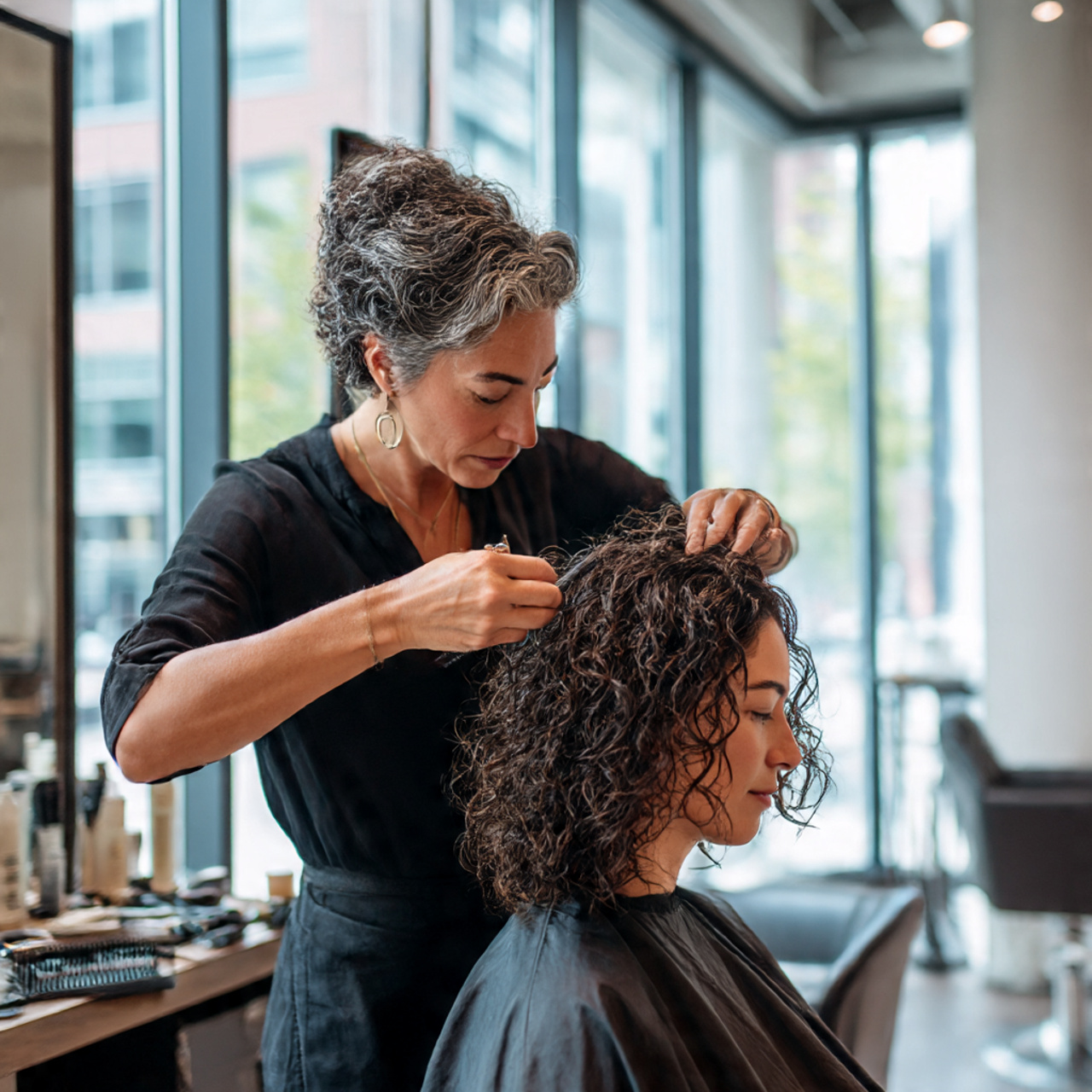
Dry cutting has been standard practice among Deva-certified curl stylists for over a decade, and the reason is straightforward. When hair is cut wet, the stylist cuts something that looks and behaves completely differently from the finished result. Wet cutting on curly hair is structural guesswork.
For face-framing layers specifically, dry cutting ensures the pieces fall exactly where both stylist and client see them in the salon. There is no shrinkage surprise and no uneven front section after the first wash.
Best for: Anyone who has been disappointed by a curly cut done on wet hair Product: DevaCurl No-Poo Original Zero Lather Conditioning Cleanser (for pre-appointment wash) Barber language: “I want dry cutting only. Please do not wet my hair before cutting. I want to see exactly where each layer falls before you commit to the cut.” Face shape: Relevant for all face shapes since dry cutting serves accuracy above anything else Pro tip: Arrive at your appointment with your hair styled exactly as you wear it every day so your stylist sees and cuts your real curl pattern, not a product-free approximation.
Maintaining Curl Definition at the Front
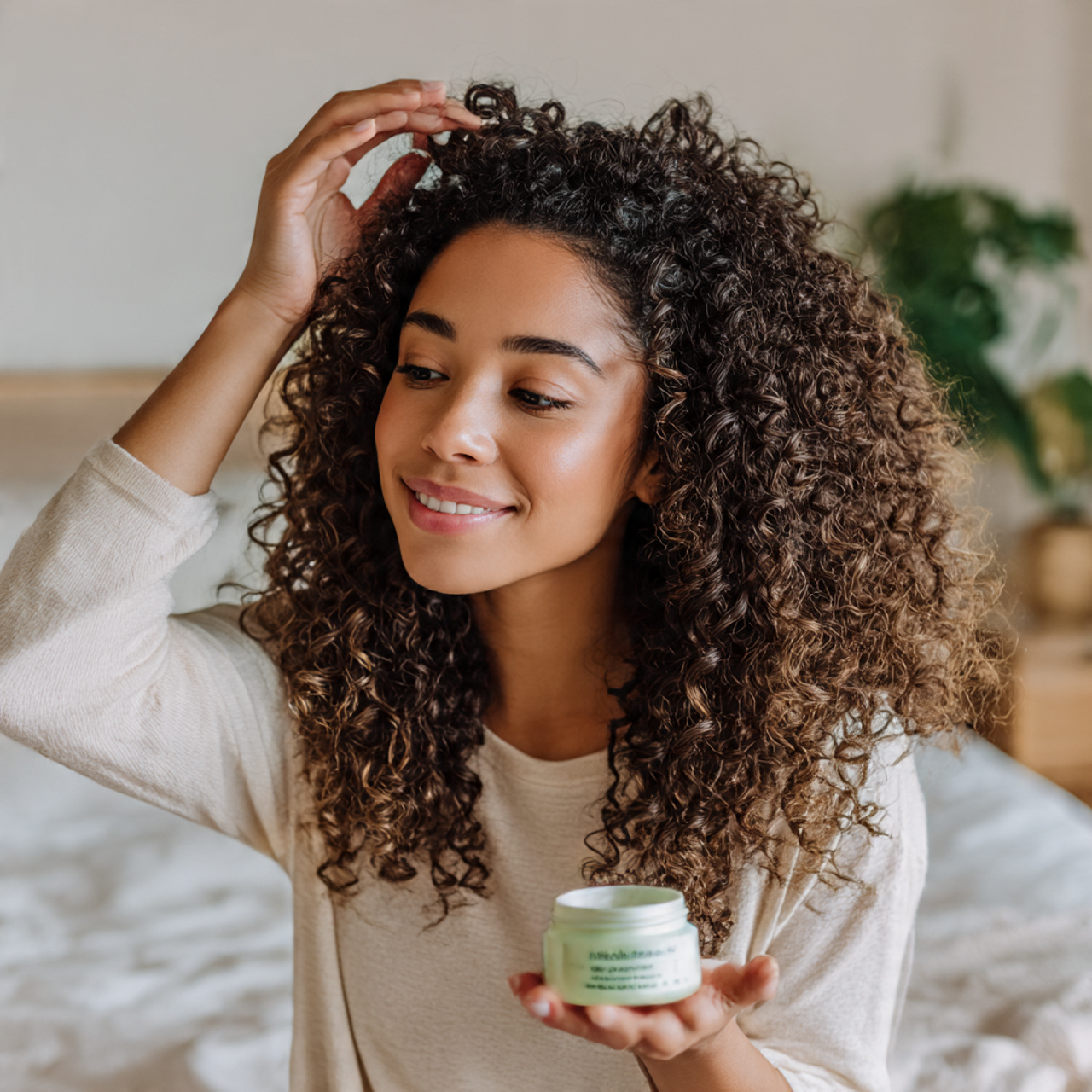
Front curls frizz faster than the rest of the hair because hands and incidental contact touch them most throughout the day. The solution is not more product. It is the right product applied in the right sequence, with the front section treated as its own defined zone.
Raking a small amount of gel through the front layers as a final step in your routine gives those pieces a second seal. This keeps the face-framing zone defined through the hours when it is most visible.
Best for: Anyone whose front curls frizz out by midday despite a full styling routine Product: Eco Style Olive Oil Gel Barber language: “Please keep my face-framing layers dense enough to hold definition throughout the day. I do not want them over-thinned or looking wispy.” Face shape: Important for all face shapes since front definition determines how the entire frame reads Pro tip: Apply Eco Style Olive Oil Gel to the front sections last in your routine and smooth downward once before scrunching so the outer layer is sealed against humidity.
Subtle Highlights and Face-Framing
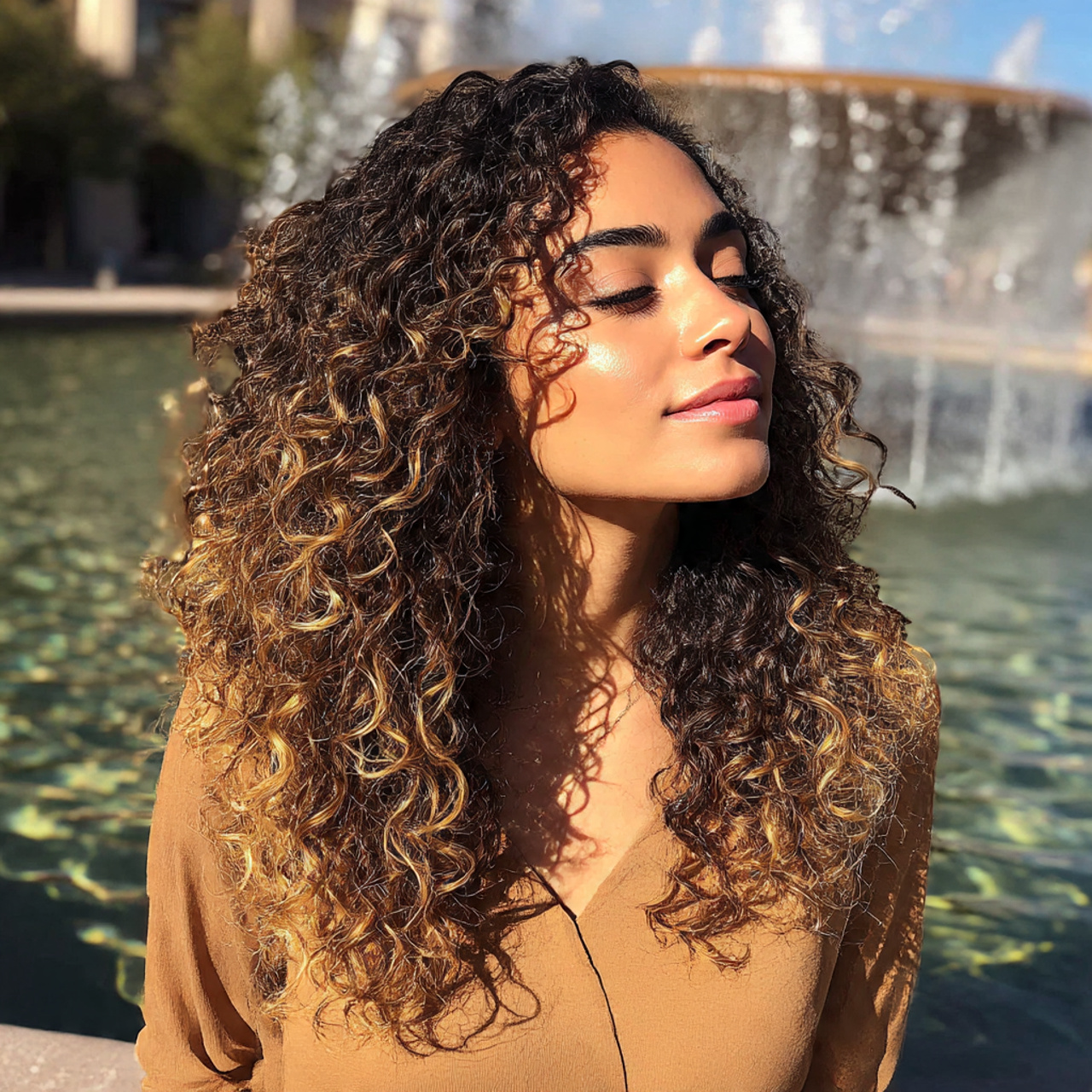
Subtle highlights placed along the face-framing layers follow the curl pattern and make each ringlet appear more three-dimensional. The lighter strands catch the light as the curls move and create depth without requiring a dramatic color change. Color and cut amplify each other when both are designed intentionally for curly hair.
This combination works because the highlight placement operates in the same zone as the cut. Both are creating dimension in the same sections at the same time, which is why the combined effect looks unified rather than like two separate treatments.
Best for: Curly hair wanting brightness and dimension without heavy color commitment Product: Wella Professionals Color Touch Gloss (applied by a colorist for tonal placement) Barber language: “I want subtle highlights placed only on my face-framing layers to follow the curl pattern. I want them to look natural and blended, not striped or banded.” Face shape: Most effective on oval and heart-shaped faces where the light catches the frame Pro tip: Use Pureology Hydrate Sheer Conditioner on the highlighted face-framing sections after color to protect the tone and prevent brassiness from developing at the front first.
Taming Frizz in Face-Framing Layers

Frizz in face-framing layers is a moisture problem before it is a product problem. When curls lose hydration throughout the day, the outer cuticle layer lifts and creates the fuzzy texture most people try to press down after the fact. Sealing moisture in from the beginning of the styling process is the only lasting fix.
A leave-in conditioner followed by a humectant-based gel keeps the cuticle closed and the curl smooth. Adding product after frizz appears is always less effective than preventing it before the style leaves the house.
Best for: Anyone in humid climates or with naturally porous, frizz-prone curl texture Product: Kinky Curly Knot Today Leave-In Conditioner Detangler Barber language: “Please do not over-thin my face-framing layers. I need them to have enough density to resist frizzing without constant product reapplication throughout the day.” Face shape: Especially helpful for round faces where frizzy sides can add unwanted width Pro tip: Apply Kinky Curly Knot Today to the face-framing sections while hair is still soaking wet, not just damp, so the leave-in absorbs into the strand before gel is layered on top.
Styling Techniques for Extra Lift

Root lift in curly hair requires working against gravity while the hair dries. Diffusing with the head tilted forward is the most effective method because it allows the root section to dry with volume rather than being compressed downward by the hair mass above it.
Clips placed at the root zone of the face-framing layers during diffusing add a second level of lift. Two or three clips at the front crown for the first ten minutes of drying can noticeably increase visible volume once the hair is fully cool.
Best for: Flat-rooted curls that lose height within an hour of styling Product: Conair Infiniti Pro Dryer with diffuser attachment Barber language: “I want my face-framing layers cut to support lift at the root. Please graduate the layers at the front crown so there is built-in volume when diffused.” Face shape: Best for long and oblong faces where crown height improves overall proportion Pro tip: Place one duckbill clip at the root of each front section before diffusing and remove them only in the final two minutes so the lift locks in as the curl cools.
Face-Framing for Fine Curly Hair

Fine curly hair is delicate and can look stringy if face-framing layers are placed too high on the face. The layers on fine curls need to start below the chin so there is enough strand length to support the curl grouping. Shorter placement on fine hair breaks the natural clusters and creates sparse, thin-looking ends.
Product choice also matters far more on fine curls than any other type. Heavy creams weigh the face-framing pieces down and break the clusters that create the appearance of density.
Best for: Fine curly hair that loses body when layered too aggressively Product: Herbal Essences Bio:Renew Curl Boosting Mousse Barber language: “I have fine curly hair and I want conservative face-framing layers starting below the chin. Please do not take too much from the front section.” Face shape: Best for oval and oblong faces where longer layers add flattering length Pro tip: Apply Herbal Essences Curl Boosting Mousse to the face-framing layers while inverted so the mousse reaches the roots and builds volume from the base upward.
Maintaining the Shape of the Cut

A face-framing cut does not maintain itself. The front layers grow out faster than the rest of the hair because they are shorter, and within eight weeks the frame can begin losing its definition. Regular trimming is the only way to preserve the precision of the shape over time.
Some clients prefer to have only the face-framing zone touched up every eight weeks between full appointments. This keeps the front frame sharp without removing any back length in the process.
Best for: Anyone who invests in a great curly cut and wants it to last between appointments Product: Tweezerman Professional Stainless Steel Styling Scissors (for single-curl home touch-ups if needed) Barber language: “I want a maintenance trim focused only on the face-framing layers. Please refresh the front and blend it back into the length without touching the back.” Face shape: Applies equally to all face shapes Pro tip: Take a photo of your face-framing layers on your best curl day and bring it to every trim appointment so your stylist always knows what the ideal shape looks like for you personally.
The Impact of Hydration on Curls

Every recurring curl problem including flat front layers, loss of definition, and daily frizz traces back to hydration. Curly hair is structurally more porous than straight hair, which means it loses moisture faster and needs it replenished more consistently. This is hair biology, not a product or routine failure.
Deep conditioning once a week keeps the face-framing layers pliable and responsive to styling. Curls that are properly hydrated hold their shape longer and accept product more evenly throughout the strand.
Best for: Dry, brittle, or chronically frizzy curly hair of any curl pattern Product: Aunt Jackie’s Knot on My Watch Instant Detangling Therapy Barber language: “During the consultation, please look at my face-framing layers and tell me if the front sections show signs of dryness or damage so I can adjust my routine before we cut.” Face shape: Relevant for all face shapes since hydration affects definition quality, not silhouette Pro tip: After applying Aunt Jackie’s Knot on My Watch, clip the front sections under a processing cap for ten minutes before rinsing so the treatment fully penetrates the outer strands.
Diffusing Curls for Maximum Definition
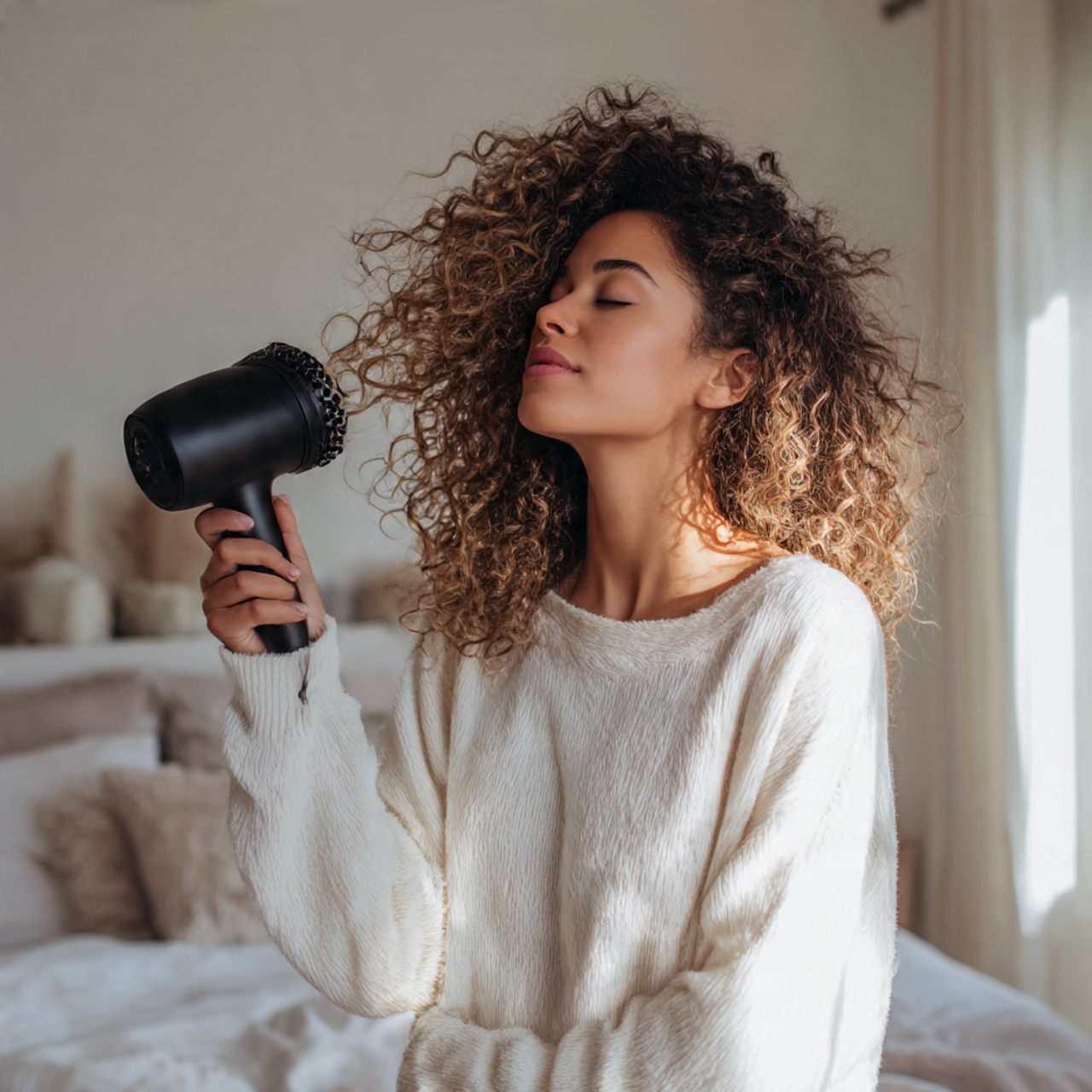
Diffusing is the difference between curls that look intentionally styled and curls that look accidental. A diffuser slows airflow and distributes heat evenly across the curl so it dries in its natural grouped shape rather than being blown apart. This is especially critical for face-framing layers, which are the first section anyone sees.
Technique matters as much as the equipment itself. Hold each face-framing section inside the diffuser bowl for five seconds before moving to set the curl shape before the strand is fully dry and most vulnerable to deformation.
Best for: Curly hair that air-dries frizzy or loses its defined curl pattern Product: Xtava Black Orchid Hair Diffuser (universal fit for most dryer nozzles) Barber language: “I diffuse my hair regularly. Please cut my face-framing layers knowing they will always be dried with a diffuser so the final shape accounts for that.” Face shape: Works for all face shapes, with the lifting effect most valuable for round faces Pro tip: Use the cool shot button for the final thirty seconds on the face-framing layers to seal the cuticle and lock the curl shape in place before you finish.
Protective Styling with Face-Framing

Protective styles do not have to mean covering up your face-framing layers. A pineapple updo at night protects the length while leaving the front section free to maintain its shape. This preserves both the style and the health of the cut without sacrificing either.
During the day, low buns and half-up styles can still show off face-framing curls by leaving the front pieces deliberately out. This one habit significantly extends the life of a fresh cut without requiring any extra time or effort.
Best for: Anyone with an active lifestyle who needs both protection and visible style Product: Slip Silk Pillowcase Barber language: “I use protective styles regularly. Please keep my face-framing layers long enough to leave out of a pineapple updo and still look intentionally shaped when the rest is pulled up.” Face shape: Works for all face shapes, keeping the frame visible and intentional even in updos Pro tip: Sleep on a Slip Silk Pillowcase instead of cotton to reduce friction on the face-framing layers and wake up with front curls that need minimal morning refreshing.
Customizing Layers for Round Faces
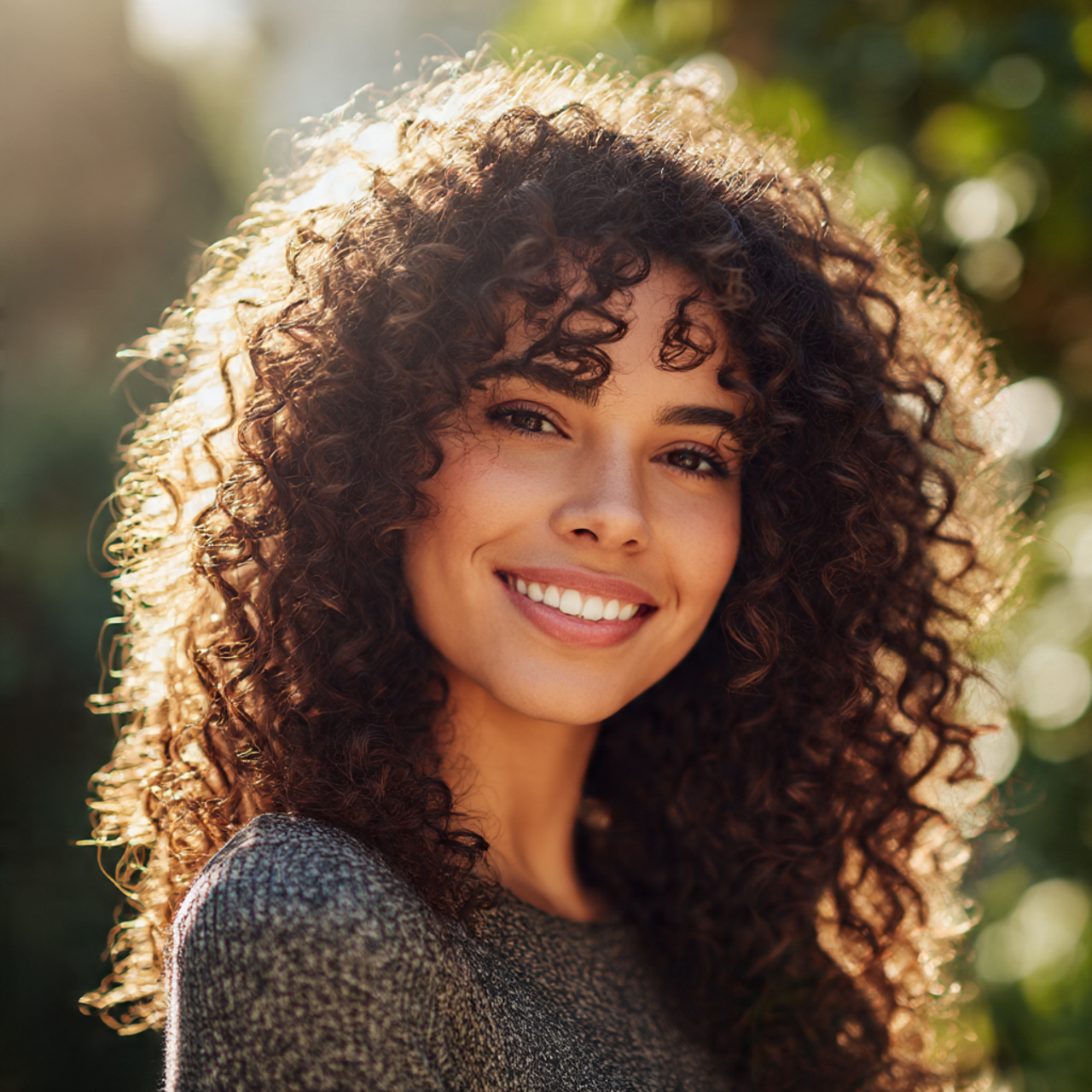
Round faces need layers that build vertical movement rather than horizontal width. Face-framing layers for round face shapes should start at or below the chin and angle inward toward the face rather than sweeping outward. This draws the eye downward and creates the impression of length.
Heavy side layers at cheekbone level on a round face add width exactly where it is least needed. Volume should be concentrated at the crown while the sides stay closer and less dramatic.
Best for: Round face shapes wanting to elongate and slim with face-framing curls Product: Garnier Fructis Pure Clean Styling Gel Barber language: “I have a round face and I want face-framing layers that create length and elongation. Please start the shortest layer below the chin and angle them to sweep inward.” Face shape: Designed specifically for round face shapes wanting a slimming visual effect Pro tip: Apply Garnier Fructis Pure Clean Gel to the front sections with a downward raking motion to train curls to fall vertically rather than spreading outward and adding unwanted width.
Visit Also: Hair Blonde Highlights Lowlights
Customizing Layers for Oval Faces
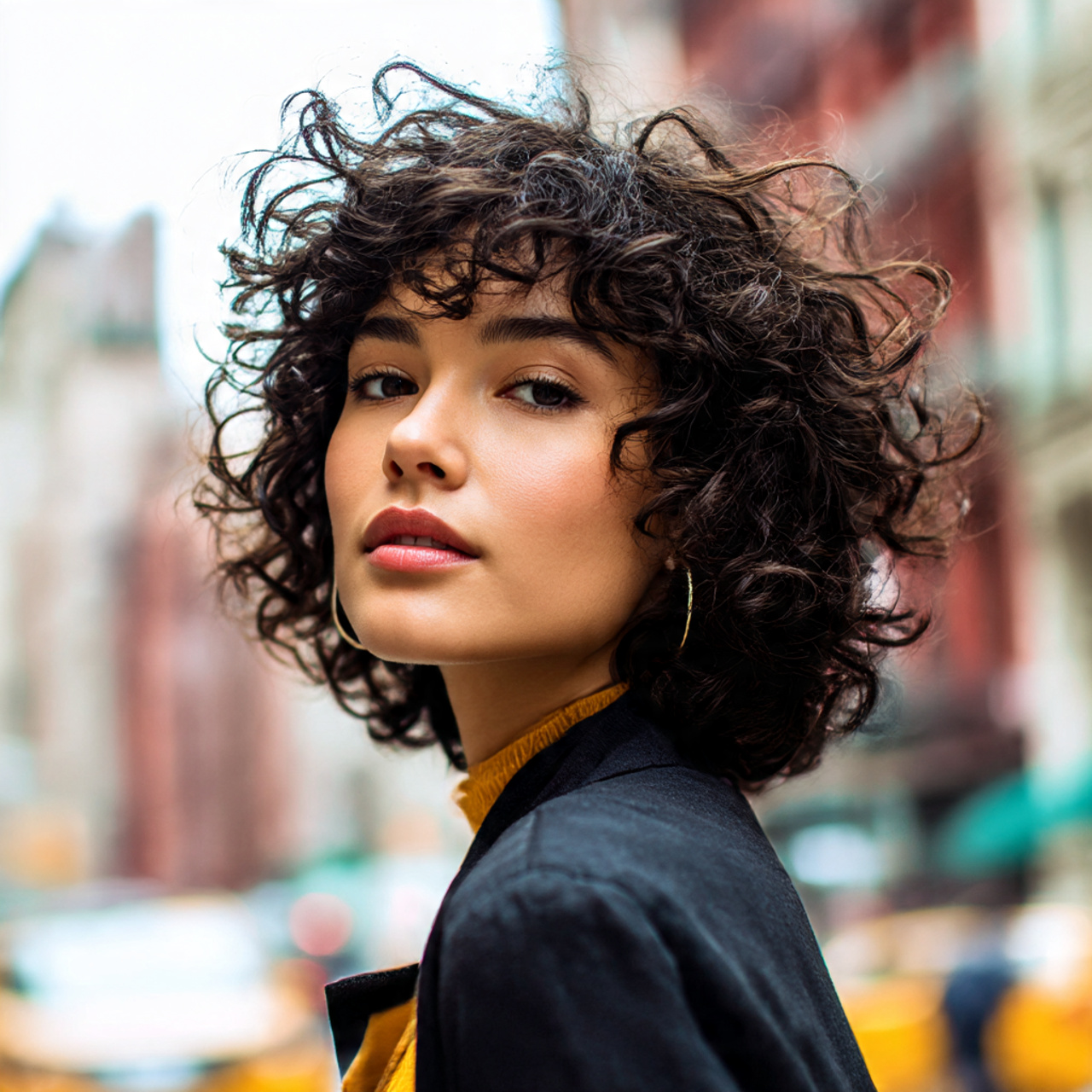
Oval faces have more flexibility than any other face shape when it comes to face-framing layers. The balanced proportions mean layers can start at the cheekbone, chin, or even higher without creating visual imbalance. This makes the oval face the easiest to cut successfully with nearly any face-framing approach.
The main rule for oval faces is to keep volume even on both sides so the natural symmetry is not interrupted. Both soft curtain-style layers and more dramatic angular framing work equally well on this shape.
Best for: Oval face shapes wanting variety and flexibility in their curly cut approach Product: SheaMoisture 100% Virgin Coconut Oil Shine and Hold Mist Barber language: “I have an oval face and I am open to where the layers start. Show me a couple of placement options during the consultation and we can choose based on my curl type.” Face shape: Specifically suited to oval faces and their naturally flexible proportions Pro tip: Since oval faces suit multiple layer placements, take a before photo at each haircut and compare over time so you can identify which layer height gives you your personal best result.
Customizing Layers for Square Faces

Square faces have strong horizontal lines at the jaw, forehead, and cheekbones. Face-framing layers for square faces should soften these angles by introducing curved, rounded pieces that bring gentle movement around the natural structure. Blunt layers cut straight across a square face make the jaw read wider than it actually is.
Longer, rounded layers that sweep inward at the ends are the most flattering approach for this face shape. They guide the eye around the angles of the face rather than emphasizing the corners.
Best for: Square face shapes wanting to soften strong jaw and cheekbone lines with curls Product: OGX Quenching Plus Coconut Curls Decadent Creamy Mousse Barber language: “I have a square face with a strong jawline. I want rounded softening face-framing layers that curve inward at the ends. Please avoid any blunt straight lines at the front.” Face shape: Designed specifically for square faces with angular features wanting softer framing Pro tip: Apply OGX Coconut Curls Mousse to the face-framing layers and guide the curls into a rounded inward curve with your fingers while diffusing so they dry in the most flattering direction.
Enhancing Waves (2A/2B/2C) with Face-Framing

Wavy hair has a challenge curly hair does not. The wave pattern forms lower on the strand and falls completely flat near the roots, leaving a straight section at the face that looks limp and undefined. Face-framing layers on wavy hair are specifically about activating the wave pattern earlier in the strand, closer to the face.
Shorter face-framing layers reduce the distance the wave needs to travel before becoming visible. The result is definition right at the face instead of flat, straight hair at the roots with waves appearing midway down.
Best for: Wavy hair types 2A through 2C wanting curl definition near the face Product: R+Co Bel Air Smoothing Conditioner Barber language: “I have wavy hair that looks flat and straight near the roots. I want face-framing layers short enough to help the wave activate sooner. Please do not be too conservative with the front length.” Face shape: Works well for heart and diamond face shapes where front volume fills out the jaw area Pro tip: Scrunch R+Co Bel Air Smoothing Conditioner into the face-framing sections on wash day as a final leave-in to smooth the cuticle and encourage wave formation from the root outward.
Refreshing Face-Framing Curls Day 2

Day two curls are a skill anyone can learn. The face-framing layers are the most likely section to look flat or undefined by the second morning because they receive the most contact and friction throughout the day and overnight. Knowing how to refresh only those sections without rewetting the entire head is what separates a good curl routine from a great one.
A spray bottle with water and a few drops of leave-in conditioner is all that is needed. Mist the front sections, scrunch gently, and diffuse briefly or allow them to air dry. The curl shape returns without disturbing the rest of the set.
Best for: Anyone wanting great curls on non-wash days without starting the routine over Product: Camille Rose Curl Maker Whipped Marshmallow Barber language: “Please cut my face-framing layers to a length that still holds shape on day two when refreshed with water. I do not want them so short they lose form between washes.” Face shape: Applies to all face shapes since day two maintenance is a universal concern Pro tip: Apply a pea-sized amount of Camille Rose Curl Maker to just the front sections on day two and scrunch from underneath so the curl is reshaped from the base rather than only the surface.
The Importance of a Silk Scarf

Protecting curls overnight is a skill anyone can learn. The face-framing layers are the most likely section to lose definition by morning because they experience the most friction against pillows and movement during sleep. Knowing how to preserve their shape overnight without restyling them each morning is what separates a consistent curl routine from an inconsistent one.
A silk scarf is all that is needed. Wrap hair loosely or use the pineapple method to keep curls lifted and shaped while sleeping. Definition is preserved without disturbing the set.
Best for: Anyone who wants to wake up with face-framing layers that still hold shape without reaching for products first thing in the morning Product: Slip Silk Scrunchie or Grace Eleyae Slap Cap Barber language: “Please keep my face-framing layers at a length that can be pineappled overnight without folding or creasing at the ends. I want them long enough to stay lifted, not so short they flatten.” Face shape: Applies to all face shapes since overnight protection is a universal concern Pro tip: Loosely gather only the front sections into the pineapple rather than all the hair at once. This keeps the layers at the crown lifted and prevents the curl from being compressed flat at the root by morning.
Products to Maximize Curl Definition
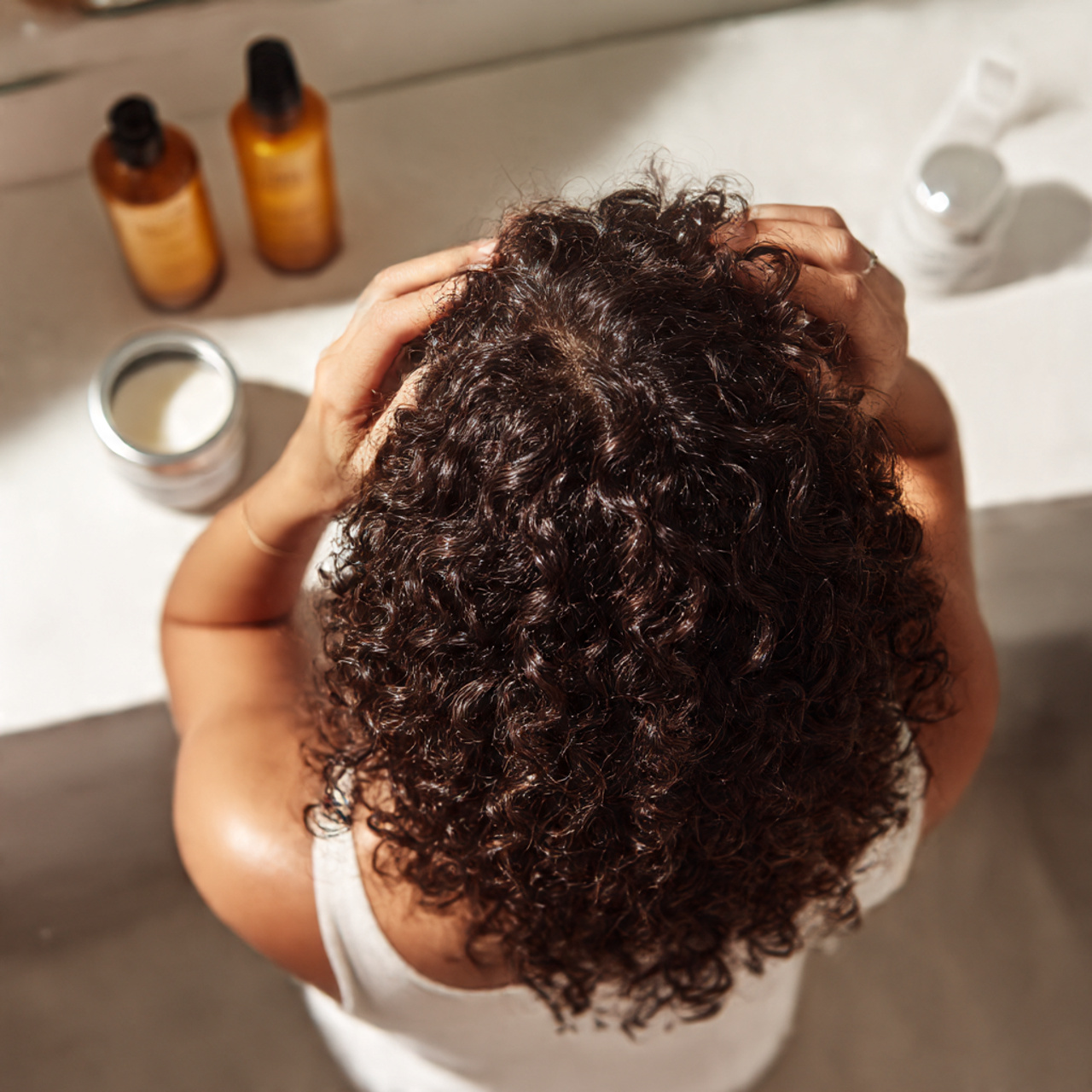
Building a layered product routine is a skill anyone can learn. The face-framing layers are the most likely section to lose hold and shape first because they are exposed to more movement, touch, and environmental moisture throughout the day. Knowing how to layer products from lightest to heaviest so each one seals the last is what separates defined curls from curls that fall flat by midday.
A hydrating leave-in conditioner, a curl cream, and a gel applied in that exact order is all that is needed. Apply a small extra amount of each product to the front sections and scrunch from underneath. Hold and definition last longer without weight pulling the curl down.
Best for: Anyone wanting face-framing layers that stay shaped and defined from wash day through day two without crunch or stiffness Product: Mielle Organics Pomegranate & Honey Leave-In, Shea Moisture Coconut & Hibiscus Curl Enhancing Smoothie, Eco Style Olive Oil Gel Barber language: “Please cut my face-framing layers so they have enough length to hold product weight without pulling the curl straight. I want layers that respond to a leave-in and gel combo and still spring back.” Face shape: Applies to all face shapes since layered product application benefits every curl pattern and texture Pro tip: Avoid applying heavy oils or butters near the roots of the front sections. Oil near the root breaks down gel hold and causes the layers closest to the face to separate and droop before the day is over.
Quick Comparison Table
| Style | Length | Hair Type | Maintenance | Bold Factor |
|---|---|---|---|---|
| Layered Curls for Volume | Medium to long | Fine to medium | Low | ⭐⭐⭐⭐ |
| Face-Framing Bangs | Short to medium | Wavy to curly | Medium | ⭐⭐⭐⭐⭐ |
| Best Cut for 3A | Medium to long | 3A spirals | Low | ⭐⭐⭐ |
| Enhancing 4C Coils | Short to medium | 4C coils | Medium | ⭐⭐⭐⭐⭐ |
| Long Curly Hair | Long | All curl types | Low | ⭐⭐⭐ |
| Short Bobs | Short | Medium to thick | Low | ⭐⭐⭐⭐ |
| Medium-Length Layering | Medium | All | Low | ⭐⭐⭐ |
| Deep Side Part | Any | All | Very low | ⭐⭐⭐⭐ |
| Curly Shag | Medium | Wavy to curly | Medium | ⭐⭐⭐⭐⭐ |
| Enhancing Cheekbones | Chin to shoulder | All | Low | ⭐⭐⭐⭐ |
| Dry Cutting Technique | Any | All | Low | ⭐⭐⭐ |
| Maintaining Definition | Any | All | Medium | ⭐⭐⭐ |
| Subtle Highlights | Any | All | Medium | ⭐⭐⭐⭐⭐ |
| Taming Frizz | Any | Dry or humid-prone | Medium | ⭐⭐⭐ |
| Styling for Extra Lift | Any | Fine to medium | Medium | ⭐⭐⭐⭐ |
| Fine Curly Hair | Chin to collarbone | Fine | Low | ⭐⭐⭐ |
| Maintaining Shape | Any | All | Medium | ⭐⭐⭐ |
| Hydration Impact | Any | Dry or porous | Medium | ⭐⭐⭐ |
| Diffusing for Definition | Any | All | Medium | ⭐⭐⭐⭐ |
| Protective Styling | Any | All | Low | ⭐⭐⭐ |
| Round Faces | Chin to long | All | Low | ⭐⭐⭐⭐ |
| Oval Faces | Any | All | Low | ⭐⭐⭐⭐ |
| Square Faces | Chin to long | All | Low | ⭐⭐⭐⭐ |
| Waves 2A/2B/2C | Any | Wavy | Low | ⭐⭐⭐⭐ |
| Refreshing Day 2 | Any | All | Low | ⭐⭐⭐ |
Frequently Asked Questions
What is the best way to ask my stylist for face-framing curly hair? Tell your stylist you want face-framing layers cut dry and ask them to show you where the shortest piece will fall before they make any cuts. Bringing one reference photo of the exact frame position you want removes all guesswork from the appointment.
Will face-framing layers make my curly hair look thinner? Not when done correctly, because the layers are designed to redistribute weight rather than remove it, and the result is more definition at the front, not less. Conservative placement starting at or below the chin keeps visible density intact.
How often should I get my face-framing layers trimmed? Every 10 to 12 weeks is the standard for most curl types to keep the shape clean and accurate. If you want the front frame to stay especially sharp, ask for a quick front-only trim every 8 weeks between full appointments.
Can face-framing curly hair work alongside color? Yes, and the two actually enhance each other when planned together. Subtle highlights placed along the face-framing layers follow the curl pattern and add dimension that makes both the cut and the color look more intentional simultaneously.
What is the difference between face-framing layers and regular interior layers? Regular interior layers are distributed evenly through the body of the hair primarily to add volume. Face-framing layers are specifically cut around the perimeter of the hairline to direct attention toward your features and improve the front silhouette of the cut.
Final Thoughts
Face-framing curly hair is not a single cut or a single technique. It is a design principle that applies differently depending on your curl type, face shape, and daily lifestyle. The 27 ideas in this article give you a clear starting point for every version of that principle, from tight 4C coils to loose 2A waves.
Getting the right cut always starts with the right conversation in the salon chair. Use the barber language lines in this article to make that conversation specific and direct. Arriving with reference photos and knowing exactly where you want your shortest layer to fall puts you in control of the result before a single curl is cut.
Caring for face-framing layers after the appointment matters just as much as the cut itself. Hydration, protective sleep habits, and a consistent day two refresh routine keep the shape visible and defined between visits. The front section of the hair is the most demanding zone and it rewards the most attention.
One insight from watching hundreds of curl consultations over the years: the clients most satisfied with their face-framing results are always the ones who arrived with specific, clear requests and trusted the stylist to handle the technical execution. The cut is a collaboration. Your job is knowing what you want. Your stylist’s job is delivering it in a way that fits your actual curl pattern on the actual day of the cut.
The most transformative thing about a great face-framing curly hair cut is that it makes you look like a more polished version of yourself without looking like you tried.
If this article helped you, save it to your Pinterest hair board right now and share it with someone whose curls deserve this exact moment.