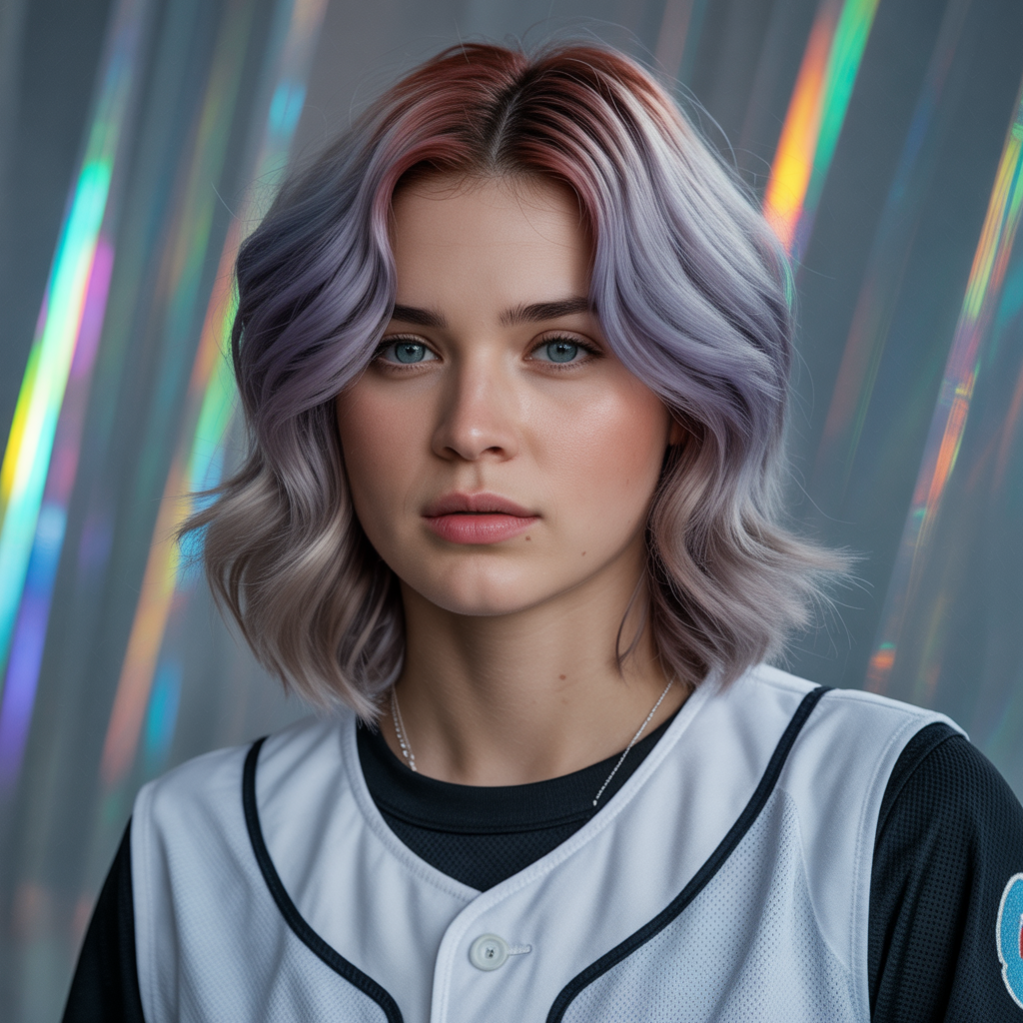
20 Side Shaved Hairstyles That Turn Heads for All the Right Reasons
You saved dozens of images of side shaved hairstyles, sat in the salon chair, and walked out with something that looked nothing like any of them. That gap between inspiration and result is one of the most common frustrations in modern salon culture. It does not mean the style is not for you. It means the translation layer was missing.
Most people arrive without a precise vocabulary for what they want. Holding your phone toward a stylist and saying “something like this” is a starting point, not a brief. When the language is vague, the result tends to match it. That is not a personal failing. It is a system problem that better information can solve.
The real issue comes down to four variables that most guides leave out entirely: placement height, clipper guard number, edge type, and face shape compatibility. Without these, a skilled stylist is working from assumption. A side shave that looks deliberately designed and one that does not often differ by a single centimetre of placement.
After working alongside stylists across high-volume commercial salons and editorial shoots, a clear pattern emerges. The consultation rarely goes deep enough. Clients leave without knowing the guard number used, the maintenance window ahead, or the grow-out strategy planned. Those are exactly the details that determine whether the cut still looks sharp at week three.
This article covers 20 side shaved hairstyle ideas with the depth most guides skip. Every option includes a real product pick, face shape guidance, and the exact words to use in the salon chair so you walk in prepared rather than hopeful.
By the end, you will know which design fits your hair type, how often you need to maintain it, and how to communicate it precisely. If you have been putting off trying side shaved hairstyles because the research never felt complete, this guide closes that gap.
Side shaved hairstyles are seeing a sharp resurgence in 2025, driven by demand for detailed pattern work and the growing appeal of soft feathered fades as alternatives to hard undercut lines. The single rule that matters above everything else: placement must be chosen based on your face shape, not the image you saved. Get that right and every other decision becomes straightforward.
Side Shaved Hairstyles Ideas
Deep Shave Undercut Ideas

A deep shave undercut pulls the razor to the upper temple and follows the skull curve toward the ear, creating a stark, high-contrast line that anchors the rest of the look. The long section above can be worn loose for a polished finish or braided back to show the full structure. This is the most recognizable version of the undercut and carries the most visual authority of any style in this guide.
Best for: Long, thick, straight hair with strong natural movement Product: Redken Brews Clay Pomade for weight and separation in the long section Face shape: Oval and oblong faces gain width and balance from the high contrast at the sides Ask for: “I want a deep undercut starting at the temple, shaved to a 0 guard, hard edge, no fade.” Pro tip: Book the long section for a gloss treatment at your next appointment so any colour difference between sections reads as intentional design rather than two-tone regrowth.
Hidden Side Shave Design Ideas

Worn down, a hidden side shave is completely invisible. The shaved section sits above the ear or just under the part line, fully covered by surrounding hair until you tuck it back or tie it up. This is the most practical option for professional environments where personal expression needs to coexist with a conservative dress code.
Best for: Fine to medium hair, first-time shave clients, professional settings Product: L’Oréal Professionnel Tecni.Art Liss Control for smooth coverage over the shaved patch Face shape: Heart and round faces benefit from placement above the ear to avoid widening the lower face Ask for: “Hidden undercut just under my part line, high enough to cover completely with hair down. Clean edge, no taper.” Pro tip: Ask your stylist to mark the boundary with a comb before any clippers touch your head so the placement is deliberate and confirmed rather than estimated.
Tapered Side Shave Fade Ideas
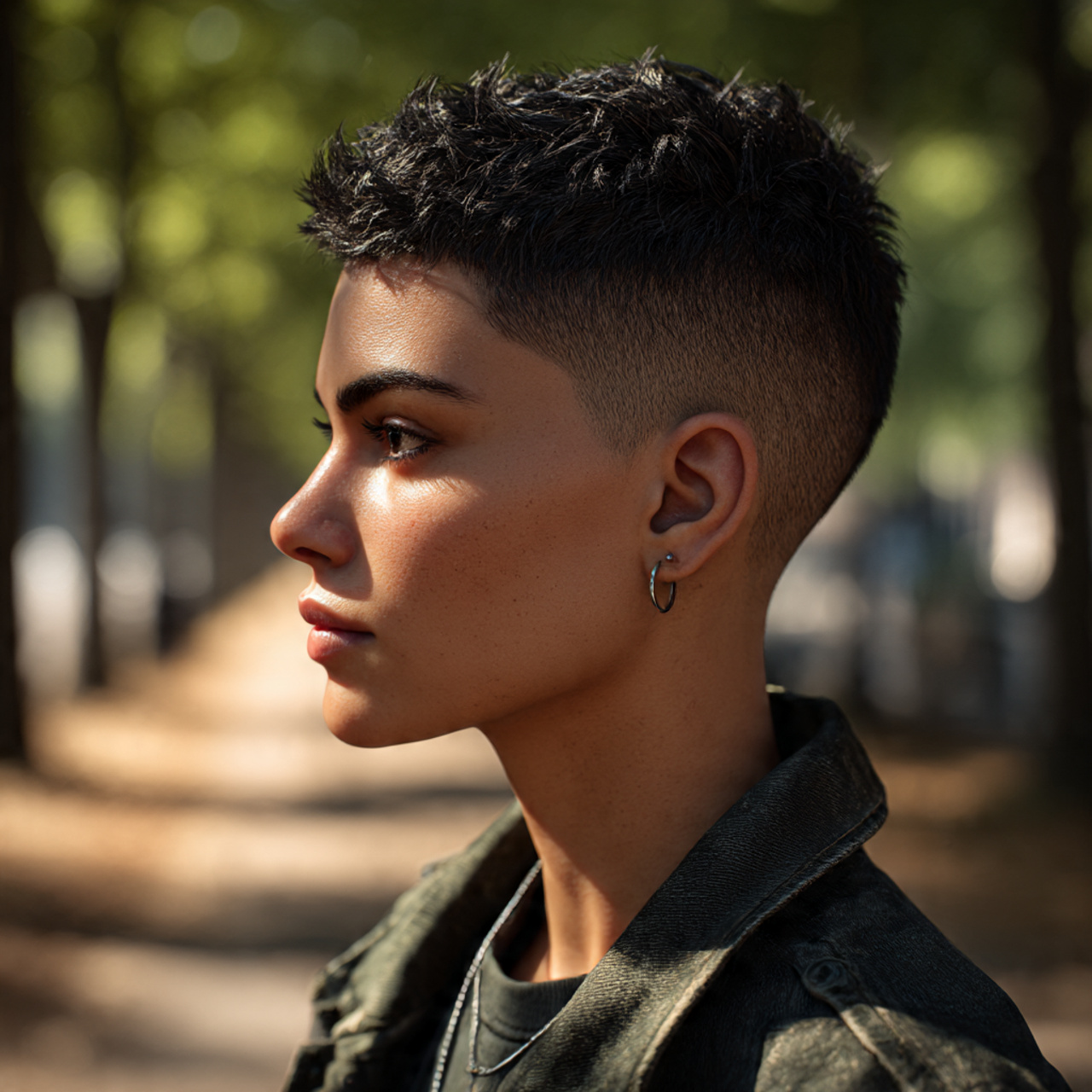
Unlike a hard undercut, a tapered side shave fade dissolves the edge between shaved and long hair through a smooth gradient rather than a blunt line. Wahl Senior Clipper with guards 0.5 through 3 is the standard combination skilled barbers use to build this transition cleanly. The grow-out is significantly more graceful than a hard undercut because there is no sharp edge to lose mid-stage.
Best for: Short to medium hair, clients who want a graceful grow-out experience Product: American Crew Forming Cream to define texture at the fade line Face shape: Square and diamond faces benefit from the soft gradient because it avoids a hard horizontal line at the widest point Ask for: “Tapered side fade, skin close at the base, graduating naturally to my length by the crown. No hard lines anywhere.” Pro tip: Schedule your first touch-up at two weeks rather than four because tapered fades lose their gradient faster than hard undercuts and the mid-stage is less flattering than either extreme.
Geometric Pattern Shave Ideas
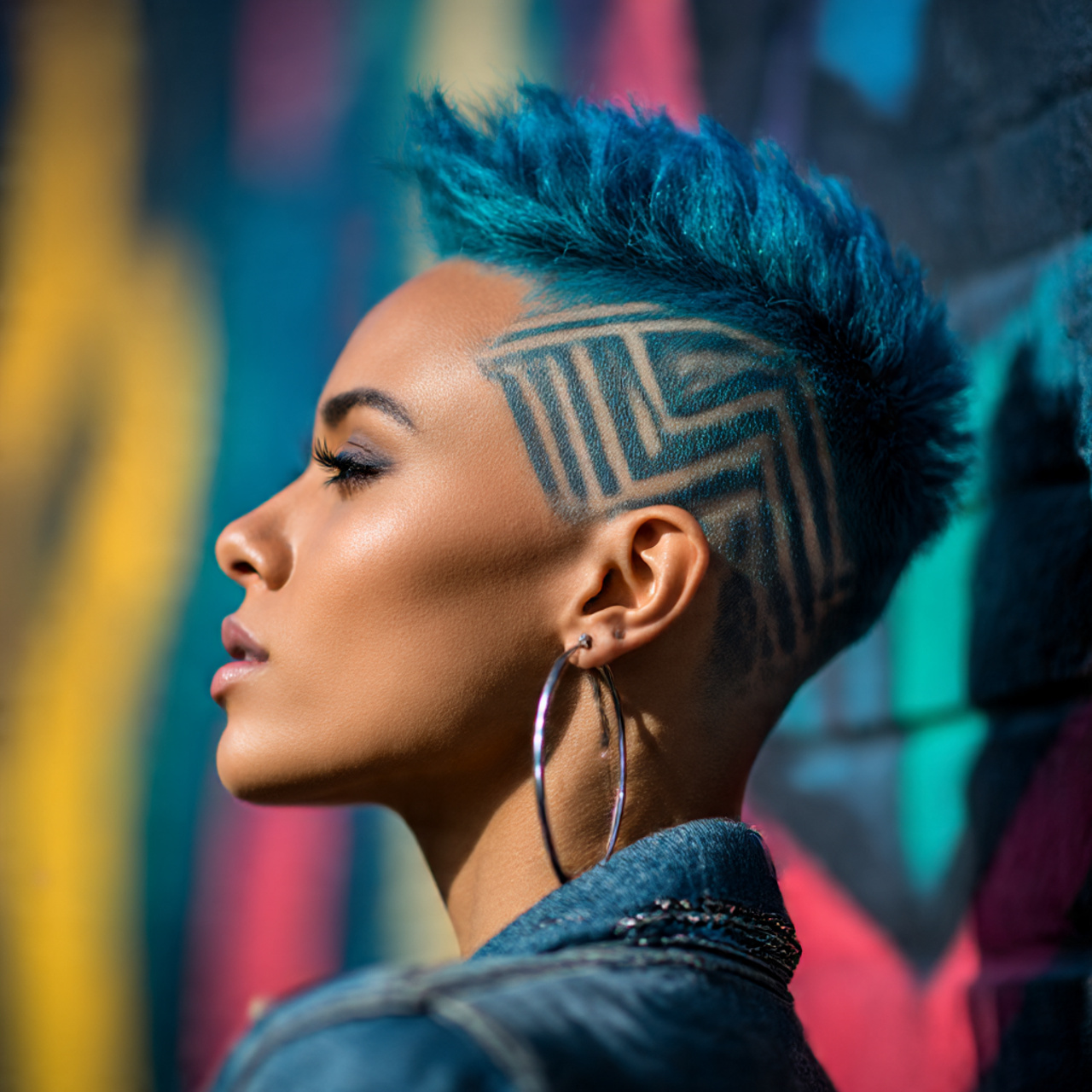
Geometric shaves carve precise angular shapes into a closely buzzed section using controlled clipper work. Chevrons, triangles, and parallel lines are the most popular entry-level options, and all three require a stylist with documented experience in precision line work. Asking to see their portfolio before the appointment is not optional here. The shaved base must reach a 0 or 0.5 guard so skin contrast is clean enough for the pattern to read at normal distance.
Best for: Dark, thick hair where skin contrast is strongest Product: Andis Master Cordless Clipper for consistent guard movement and zero-gap line definition Face shape: Oval faces carry angular designs without the pattern competing with facial proportions Ask for: “Geometric design in my undercut at a 0 guard. I’m thinking [chevron or triangle]. Map the design on dry hair before cutting.” Pro tip: Photograph the completed design from two angles immediately after your appointment so your stylist can replicate exact placement at every future touch-up.
Lightning Bolt Side Shave Ideas
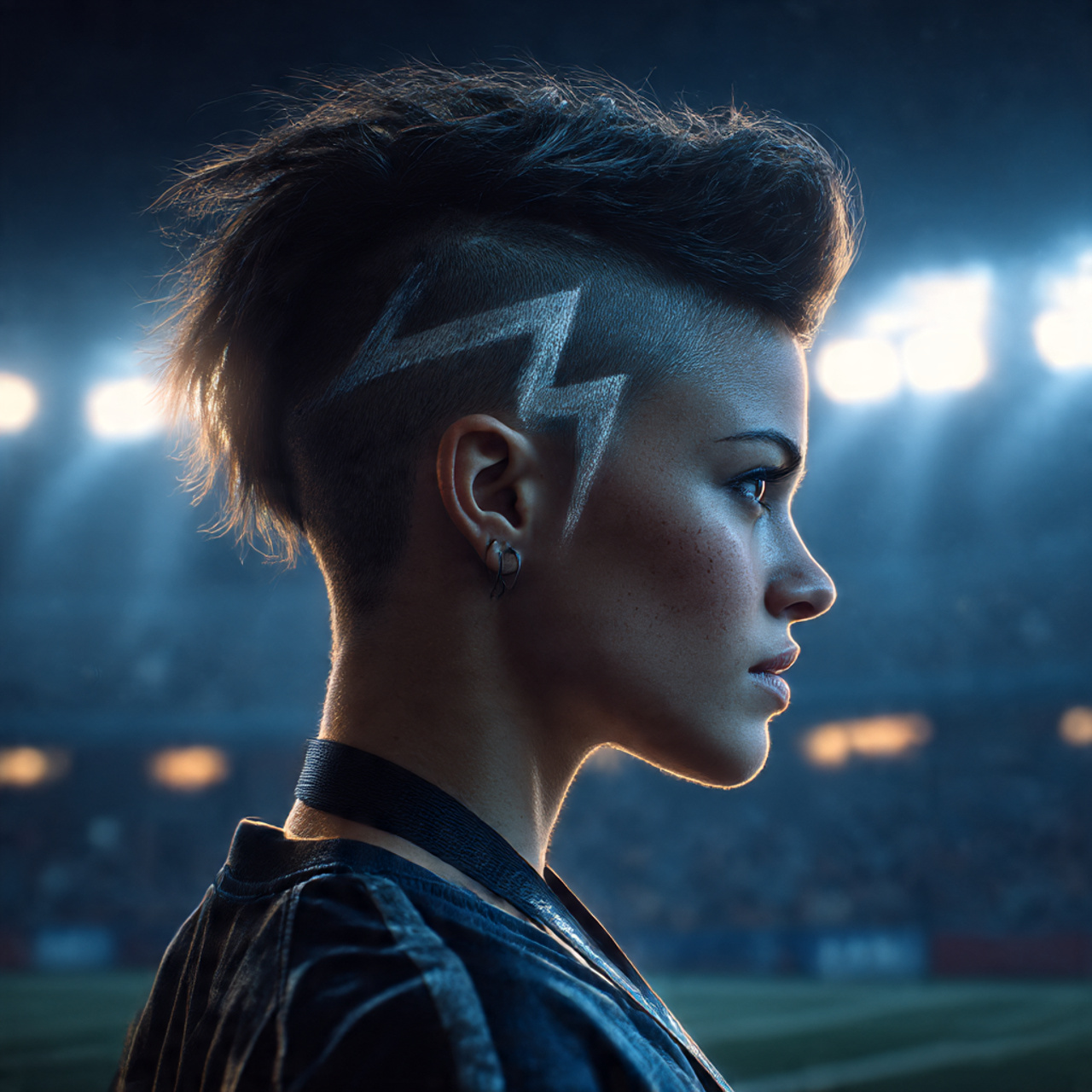
The lightning bolt design etches a single or double bolt into the undercut section using freehand clipper work. The bolt must follow the natural curve of the skull from the temple toward the nape to create the illusion of motion. Bolts that cut against the skull curve flatten out and lose their impact within days because they fight the head’s actual geometry.
Best for: Medium to long hair where the bolt contrasts clearly against full length above Product: Oster Fast Feed Adjustable Pivot Motor Clipper for controlled freehand work on curved surfaces Face shape: Round faces benefit from the vertical direction of the bolt, which draws the eye upward and adds length to the face Ask for: “Single lightning bolt in my undercut, following the curve of my skull from temple downward. 0 guard for the bolt, 1 guard for the surrounding shaved area.” Pro tip: A single streak of Manic Panic Electric Tiger Lily applied to the long section directly above the bolt doubles the visual impact with zero additional cutting time.
Curly Hair Side Shave Placement Ideas
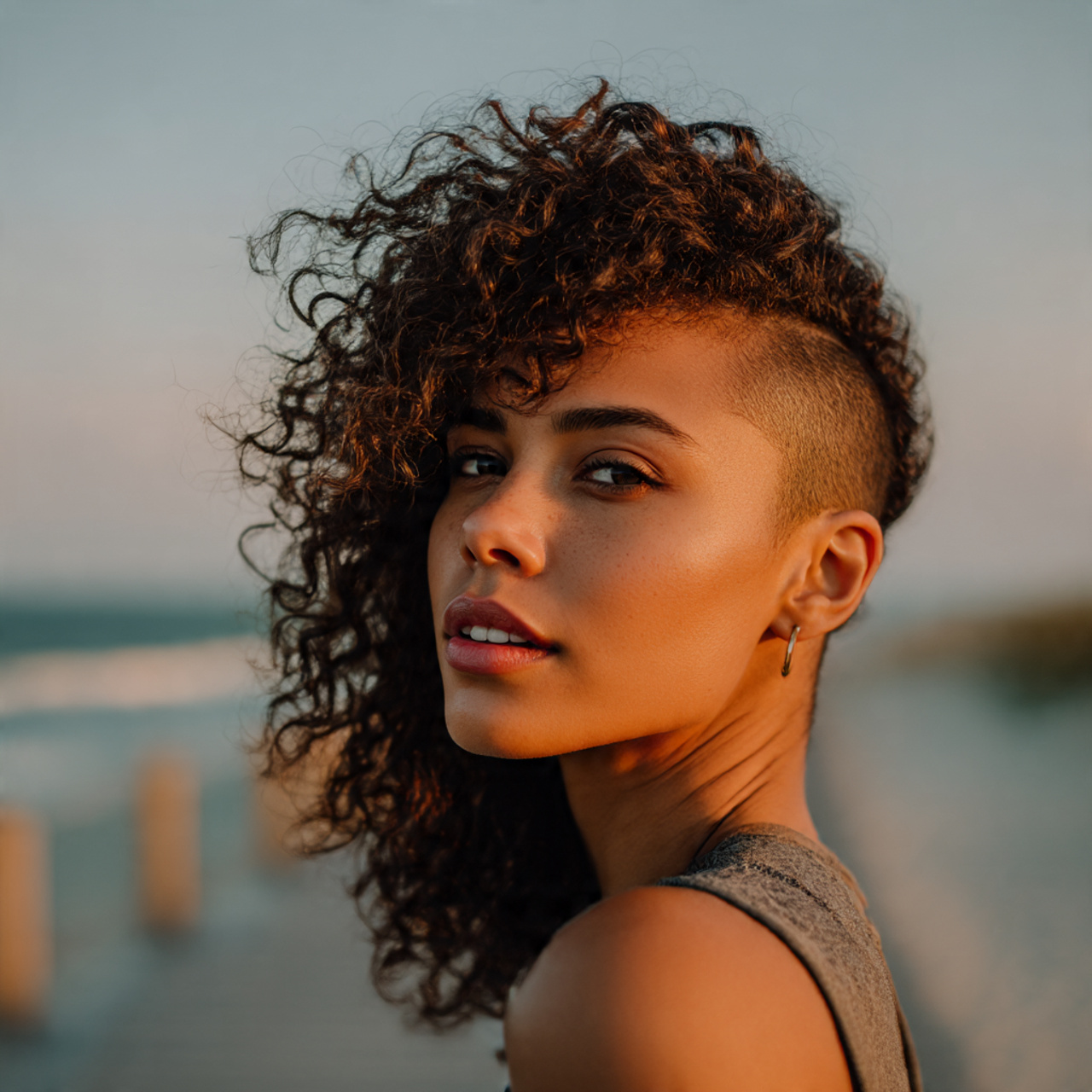
Curly hair requires different placement logic because curl volume creates a natural ledge that obscures a shave placed too high. A lower temple position angled slightly backward gives curly hair clients the clearest visual separation between the shaved section and the curl mass above. Type 3 and 4 curl patterns also grow outward rather than downward, filling the shaved area faster, which makes three-week touch-ups more realistic than four-week schedules.
Best for: Type 3a to 4c curls, medium to long length Product: Ouidad Advanced Climate Control Heat and Humidity Gel for curl definition above the shaved line Face shape: Oblong and oval faces handle the added volume of curls above a shaved side without looking top-heavy Ask for: “I have [Type 3 or 4] curls. Place the shave at the lower temple, angled slightly back. 0 guard, clean transition.” Pro tip: Diffuse with the shaved section uncovered so the design dries visible rather than hidden under collapsed curl clusters.
Long Hair Asymmetric Shave Ideas

Keeping one side at full length while the opposite is taken close to the scalp creates a split silhouette that reads as two separate styles from different angles. A deep side part shows the shaved section intentionally. A loose wave on the long side conceals it completely. The same haircut manages a boardroom presentation and a Saturday night without a single change to the cut.
Best for: Long straight or wavy hair, clients who want a versatile dual-look result Product: GHD Curve Creative Curl Wand to add texture to the long side and reinforce the visual asymmetry Face shape: Heart and oval faces carry the weight imbalance of an asymmetric cut without the proportions reading as uneven Ask for: “Full asymmetric shave. Left side at full length, right side taken to a 0 guard from just above the ear. Hard edge, no fade.” Pro tip: Sleep on a silk pillowcase on the long side every night to prevent friction frizz from blurring the contrast line at the shaved boundary.
Zig-Zag Detail Shave Ideas

Repeating V-angles across the shaved patch create movement without the complexity of a full geometric layout. Consistent spacing between each angle is what separates a sharp zig-zag from an accidental one. Dark hair makes this pattern read immediately because light reflection off the scalp creates a clear edge at every point, and that is the technical detail most people overlook when choosing their hair colour before booking this design.
Best for: Dark, medium to thick hair where skin contrast is strong Product: Babyliss Pro Barberology MetalFX Outliner for sharp angle definition at every V-point Face shape: Square faces benefit from the repeating angles, which echo the jaw and create a cohesive geometric result Ask for: “Zig-zag pattern in my undercut. Even V-shapes, approximately 1 to 2 centimetres wide per angle. Mark the pattern before cutting.” Pro tip: Book a three-week touch-up cycle because the tips of each angle soften first and the design blurs before the rest of the shave looks grown out.
Micro-Shave Outline Ideas

Razor-thin lines shaved near the ear or along the nape create a precise perimeter on a simple cut without changing the overall shape. The shaved lines are often just a few millimetres wide and produce a border effect that elevates a bob or pixie to something that reads as considered rather than basic. This technique removes the least hair of anything in this guide and produces the cleanest grow-out of any option.
Best for: Bob and pixie cuts, fine hair, minimal maintenance clients Product: Wahl Beret Rotary Trimmer for single-width line definition at the perimeter Face shape: Oval and long faces gain a flattering perimeter emphasis from micro-outlines near the ear Ask for: “Micro-outline shaved along my hairline near the ear and down the nape. One to two millimetres wide, skin level, no taper.” Pro tip: Ask your stylist to draw the line with a fine-tip washable marker before shaving so the placement is symmetrical from both sides before any cutting begins.
Temporary Color Accent Shave Ideas

Temporary color accents bring personality to a shaved section without permanent dye commitment. Products like Sparks Color Wax apply directly to the close-trimmed area and wash out with regular shampoo, which makes them ideal for events, photoshoots, or testing a color direction before committing to bleach. The shaved section takes color most evenly when freshly trimmed and completely clean of product.
Best for: Any hair type, event styling, clients exploring color without commitment Product: Sparks Color Wax in Electric Blue or Smoky Rose for buildable, washable pigment on any base Face shape: All face shapes benefit equally as the color draws the eye toward the design rather than the face outline Ask for: “Freshen the shaved section to a 0 guard and leave it clean and dry. I’ll apply color wax at home.” Pro tip: Smooth a thin layer of conditioner along the edge of the shaved section before using color spray to prevent pigment from staining the surrounding skin.
Two-Tone Contrast Shave Ideas

Color difference between the shaved base and the longer section above amplifies the structural divide in a way that texture contrast alone cannot. Pravana ChromaSilk Vivids on the long section against a naturally dark shaved base creates maximum impact. The technical detail most guides miss entirely: the shaved section must be taken to a consistent guard length throughout before any color is applied, because an uneven base makes even the most precise color boundary read as sloppy.
Best for: Medium to long hair with a natural dark base colour Product: Pravana ChromaSilk Vivids for saturated, fade-resistant colour on the long section Face shape: Oval and oblong faces carry the vertical colour divide without shortening or widening the face Ask for: “Shaved section to a consistent 0 guard throughout, then colour the long section with [colour]. Hard clean edge at the boundary, no bleed.” Pro tip: Use Pureology Colour Fanatic leave-in treatment on the coloured section weekly to preserve vibrancy and prevent the contrast from fading into a muddy middle tone between visits.
Back-of-the-Ear Shave Ideas
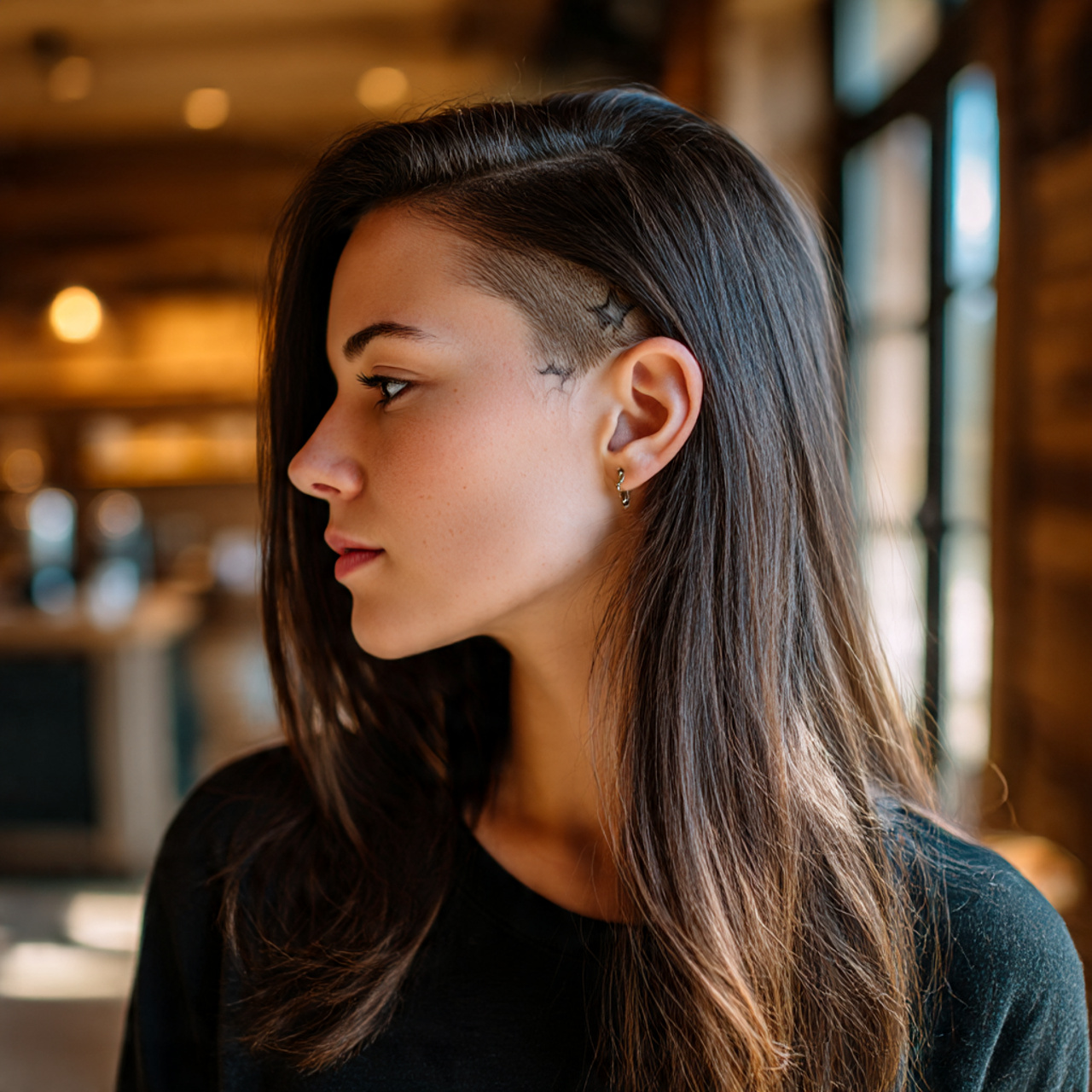
Directly behind the ear sits the lowest-visibility zone for any shaved design. The area is naturally concealed by the ear and surrounding hair, revealing itself only when hair is tied up or the head turns. Simple designs like a star, a clean patch, or a single initial work best here because fine-line complexity loses legibility within days as skin texture interferes with the edges.
Best for: Professional settings, clients who want a private detail, low-commitment first step Product: Wahl Beret Rotary Trimmer for accurate work in the tight behind-ear zone Face shape: All face shapes are suited because placement behind the ear has no effect on face outline perception Ask for: “Small design shaved behind my right ear, within a two to three centimetre area. I’m thinking [star or initial]. 0 guard, clean line down to the nape.” Pro tip: Photograph the finished design immediately after the appointment because you will rarely see this area without deliberate positioning, and documentation keeps it replicable.
Textured Line Art Shave Ideas

Varying clipper guard lengths across a single design creates depth through shadow rather than relying on skin-level contrast. The result is a three-dimensional effect where the design is perceived as much as seen, and it is the technique used in editorial contexts where a flat skin-shave pattern would look too stark under direct lighting. Because no hair is fully removed, the grow-out produces a gradual softening rather than a sudden disappearance, making four-week touch-ups realistic.
Best for: Thick hair where multiple guard lengths read as distinct tonal differences Product: Oster Fast Feed Adjustable Pivot Motor Clipper for precise guard-to-guard transitions mid-design Face shape: Square and round faces benefit from the softer appearance of textured art versus stark line carving Ask for: “Textured line art, not skin-shaved lines. Guard 0.5 for the deepest lines, guards 1 and 2 to fill the surrounding texture. Map the design before cutting.” Pro tip: Lightly mist the design area with water before each touch-up so your stylist can see the existing lines through regrowth and replicate the boundaries precisely.
Short Pixie Side Shave Ideas
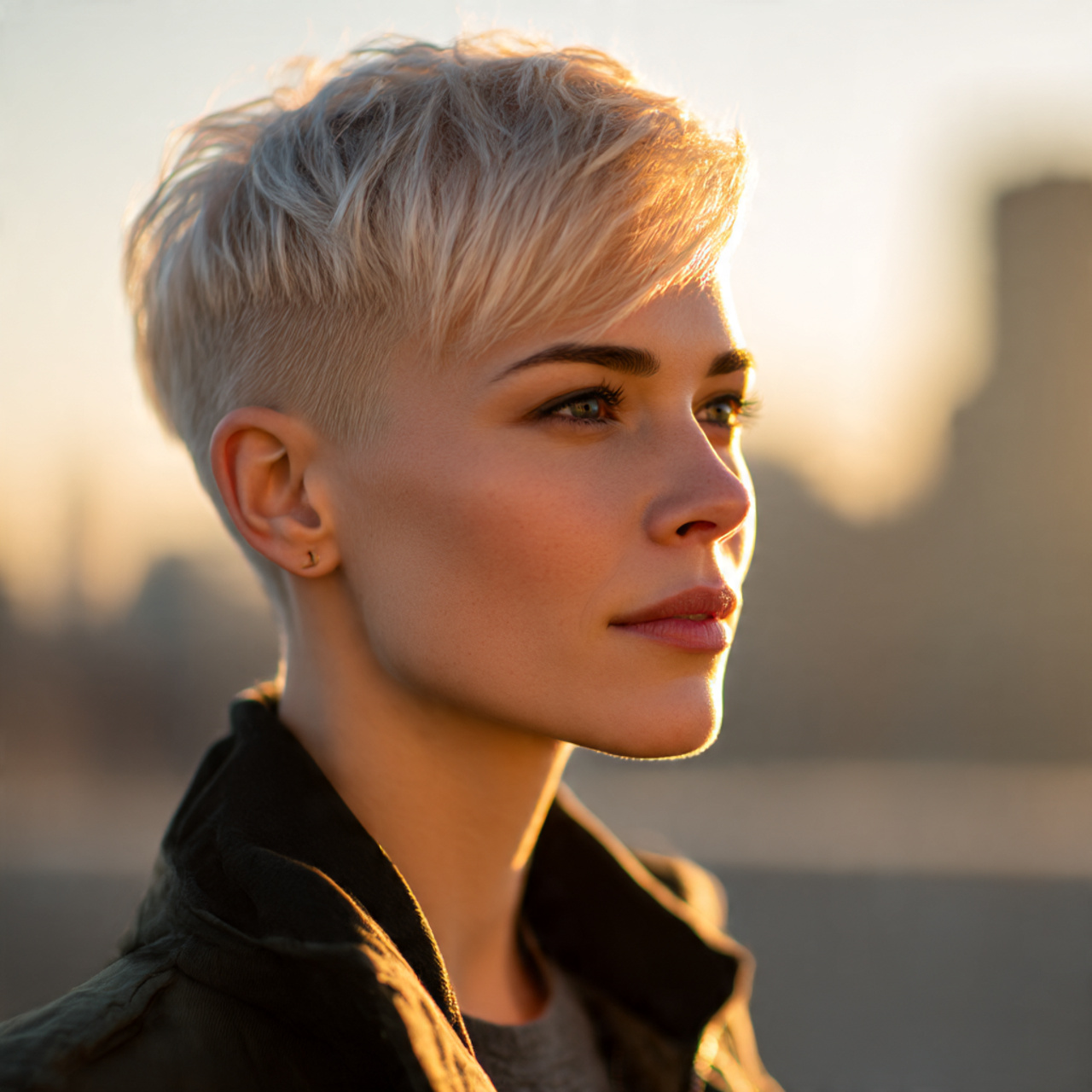
When a side shave is built into a short pixie cut, it removes side bulk and sharpens the silhouette without the result reading as aggressive or editorial. The shaved section becomes part of the pixie’s structure rather than something added on top. Oribe Dry Texturizing Spray on the crown creates the separation that makes the contrast between textured top and shaved side visually clear even on fine hair.
Best for: Short pixie cuts, fine to medium hair, active lifestyles Product: Oribe Dry Texturizing Spray for crown volume and texture definition against the shaved side Face shape: Oval, heart, and long faces carry the pixie side shave well because reduced side volume avoids widening the face Ask for: “I have a pixie cut. Shave the side from just above the ear to a 0 or 1 guard. Blend it into the existing pixie shape rather than creating a separate undercut line.” Pro tip: Apply a pea-sized amount of Bumble and bumble Sumo Tech to the crown on wash days and air-dry so the textured top stays defined against the shaved side without heat.
Feathered Fade Effect Ideas

Razor over comb technique thins and dissolves the hair at the shave boundary to create an edge that appears almost translucent rather than cut. This is technically distinct from a clipper fade: the razor thins individual strands rather than cutting to a uniform guard length, producing a softer, more organic finish. It is the method barbers use when they want the transition to look like it grew there naturally rather than being cut in.
Best for: Fine, straight, or wavy hair, clients who want a low-aggression entry into the shaved style Product: Fromm Barber Razor with fresh blades for clean, snag-free feathering at the boundary Face shape: All face shapes suit the feathered fade because the soft edge adds no visible width or weight to the face outline Ask for: “Feather the edge of my shave with a razor, not clippers. I want the boundary to dissolve rather than have a visible fade line. Fresh blade please.” Pro tip: Use Kevin Murphy Smooth.Again rinse-out treatment at home to prevent the feathered edge from frizzing, which would make the soft dissolve appear blunt on humid days.
Half-Moon Shape Shave Ideas
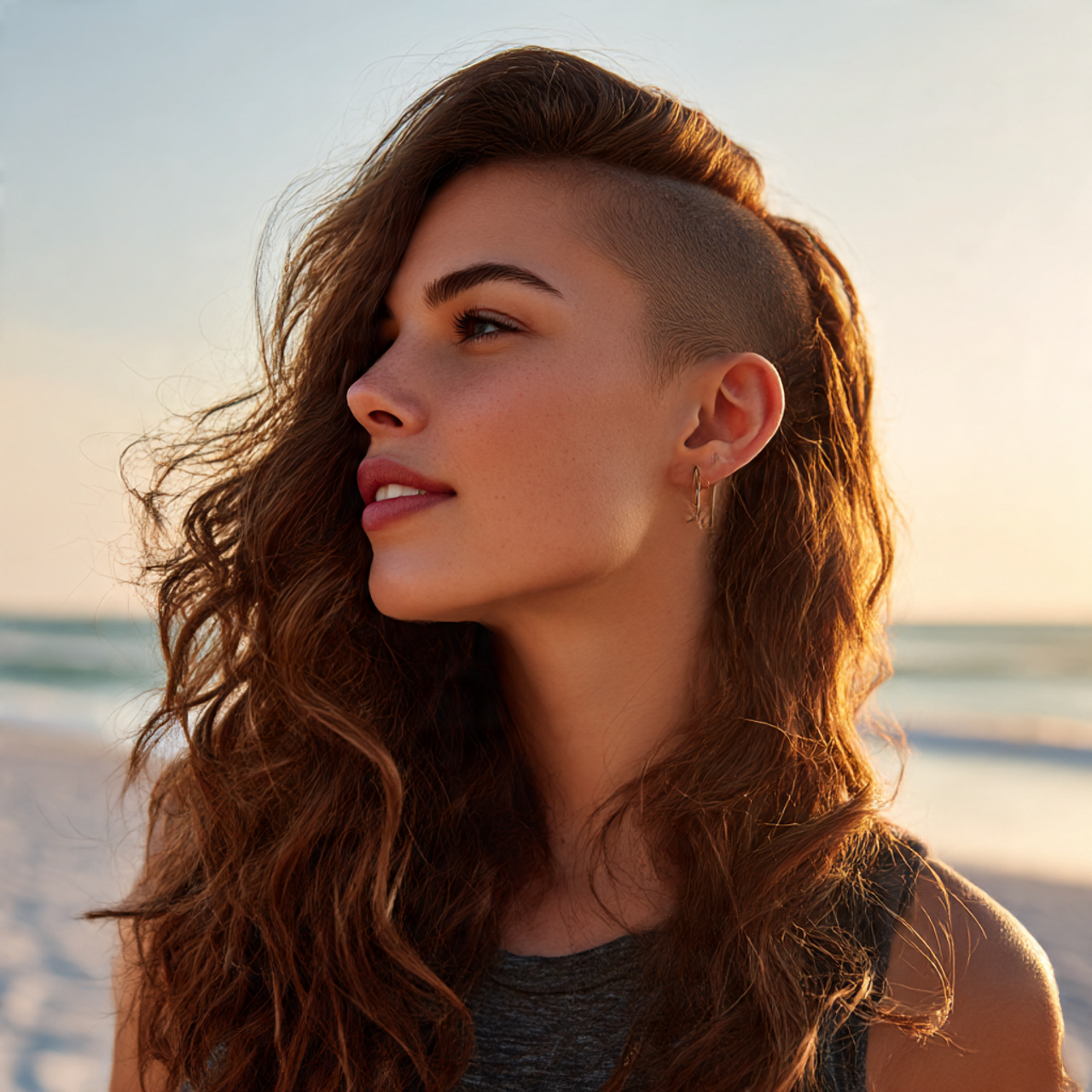
Tracing a curved crescent path near the ear produces a shape that follows the skull’s natural arc and looks integrated into the head rather than placed on it. That is the functional difference between a design that reads as architectural and one that reads as arbitrary. The half-moon is adaptable from a clean skin-shaved crescent to a bordered arc with a small interior detail, and each variation carries a different maintenance window.
Best for: Medium length hair, clients who want a softer geometric design with grow-out flexibility Product: Andis Slimline Pro Li T-blade Trimmer for clean arc definition on curved surfaces Face shape: Round and oval faces carry curved designs most naturally because the arc echoes rather than fights the face outline Ask for: “Half-moon near my ear, following the curve of my skull. Skin level inside the arc, feathered slightly at the boundary. Map the curve before cutting.” Pro tip: Ask your stylist to trace the half-moon with a comb and check it from three paces in the mirror before cutting begins so the curve looks balanced at normal viewing distance.
Visit Also: Types Of Bangs
Intricate Mandala Pattern Shave Ideas
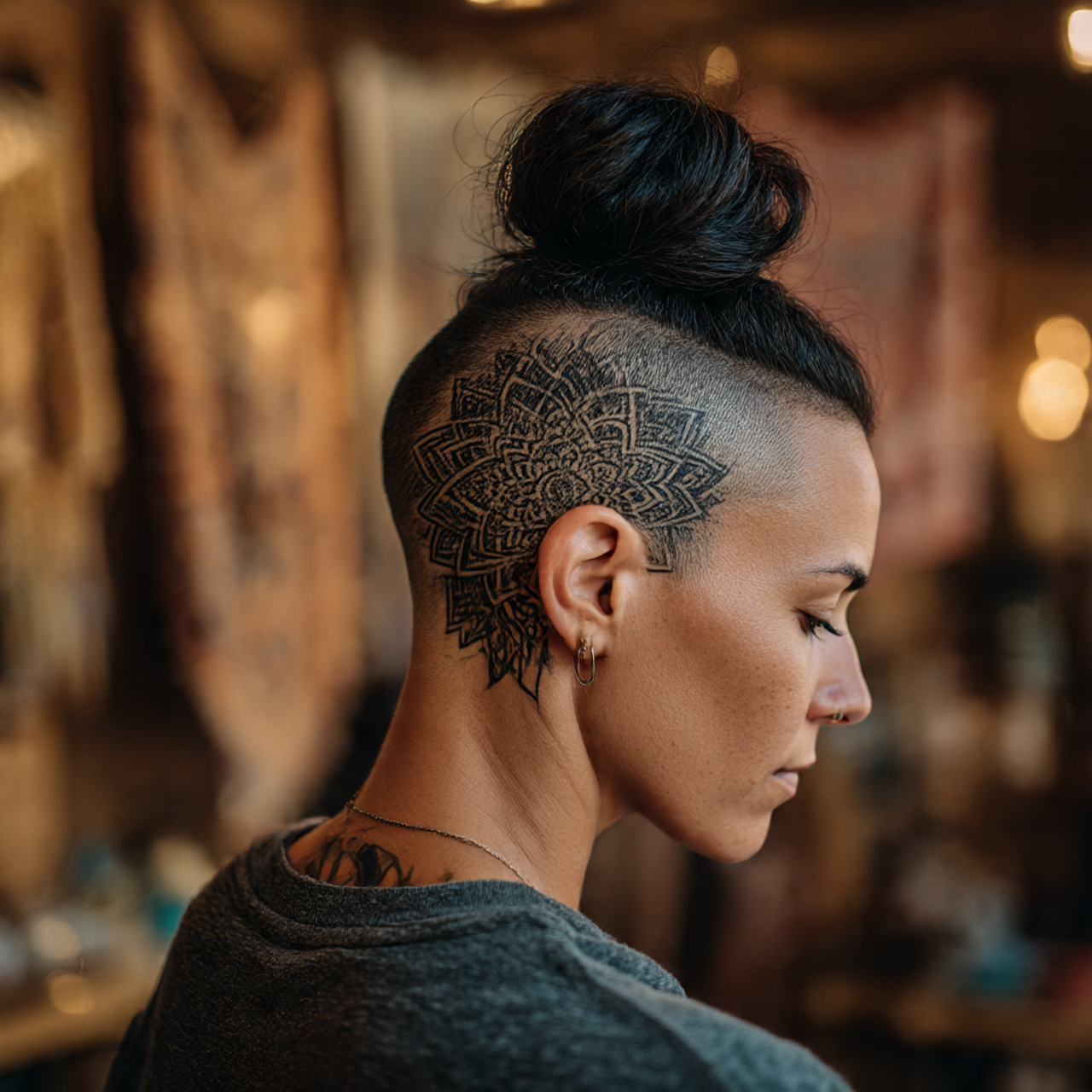
Circular, symmetrical designs in the shaved section are fashion-driven geometric art that require a stylist with documented experience in complex pattern work. Reviewing a stylist’s previous mandala or geometric shave portfolio before committing is not a preference. It is a requirement. Andis Master Cordless Clipper with zero-gap adjustment is the tool most specialists use for the single-hair-width line precision these designs demand.
Best for: Dark, thick hair, clients fully committed to high maintenance and artistic expression Product: Andis Master Cordless Clipper with zero-gap adjustment for single-hair-width line precision Face shape: Oval faces carry the scale of a mandala design without the pattern competing with facial proportions Ask for: “Mandala shave in my undercut. Draw the design with a washable marker before any cutting. Please show me your previous geometric shave work first.” Pro tip: Book your next touch-up before leaving the salon after your first session because availability within ten to fourteen days is not guaranteed and the design blurs if the gap extends longer.
Smooth Transition Blend Shave Ideas

The goal here is a continuous surface rather than a two-section haircut. Careful guard graduation eliminates visible steps between the shaved base and the longer hair above so the overall result reads as a polished, high-end cut rather than a defined undercut. Sam Villa Artist Series Clipper is used widely in editorial settings specifically because its motor speed allows slow, controlled guard transitions without the blade jumping at the transition point.
Best for: Straight and wavy hair, professional settings, clients who want subtle edge Product: Sam Villa Artist Series Clipper for precise guard graduation across the transition zone Face shape: Square and rectangular faces benefit from the smooth blend because it avoids a hard horizontal line at the widest point Ask for: “Smooth continuous blend from the shaved base to the long hair. No steps, no visible fade line. The transition should read as a natural texture change.” Pro tip: Finish with Aveda Men Pure-Formance Grooming Clay on the blended section so all layers lie in the same direction and no individual strands lift to disrupt the smooth gradient.
High Side Fade Shave Ideas

Pushing the shortest section up to the upper temple changes the head’s full silhouette and creates a sleek, elongated profile from every angle. Top knots, braids, and voluminous natural texture all read stronger above a high fade because the extended negative space draws the eye upward. This structural principle is exactly why high fades perform so well in editorial and campaign photography, and why the style photographs more dramatically than it reads in person.
Best for: Medium to long hair, clients who want a high-contrast, transformative look Product: Wahl Senior Clipper with stagger-tooth T-blade for clean fade lines on the temple curve Face shape: Oblong and oval faces carry high fades well because the added height does not over-elongate the face outline Ask for: “High skin fade starting at the lower temple, fading out at the upper temple. 0 to 0.5 guard at the base graduating to a 2 before it meets the length.” Pro tip: Use Reuzel Blue Pomade on the top section on touch-up day to hold the longer hair back and show the full extent of the fade when you want maximum visibility of the design.
Subtle Shadow Shave Ideas

Shadow shaves use a guard 2 or 3 to shorten the side hair without reaching the scalp. From a distance it reads as natural texture variation. From close up it is a deliberate, well-maintained choice. This is the best starting point for anyone who wants to explore side shaved hairstyles without committing to skin-level work, and it is where many clients begin before moving toward closer cuts six months later.
Best for: Any hair type, first-time shaved style clients, low-commitment exploration Product: Wahl Color Pro Cordless Clipper for reliable guard-length consistency during at-home maintenance Face shape: All face shapes are suited because the shadow shave adds no visible hard edge or line to the overall silhouette Ask for: “Shadow shave on the right side using guard 2 or 3. Nothing below the skin. Shorter than the rest with no visible hard line.” Pro tip: Use the same guard at home two weeks after your salon visit to extend the time between appointments and maintain the style’s shape without visible deterioration.
Quick Comparison Table
| Style | Length | Hair Type | Maintenance | Bold Factor |
|---|---|---|---|---|
| Deep Shave Undercut | Long | Thick, Straight | Every 3 weeks | ★★★ |
| Hidden Side Shave | Any | Fine to Medium | Every 4 weeks | ★ |
| Tapered Side Shave Fade | Short to Medium | Any | Every 3 to 4 weeks | ★★ |
| Geometric Pattern Shave | Short | Dark, Thick | Every 2 weeks | ★★★ |
| Lightning Bolt Side Shave | Medium to Long | Any | Every 2 to 3 weeks | ★★★ |
| Curly Hair Side Shave | Medium to Long | Curly 3a to 4c | Every 3 weeks | ★★ |
| Long Hair Asymmetric Shave | Long | Straight, Wavy | Every 4 weeks | ★★★ |
| Zig-Zag Detail Shave | Any | Dark, Medium | Every 3 weeks | ★★ |
| Micro-Shave Outline | Short to Medium | Fine | Every 4 to 6 weeks | ★ |
| Temporary Color Accent | Any | Any | As needed | ★★ |
| Two-Tone Contrast Shave | Medium to Long | Dark | Every 3 weeks | ★★★ |
| Back-of-the-Ear Shave | Any | Any | Every 4 to 6 weeks | ★ |
| Textured Line Art Shave | Any | Thick | Every 4 weeks | ★★ |
| Short Pixie Side Shave | Short | Fine to Medium | Every 3 weeks | ★★ |
| Feathered Fade Effect | Any | Fine, Straight | Every 4 to 5 weeks | ★ |
| Half-Moon Shape Shave | Medium | Any | Every 3 to 4 weeks | ★★ |
| Intricate Mandala Pattern | Short | Dark, Thick | Every 1 to 2 weeks | ★★★ |
| Smooth Transition Blend | Short to Medium | Straight, Wavy | Every 3 to 4 weeks | ★★ |
| High Side Fade | Medium to Long | Any | Every 2 to 3 weeks | ★★★ |
| Subtle Shadow Shave | Any | Any | Every 4 to 6 weeks | ★ |
Frequently Asked Questions
What side shaved hairstyles work best for someone trying this for the first time? The subtle shadow shave and the hidden side shave are both excellent starting points because neither removes hair to the skin and both grow out without an awkward intermediate stage. They are the lowest-risk entries into side shaved hairstyles and leave the door open for a closer cut later.
How often does a side shave need a touch-up? Mandala and geometric patterns need a salon visit every one to two weeks to stay legible. Feathered fades and shadow shaves can go four to six weeks between visits without looking neglected.
Can side shaves work on fine hair? Yes, and in many cases a micro-shave outline or feathered fade makes fine hair appear fuller by removing side bulk. Placement at the lower temple avoids eliminating the volume the sides need to support the overall shape.
What do I say to my stylist to get exactly what I want? Bring two or three reference photos and use specific language including guard number, placement point, edge type, and whether you want the design visible or hidden under your hair. Vague descriptions consistently produce vague results.
Does curly hair work with a side shave? Yes, but placement logic for curly textures is different and requires a lower temple position to let curls fall naturally over the edge without concealing the design. Type 3 and 4 patterns grow into the shaved area faster, so plan for three-week touch-ups rather than four.
Final Thoughts
Choosing a side shave is one of the more personal decisions you can make in the salon chair. The range is wide enough that someone who wants a design invisible at a job interview and someone who wants a mandala that stops conversations at a show can both find their version in this list. This is not about how bold you are. It is about how honest you are with yourself about your lifestyle, your maintenance window, and the image you want to carry every day.
Start where your comfort level genuinely is, not where you think it should be. A shadow shave you maintain confidently over three months will serve you better than a geometric pattern that blurs within two weeks because the upkeep was more than you planned for. Growth happens in both directions. Many clients who start with a hidden shave are requesting line art six months later.
Side shaved hairstyles are deliberate choices, not permanent ones. The right design, placed correctly on your specific head shape, maintained at the right frequency, and communicated clearly to a qualified stylist will look better at week three than it did on day one. That is the sign of a haircut that was chosen well, not just cut well.
The detail most guides leave out: ask your stylist to show you the exact boundary placement on dry hair before any clippers are switched on. That single step eliminates most post-cut regret and costs nothing but thirty extra seconds.
Loved this guide? Save it to your Pinterest hair board and share it with someone who keeps putting off their first side shave.