20 Blonde Wolf Cut Styles That Will Finally Work for Your Face Shape
You have been saving blonde wolf cut photos for weeks and every time you sit in the salon chair you leave with something that feels almost right but not quite. The texture is there. The layers are there. But the final result does not match the version you had in your head.
This happens to nearly every person who tries a wolf cut without knowing which specific variation fits their face and hair type. The style has so many directions that even experienced clients struggle to land on the right one.
The root cause is almost never the stylist. It is that most articles show the finished look without explaining the details that actually determine whether a style works. Knowing the variation is only half the equation. Knowing how to communicate it is the other half.
Studying how layer placement and color work together across different hair textures has made it clear that a blonde wolf cut that holds up through the week comes down to three things: where the layers start, how the color falls between them, and whether the cut was designed for your specific hair behavior rather than the reference photo.
This article breaks down 20 real blonde wolf cut variations with the details you actually need. Face shapes, product picks, and the exact words to use in the salon chair so you walk out with a style that fits your life.
By the end, you will know which version is yours. You will know how to ask for it. And you will finally leave the salon with a blonde wolf cut that looks just as good on day five as it did on day one.
The blonde wolf cut is one of the most searched and requested textured styles in salons right now, and a big reason for that is how many variations exist under one name. Before choosing yours, commit to this rule: the color and the cut must be planned in the same conversation. Placing blonde tones without considering how the layers fall will collapse the entire shape before you leave the building.
Blonde Wolf Cut Ideas
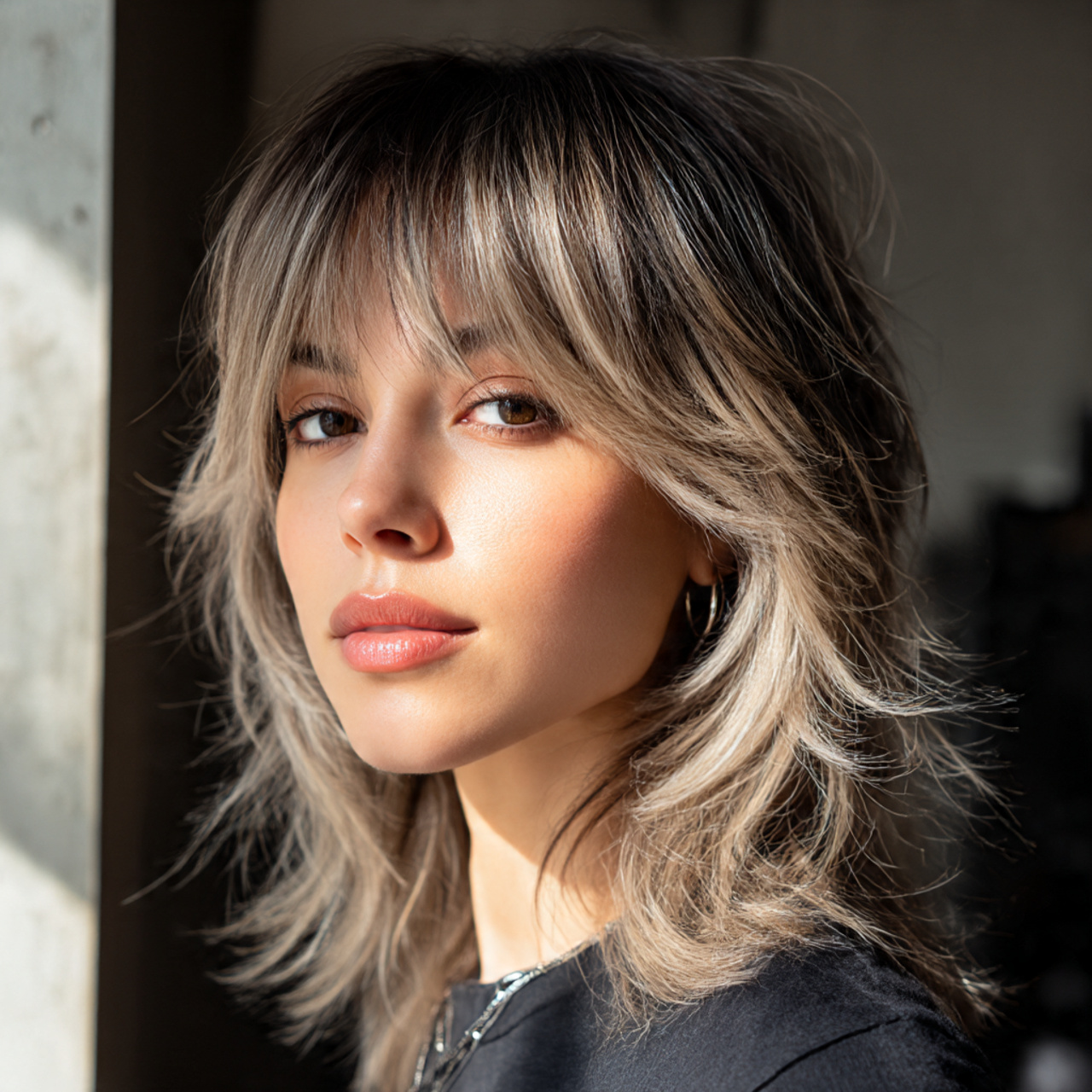
Blonde Wolf Cut with Curtain Bangs
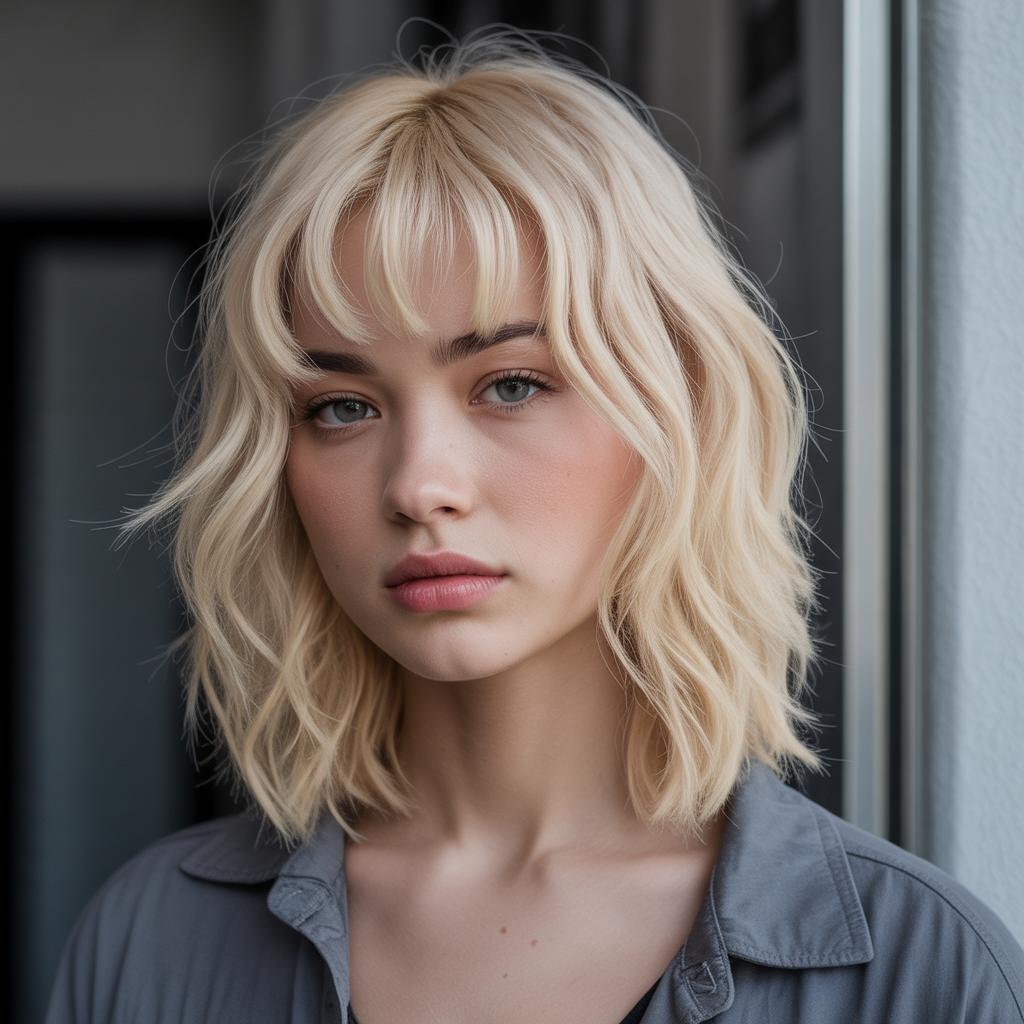
Curtain bangs give the blonde wolf cut one of its most flattering front shapes. They part naturally down the center, taper at the sides, and melt into the face layers without a visible break. Blonde tones around the face lift the skin tone and make the bangs read lighter and softer in person than they do in photos.
What most stylists know but rarely say out loud is that curtain bangs require three-section cutting. The center sits shortest, the sides are left longer, and the blend into the front layers must be seamless or the whole look falls apart at the parting.
Best for: Round, square, and heart face shapes Product: Revlon One-Step Volumizer for shaping soft curtain movement in one pass Pro tip: Ask your stylist to point-cut the ends of the bangs at a downward angle so they blend into the face layers with no visible line. Barber language: “I want curtain bangs that part naturally, taper past the cheekbone, and blend straight into my face layers.” Face shape: Best for round and square faces. The center part creates visual length while the sweeping sides soften the jaw.
Platinum Blonde Wolf Cut
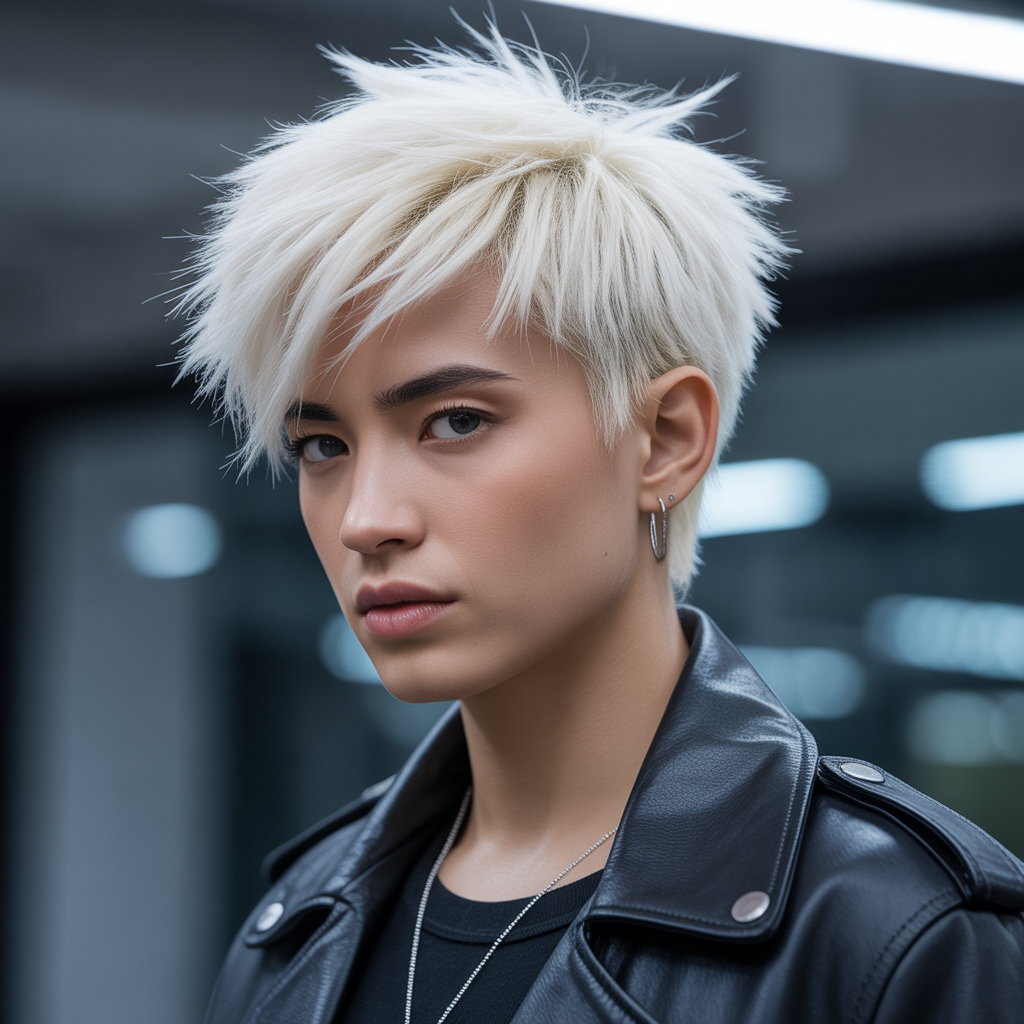
Platinum takes the wolf cut to its highest contrast form. Every layer reads sharply against the pale base and the choppy texture looks deliberate rather than messy. This is the variation clients choose when they want the cut itself to make the statement.
It performs best on straight and fine to medium hair. On very thick hair, platinum can emphasize bulk if the layers are not cut with enough graduation throughout.
Best for: Straight and wavy hair with a finer texture Product: Olaplex No. 3 Hair Perfector used weekly to maintain bond integrity in lightened hair Pro tip: Request razor-finished ends instead of scissor-cut ends so the layers stay soft under the bright color rather than looking blunt. Barber language: “I want platinum blonde with choppy, razor-finished layers. Keep the shape clean but the ends feathered and soft.” Face shape: Flatters oval and oblong faces. The light color draws the eye outward and adds visual width.
Textured Blonde Wolf Cut
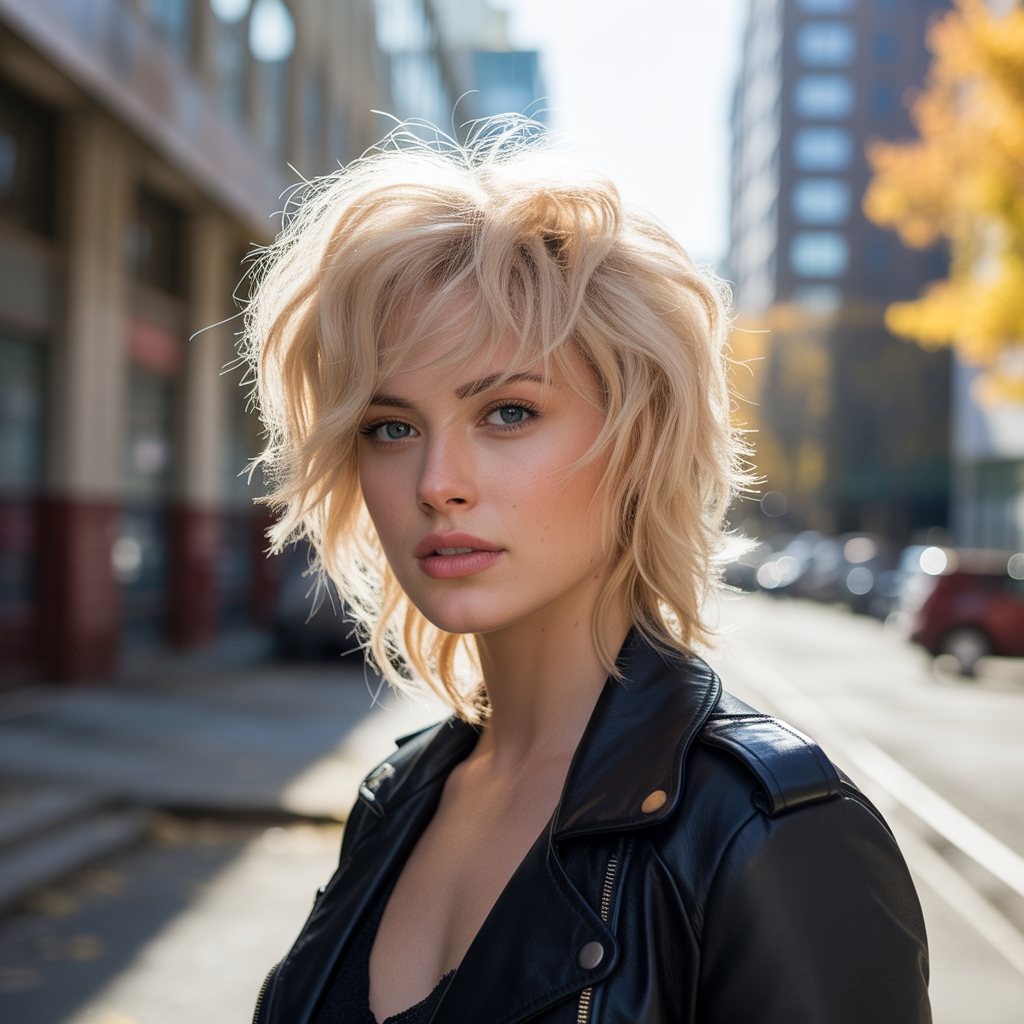
Texture is what separates a wolf cut from any other layered style. This version focuses on uneven, deliberately choppy ends and layers that move independently from one another. Blonde color makes each layer visible and adds the kind of depth that a single flat shade never achieves.
This is the version I point toward for people with naturally flat or fine hair. The layers create volume at the roots without needing heat styling, and the blonde tones catch light in a way that makes the hair read thicker than it actually is.
Best for: Fine and flat hair that needs volume without product weight Product: R+Co Rockaway Salt Spray worked into damp sections before air drying Pro tip: Scrunch the product into the hair in small sections rather than raking it through so each layer can form its own texture. Barber language: “I want a textured wolf cut with choppy, point-cut ends throughout. I want visible layers, not smooth or blended ones.” Face shape: Works on all face shapes. Volume at the crown and soft ends keep proportions balanced across different structures.
Long Blonde Wolf Cut
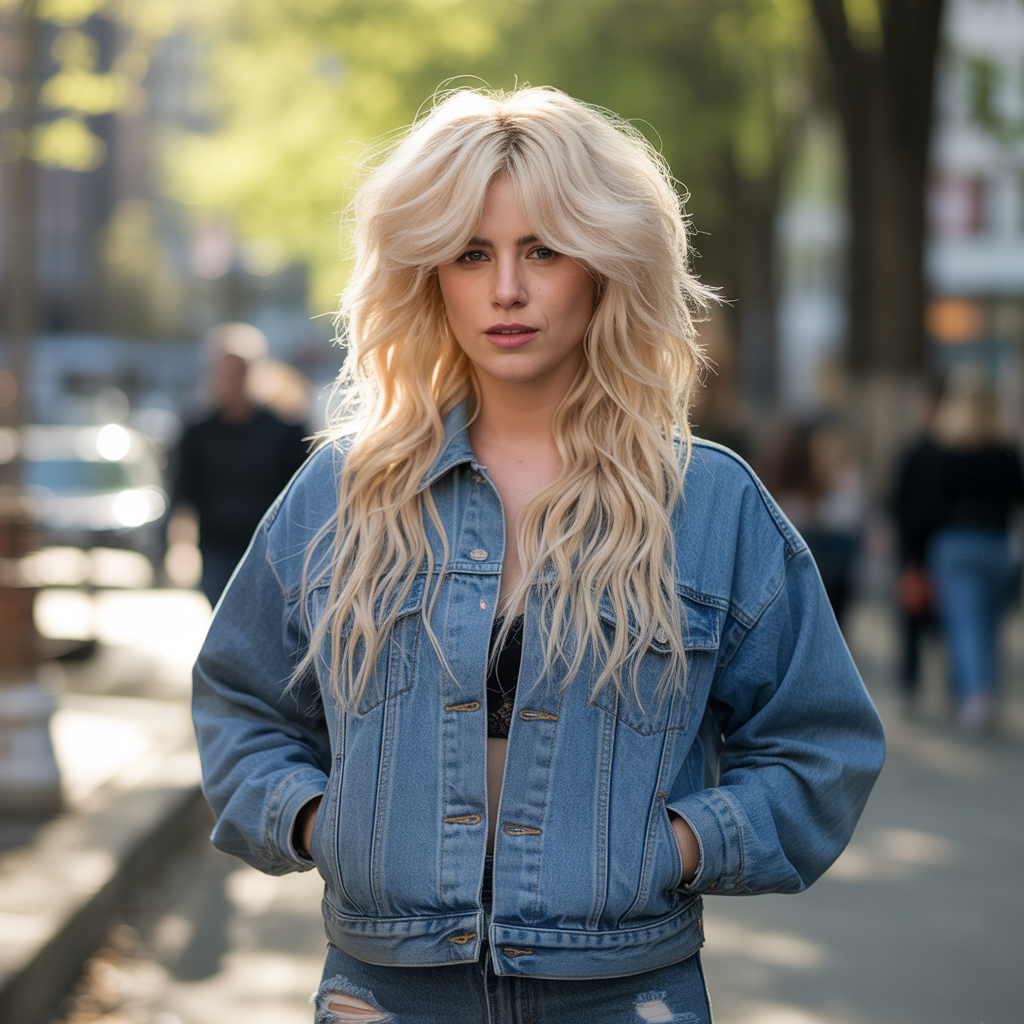
Length and the wolf cut are not mutually exclusive. This version keeps overall length while using high-placed layers to add shape and movement. The result flows like long hair but behaves like a styled one.
Oval and long face shapes benefit most from this variation. The layers break up the straight fall of length and add width at the sides without shortening the silhouette.
Best for: Thick and heavy hair that needs weight removed without losing length Product: Bumble and bumble Hairdresser’s Invisible Oil for frizz control that does not flatten layers Pro tip: Ask for layers that begin at the collarbone rather than the chin so the shape stays long and does not lose its flow through the mid-shaft. Barber language: “I want a long wolf cut with layers starting at the collarbone. Keep the full length but add movement through the middle sections.” Face shape: Ideal for oval and long face shapes. Side layers add width at the mid-length without cutting the overall silhouette.
Short Blonde Wolf Cut
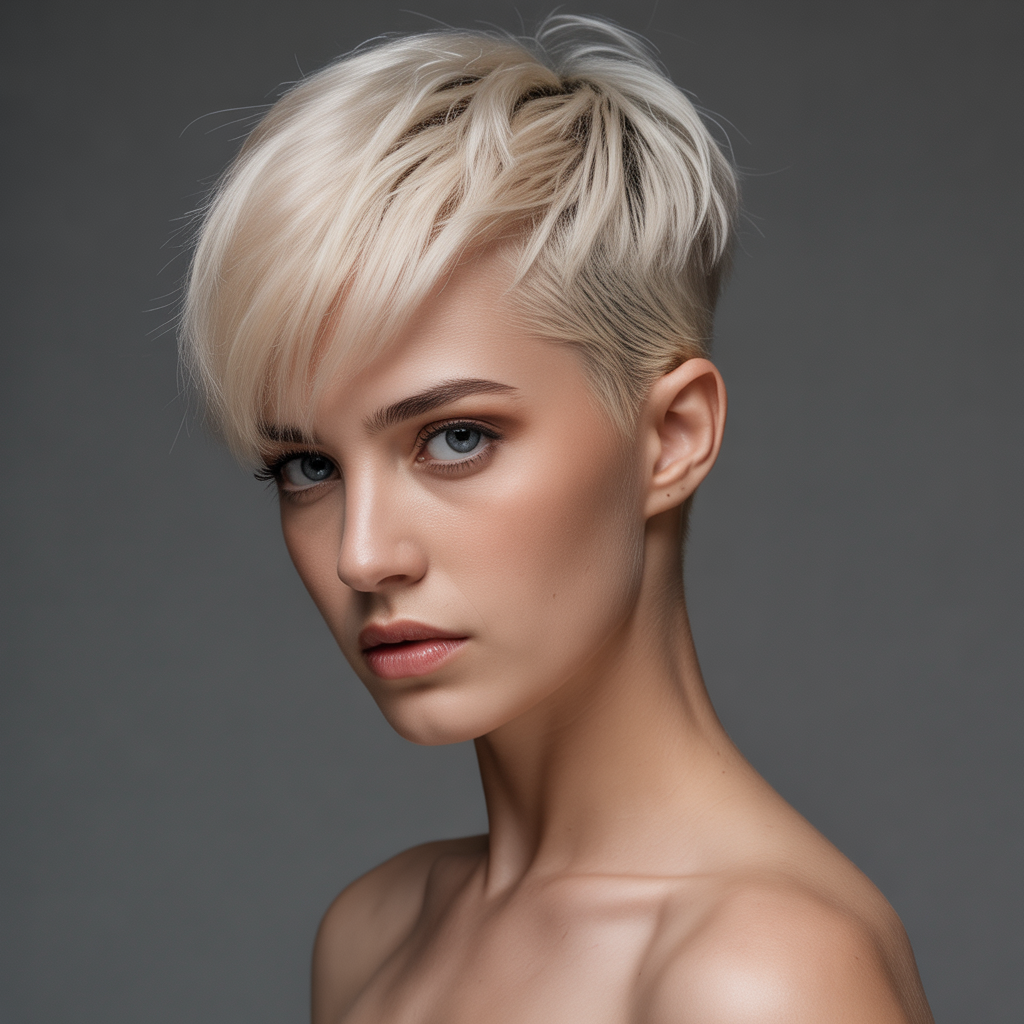
The short version of this style is about controlled volume at the crown and soft face pieces at the front. It is not a pixie and it is not a bob. The signature drop at the back stays intact even at shorter lengths.
Fine hair thrives in this cut. The layers create the illusion of thickness and the shorter length means the hair holds lift through the day without heavy product support.
Best for: Fine hair and clients who want minimal daily styling time Product: Kevin Murphy Rough Rider for a matte, textured finish with light hold Pro tip: Work product through the crown using lifting motions with your fingertips rather than pressing down so the volume stays built in rather than pressed flat. Barber language: “I want a short wolf cut with volume at the crown, soft face framing pieces, and the length drop kept at the back.” Face shape: Best for oval and heart faces. Crown volume balances a narrower chin and keeps the face proportioned.
Ash Blonde Wolf Cut
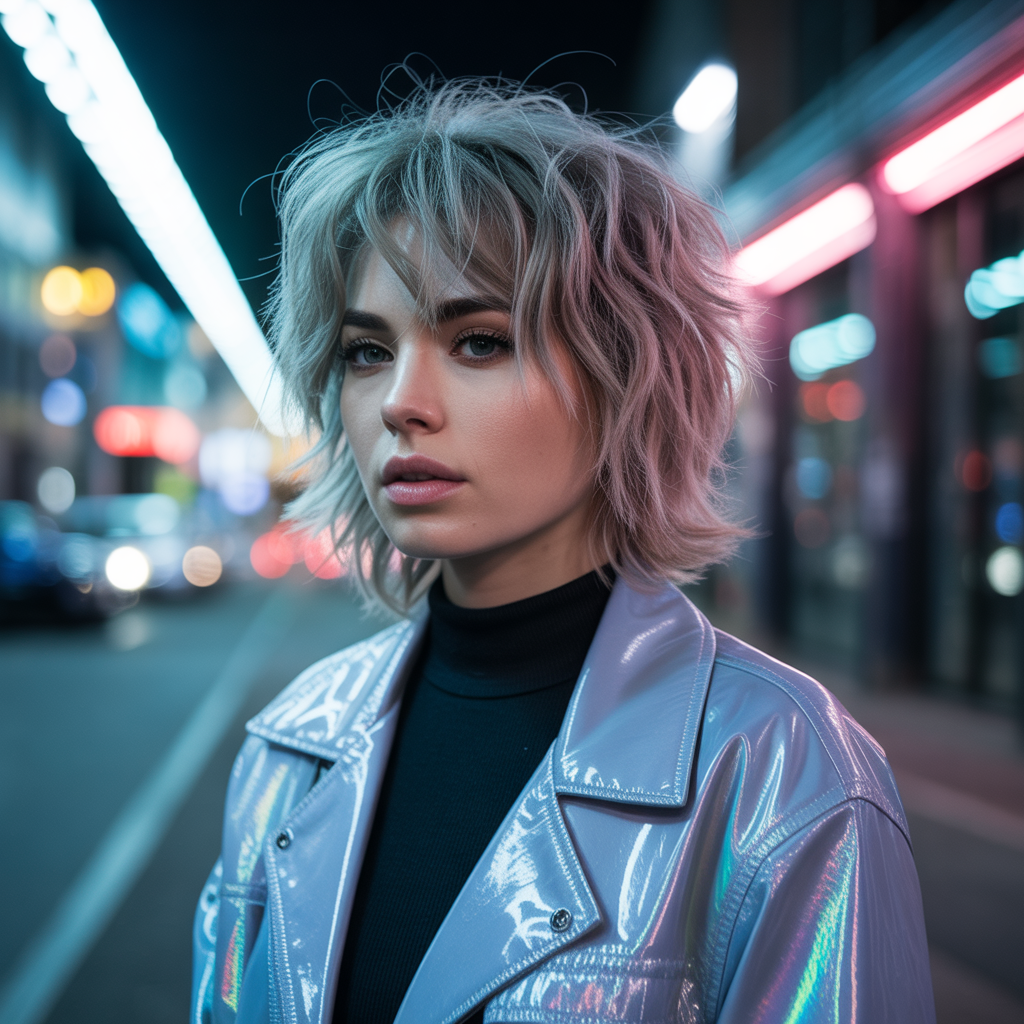
Ash blonde operates on the cool end of the spectrum and delivers a polished, modern finish that reads as intentional rather than washed out. It strips warmth from the hair and lets the layer structure do the visual work.
This version suits people who want blonde without golden or brassy tones. The muted shade complements the relaxed energy of the wolf cut without competing with the texture.
Best for: Fair to medium skin tones who prefer cool, muted tones Product: Redken Acidic Bonding Concentrate before every color session to prevent ash tones from pulling orange over time, then Shimmer Lights Purple Shampoo weekly to maintain the cool finish Pro tip: Use Redken Acidic Bonding Concentrate as a pre-color treatment before each ash session to stop the hair from pulling warm underneath the toner. Barber language: “I want an ash blonde wolf cut. Keep the tone cool and the layers clearly defined throughout.” Face shape: Works on most face shapes. Cool tones draw less visual attention to width and let the cut do the framing instead.
Dirty Blonde Wolf Cut

Dirty blonde sits between light brown and true blonde, and it is one of the most practical color choices for a wolf cut because the roots grow out without a harsh line. The depth in the color adds natural dimension to every layer.
This suits clients who do not want to be in the salon every six weeks. The roots blend into the mid-lengths softly and the style keeps looking intentional between appointments.
Best for: All hair types and clients who want lower color maintenance Product: Matrix Total Results Brass Off Shampoo to keep the warm tones balanced between appointments Pro tip: Ask your colorist to add two or three lighter pieces around the face framing so the color reads dimensional rather than flat in photographs. Barber language: “I want a dirty blonde wolf cut. Keep it natural-looking with a soft, undetectable blend at the roots.” Face shape: Flatters all face shapes. The layered depth creates natural movement that reads well across every structure.
Blonde Wolf Cut with Layers
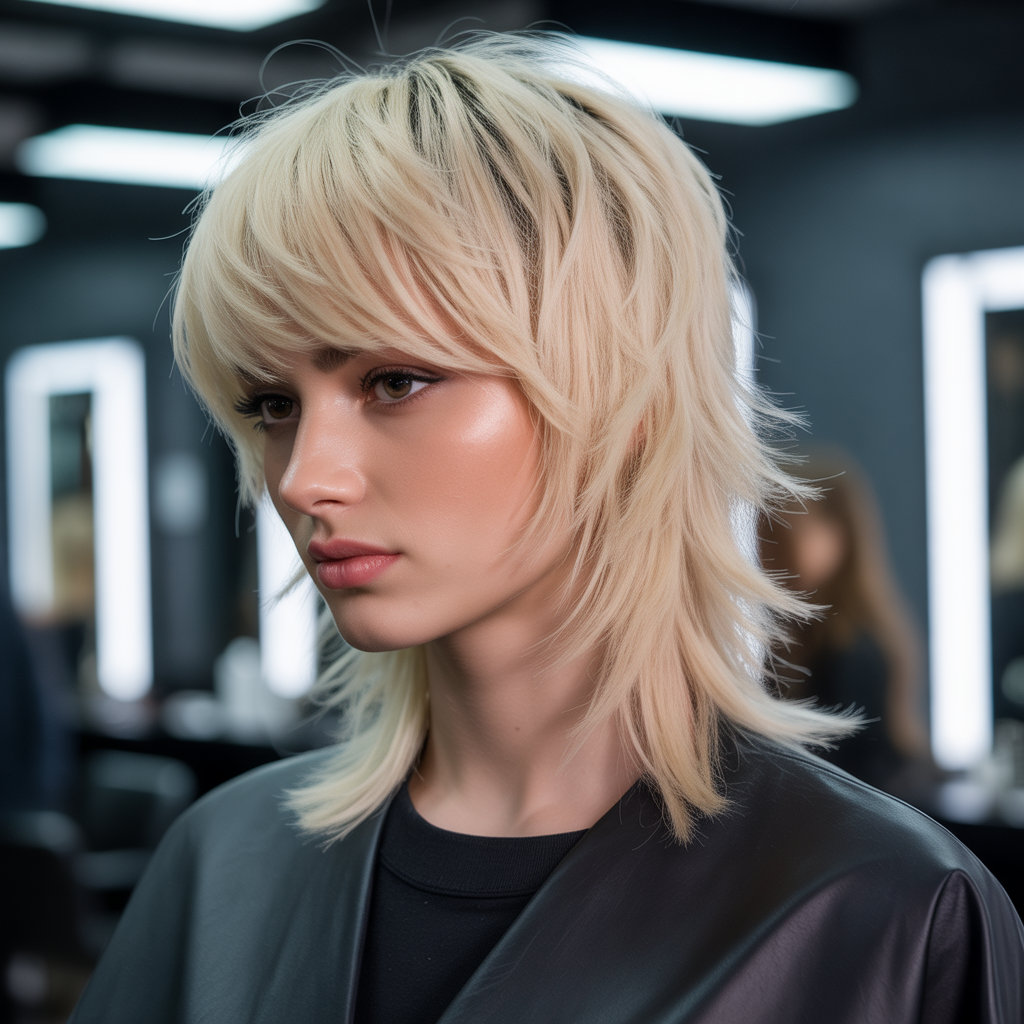
This version makes the layers the centerpiece of the cut. They are more defined, more stacked, and cut with precision at every level of the hair. Blonde color helps each layer read as its own element, giving the whole style a sculptural quality.
Thick hair benefits most from this approach. The layers remove bulk and redistribute weight across the length so the hair feels lighter to carry and easier to manage without heavy product.
Best for: Thick and heavy hair that needs shape through redistribution Product: Kenra Platinum Silkening Mist to smooth between layers without pressing them together Pro tip: Ask for a combination of slice-cutting and point-cutting so your stylist removes bulk between layers without blunting the visible ends. Barber language: “I want stacked, defined layers throughout the entire cut, not just at the face. Full layers from root to end.” Face shape: Suits oval, square, and round faces. The layered volume adds height without widening the jaw area.
Wavy Blonde Wolf Cut
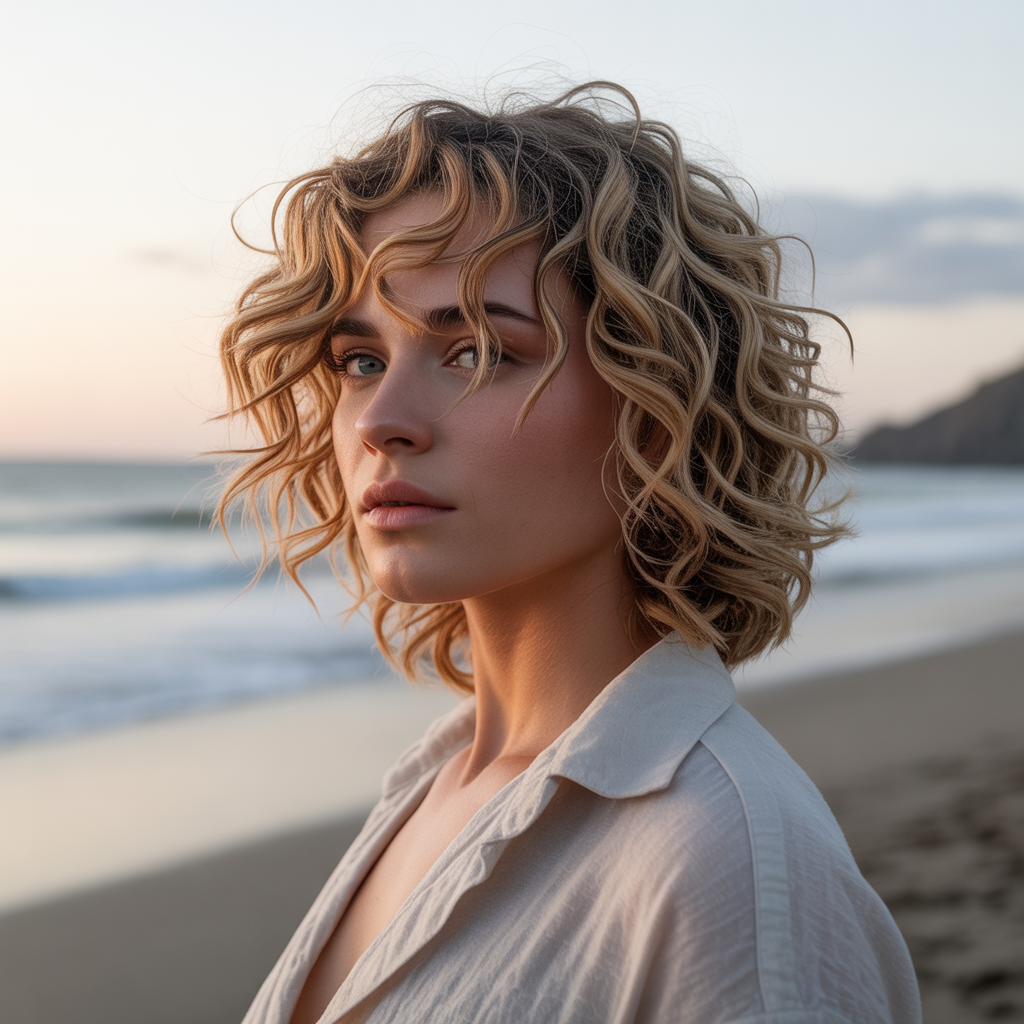
Waves and a wolf cut are a natural pairing. The layers support individual wave formation and give each wave its own space instead of letting them clump. Blonde tones catch light differently in each wave and create depth that flat color cannot replicate.
Medium and long lengths work best here because the waves need enough length to form a full curl pattern. Shorter cuts can lose the wave definition in the face framing sections.
Best for: Naturally wavy or heat-waved hair at medium to long lengths Product: Ouai Wave Spray worked into damp hair, then scrunch and air dry completely without touching Pro tip: Separate the waves with your fingers only after the hair is fully dry so you do not break up the texture before it sets. Barber language: “I want a wolf cut that works with my waves. Leave enough length in each layer for the wave pattern to form properly.” Face shape: Suits all face shapes. Waves add volume in multiple directions, making the cut adaptable across different proportions.
Messy Blonde Wolf Cut
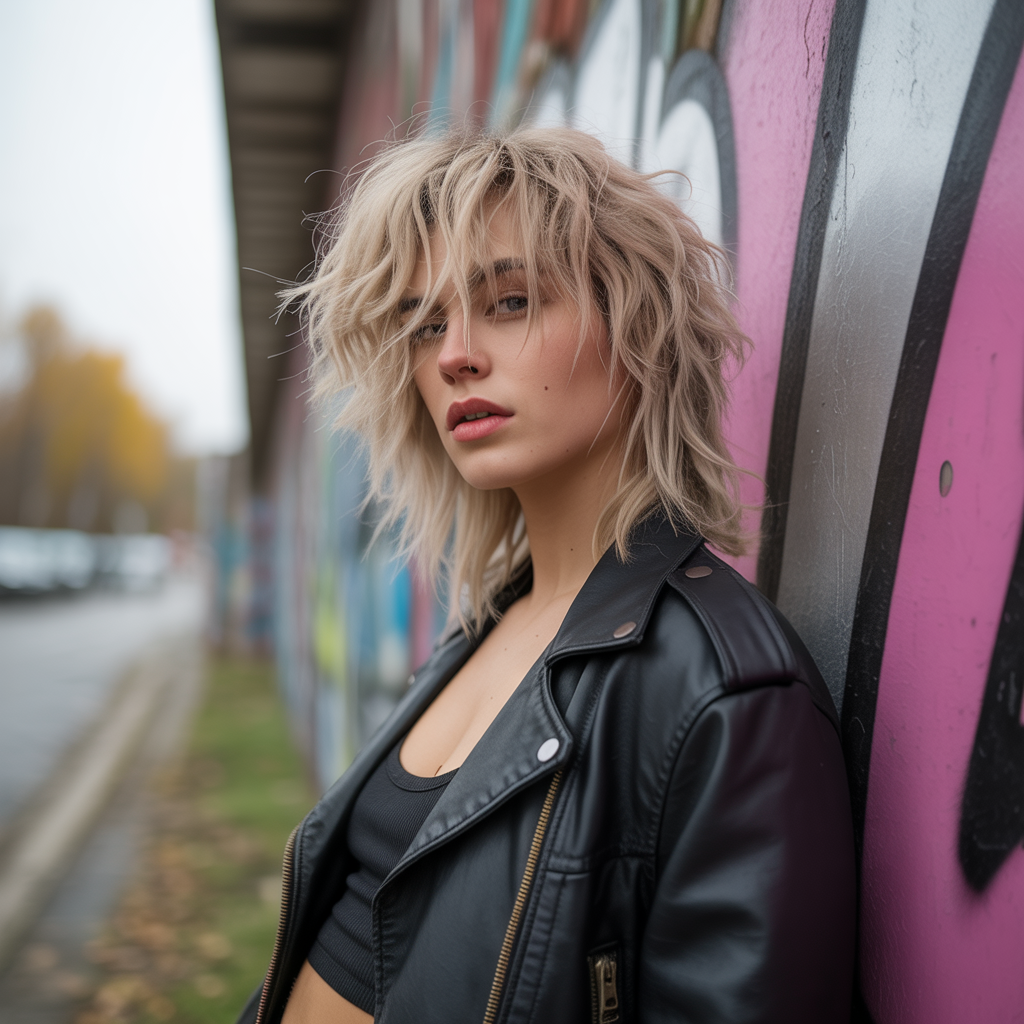
A messy finish is built into the identity of the wolf cut, and this version commits to it fully. Nothing is smooth and nothing is over-refined. The blonde tones make the texture look considered rather than accidental.
This suits people who do not have time for a morning routine. The cut looks best when shaped with fingers and allowed to settle on its own terms rather than forced into a specific direction.
Best for: Casual lifestyles and low-effort morning routines Product: Not Your Mother’s Curl Talk Curl Defining Cream for loose hold with no stiffness Pro tip: Apply dry shampoo to the roots the night before so it absorbs overnight and gives you grip and volume from the moment you get up. Barber language: “I want a wolf cut with a deliberately undone finish. Nothing too clean or too polished.” Face shape: Works on all face shapes. The loose shape does not add definition in any fixed direction so it sits naturally across different structures.
Blonde Wolf Cut with Shadow Roots
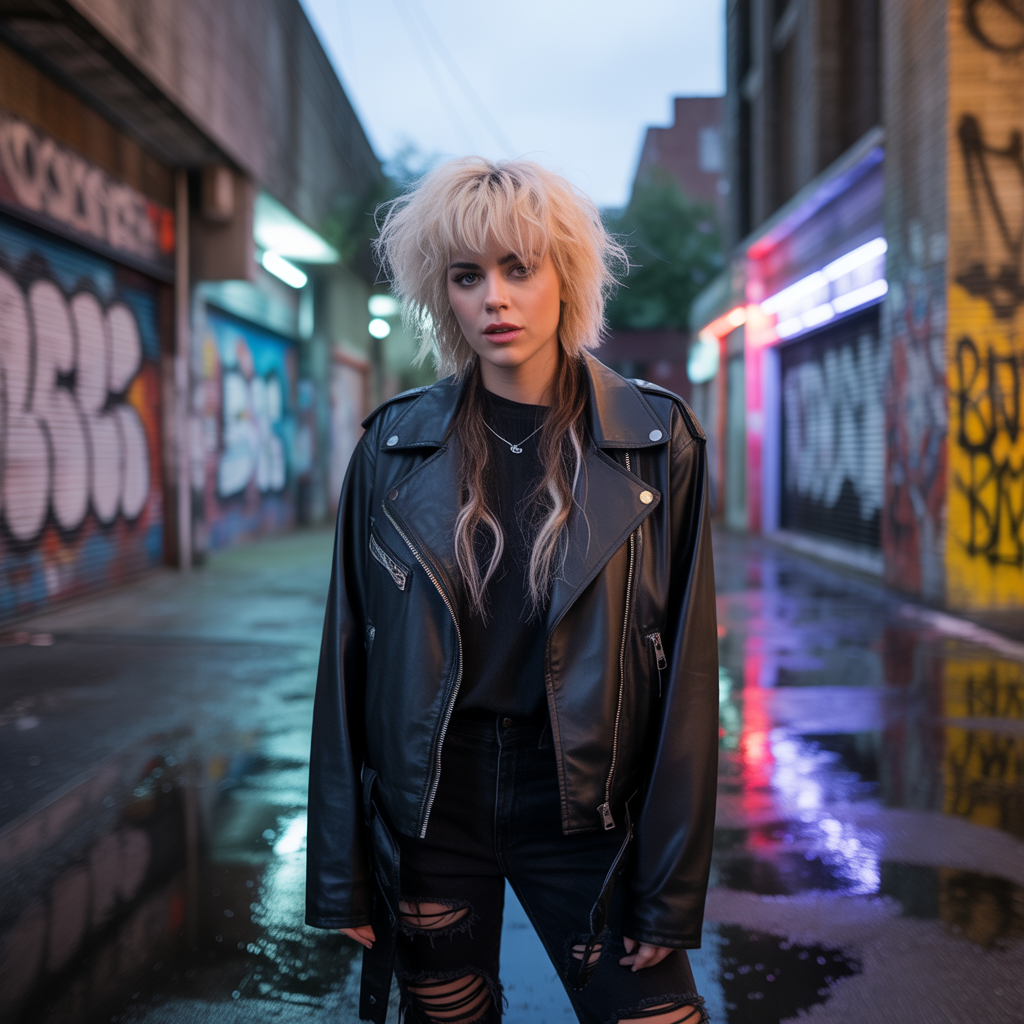
Shadow roots keep the top section darker and graduate into blonde through the mid-lengths and ends. The contrast adds natural-looking depth and makes regrowth invisible for months rather than weeks.
This technique works particularly well with a wolf cut because the layers carry the color gradient differently at each level. The result looks like the depth is part of the cut structure rather than a separate color decision.
Best for: Clients who want the blonde look without frequent root appointments Product: Fanola No Yellow Shampoo on the blonde sections only to keep the ends bright without lightening the shadow area Pro tip: Ask your colorist to use a smudge technique at the root line rather than a hard brush-off so the shadow fades softly into the blonde instead of cutting across it. Barber language: “I want a shadow root wolf cut. Keep the top section noticeably darker and fade into blonde by the mid-shaft.” Face shape: Suits all face shapes. The darker crown creates height on rounder faces and adds visual weight to narrow ones.
Bleach Blonde Wolf Cut
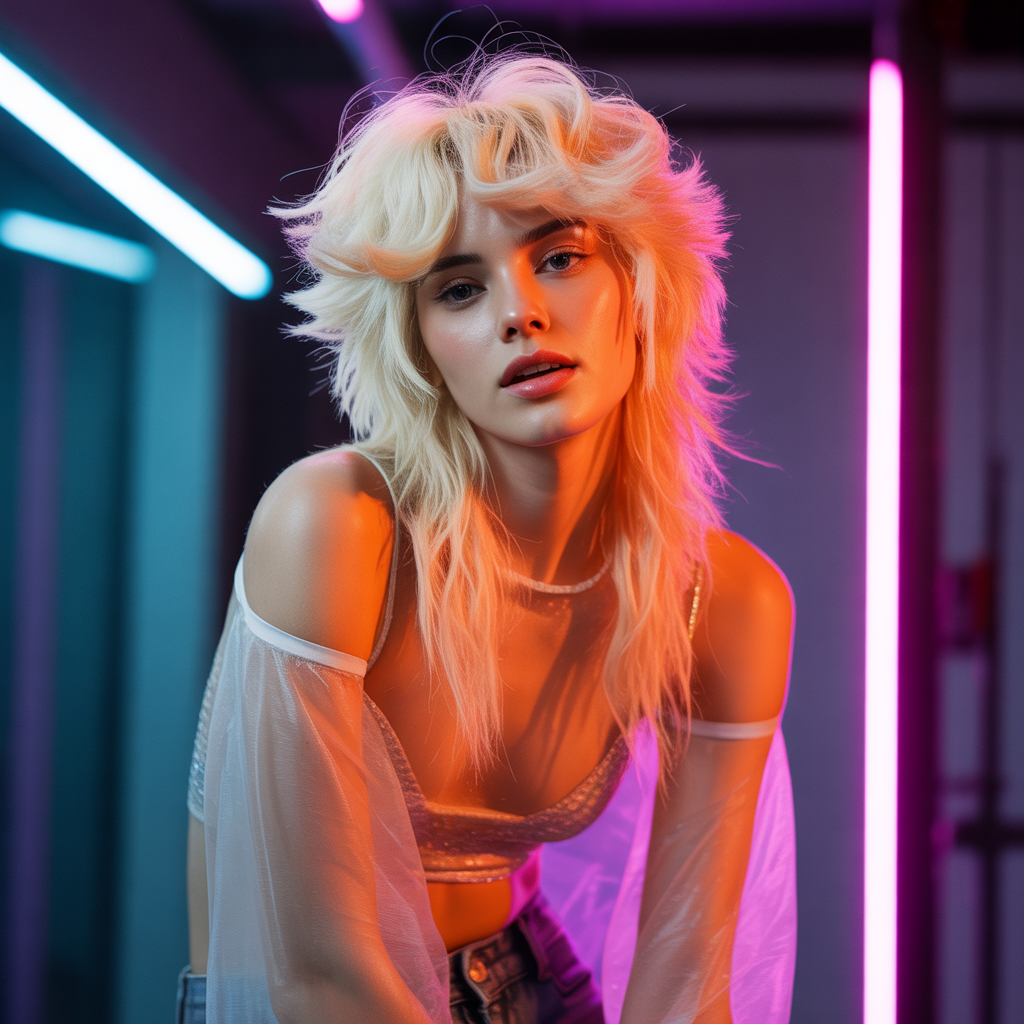
Bleach blonde is the highest-contrast version of this style. Every layer is visible and every line in the cut reads sharply against the pale base. This is the choice for people who want maximum impact from the structure of the cut.
It also requires the most maintenance of any blonde variation. Bond-building treatments are not optional with a bleach blonde wolf cut. They are what keep the layers looking deliberate rather than damaged as the color is maintained.
Best for: Straight and slightly wavy hair with a strong structure Product: Olaplex No. 4 Shampoo paired with No. 5 Conditioner as the everyday wash routine Pro tip: Space bleach appointments no closer than eight weeks apart so the hair has time to stabilize its internal structure between sessions. Barber language: “I want a bleach blonde wolf cut. Maximum lightness, choppy layers, and a clean overall shape.” Face shape: Best for oval and square faces. The pale color draws attention outward and adds visual width to narrower face structures.
Icy Blonde Wolf Cut
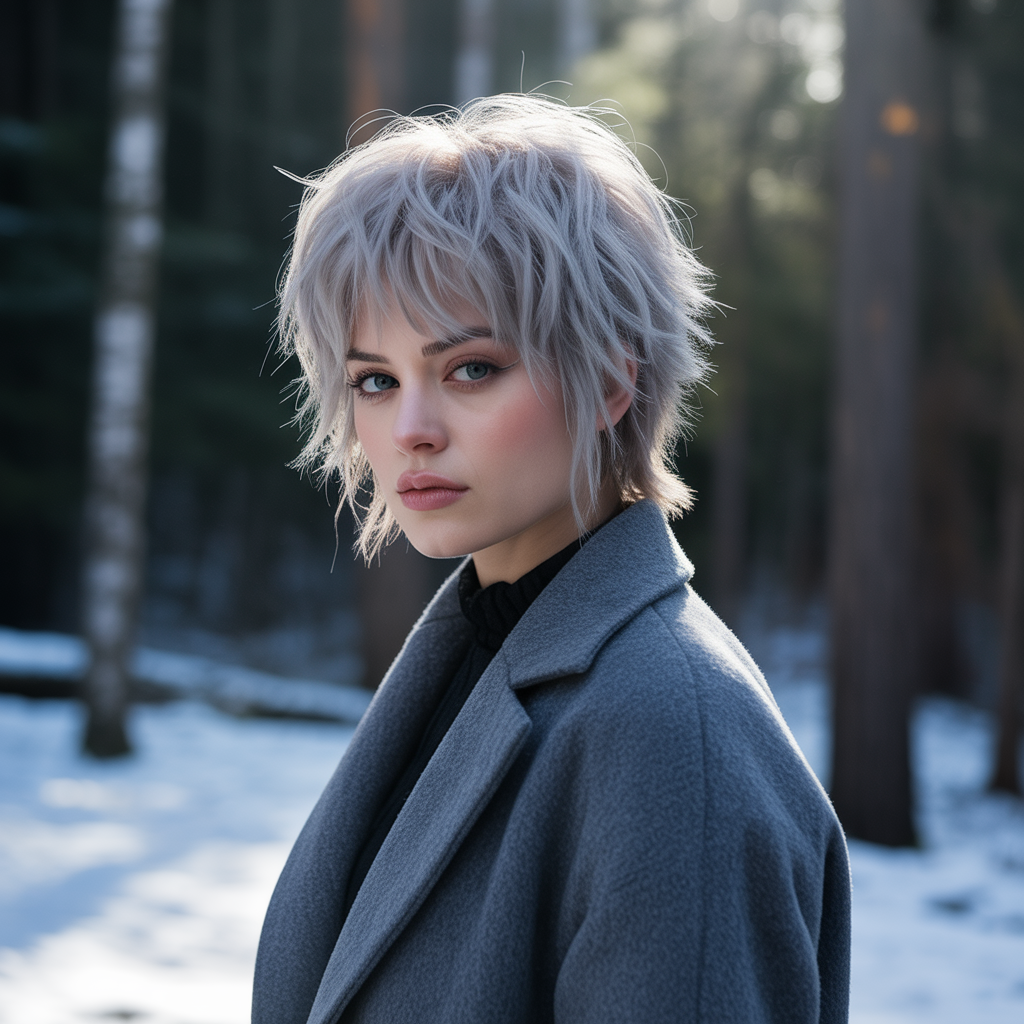
Icy blonde is the palest and coolest version of platinum. It strips out nearly all remaining warmth and creates a clean, almost white finish that makes the layers look crisp and precisely defined.
Toning is the most critical part of maintaining this look. Without regular appointments, icy blonde shifts toward yellow within weeks, especially in areas with hard water.
Best for: Fair skin tones with cool or neutral undertones Product: Joico Color Balance Blue Conditioner used twice a week to neutralize brassiness between salon visits Pro tip: Rinse your hair with cold water at the end of every wash to close the cuticle and extend the life of the cool tone. Barber language: “I want an icy, near-white blonde wolf cut with sharp layers and a clean finish.” Face shape: Works best on oval and long face shapes. The bright pale tone draws attention upward to the eyes without adding visual weight.
Golden Blonde Wolf Cut
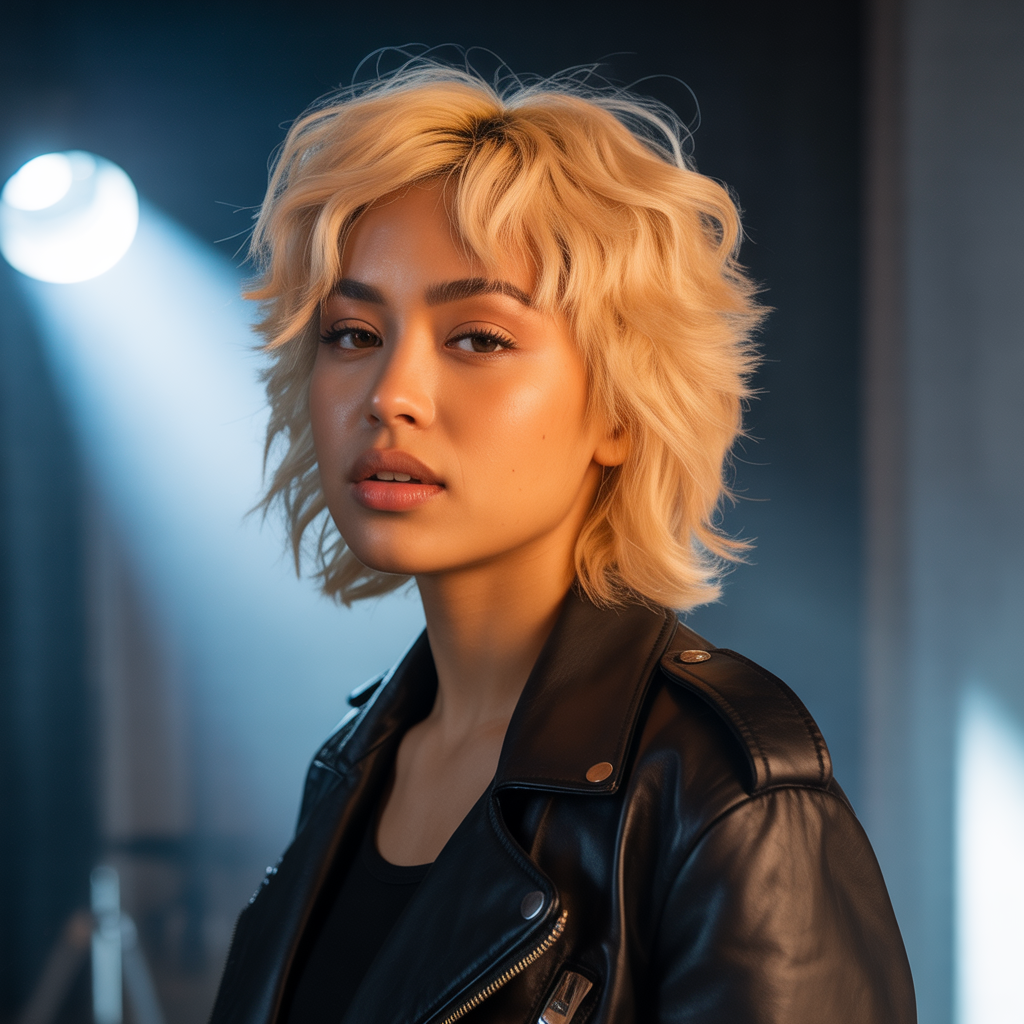
Golden blonde brings warmth back into the wolf cut through honey and amber tones that reflect light softly and make the layers look rich. This shade suits the widest range of skin tones of any blonde variation in this list.
The warmth of golden tones adds a healthy glow to fair skin and complements both warm and neutral undertones in medium complexions. It is the version that photographs beautifully in natural light.
Best for: Most skin tones, especially warm and neutral undertones Product: John Frieda Brilliant Brunette Luminous Color Glaze in golden blonde for at-home tone refreshing between appointments Pro tip: Ask your colorist to concentrate the deepest golden tones at the mid-length so the ends stay slightly brighter and create natural-looking dimension from root to tip. Barber language: “I want a warm golden blonde wolf cut. Honey tones through the mid-length with lighter ends overall.” Face shape: Flatters all face shapes. The warmth of the color adds a glow that makes every structure look healthy and dimensional.
Blonde Wolf Cut with Fringe
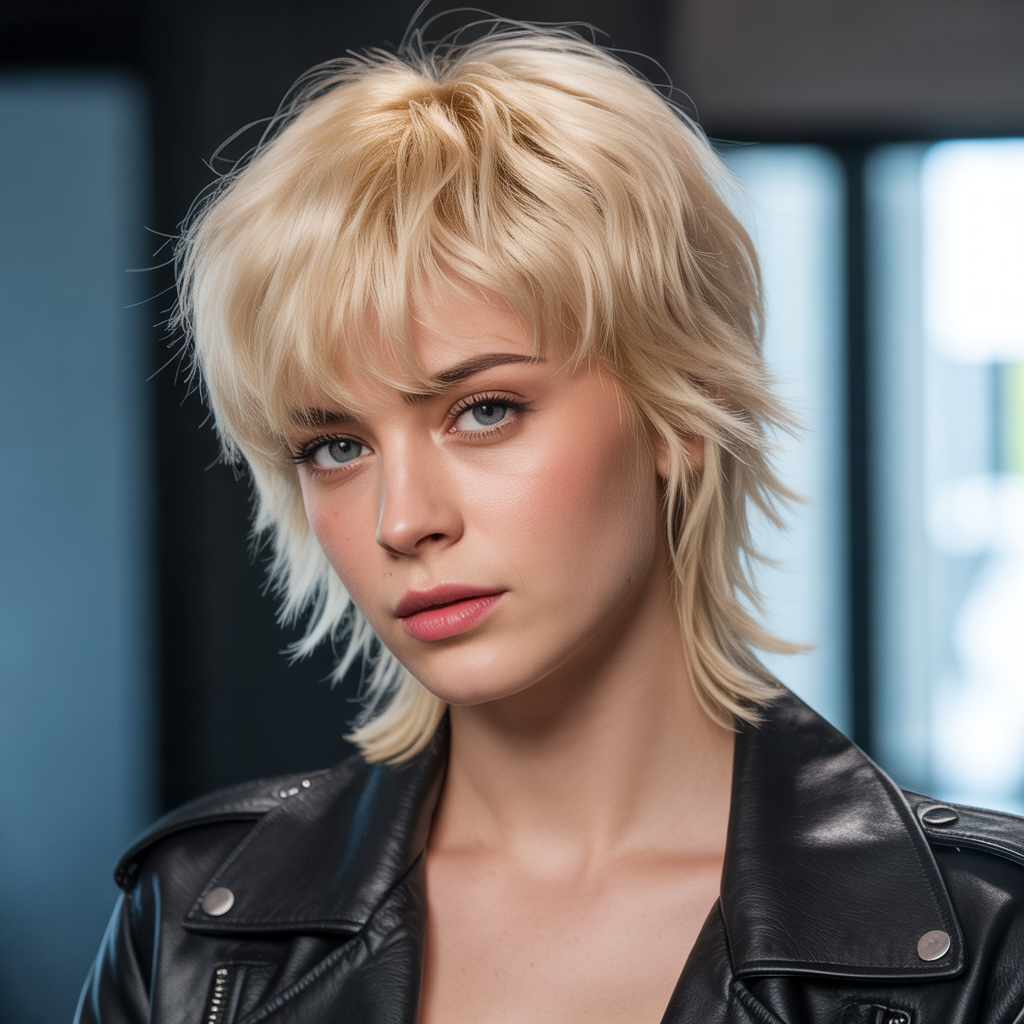
A fringe gives the blonde wolf cut a strong visual anchor at the front. It draws attention directly to the eyes and creates a focal point that makes the rest of the layers read as intentional. Blonde tones in the fringe keep it from sitting heavy on the face.
Longer face shapes benefit most from this combination because the fringe shortens the vertical line of the face visually. The wolf cut layers at the sides add width to balance the proportion.
Best for: Long and oblong face shapes and clients wanting to reduce a high forehead Product: Kenra Platinum Silkening Mist and a Tangle Teezer for smooth fringe shaping without frizz Pro tip: Blow-dry your fringe first before touching the rest of the hair so it sets in the right direction before the layers are styled around it. Barber language: “I want a full fringe that sits just above the brows and blends cleanly into the wolf cut layers at the sides.” Face shape: Ideal for long and oblong face shapes. Shortens the face visually and brings balance to strong vertical length.
Layered Blonde Wolf Cut with Volume
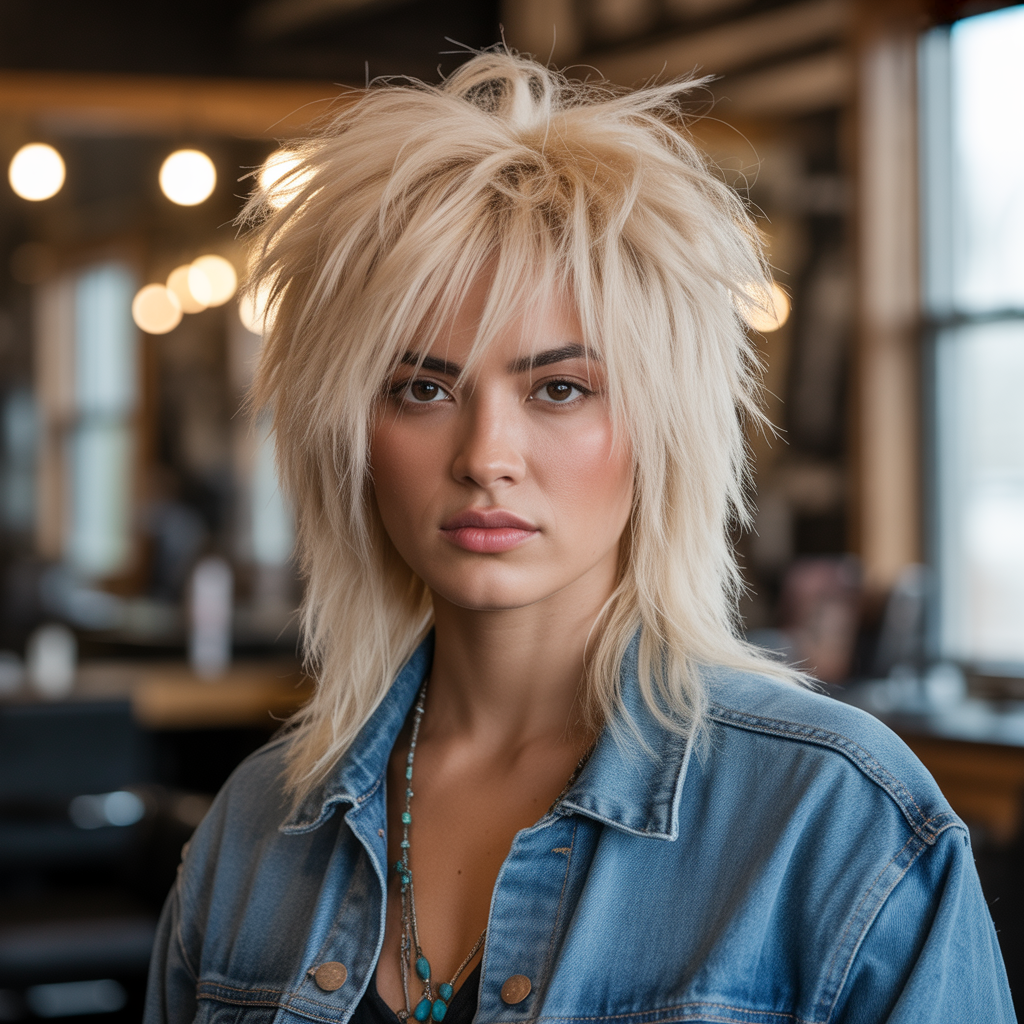
Volume is the primary goal of this version. The layers are stacked high at the crown to lift the hair away from the scalp and create a fuller silhouette from the first look. Blonde color catches light at each stacked level, making the volume appear real rather than product-dependent.
Fine and flat hair responds best to this variation. The stacking creates lift from the root and maintains height through the day even without a strong-hold product backing it up.
Best for: Fine hair that collapses by midday and needs structure built into the cut Product: Living Proof Full Thickening Cream applied to damp roots before blow-drying Pro tip: Flip your head upside down during the crown section of your blow-dry to lock in root lift before finishing the rest of the hair normally. Barber language: “I want lots of volume at the crown with stacked layers. I want the root lift built into the cut itself.” Face shape: Best for round and square faces. Crown height elongates the face vertically and draws the eye upward.
Blonde Wolf Cut with Beach Waves

Beach waves and a wolf cut share the same relaxed energy, and pairing them creates one of the most naturally effortless looks in the entire category. The layers support the wave pattern and stop the hair from clumping at the ends.
The blonde tones reflect outdoor light in a way that makes the waves appear to form on their own. This look works equally well in summer and through casual year-round wear.
Best for: Relaxed styling and people with outdoor-friendly routines Product: IGK Beach Club Texture Spray for defined waves with a salty, lightweight finish Pro tip: Twist each section loosely before diffusing so the waves form with more separation and significantly less frizz at the ends. Barber language: “I want a wolf cut that enhances beach waves. Keep the layers loose so the waves have room to form naturally within them.” Face shape: Works on all face shapes. The organic shape of beach waves adapts naturally to different structures without forcing any one proportion.
Visit Also: Octopus Cut
Tousled Blonde Wolf Cut
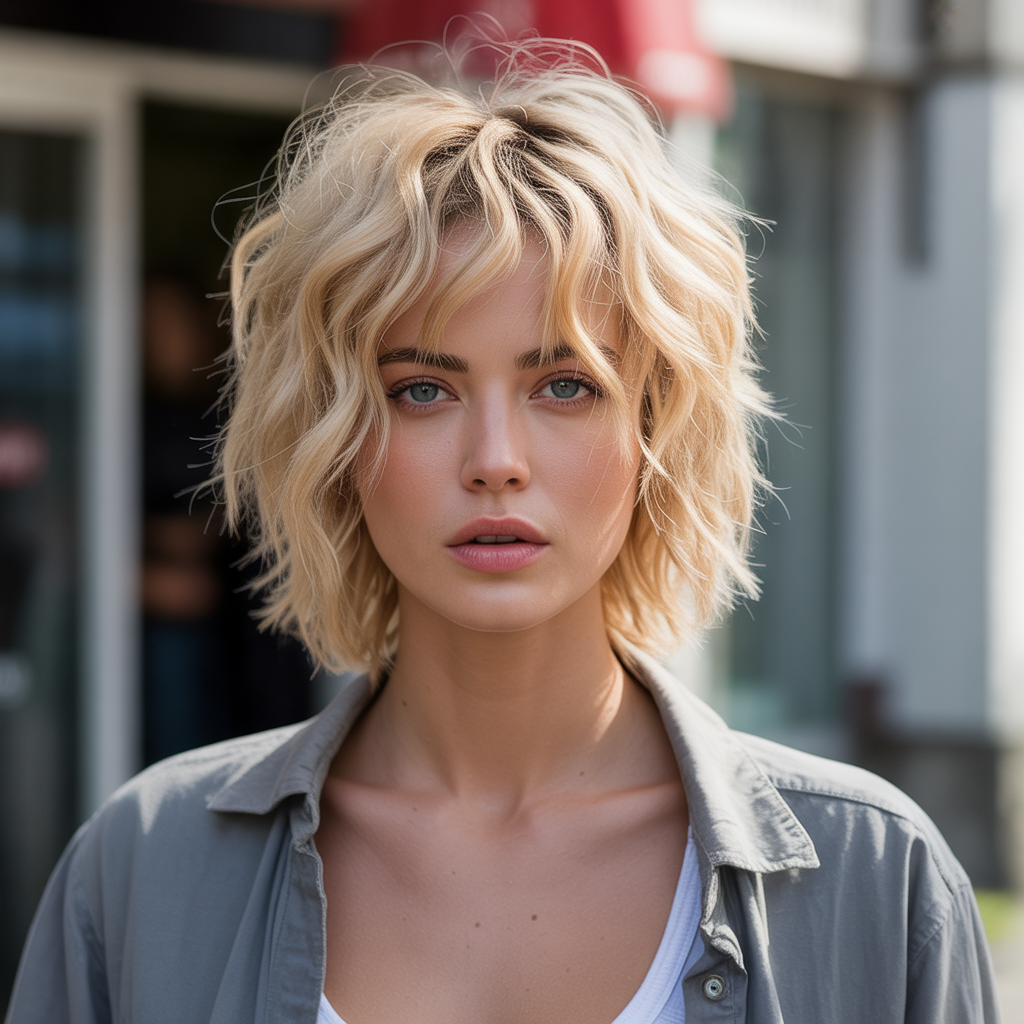
Tousled means shaped with fingers, not a brush. This version is about movement and relaxed shape without precision. The blonde tones highlight the texture that finger-styling creates, making the hair look intentionally lived-in rather than neglected.
This is the version for people who have five minutes in the morning and still want to look deliberate. The key is working the right product into damp hair and then leaving it completely alone until it dries.
Best for: Busy schedules and people who prefer very low daily effort Product: Aveda Be Curly Style Prep worked through damp hair evenly before air drying Pro tip: Do not touch the hair again after applying product until it is at least 80 percent dry or you will break apart the texture before it has set. Barber language: “I want a tousled, relaxed wolf cut. Nothing precise. I want it to look like it just fell perfectly on its own.” Face shape: Suits all face shapes. The loose, unfixed shape adapts naturally to different proportions without pulling in any fixed direction.
Blonde Wolf Cut with Highlights
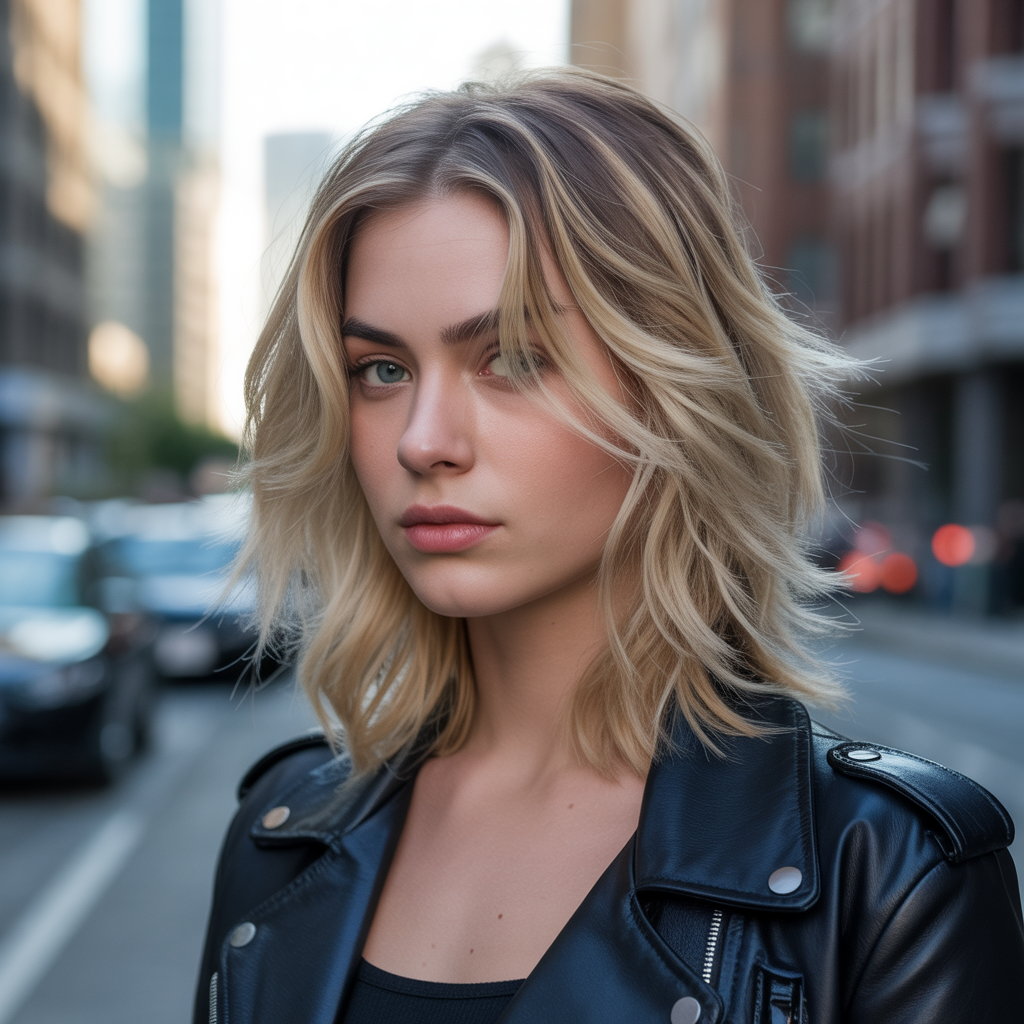
Highlights add a second layer of dimension to an already dimensional cut. Each highlighted piece catches light differently depending on how it falls within the layer structure, creating a shifting depth that flat blonde color cannot replicate.
Soft balayage highlights work better than traditional foil highlights in a wolf cut because the color placement follows the natural movement of the layers rather than cutting across them at fixed intervals.
Best for: Clients who want added depth and dimension without committing to a full color change Product: Moroccanoil Hydrating Styling Cream to keep highlighted sections smooth and visibly separated Pro tip: Ask your colorist to place highlights specifically on the pieces that fall to the face frame so they show the dimension where it reads most clearly in person and on camera. Barber language: “I want balayage highlights placed through my wolf cut layers. Focus on face framing and mid-length, not at the roots.” Face shape: Works on all face shapes. Strategic highlight placement can visually add width or length depending on where the lighter pieces are concentrated.
Blonde Wolf Cut with Dark Undercut
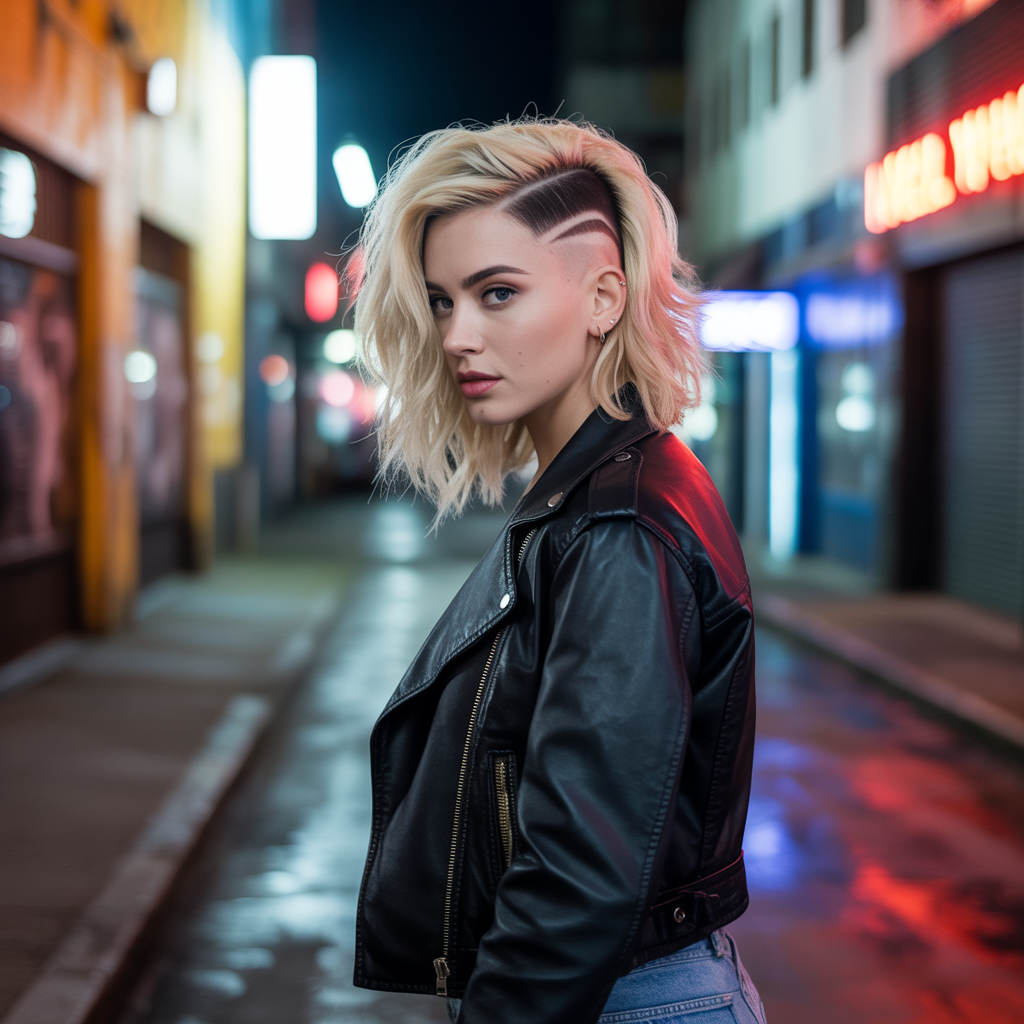
A dark undercut sits beneath the blonde layers and creates a deliberate contrast between the top sections and the underneath. The layers above are blonde and light while the underlayer is darker, adding visual structure that makes the overall cut look more architectural.
This is a strong choice for people with thick hair who want to reduce bulk while adding a design element. The undercut removes weight at the nape and keeps the neckline clean without shortening the visible length.
Best for: Thick hair and clients who want a structured, high-contrast finish Product: Redken Rough Clay 20 for a matte, structured finish that defines the top blonde layers clearly Pro tip: Ask your stylist to keep the undercut line high enough that it stays completely hidden when your hair is down and only appears when worn up. Barber language: “I want a dark undercut under blonde wolf cut layers. Keep the undercut line high and tight so it hides when the hair is down.” Face shape: Suits all face shapes. The contrast draws the eye upward to the lighter layers and away from the jaw and neckline.
Quick Comparison Table
| Style | Length | Hair Type | Maintenance | Bold Factor |
|---|---|---|---|---|
| Curtain Bangs | Medium | All types | Medium | ★★★☆☆ |
| Platinum Blonde | Medium to long | Straight, fine | High | ★★★★★ |
| Textured | Any | Fine, flat | Low | ★★★☆☆ |
| Long | Long | Thick | Low to medium | ★★☆☆☆ |
| Short | Short | Fine | Low | ★★★☆☆ |
| Ash Blonde | Any | All types | Medium | ★★★☆☆ |
| Dirty Blonde | Any | All types | Low | ★★☆☆☆ |
| Defined Layers | Medium to long | Thick | Low to medium | ★★★☆☆ |
| Wavy | Medium to long | Wavy | Low | ★★★☆☆ |
| Messy | Any | All types | Very low | ★★☆☆☆ |
| Shadow Roots | Any | All types | Low | ★★★☆☆ |
| Bleach Blonde | Medium to long | Straight | Very high | ★★★★★ |
| Icy Blonde | Any | All types | High | ★★★★☆ |
| Golden Blonde | Any | All types | Medium | ★★★☆☆ |
| With Fringe | Medium to long | All types | Medium | ★★★★☆ |
| Volume Layers | Short to medium | Fine | Medium | ★★★☆☆ |
| Beach Waves | Medium to long | Wavy | Low | ★★★☆☆ |
| Tousled | Any | All types | Very low | ★★☆☆☆ |
| With Highlights | Any | All types | Medium | ★★★☆☆ |
| Dark Undercut | Any | Thick | Medium | ★★★★☆ |
Frequently Asked Questions
Which blonde wolf cut is the best starting point for someone new to this style? The dirty blonde wolf cut is the most forgiving entry point because it grows out without a harsh line and requires the lowest color maintenance. You get the full texture and shape of the style without committing to high-contrast color upkeep.
Can someone with fine hair wear a wolf cut without it looking flat? Yes, the textured and volume-focused variations are specifically designed for fine hair. The layers redistribute what little density exists across the length and create visible movement that makes the hair read thicker in person.
How often does a blonde wolf cut need to be trimmed? Every six to eight weeks keeps the layers distinct and the ends healthy. Waiting longer than ten weeks allows the shorter layers to grow into the longer ones and the defining shape of the cut disappears.
What is the simplest product routine for maintaining this cut? A light texturizing spray on damp hair followed by air drying handles most days. A shot of dry shampoo at the roots the following morning restores volume without requiring a full wash.
Is the wolf cut appropriate for professional settings? Yes. The golden blonde and ash blonde versions, smoothed with a Dyson Airwrap, read as polished and intentional in most professional environments. The key is choosing a product that controls frizz without adding the kind of shine that reads as greasy under office lighting.
Final Thoughts
The blonde wolf cut is not a trend that peaked and passed. It is a structural decision that works because it was designed around real hair behavior rather than a single idealized texture. Every variation in this list exists because someone sat in a salon chair and asked for something specific, and the cut delivered it.
The version that is right for you is the one that matches your hair type, your face shape, and the amount of styling you are genuinely willing to do on an ordinary morning. Choosing based on what looks beautiful in a photo without considering those three factors is exactly how clients end up with a blonde wolf cut that looks perfect in the salon and falls apart within forty-eight hours.
One detail that separates a wolf cut that holds up from one that does not is the ratio between the shortest layer and the longest. When that ratio is wrong, no product corrects it. When it is right, the cut works in every condition, every setting, and every season without requiring you to think about it at all.
The right version of this cut will feel easy from the very first morning. If it does not feel easy, the ratio is wrong and one conversation with your stylist will fix it.
Save this to your Pinterest board now and share it with a friend who keeps walking out of the salon with the wrong wolf cut.