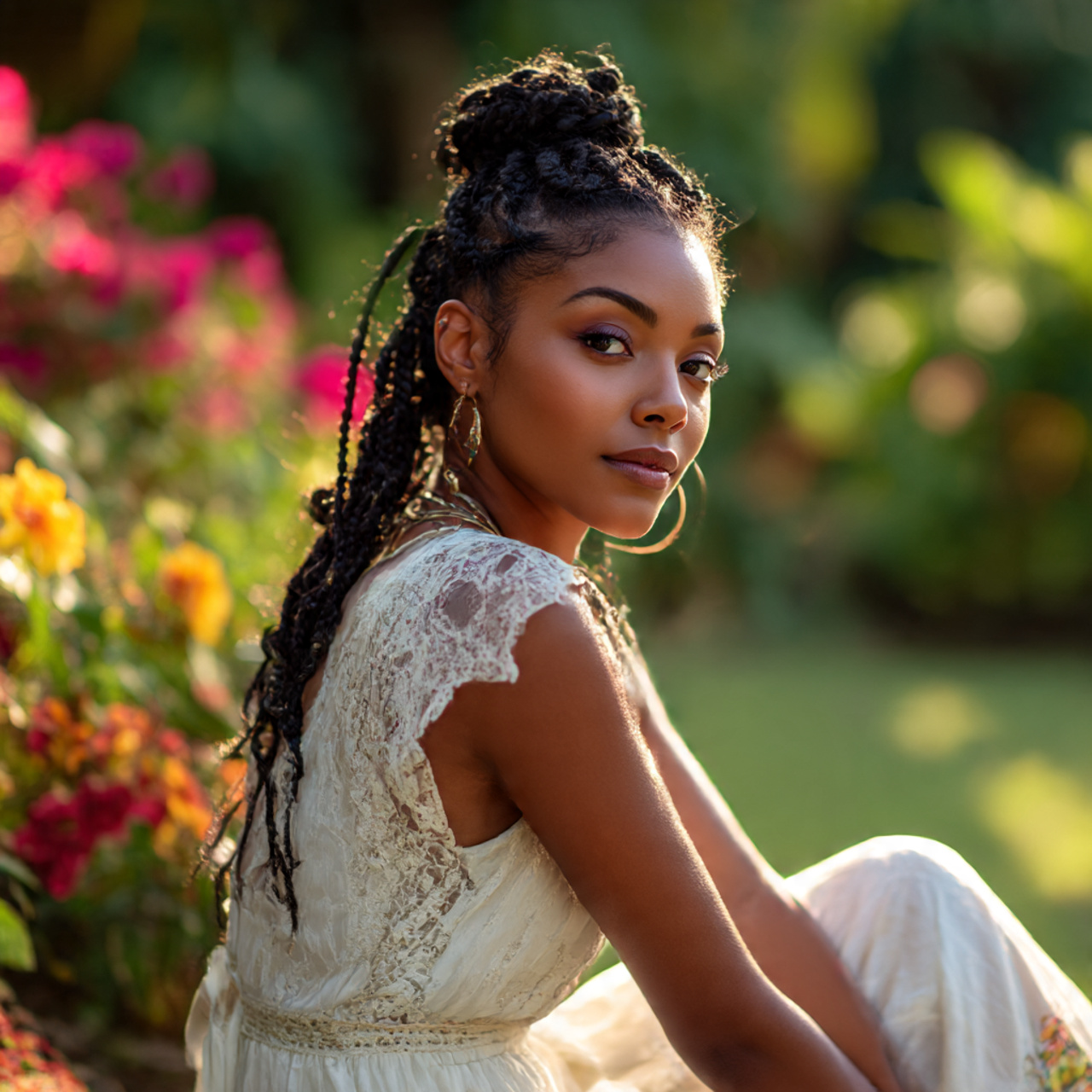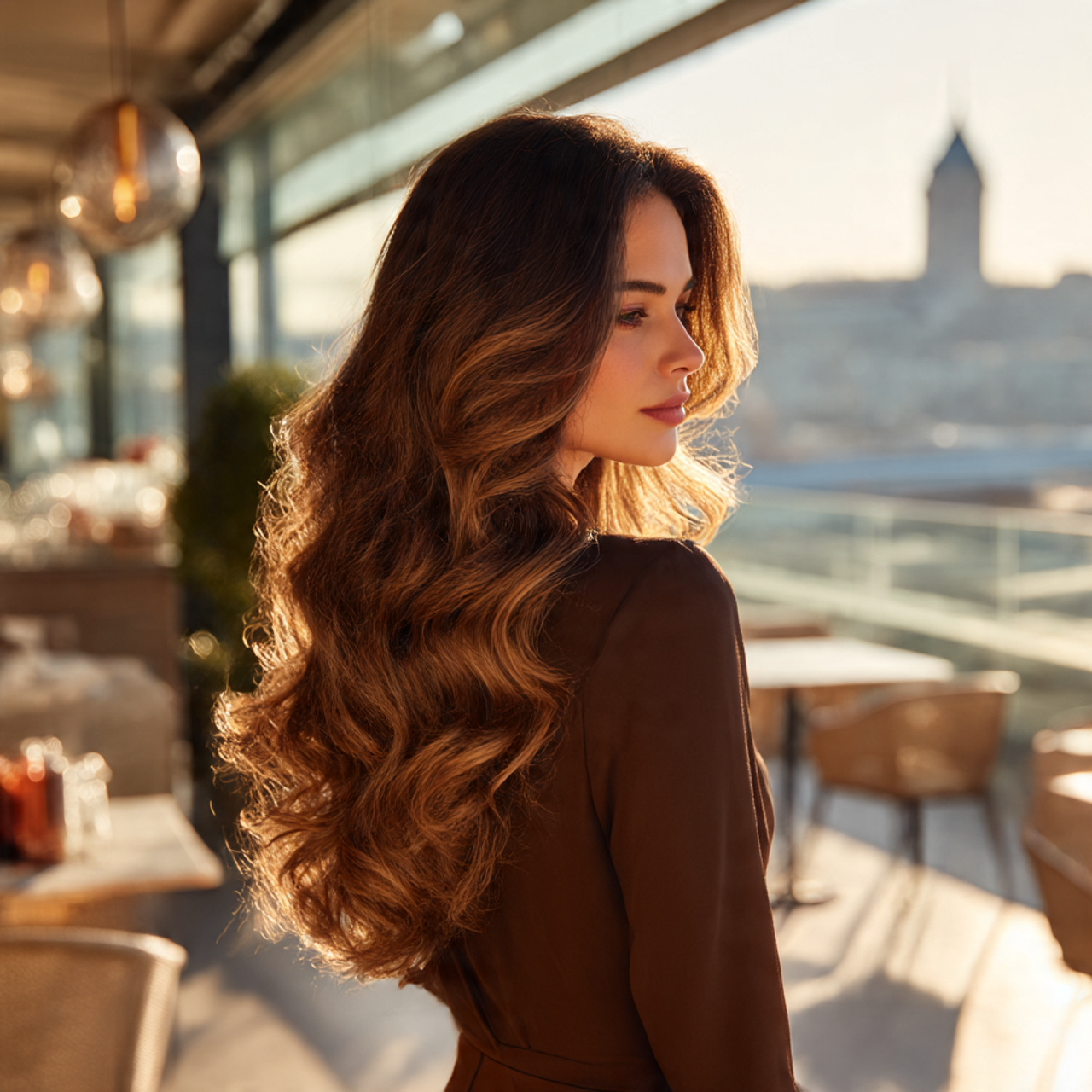
28 Long Layered Curly Hair Face Framing Styles That Transform Your Curls
You told your stylist exactly what you wanted, showed them a photo, and still walked out with curls that sat nothing like the picture. If that sounds familiar, the problem was not you and it was not your hair. Long layered curly hair face framing is one of the most requested cuts in curly hair care, and it is also one of the most misunderstood.
The struggle is real and extremely common. Most people with long curly hair know something is off but cannot name what it is. The front feels heavy. The shape looks wide. The curls near the face have no lift. You spend thirty minutes styling only to feel like nothing changed. That disconnect is exhausting.
The root cause is almost always a mismatch between the cut and the curl type. A technique that creates stunning face framing on loose waves can look completely wrong on a tight coil pattern. When stylists apply a single layering method across all textures, the result is a cut that fights the hair instead of working with it.
After years of working with curly clients and studying how different textures behave under a dry cut, placement is everything. Moving a face-framing layer two centimeters higher or lower changes whether curls lift toward the face or fall away from it entirely. That detail is rarely discussed in generic curly hair advice.
This guide covers 28 different aspects of long layered curly hair face framing, from the fundamentals of how weight and movement work together to advanced tips for coily textures, updo styling, and daily maintenance.
By the time you finish reading, you will have everything you need to walk into any salon and describe exactly what you want. You will understand why long layered curly hair face framing remains one of the most flattering and low-maintenance choices for textured hair of every kind.
Before the list begins, here is the one rule that applies to every item below: long layered curly hair face framing is not a universal technique. It must be customized to your specific curl pattern, face shape, and shrinkage percentage. In 2026, the shift in curly hair salons is toward individualized precision cuts that treat each texture differently instead of applying one method to all. That shift is exactly why this guide exists.
Choosing the Right Face-Framing Length for Your Curls
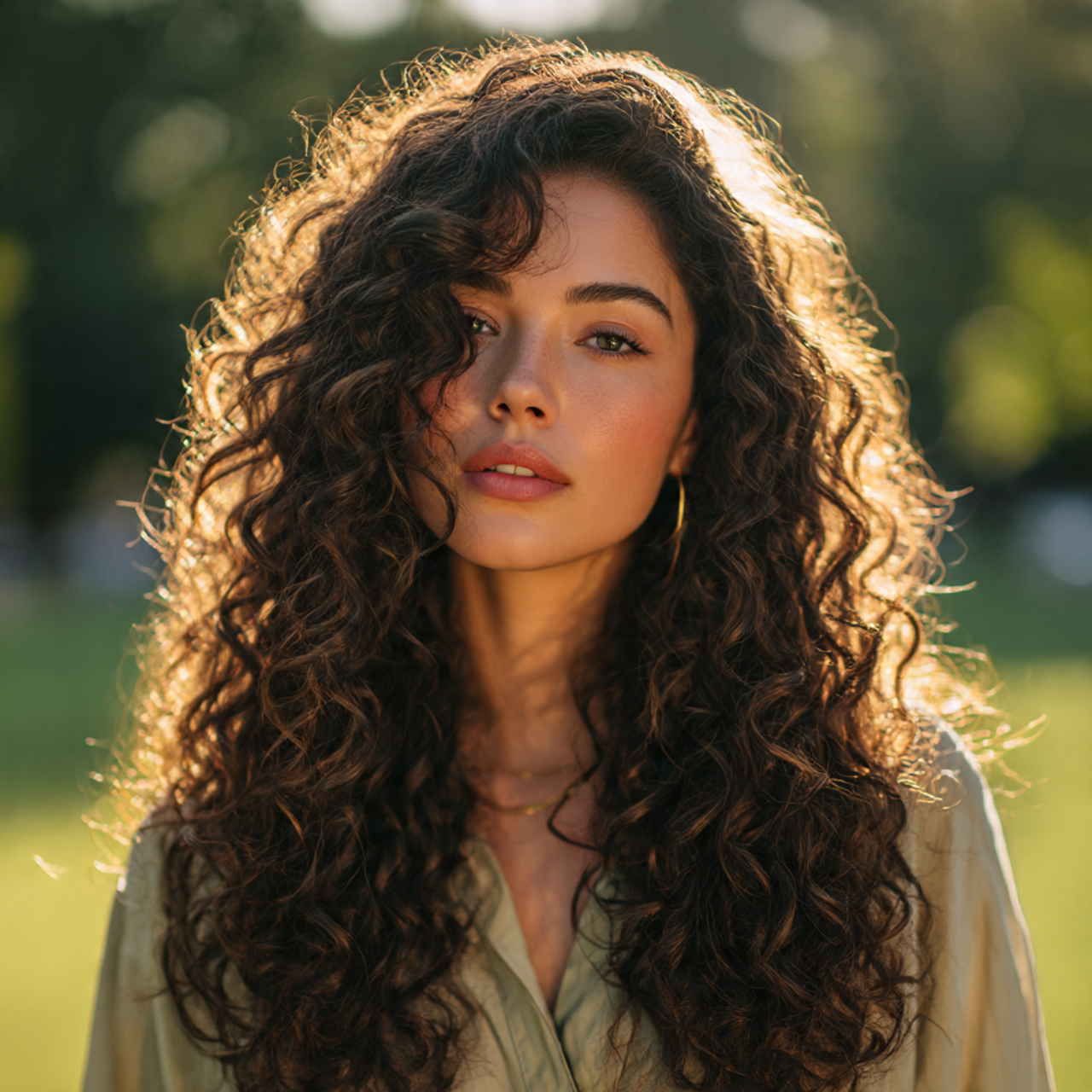
Curl type determines the correct layer length more than any other factor. Loose wavy curls look best when face-framing layers start near the jaw and fall softly. Tighter coils need layers that begin closer to the cheekbones to account for the extra shrinkage those textures carry. Getting this calculation wrong is the most common reason curly cuts miss the mark entirely.
Best for: Anyone unsure of where their layers should start Product: Cantu Moisturizing Curl Activator Cream to define and test layers after a fresh trim Pro tip: Wet your hair and measure your shrinkage percentage before your appointment so your stylist can adjust the starting point of every layer accordingly. Face shape: All face shapes depending on adjustment Stylist language: “My curls shrink about [X] percent when dry. Can you adjust my face-framing layer placement to account for that shrinkage?”
How Face-Framing Layers Improve Curl Definition
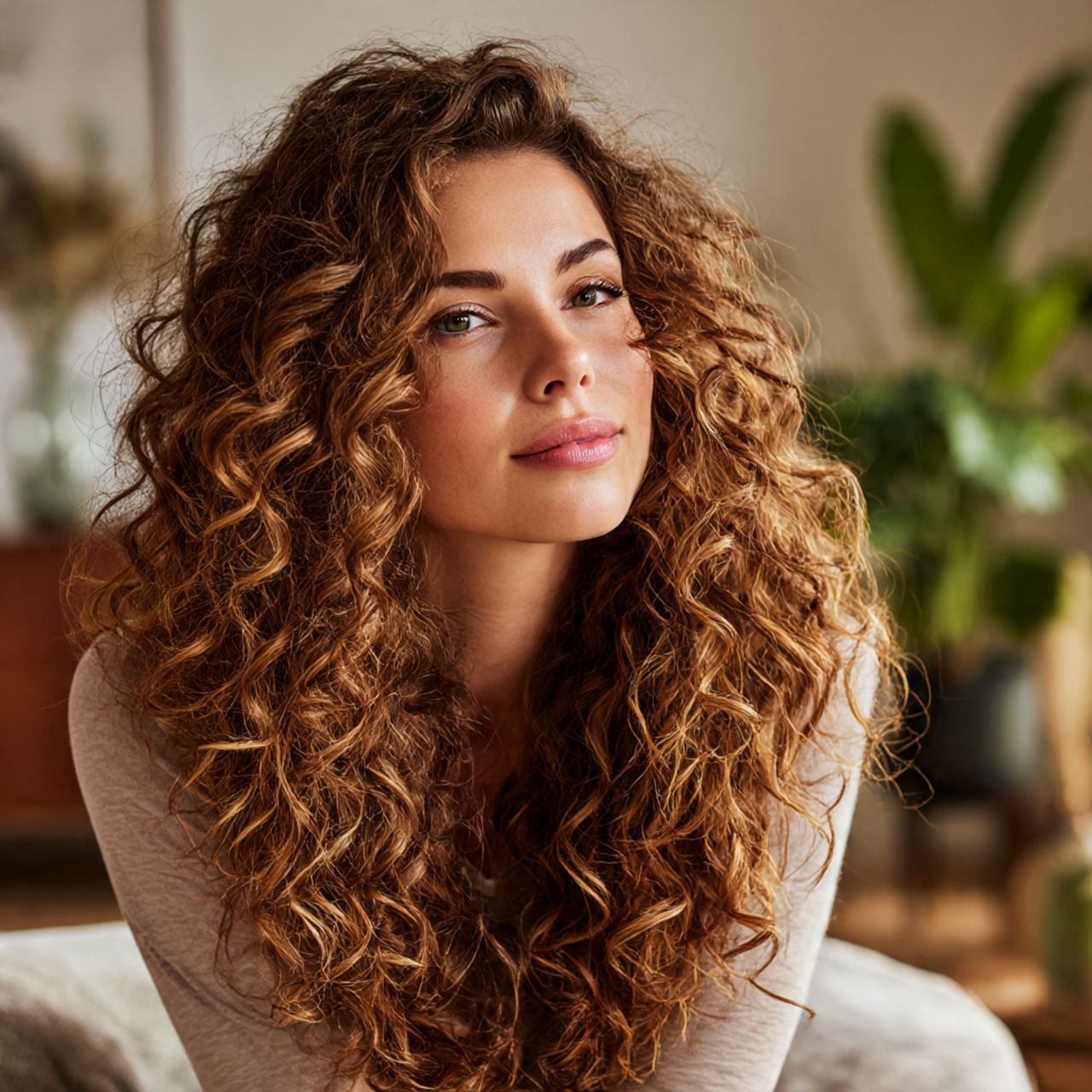
Curls form better when each strand has room to coil without the weight of surrounding hair pulling it flat. Layers create that space. The curls near the face spring up more cleanly, creating a sharp visual outline that highlights the eyes and cheekbones. That defined front edge makes the entire style look intentional and polished.
Best for: Curls that look flat or stretched around the face by midday Product: Bounce Curl Clump and Define Cream for clean, defined face-framing pieces Pro tip: Apply curl cream section by section to the face-framing area immediately after washing so each curl sets with even product coverage. Face shape: Heart and oval Stylist language: “I want layers that improve curl definition at the front. My curls tend to stretch flat in that area.”
Adding Volume Without Losing Length

Many people avoid layers because they fear losing length. Internal layers solve that problem. They remove weight from inside the hair so curls lift from the roots without changing the visible outer shape. The hair looks fuller at the top while the tips stay exactly where they were before the cut.
Best for: Fine or medium curly hair that falls flat at the crown Product: Kenra Platinum Silkening Mist as a lightweight pre-styler applied before diffusing Pro tip: Ask specifically for internal layers separate from face framing so your stylist targets the correct sections without confusing the two techniques. Face shape: Round and square Stylist language: “I want volume through internal layers. Please do not change my overall length or the shape of my perimeter.”
Blending Layers for a Smooth, Natural Look

A cut with poor blending shows harsh lines between the shorter face-framing pieces and the longer back sections. Good blending uses point-cutting or a soft razor technique to soften those transitions so the layers flow as one piece. When the blend is clean, the curl movement looks natural and intentional from every angle.
Best for: Anyone who has experienced a choppy layer result in the past Product: Moroccanoil Treatment Light to seal cut ends and enhance the visual appearance of the blend Pro tip: Request that your stylist cut and blend in sections while your hair is dry so you can see the shape build gradually before the final cut is made. Face shape: All face shapes Stylist language: “Please blend my face-framing layers into the length softly. I do not want a visible line between the shorter front sections and the rest.”
Adjusting Face-Framing Layers for Different Face Shapes

Face shape changes the placement, angle, and length of every layer in this cut. Long faces need shorter layers that add width. Round faces benefit from layers starting below the jaw to create vertical length. Square faces look softer with curved, flowing layers that move away from strong angles.
Best for: Anyone wanting a cut customized to their facial structure Product: Deva Curl No-Poo Original Zero Lather Conditioning Cleanser to maintain shape between trims Pro tip: Look up your face shape before the appointment and bring reference photos that combine your face shape with your specific curl type. Generic curly hair photos without matching features rarely translate. Face shape: All face shapes, customized per appointment Stylist language: “I have a [face shape] face. Can you position and angle my face-framing layers to flatter my features specifically?”
How to Care for Layered Curly Hair Daily

Consistent moisture is the backbone of daily layered curl care. The shorter face-framing pieces lose hydration faster than the rest of the hair and show dryness before any other section does. A leave-in conditioner applied to damp hair each morning and a light sealing product on the ends keeps every layer soft, defined, and frizz-free through the day.
Best for: People whose front layers frizz first Product: SheaMoisture Jamaican Black Castor Oil Strengthen and Restore Leave-In Conditioner Pro tip: Dampen only the face-framing pieces each morning rather than rewetting the full head so you save time and reduce unnecessary manipulation. Face shape: All face shapes Stylist language: “Can you recommend a specific daily care routine for my face-framing layers? They seem to need more attention than the rest of my hair.”
Short Face-Framing Layers for Extra Lift
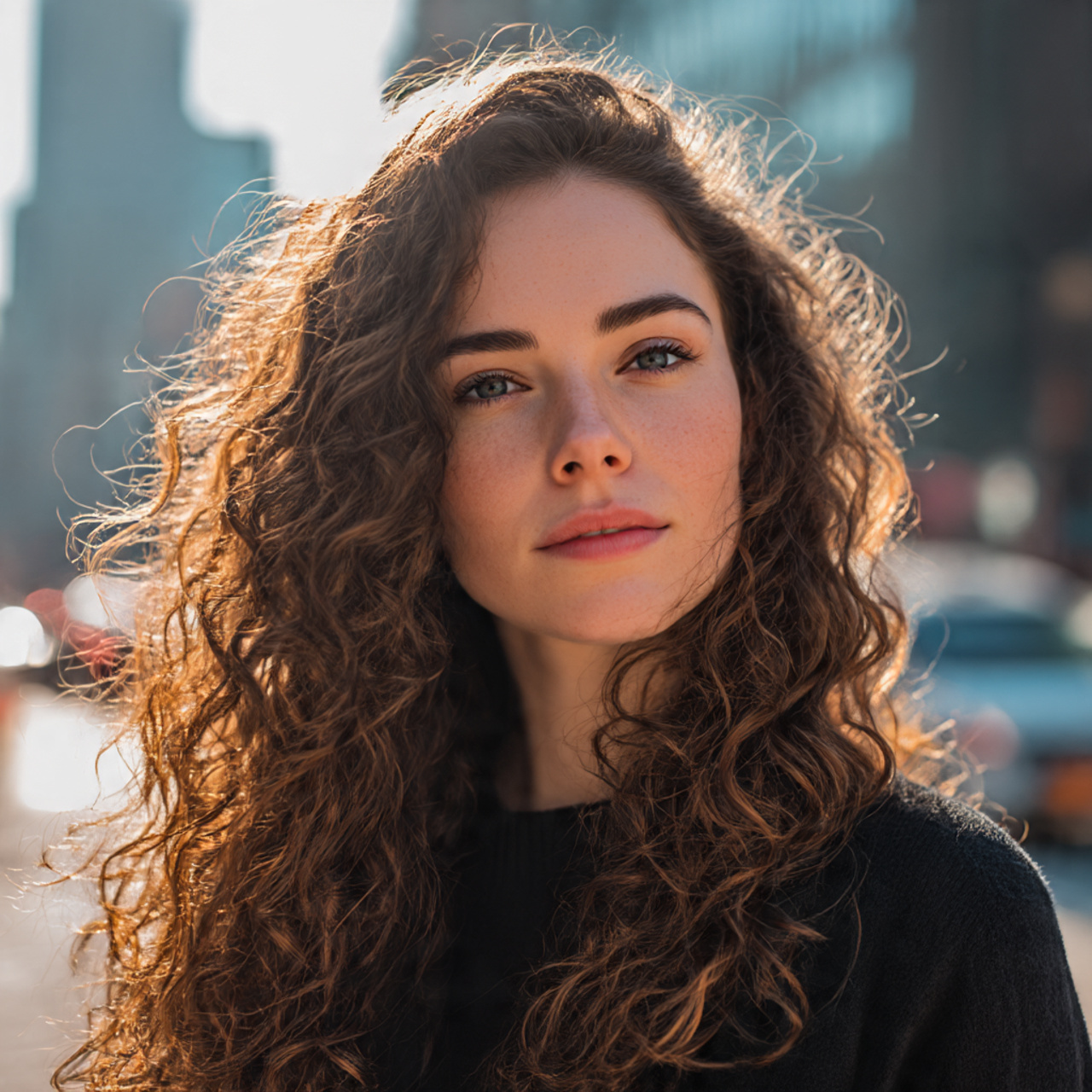
Pieces that begin near the temples or even at the eyebrows create instant crown volume. These shorter layers work best on fine curly hair that needs help lifting at the front and the top. They direct attention toward the cheekbones and make the eyes look more open and defined without requiring any extra tools.
Best for: Fine curly hair needing lift at the crown and temples Product: TIGI Bed Head Masterpiece Hairspray for lightweight hold on the shortest face-framing pieces Pro tip: Apply a small amount of Aveda Be Curly Curl Enhancer to the temple pieces specifically so they hold their curl shape and blend into the longer layers behind them. Face shape: Round and heart Stylist language: “I want my face-framing layers to start at the temples for extra volume. Please keep them light enough to blend without puffing outward.”
Choosing the Best Products for Layered Curls
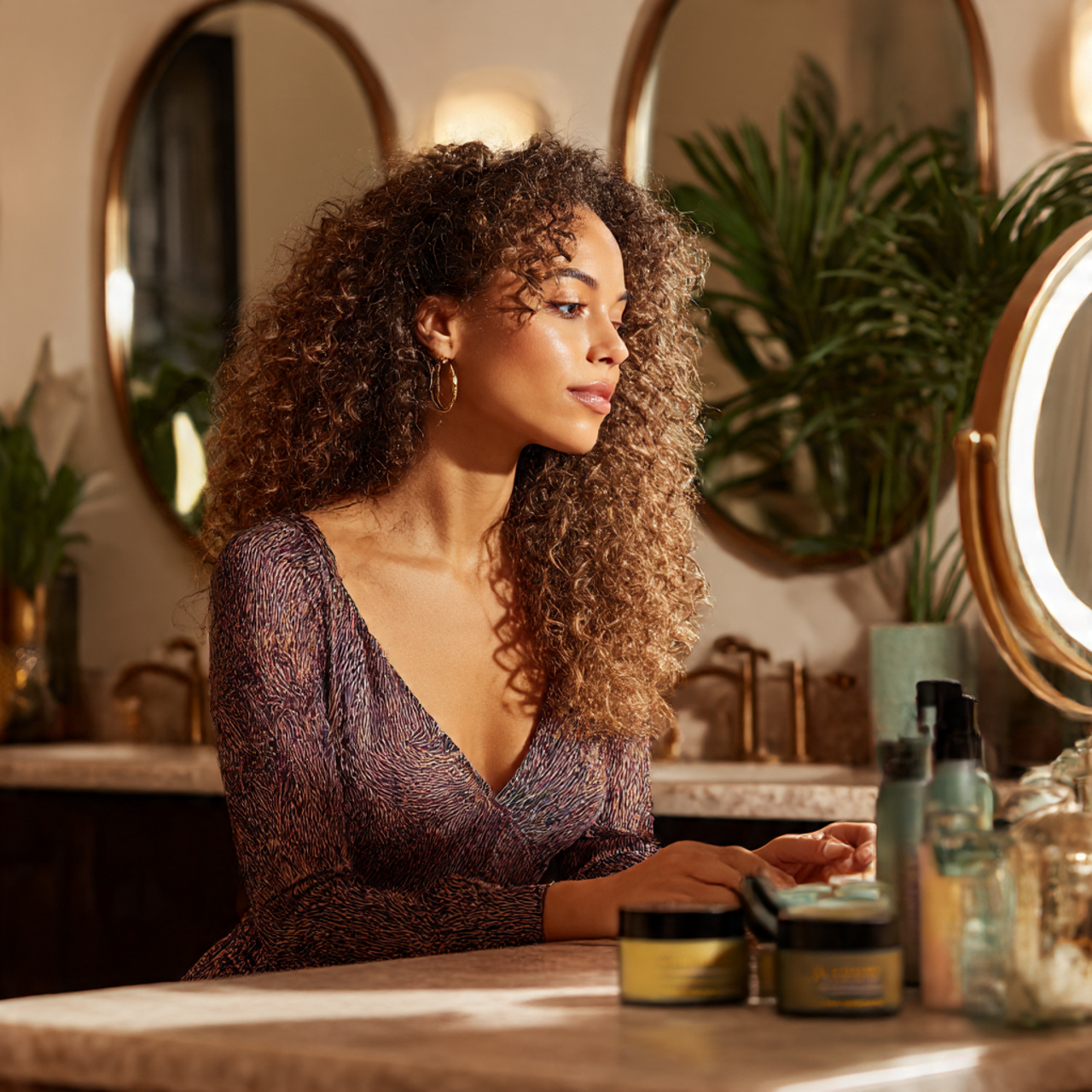
Product weight is the most overlooked factor in layered curl styling. Heavy butters and thick creams cause layers to clump together and lose their individual shape. Medium-hold gels, foams, and spray creams allow each layer to move and define separately without collapsing under its own weight.
Best for: Anyone whose layers clump or sag after applying product Product: Ecoslay Orange Marmalade Gel for lightweight, flake-free hold that preserves layer separation Pro tip: Start product application at the face-framing layers so the most visible section gets the freshest and most evenly distributed coverage before the product thins out on your hands. Face shape: All face shapes Stylist language: “Can you recommend the correct product weight for my curl type so my layers stay defined and separated without flattening out?”
Getting Volume Without Frizz

Volume and frizz feel identical until you understand what separates them. The key is applying product to soaking wet hair before squeezing out any water. This seals the cuticle and locks the curl shape in place before air or heat exposure begins. Once that step is done correctly, volume comes naturally without the expansion that causes frizz.
Best for: Curly hair that expands into frizz instead of controlled volume Product: Kinky Curly Curling Custard for a strong cast that dries frizz-free with clean hold Pro tip: Use an Aquis Original Hair Towel to blot after washing instead of a regular cotton towel. Cotton breaks the product seal before the curl sets and causes frizz before the hair even starts to dry. Face shape: Round and oval Stylist language: “My curls expand into frizz when I try to build volume. Can you walk me through a diffusing technique that adds lift without that expansion?”
Why Dry Cutting Is Best for Curly Face Framing
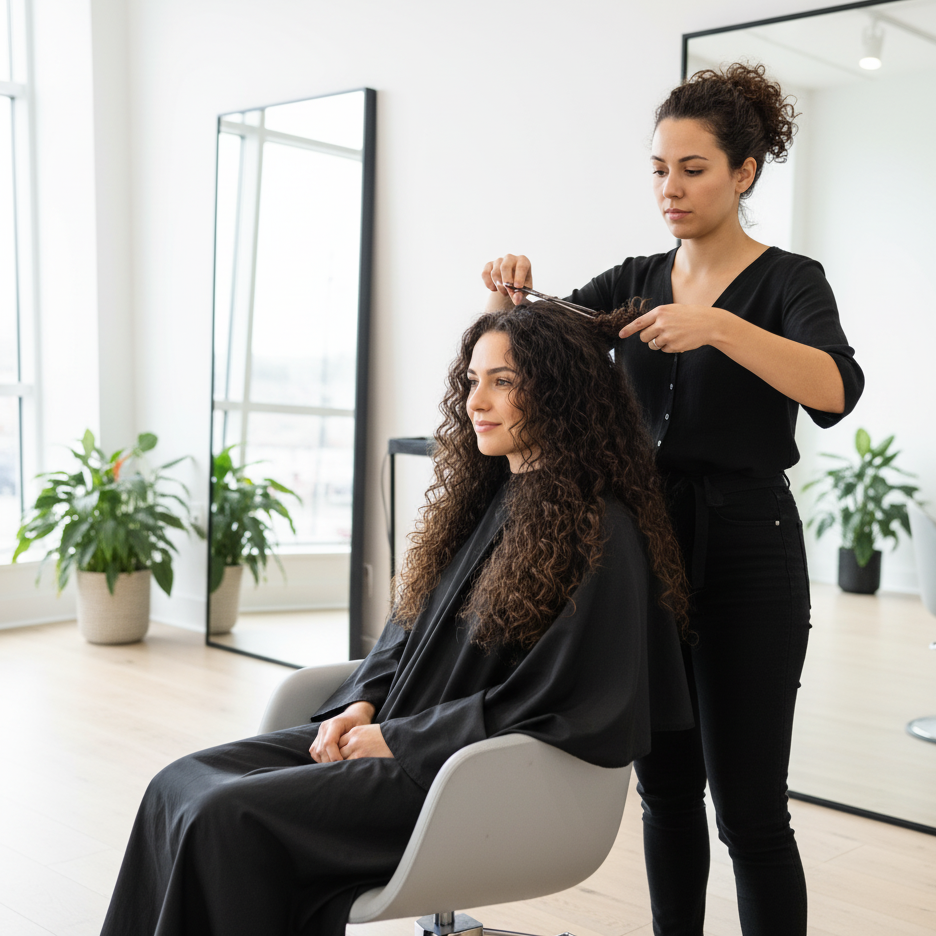
Curly hair cut wet will always spring up shorter than expected once it dries. This surprises people who asked for long face-framing layers and ended up with something far shorter and harder to manage. Dry cutting eliminates that guesswork. The stylist sees each curl exactly where it lands in its natural state and places every layer with precision.
Best for: Anyone who has had wet-cut curly layers come out too short Product: Ouidad Curl Quencher Moisturizing Styling Gel to define curls before arriving at a dry-cut appointment Pro tip: Come to your appointment with your hair styled the way you wear it every day. A styled dry cut shows the stylist your actual curl behavior, not a laboratory version of it. Face shape: All face shapes Stylist language: “I prefer a dry haircut. Can you cut and place my face-framing layers while my hair is fully dry and in its natural shape?”
The Role of Internal Layers in Long Curly Hair

Internal layers are cuts made through the mid-section of the hair, not along the outer perimeter. They reduce bulk and allow curls to lift from the midpoint rather than falling flat from the roots. This is the technique that separates a layered cut that moves naturally from one that sits heavy, stiff, and shapeless all day.
Best for: Thick or dense curly hair that holds too much weight Product: AG Hair Curl Re:Coil Curl Activator applied to internal sections after the cut to define each layer Pro tip: Ask your stylist to show you the internal layer placement before cutting so you can see exactly which sections are being lightened and approve the plan. Face shape: Square and round Stylist language: “Please add internal layers to reduce bulk through the mid-lengths without changing my perimeter. I want movement, not removal.”
Layering Tips for Fine Curly Hair
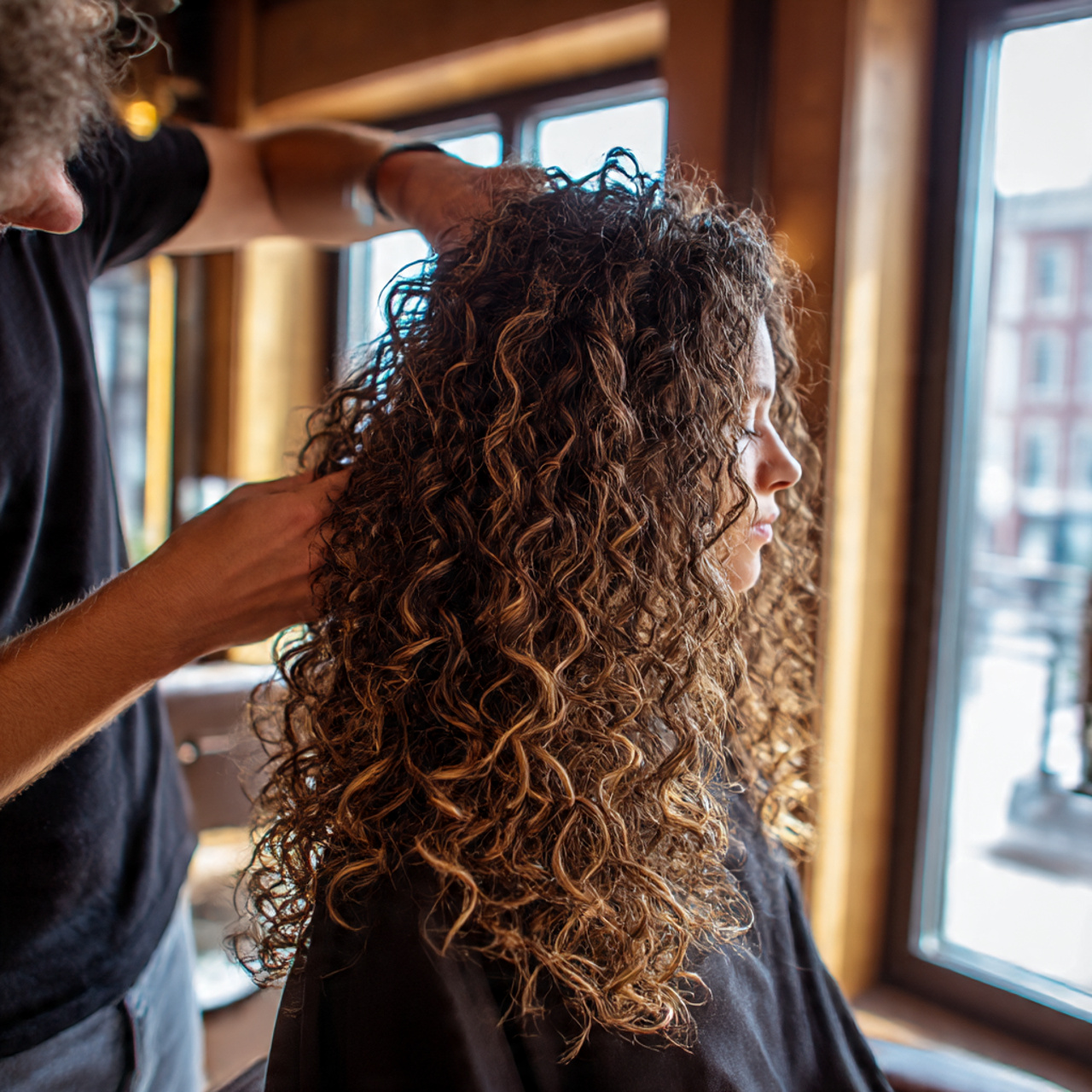
Fine curls require fewer layers with wider spacing between them. Over-layering fine hair makes the ends look wispy and thin rather than full and defined. The face-framing pieces should stay on the longer side to preserve visual density around the face, and the goal of every cut should be shape and structure rather than dramatic volume.
Best for: Fine curly hair that looks stringy when too many layers are added Product: Briogeo Curl Charisma Rice Amino and Quinoa Frizz Control Gel for lightweight hold without product buildup Pro tip: Request point-cutting instead of slide-cutting for fine curls. Point-cutting creates soft texture without removing too much weight from already-thin ends. Face shape: Heart and oval Stylist language: “My hair is fine. I want a light layering approach with longer face-framing pieces to keep density around my face.”
Adding Curly Bangs to Face-Framing Layers

Curly bangs blend naturally into face-framing layers and add personality to the front of the style without disrupting the length. They can be full, side-swept, or curtain-style depending on the aesthetic you want. When cut correctly and blended seamlessly into the front sections, they create a transition from hairline to length that looks effortless and completely intentional.
Best for: Anyone who wants more visual impact and personality at the front Product: DevaCurl Wavemaker Texture Spray to define and set bang pieces separately before styling the rest Pro tip: Ask for curly bangs to be cut slightly longer than you think necessary. Curl shrinkage is unpredictable and a too-short bang on coily hair can take months to grow back to a workable length. Face shape: Oval and heart Stylist language: “I want curtain-style curly bangs blended into my face-framing layers. Please cut them dry and leave extra length for shrinkage.”
Diffusing for Better Layer Definition
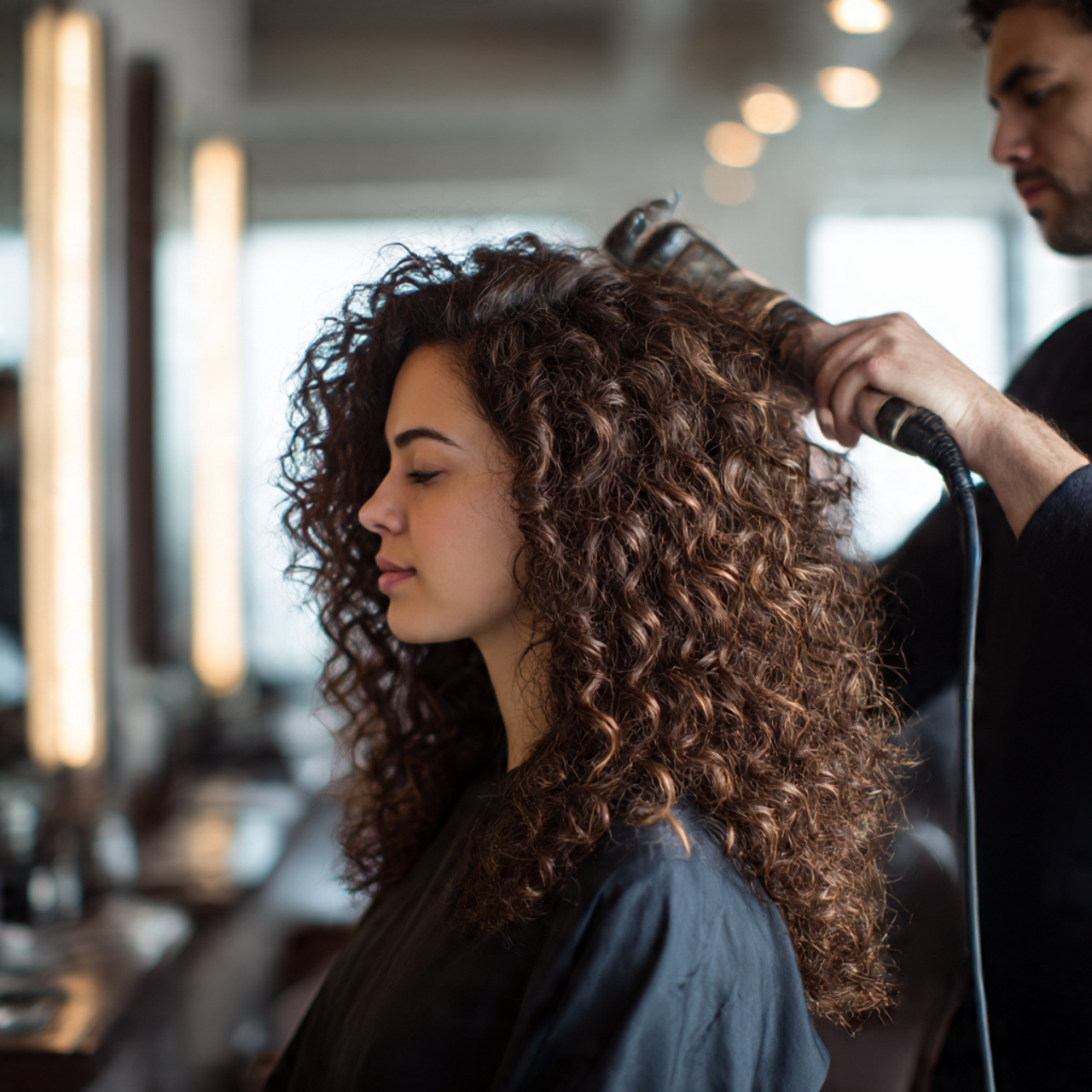
Diffusing activates layers in a way that air drying alone rarely achieves. The controlled heat encourages curls to clump tightly and stay in place while the airflow dries them without disruption. Starting at low speed with low heat allows curls to set fully before adding extra warmth to finish the dry.
Best for: Anyone whose layers lose shape or fall flat when air-dried Product: Dyson Supersonic Hair Dryer with diffuser attachment for consistent heat distribution without frizz Pro tip: Cup the face-framing layers in the diffuser bowl and hold for thirty seconds per section before moving on. This lets each curl dry in its coiled shape rather than being jostled loose by movement. Face shape: All face shapes Stylist language: “Can you show me the best diffusing technique for my specific face-framing layers and curl type before I leave today?”
Protecting the Face-Framing Ends
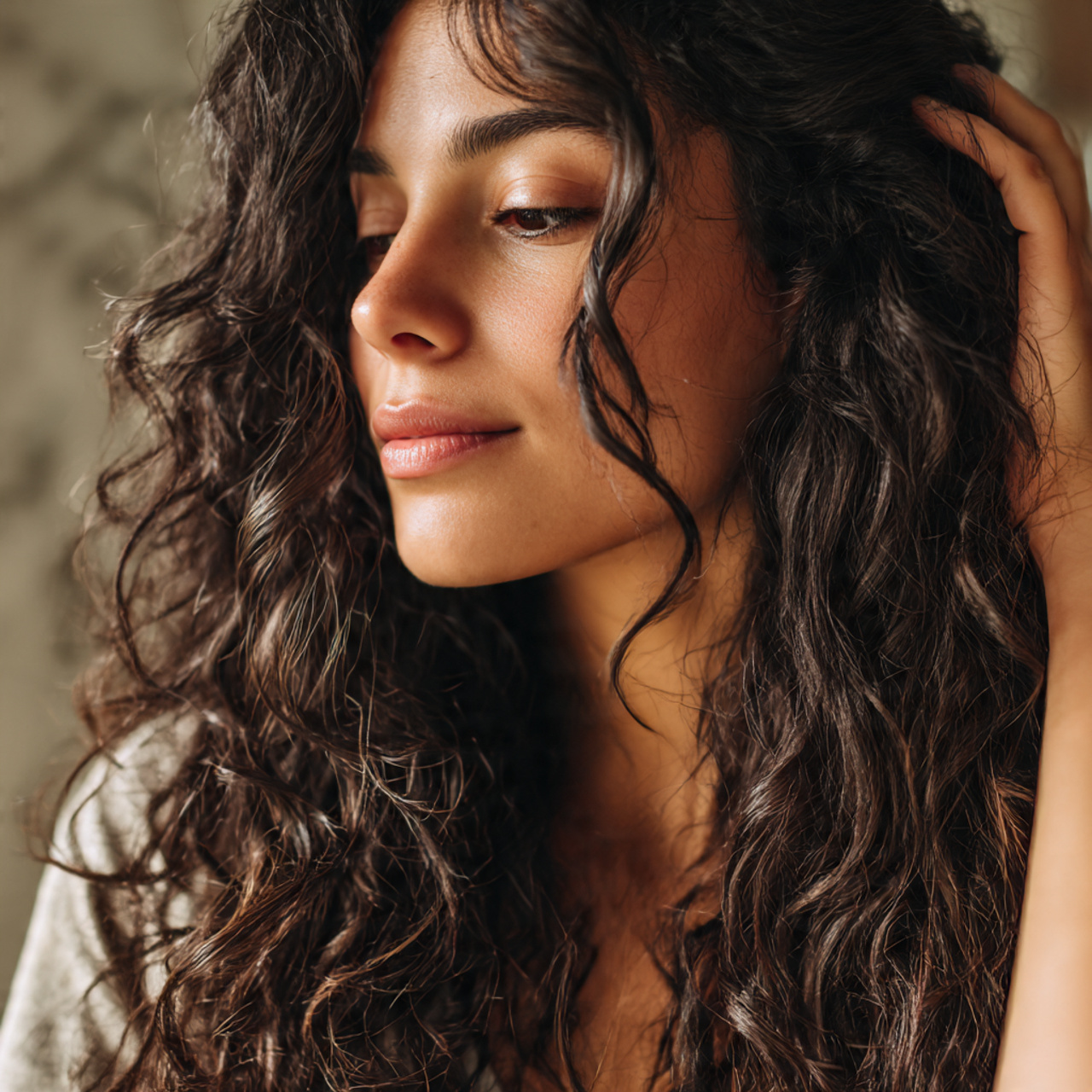
The shortest pieces in this cut are the most exposed. They contact skin, clothing, and accessories throughout the day, leading to split ends and dryness faster than the rest of the hair develops them. Applying a small amount of sealing oil to the front pieces each morning creates a lightweight barrier that extends the life of every layer.
Best for: Anyone whose face-framing pieces break or split ahead of the rest of the hair Product: Mielle Organics Rosemary Mint Scalp and Hair Strengthening Oil for daily end protection Pro tip: Apply a pea-sized amount of Mielle Organics oil to the face-framing ends before sleep and use a satin scarf to protect them from overnight friction. Face shape: All face shapes Stylist language: “My face-framing pieces break faster than the rest of my hair. Can you recommend how to protect and strengthen these ends specifically?”
Creating the Look of Thicker Hair

Strategic placement of layers can make low-density curly hair appear significantly fuller. Keeping the back section more solid while concentrating layers around the face redirects visual attention forward and upward. This technique creates the illusion of density where it matters most without making the back look flat or underdone.
Best for: Thin or low-density curly hair Product: Batiste Dry Shampoo Original for root lift and instant density on days between washes Pro tip: Avoid layering the back more than two inches deep on thin hair. Layering too far into the back removes the visual density that makes the full style read as thick. Face shape: Oval and long Stylist language: “My hair is thin and I want to create a fuller look. Please concentrate the layering at the face and minimize changes to the back.”
Styling for Maximum Bounce
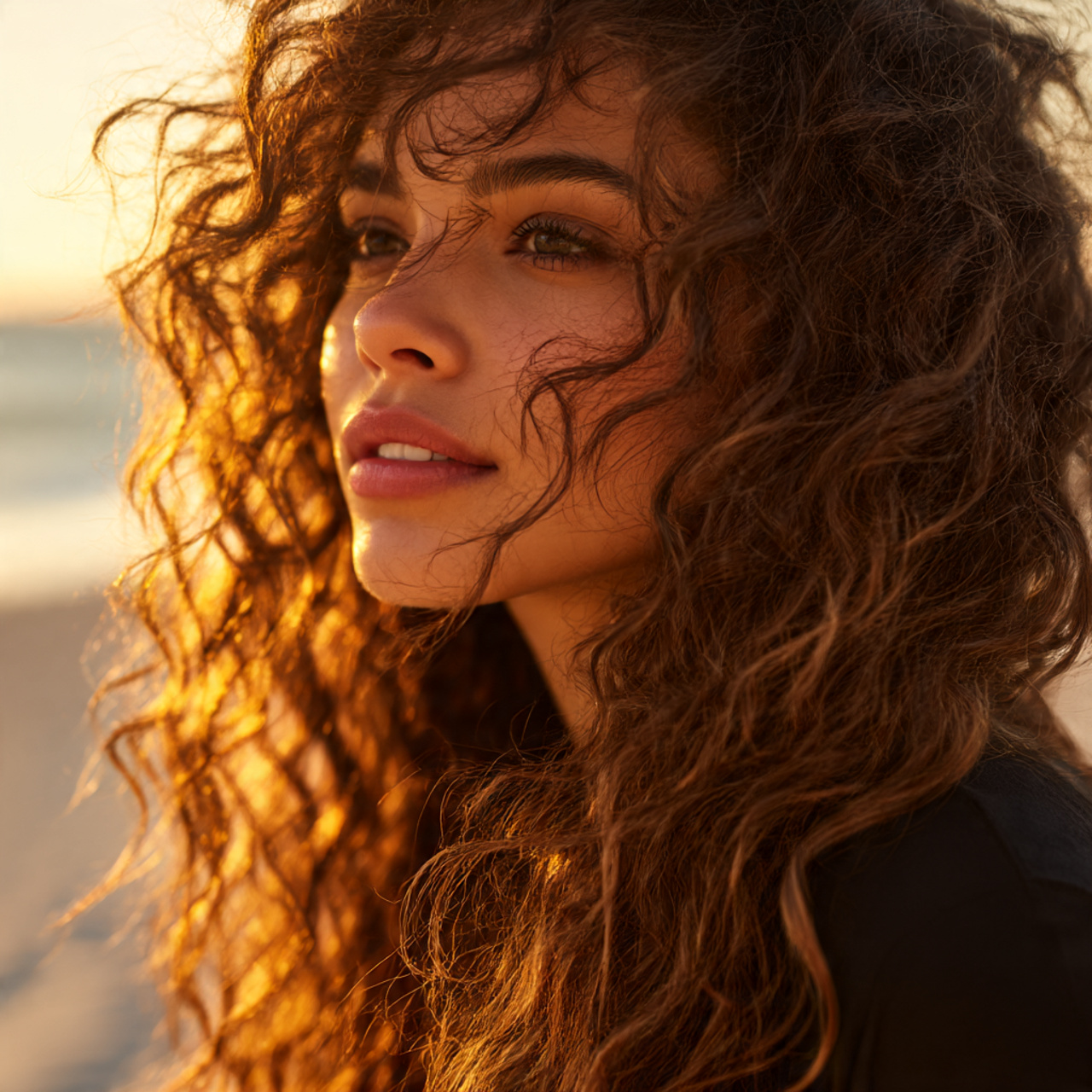
Bounce starts with a medium-hold gel applied to soaking wet curls. Let it dry fully into a cast before touching the hair. Once the cast is completely set, scrunch it out gently. The cast protects each curl through the drying process and releases into soft, springy movement that lasts all day.
Best for: Anyone who wants lively, bouncy curls without hardness or crunch Product: Aunt Jackie’s Don’t Shrink Flaxseed Elongating Curling Gel for a strong, glossy cast with flexible hold Pro tip: Wait until curls are fully dry before scrunching the cast. Touching them while even slightly damp reactivates moisture in the wrong direction and causes frizz rather than bounce. Face shape: Round and heart Stylist language: “I want maximum bounce in my face-framing layers. What product and technique would you recommend for my specific curl pattern?”
Adding Asymmetry for a Modern Look

Asymmetrical face-framing layers give a cut a contemporary edge without requiring a dramatic change to the overall length. One side sits slightly shorter or at a different angle than the other, creating visual movement and interest. This approach works especially well for people who part their hair consistently to one side.
Best for: Anyone wanting a modern update to a classic layered curly cut Product: Living Proof Perfect Hair Day 5-in-1 Styling Treatment to smooth and define the asymmetrical pieces Pro tip: Ask your stylist to keep the asymmetry subtle. A small difference in angle reads as intentional movement. Too much difference reads as an uneven cut that needs correcting. Face shape: Oval and long Stylist language: “I want subtle asymmetry in my face-framing layers. Please make one side slightly shorter for a modern finish.”
Showing Off Hair Color with Layers

Layers create depth and directional light in both natural and colored hair. Each layer catches light at a different angle, making color look richer and more dimensional than it would on a single-length cut. Face-framing layers are the best placement for highlights because they sit directly in the path of facial light.
Best for: Anyone with highlights, balayage, or natural gray at the front Product: Redken Color Extend Magnetics Shampoo to preserve color vibrancy between salon visits Pro tip: Ask for highlights placed specifically along the face-framing layer sections so the color line follows the cut angle and the two elements enhance each other naturally. Face shape: All face shapes Stylist language: “I want highlights added along my face-framing layers specifically. Please match the highlight placement to the angle of the cut.”
Choosing the Best Back Shape for Long Curly Hair
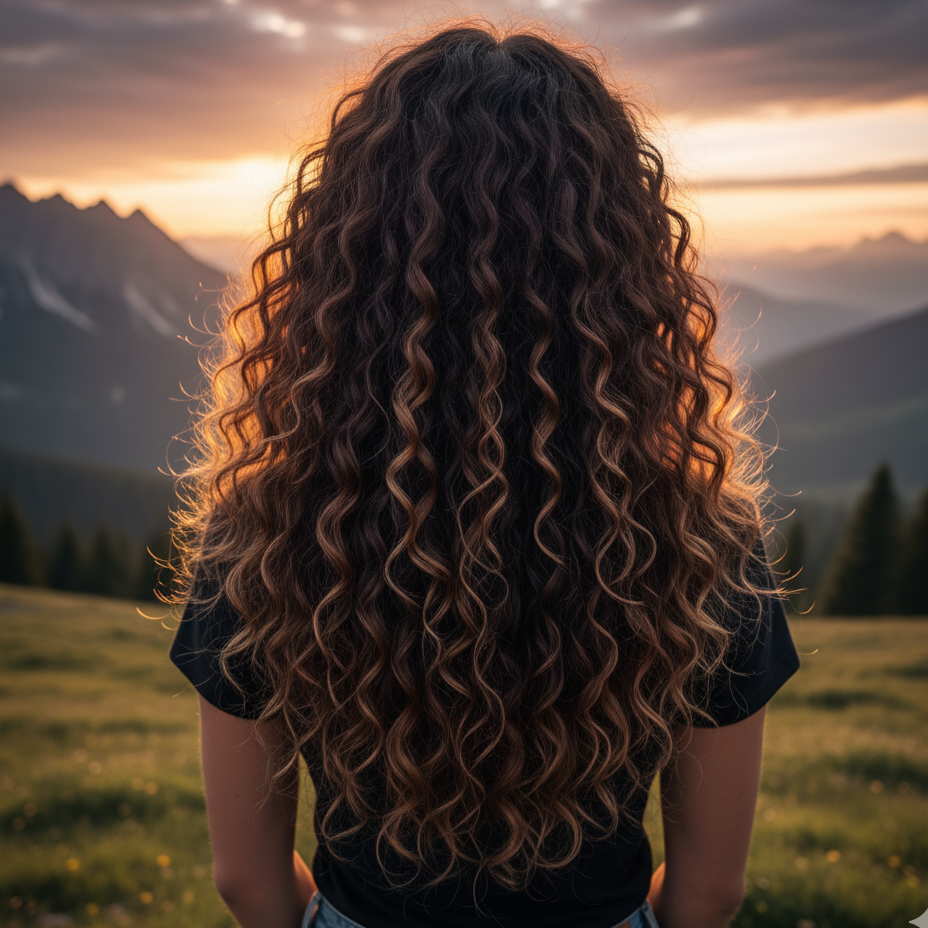
The back perimeter shape affects how the entire style reads from behind and in profile. A U-shape gives a soft, rounded finish that makes the hair look full and feminine. A V-shape creates a sharper, longer point that adds structure and drama. The right choice depends on how geometric you want the overall look to feel.
Best for: Anyone wanting to define the overall silhouette of their curly style Product: Curl Smith Curl Defining Styling Soufflé for back section definition and frizz control Pro tip: Choose a U-shape if your curls are fine or thin. It makes the back look fuller and softer and prevents the tips from looking stringy. Face shape: All face shapes Stylist language: “I want a U-shaped perimeter in the back to complement my face-framing layers. Please blend the sides into the back smoothly.”
Picking the Right Long Layer Length
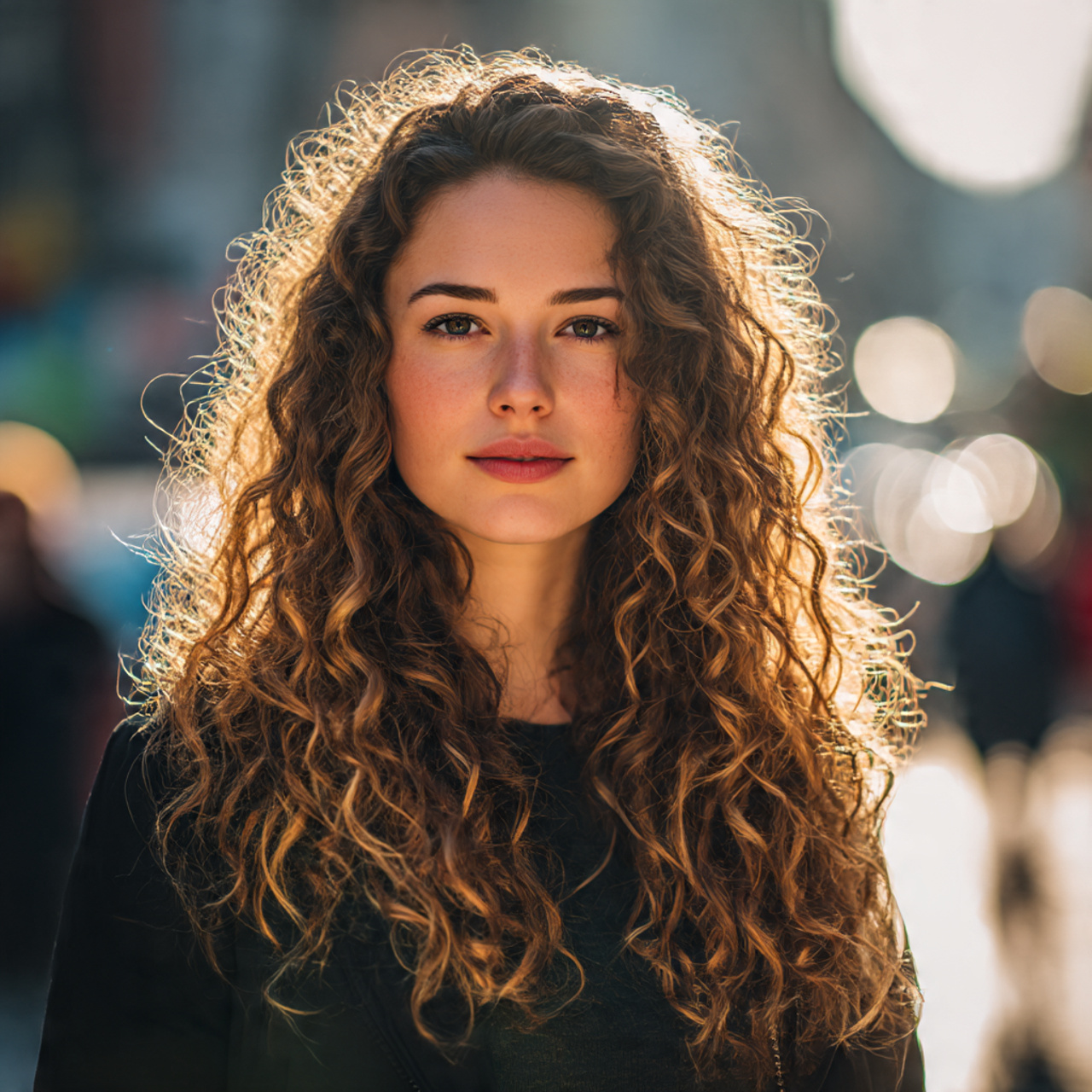
Long layers are not one category. Layers that begin at the shoulder create more movement and volume. Layers that begin lower down the back keep more weight in the hair and create a controlled, sleeker appearance. Understanding this trade-off before your appointment helps you choose the right starting point for your lifestyle and curl pattern.
Best for: Anyone unsure whether to prioritize volume or controlled length Product: SheaMoisture Coconut and Hibiscus Curl and Style Milk for managing longer layered sections during styling Pro tip: If you are growing out a shorter cut, request layers that start below the shoulder during the transition. This keeps weight in the hair while the lengths even out. Face shape: Oval and long Stylist language: “I want my long layers to start at the shoulder for more movement. Please do not start them lower. I am prioritizing volume.”
Growing Out or Adding Layers Gradually

Layers do not need to appear all at once. Starting with face-framing pieces only is a low-commitment entry point that changes the look at the front without touching the rest. From there, internal layers can be added at each subsequent trim as you build confidence with the shape and understand how your curls respond.
Best for: Anyone nervous about committing to a fully layered cut for the first time Product: Mizani 25 Miracle Milk Leave-In Treatment to support hair health during the building phase Pro tip: Schedule trims every eight weeks during a gradual layer-building phase rather than every twelve. More frequent visits help your stylist manage the blend as the lengths naturally even out over time. Face shape: All face shapes Stylist language: “I want to add layers gradually over a few appointments. Please start with face framing only and we will build from there each visit.”
Styling Face-Framing Layers in Updos
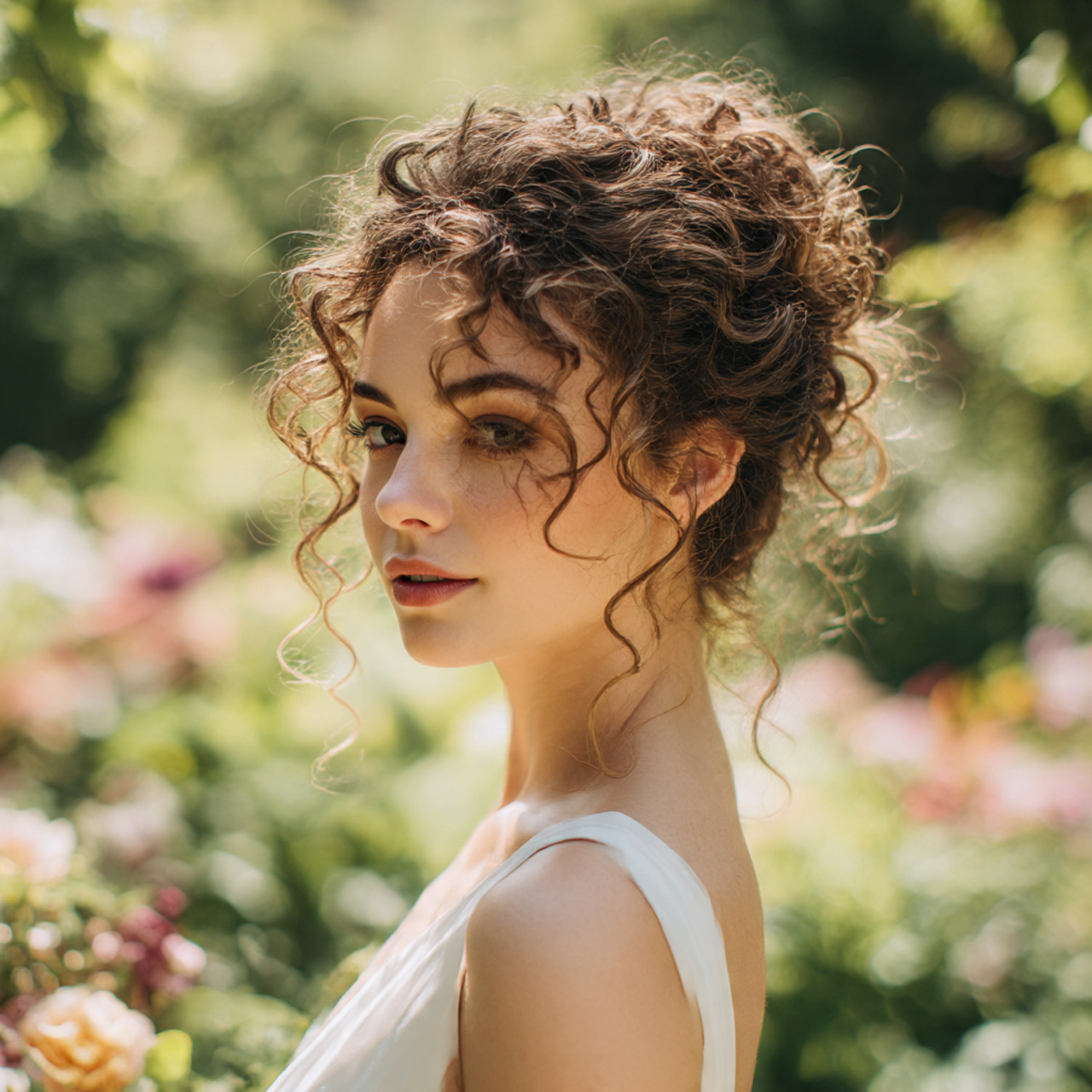
Updos look more polished and intentional when a few face-framing pieces are deliberately left out. Pulling all the front sections back completely creates a severe finish that removes the softness these layers are designed to provide. Leaving two to four curled pieces loose around the face adds dimension to any updo without extra effort.
Best for: Anyone who regularly wears their curly hair in updos or half-up styles Product: OGX Coconut Miracle Oil Frizz-Free Curl Defining Cream to smooth and define the pieces left loose around the face Pro tip: Finger-coil the loose face-framing pieces while they are still damp before putting the rest of the hair up. They will set in a clean, lasting curl shape throughout the day. Face shape: Oval and heart Stylist language: “I wear updos often. Can you cut my face-framing layers at a length that hangs naturally and softens the look when my hair is pulled back?”
Deep Conditioning for Healthy Layers
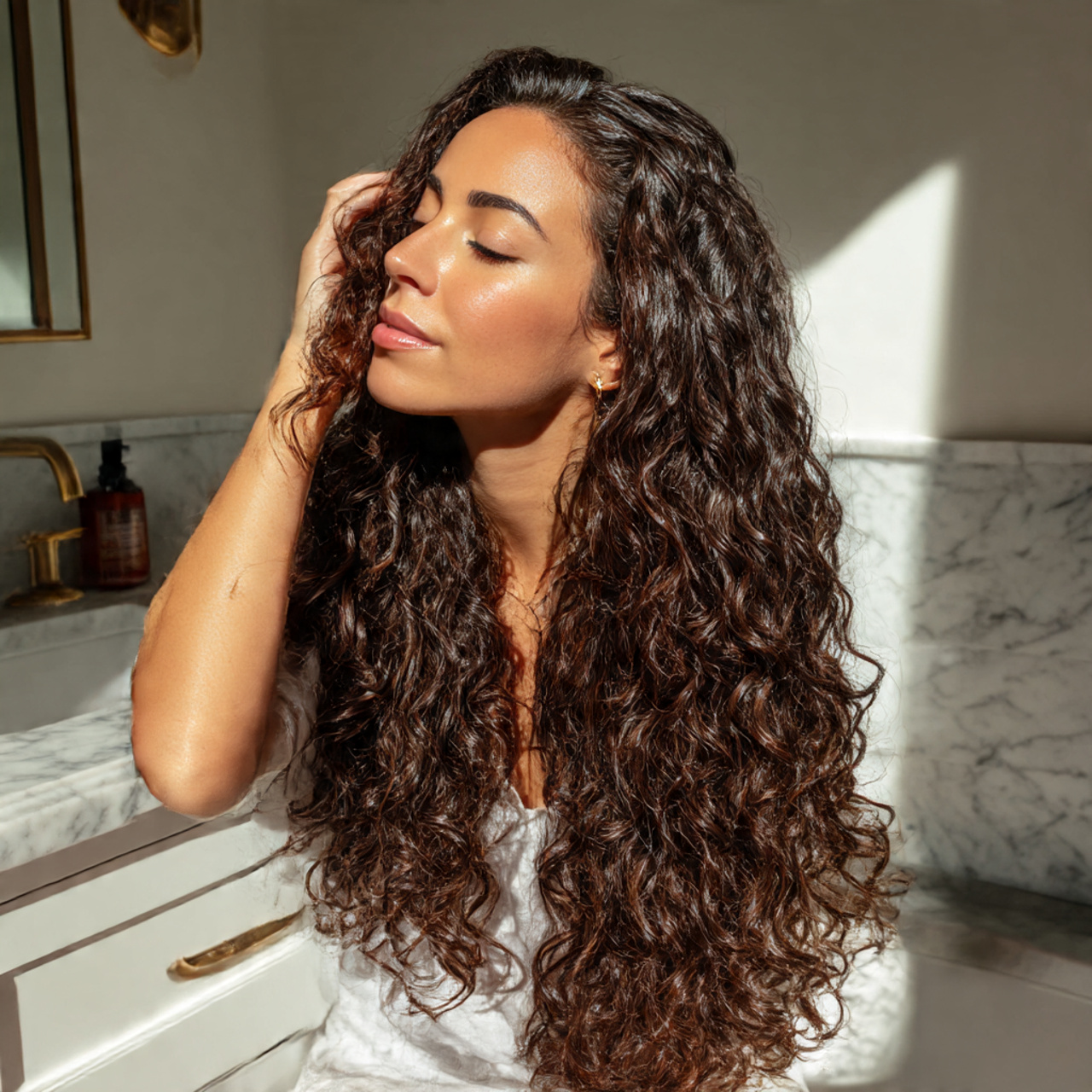
Layers expose more hair surface area than a single-length cut, which means moisture leaves the hair faster. A weekly deep conditioning session keeps the layers elastic, reduces breakage at the shortest pieces, and helps curls hold their shape longer between washes. Skipping this step consistently leads to layers that look dry and undefined ahead of any other part of the hair.
Best for: Anyone whose layers look dry or frizzy by the second day Product: Olaplex No. 8 Bond Intense Moisture Mask as a weekly treatment for layer integrity Pro tip: Apply deep conditioner from the ears down and spend extra time working it into the face-framing ends specifically, since those pieces handle the most contact and wear throughout the day. Face shape: All face shapes Stylist language: “My layers dry out very quickly. What deep conditioning treatment would you recommend to keep my face-framing pieces healthy between appointments?”
Visit Also: Hair Trends 2026
Why a Consultation Is Always Important
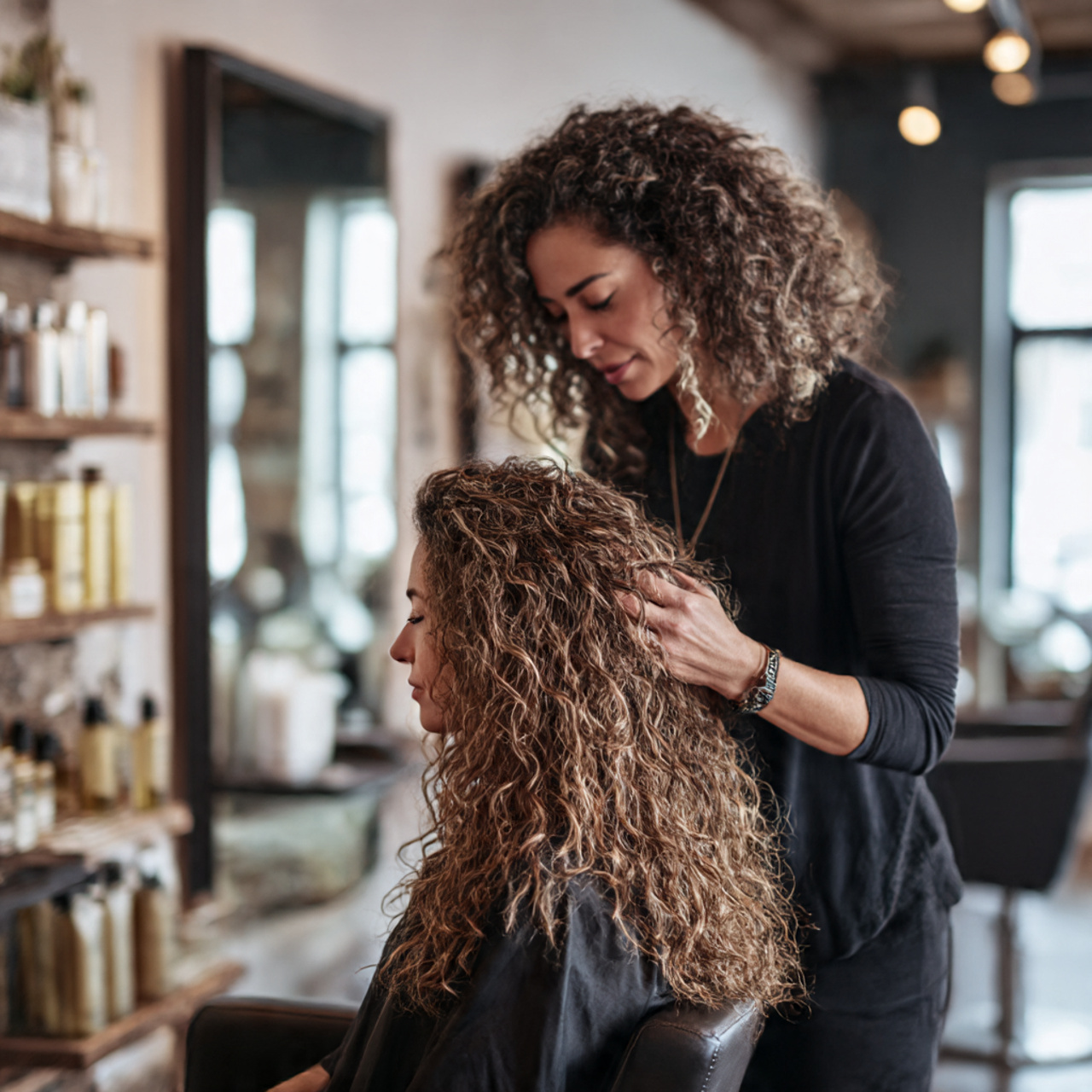
A good consultation changes everything about what happens in the chair. A stylist who sees your hair dry, understands your lifestyle, and discusses your goals will cut with far more precision than one who goes straight to the basin. This is not a nice-to-have. It is the single most impactful step in the entire appointment.
Best for: First-time visitors to a curly-specialist salon Product: Hask Argan Oil from Morocco Repairing Deep Conditioner as a prep treatment the night before the appointment Pro tip: Come to your consultation with three photos that show layer placement on the same curl type as yours. Matching the curl type in your reference photos removes almost all ambiguity from the conversation. Face shape: All face shapes Stylist language: “Before we start, can we take a few minutes for a dry consultation? I want you to see my natural curl pattern and shrinkage before we plan the cut.”
Boosting Root Volume in Long Curly Hair
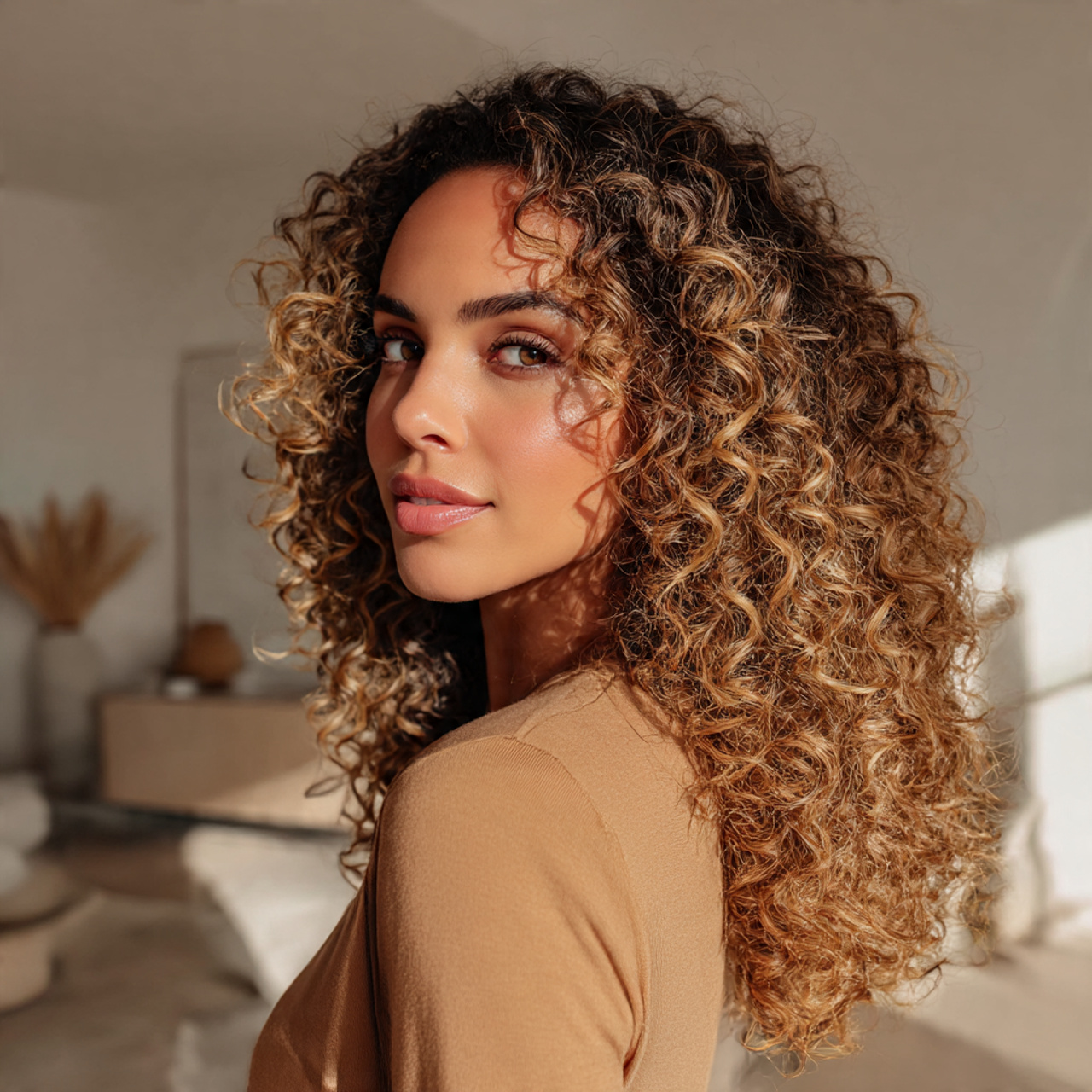
Long curls lose root lift quickly because the weight of the length pulls them flat within hours. Applying a root-lifting mousse or volume gel before diffusing and clipping the roots at the crown while drying addresses that problem directly. Remove the clips once the hair is fully cool, not just dry, and the lift holds significantly longer throughout the day.
Best for: Long curly hair that deflates at the crown within hours of styling Product: IGK Rich Kid Coconut Oil Gel as a root-lifting product that holds lift without flaking Pro tip: Use butterfly clips from Sally Beauty at the crown roots while diffusing and leave them until the hair cools completely. Heat locks the volume in place and cool air holds it there. Face shape: Round and oval Stylist language: “My roots always go flat. Can you show me a root-clipping technique that works with my face-framing layers for lasting lift?”
Layering for Coily Hair Types
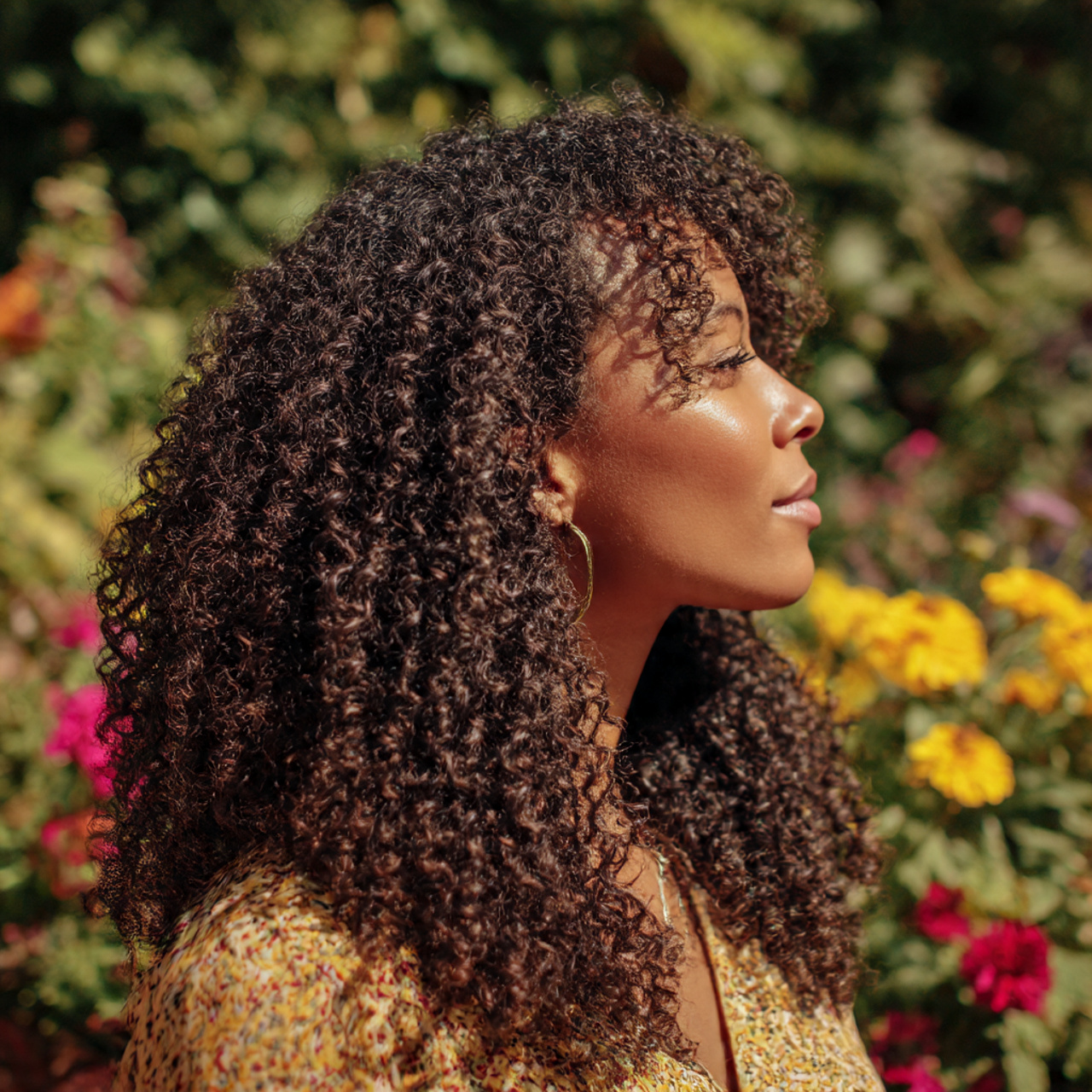
Coily textures shrink significantly when dry, which means every layer must be cut longer than the target to account for that change. A stylist who applies the same layering technique to coily hair that they use on looser textures will almost always cut the layers too short. Asking for an explicit shrinkage allowance is not optional for coily hair. It is the minimum baseline requirement for the cut to work.
Best for: Type 4a through 4c coily textures wanting face-framing definition Product: As I Am Naturally Double Butter Rich Daily Moisturizer for coil definition and moisture retention after a layered cut Pro tip: Ask your stylist to pull a single coil to its stretched length before cutting so both of you agree on the exact shrinkage factor being accounted for in the placement. Face shape: Round and heart Stylist language: “My coils shrink [X] inches when dry. Please add that full shrinkage allowance to every layer placement, especially the face-framing sections.”
Refreshing Face-Framing Curls Between Washes
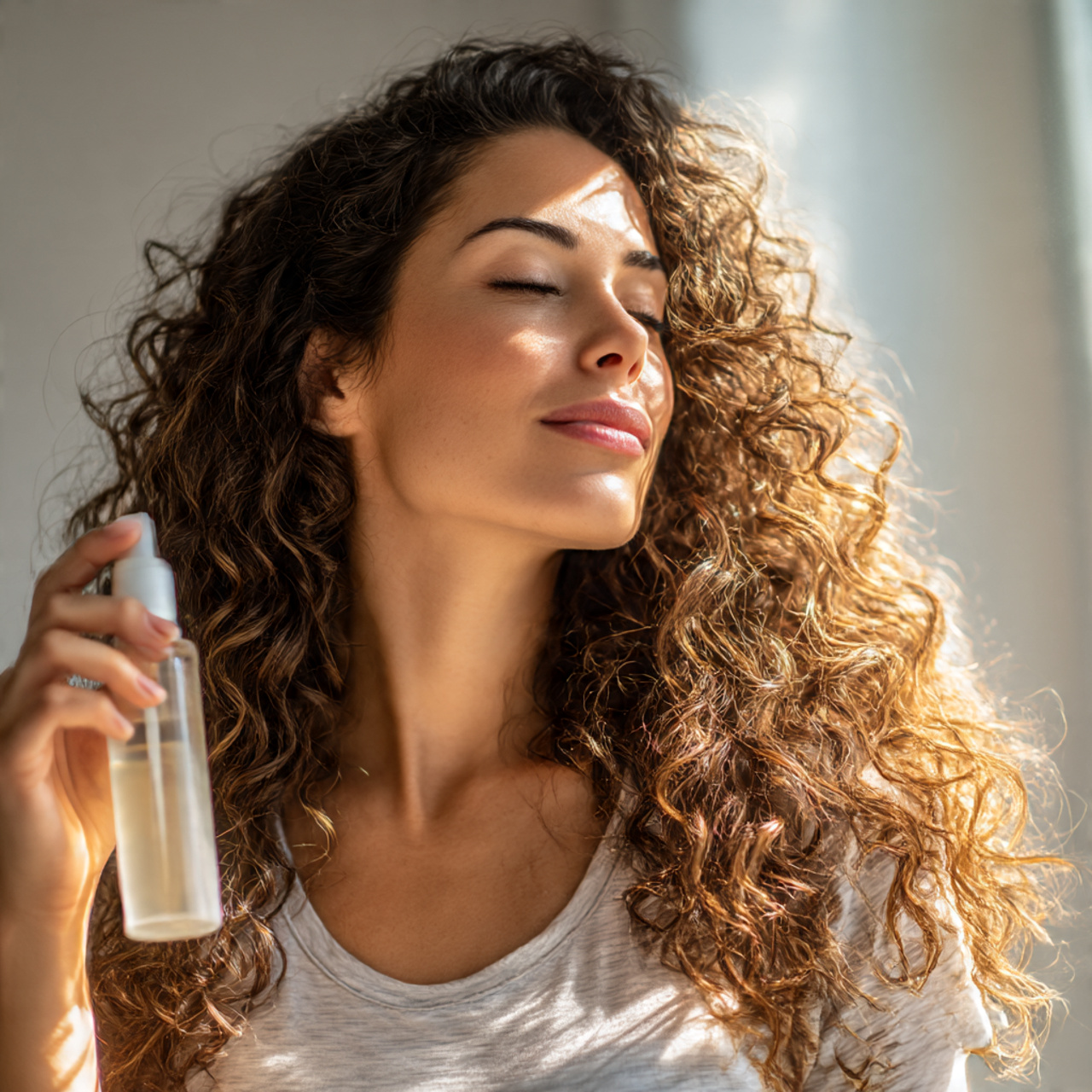
The front pieces lose their curl shape first because they are handled more throughout the day than any other section. A quick spray of water mixed with a small amount of leave-in conditioner reactivates each curl without requiring a full wash. Scrunch the front sections gently and let them air-dry for a clean, refreshed face frame in under ten minutes.
Best for: Anyone whose front layers go limp or frizzy before wash day arrives Product: Kinky Curly Knot Today Leave-In Detangler diluted in a travel spray bottle for daily refreshing Pro tip: Keep a small spray bottle in your bag specifically for your face-framing layers. A targeted two-second spritz and scrunch refreshes the front without touching the rest of the hair. Face shape: All face shapes Stylist language: “Can you show me a quick between-wash refresh routine specifically for my face-framing layers so I can maintain them without a full wash day?”
Frequently Asked Questions
What is the best way to ask for long layered curly hair face framing at a salon? Tell your stylist you want face-framing layers starting at the jaw, cut dry, and blended into the full length behind them. Bring a reference photo that matches your specific curl type for the clearest communication.
How often should face-framing layers be trimmed? Every three to four months is the standard schedule for the overall shape. The face-framing pieces specifically may need a small clean-up trim closer to the two-month mark because shorter ends break faster.
Do face-framing layers work on coily hair? Yes, but they require extra length allowance to account for shrinkage. Ask your stylist to pull a coil to its stretched length before cutting so the final placement is accurate once the hair dries and springs back up.
What products work best for keeping layered curls defined? Medium-hold gels and lightweight foams outperform thick creams for layered curls because they let each layer move and define individually without weighing sections together. Apply to soaking wet hair for the cleanest result.
How do I add volume to my face-framing layers without getting frizz? Apply a hold product to soaking wet hair, let it form a cast, and wait until the hair is fully dry before scrunching. Touching curls while they are still setting disrupts the curl shape and causes frizz instead of the bounce you are looking for.
Final Thoughts
Long layered curly hair face framing is one of the most flexible and flattering options for textured hair of any length. It adds structure at the front, removes weight where curls need room to lift, and makes daily styling feel less like a battle and more like a routine.
The cut works best when it is supported by honest communication with your stylist, the right product weight for your curl type, and a consistent moisture routine that keeps the face-framing pieces healthy between visits. These three elements are what turn a good haircut into a great one.
Whatever your curl pattern or lifestyle, the foundation of this style stays the same: layers that work with your texture instead of flattening it and face-framing pieces that lift toward your features instead of pulling away from them.
Here is the detail that most guides will not tell you: the angle of a face-framing layer should mirror the angle of your cheekbone. When that alignment is correct, the entire face reads as lifted and defined without any change to makeup, length, or color. That single detail separates a precision curly cut from a generic one.
The right cut does not fight your curls. It gives them exactly what they need to do their best work every single day.
Save this guide before your next salon appointment and share it with a curly-haired friend who deserves a cut that finally works for them.