27 Medieval Princesses Hairstyles Ideas That Deliver Instant Royal Drama
You have spent hours searching for Medieval Princesses Hairstyles Ideas and still feel no closer to knowing which style will actually work for your hair type, your event, or your skill level. The images look stunning but the instructions stop there. You are left with inspiration and no real path forward.
This happens to almost everyone who dives into historical hairstyling. The category is enormous, spanning centuries of court fashion, and most guides drop a list of looks without explaining what makes each one work or how to actually build it from scratch.
The real problem is that most medieval hair content is created by people who have never set a snood, wrapped a coif, or pinned a crown braid that needed to survive six hours of movement. The result is beautiful photography paired with advice that falls apart the moment you try it at home.
With over a decade of hands-on work in period-accurate hairstyling for film sets, Renaissance editorial shoots, and cosplay competitions, I know exactly what separates a style that photographs like royalty from one that collapses before the first photo is taken.
This guide breaks down every single style in this collection with clear descriptions, real product recommendations, and one actionable pro tip per look so you can replicate what you see without guessing.
By the time you finish reading, you will know exactly which style fits your hair type, face shape, and occasion. If you have been searching for Medieval Princesses Hairstyles Ideas that go beyond pretty pictures, this is the guide you have been waiting for.
The single most important rule in medieval hairstyling is this: build the structure before adding the decoration. No accessory saves a poorly constructed base. In 2026, braided updos with period-accurate hairnets and circlets are surging across bridal Pinterest boards and fantasy editorial shoots, making this the ideal moment to master them properly.
Braided Crown Hairstyle
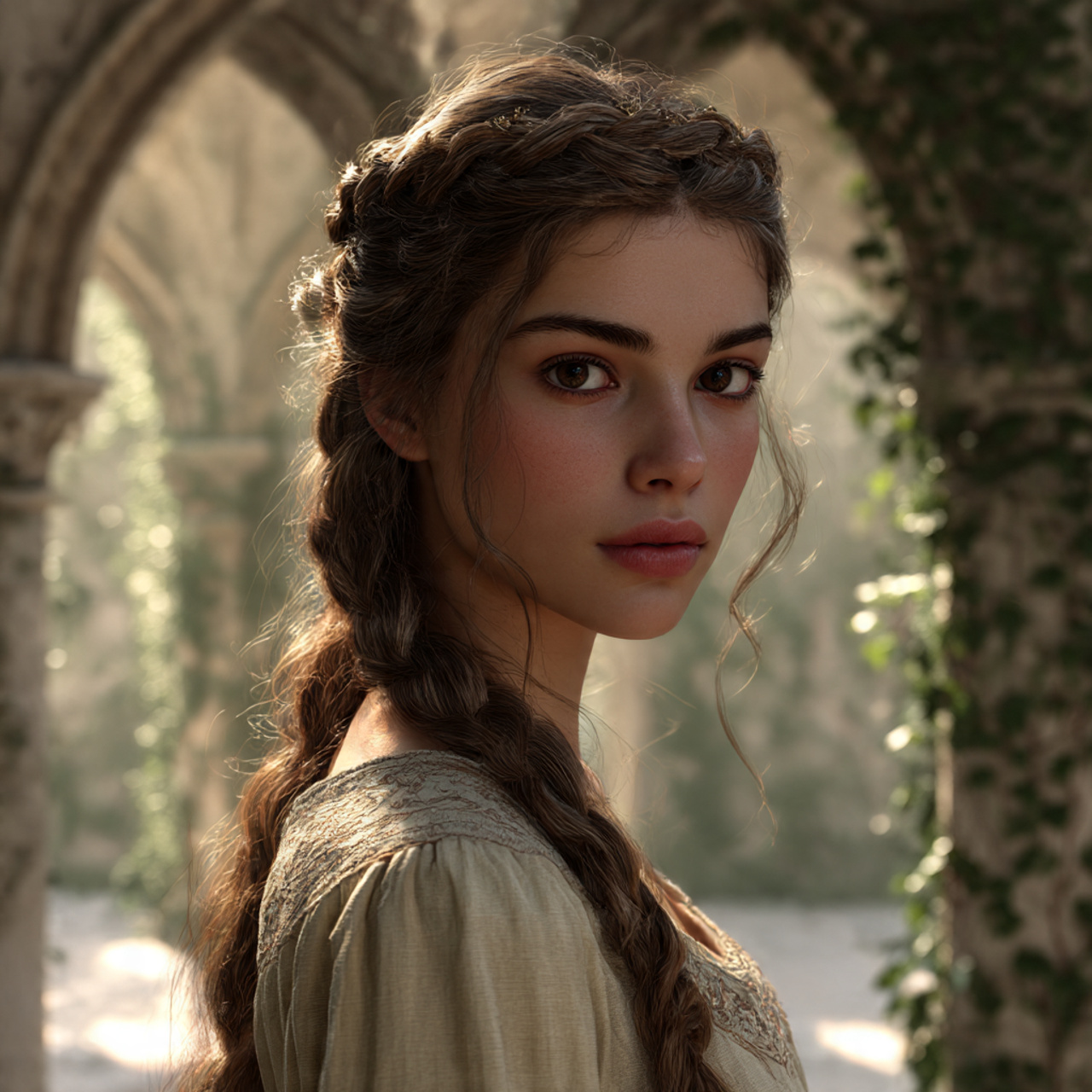
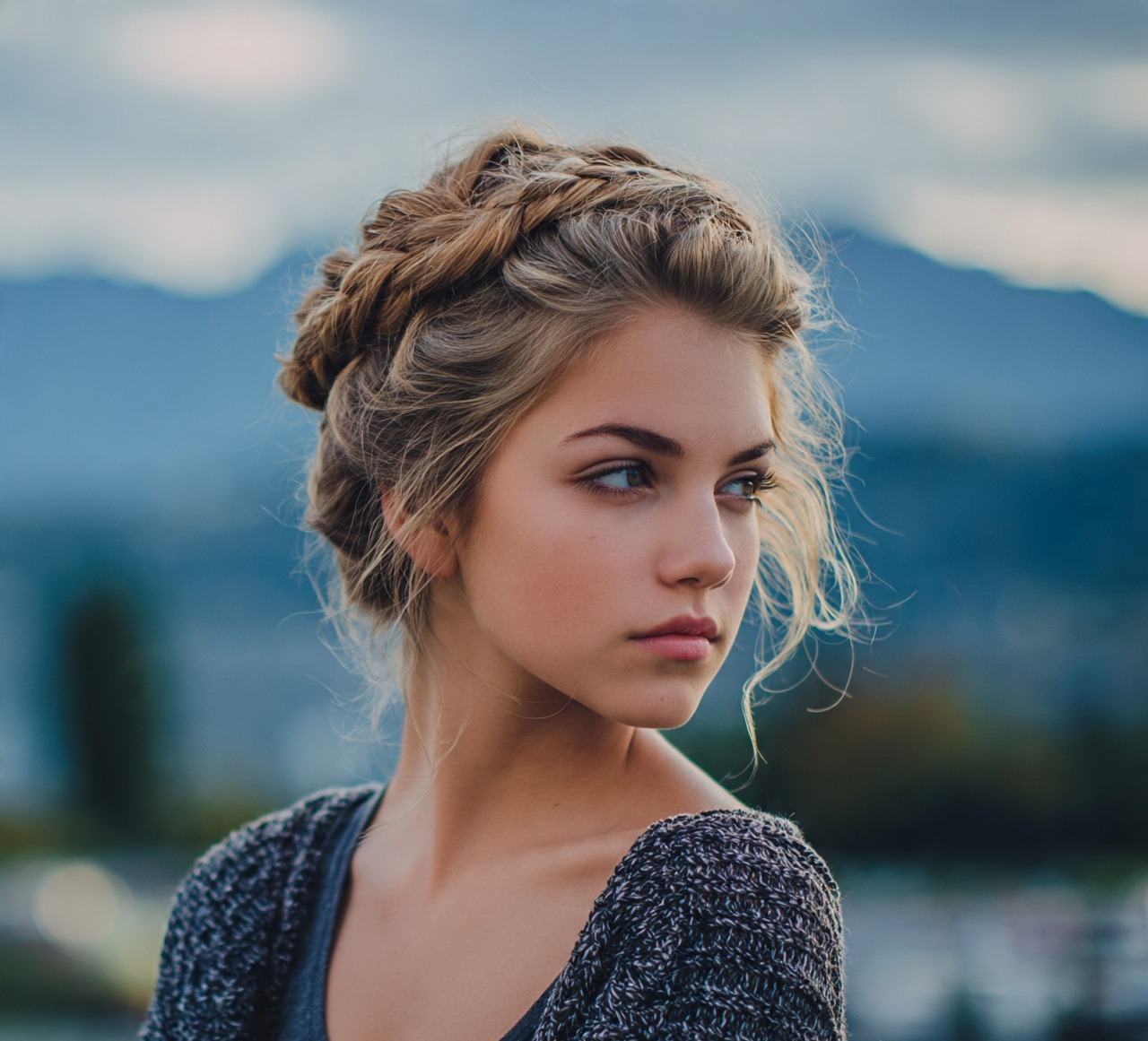
The braided crown is the most recognized silhouette in all of medieval hairstyling. You take one or two large Dutch or three-strand plaits and wrap them around the perimeter of the head, creating a living circlet made entirely from your own hair. The finished look is striking from every angle and holds through hours of movement without requiring complex pinning techniques.
What makes this style genuinely reliable is its structural stability once the base is set correctly. Hairstylists on Renaissance editorial shoots return to this look repeatedly because it adapts to both fine and thick hair with minimal product and virtually no touchups needed.
Best for: Formal events, Renaissance fairs, bridal photography Product: Ouai Hair Oil to smooth flyaways before braiding Pro tip: Pancake each section of the braid outward before wrapping to double its apparent thickness without adding any extra hair. Face shape: Oval and heart Barber language: “I want a Dutch braid crown with the braid wrapped flat and pinned close to the head, tight at the nape.”
Long Cascading Braid
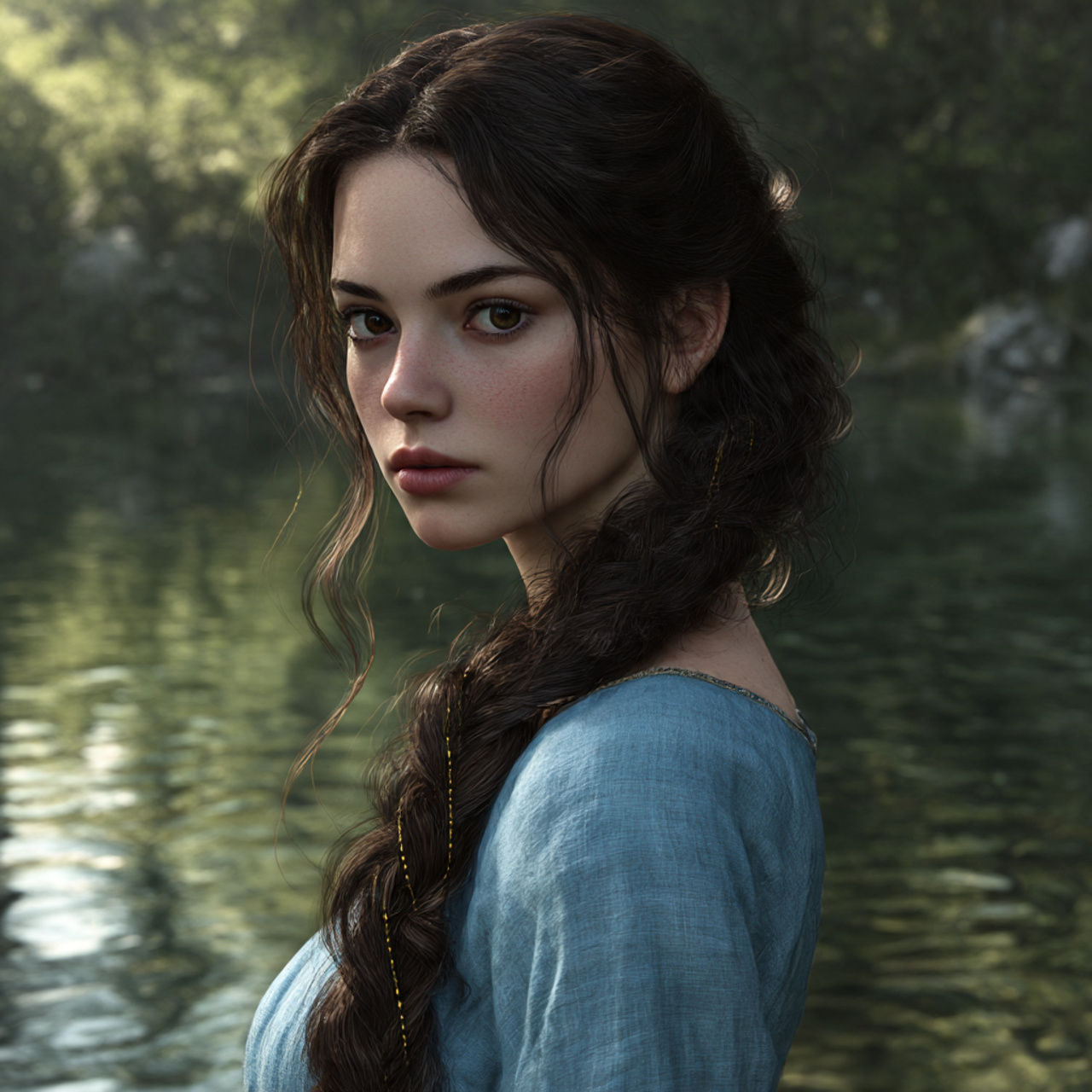
A single thick three-strand braid beginning at the crown and falling straight down the back is one of the oldest and most powerful images in medieval hairstyling. It communicates youth, strength, and effortless elegance without requiring any updo structure at all.
The key is beginning the braid at the very top of the crown rather than at the nape, which creates a more dramatic taper and a longer visual line. Start with well-moisturized, detangled hair so every section sits smooth and even throughout the full length.
Best for: Everyday medieval looks, themed events, long hair showcasing Product: Moroccanoil Treatment applied to damp hair before braiding Pro tip: Start the braid at the very top of the crown and gently tug each loop outward after completing it for a thicker, fuller plait. Face shape: Round and square Barber language: “I want a single three-strand braid starting at the crown, kept tight and even from root to tip.”
Woven Ribbon Adornment
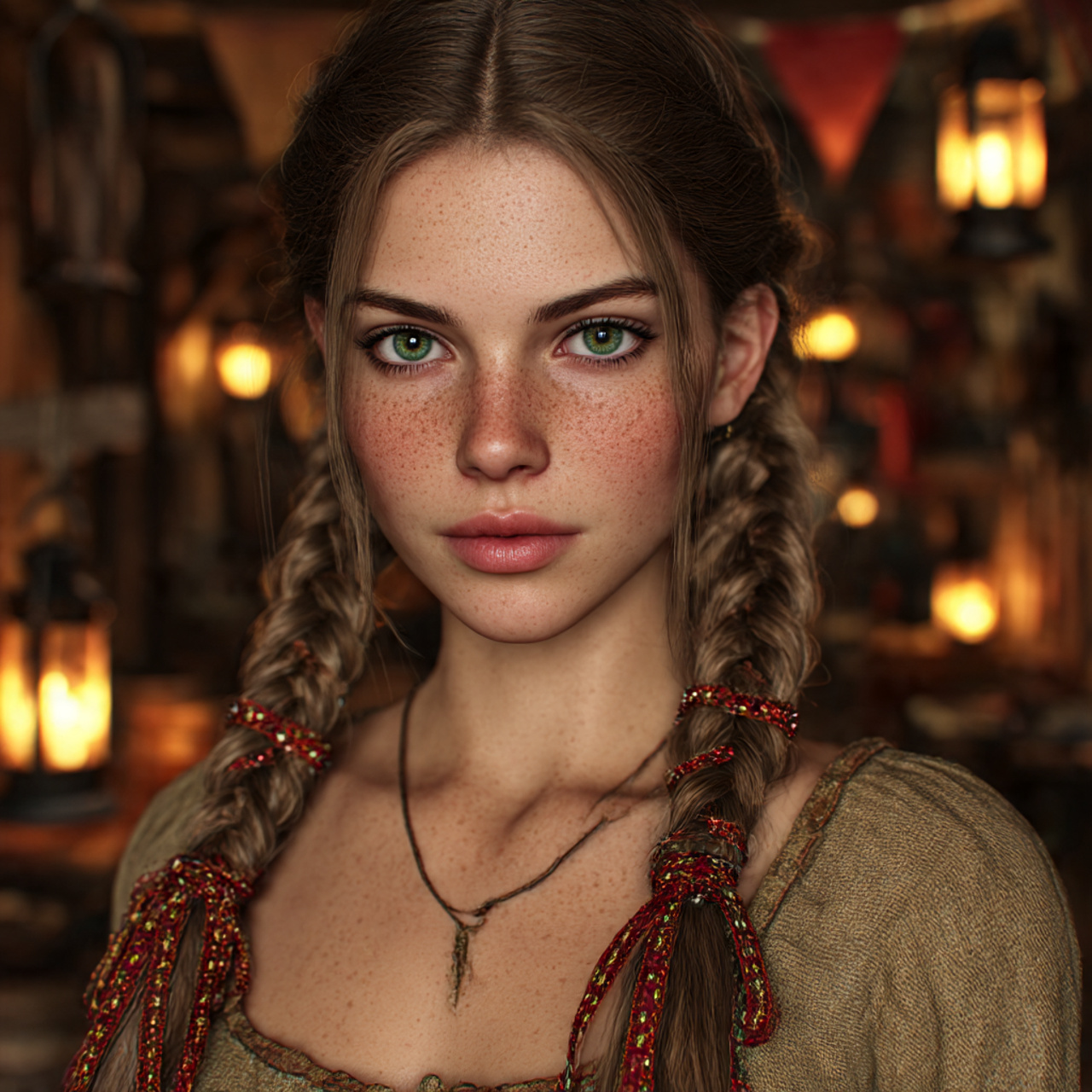
Weaving ribbon directly into a braid transforms a simple plait into a deliberate decorative statement. Jewel-toned velvet or satin ribbons in burgundy, forest green, or cobalt blue woven into each crossing section add both color and texture to any medieval style without requiring a single accessory beyond the ribbon itself.
Placement matters as much as the ribbon choice. A ribbon woven through two symmetrical braids at shoulder level reads as formal and balanced. The same ribbon running through a loose side plait introduces movement and a more romantic feel.
Best for: Themed parties, Renaissance fairs, bridal accessories Product: Offray velvet ribbon in 3/8 inch width for clean integration Pro tip: Cut ribbon to 20 percent longer than the braid before starting so you never run short midway through. Face shape: All face shapes Barber language: “I want a standard three-strand braid with a velvet ribbon woven through every crossing from root to end.”
Pearl and Gemstone Hairnet
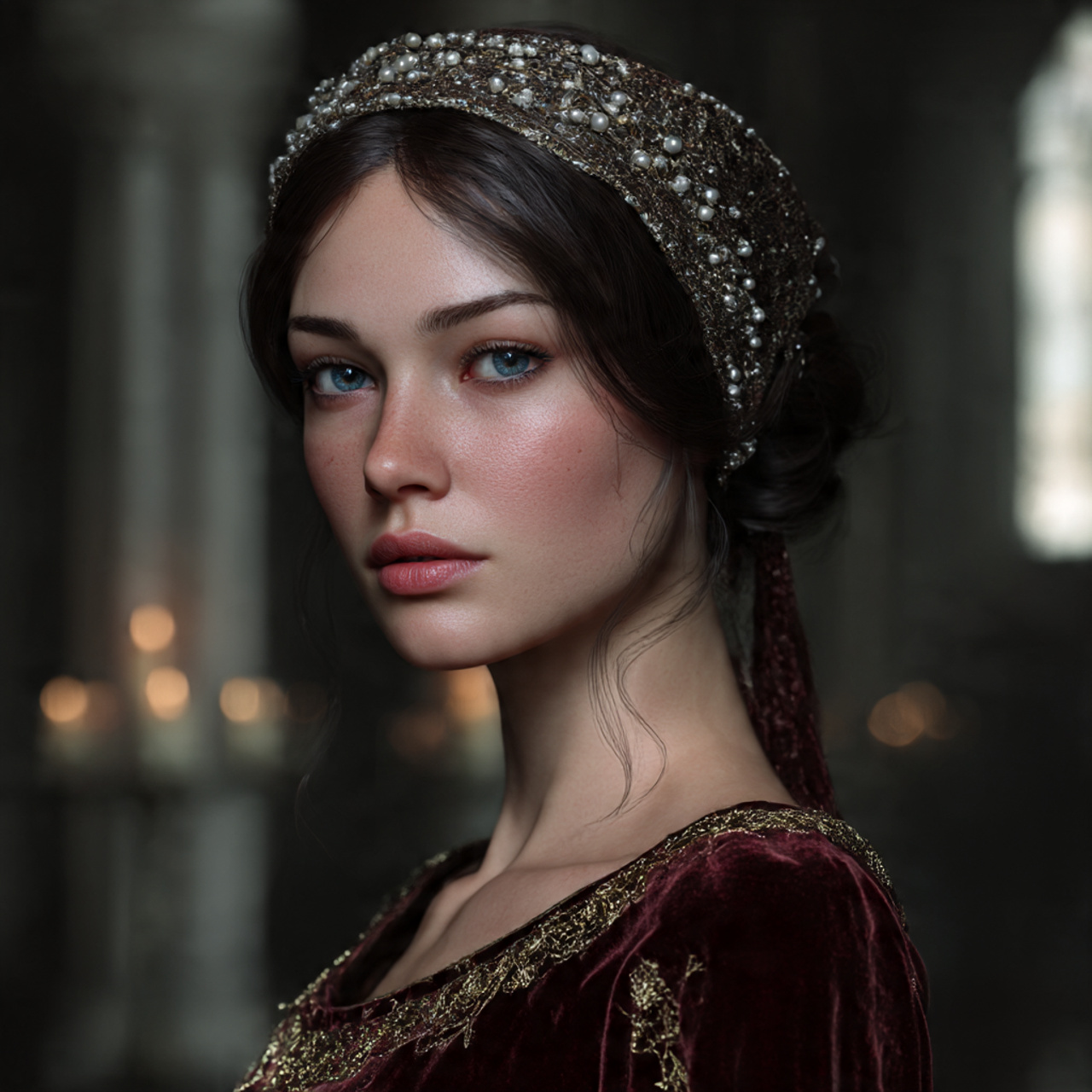
A jeweled snood encasing the back sections of the hair in a beaded net is one of the most elevated styles in medieval fashion. Pearl-studded nets contrast beautifully against dark hair and add sparkle against light hair without competing with facial features or earrings.
The hair beneath the snood must be pulled back cleanly into a low bun with no flyaways. Choose a net where the mesh is fine enough that the pearl or crystal placements are prominent rather than lost against a chaotic background.
Best for: Formal events, weddings, high-status costumes Product: Lux Hair Studio beaded snood in antique gold Pro tip: Mist the finished net with Kenra Platinum Silkening Mist to reduce static and keep flyaways from pushing through the mesh openings. Face shape: Oval and oblong Barber language: “I want a smooth low bun at the nape covered completely by a jeweled snood with no flyaways visible at the hairline.”
Simple Half-Up Twist
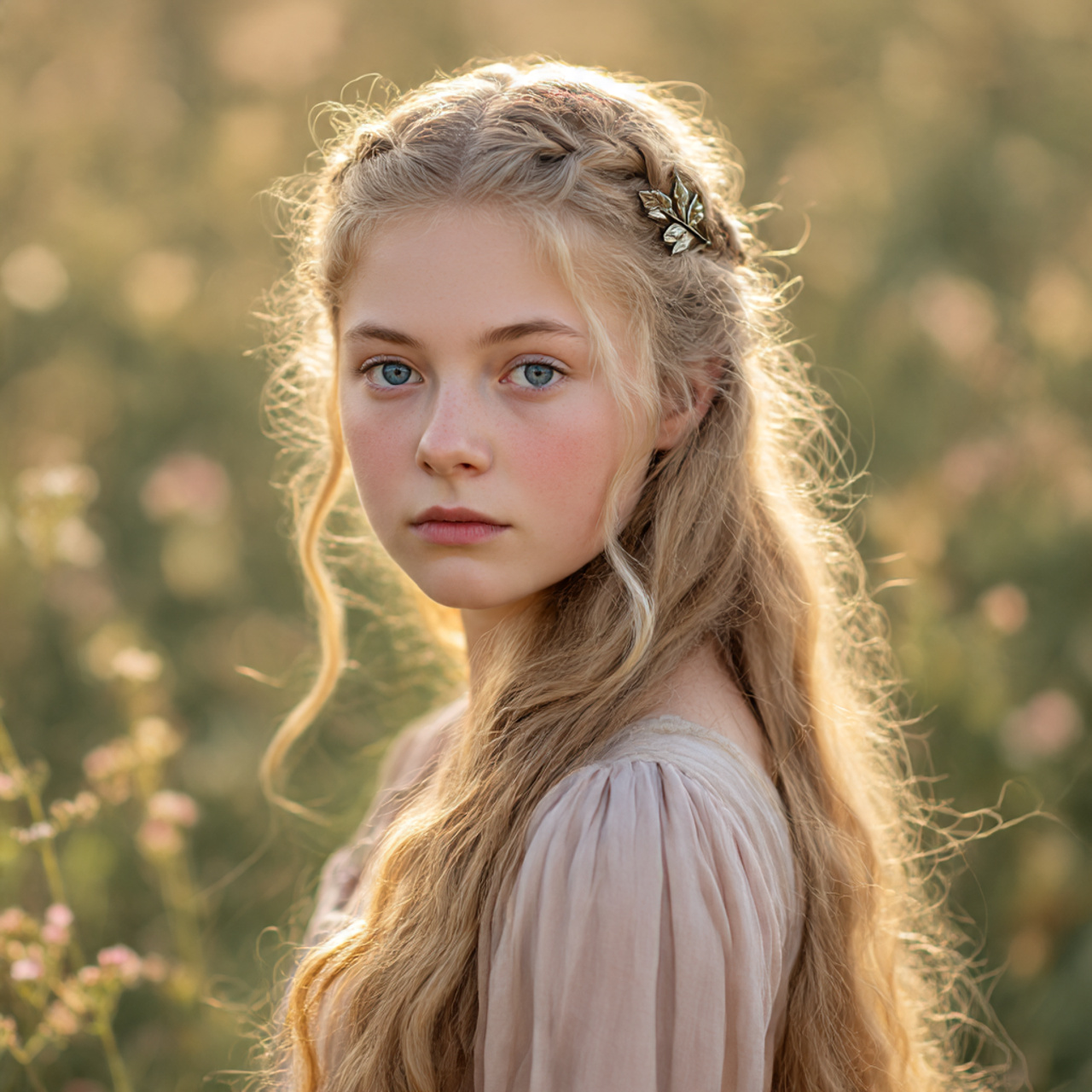
Two front sections of hair twisted back toward the center and pinned together is a deceptively simple technique that reads as polished and intentional. What most people miss is the direction of the twist: turning each section away from the face rather than toward it creates a cleaner, more lifted shape that stays in place longer.
In period hair work, this style was finished with a single decorative pin at the point where the two twists meet. That focal point draws the eye upward and keeps attention on the face, which is exactly what this type of princess-level style should accomplish.
Best for: Everyday wear, casual medieval events, beginner styling Product: Kitsch spiral pins for invisible hold at the twist junction Pro tip: Spritz the front sections with Kevin Murphy Session Spray before twisting to add grip without creating any stiffness. Face shape: Heart and oval Barber language: “I want two sections from the temples twisted back and pinned at the center crown, leaving everything else down.”
Velvet Headband Look

A deep velvet headband in a rich jewel tone is one of the fastest ways to achieve a medieval aesthetic without picking up a single bobby pin. The fabric itself does the work. The texture, depth of color, and the way velvet catches soft light create instant period drama.
Place the band about one inch behind the hairline so it sits securely rather than slipping backward throughout the day. A band with a single centrally placed rhinestone or cameo functions as a practical circlet without the weight of actual metalwork.
Best for: Quick medieval looks, casual costume events, beginner styling Product: Anthropologie velvet embroidered headband in emerald or burgundy Pro tip: Slide the band forward before setting it and then push it back into final position so the natural tension of the placement keeps it anchored for hours. Face shape: Round and square Barber language: “I want a wide velvet headband placed one inch behind the hairline with hair smoothed flat on top and loose in the back.”
French Plait Variation

Two symmetrical French plaits traveling down the sides of the head and meeting at the nape in a joined tail creates a look that feels more complex than it actually is to build. The symmetry creates an immediate sense of order and deliberateness that reads as regal in nearly every setting.
An advanced variation involves loosening each completed plait by pulling the loops outward after finishing, creating a thick, textured appearance that transforms a familiar braid into something unmistakably editorial. This works particularly well on medium to thick hair.
Best for: Period events, photography, medium to thick hair Product: IGK Good Behavior Spirulina Protein Smoothing Spray before plaiting Pro tip: Braid on slightly damp hair so tension is consistent from root to end and the lobes of each plait stay uniform in width. Face shape: Oval and heart Barber language: “I want two French plaits starting at the temples, running parallel down the sides, and joined into a single tail at the nape.”
Waterfall Braid Styling
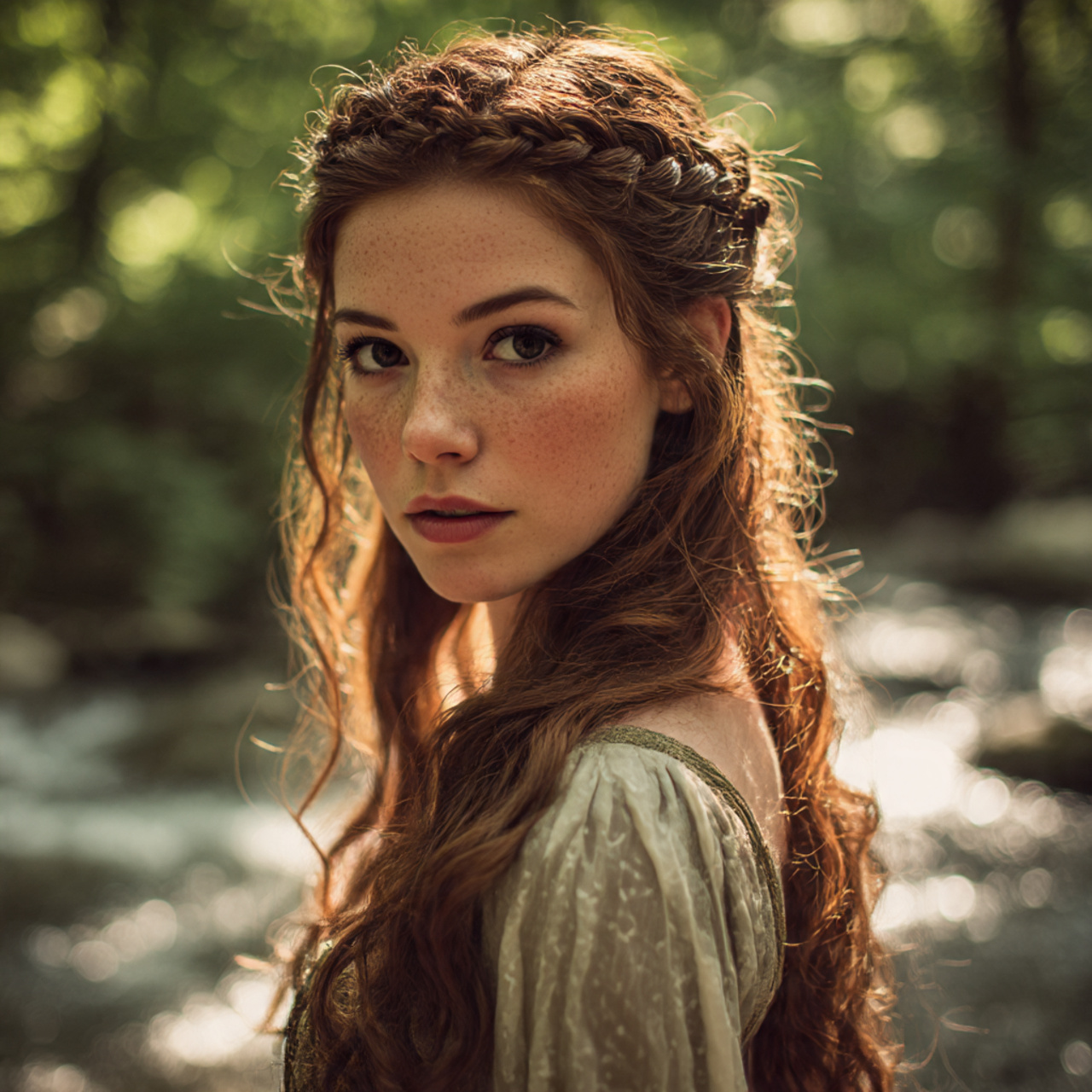
The waterfall braid creates a lacy, open effect across the back of the head by continuously dropping strands as you work, leaving them to flow downward through the braid body like a cascade. The result is romantic and delicate without the heaviness of a full updo.
This style works best as a horizontal border near the crown with the rest of the hair left in loose waves below. The contrast between the structured braid at the top and the free movement beneath is what gives the look its ethereal, fairytale quality.
Best for: Romantic styling, outdoor events, flowing long hair Product: L’Oreal Elnett Satin Extra Strong Hold hairspray to set the dropped strands Pro tip: Mist the sections that will be dropped with sea salt spray before braiding so they hold their position rather than going limp immediately. Face shape: All face shapes Barber language: “I want a waterfall braid running horizontally at the crown with the dropped strands left loose and the rest of the hair in soft waves.”
Flowing Hair with Circlet
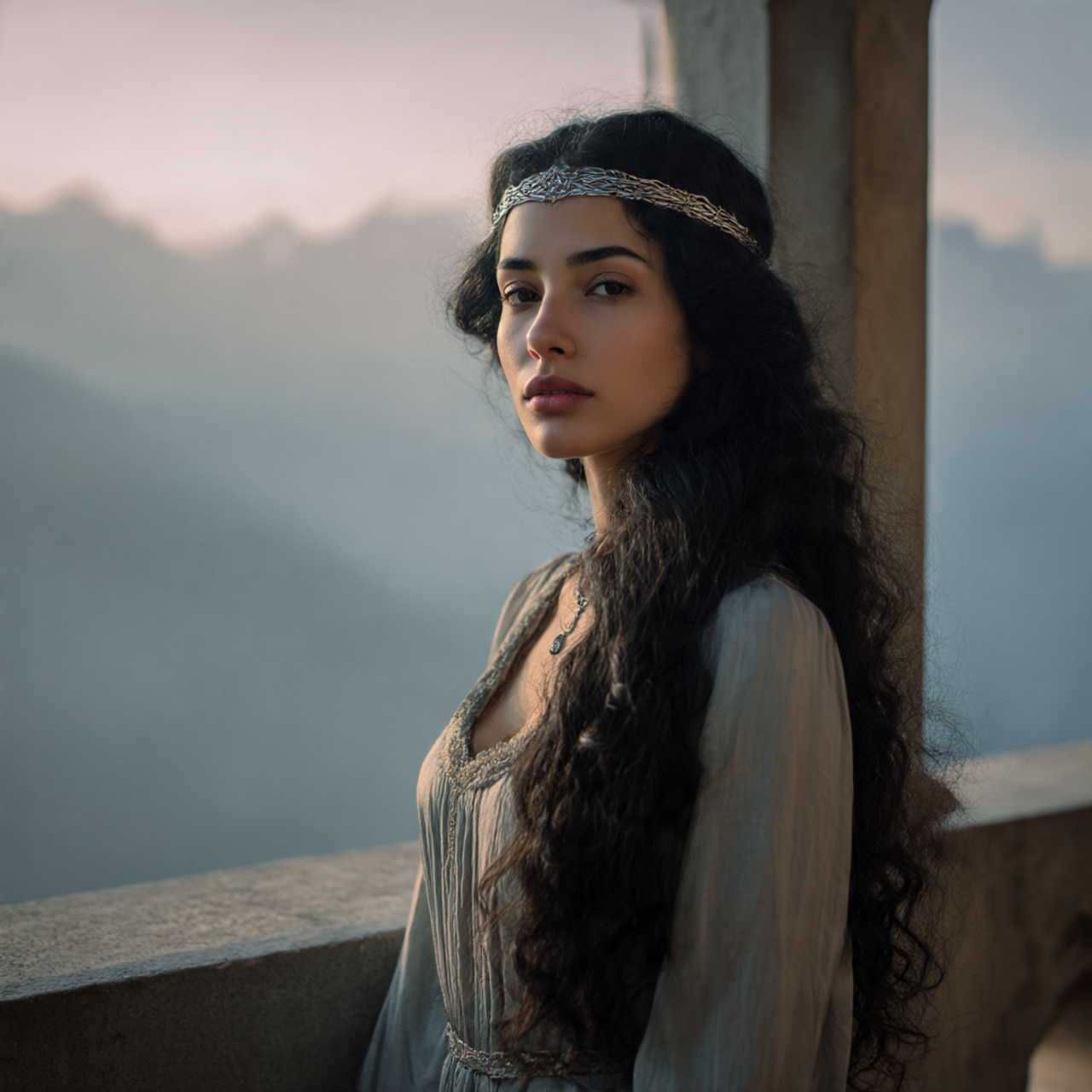
Clean, healthy hair left completely loose with a metal circlet placed either high on the head or low across the forehead is the ultimate statement of natural confidence in medieval hairstyling. The circlet does not need to be ornate. Its shape and material carry the look entirely on their own.
The real technique here lies in hair preparation. Hair must have body and movement, not just surface shine. A soft wave amplified with a Dyson Airwrap using the barrel attachment creates exactly the kind of flowing, dynamic texture that makes a simple circlet feel like a crown.
Best for: Photography, weddings, long healthy hair Product: Dyson Airwrap for soft, defined waves before placing the circlet Pro tip: Apply a drop of Bumble and Bumble Hairdresser’s Invisible Oil before blow-drying to prevent frizz in the loose sections throughout a long event. Face shape: Oval and round Barber language: “I want my hair blown out with a natural wave and a plain metal circlet placed low across the forehead.”
Tapered Fishtail Braid

The fishtail braid is created by dividing hair into two sections and alternately pulling thin strands from the outer edge of each section across to the other. The result is a complex-looking herringbone pattern that tapers naturally toward the end and has a texture no three-strand braid can replicate.
For a distinctly medieval finish, create two side fishtail braids and twist them together at the nape into a single coil pinned at the base. This layered approach combines two weaving patterns in one look, producing a level of visual complexity that photographs exceptionally well under any lighting.
Best for: Editorial photography, formal events, thick hair Product: Redken One United All-In-One Multi-Benefit Treatment to smooth sections before braiding Pro tip: Pull each strand firmly and evenly on every cross to maximize the herringbone texture. The tighter the pull, the more dramatic the pattern reads. Face shape: Oval and heart Barber language: “I want two fishtail braids at the sides twisted together and pinned into a low coil at the nape.”
Double Rope Braid
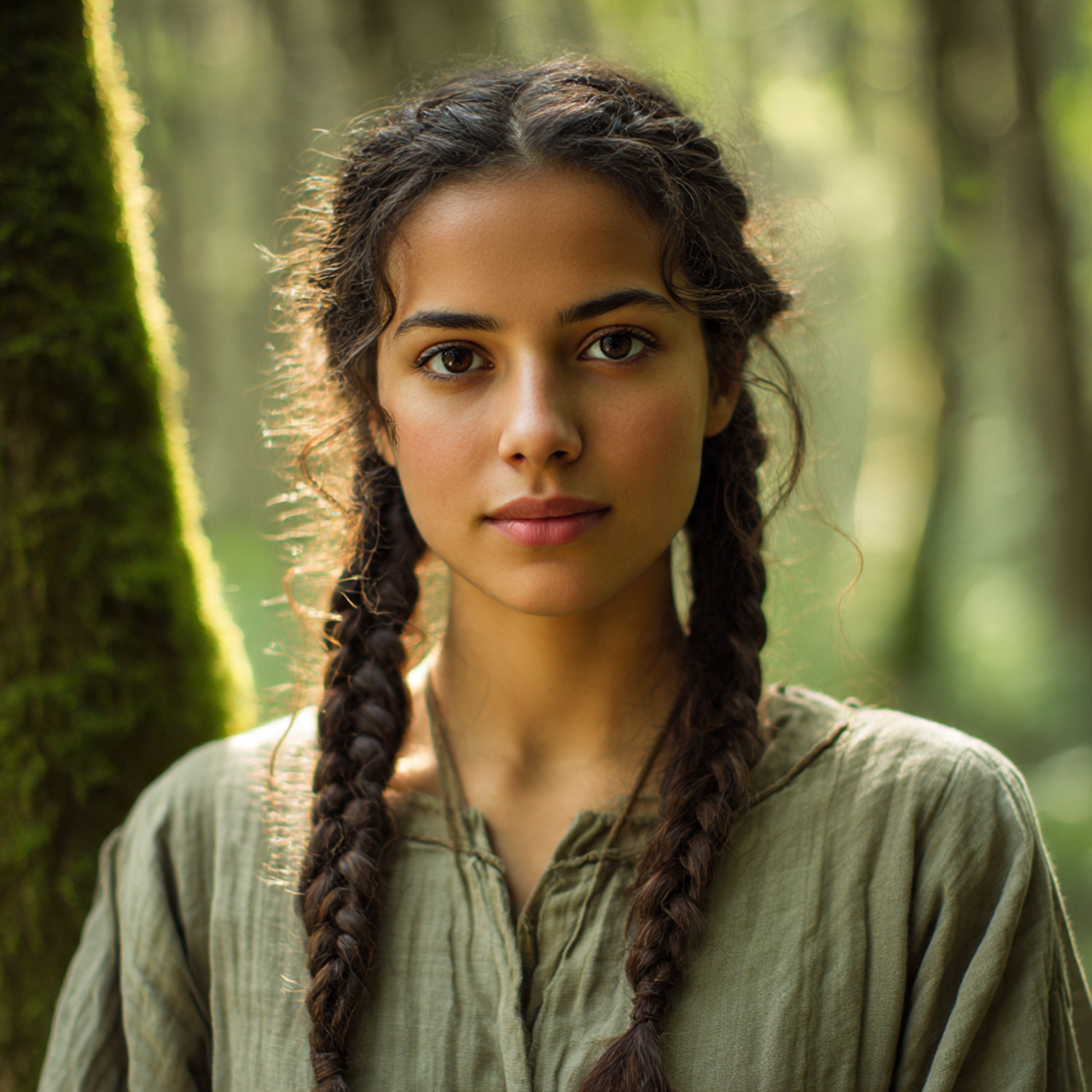
Two rope braids, each made by wrapping two strands tightly around each other, one on each side of the head, create a framing effect that is both practical and deeply decorative. The twist pattern catches light differently than a flat plait, giving it a dimensional quality that reads beautifully in photographs.
Gather the two finished rope braids at the back and secure them in a low ponytail or coil them into a small, neat bun. For events where the style needs to hold for six or more hours without touchups, this approach is one of the most secure options in the medieval category.
Best for: Long events, themed weddings, practical styling Product: Kitsch Elasten hair ties for invisible, secure anchoring Pro tip: Over-twist each section slightly before wrapping the two strands together so the rope retains its structure even after a full day of movement. Face shape: Round and square Barber language: “I want two rope twists starting at the temples, running alongside the head, and joined at the nape in a low coil.”
Hair Embellished with Floral

Fresh or faux flowers woven into braided structures or placed around the base of an updo instantly connect a medieval hairstyle to the natural, symbolic world. Small roses, baby’s breath, or daisies woven into a plait add color and softness that no metal accessory can achieve.
For events where fresh flowers are impractical, dried flowers from Afloral.com in ivory, blush, or lavender stay intact all day and photograph as well as fresh blooms. Weave them through the braid at intervals of about four inches for a balanced, deliberately spaced arrangement.
Best for: Outdoor weddings, spring events, romantic occasions Product: Afloral dried flower stems in blush or ivory for long-lasting wear Pro tip: Secure each flower stem with a single bobby pin run parallel to the stem so the bloom cannot rotate or droop between wearings. Face shape: Heart and oval Barber language: “I want flowers woven into a braid at even intervals, secured with pins, and the stems hidden completely within the plait.”
Maiden’s Knot Updo
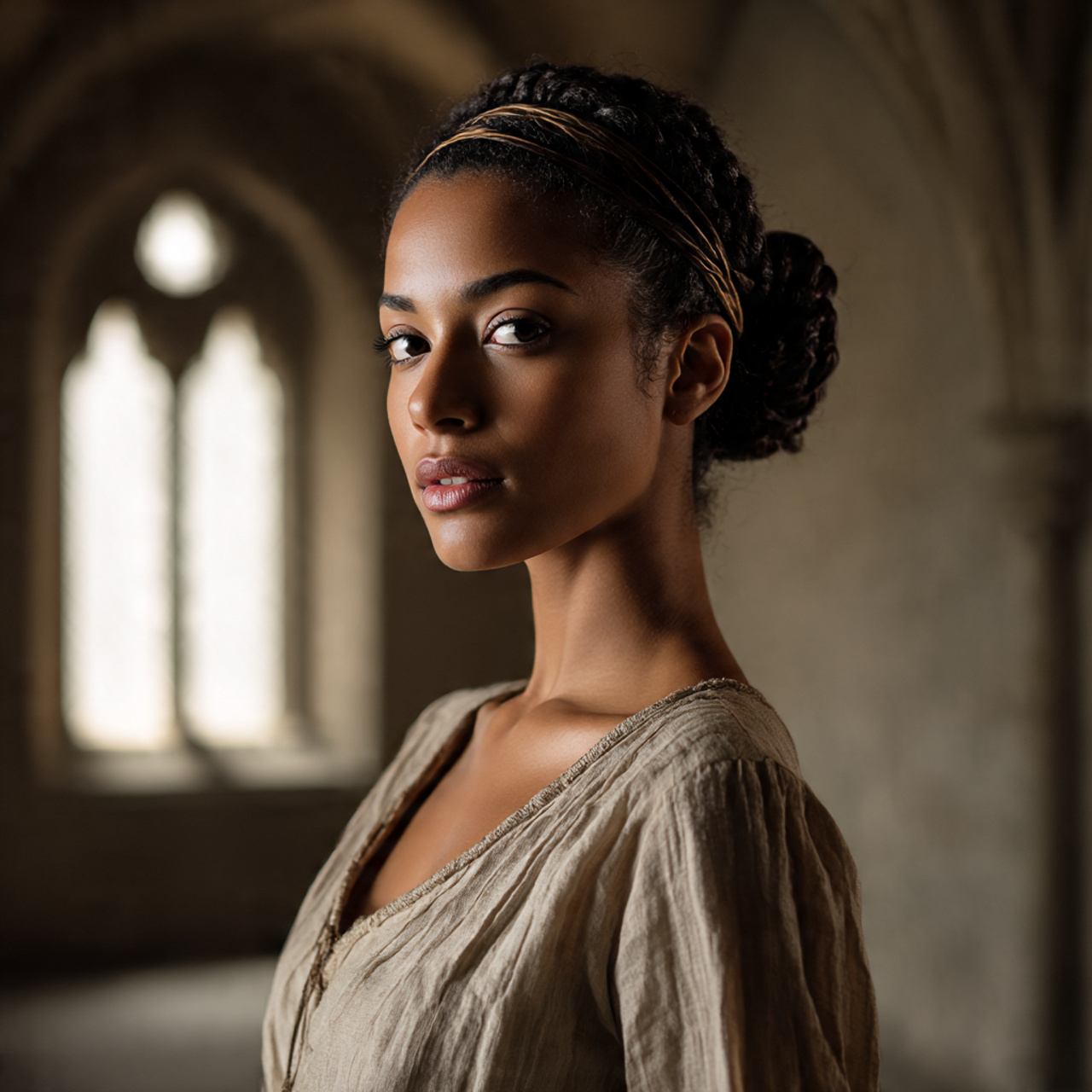
A tight coil at the crown or nape is one of the cleanest and most structured choices in the medieval updo category. The knot itself is simple but it provides a perfect canvas for decorative cord wrapping or ribbon detail that transforms a plain shape into something deliberately elegant.
Wrap the finished knot with a thin length of braided velvet cord or metallic floss from Herrschners before securing the final pin. The cord traces the outer line of the coil and adds a subtle texture that elevates the entire look without adding weight to the structure.
Best for: High-status costumes, formal dinners, showcasing statement accessories Product: Herrschners metallic floss in gold or silver for decorative cord wrapping Pro tip: Secure the knot with a single large U-pin through its center before wrapping so the cord application does not shift the base shape while you work. Face shape: Oblong and oval Barber language: “I want a smooth tight coil pinned at the nape with metallic cord wrapped around it and no loose ends visible.”
Medieval Low Bun
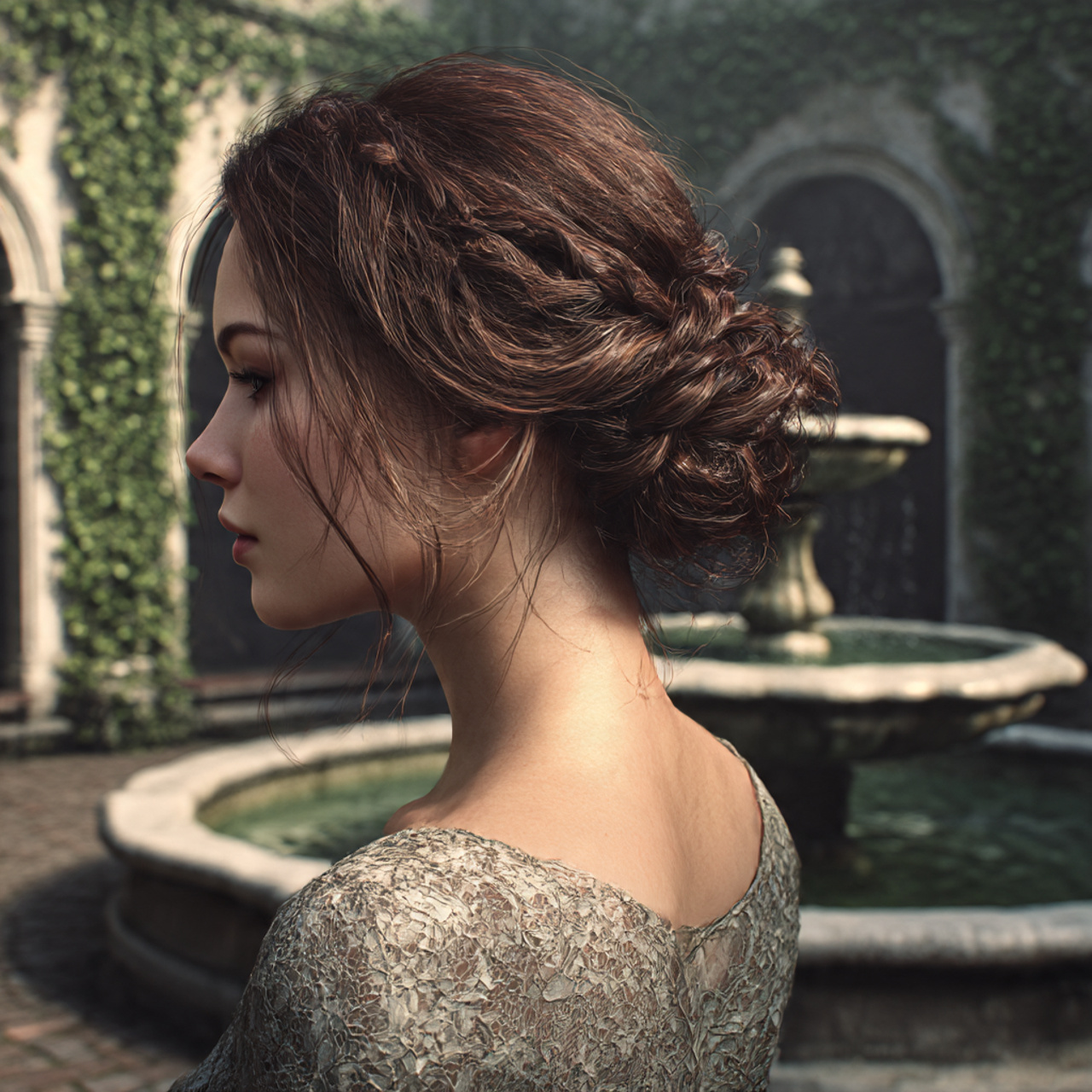
A low bun at the base of the skull or split into two symmetrical coils placed just above the ears is the foundation of nearly every formal medieval hairstyle. It creates a clean, uncluttered silhouette that allows heavy earrings and elaborate necklines to read without any competition from the hair.
Before pinning the final bun, wrap the gathered hair section in a small square of silk organza. This adds a layer of softness and opacity to the shape, elevating the finish from a simple bun to something deliberately constructed. This is a detail used in period film set hairstyling that almost never appears in DIY tutorials.
Best for: Showcasing jewelry, formal events, film and theater costuming Product: Slip Silk Hair Scrunchie to anchor the initial ponytail before coiling Pro tip: Wrap the bun in a 6×6 inch square of silk organza before inserting the final pins to add a period-accurate layered texture with zero added volume. Face shape: Round and heart Barber language: “I want a low bun at the nape placed tight against the head, finished with no visible elastic or flyaways.”
Jeweled Snood Coverage

A jeweled snood that incorporates large, prominently placed stones and metallic filigree directly into its net body creates a dramatically different visual impact than a simple pearl net. The stones catch light and draw attention to the back of the head from across a room.
The snood works best when paired with sleek, tightly managed hair at the sides and front. Any flyaway or loose section competes with the ornate network of the snood and diminishes its effect. The contrast between smooth hair and elaborate netting is the entire architectural point of this style.
Best for: Formal costume events, bridal photography, editorial Product: Maria Elena Headpieces jeweled snood in antique gold for ready-to-wear quality Pro tip: Stretch the snood over the bun from bottom to top rather than top to bottom so the jewels distribute evenly across the surface without clustering at one point. Face shape: Oval and oblong Barber language: “I want a sleek flat updo with a jeweled snood pulled over the entire bun, no hair escaping at the edges.”
Braided Coif Integration
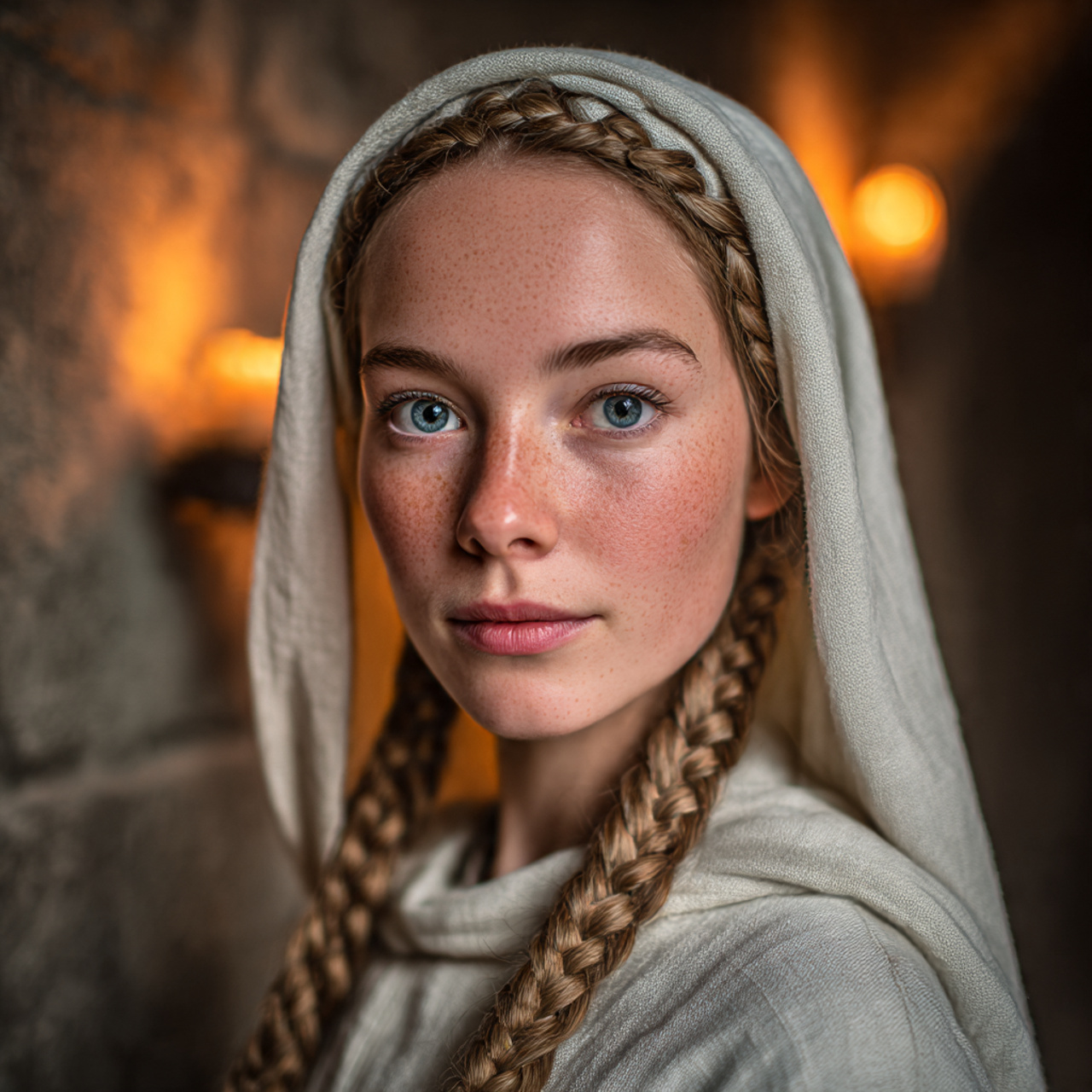
A white linen coif worn beneath a veil or circlet with two tight braids emerging from underneath creates a layered silhouette that reads as both modest and sophisticated. The braids serve as the visible decorative element below the headpiece, framing the lower face and neck.
The coif must sit flush against the hairline with no gapping or bunching. Pin it directly to the hair using flat clips before any braids are created so it remains completely stable throughout the styling process.
Best for: Period-accurate costumes, theater, living history events Product: Dharma Trading Co. natural linen fabric for handmade coif construction Pro tip: Dampen the linen coif slightly before placing it so it molds to the head shape and stays flat against the scalp without requiring heavy pinning. Face shape: All face shapes Barber language: “I want a white linen coif pinned flat to my head with two tight braids emerging below it at the temples.”
Temple Braid Accent
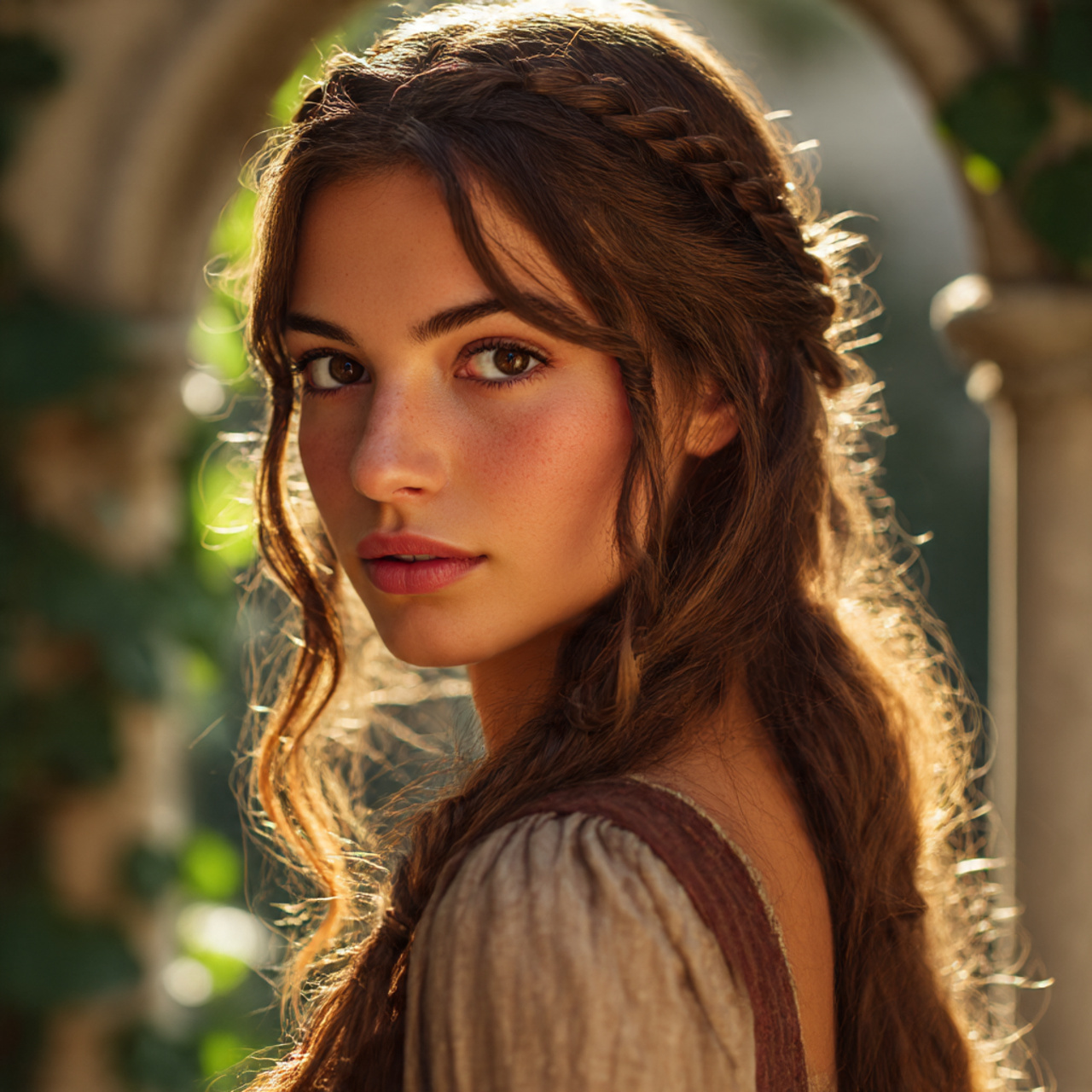
Thin, tight braids at the temples, woven from small sections near the hairline, frame the face with a delicacy that no headband or clip can achieve. These accents draw the eye toward the cheekbones and eyes while leaving the rest of the style completely open and adaptable to any occasion.
Adorn each temple braid with two or three tiny gold seed beads placed at intervals before the final loop of each section is closed. This detail is what separates a modern festival accent from a genuinely period-inspired medieval style.
Best for: Face-framing detail, everyday elevated looks, adding depth to simple styles Product: Beadaholique gold seed beads in size 11/0 for lightweight adornment Pro tip: Thread beads onto each hair strand before braiding rather than after so they are locked in place and cannot slide out during the day. Face shape: Oval and heart Barber language: “I want two thin braids at the temples with small gold beads woven through them, pinned behind each ear.”
Crown of Thorns Braid
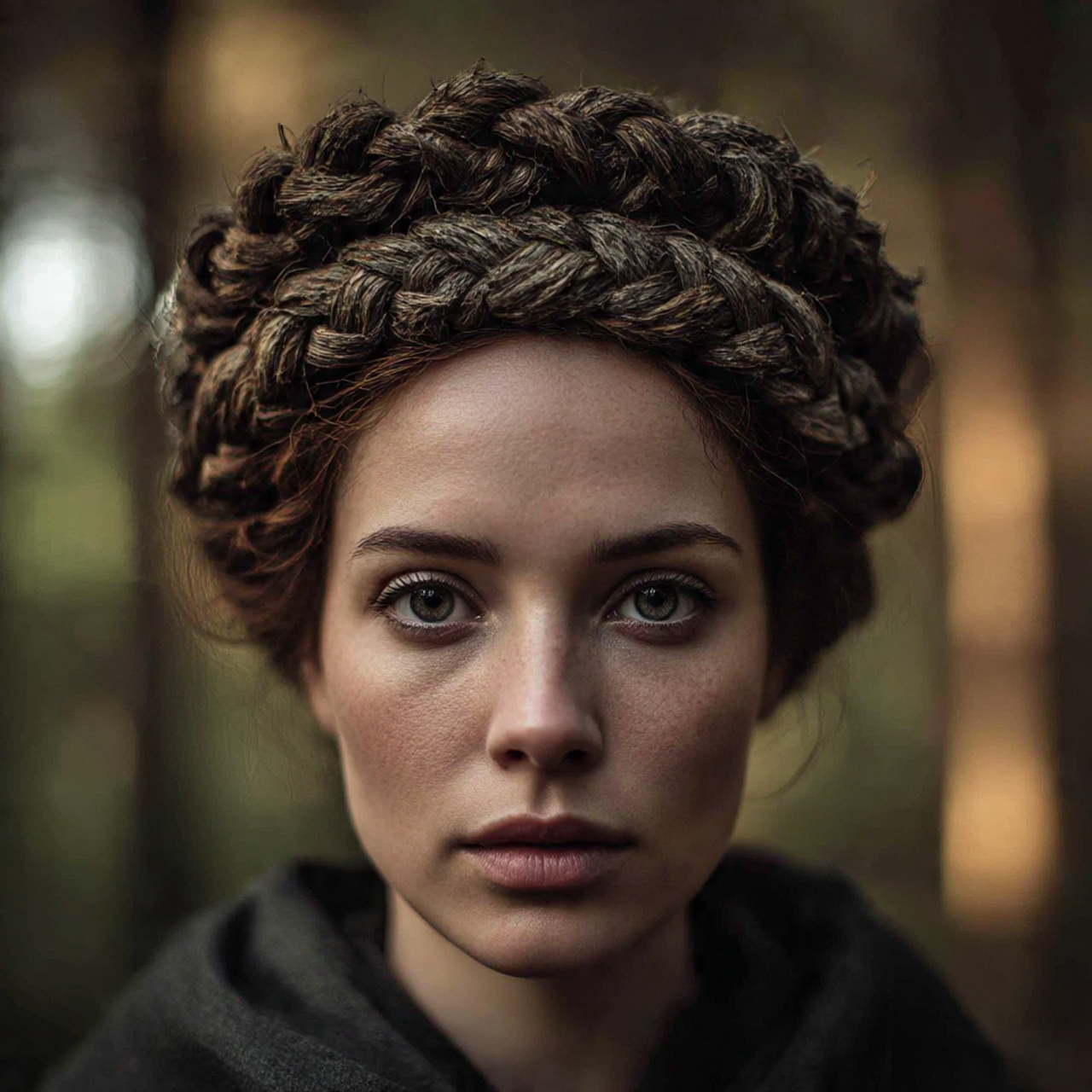
A thick Dutch braid that is deliberately pancaked to maximum volume and then wrapped tightly around the head creates a dramatic, sculptural crown effect. The protruding loops give the style its distinctive thorny texture that reads as genuinely bold and intentional.
This style requires hair with natural volume or product-assisted body. Work Kenra Platinum Thickening Spray through the hair before braiding and pull each loop outward immediately after completing that section, before the next section is formed, so the texture builds consistently as you go.
Best for: Editorial photography, theatrical styling, volume showcasing Product: Kenra Platinum Thickening Spray for pre-braid volume building Pro tip: Wrap the completed crown braid with a single strand of fine gold wire to add structure and prevent the loops from collapsing throughout a long event. Face shape: Oval and round Barber language: “I want a Dutch braid fully pancaked into a voluminous crown, wrapped tightly around the head and pinned at the nape.”
Glimmering Gold Thread Weave

Fine gold thread used in place of a single hair strand throughout a braid creates a shimmer effect that moves naturally with the hair. Unlike metallic ribbon, thread integrates seamlessly into the braid structure and catches light subtly rather than creating an obvious decorative band.
DMC Light Effects Metallic Embroidery Floss in gold E3821 is fine enough to blend cleanly with most hair textures and strong enough to not break midway through a full-length braid. Thread it through a double rope braid or a simple plait and allow it to be the sole decorative element with no accessories competing for attention.
Best for: Subtle formal occasions, photography, dark and medium hair Product: DMC Light Effects Metallic Embroidery Floss in gold E3821 Pro tip: Double the thread length before starting so it has enough visual weight to register inside the braid without knotting or pulling during the weaving process. Face shape: All face shapes Barber language: “I want gold metallic thread braided through as a single strand from root to end, kept subtle and even throughout.”
Visit Also: Hat Hairstyles
Asymmetrical Side Sweep
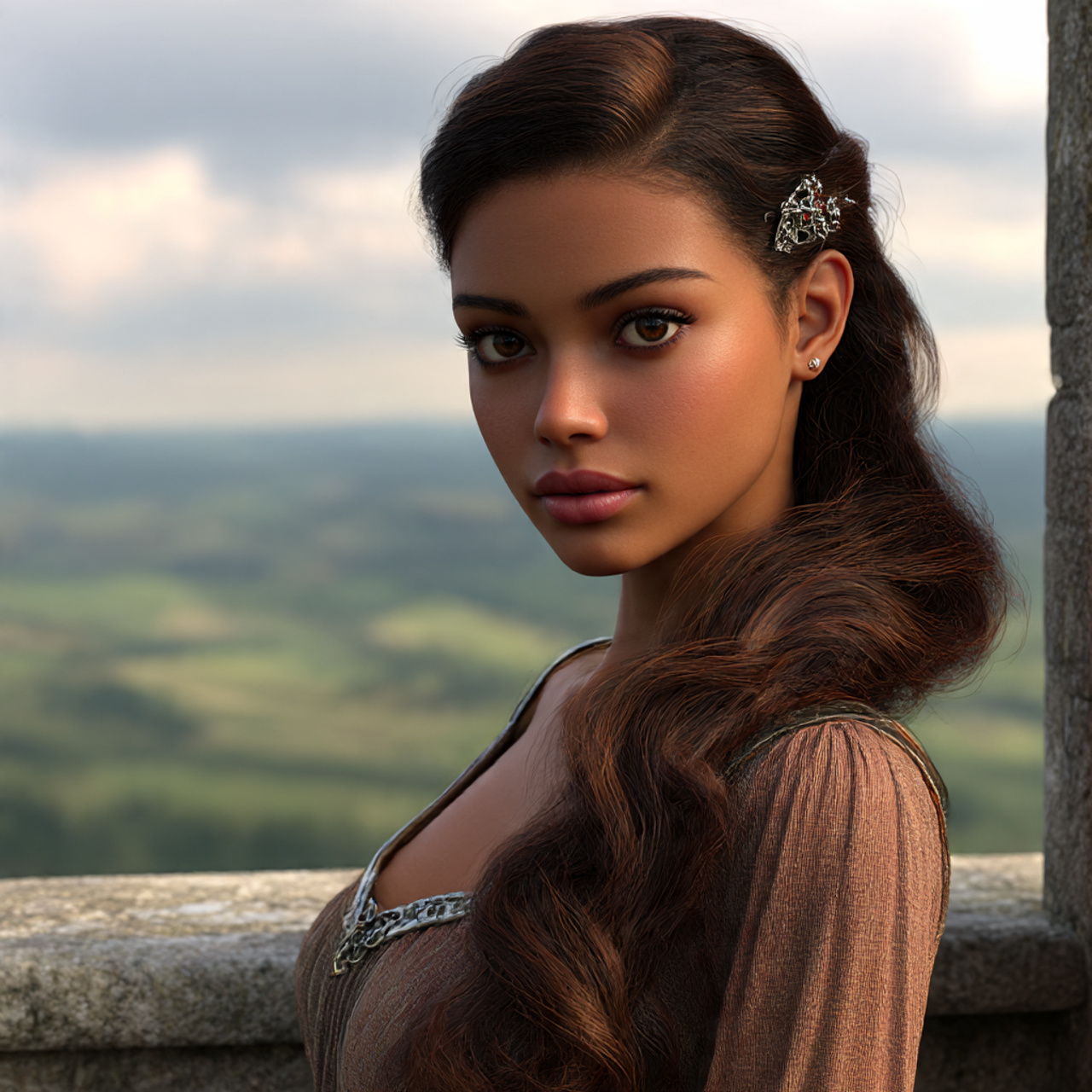
A deep side part with the majority of the hair swept dramatically across one shoulder creates a dynamic, directional silhouette that breaks the strict symmetry of most medieval styles. A large decorative brooch or pin placed near the ear anchors the sweep and keeps it intentional rather than accidental.
In editorial hairstyling, this look is most effective when the swept side has subtle texture, either a gentle wave or a simple twist at the earlobe. The deep part does most of the visual work, so the hair itself does not need heavy structure to carry the style.
Best for: Statement styling, photography, drama-forward costume looks Product: Loren Hope decorative hair brooch for anchoring the swept section Pro tip: Apply Olaplex No.6 Bond Smoother to the swept side before sweeping to keep frizz smooth along the deep parting line. Face shape: Square and round Barber language: “I want a very deep side part, all the hair swept to one side, anchored near the ear with a decorative pin, and left loose or lightly twisted.”
Voluminous Back Braid
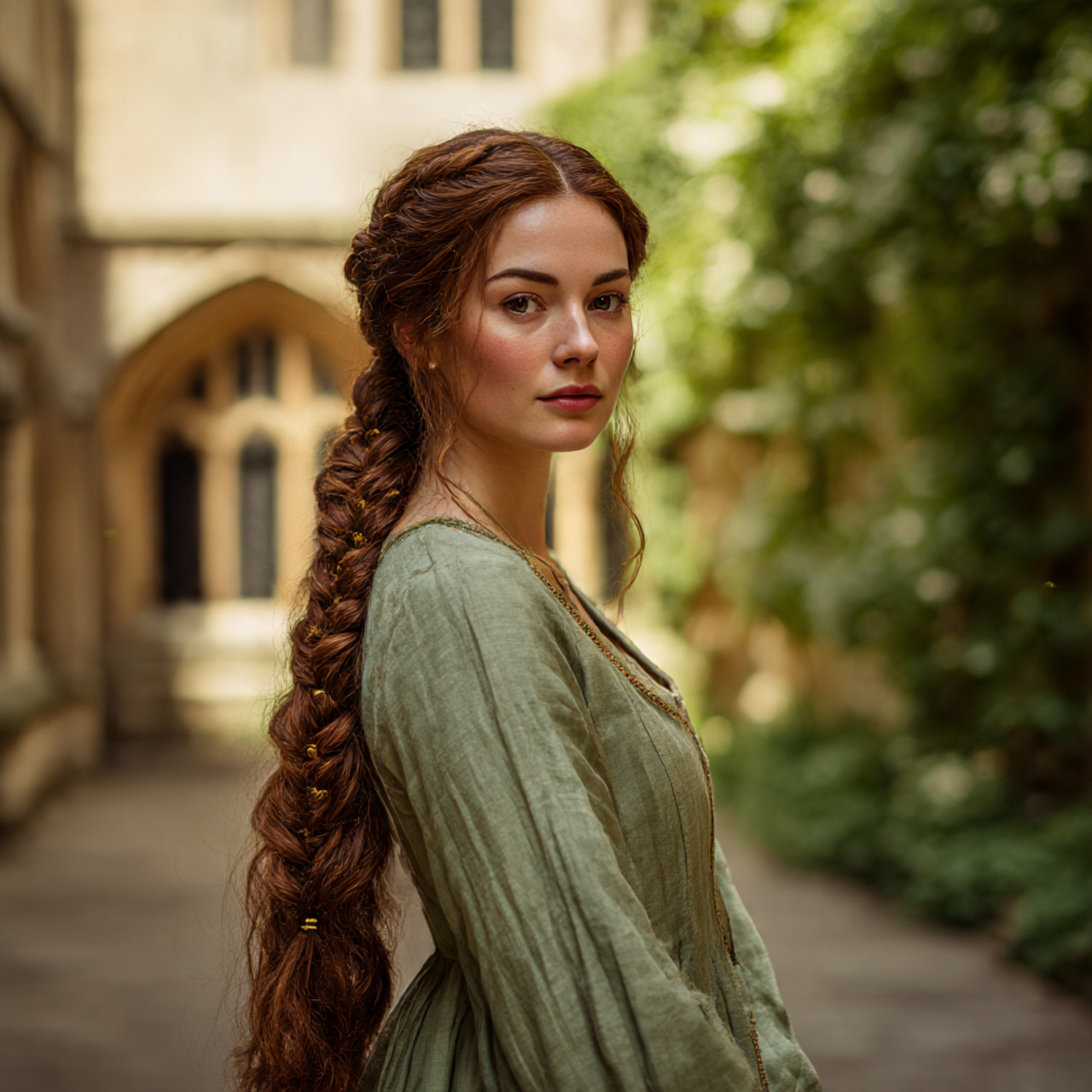
A braid built for maximum apparent thickness begins with a technique most guides skip entirely: light teasing at the crown before the first loop is formed. From there, every loop of the completed braid is pulled outward to expand the plait far beyond its natural width.
Finish the end of this braid with a wide velvet bow or a large gemstone clasp from Anthropologie, which conceals the elastic completely and adds an intentional decorative finish to an already bold style. The clasp signals that the end of the braid is part of the design, not an afterthought.
Best for: Long hair showcasing, formal events, photography Product: Anthropologie gemstone hair clasp for decorative braid finishing Pro tip: Tease only at the roots of the crown before braiding and smooth the surface layer over it so the volume reads from inside the braid rather than on the exterior. Face shape: Oblong and oval Barber language: “I want a single thick braid with every loop pulled wide, starting at the crown and finished with a decorative clasp at the end.”
Twisted Chignon Placement
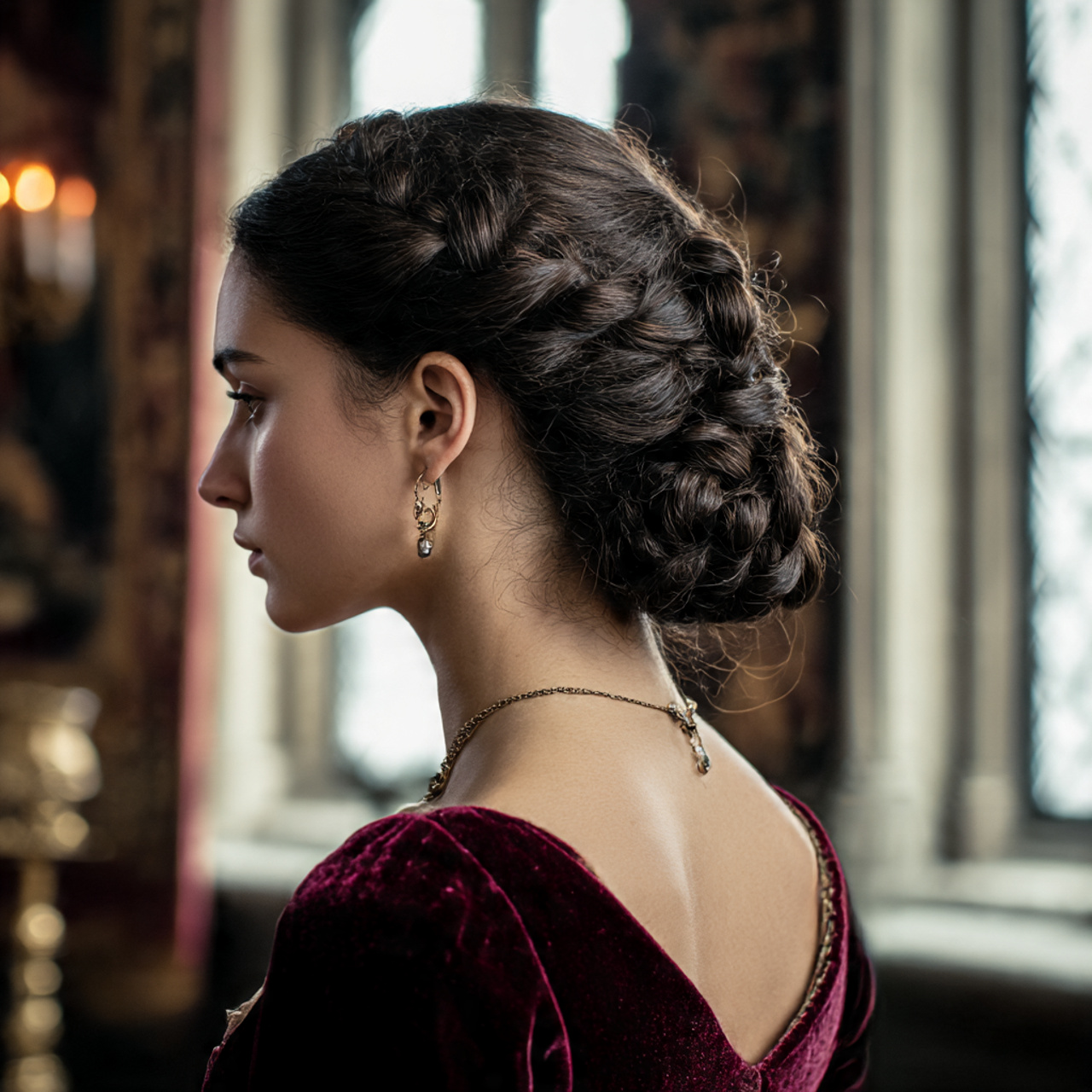
Three sections of hair, each twisted individually and then coiled together at the nape into a complex arrangement, create a chignon with far more visual depth than a simple roll. The intersecting lines of each twist become visible at the surface, giving the updo a built-in decorative texture with no additional accessories required.
Place fine hairpins with tiny pearl heads along each intersection line so the point where each twist meets the next is marked by a small, deliberate detail. This technique is used in film set hairstyling to add period-appropriate finishing that holds up under high-definition camera scrutiny.
Best for: Film, theater, editorial, high-definition photography Product: Conair pearl-tipped bobby pins for decorating the chignon intersections Pro tip: Secure each individual twist with a clear elastic before coiling all three together so the sections stay visually distinct inside the final chignon shape. Face shape: Oval and heart Barber language: “I want a low chignon made from three separate twisted sections coiled together, with pearl pins placed at every visible intersection.”
Simple Veil Attachment
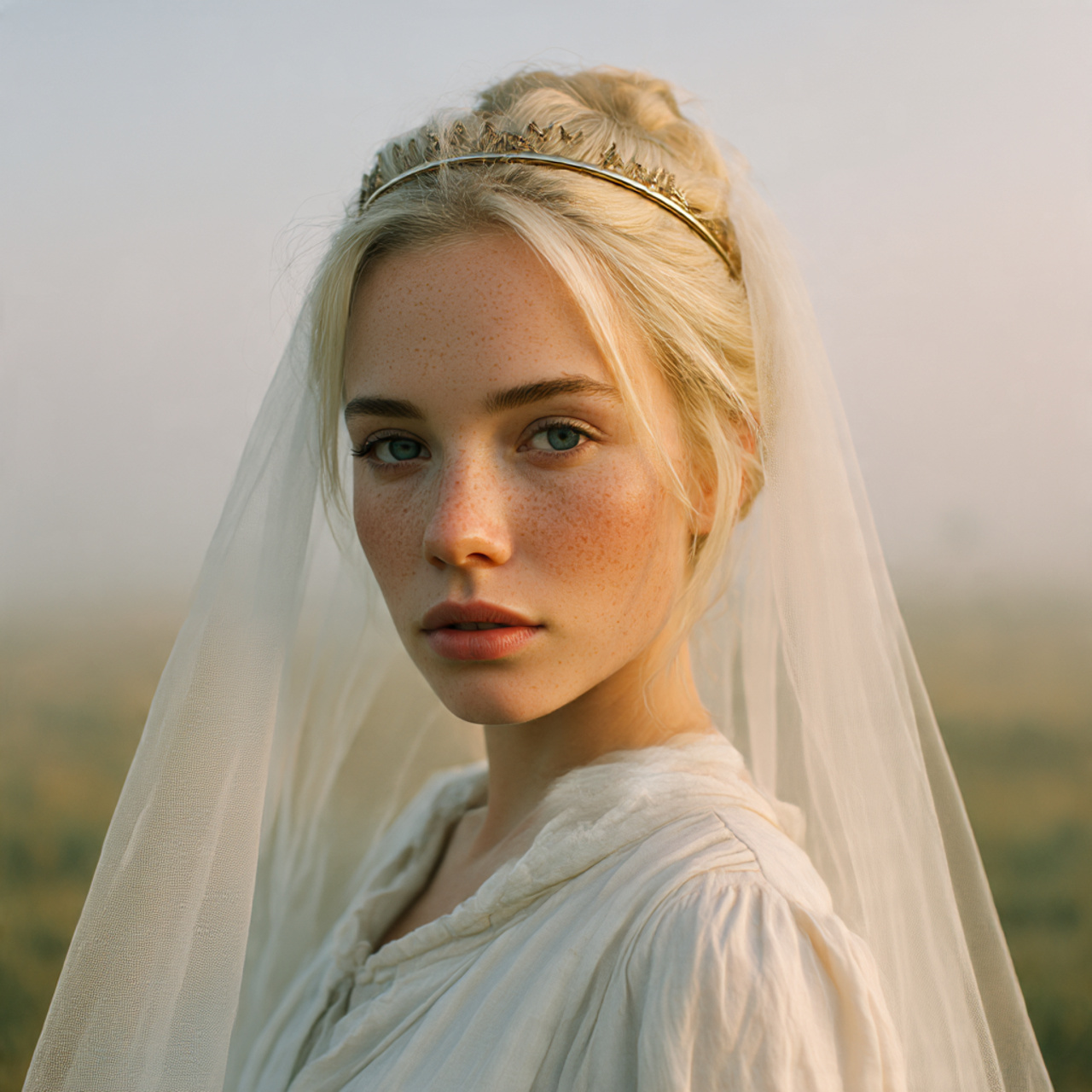
A sheer silk or linen veil attached beneath a thin headband or small crown drapes down the back and creates an ethereal, moving silhouette that no updo alone can achieve. The veil is the style. Everything beneath it should be minimal and clean.
Pin the veil to a small, tight low bun or two simple side braids using flat clips hidden under the headband. The less the hair beneath the veil is structured, the more gracefully the veil moves with the wearer. Over-styling the base is the most common mistake in veil attachment.
Best for: Weddings, formal costume events, period-accurate presentations Product: Kleinfeld veil fabric in silk organza cut to desired length Pro tip: Attach the veil to a removable comb before the event so you can lift it free from the base style without disturbing the pinning beneath. Face shape: All face shapes Barber language: “I want a simple low bun with a sheer veil attached under a thin headband, draped straight down the back with no pins showing.”
Intertwined Hair Chain
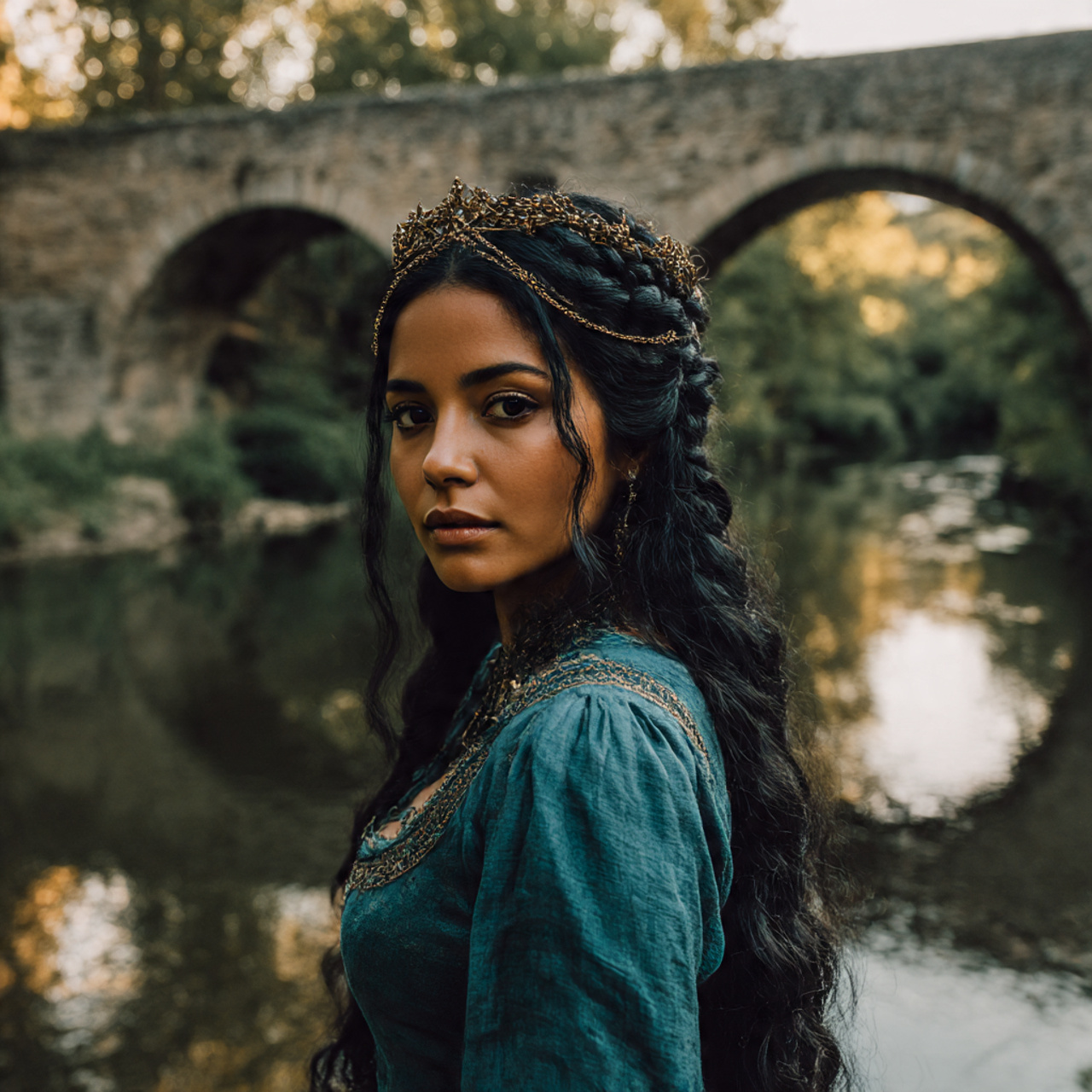
A fine gold or silver chain woven through the body of a braid or looped around a central updo adds a dimensional, luxurious quality that no clip-on accessory can replicate. The chain moves with the hair, creating a dynamic effect that is visible in both still photography and film.
Use a delicate cable chain from Mejuri in 14k gold vermeil, which is fine enough to integrate cleanly into braids without catching or snagging. Thread it through the loops of a completed crown braid by passing each link under alternating sections of the plait for a clean, even distribution.
Best for: Bridal styling, editorial photography, luxury costume work Product: Mejuri 14k gold vermeil cable chain in 18 inch length Pro tip: Secure both ends of the chain to a single bobby pin before threading it through the braid so it does not slide loose while you work. Face shape: Oval and oblong Barber language: “I want a thin gold chain woven through the loops of my braid from one end to the other, anchored on each side with a hidden pin.”
Renaissance-Inspired Loop
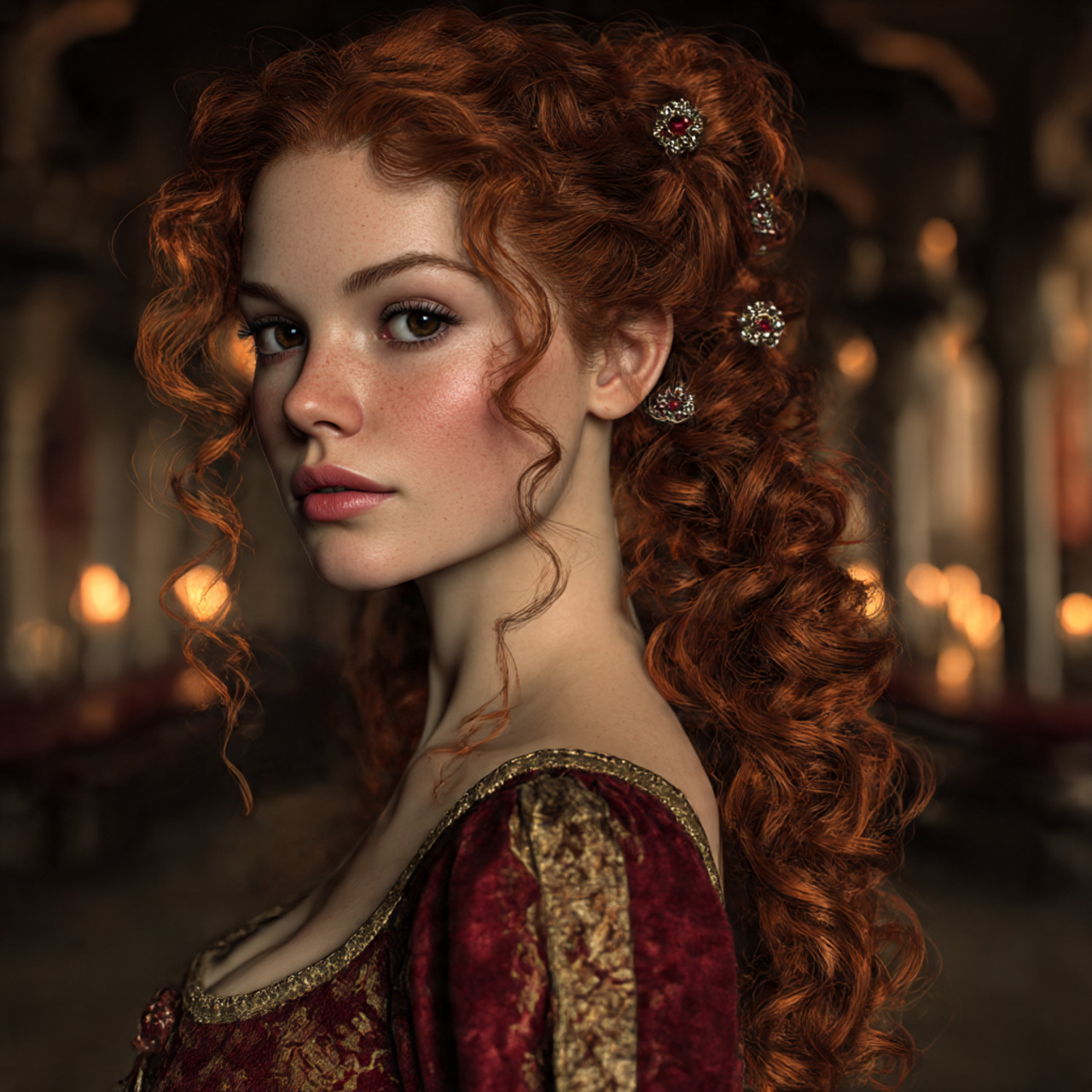
Large, soft loops of hair at the sides of the head, secured with oversized jeweled pins or decorative combs, create a rounded, full silhouette that gives the face a beautifully framed appearance. The style borrows from the later Renaissance period but sits comfortably within a broadly interpreted medieval princess aesthetic.
For maximum volume in each loop, insert a small foam hair donut from Fromm International inside the loop before pinning. This keeps the shape round and full even on fine hair and prevents each loop from flattening over the course of a long event.
Best for: Fine hair, bridal styling, theatrical costuming, portrait photography Product: Fromm International foam hair donuts in small size for internal loop structure Pro tip: Place the foam donut before forming the loop rather than after so you can adjust the diameter of the circle before any pins are set in place. Face shape: Oval and square Barber language: “I want two large looping coils at the sides of my head, one at each ear, supported internally and pinned securely with decorative combs.”
Braided Halo with Loose Curls
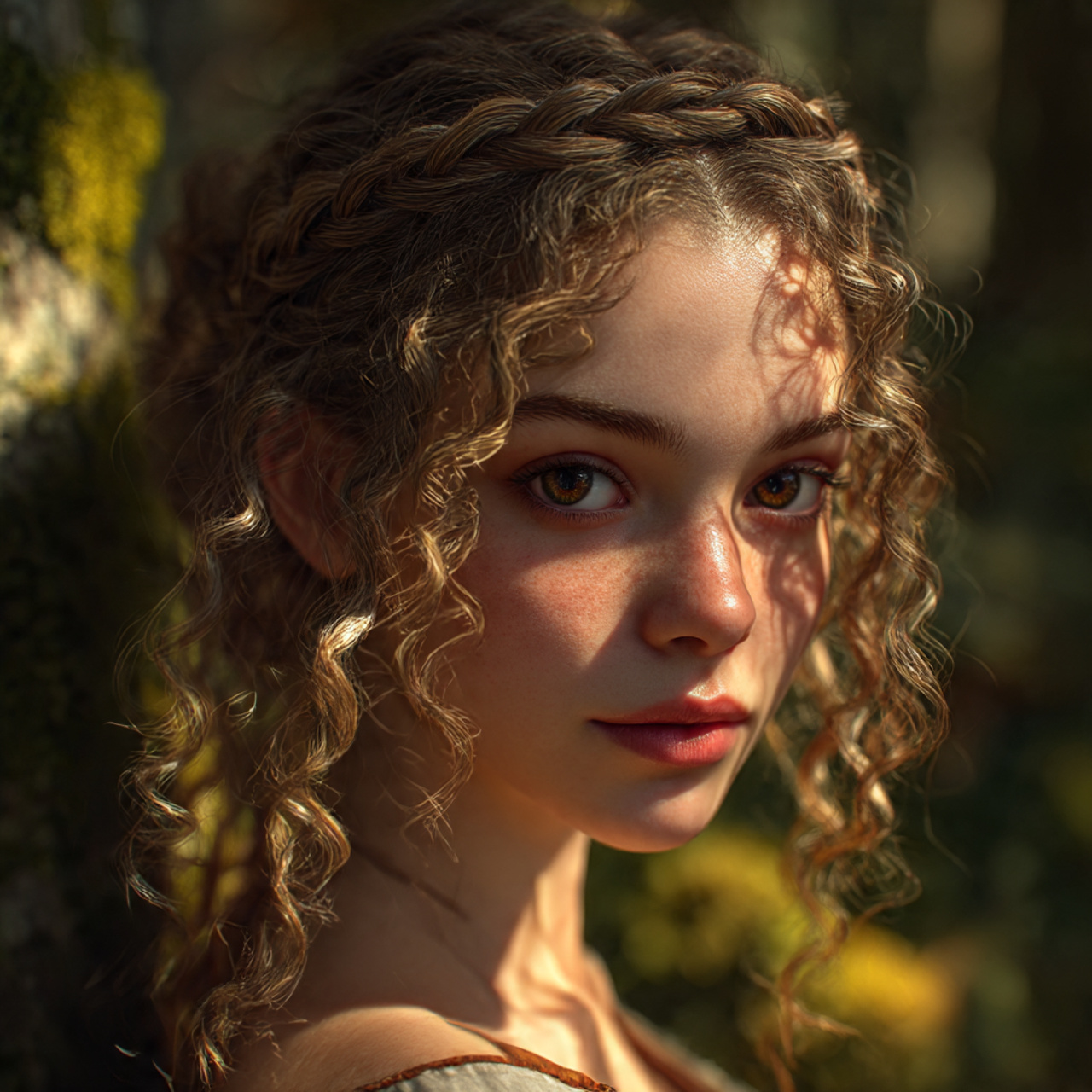
A tight, narrow braid following the hairline from one temple all the way around to the other forms a structured halo border. The rest of the hair below is styled into loose ringlets or flowing waves that spill freely underneath the braided frame.
The contrast between the controlled braid at the top and the free movement below gives the style a balance that is both editorial and deeply feminine. Use a T3 Whirl Trio Interchangeable Curling Iron to create consistent soft ringlets throughout all of the loose sections before setting the halo.
Best for: Romantic events, bridal, loose hair showcasing Product: T3 Whirl Trio Interchangeable Curling Iron for consistent ringlet definition Pro tip: Create the loose curls first and pin them temporarily out of the way before braiding the halo so the braid sits cleanly over the wave pattern rather than beneath it. Face shape: Heart and oval Barber language: “I want a thin braid following the hairline all the way around the head, with the rest of the hair in loose curls falling freely below it.”
High Crown Braided Base

A voluminous Dutch braid beginning at the very top of the head and running backward down the skull before falling into a tail creates a natural elevated platform for a small crown or diadem. The high starting point pushes the accessory higher than any headband placement would allow, adding genuine visual stature.
This style photographs dramatically well from the front because the braid draws the eye upward, giving the wearer the visual impression of additional height. Pair it with a fine wire diadem from an Etsy studio specializing in Renaissance or medieval replica pieces for an authentic, polished result.
Best for: Portrait photography, formal costuming, crown and diadem showcasing Product: Etsy handmade wire diadem from a medieval jewelry studio Pro tip: Begin the Dutch braid directly at the apex of the skull so the crown sits at the absolute highest point on the head and maximizes its visual impact from every angle. Face shape: Oval and oblong Barber language: “I want a Dutch braid starting at the very top of the crown, running straight back, with my crown or diadem placed at the highest point of the braid base.”
Quick Comparison Table
| Style | Length | Hair Type | Maintenance | Bold Factor |
|---|---|---|---|---|
| Braided Crown | Long | Any | Medium | ★★★★☆ |
| Long Cascading Braid | Long | Any | Low | ★★★☆☆ |
| Woven Ribbon Adornment | Medium to Long | Any | Low | ★★★☆☆ |
| Pearl and Gemstone Hairnet | Medium to Long | Any | Medium | ★★★★★ |
| Simple Half-Up Twist | Medium to Long | Any | Low | ★★☆☆☆ |
| Velvet Headband Look | Short to Long | Any | Very Low | ★★☆☆☆ |
| French Plait Variation | Long | Medium to Thick | Medium | ★★★☆☆ |
| Waterfall Braid | Long | Any | Medium | ★★★★☆ |
| Flowing Hair with Circlet | Long | Any | Low | ★★★☆☆ |
| Tapered Fishtail Braid | Long | Medium to Thick | High | ★★★★☆ |
| Double Rope Braid | Long | Any | Medium | ★★★☆☆ |
| Hair Embellished with Floral | Medium to Long | Any | Medium | ★★★☆☆ |
| Maiden’s Knot Updo | Long | Any | Low | ★★★☆☆ |
| Medieval Low Bun | Medium to Long | Any | Low | ★★★☆☆ |
| Jeweled Snood Coverage | Medium to Long | Any | Medium | ★★★★★ |
| Braided Coif Integration | Long | Any | High | ★★★★☆ |
| Temple Braid Accent | Medium to Long | Any | Medium | ★★★☆☆ |
| Crown of Thorns Braid | Long | Thick | High | ★★★★★ |
| Glimmering Gold Thread Weave | Long | Any | Medium | ★★★★☆ |
| Asymmetrical Side Sweep | Long | Any | Low | ★★★☆☆ |
| Voluminous Back Braid | Long | Thick | Medium | ★★★★☆ |
| Twisted Chignon Placement | Long | Any | High | ★★★★☆ |
| Simple Veil Attachment | Medium to Long | Any | Low | ★★★★★ |
| Intertwined Hair Chain | Long | Any | High | ★★★★★ |
| Renaissance-Inspired Loop | Short to Long | Fine to Medium | Medium | ★★★★☆ |
| Braided Halo with Loose Curls | Long | Any | High | ★★★★☆ |
| High Crown Braided Base | Long | Medium to Thick | Medium | ★★★★★ |
Frequently Asked Questions
What makes Medieval Princesses Hairstyles Ideas different from hairstyles of other historical periods? Medieval princess hairstyles are defined by tight braiding kept close to the head, symmetry, and the use of fabric-based accessories like veils and snoods. Unlike the powdered height of Rococo or the loose waves of Edwardian styling, medieval styles prioritize structure, containment, and deliberate adornment using natural materials.
Which tools and products do I need to build these styles at home? The essentials are a fine-tooth rat tail comb for clean parting, a set of U-pins and flat bobby pins in multiple sizes, and a texturizing spray to give hair grip before braiding. A strong-hold finishing spray like L’Oreal Elnett keeps the completed style intact throughout a long event.
Can short or fine hair work with these braided medieval looks? Yes, with the right approach. Fine hair responds well to the Renaissance-Inspired Loop Ideas and Simple Half-Up Twist Ideas, both of which rely on accessories rather than sheer volume. Clip-in extensions from Hidden Crown Hair add enough length and thickness for the more complex braided looks.
What occasions are these styles best suited for in 2026? These looks are consistently popular for fantasy-themed weddings, Renaissance fairs, cosplay events, and period editorial photography. They are also growing in popularity for formal occasions where the guest wants a one-of-a-kind style that stands apart from conventional updos.
How do I keep a complex braided medieval updo in place for six or more hours? Begin with texturizing spray applied before braiding to help the hair grip itself. Use more U-pins than you think you need, placed in opposing directions inside each coil. Finish with a light application of strong-hold hairspray held eight inches from the surface so the style is set without feeling stiff.
Final Thoughts
Medieval Princesses Hairstyles Ideas offer something rare in modern hairstyling: a category where the decorative choices carry genuine historical meaning and structural logic at the same time. Every style in this collection connects function to beauty in a way that most contemporary trends simply do not.
You do not need to choose the most complex look on this list to feel the impact. Even a single velvet headband or a braided crown built from a three-strand plait carries weight and intention when it is executed correctly. Start where your skill level is comfortable and grow from there.
The styles that age best, both in photographs and in memory, are the ones built on a solid base. Spend the extra ten minutes on your foundation and the accessories will do exactly what they are designed to do.
One truth that only becomes clear after years of working in period hair: the most powerful medieval looks are never the most decorated. They are the most precisely constructed.
Choose one style from this list, build it once with care, and you will understand exactly why these looks have lasted a thousand years.
Save this to your Pinterest boards right now and share it with anyone who loves historical hairstyling.