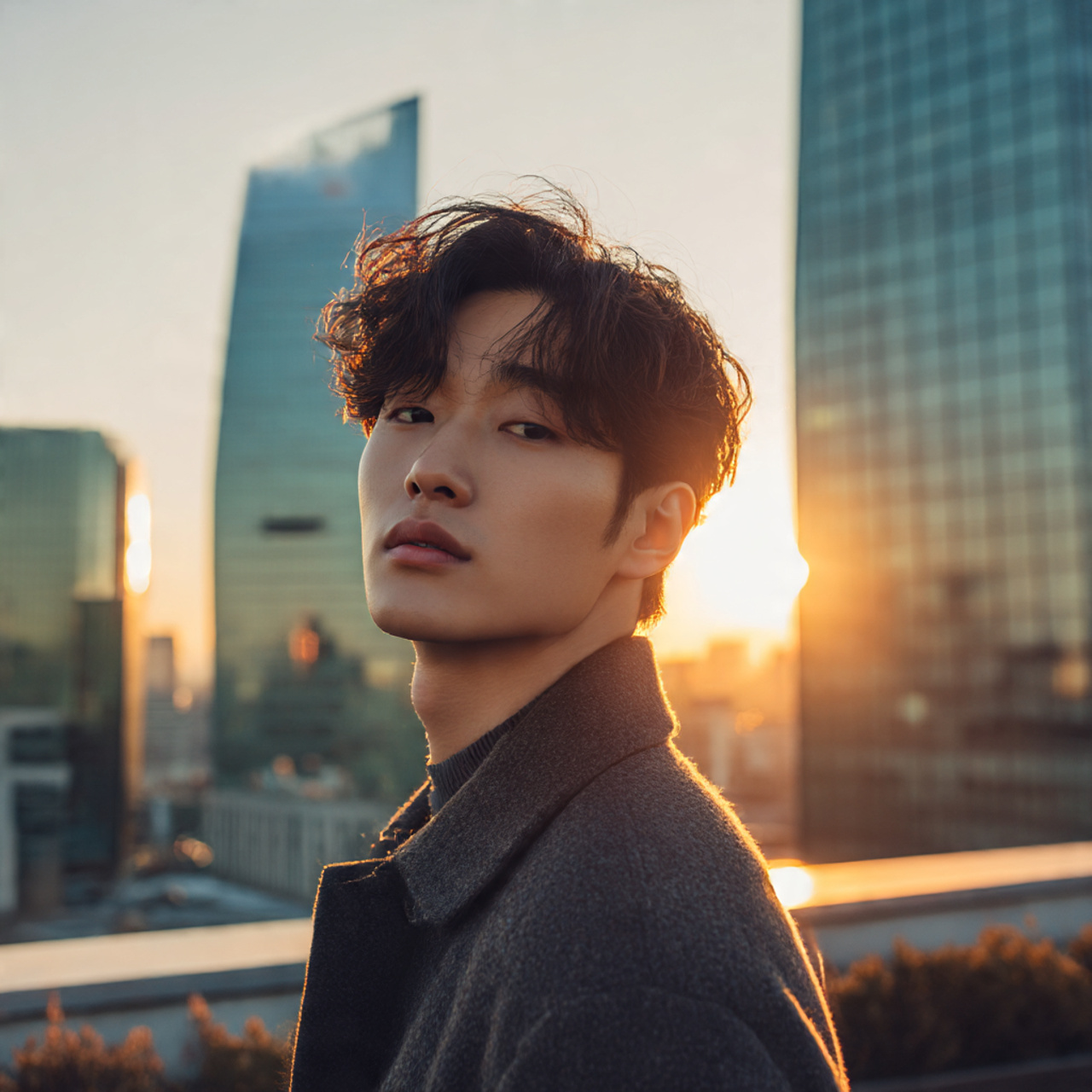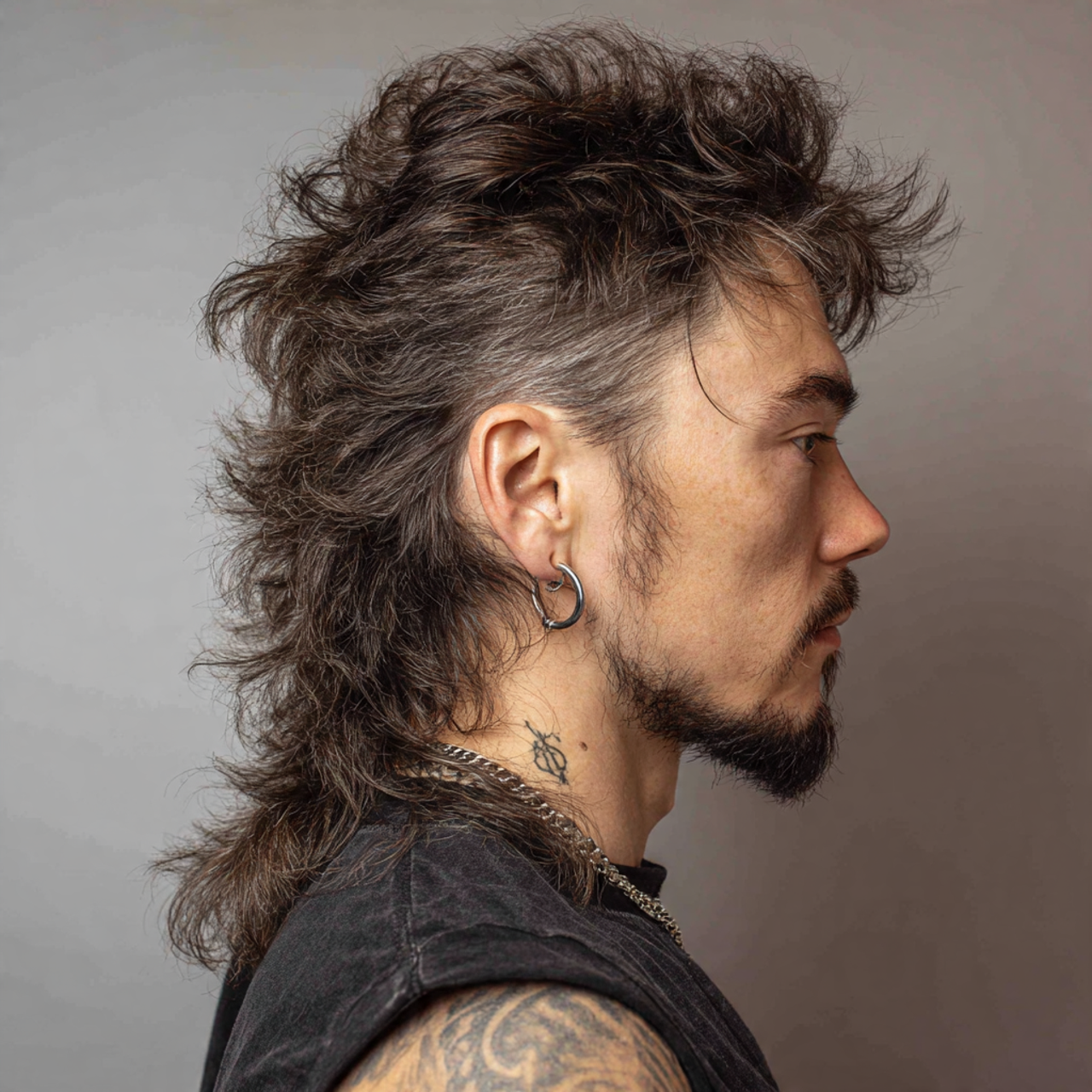
20 Temple Fade Haircuts That Will Upgrade Your Entire Look
You left the barbershop with something that looked nothing like the photo. The lines sat wrong, the shape missed the mark, and the whole cut felt like it belonged to someone else. That gap between what you imagined and what you walked out with is one of the most common frustrations in men’s grooming.
This is not a rare problem. Most men experience it repeatedly without understanding why, and the answer almost never has anything to do with the barber’s skill level. The wrong style chosen before the first guard ever touches your head will produce the wrong result every single time.
The root cause is almost always a mismatch. Men choose styles based on what looks good on a different face shape in a different photo. A high contrast fade that works beautifully on a slim oval face reads completely differently on a rounder or wider structure. The reference image is not the issue. The fit is.
Studying dozens of fade variations and the faces that carry them best reveals one consistent truth. The temple fade haircut is the most adaptable cut in modern men’s grooming because it adjusts to face shape, hair texture, and lifestyle demands without losing its core structure or clean visual impact.
This article walks through twenty specific temple fade variations. Each one includes the exact words to say to your barber, a targeted product recommendation, and a pro tip drawn from real styling knowledge so you leave with what you actually came for.
By the end, you will have a clear answer for which temple fade haircut matches your face, your hair type, and how much time you are actually willing to spend in front of a mirror.
The single most important rule with a temple fade is fade line placement. Set it too high and the cut reads aggressive. Set it too low and you lose the face-framing structure the entire style is built on. Right now barbers are seeing a strong shift toward mid-height temple fades blended into textured tops. That combination works across the widest range of faces and hair types without heavy product or daily effort, and it is where most men should start.
Temple Fade Haircuts Ideas
Classic Temple Fade

The classic temple fade sets the fade at a medium height with a clean line at the temple and a top that stays controlled enough for professional settings but flexible enough for everything else. Nothing here is pushed to an extreme, and that restraint is exactly what makes this the most consistently wearable version on this list. It frames the face without demanding attention.
This is the cut barbers recommend most often for men trying a fade for the first time because the mid-height placement gives room to adjust up or down on future visits. Suavecito Pomade Firme Hold keeps the top smooth and responsive without the stiffness that heavier wax products leave behind.
Best for: All hair types, short to medium lengths Product: Suavecito Pomade Firme Hold Barber language: “Classic temple fade at mid height, square off the top, clean tight line at the temple and behind the ear.” Face shape: Oval, round, and square faces all carry this version without adjustment. Pro tip: Ask your barber to finish the temple line with a straight razor for a crisper edge that holds definition three days longer than clipper-only edging.
Low Temple Fade
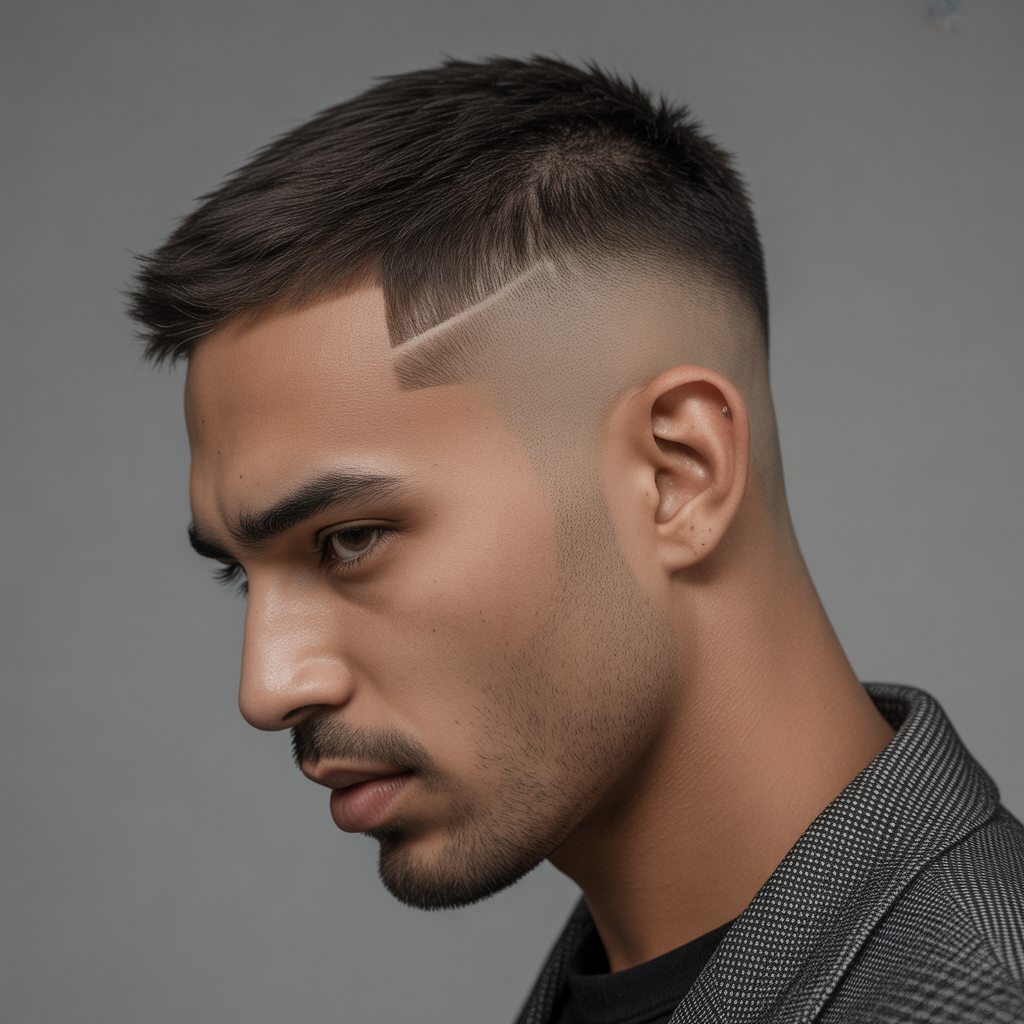
The low temple fade sits just above the ear and follows the natural hairline closely. The result is a soft, conservative transition that reads as polished without reading as bold. This is the version that holds up in corporate environments, formal occasions, and anywhere grooming needs to look intentional but never extreme.
Fine hair benefits most from the low placement because the gentle taper creates visual density without exposing too much scalp. American Crew Fiber gives medium hold with light texture that does not flatten fine strands the way heavier products do.
Best for: Fine to medium hair, short lengths Product: American Crew Fiber Barber language: “Low temple fade just above the ear, keep it close to the hairline, leave the top clean with some natural texture.” Face shape: Square and rectangular faces benefit most because the softer low line reduces angularity without removing structure. Pro tip: Avoid pomades near the fade area on fine hair. They flatten texture and blur the transition so the fade looks unfinished rather than refined.
High Temple Fade
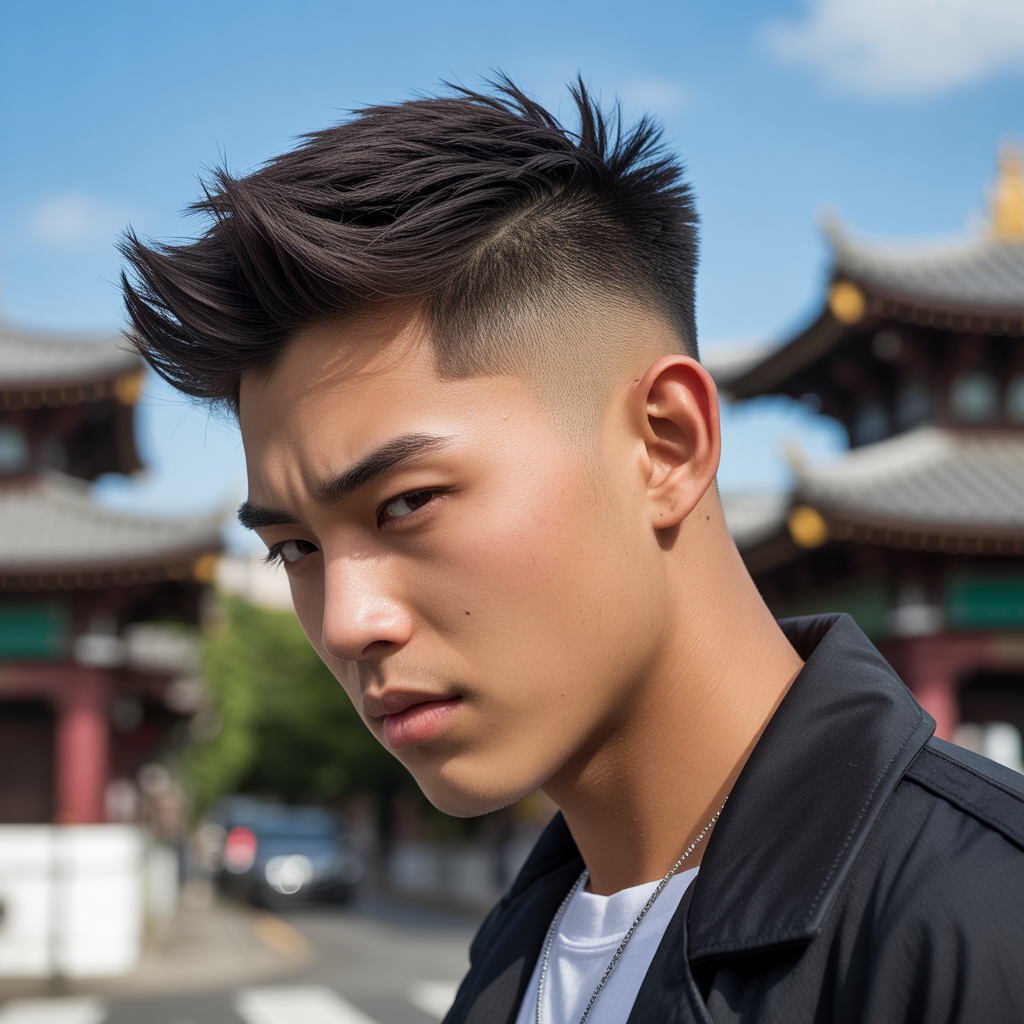
The high temple fade raises the line significantly for a bolder, more directional result. The contrast between tightly faded sides and a full top is sharp enough to be noticed across a room, which makes this the version for men who want their haircut to do some of the talking. Volume and texture on top carry more visual weight than the fade itself at this height.
Thick hair and natural curl types hold this version best because the volume above the fade line balances the tight sides visually. Layrite Supershine Cream defines curls and controls frizz without the crunch that gel products leave.
Best for: Thick hair, curly and textured tops Product: Layrite Supershine Cream Barber language: “High temple fade, push the line up well above where you would normally set it, I want strong contrast and full volume on top.” Face shape: Oval and long faces handle the added height without appearing stretched. Round faces should keep the top volume moderate. Pro tip: Schedule a touch-up every ten days with a high fade. The contrast drops noticeably faster than a low or mid version and a grown-out high fade looks unintentional quickly.
Temple Fade with Afro
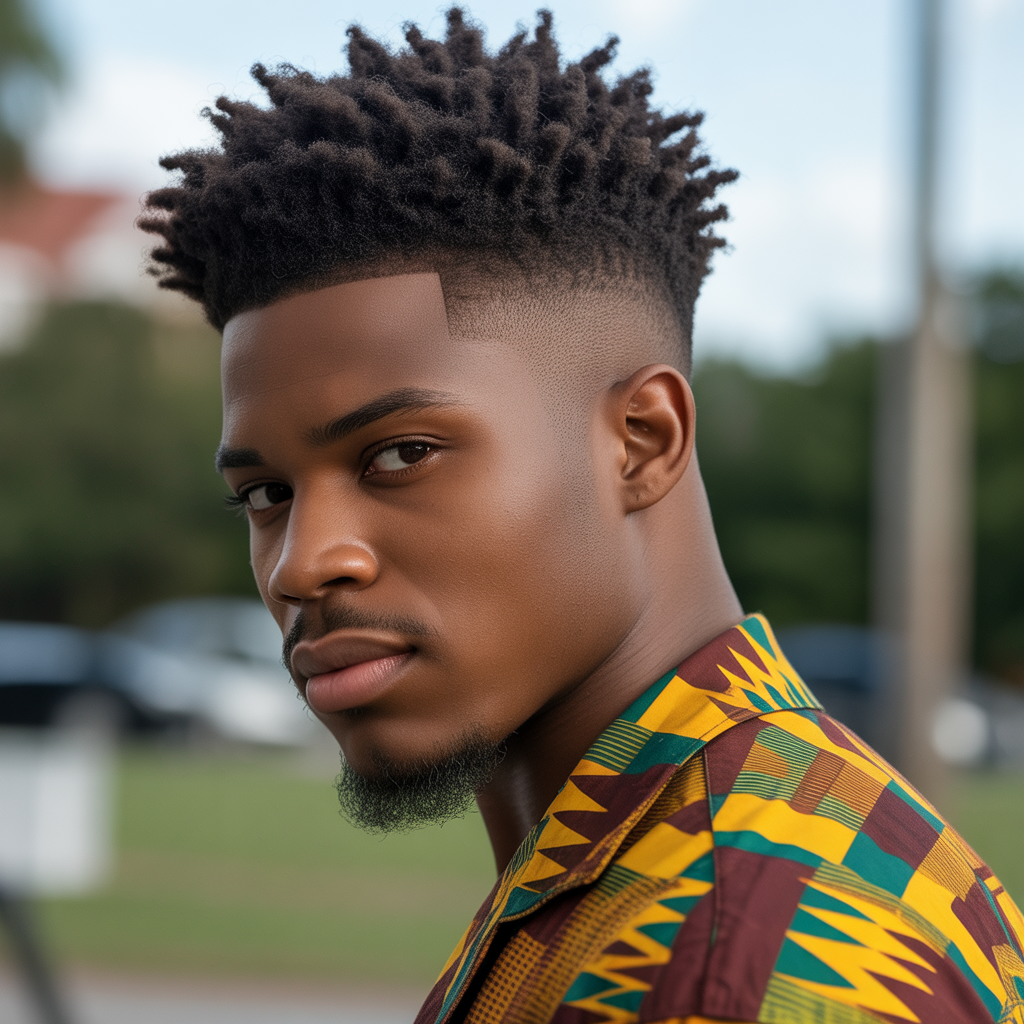
An afro paired with a temple fade is one of the most intentional combinations in natural hair styling. The fade defines and cleans the perimeter while the afro keeps its full volume and shape above it. The result balances expression with grooming discipline in a way neither element achieves alone. The contrast between the tight base and the open top creates a strong, clean outline.
Cantu Shea Butter Leave-In Conditioning Cream keeps coily strands moisturized and defined through the day, which prevents the afro from losing its circular shape between visits. Barbers who specialize in natural hair know the fade height must complement the afro diameter. A flatter afro reads better with a lower fade. A tall afro needs the line to sit higher to keep proportions balanced.
Best for: Thick, coily, and type 4 hair Product: Cantu Shea Butter Leave-In Conditioning Cream Barber language: “Temple fade with a rounded afro on top, sides tight and clean, shape the afro into an even circle.” Face shape: Round and square faces gain angular definition from the temple line when paired with the rounded afro volume above. Pro tip: Pick out the afro immediately after applying leave-in conditioner while the hair is still damp for maximum lift and even shape that holds through the day.
Temple Fade with Waves
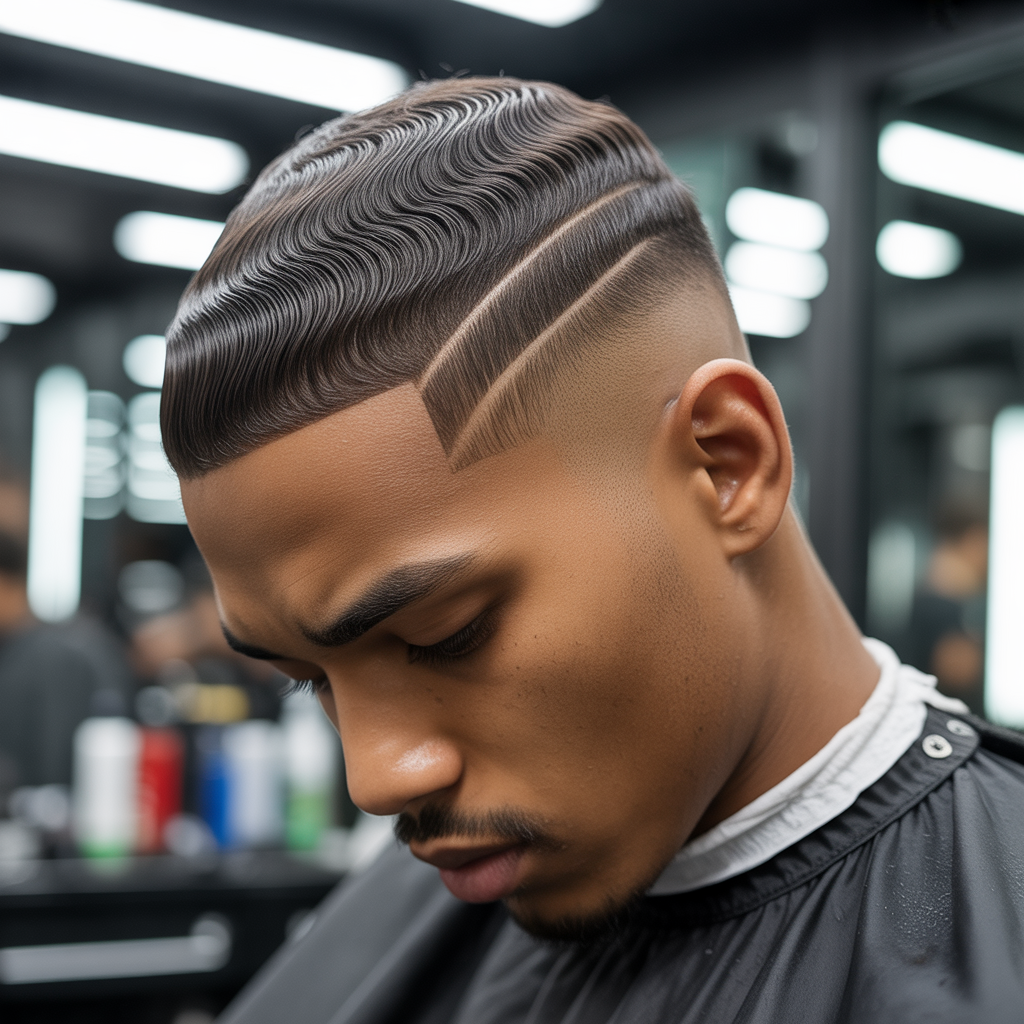
Waves and a temple fade are a pairing that rewards consistency more than almost any other combination on this list. The fade frames the wave pattern with a defined edge that makes ripple flow from temple to crown look sharper and more symmetrical. Without that edge, waves lose the clean boundary that makes them stand out. The two elements depend on each other.
Consistent brushing with a firm-bristle wave brush like the Diane Premium Reinforced Boar Bristle model and daily du-rag compression are what actually build the pattern. Murray’s Superior Hair Dressing Pomade provides the compression layer that trains the wave direction. The temple fade simply gives that pattern a clean border to work within.
Best for: Straight to wavy hair trained for waves Product: Murray’s Superior Hair Dressing Pomade Barber language: “Temple fade at mid height, crisp line at the temple, keep it clean around the ear without disturbing the wave pattern on top.” Face shape: All face shapes benefit because the horizontal wave direction naturally balances proportions regardless of structure. Pro tip: Wear your du-rag for at least ninety minutes after a fresh lineup to lock the waves flat against the newly shaped edges before the shape sets.
Temple Fade with Braids
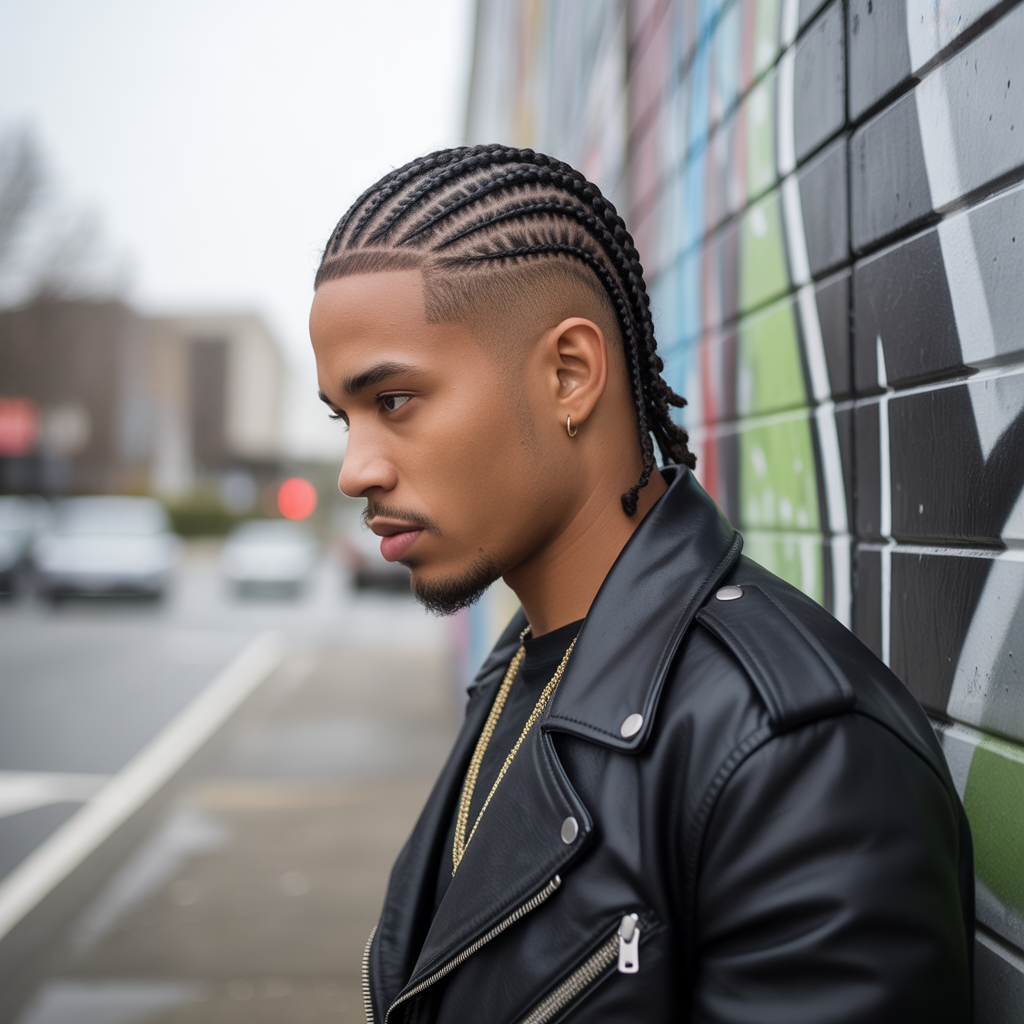
Braids combined with a temple fade create a structured contrast between the textured top and the clean, tight sides. The fade gives the braids a defined base to start from, which is what separates a deliberate style from one that just looks grown out. This works for cornrows, freestanding braids, and most patterns in between.
Keeping the scalp healthy underneath is critical for maintaining this combination over time. Carol’s Daughter Black Vanilla Moisture and Shine Hair Gloss nourishes the scalp and adds light sheen at the roots without the buildup that heavier oils create near the fade line.
Best for: Medium to long lengths, thick and coily textures Product: Carol’s Daughter Black Vanilla Moisture and Shine Hair Gloss Barber language: “Temple fade clean on the sides, sharp edge around the base of my braids, tight at the temple but don’t take too much off the nape.” Face shape: Heart and oval faces carry braids with a temple fade well because the volume stays on top where it adds balance to a narrower jaw. Pro tip: Apply a small amount of edge control along the temple fade line before laying braids forward at the front for a cleaner finished look at the hairline.
Temple Fade with Dreads
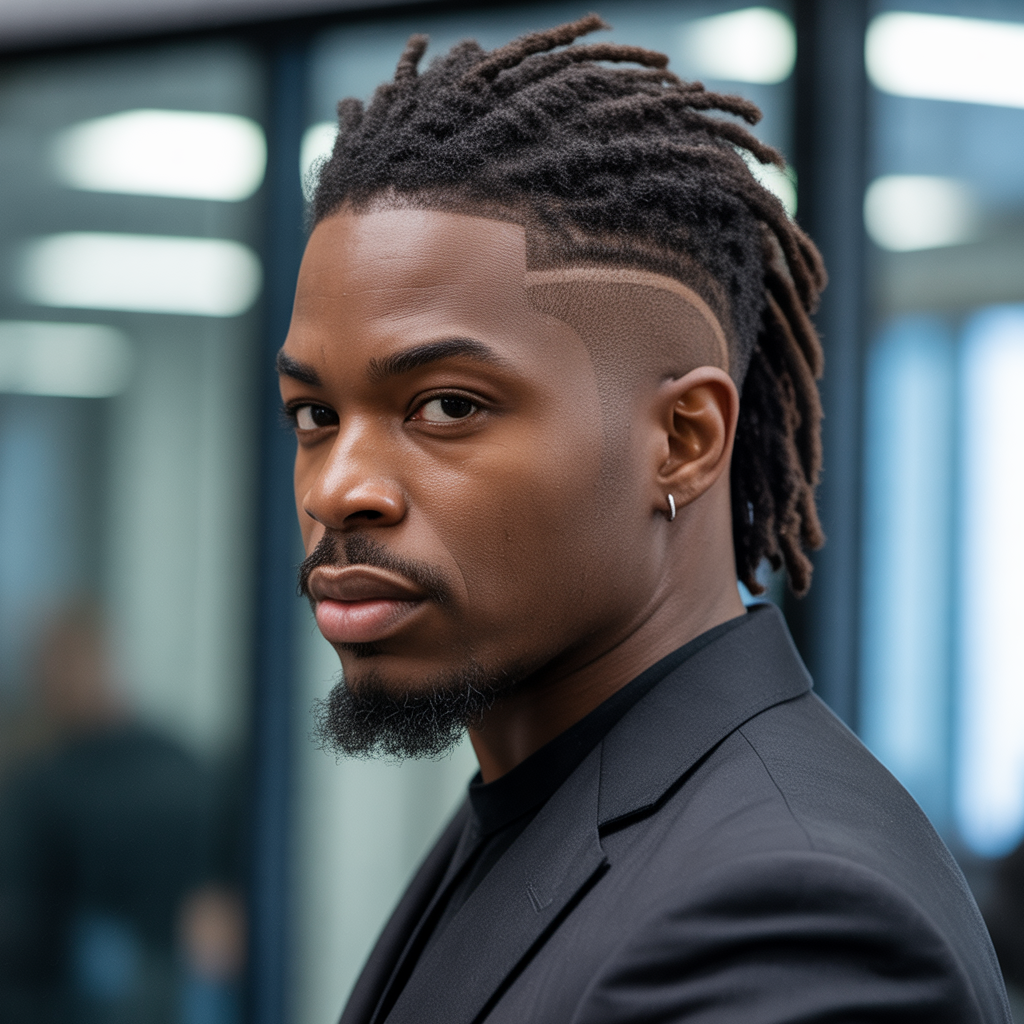
Locs paired with a temple fade create dramatic framing that brings structure to mature dreads without interfering with their natural form. The fade sharpens the perimeter while the locs stay full and free above. The combination reads as both expressive and well-maintained, which is difficult to achieve with locs at longer lengths without this kind of structural base.
Jamaican Mango and Lime Resistant Formula Locking Gel keeps locs tight at the root while the fade keeps the surrounding area fresh. Barbers experienced with locs know to keep the fade conservative in height so the clean sides complement the loc volume rather than compete with it.
Best for: Medium to long locs with good density Product: Jamaican Mango and Lime Resistant Formula Locking Gel Barber language: “Low to mid temple fade, keep my locs completely untouched, clean the sides and nape without removing any loc length.” Face shape: Oval and square faces carry the loc volume paired with a tight fade best because both structures benefit from a defined perimeter. Pro tip: Ask your barber to use a liner to redefine the temple point before starting the fade so the natural hairline guides the shape rather than estimation.
Temple Fade with Curly Hair
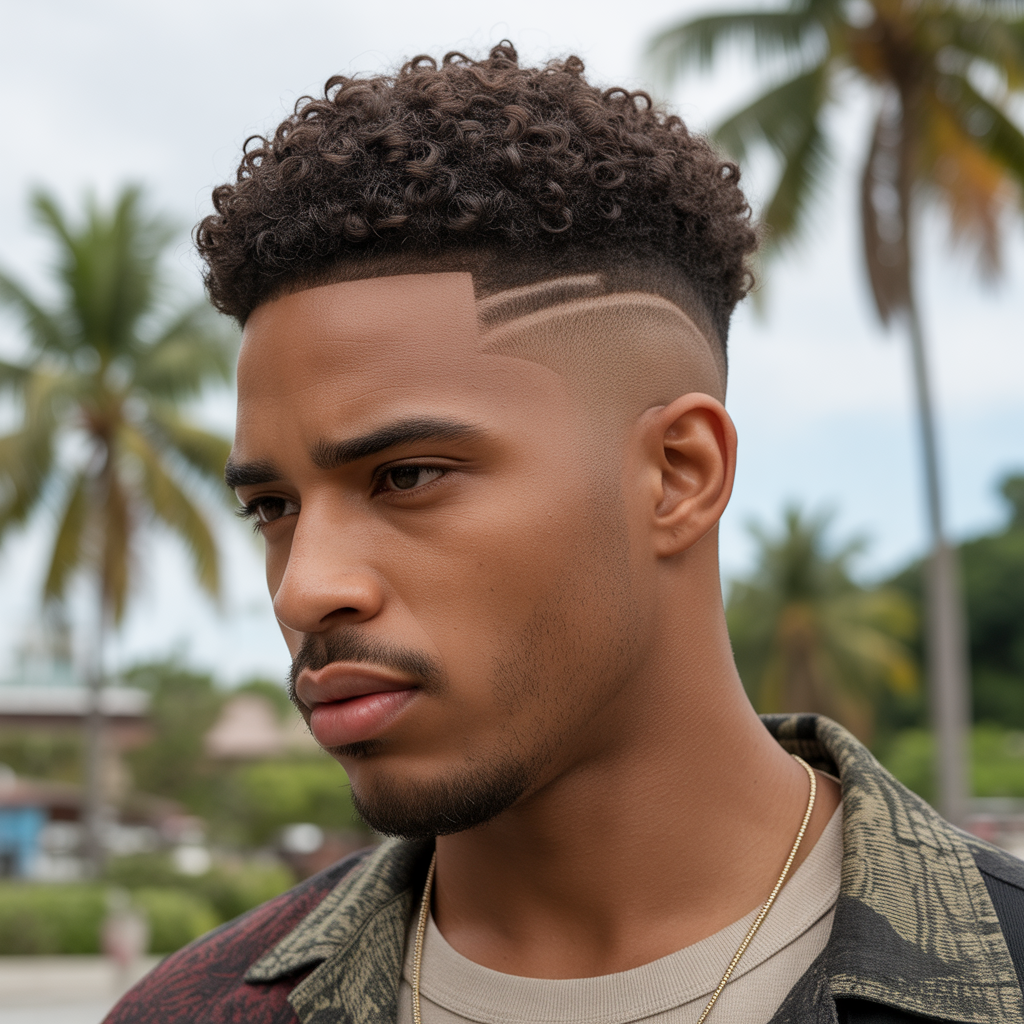
Curly hair and a temple fade are a natural pairing because the fade controls exactly where the curls begin and gives them a defined starting point. Without it, curls spread past the temple and blur the face frame. The fade acts as a contained edge that makes everything above it look purposeful.
DevaCurl SuperCream Coconut Styler defines curl clusters and controls frizz without the crunch that gel finishes leave. The insight most people miss with this combination: curls near a fade line should never be diffused downward. Always diffuse upward and inward to preserve height and prevent the top from collapsing toward the fade.
Best for: Loose to medium curl types, type 2c to 3b hair Product: DevaCurl SuperCream Coconut Styler Barber language: “Temple fade at mid height, leave the curl length on top, shape the outline of the curls but don’t remove volume.” Face shape: All face shapes benefit, but round faces see the clearest improvement because the curls add vertical height while the fade reduces side width. Pro tip: Apply curl cream to soaking wet hair and scrunch upward before diffusing for maximum curl definition with zero frizz at the fade line.
Temple Fade with Buzz Cut
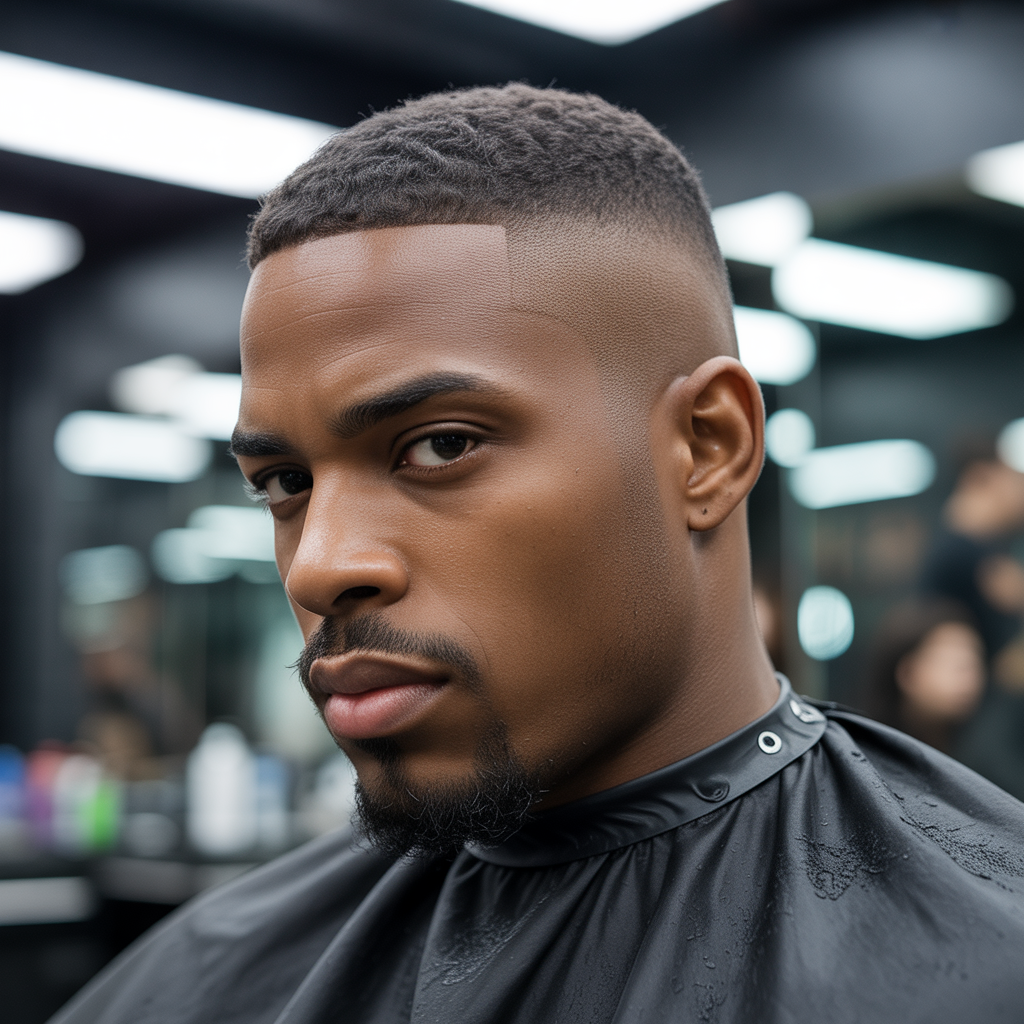
The buzz cut with a temple fade is the most practical combination on this list and still delivers a noticeably sharp result. The buzz takes all top hair to a uniform short length while the temple fade adds defined contrast at the sides. The outcome looks significantly more groomed than a standard buzz without adding any meaningful styling time.
Wahl Professional 5-Star Magic Clip Cordless is the clipper barbers reach for consistently when blending a buzz into a fade because its motor precision allows clean gradients without choppy lines at the transition.
Best for: All hair types, very short lengths, high-activity lifestyles Product: Bevel All-in-One Pomade Spray for light finish and scalp care post-cut Barber language: “Buzz cut on top at a two or three guard, temple fade on the sides with a clean crisp line, sharp and tight.” Face shape: Every face shape works. The short uniform top removes most proportion concerns entirely. Pro tip: Apply a small amount of Kiehl’s Facial Fuel Moisturizer across the temples and scalp after a fresh buzz fade to prevent dryness that makes the fade look rough as it grows.
Temple Fade with Pompadour
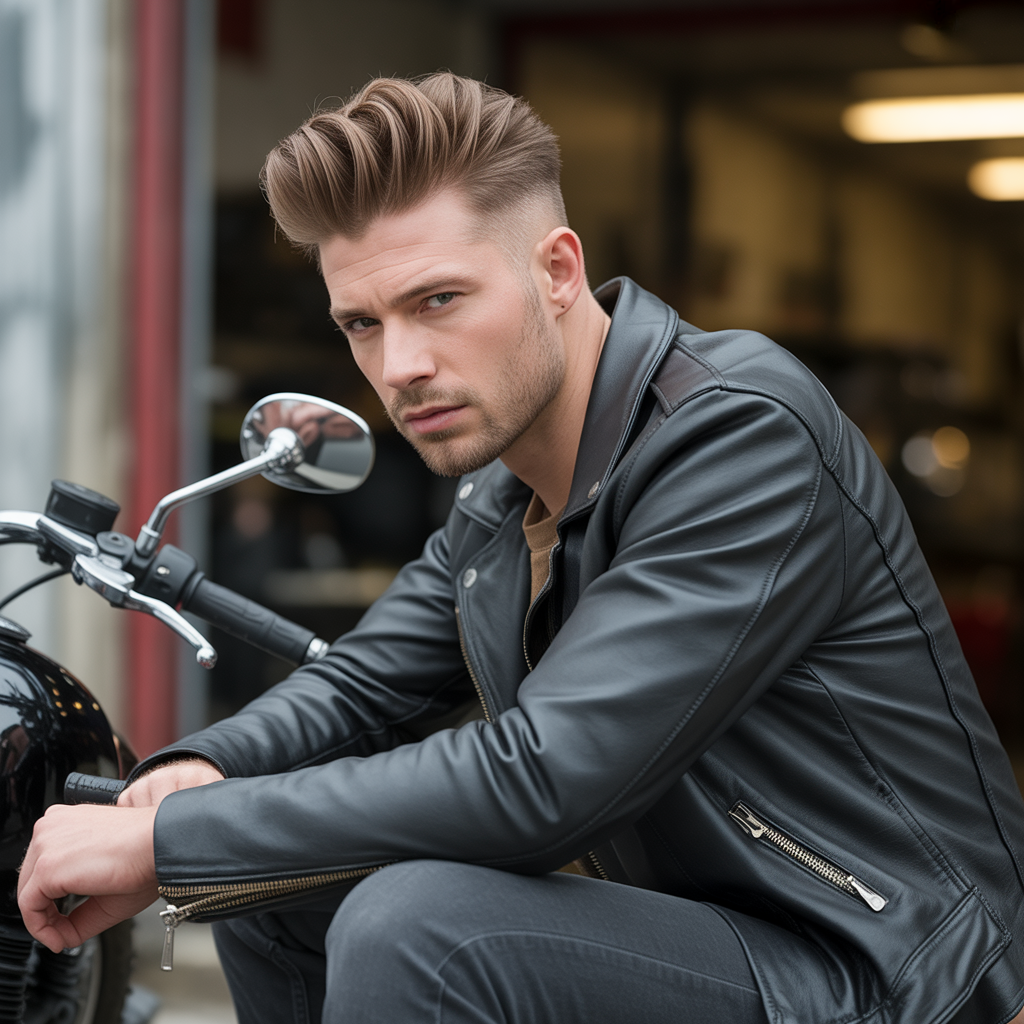
The pompadour adds significant height at the front while the temple fade keeps the sides disciplined and tight. The contrast between the lifted top and the clean sides is what gives the modern pompadour its visual strength. This style references classic barbershop history while staying current in men’s fashion without relying on nostalgia alone.
Gatsby Moving Rubber Grunge Matt gives the pompadour texture and lift without the shellacked look that older pomades produce. Volume spray applied to the roots before product gives thinner hair the structural lift it needs to hold shape without relying on product weight alone.
Best for: Medium to thick hair, men who style daily Product: Gatsby Moving Rubber Grunge Matt Barber language: “Temple fade on the sides with high contrast, leave plenty of length on top to push back into a pompadour.” Face shape: Oval and long faces carry the added height cleanly. Round faces should keep the pompadour at a moderate height to avoid adding perceived length to a shorter face. Pro tip: Blow-dry the front section upward and backward with a round brush before applying any product to lock the lift into position and reduce the amount of pomade needed.
Temple Fade with Quiff
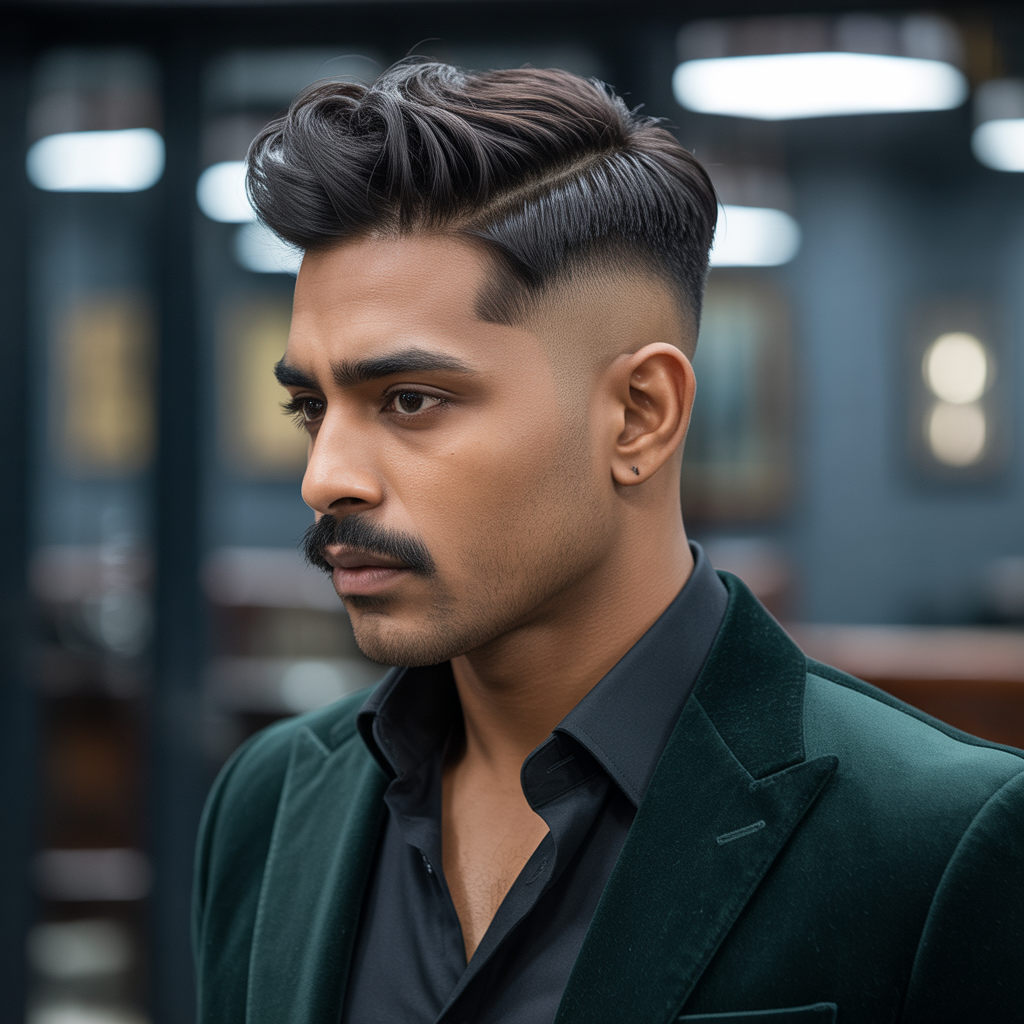
The quiff pushes a section of hair upward and slightly forward at the front while the temple fade keeps the sides controlled and defined. It reads a step softer than a pompadour in energy, which makes it more suited to daily wear that moves between professional and social settings without requiring a restyle in between.
American Crew Forming Cream gives the quiff a flexible, touchable hold that keeps the shape intact through the day without making the hair feel coated or stiff under office lighting.
Best for: Straight and wavy hair, medium lengths Product: American Crew Forming Cream Barber language: “Temple fade on the sides, leave a bit more length at the front to push up into a quiff, not too much height.” Face shape: Round and oval faces benefit most. The lifted front creates the appearance of a longer face and draws the eye upward. Pro tip: Apply forming cream to slightly damp hair rather than dry for a more natural-looking hold that does not reflect light or read as deliberate.
Temple Fade with Caesar Cut
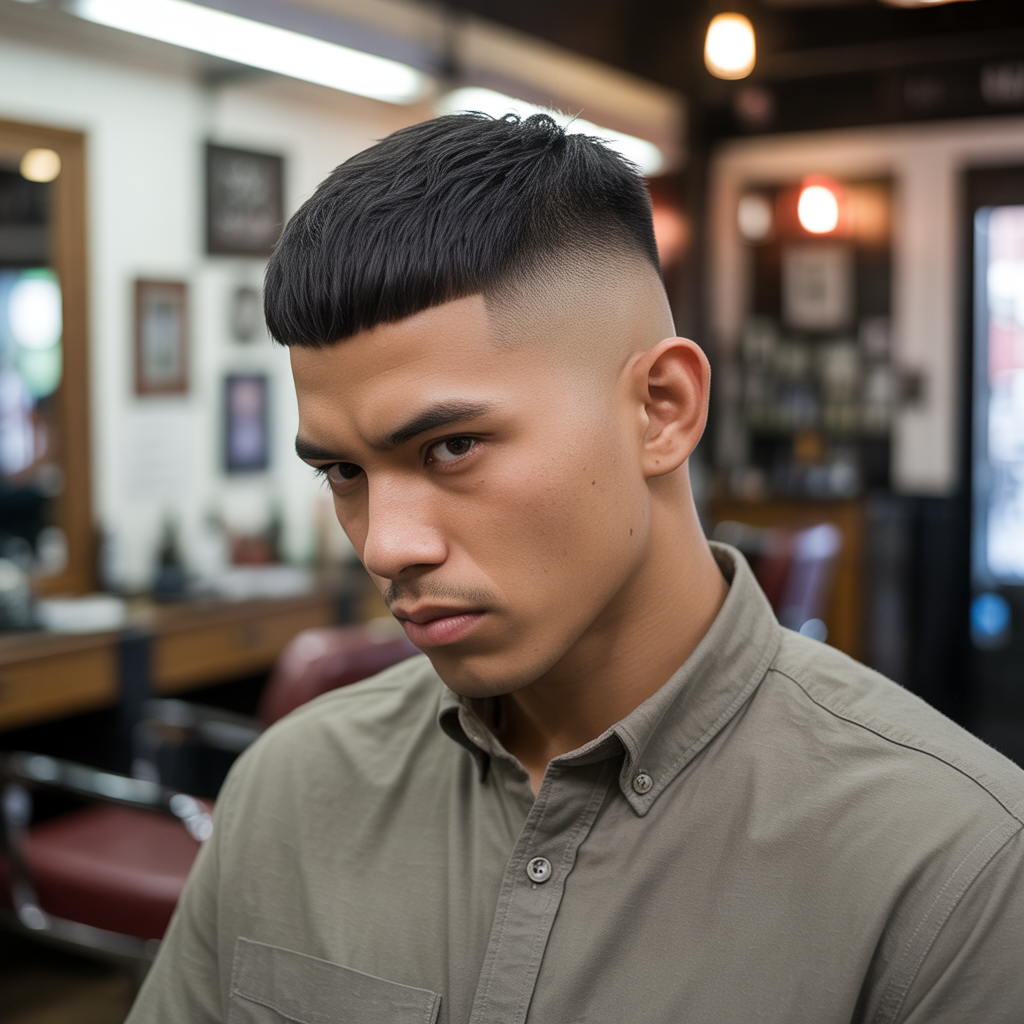
The Caesar cut delivers a short, horizontal fringe across the forehead that pairs naturally with the clean lines of a temple fade on the sides. Together they create a tidy, structured look that reduces daily styling to almost nothing. This is the cut most often requested by men who want to look groomed without a morning routine.
Redken Brews Mess Around Cream Paste adds enough texture to the Caesar fringe to keep it looking intentional through the day without requiring precise placement each morning.
Best for: Fine to medium hair, men managing receding hairlines Product: Redken Brews Mess Around Cream Paste Barber language: “Caesar cut with the fringe short and horizontal across the front, temple fade on the sides, keep the top flat and controlled.” Face shape: Square and round faces suit this combination because the horizontal fringe and clean fade balance width and height without pulling attention upward. Pro tip: Ask your barber to keep the Caesar fringe slightly textured rather than blunt-cut for a more current result that avoids the severity of a perfectly flat line.
Temple Fade with Taper
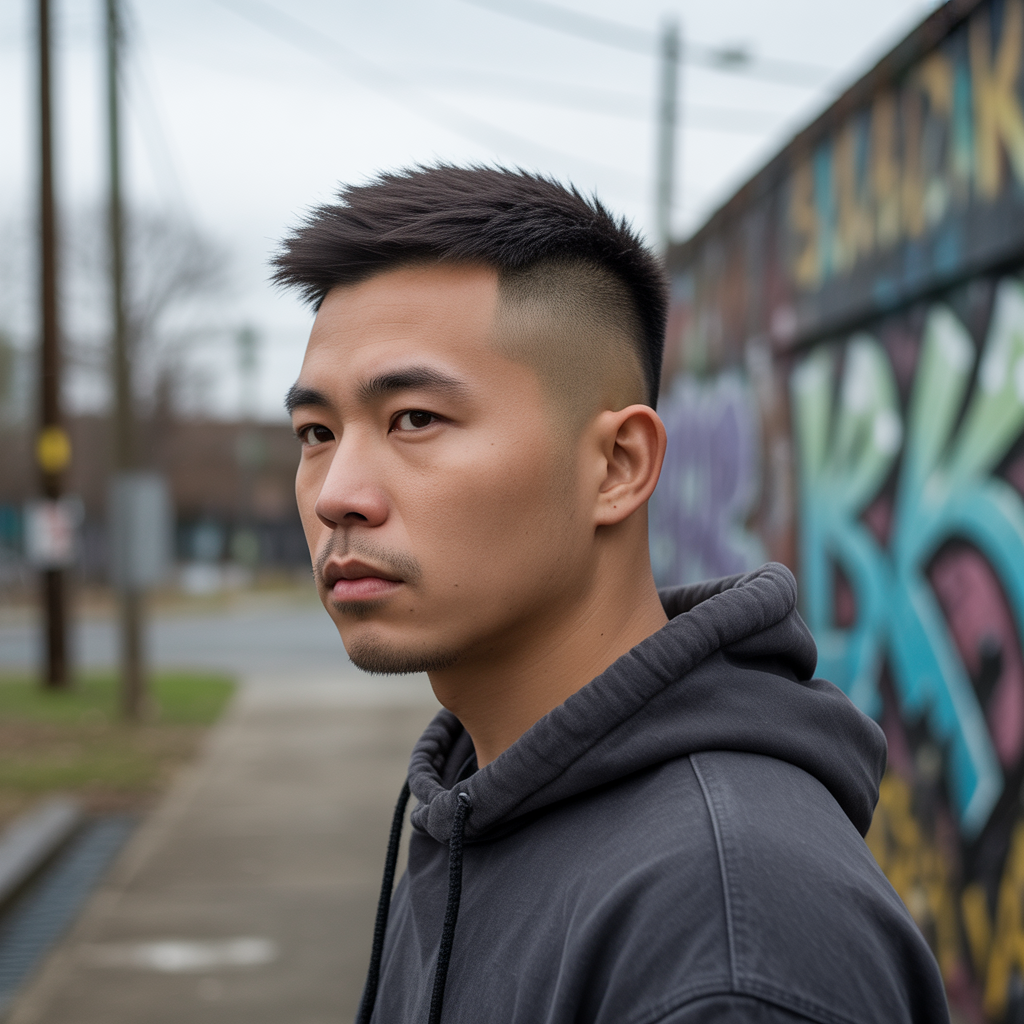
This version blends the temple fade smoothly into a tapered neckline for a seamless, connected finish across the entire perimeter. It avoids any harsh cutoff line and creates a continuous gradient from the fade around the ear down to the neck. This is the most conservative and approachable interpretation of the temple fade, ideal for first-timers or men in traditional professional environments.
Jack Black Wax Pomade gives a natural matte finish that keeps this style tidy without adding visible sheen, which matters when subtlety is the point.
Best for: All hair types, professional environments, first-time fade clients Product: Jack Black Wax Pomade Barber language: “Temple fade that blends into a tapered neckline, no harsh line at the bottom, I want it to fade out smoothly without a cutoff.” Face shape: Square and oval faces gain the most from the softened transition because it removes edge angularity while keeping overall structure clean. Pro tip: Ask your barber to blend using three guard sizes through the transition rather than freehanding the gradient for the smoothest taper-to-fade connection.
Temple Fade with Beard
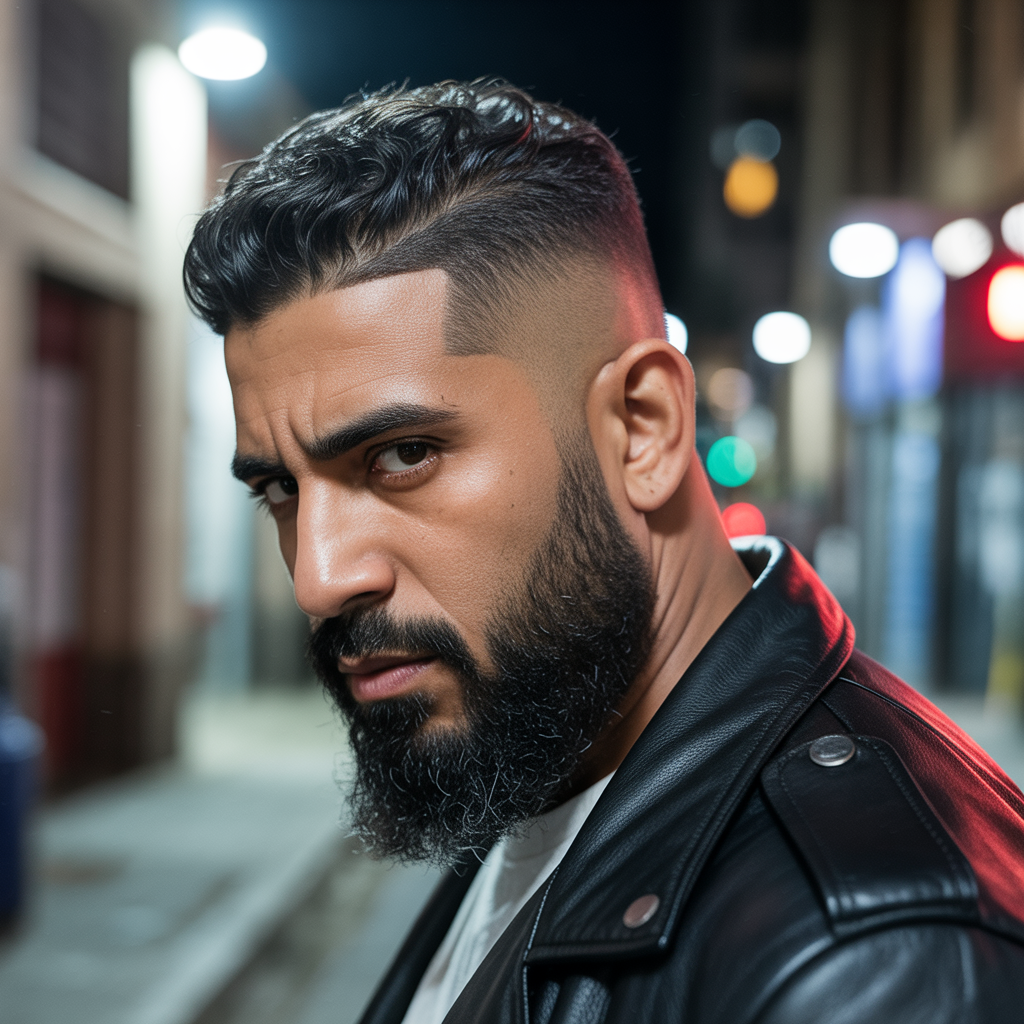
The temple fade flowing into a full beard creates a unified facial frame that treats the head and jaw as one intentional shape. Done cleanly, this connection removes the visual break between haircut and facial hair that makes grooming look incomplete. It is the combination that turns a good haircut into a strong overall impression.
Scotch Porter Smooth and Nourishing Leave-In Beard Conditioner keeps beard hair soft and manageable while defining the connection zone at the jaw. Barbers who specialize in beard sculpting know the fade line and beard line must meet cleanly at the cheekbone or the sculpted effect falls apart entirely.
Best for: Men with thick, dense beard growth, angular face shapes Product: Scotch Porter Smooth and Nourishing Leave-In Beard Conditioner Barber language: “Temple fade that connects clean into the beard, I want the transition to look sculpted, blend the sideburn into the beard seamlessly.” Face shape: Angular, square, and oval faces benefit most. Round faces can use this combination to create jaw definition that the face shape does not naturally provide. Pro tip: Use a Panasonic ER-GB80 beard trimmer on a low guard weekly to maintain the connection between fade and beard without a mid-cycle barber visit.
Visit Also: Beehive Hairstyles
Temple Fade with Undercut

The undercut keeps significant length on top while the sides are cut tightly, and the temple fade sharpens the transition between them for maximum contrast. This combination delivers a directional, fashion-forward result with staying power that most clean cuts cannot match. The longer the top section, the stronger the visual contrast at the sides.
Uppercut Deluxe Pomade delivers high shine and strong hold, which is what the undercut needs to display top length without slouching or separating. The undercut only works effectively when the top section is at least three inches. Anything shorter loses the contrast that defines the style. This is the detail most men miss when the result disappoints.
Best for: Thick hair, men comfortable with high-contrast styling Product: Uppercut Deluxe Pomade Barber language: “Undercut on the sides with a temple fade, keep three or more inches on top, I want maximum contrast between the top and sides.” Face shape: Oval and long faces carry the length well. Square faces should moderate the top length to avoid an elongated appearance. Pro tip: Blow-dry the top section in your preferred part direction before applying Uppercut Deluxe to set the foundation and reduce the product load needed to hold shape all day.
Temple Fade with Tapered Mohawk

The tapered mohawk keeps a defined strip of length running from the front hairline to the crown while the temple fade controls the sides. It reads bolder than most cuts on this list but stays wearable because the fade softens the harsh lines a traditional mohawk creates. This is the style for men who want personality in their cut without committing to something unwearable in public.
SheaMoisture Jamaican Black Castor Oil Strengthen and Restore Styling Lotion adds hold and moisture to the center strip without the weight that collapses height.
Best for: Thick hair, men who style daily Product: SheaMoisture Jamaican Black Castor Oil Strengthen and Restore Styling Lotion Barber language: “Tapered mohawk with a temple fade, keep the strip on top narrow and well-defined, fade the sides tight and blend it so it does not read harsh.” Face shape: Oval and square faces handle the narrow center strip cleanly. Long faces should avoid adding excessive height in the center to prevent an elongated appearance. Pro tip: Finger-style the center strip from front to back with product while the hair is still damp to set the direction before the hair fully dries.
Temple Fade with Curly Fringe
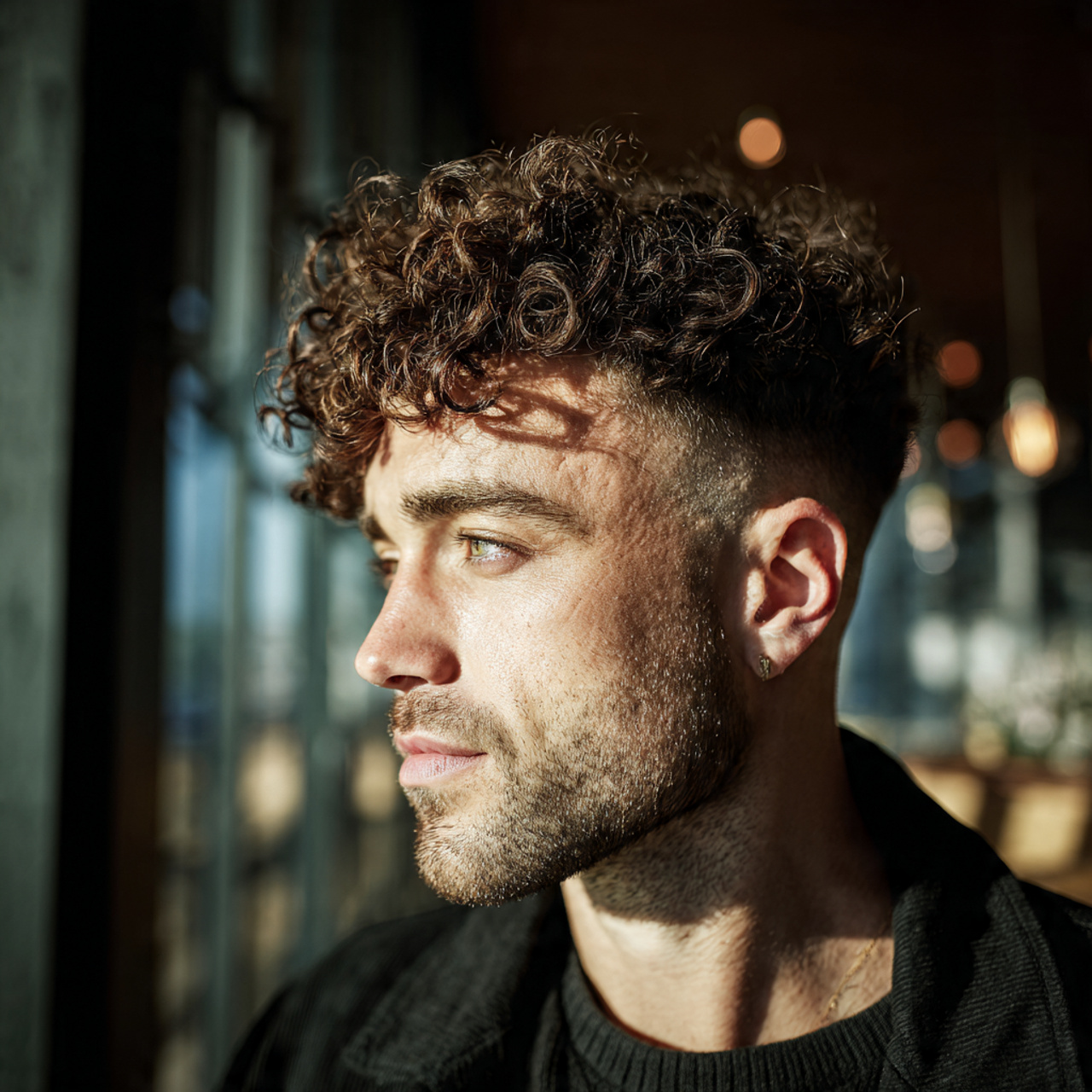
The curly fringe pushes natural curls forward at the front while the temple fade eliminates side bulk below the temples. The result is youthful and relaxed without looking accidental. The fringe provides softness and movement at the front while the fade creates the clean base that keeps the entire style looking shaped rather than grown out.
Not Your Mother’s Curl Talk Defining Cream defines fringe curls softly without the stiffness that gel-heavy products leave on finer curl types, which is the most common complaint with this style when the wrong product is used.
Best for: Loose to medium curls, type 2b to type 3a hair Product: Not Your Mother’s Curl Talk Defining Cream Barber language: “Temple fade on the sides, leave the curls long enough at the front to fall forward naturally, shape the outline without removing the length.” Face shape: Round and heart-shaped faces benefit most because the forward fringe softens wider foreheads and cheekbones naturally. Pro tip: Never brush the fringe dry. Refresh with a small amount of water and scrunch in curl cream to restore definition without disturbing the shape or creating frizz.
Temple Fade with Natural Gray Hair
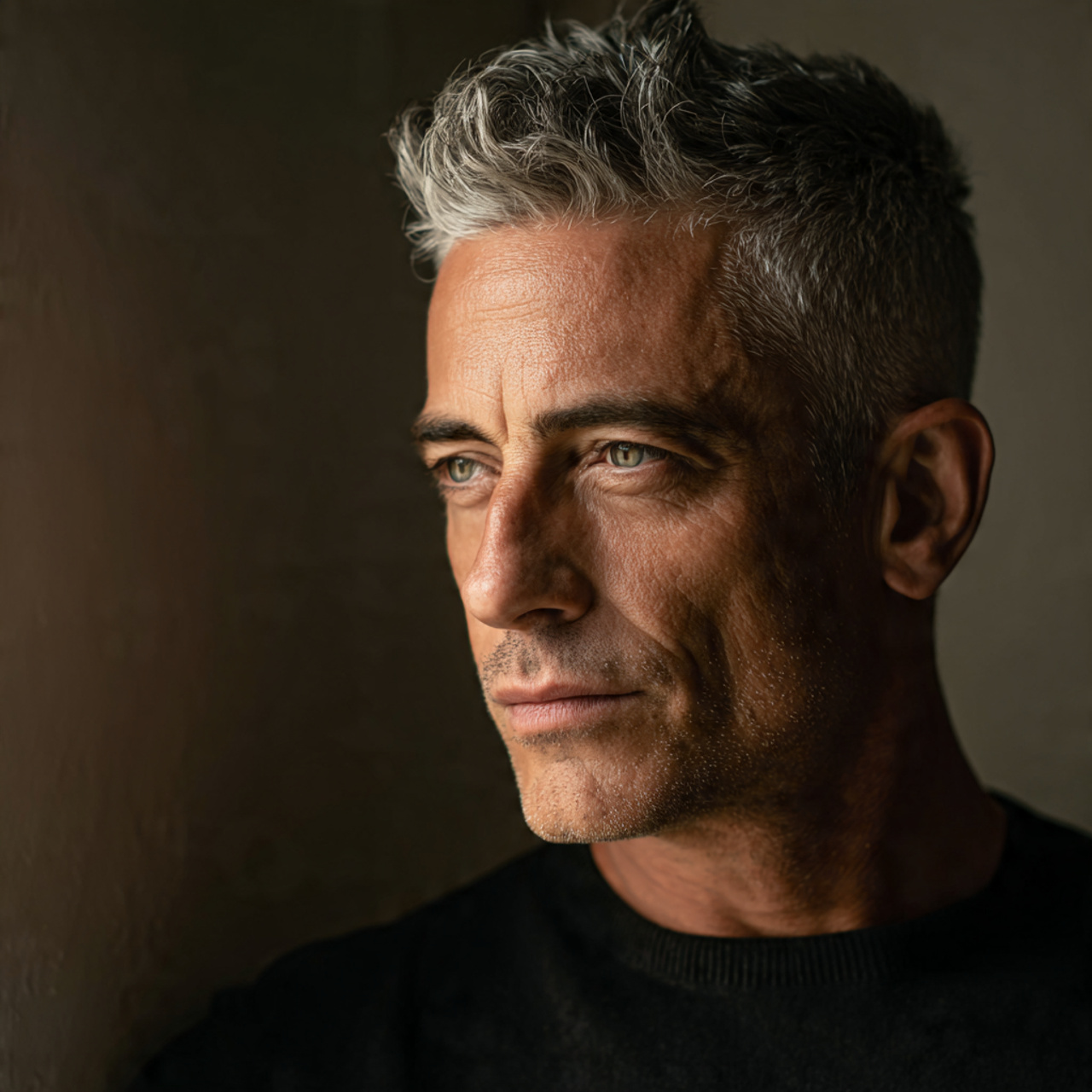
Gray hair paired with a temple fade is one of the most overlooked and most powerful combinations in this guide. The fade keeps edges modern and precise while the color stays exactly as it is. The result reads as confident and deliberate, which is exactly why it is gaining momentum as more men choose to stop coloring and let their gray work for them.
Blind Barber 90 Proof Styling Cream gives gray hair a clean, low-sheen finish that allows the natural color to stay visible rather than coating it under product layer.
Best for: Straight and wavy hair, men embracing natural color Product: Blind Barber 90 Proof Styling Cream Barber language: “Temple fade on the sides, keep the top as is, I want it to look modern and clean without anything drastic.” Face shape: All face shapes carry this well because clean fade lines and natural gray create their own visual balance regardless of structure. Pro tip: Use a purple-toning shampoo like Shimmer Lights once a week to keep gray strands bright and eliminate any yellow tint that makes the fade look dated rather than intentional.
Temple Fade with Athletic Short Crop

The athletic short crop combined with a temple fade is the hardest-working combination on this list in practical terms. It stays cool in high heat, dries fast after training, and requires almost no styling effort while still looking shaped. The fade adds the definition that separates this from a basic clipper cut.
Bevel All-in-One Pomade Spray is ideal here because it gives a light finish and a touch of texture to a very short crop without the greasiness that traditional pomades leave on active scalps throughout the day.
Best for: All hair types, athletes and high-activity lifestyles, men with minimal grooming time Product: Bevel All-in-One Pomade Spray Barber language: “Short crop on top at a two or three guard, temple fade on the sides, keep it neat and very low maintenance.” Face shape: Every face shape works. The brevity of the crop neutralizes most proportion concerns without adjustment. Pro tip: Rinse hair with cool water after workouts before any shampoo to lift sweat from the scalp without stripping the natural moisture barrier at the fade area.
Temple Fade with Natural Side Swept Waves
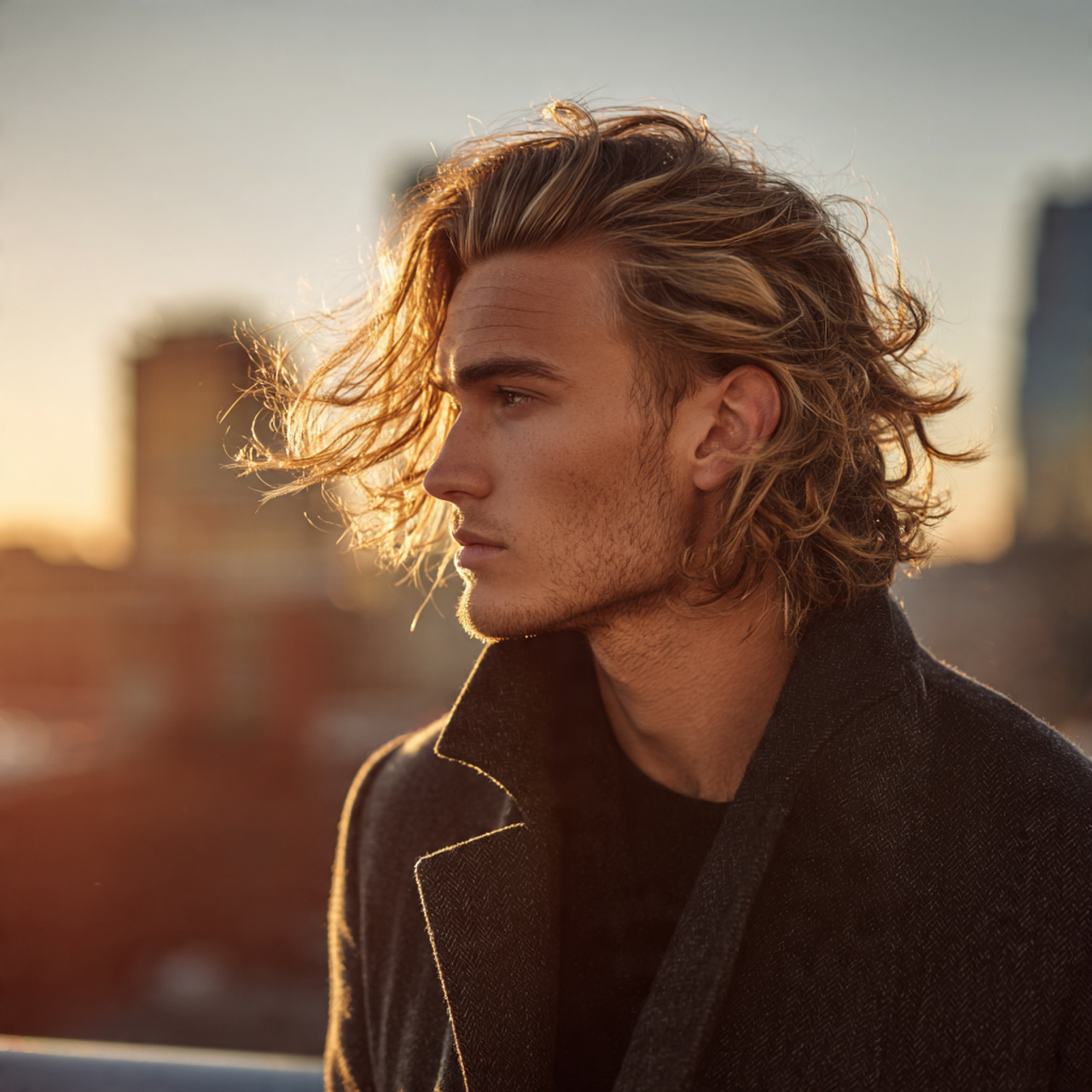
Side-swept waves combined with a temple fade create one of the most balanced combinations on this list. The wave direction adds natural movement across the top while the fade keeps the sides defined without competing with the flow of the hair. The result suits everyday wear and elevated social settings without needing a restyle between them.
Kenra Platinum Silkening Mist adds light control and subtle shine to naturally wavy hair without weighing down the sweep or flattening movement. Barbers consistently recommend this combination for men transitioning from structured styles into something that feels lower effort without looking less intentional.
Best for: Wavy hair, type 2a to type 2c, men who prefer minimal daily styling Product: Kenra Platinum Silkening Mist Barber language: “Temple fade on the sides, leave enough length on top to fall naturally to one side, shape the front so the wave direction reads clearly.” Face shape: Oval and long faces benefit most because the horizontal side sweep emphasizes width and balance rather than length. Pro tip: Sleep on a silk pillowcase to preserve the natural wave pattern overnight and reduce the restyling needed in the morning.
Quick Comparison Table
| Style | Length | Hair Type | Maintenance | Bold Factor |
|---|---|---|---|---|
| Classic Temple Fade | Short to Medium | All types | Low | ★★ |
| Low Temple Fade | Short | Fine to Medium | Very Low | ★ |
| High Temple Fade | Short to Medium | Thick/Curly | High | ★★★ |
| Temple Fade with Afro | Medium to Long | Coily | Medium | ★★★ |
| Temple Fade with Waves | Short to Medium | Straight/Wavy | High | ★★ |
| Temple Fade with Braids | Medium to Long | Thick/Coily | Medium | ★★★ |
| Temple Fade with Dreads | Long | All natural | Medium | ★★★ |
| Temple Fade with Curly Hair | Short to Medium | Curly | Low | ★★ |
| Temple Fade with Buzz Cut | Very Short | All types | Very Low | ★ |
| Temple Fade with Pompadour | Medium to Long | Medium/Thick | High | ★★★ |
| Temple Fade with Quiff | Medium | Straight/Wavy | Medium | ★★ |
| Temple Fade with Caesar Cut | Short | Fine to Medium | Low | ★ |
| Temple Fade with Taper | Short to Medium | All types | Low | ★ |
| Temple Fade with Beard | Short to Medium | All types | Medium | ★★ |
| Temple Fade with Undercut | Medium to Long | Thick | High | ★★★ |
| Temple Fade with Tapered Mohawk | Medium | Thick | High | ★★★ |
| Temple Fade with Curly Fringe | Short to Medium | Curly | Low | ★★ |
| Temple Fade with Natural Gray Hair | Short to Medium | Straight/Wavy | Low | ★★ |
| Temple Fade with Athletic Short Crop | Very Short | All types | Very Low | ★ |
| Temple Fade with Side Swept Waves | Medium | Wavy | Low | ★★ |
Frequently Asked Questions
What is a temple fade haircut and who does it suit best? A temple fade haircut focuses the fade gradient specifically at the temple and sideburn area rather than across the full side of the head. It adapts to most face shapes and hair types, which is why it remains one of the most requested styles across all age groups.
How often should a temple fade be maintained? Most temple fades stay sharp for one to two weeks before the lines begin to soften visibly. Men who prefer crisp edges should plan a barber visit every ten to fourteen days.
Can a temple fade work for men with a receding hairline? A well-placed temple fade draws attention away from recession by redefining the temple point with a clean structural line. Ask your barber to position the fade slightly forward to create definition where the hairline has softened.
What is the difference between a temple fade and a full fade? A full fade covers the entire side of the head from ear to neckline. A temple fade focuses the gradient only at the temple and sideburn, leaving the rest of the side in a more natural or tapered state.
Does hair texture change how the fade looks? Texture affects the finish more than the structure. Straight hair produces the sharpest visible lines while curly and coily hair creates a softer, rounder edge at the fade that still reads as clean and deliberate.
Final Thoughts
A strong haircut does not begin with the clippers. It begins with understanding which version of a style was actually built for your face, your hair, and the amount of maintenance you will realistically commit to. That understanding is the only thing that closes the gap between what you ask for and what you walk out with.
The twenty styles in this guide cover the full range from the low-maintenance buzz crop to the bold tapered mohawk. Every one of them builds on the same principle. A clean, well-placed temple fade improves every top style above it. It is the structural base that makes the rest look intentional.
One consistent truth emerges after studying these styles closely. Men underestimate how much maintenance frequency matters. The difference between a fresh temple fade and one that is two weeks past its visit is visible to anyone nearby. The cut is not what fails. The upkeep is what determines whether it works.
The barbers who deliver the best results consistently are not using better techniques. They are having clearer conversations before the clippers come on.
If this guide helped you find your next cut, save it to your Pinterest board and share it with someone who has been settling for the wrong style.