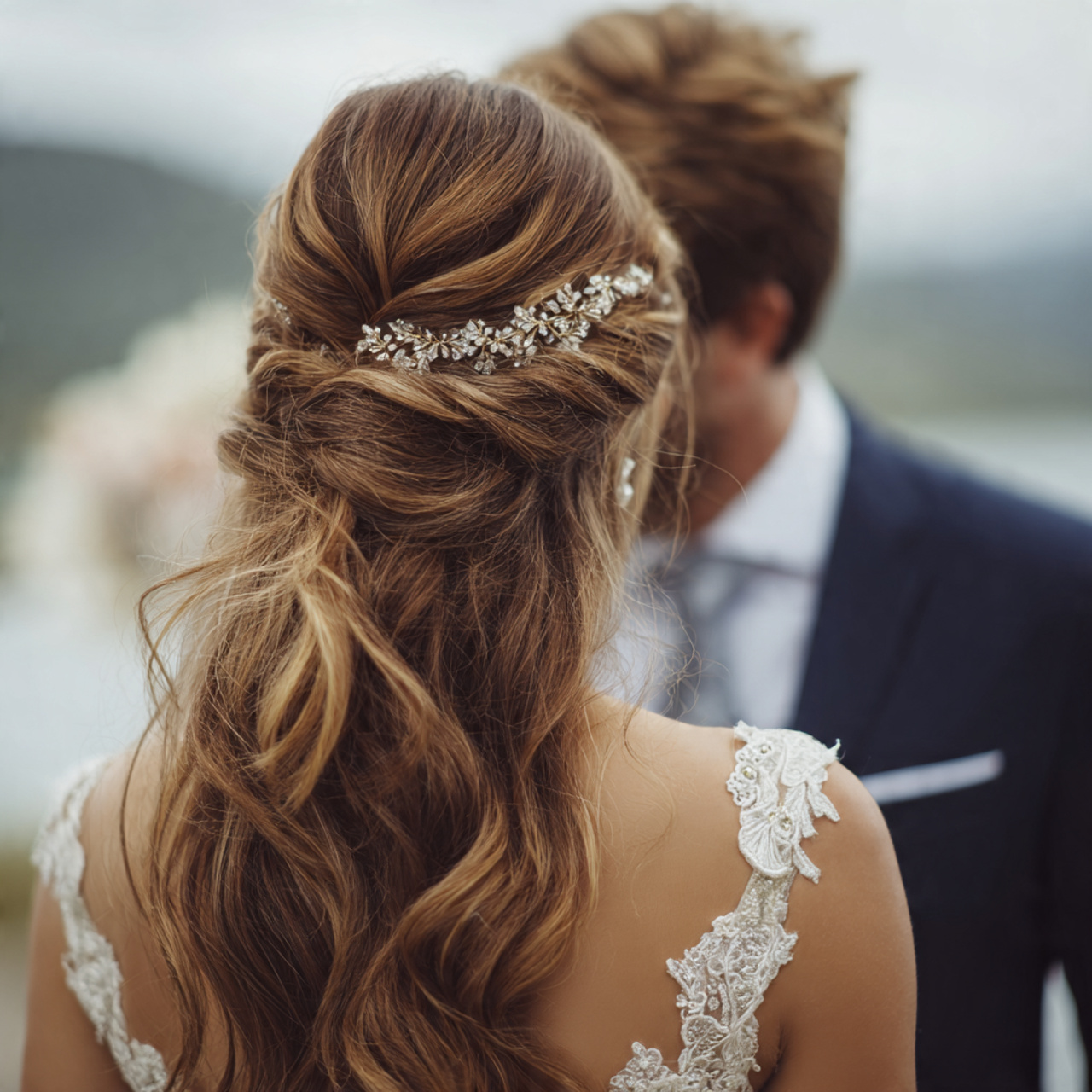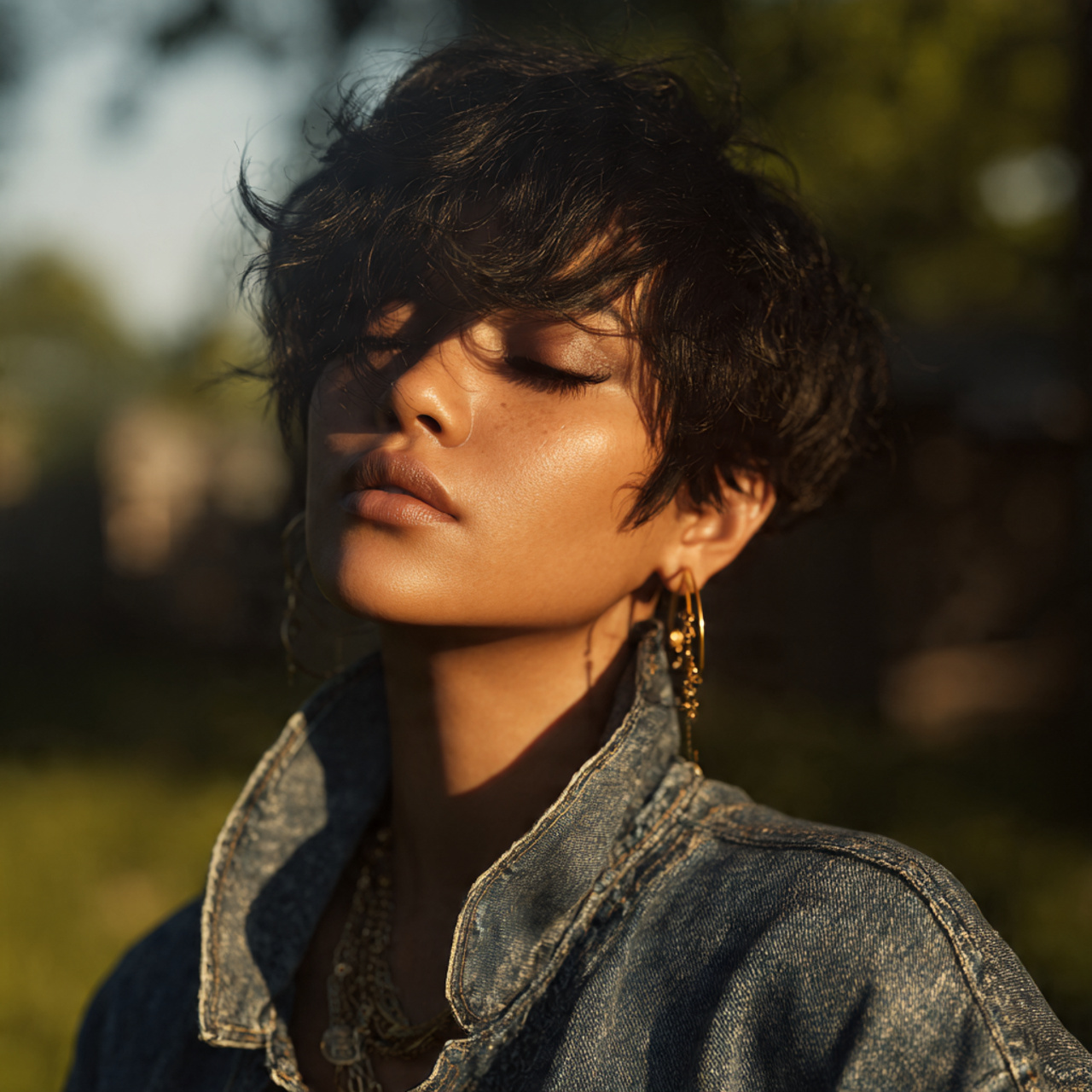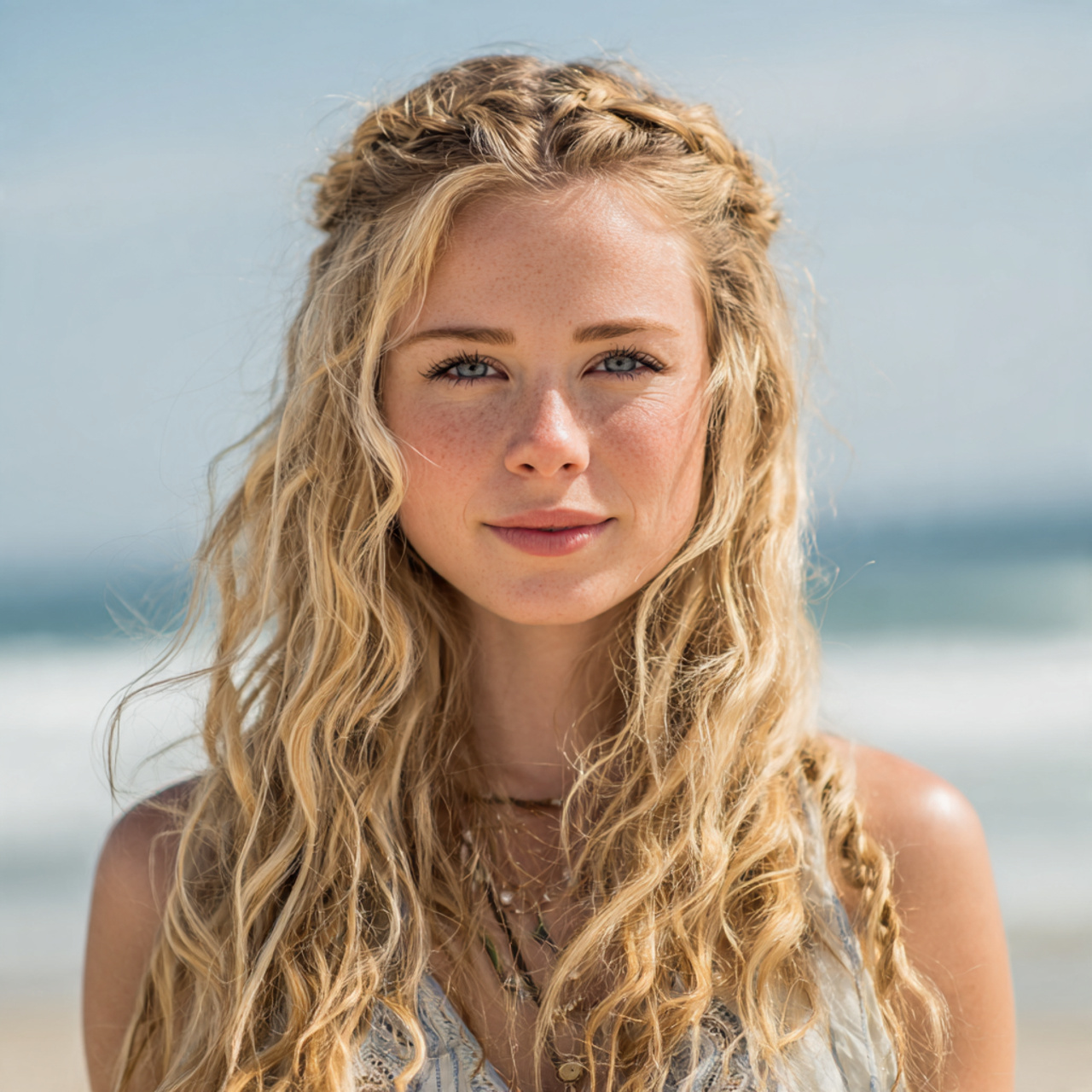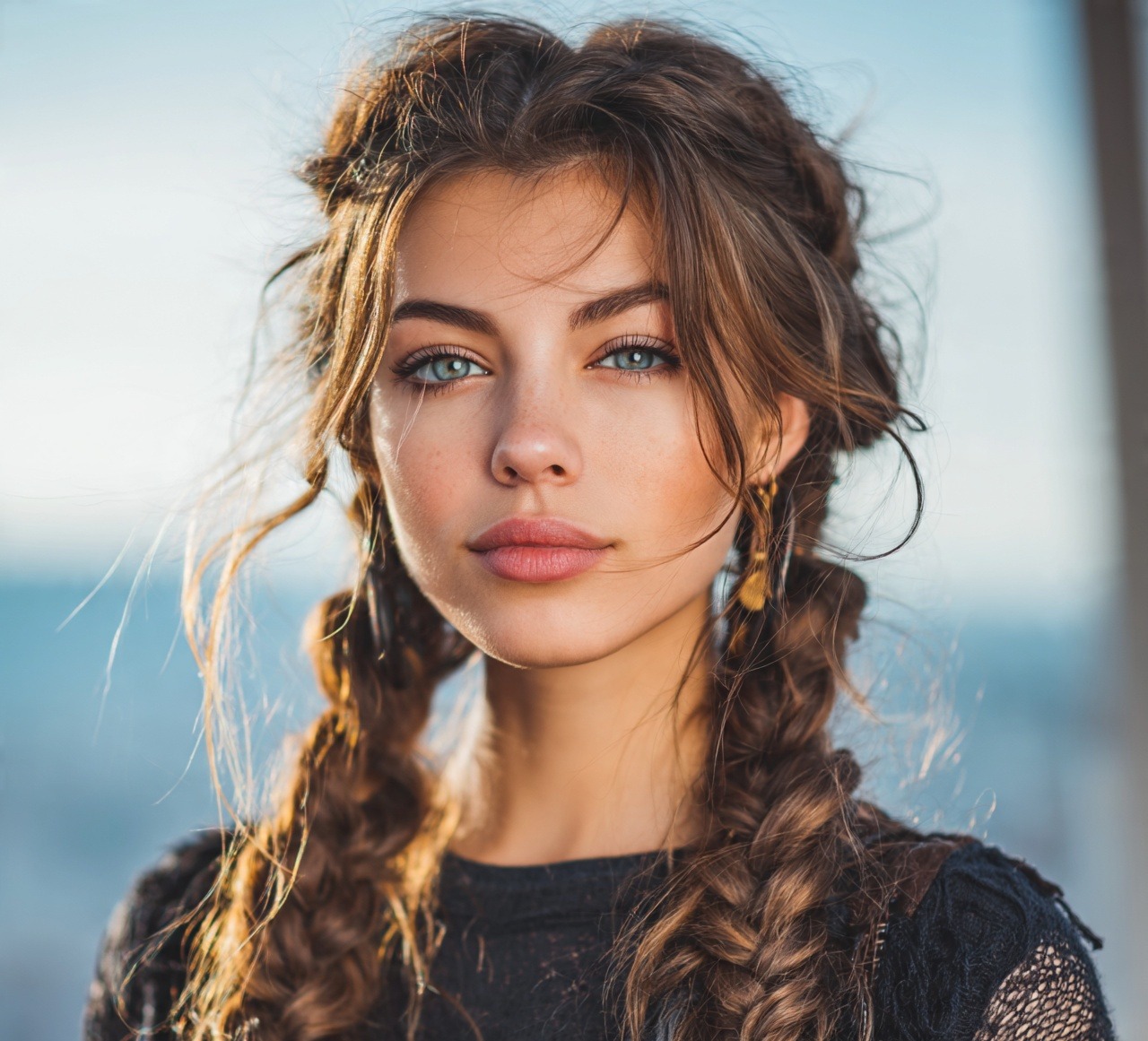
27 Winter Haircut Ideas That Will Transform Your Cold-Weather Look This Season
Every winter, the same thing happens. You walk out of the house with your hair looking decent, and by the time you pull off your beanie or unwrap your scarf, it is flat, static-filled, and nothing like it was an hour ago. Winter haircut ideas get treated like an afterthought, but the cut you sit down for before temperatures drop is the single biggest factor in how your hair performs for the next four months.
This is not a personal failing. Cold air, forced indoor heat, and the daily friction of wool coats and knit scarves are actively working against every strand on your head. Static increases. Moisture evaporates from the shaft faster. Ends that were perfectly healthy in October start splitting by December because they are rubbing against fabric all day, every day.
The real problem is that most people choose a haircut based on how it looks in a photo, not how it functions in real winter conditions. A style that photographs beautifully in summer humidity can become impossible to manage once the air turns dry and cold. Shape, length, and layering technique all respond differently to seasonal change.
Years of working with seasonal hair care and watching how different cuts respond to temperature drops, humidity shifts, and friction damage create patterns that become impossible to ignore. The cuts that actually hold up in winter share specific structural qualities. They are built around natural texture, protective length choices, and smart layering that supports the hair instead of fighting the environment.
This guide covers every style worth considering when the temperature falls. You will see which lengths protect your ends, which layers add volume without static, and which cuts look sharp even after a full day under a hat. Every style here is selected for real-world winter performance.
By the end, you will know exactly which cut to request and the precise words to say when you sit in the chair. These winter haircut ideas are chosen for how they actually work, not just how they look on a mood board.
Your haircut is the foundation of every winter style you wear. The single most important rule in cold-weather hairstyling is to choose a shape that works with your natural texture rather than trying to override it. With the current season pushing lived-in, low-maintenance cuts to the front of every editorial, there has never been a better moment to invest in a cut designed to do the work for you.
Winter Haircut Ideas
Cozy Cuts for Cold Weather

When winter sets in, internal structure becomes your most valuable styling tool. A cozy cut is designed with layering and texture that allow hair to hold its shape after being compressed under a hat or trapped beneath a scarf for hours. These styles look relaxed and comfortable while never appearing unstyled or neglected.
The secret is in how weight is removed. A skilled stylist pulls weight from the right interior zones so hair springs back naturally rather than sitting flat and defeated. This type of cut finished with Olaplex No. 6 Bond Smoother keeps the texture soft and frizz-controlled even in the driest winter air.
Best for: All hair types needing shape with minimal daily effort Product: Olaplex No. 6 Bond Smoother Pro tip: Ask your stylist to point-cut the ends rather than blunt-cut them so the hair retains movement when cold air hits it. Face shape: Oval and round faces Stylist language: “I want a cozy, structured cut with soft internal layers that springs back after I’ve been wearing a hat.”
Layered Looks for Winter Volume
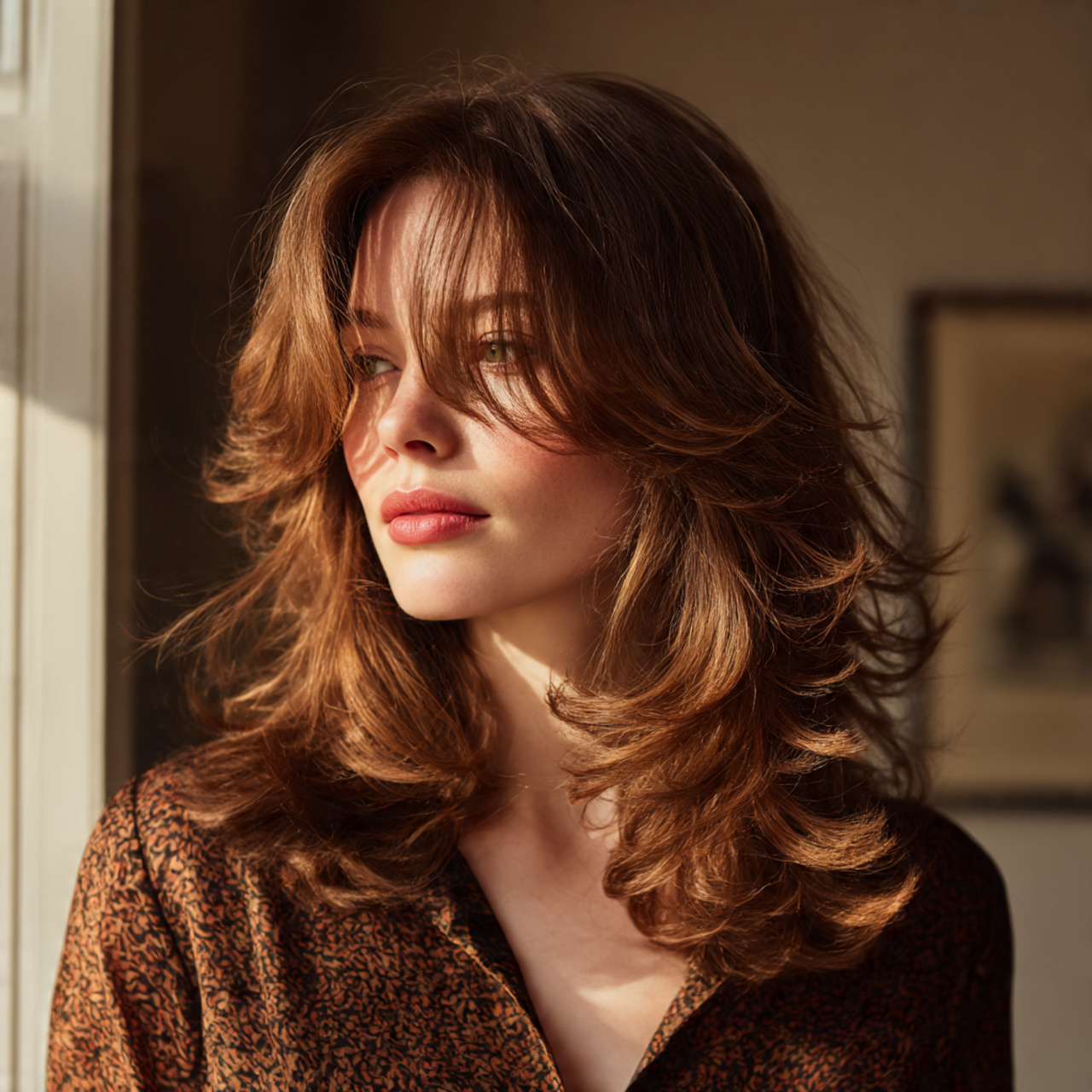
Fine hair loses its fight with winter faster than any other type, and soft blended layers are the most effective counter. Strategically placed through the mid-lengths and ends, these layers restore volume without making hair appear thin or over-processed. The result is a shape that moves beautifully even in heavy, dry air.
Modern layering has moved far from the harsh, choppy cuts of earlier decades. Stylists at Aveda salons now use a slide-cutting technique through the mid-shaft that removes weight without disturbing the outer silhouette. This gives hair a lifted, full appearance that holds through the day without needing a single product touch-up.
Best for: Fine to medium hair that collapses in dry winter air Product: Bumble and bumble Thickening Spray Pro tip: Request layers that begin no higher than the cheekbone to prevent top-heavy volume that collapses before noon. Face shape: Round and heart-shaped faces Stylist language: “I want blended, soft layers through the mid-lengths for volume without thinning my hair out.”
The Effortless Long Bob
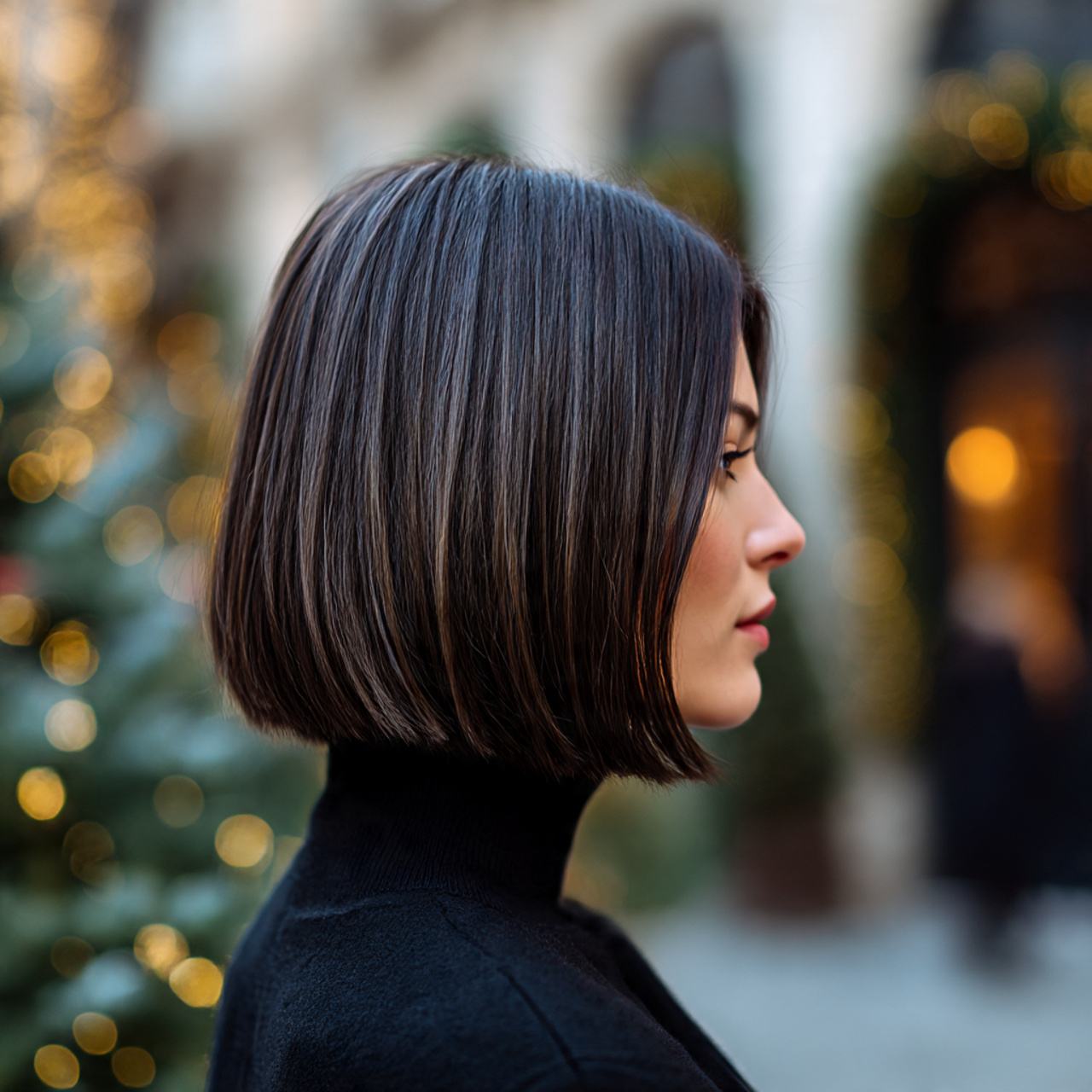
The long bob remains one of the most practical winter haircut ideas available. Sitting just above the collarbone, this length keeps hair from rubbing against coat collars all day, which is one of the primary drivers of split ends and frizz during cold months. The shape is clean, modern, and adaptable to nearly every winter occasion.
What makes the lob exceptional in cold weather is its structural versatility. A slight forward graduation in the front panel allows the cut to frame the face beautifully whether worn straight or wavy. Finishing with Redken All Soft Heavy Cream seals the ends and maintains the sleek line even against wind and friction.
Best for: Straight and wavy hair wanting a polished, everyday shape Product: Redken All Soft Heavy Cream Pro tip: Ask for a five-degree graduation in the front panel to stop the ends from flipping outward when you zip your coat collar up. Face shape: Oval and square faces Stylist language: “I want a long bob just above the collarbone with a slight forward graduation and a clean blunt edge.”
Low-Maintenance Short Hair

Short hair is one of the most strategically intelligent winter choices because it air-dries in minutes. Leaving the house with wet hair in freezing temperatures accelerates breakage significantly, and short cuts remove that risk entirely. They also sit clear of coat collars, protecting the ends that cause the most problems when left to friction.
Pixie cuts and short crops styled with Kevin Murphy Easy Rider define the shape without adding weight or static-prone residue. Lightweight cream is essential here because heavy products attract static electricity in cold, dry air. The result is a polished look that stays sharp through a full day of hats and hoods.
Best for: Anyone wanting fast mornings and practically zero daily styling Product: Kevin Murphy Easy Rider Pro tip: Apply product to slightly damp hair and use your fingers rather than a comb to avoid disturbing the natural texture direction. Face shape: Oval and oblong faces Stylist language: “I want a short crop or pixie with a clean nape and soft texture through the top.”
Fringe Styles for Beanie Season

The assumption that bangs and winter hats cannot coexist is simply wrong. Soft curtain bangs and long wispy fringes sit flat under beanies and snap back the moment the hat comes off. They also add instant visual interest to a look that might otherwise disappear completely beneath scarves and heavy winter outerwear.
A fringe sitting between the bridge of the nose and the brow line is the most forgiving option for hat-wearers. Styling with IGK Good Behavior Spirulina Protein Spray keeps the fringe flexible and easy to reset throughout the day. It is one of the most impactful low-effort updates available for winter.
Best for: Anyone wanting a fresh update without changing overall length Product: IGK Good Behavior Spirulina Protein Spray Pro tip: Blow-dry your fringe with a round brush while pulling it slightly to the side so it settles into a natural direction faster when the hat comes off. Face shape: Heart and oval faces Stylist language: “I want soft curtain bangs that sit between my brow and nose bridge, blended into the sides.”
The Modern Shag Haircut
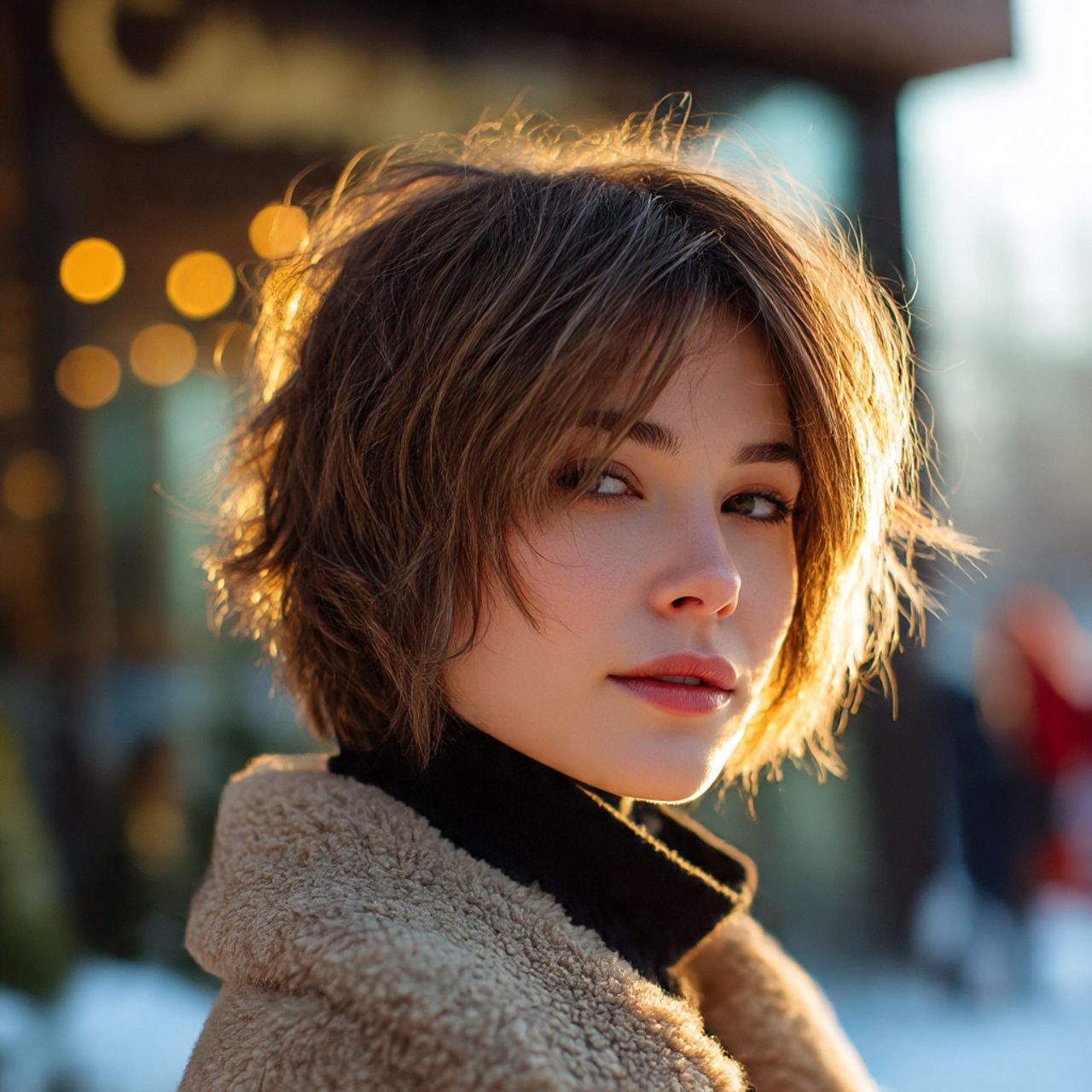
The modern shag has been one of the most consistently requested cuts in editorial salons for the past two seasons, and its cold-weather durability is a significant reason why. Today’s version is far softer than the classic 1970s shag. Layers begin shorter through the crown and gradually lengthen toward the ends, creating a lived-in shape that looks considered even on days you barely touched it.
One detail that separates a great shag from a mediocre one: never allow the shortest layers to sit above the occipital bone, or the top section collapses under the weight of the longer lengths and cannot recover. Moroccanoil Treatment worked through the ends defines each layer without any greasiness.
Best for: Wavy and curly hair wanting texture with structural hold Product: Moroccanoil Treatment Pro tip: Diffuse on low heat and scrunch upward from the ends to maximize the layered movement without flattening the root volume. Face shape: Oval and oblong faces Stylist language: “I want a modern shag with curtain bangs, shorter crown layers, and longer pieces through the ends.”
Textured Pixie Cuts

A textured pixie creates lift and dimension that a smooth pixie simply cannot match. The surface is broken into soft, separated pieces that give the cut a sculptural quality without looking disheveled. This style is exceptionally practical in winter because hat hair is corrected in seconds with a single pass of your fingers.
R+Co Rockaway Salt Spray gives fine to medium hair the grip and definition needed to hold the texture through a full day without buildup or static. This is the most important advantage over heavier pomades, which activate static electricity in cold, dry air and undermine the whole look by midday.
Best for: Fine and medium hair wanting bold shape with minimal time investment Product: R+Co Rockaway Salt Spray Pro tip: Mist the salt spray on dry hair and scrunch the top section backward to create root lift that holds without a second pass. Face shape: Oval and heart-shaped faces Stylist language: “I want a textured pixie with disconnected pieces through the top and a clean taper at the nape.”
Mid-Length Choppy Layers

Hair that falls between the shoulders and chest hits the zone where winter flatness causes the most frustration. Choppy layers break that heaviness and introduce movement that makes hair look alive rather than simply long and weighed down. The cut reads as relaxed and modern without requiring any effort to appear that way.
What separates choppy from messy is the internal architecture underneath. Stylists at Bumble and bumble salons describe this as invisible scaffolding, where the interior layers support the outer shape without being visible at the surface. Color Wow Dream Coat Supernatural Spray smooths the outer layer while letting the texture underneath do its work.
Best for: Straight and wavy hair at shoulder to chest length Product: Color Wow Dream Coat Supernatural Spray Pro tip: Let hair air-dry eighty percent of the way before diffusing so the choppy texture sets naturally before heat is introduced. Face shape: Round and square faces Stylist language: “I want mid-length choppy layers with point-cut ends and a broken, relaxed finish through the lengths.”
Blunt Bobs for Straight Hair
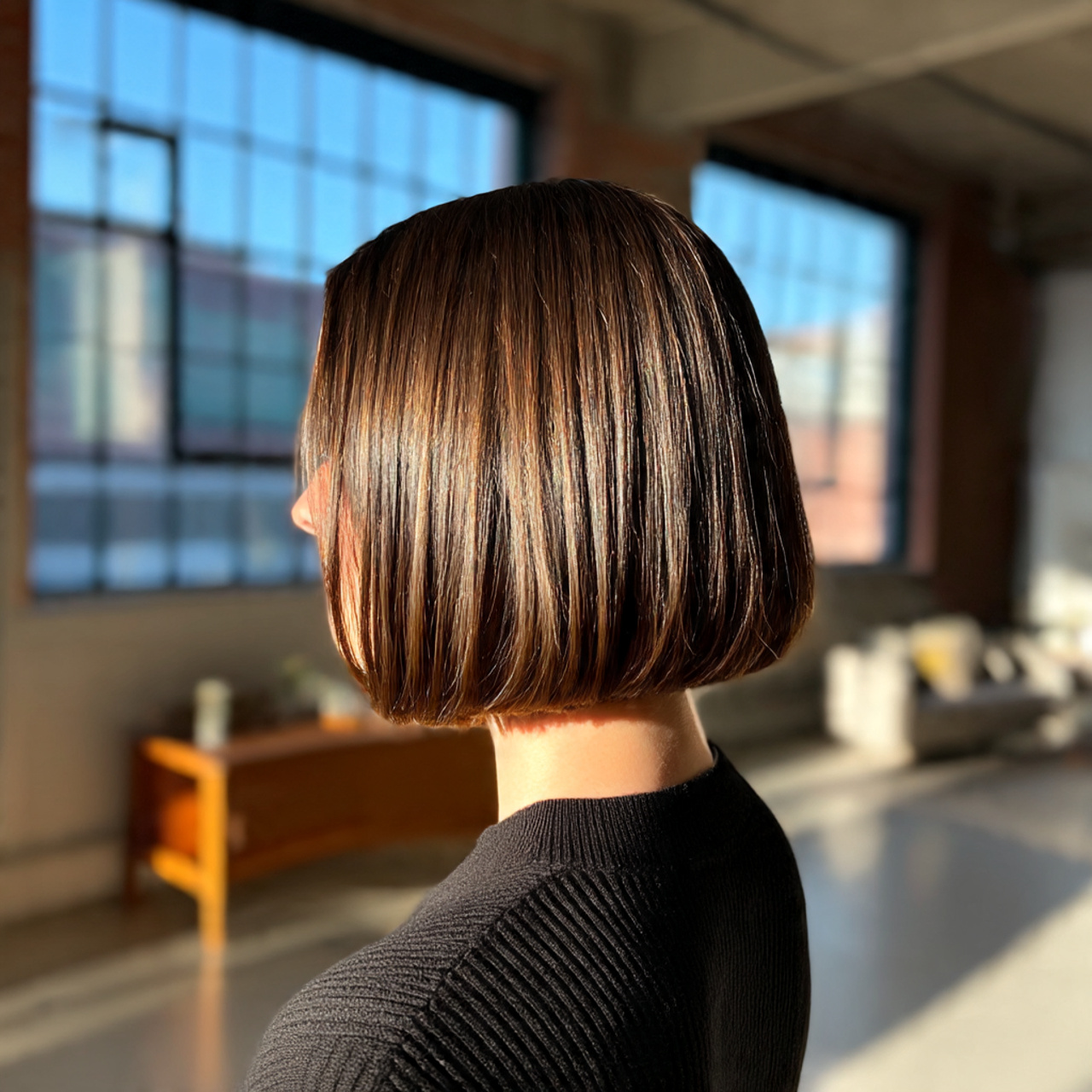
Nothing makes straight hair look thicker in winter faster than a clean, even blunt edge. The unbroken line across the bottom creates an optical illusion of density that flatters fine to medium hair significantly. There is a reason this cut keeps returning. It consistently delivers.
The blunt bob sits best at the jaw or just below, a length that clears coat collars and eliminates the daily friction battle that destroys ends by February. L’Oreal Professionnel Liss Unlimited Serum applied through the lengths gives the surface a mirror-like finish that enhances the precision of the cut and keeps it looking intentional all day.
Best for: Straight to slightly wavy fine or medium hair Product: L’Oreal Professionnel Liss Unlimited Serum Pro tip: Have your stylist cut the bob on dry hair so the natural weight and fall determines the final line rather than a wet approximation. Face shape: Oval and heart-shaped faces Stylist language: “I want a blunt bob at jaw length, cut on dry hair for precision, with no graduation in the back.”
Long Hair U-Shape Trim

Long hair does not have to become a winter casualty. A U-shape trim replaces the flat, heavy line of a straight cut with a gentle curve that improves movement and gives the ends somewhere natural to fall. This small adjustment makes a significant difference in how long hair behaves every single day.
The curved line also prevents ends from buckling inward or flipping outward along the back. Sealing the freshly trimmed ends with Olaplex No. 7 Bonding Oil protects them from the combination of cold outdoor air and dry indoor heat that together accelerate split end development faster than almost anything else.
Best for: Long hair needing a genuine refresh without sacrificing length Product: Olaplex No. 7 Bonding Oil Pro tip: Ask your stylist to divide the hair into three panels, center and both sides, before trimming the U-shape to guarantee perfect symmetry. Face shape: All face shapes Stylist language: “I want a U-shape trim with the center longer and the sides slightly shorter to create a soft, flowing curve.”
Soft Curtain Bangs

Curtain bangs have moved from trend to staple and for genuinely good reason. The center split and soft sweep to either side frames the eyes and cheekbones in a way that works beautifully beneath winter scarves and coats. They add personality to any cut without asking for a serious commitment in return.
The most common mistake with curtain bangs is cutting the center too short, which makes them rigid and impossible to push aside naturally. Keeping the shortest point at the bridge of the nose gives maximum flexibility for all-day styling. Kenra Platinum Silkening Mist keeps them falling softly even after being tucked under a hood.
Best for: Most hair types wanting a soft, face-framing update with no drama Product: Kenra Platinum Silkening Mist Pro tip: Dry curtain bangs using a round brush split into two sections, brushing each side away from center before the hair fully cools to lock in the sweep. Face shape: Oval and heart-shaped faces Stylist language: “I want curtain bangs parted in the center, longest point at the bridge of my nose, blended into the front sections.”
Haircuts That Prevent Split Ends

Winter accelerates split end development faster than any other season, and a strategic cut is the most effective form of prevention available. Styles that sit above the collarbone eliminate the primary source of friction-driven damage before it even begins. This is a protective styling decision, not just a trim.
Stylists trained in Vidal Sassoon precision cutting techniques focus on removing the final centimeter of hair where splitting most commonly originates. Following up with Wella EIMI Thermal Image heat protectant before every blow-dry prevents further damage from building through the season.
Best for: All hair types dealing with winter breakage or dryness Product: Wella EIMI Thermal Image Pro tip: Book your protective trim before winter peaks rather than after damage appears, because splits travel upward faster in dry air and cost you more length in the end. Face shape: All face shapes Stylist language: “I want a protective cut that removes my most damaged ends and keeps my length above the collarbone to reduce friction.”
Face-Framing Layers

Face-framing layers are one of the most consistently undervalued updates in hairstyling. Shorter pieces placed near the cheekbones and chin draw attention to the face, which becomes critically important in winter when the rest of your body disappears beneath heavy coats and layered clothing. These pieces do what a whole outfit change cannot.
They flow downward and blend seamlessly into the rest of the cut. They look equally strong when hair is worn fully down, half-up, or in a loose winter bun. Joico Moisture Recovery Styling Creme keeps them soft and defined without the stiffness that heavier products often introduce.
Best for: Medium to long hair wanting a lifted, softened appearance around the face Product: Joico Moisture Recovery Styling Creme Pro tip: Ask for face-framing pieces cut at a steep angle toward the face rather than straight across so they curve naturally toward the jaw without being styled. Face shape: Square and round faces Stylist language: “I want face-framing layers starting at the cheekbone, angled steeply toward my jaw, blended into the rest of the cut.”
Visit Also: Winter Hair Color Ideas
The ‘Sleek Back’ Cut

Winter styling often means pulling your hair back under a hat, hood, or earmuffs, and your cut should look clean and intentional when you do. Even layers through the mid-lengths combined with light tapering at the ends allow hair to sit flush and smooth when tied or clipped back, without flyaways, visible bulk, or awkward flipping at the nape.
This result comes from a technique called interior blending, where a stylist uses a razor or texturizing shears to smooth the underneath sections specifically. GHD Smooth and Finish Serum applied before pulling hair back creates a glass-like finish that holds polished for hours, even after time under a hat.
Best for: All lengths needing clean versatility for pulling back in winter Product: GHD Smooth and Finish Serum Pro tip: Apply the serum specifically to the hairline and nape before pulling hair back so those sections stay flat and smooth without needing a second application. Face shape: All face shapes Stylist language: “I want even interior blending through the mid-lengths so my hair sits flat and smooth when pulled back.”
Hair Styles for Turtleneck Weather
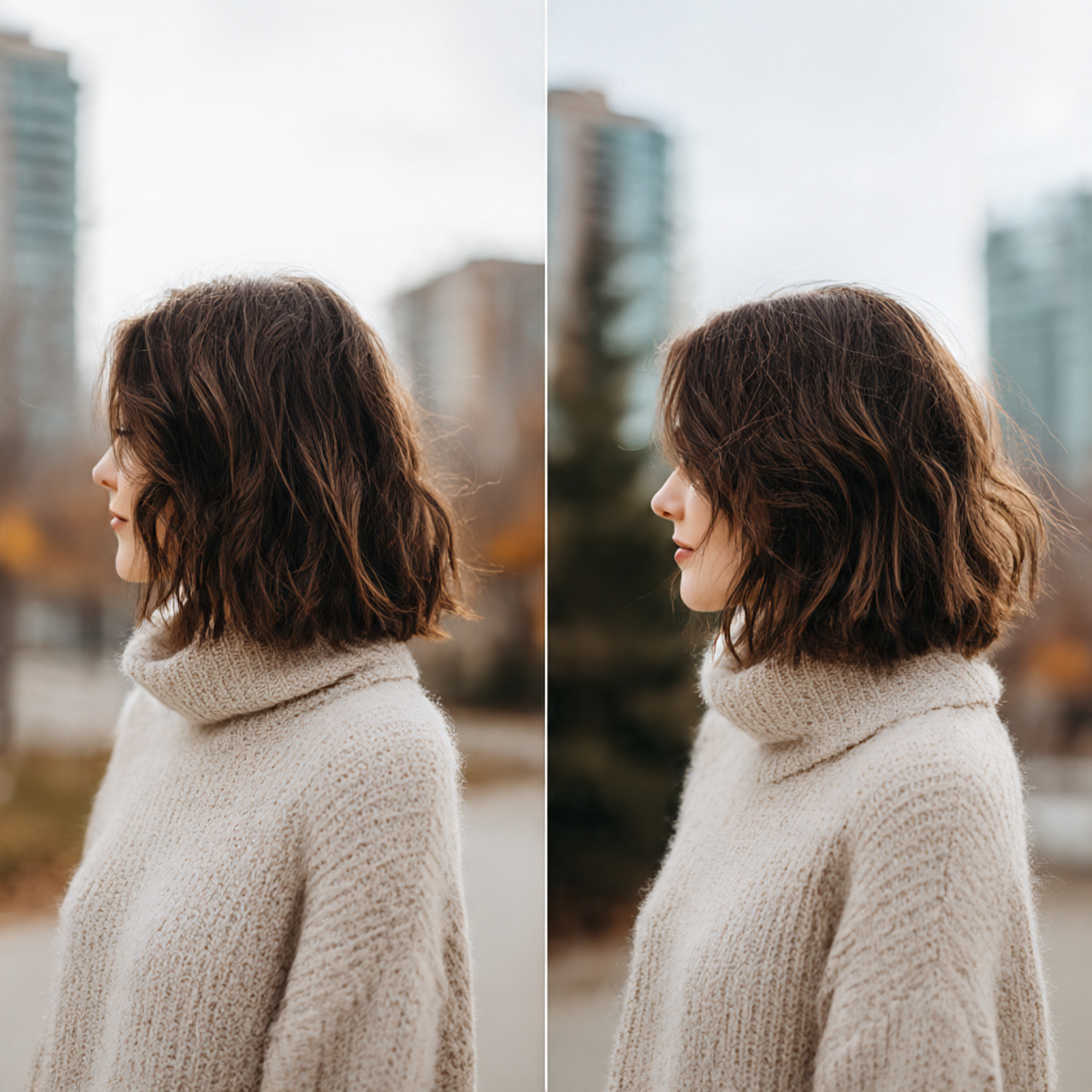
Turtleneck collars are one of the most underestimated sources of daily hair damage in winter. Hair resting directly on that edge gets compressed, bent, and broken with every movement and every time you tug the fabric up or down. The safest lengths are either short enough to clear the collar entirely or long enough to drape past the shoulder where the hair hangs free rather than folding against fabric.
A short bob ending at the jawline eliminates collar contact completely. Longer hair benefits from a slight weight line built just below the shoulder to help the hair drape outward and prevent inward curling. Oribe Supershine Moisturizing Cream keeps both lengths smooth beneath even the thickest knit.
Best for: Anyone wearing turtlenecks or high-collar winter coats daily Product: Oribe Supershine Moisturizing Cream Pro tip: If you wear turtlenecks every day, ask your stylist to build a weight line at the shoulder to train the hair to fall outward rather than folding inward against the collar. Face shape: All face shapes Stylist language: “I want a cut that clears my turtleneck collar completely or falls well past the shoulder with a built-in weight line.”
Adding Depth with Invisible Layers
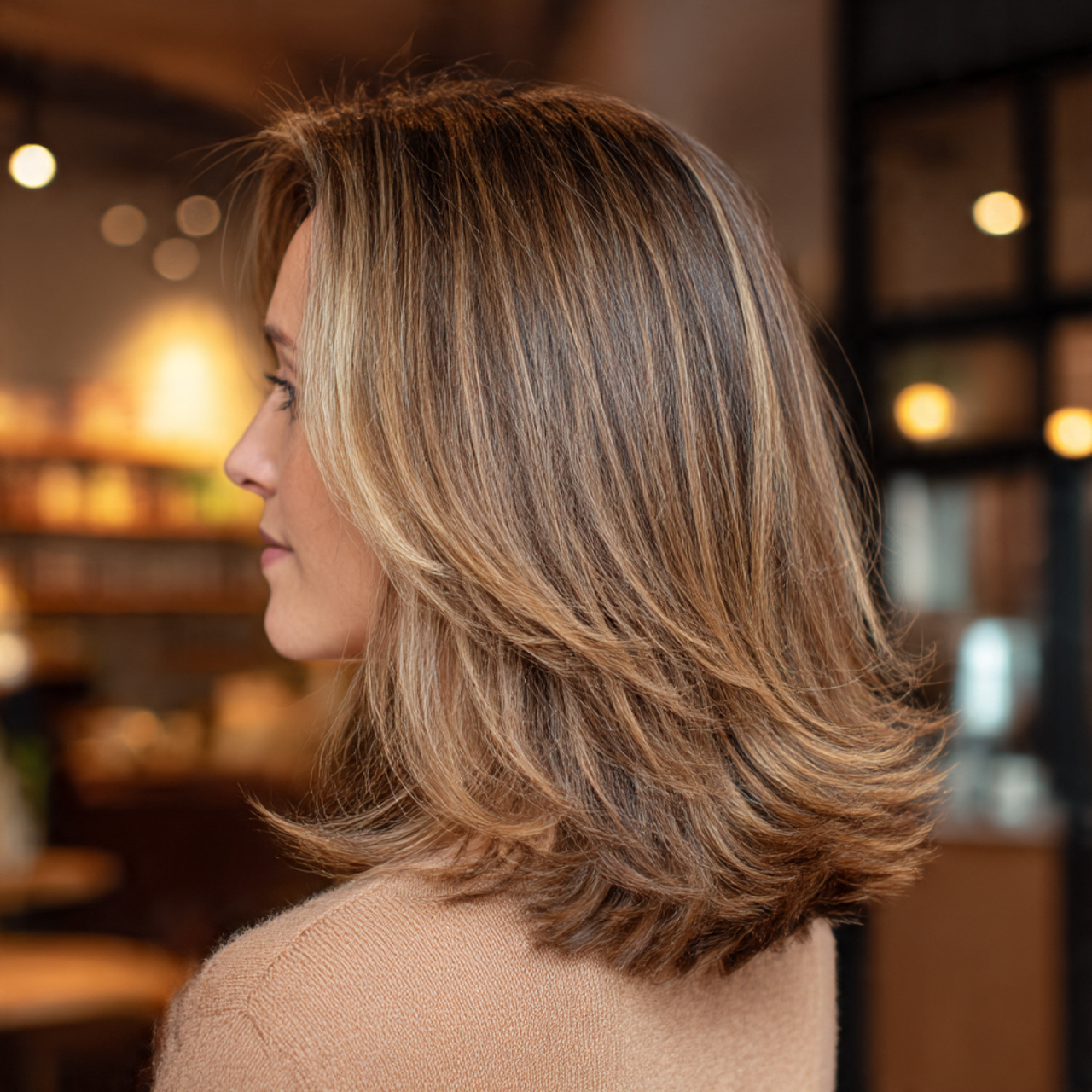
Invisible layers are a technique, not a visible look. The layers live entirely inside the hair, removing bulk without altering the outer silhouette in any way. For thick hair that becomes heavy and difficult to manage once indoor heat drops the humidity, this is the most effective weight reduction available without making hair appear thin.
The technique requires shears worked horizontally through the interior without ever touching the outer surface. Aveda Smooth Infusion Style-Prep Smoother applied before blow-drying takes full advantage of the reduced bulk by allowing heat to distribute evenly through every section with far less time and effort.
Best for: Thick hair needing bulk reduction without any visible thinning at the surface Product: Aveda Smooth Infusion Style-Prep Smoother Pro tip: Tell your stylist you want internal weight removal with zero change to your outer shape so they understand you are not asking for traditional thinning shears. Face shape: All face shapes Stylist language: “I want invisible internal layers through the bulk of my hair with no change to my outer silhouette.”
The Tapered Nape Cut

A tapered nape is a finishing detail that elevates almost any short or mid-length cut from good to polished. The hairline at the neck is cut close and clean, which prevents hair from bunching against coat collars or sitting awkwardly when layered beneath winter scarves. It also makes the shape look more deliberate and professionally maintained between appointments.
This technique reaches its best result when done with a razor for a precise, skin-level finish at the neckline. Redken Brews Mess Around Cream worked through the nape area keeps the taper sharp between visits, which often extend a week or two longer because the nape stays so tidy.
Best for: Short and mid-length cuts needing a polished, long-lasting finish Product: Redken Brews Mess Around Cream Pro tip: Ask specifically for a tapered nape so your stylist knows you want the hairline cut close and faded at the neck rather than simply trimmed straight across. Face shape: Oval and oblong faces Stylist language: “I want a tapered nape using a razor, fading close at the hairline with a clean, precise finish.”
Asymmetrical Bob Variations
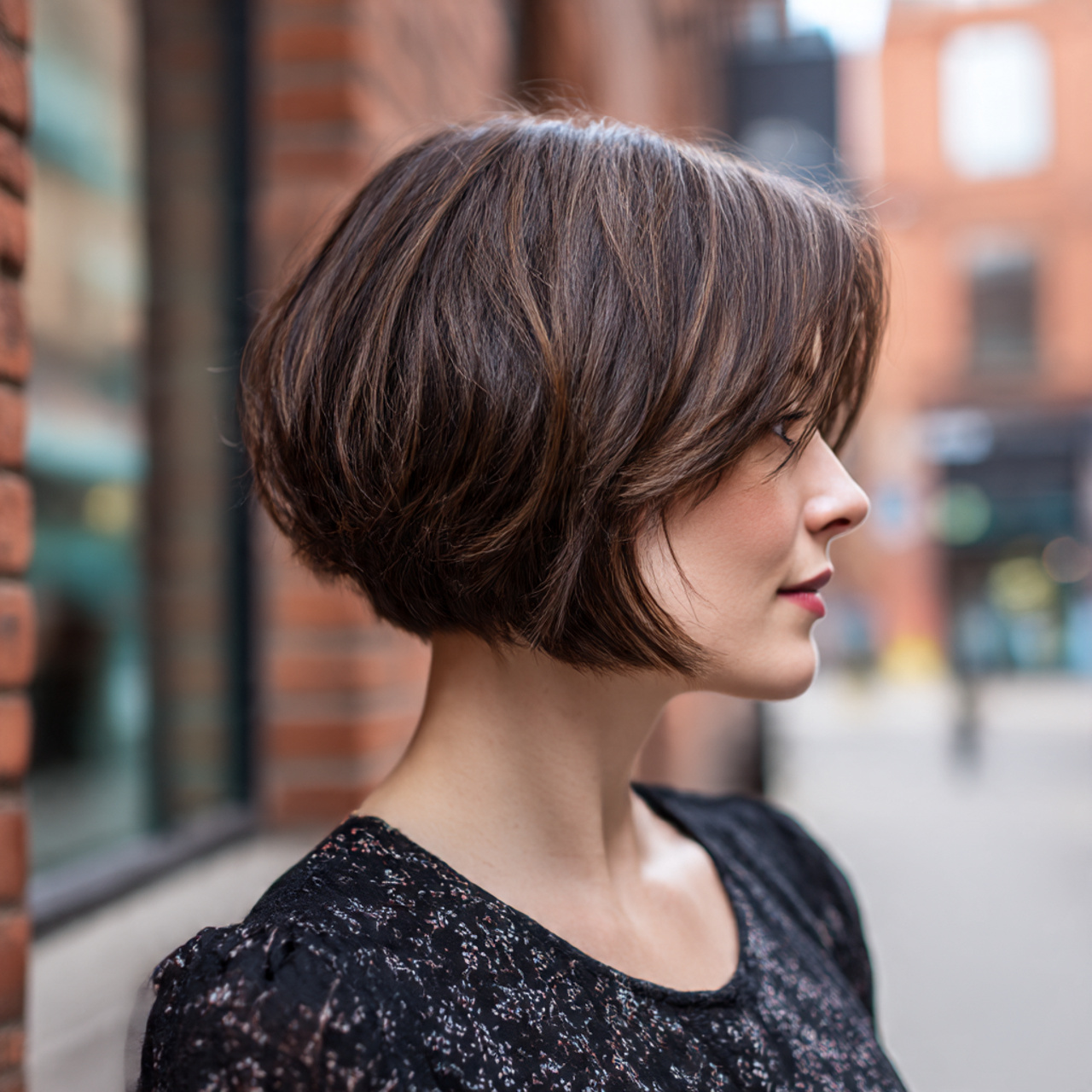
An asymmetrical bob brings immediate modern energy to winter hair. One side is cut longer to sweep across and frame the face while the shorter side stays sharp and geometric. The contrast between the two lengths creates movement and visual interest that makes the cut feel considered and bold in equal measure.
Straight hair shows this style at its absolute best because the clean lines of each side remain fully visible and defined throughout the day. The Dyson Airwrap used on the longer side with a round brush attachment creates a smooth curve that enhances the asymmetry and gives the longer panel its full visual weight. This is a confident winter choice.
Best for: Straight to slightly wavy hair ready to make a modern, bold statement Product: Dyson Airwrap Pro tip: Always blow-dry the shorter side fully before touching the longer side so the shape does not distort while the rest of the hair is still wet. Face shape: Oval and oblong faces Stylist language: “I want an asymmetrical bob with the longer side sweeping to one side, blunt finish on both ends.”
Wavy Hair Maintenance Cuts

Wavy hair loses its definition faster in winter than in any other season, and a maintenance cut is the most reliable way to reset that pattern. A clean blunt edge at the bottom combined with long, wide internal layers preserves the wave without introducing frizz. This is not about a dramatic transformation. It is a calculated, intentional reset.
Heavy thinning or aggressive layering is the single worst thing a stylist can do to wavy hair in winter because it breaks up the wave clumping that creates definition. DevaCurl Buildup Buster Micellar Water Cleansing Serum used before the cut removes product residue so the stylist can see the true wave pattern before making any decisions.
Best for: Wavy hair needing shape and definition maintained through winter Product: DevaCurl Buildup Buster Micellar Water Cleansing Serum Pro tip: Request a dry cut specifically so your stylist can see exactly how your waves fall at their natural width before touching anything. Face shape: Round and square faces Stylist language: “I want a wavy hair maintenance cut on dry hair, blunt edge at the bottom, wide internal layers, no thinning.”
Low-Commitment Fringe

Long, soft bangs are the ideal entry point for anyone curious about a fringe but not ready to commit fully. These sit around the cheekbone or below and blend effortlessly into the surrounding layers. They can be styled forward, swept aside, or tucked behind the ear with equal ease depending on the day.
The most important advantage of this fringe is how naturally it grows out. IGK First Class Charcoal Detox Dry Shampoo at the roots lifts the fringe between washes so it never sits flat or greasy, which is the most common complaint about any fringe during winter when hair is washed less frequently.
Best for: Anyone wanting a soft, easy update with a graceful grow-out path Product: IGK First Class Charcoal Detox Dry Shampoo Pro tip: Have your stylist cut this fringe at a slight angle rather than straight across so it sweeps naturally to one side without needing any daily styling. Face shape: Oval and heart-shaped faces Stylist language: “I want long, soft bangs at cheekbone length, cut at a slight angle and blended into my layers.”
The French Bob Revival

The French bob has returned with real staying power and cold-weather practicality to match its considerable aesthetic appeal. This short cut ends at the jaw and is traditionally paired with a straight, blunt fringe. Together they form a shape that clears coat collars entirely and requires almost no daily effort to maintain through even the busiest winter weeks.
The version currently favored in Parisian-influenced editorial work sits slightly longer than the traditional cut, landing at or just below the earlobe rather than mid-cheek. This small adjustment makes the style significantly more wearable for everyday life while preserving the graphic, intentional quality the cut is known for. Bumble and bumble Bb. Straight Blow Dry finishes it immaculately.
Best for: Straight to lightly wavy hair wanting a bold, low-maintenance winter shape Product: Bumble and bumble Bb. Straight Blow Dry Pro tip: Ask for both the bob and the fringe to be cut dry at horizontal lines so each edge is calibrated to your actual hairline rather than a wet approximation. Face shape: Oval and heart-shaped faces Stylist language: “I want a French bob at earlobe length with a blunt horizontal fringe, both cut dry for precision.”
Cuts Designed for Blowouts

Certain cuts are genuinely engineered to maximize a blowout. Round interior layers allow a brush to lift and curl each section with minimal effort and minimal time under heat. The shape holds for multiple days, which significantly reduces total heat exposure across the week. In winter, when frequent blow-drying strips moisture faster than any other season, that reduction matters.
The structural requirement is layers that graduate from shorter at the crown to longer at the perimeter, creating a natural roll at the ends that a round brush can follow precisely. The T3 Cura Luxe Hair Dryer with a concentrator nozzle achieves a mirror-smooth finish without the extreme heat that lower-quality tools require to produce the same result.
Best for: Medium to long hair wanting polished blowout results with minimal heat use Product: T3 Cura Luxe Hair Dryer Pro tip: Blow-dry in sections from the nape upward and let each section cool completely before releasing it so the shape locks in with maximum hold. Face shape: Round and oval faces Stylist language: “I want a blowout-friendly cut with round interior layers graduated from crown to perimeter, built specifically to roll on a brush.”
Collarbone-Grazing Lob
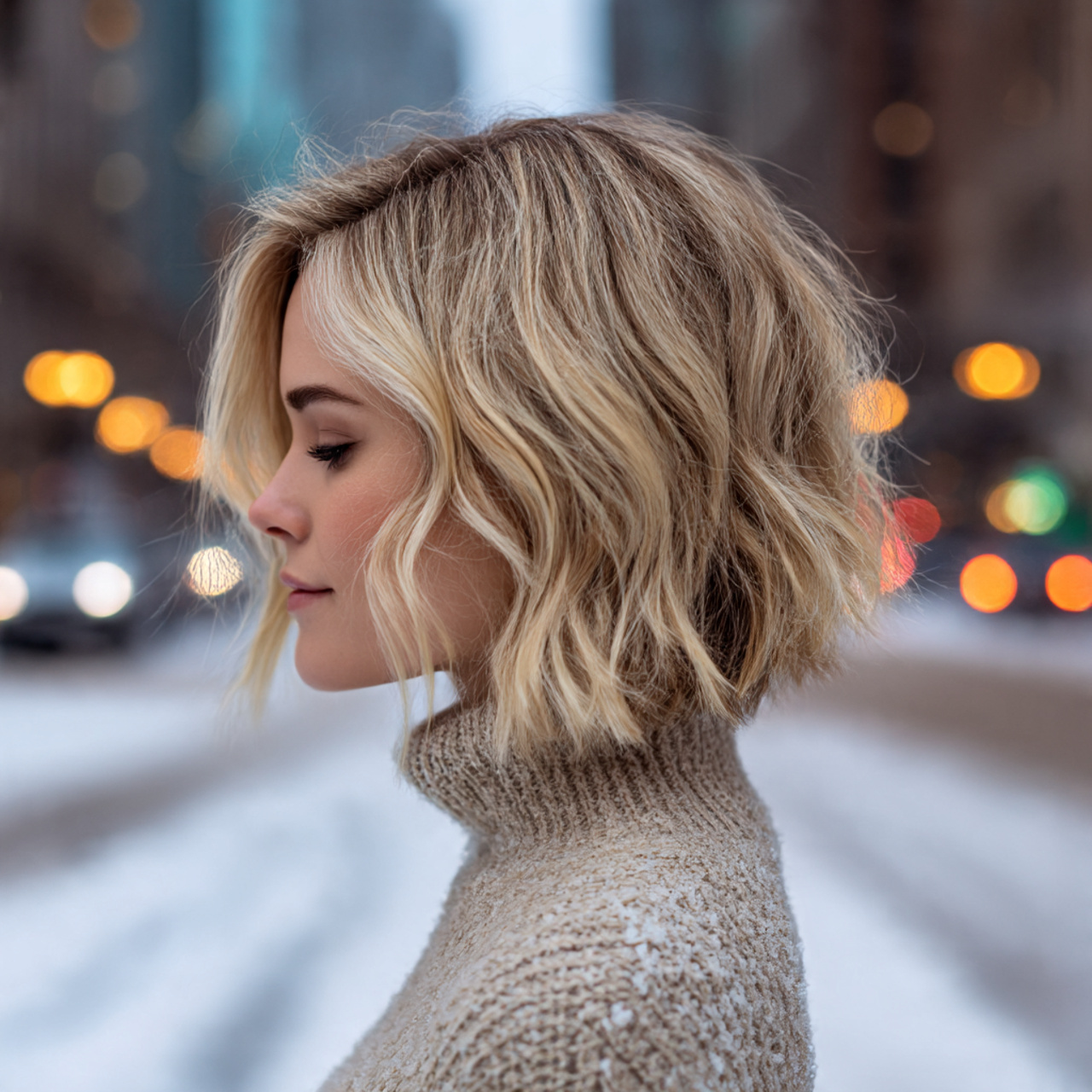
The collarbone-grazing lob is arguably the most versatile length in all of winter hairstyling. Long enough to pull back into a low bun or loose ponytail, short enough to avoid the collar friction that destroys ends by midseason. It flatters nearly every face shape and performs equally well on straight, wavy, and loosely curly hair.
This length is also the most forgiving to grow out between appointments, which is a practical advantage in a season when salon visits become less frequent. Moroccanoil Smooth Style Serum applied through the mid-lengths and ends keeps the lob sleek and intentional even on days when there is simply no time to style it properly.
Best for: Most hair types wanting maximum day-to-day versatility at a single length Product: Moroccanoil Smooth Style Serum Pro tip: Ask for a slight bevel underneath at the ends to give the lob a built-in bend that holds shape without any heat styling. Face shape: Most face shapes Stylist language: “I want a lob that grazes my collarbone with a slight bevel underneath the ends for natural shape.”
Haircuts for Hat Season

Hats are the silent enemy of good hair structure. Any cut that depends on root volume as its primary feature will suffer significantly under a beanie. The most successful winter cuts are designed to recover quickly, meaning the hair has enough internal texture or structural layering to spring back to shape the moment the hat comes off.
Root-supporting layers placed close to the scalp help longer hair rebuild volume after compression. Short styles with surface texture can be reset in seconds with a quick finger-style. Kenra Platinum Texturizing Taffy worked through the mid-lengths before putting a hat on gives hair the structural memory it needs to bounce back reliably.
Best for: Anyone wearing hats regularly throughout the winter season Product: Kenra Platinum Texturizing Taffy Pro tip: Apply a small amount of texturizing product before you put your hat on, not after, so the hair retains its internal memory under compression rather than losing it. Face shape: All face shapes Stylist language: “I want a hat-friendly cut with root-supportive internal layers or surface texture that recovers quickly after a beanie.”
The Precision Line Cut
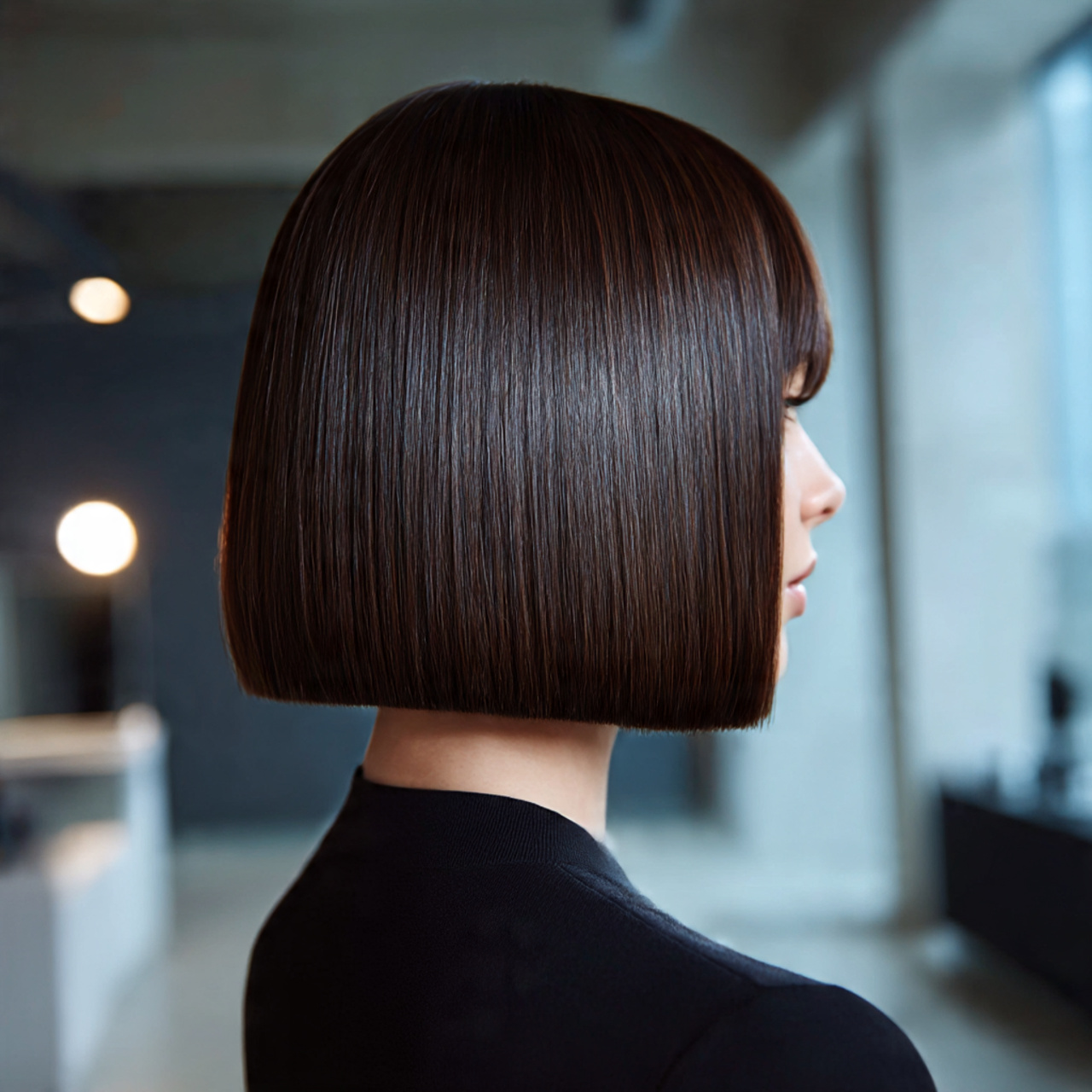
A precision cut is built entirely on geometry. Every section is measured and cut to a specific angle so the outer shape forms clean, deliberate lines with no softening or diffusion at the edges. In winter, this structure holds up better than looser cuts because there is less movement for wind and static to disrupt.
The strong silhouette contrasts beautifully with the soft layers of knit and wool fabrics, making this cut look more striking in winter than in any other season. Oribe Glaze for Beautiful Color adds a high-gloss finish that makes the precision lines appear even more intentional and sharp throughout the day.
Best for: Straight and lightly wavy hair wanting a structured, powerful winter shape Product: Oribe Glaze for Beautiful Color Pro tip: Schedule your precision cut at least one week before any major winter event so the lines have time to settle and soften to exactly the right degree. Face shape: Oval and square faces Stylist language: “I want a precision cut with clean geometric lines and no softening or point-cutting at the edges.”
Healthy Hair Trims
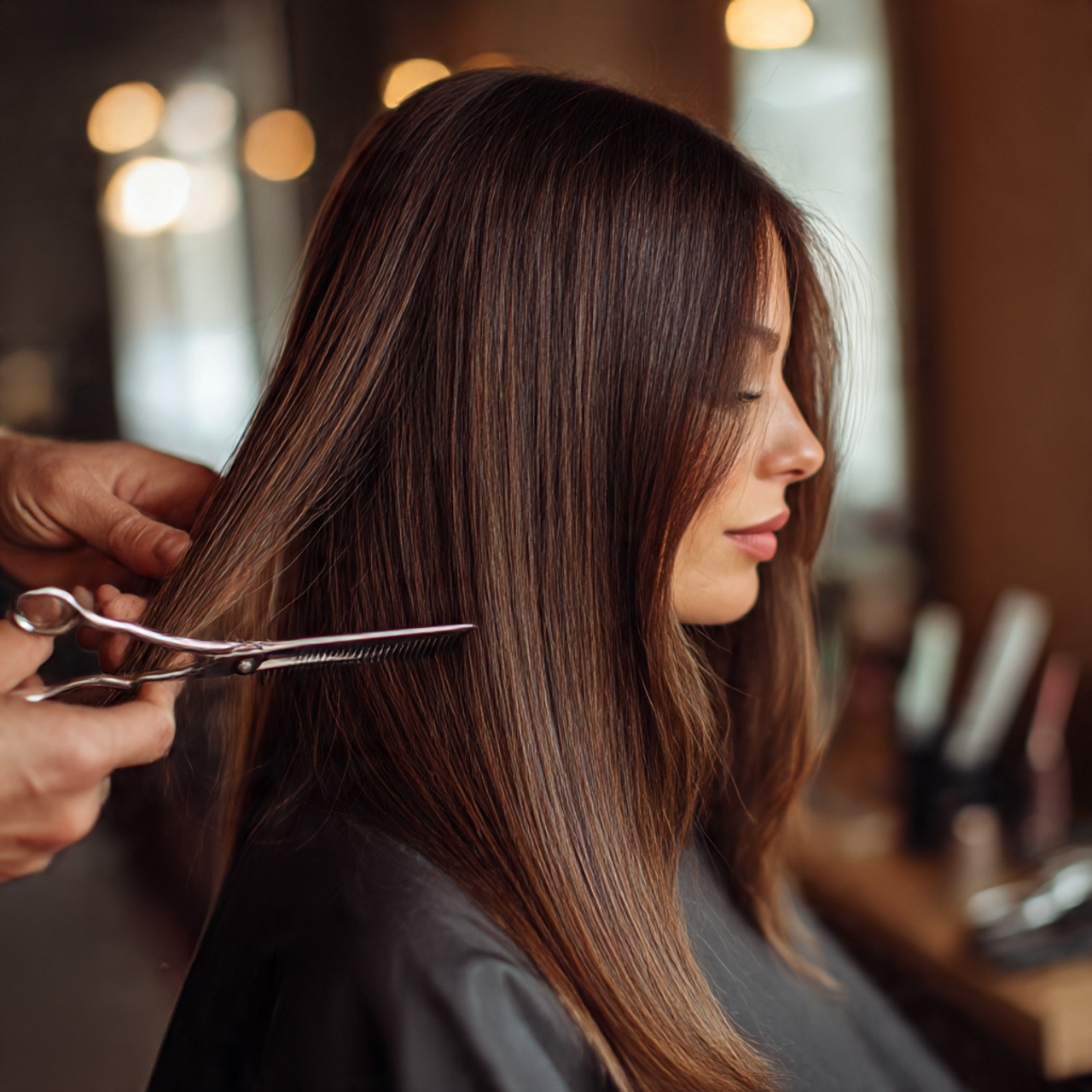
A healthy trim is one of the most undervalued appointments on any hairstyling calendar, and winter makes it non-negotiable. Removing one to two centimeters from the ends every six weeks during cold months does more for overall hair health than almost any product applied between visits. Dry ends are the starting point for breakage that travels upward, and stopping it early saves significantly more length over the full season.
The difference between a trim that maintains health and one that sets it back comes down to the angle of the cut and the tool used. Shear work performed on completely dry hair seals the cuticle more cleanly than a wet cut. Redken Extreme Length Sealer with Biotin applied immediately after strengthens those freshly cut ends on contact.
Best for: All hair types prioritizing length retention and health through winter Product: Redken Extreme Length Sealer with Biotin Pro tip: Ask specifically for a dry trim using shears rather than a standard wet cut so the cuticle seals cleanly rather than being left slightly open by moisture. Face shape: All face shapes Stylist language: “I want a healthy dry trim, one to two centimeters off the ends with a clean shear cut and no razor work.”
Seasonal Hair Transformation
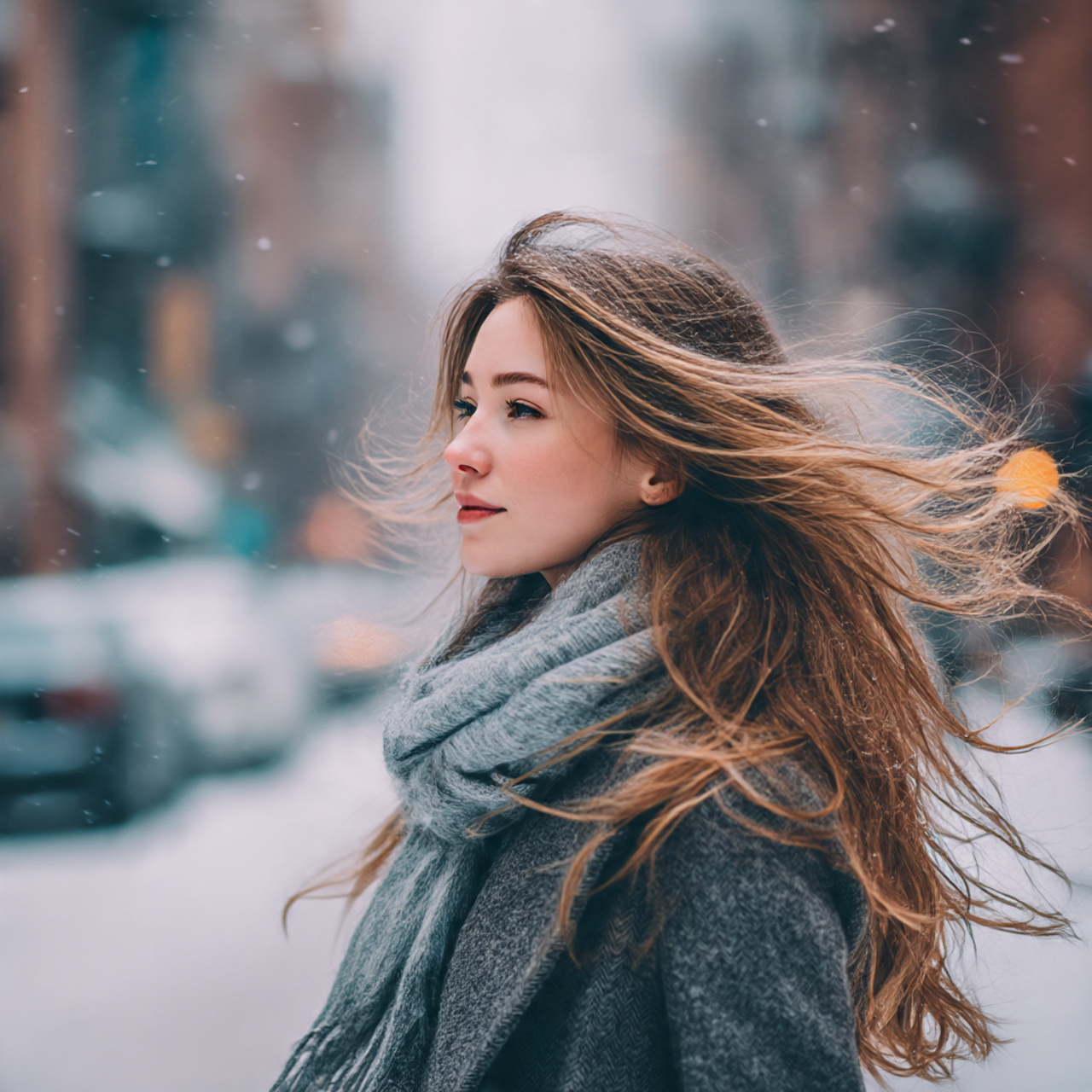
Winter is genuinely one of the best seasons to make a significant change to your hair. Cooler temperatures reduce scalp oil production, which means your scalp is in a cleaner, more balanced state for a major cut or style shift. Hair also behaves more predictably in cool, dry air than in the humidity and heat of summer, making it easier for a stylist to see exactly what they are working with.
A seasonal transformation does not require going dramatically short. Committing to a fringe, shifting from a straight cut to a curved one, or finally adding the layers you have considered all year all qualify. Kevin Murphy Rough Rider defines the new texture and holds the transformation so you can see clearly what your hair is fully capable of becoming.
Best for: Anyone ready to make a meaningful, intentional style shift this winter Product: Kevin Murphy Rough Rider Pro tip: Book a separate consultation appointment before the cutting appointment so you and your stylist can plan the full transformation without time pressure. Face shape: All face shapes Stylist language: “I want a seasonal transformation and have a clear direction. Can we plan this in a consultation before we cut?”
Quick Comparison Table
| Style | Length | Hair Type | Maintenance | Bold Factor |
|---|---|---|---|---|
| Cozy Cuts for Cold Weather | Medium | All types | Low | ★★★☆☆ |
| Layered Looks for Winter Volume | Medium | Fine to medium | Low | ★★★☆☆ |
| The Effortless Long Bob | Medium | Straight, wavy | Low | ★★★☆☆ |
| Low-Maintenance Short Hair | Short | All types | Very low | ★★★★☆ |
| Fringe Styles for Beanie Season | Any | Most types | Low | ★★★☆☆ |
| The Modern Shag Haircut | Medium to long | Wavy, curly | Low | ★★★★☆ |
| Textured Pixie Cuts | Short | Fine to medium | Very low | ★★★★★ |
| Mid-Length Choppy Layers | Medium | Straight, wavy | Low | ★★★☆☆ |
| Blunt Bobs for Straight Hair | Short to medium | Straight | Low | ★★★★☆ |
| Long Hair U-Shape Trim | Long | All types | Low | ★★☆☆☆ |
| Soft Curtain Bangs | Any | Most types | Low | ★★★☆☆ |
| Haircuts That Prevent Split Ends | Short to medium | All types | Low | ★★☆☆☆ |
| Face-Framing Layers | Medium to long | All types | Low | ★★★☆☆ |
| The ‘Sleek Back’ Cut | Any | All types | Low | ★★★☆☆ |
| Hair Styles for Turtleneck Weather | Short or long | All types | Low | ★★★☆☆ |
| Adding Depth with Invisible Layers | Medium to long | Thick | Low | ★★★☆☆ |
| The Tapered Nape Cut | Short to medium | All types | Low | ★★★★☆ |
| Asymmetrical Bob Variations | Short to medium | Straight | Medium | ★★★★★ |
| Wavy Hair Maintenance Cuts | Any | Wavy | Low | ★★★☆☆ |
| Low-Commitment Fringe | Any | Most types | Very low | ★★☆☆☆ |
| The French Bob Revival | Short | Straight, wavy | Very low | ★★★★★ |
| Cuts Designed for Blowouts | Medium to long | Straight, wavy | Medium | ★★★★☆ |
| Collarbone-Grazing Lob | Medium | All types | Low | ★★★☆☆ |
| Haircuts for Hat Season | Any | All types | Low | ★★★☆☆ |
| The Precision Line Cut | Any | Straight | Low | ★★★★☆ |
| Healthy Hair Trims | Any | All types | Very low | ★★☆☆☆ |
| Seasonal Hair Transformation | Any | All types | Varies | ★★★★★ |
Frequently Asked Questions
What are the best winter haircut ideas for fine hair that loses volume in cold weather? Soft blended layers through the mid-lengths work best for fine hair because they remove weight without thinning the hair further. Bumble and bumble Thickening Spray applied to damp roots before blow-drying doubles the effect of any layered cut.
How often should I get a trim during winter to keep my hair healthy? Every six to eight weeks is the ideal window to prevent split ends from traveling upward and costing you length. A dry shear trim rather than a wet razor trim seals the cuticle most effectively in cold conditions.
Can I wear bangs in winter without them getting flattened by hats? Yes, soft curtain bangs and long wispy fringes sit flat under beanies and spring back quickly once the hat is off. Keeping the fringe at or below the bridge of the nose gives the most flexibility for daily recovery.
What is the most low-maintenance winter haircut for someone who styles their hair in under five minutes? A textured pixie or short crop with a tapered nape requires almost no daily product and recovers from hat hair with one pass of the fingers. These cuts also air-dry before you leave the house, which removes the single biggest cause of winter breakage.
Do blunt cuts actually make hair look thicker when the air is dry and flat? A blunt edge creates an optical density at the perimeter that genuinely reads as thicker hair, particularly under flat winter light. Finishing with a high-gloss serum like L’Oreal Professionnel Liss Unlimited enhances the line and amplifies the effect noticeably.
Final Thoughts
The best winter haircut ideas share one quality: they are built to perform, not just to photograph. Every style on this list was selected because it holds up against real winter conditions, including hats, scarves, coat friction, dry air, and cold temperatures that work against your hair in ways a summer cut never has to manage. Choosing a cut that works with these forces rather than ignoring them is the decision that separates people who love their hair in January from those who simply endure it.
This is also the time of year when hair health matters most. Cold outdoor air and heated indoor air form a damaging cycle that dehydrates the shaft and weakens the ends faster than any other season. A cut that removes vulnerable ends, supports your natural texture, and reduces the daily need for heat styling is not just a style choice. It is a form of protection.
The most overlooked expert insight in cold-weather hairstyling is this: winter is when your hair’s true texture is most honest. Without summer humidity swelling the cuticle or summer sun lightening the tone, you see your hair exactly as it is. That makes winter the best possible season to get a cut that genuinely fits you, not a version of you that only exists in a different climate.
The right winter haircut does not just survive the season. It makes every single day of it easier.
Save this guide to your Pinterest boards and share it with anyone who needs a winter hair refresh.