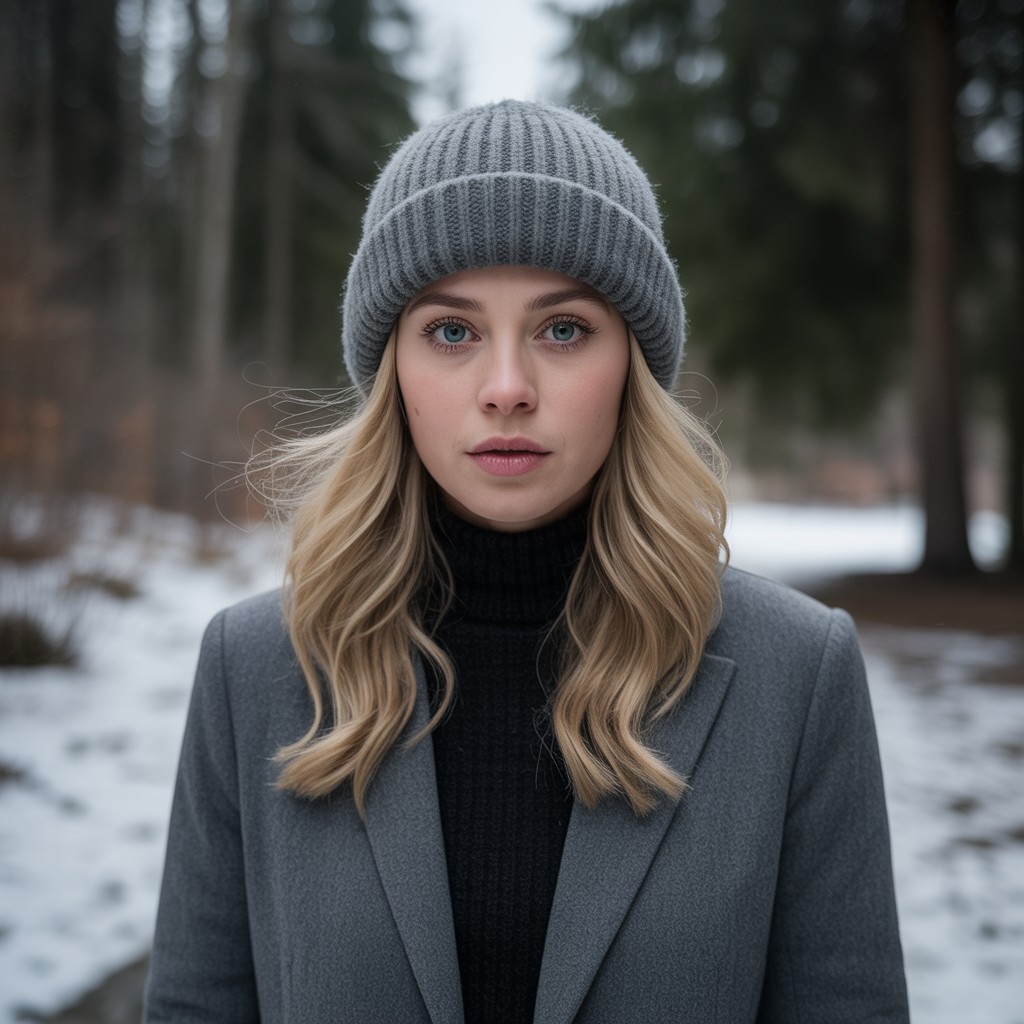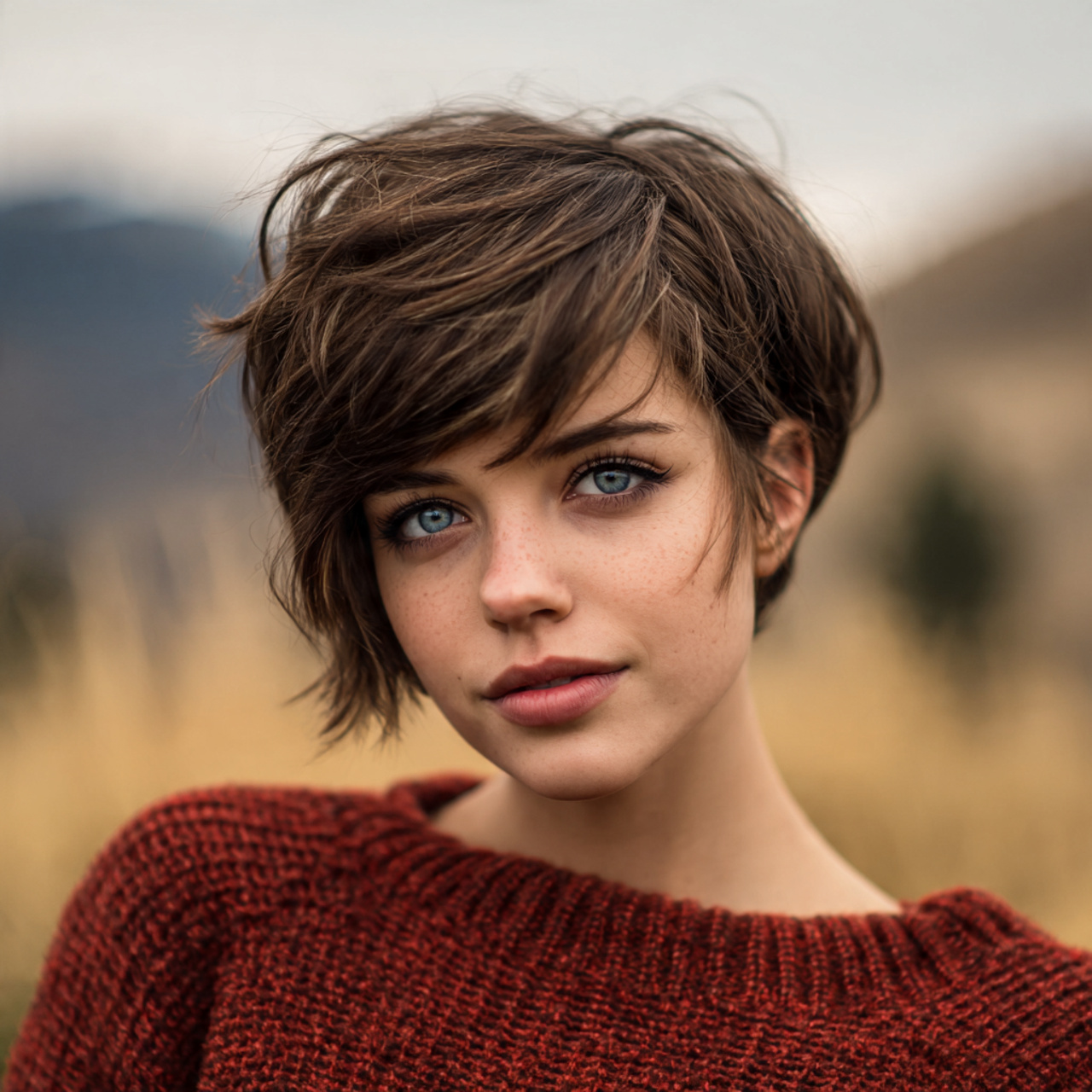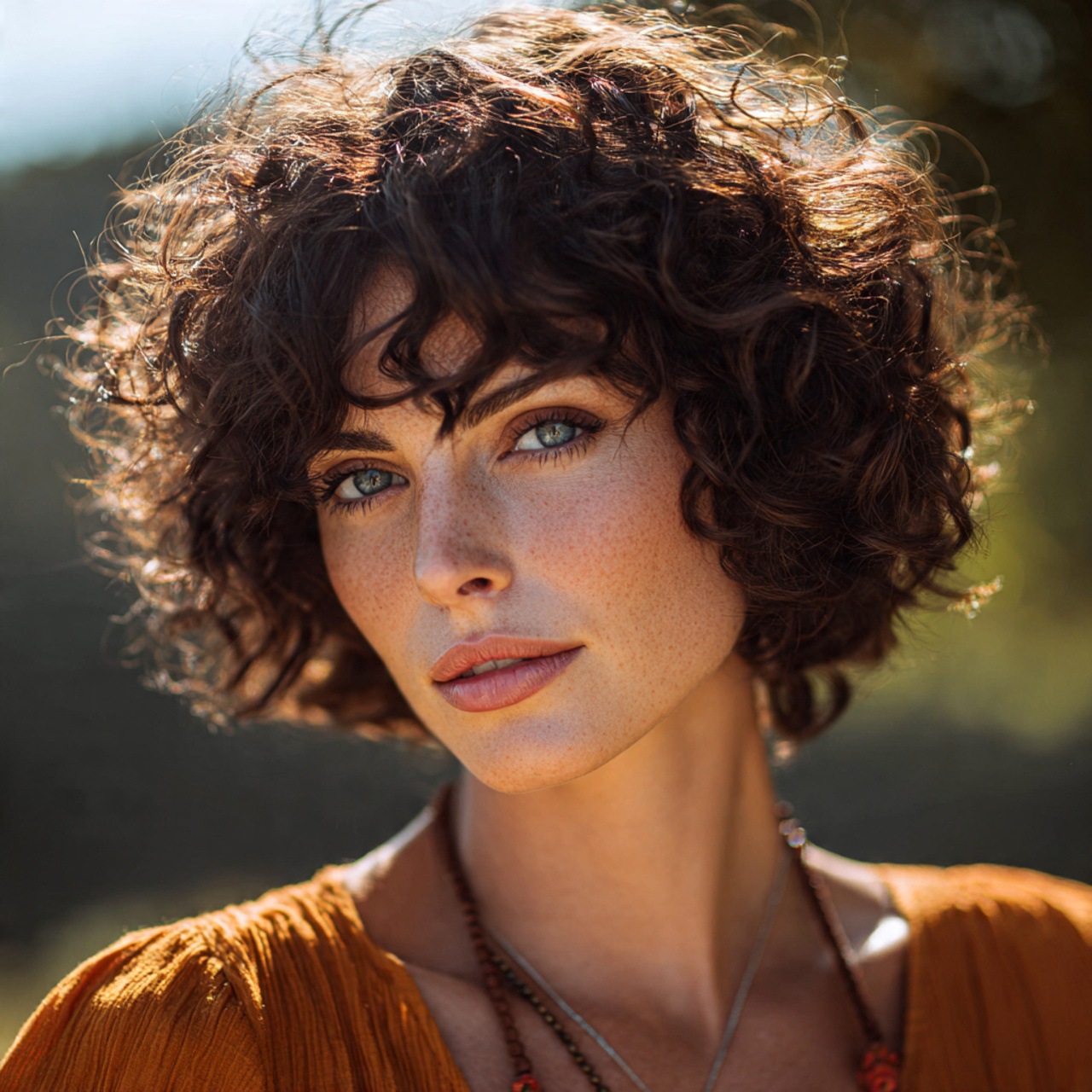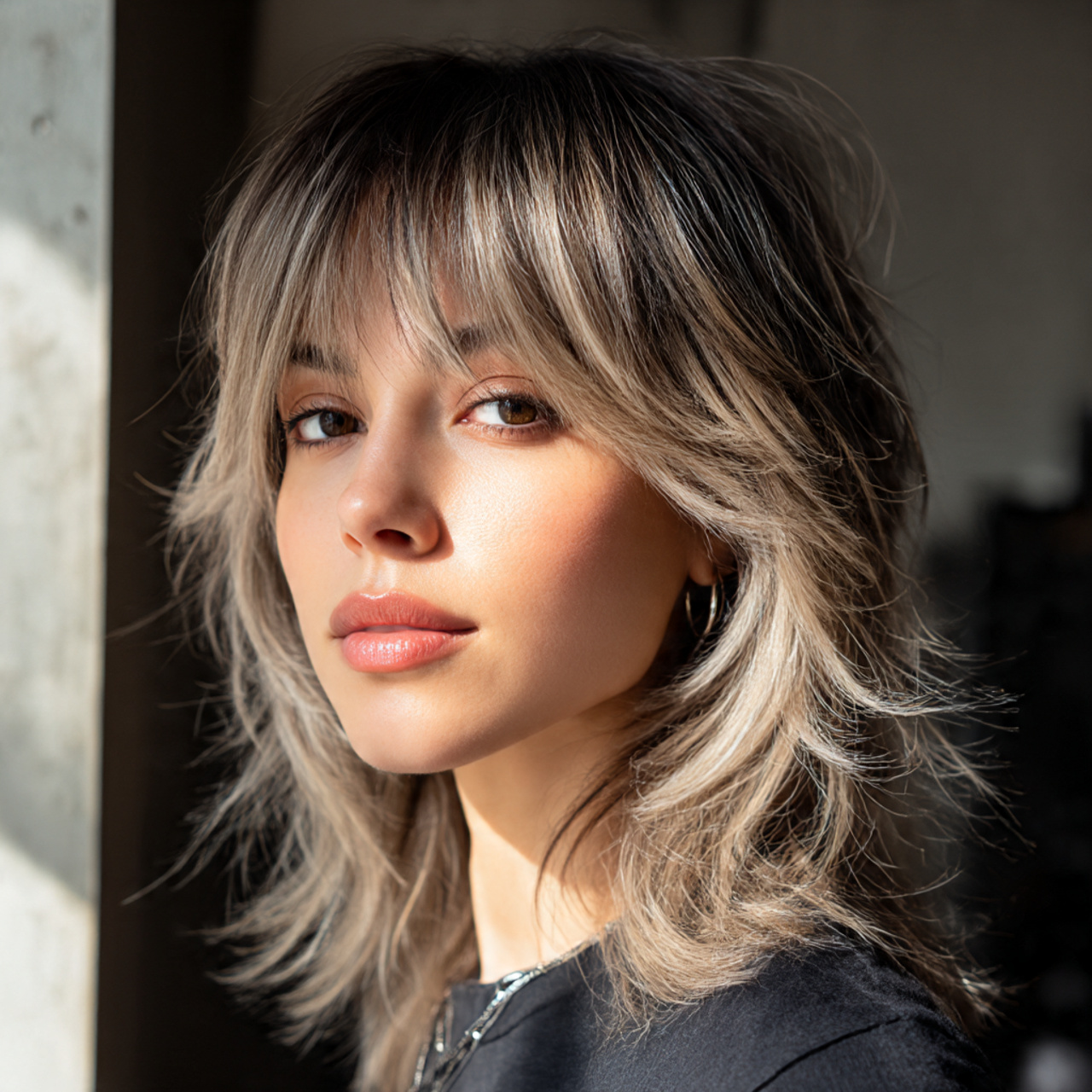
27 French Shag Haircuts That Work for Every Hair Type and Face Shape
You sat in the salon chair with a photo of the perfect French shag haircut, and you walked out with something that looked nothing like it. This happens more often than most stylists admit. The French shag has distinct variations and most consultations never go deep enough to deliver the right one.
Stylists often default to whichever version they know best rather than the one that fits your actual texture and face shape. That gap between inspiration and what ends up on your head is a communication problem, and the right information closes it.
Most French shag disappointments trace back to the same root cause: one photo and no vocabulary for what you actually want. Knowing your specific version before you sit down changes the entire outcome.
This cut behaves completely differently on fine hair versus thick hair and on wavy versus straight. Each version needs different layer placement and different products to perform correctly.
This article covers 27 specific versions and elements of the French shag with honest detail about what makes each one work. You will learn which variation fits your texture, which products support it, and what to say when you sit down.
By the end you will know precisely which French shag haircut suits your hair type and face shape, and you will walk into your next appointment ready to get it right the first time.
The most important rule for French shag haircut results is this: layer placement must match your hair’s density and texture, not just its length. A version that works on fine hair will look wide and shapeless on thick hair using the same measurements. The French shag is also leading a clear industry shift toward soft, blended texture over structured precision cuts, which is why clients of every age are choosing it right now.
French Shag Haircuts Ideas
Classic French shag

The classic French shag is the foundation every other version builds from. It features short crown layers, soft graduation through the sides, and a wispy fringe at or just below the brow. This version usually sits at the shoulder, making it flexible enough for most hair types without adjustment.
What sets it apart is how well it looks with minimal effort. The blended ends mean it grows out cleanly without losing shape, making this the most reliable starting point for anyone new to layered cuts.
Best for: Beginners to layered cuts who want a versatile, low-effort shape Product: Oribe Dry Texturizing Spray for soft volume and a lived-in finish Pro tip: Ask your stylist to point-cut the ends rather than blunt-cut so the fringe blends seamlessly into the layers. Face shape: Works best for oval and heart-shaped faces Stylist language: “I want a classic French shag with short crown layers, soft blended ends, and a wispy brow-length fringe.”
French shag for fine hair

Fine hair lies flat no matter what products you use, and this version solves that directly. The crown layers are cut shorter and closer together to push volume upward and create lift that actually holds. The ends stay light so hair does not collapse under its own weight.
Redken Volume Injection Mousse applied only at the roots on damp hair creates a real difference without adding heaviness. Fine hair needs lift more than definition, and this cut is built around that priority.
Best for: Fine or limp hair that loses volume within a few hours Product: Redken Volume Injection Mousse applied to roots only on damp hair Pro tip: Flip your head upside down while diffusing to build root volume that holds through the day. Face shape: Especially flattering for round faces where crown lift adds the illusion of length Stylist language: “I want a French shag for fine hair with short crown layers and lightweight point-cut ends to keep volume lifted.”
French shag on short hair

A short French shag sits at the jaw or chin and brings personality into a compact shape. The layers are more visible at this length and give the cut a noticeable texture that looks intentional rather than just trimmed. The shorter the length, the more individual layers define the silhouette.
Bumble and bumble Surf Paste on the ends shapes and separates without stiffness. It is a great shift if you want bold texture without going extremely short.
Best for: People who want short hair with visible texture and easy movement Product: Bumble and bumble Surf Paste for end definition and piecey separation Pro tip: Use a drop of paste no bigger than a pea and work it only through the bottom third of the hair to keep the look light. Face shape: Best for oval and oblong faces; the layers add width and softness at the cheekbone Stylist language: “I want a French shag at jaw or chin length with visible crown layers and soft, piecey ends.”
French shag long hair

Long hair easily looks heavy and shapeless, and the French shag corrects this by adding internal layers that lift the crown while keeping full length. Volume builds at the top while the ends stay connected.
Moroccanoil Treatment Light applied through the midlength and ends before air drying gives layers a healthy, defined look without added weight. This version works well for anyone who loves their length but wants more life in the overall shape.
Best for: Long hair that looks flat or heavy without wanting to sacrifice length Product: Moroccanoil Treatment Light for smooth, lightweight shine through long layers Pro tip: Dry the crown first with a round brush before letting the ends air dry for the most balanced, voluminous result. Face shape: Suits all face shapes; the stylist adjusts the layer starting point based on face length Stylist language: “I want a long French shag with crown layers for lift and soft internal layers to add movement through the length.”
French shag with bangs

Bangs define the French shag more than any other element. They are soft, wispy, and slightly uneven at the tips, blending naturally into the face-framing pieces rather than sitting as a straight horizontal line. What most people do not realize is that the weight of the very first cut determines whether the tips land airy or blunt, which is why this fringe requires more precision than it appears to need.
Kevin Murphy ANTI.GRAVITY Spray keeps wispy bangs lifted and separated without crunch.
Best for: Anyone who wants to frame their face without committing to heavy blunt bangs Product: Kevin Murphy ANTI.GRAVITY Spray for lightweight fringe lift and separation Pro tip: Dry bangs using a small flat paddle brush with minimal tension to keep them soft rather than flat against the forehead. Face shape: Ideal for square and round faces where wispy fringe adds length and softens strong angles Stylist language: “I want a French shag with wispy, piecey bangs that blend into the face-framing layers instead of sitting blunt.”
Curly French shag haircut

Curly hair and the French shag pair naturally. The layered shape helps curls fall in a balanced silhouette instead of spreading wide at the bottom, which is the most persistent problem with most curly cuts.
Curlsmith Curl Defining Styling Soufflé enhances definition while keeping the silhouette soft. A stylist should cut curly hair dry to respect each curl’s true shape rather than guessing from wet length.
Best for: Curly or coily hair that tends to grow wide rather than long Product: Curlsmith Curl Defining Styling Soufflé for hold that does not override the natural pattern Pro tip: Scrunch out the cast when hair is about 80 percent dry to release softness and reduce any crunchiness in the finish. Face shape: Works beautifully for long and diamond-shaped faces by adding intentional width at the right point Stylist language: “I want a French shag cut for curly hair with layers shaped around my curl pattern to reduce width and add bounce.”
Wavy French shag styling

Wavy hair is the most naturally compatible texture for this cut. The natural bends respond directly to the layered shape and create movement that looks effortless without heat.
Apply Not Your Mother’s Curl Talk Defining Cream on damp hair, scrunch lightly, and let it air dry without touching it. The waves settle into the layers and the finish reads relaxed and intentional at the same time.
Best for: Wavy hair that wants to be enhanced rather than suppressed or smoothed out Product: Not Your Mother’s Curl Talk Defining Cream for light wave enhancement with no stiffness Pro tip: Sleep on a satin pillowcase to preserve the wave pattern overnight without frizz or disruption. Face shape: Flattering for all face shapes; the stylist adjusts side layer length to balance individual proportions Stylist language: “I want a French shag that works with my natural wave pattern, with soft layers to enhance movement and reduce weight.”
Modern French shag vs traditional shag
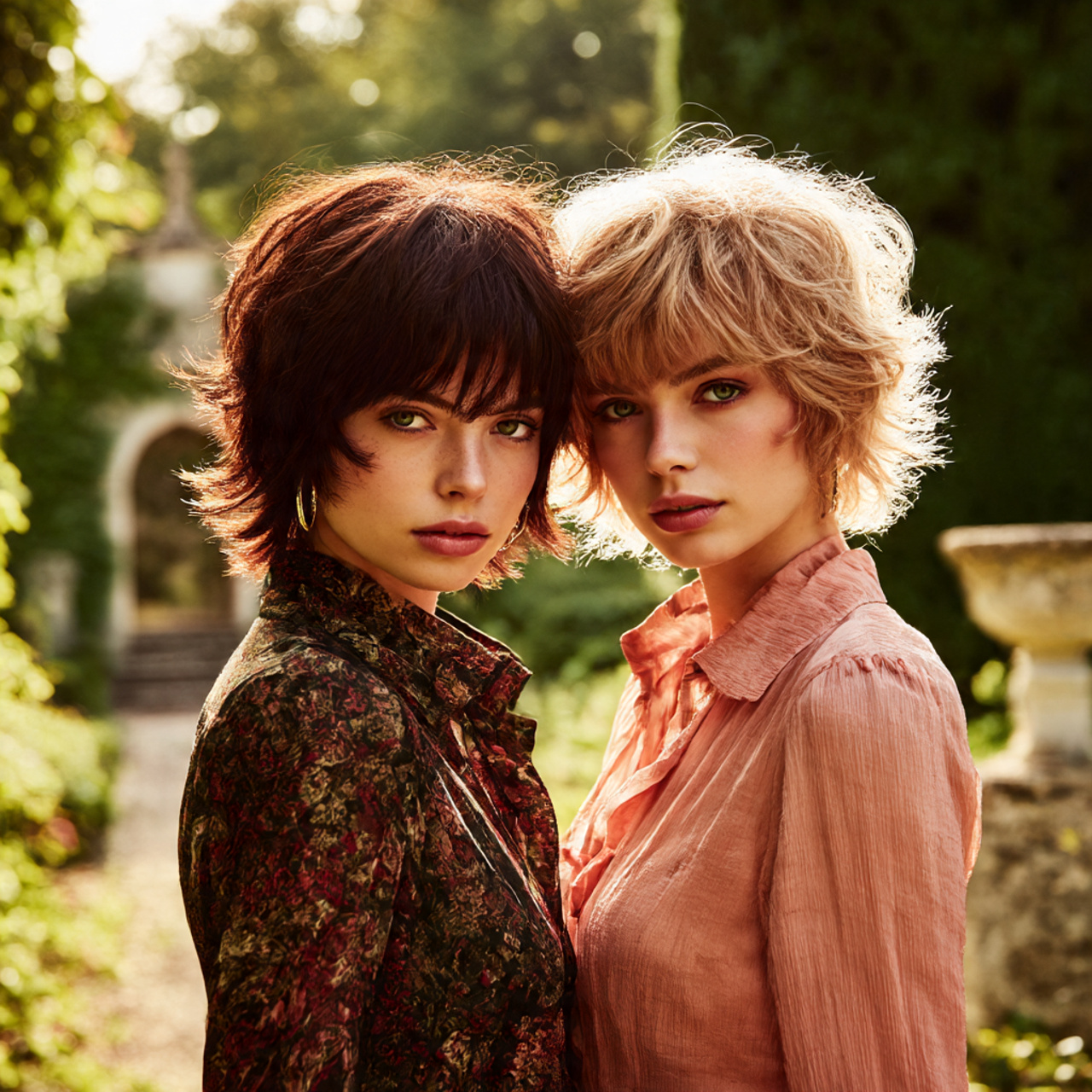
The traditional shag had sharp, heavy layers with strong contrast between the crown and the ends. The modern French version softens all of that. Layers are blended rather than stacked, the fringe is wispy rather than thick, and the shape looks lighter overall.
Many clients ask for a shag and receive the older version when they wanted the French interpretation. Knowing the difference gives you the language to ask for exactly what you want.
Best for: People who loved the 70s shag look but want something softer and more wearable daily Product: L’Oreal Elvive Dream Lengths Curls Leave-in Cream for defined but soft blended layers Pro tip: Tell your stylist “French shag with invisible layers” as shorthand for blended, soft layering versus the stacked traditional version. Face shape: Suits oval and heart faces especially well; blended layers avoid harsh visible lines at the sides Stylist language: “I want a modern French shag with blended layers, not stacked. Soft fringe, no heavy contrast between the crown and the ends.”
How to style a French shag

Styling this cut is simpler than most people expect. The layers are designed to work with the hair’s natural movement, which means the less you manipulate the hair during drying, the better the result.
Apply Kenra Platinum Silkening Mist to damp hair, scrunch from the ends upward, and air dry or diffuse on low. Never comb or brush once the product is in.
Best for: Any hair type looking to maximize natural movement with minimal product and effort Product: Kenra Platinum Silkening Mist for lightweight definition that does not compete with the layers Pro tip: Diffuse with your head flipped forward for the first two minutes to set root volume before finishing upright. Face shape: Diffusing direction can be adjusted for any face shape to emphasize or reduce volume in specific areas Stylist language: “Can you walk me through how to air-dry this cut so I can see the layers without needing heat every day?”
French shag maintenance tips
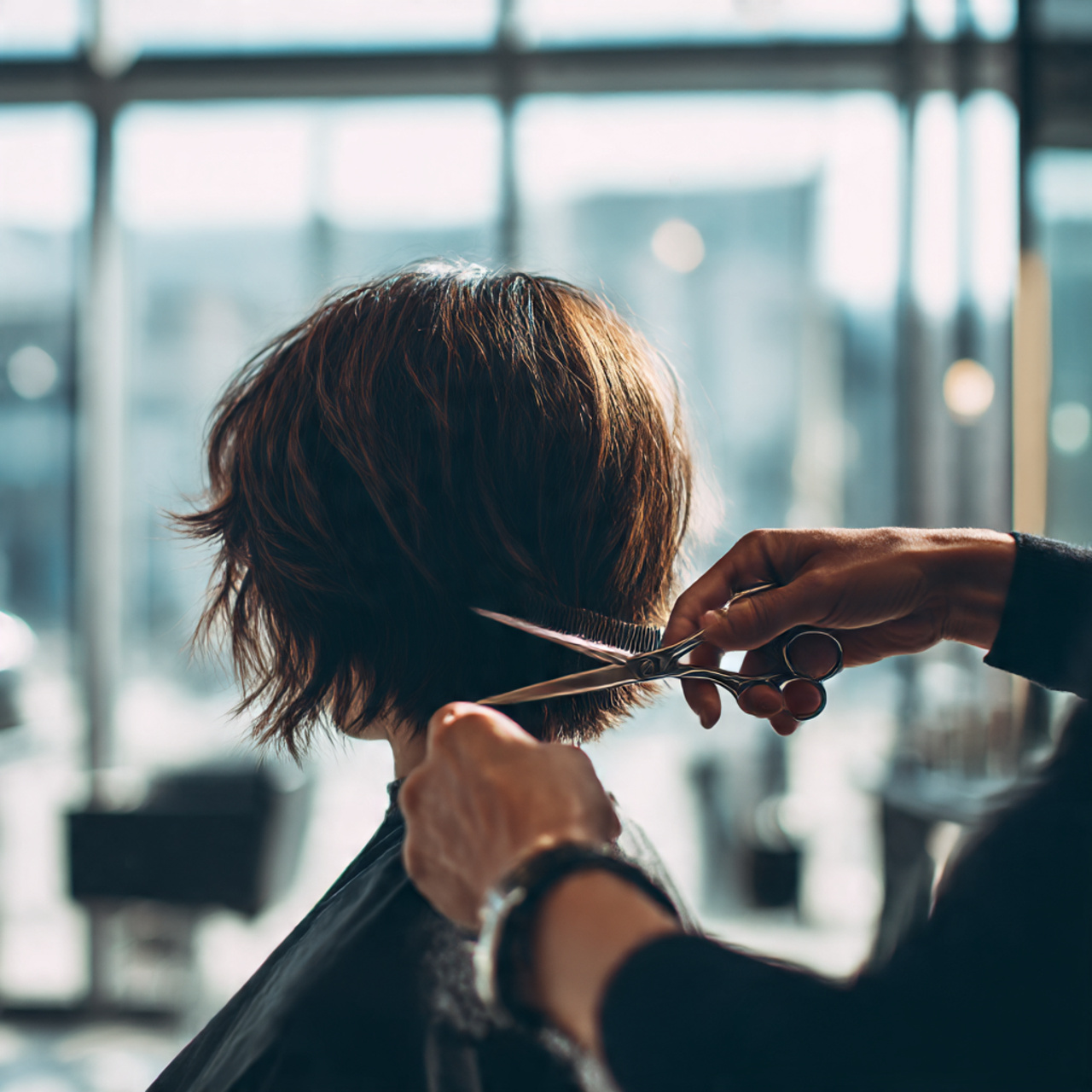
Keeping a French shag sharp depends on consistent trims and the right daily habits. The crown layers grow fastest and lose their lift after six to eight weeks. Trimming at that interval keeps the balance between volume and length.
Paul Mitchell Clean Beauty Everyday Shampoo keeps the scalp clean and layers light without stripping moisture. Use conditioner on the midlength and ends only, never the roots.
Best for: Anyone who wants to keep the cut looking intentional without constant salon visits Product: Paul Mitchell Clean Beauty Everyday Shampoo for clean volume without weighing layers down Pro tip: Ask your stylist to show you exactly where your crown layers start so you can spot when a trim is needed before the shape fully falls. Face shape: Regular trims keep the cut flattering your face shape as the layers grow Stylist language: “I want a maintenance trim focused on the crown layers to restore lift without changing the overall length.”
Best products for French shag
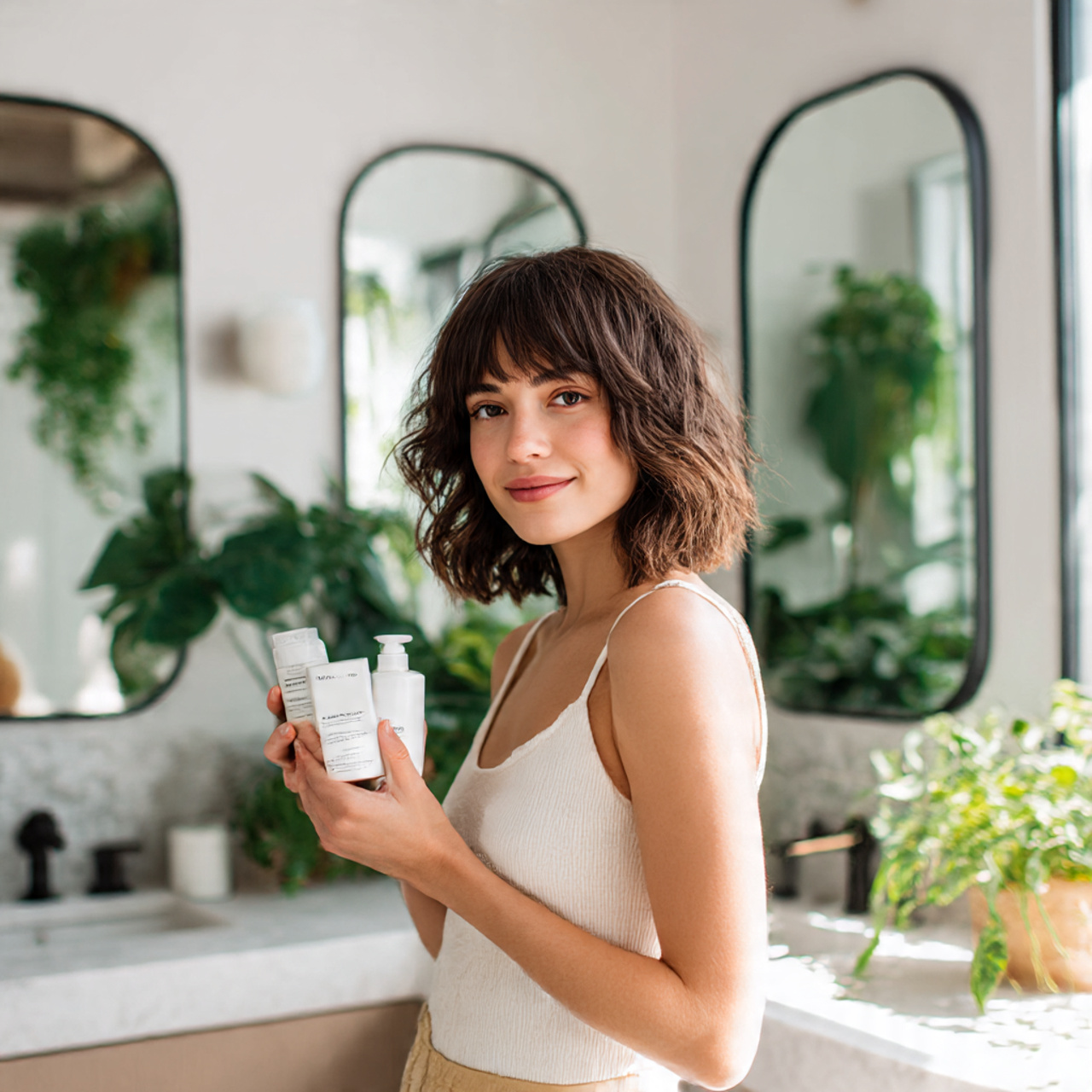
The French shag is a lightweight cut and it needs lightweight products to match. Heavy creams and thick oils flatten the layers and remove the movement that makes the cut worth having.
Sea salt sprays, flexible texture sprays, and soft foams are the right categories. IGK Beach Club Texture Spray builds grip and separation without stiffness.
Best for: All French shag wearers who want to keep their layers airy and visible through the day Product: IGK Beach Club Texture Spray for grip, separation, and natural-looking movement Pro tip: Apply texture spray before diffusing rather than after for better distribution through all the layers. Face shape: Application focus shifts by goal: root-focused for volume, ends-focused for definition and separation Stylist language: “What light products would you recommend for keeping my layers visible and moving without weighing my hair down?”
French shag on thick hair

Thick hair creates a challenge that most layered cuts do not fully solve. Without proper interior thinning, surface layers on thick hair produce a wide, poofy silhouette instead of the flowing shape the French shag is known for.
A razor comb or thinning shears through the interior of each section sets the foundation before visible layers are created. Pantene Nutrient Blends Hydrating Glow Conditioner used weekly keeps thick hair manageable between appointments.
Best for: Dense or thick hair that tends to look wide and heavy with most layered cuts Product: Pantene Nutrient Blends Hydrating Glow Conditioner for weekly moisture management on thick texture Pro tip: Apply a pea-sized amount of cream through the midlength only before drying to prevent thickness from expanding outward. Face shape: Round faces should be careful with very thick cuts; the stylist should control width at the sides Stylist language: “I have thick hair and I want a French shag with internal thinning to remove bulk, not just surface layers.”
French shag face shape guide
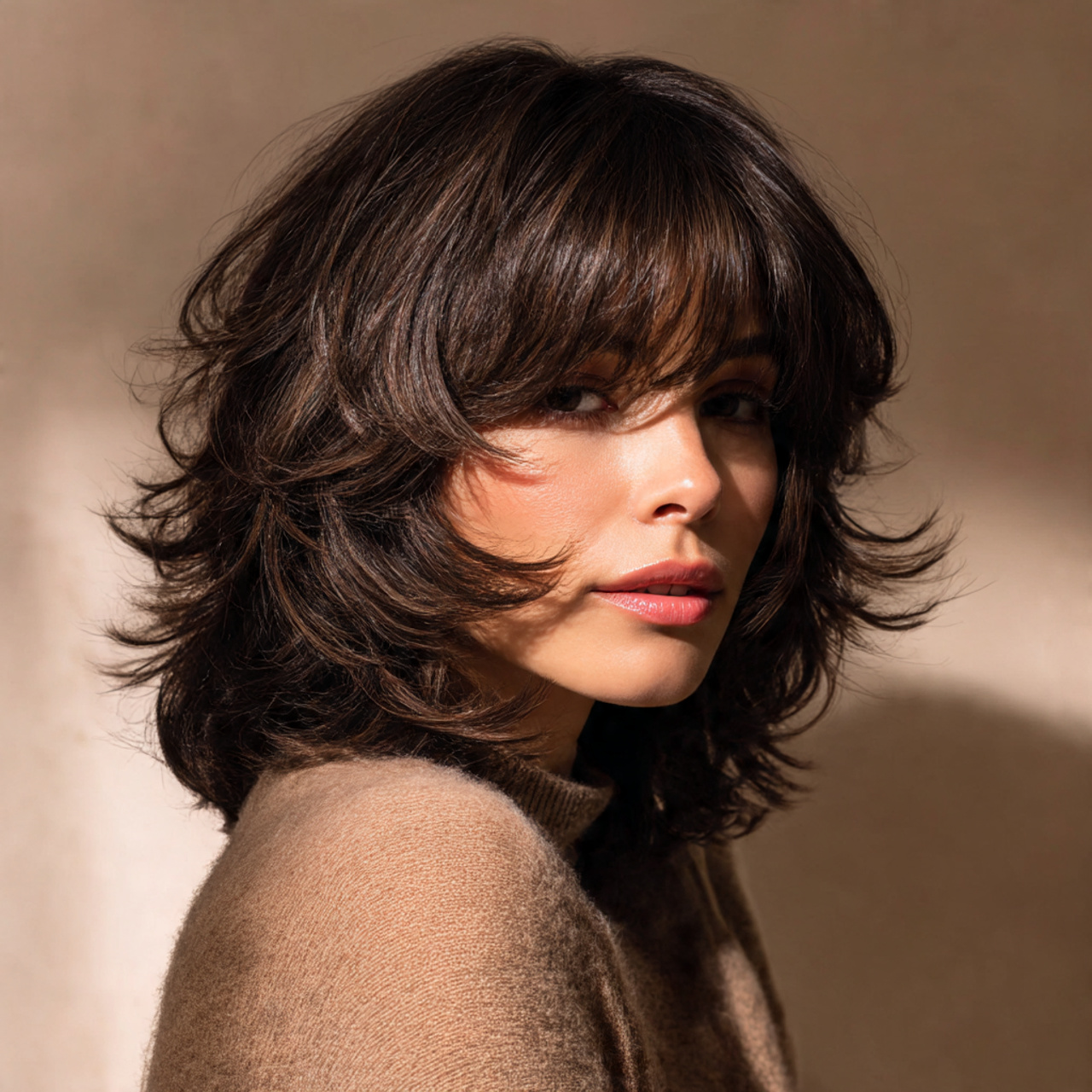
The French shag is one of the most face-shape-flexible cuts available because layer position and fringe length can shift based on what needs balancing. Round faces benefit from extra crown height and longer side layers. Square faces look softer when the ends are textured and the fringe is wispy rather than straight.
Oval faces can wear almost any version. Heart-shaped faces look excellent with longer layers around the jaw to balance a wider forehead. CHI Silk Infusion directs specific sections based on face shape needs.
Best for: Anyone who wants to choose a version that works specifically with their face shape Product: CHI Silk Infusion for targeted smoothing and directing layers toward or away from the face Pro tip: Bring two or three reference photos showing different bang and layer lengths to help your stylist calibrate without guessing. Face shape: Fully adjustable for every face shape through targeted changes in fringe length and side layer placement Stylist language: “Can you adjust the layer and bang placement for my specific face shape? I have reference photos to show you.”
Layering techniques for French shag
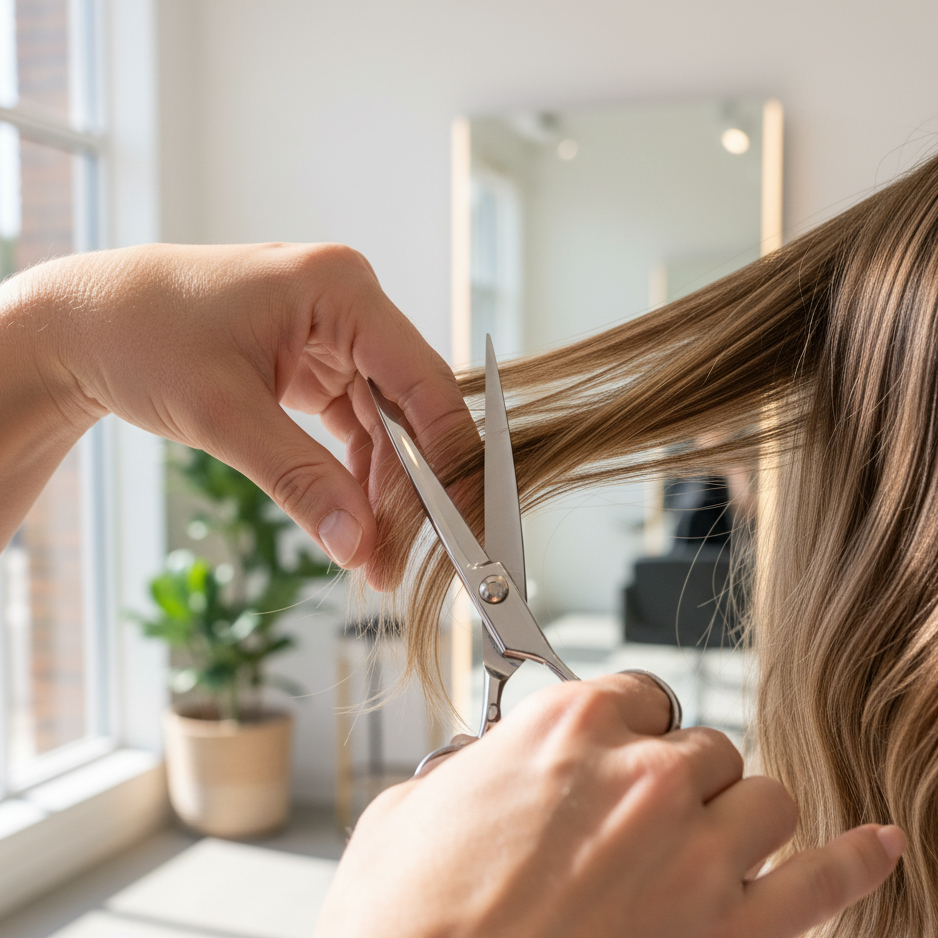
The technical foundation of the French shag is where the shortest layers begin. They sit at the crown roughly two to three inches from the root and graduate softly downward rather than dropping in a sharp step. This gradient creates lift without the heavy shelf that older shag cuts are known for.
Point cutting and slicing are the primary finishing techniques on the ends. Wella Professionals EIMI Sugar Lift texture spray shows off the gradient layering beautifully after styling.
Best for: Clients who want to understand the technical approach before their appointment Product: Wella Professionals EIMI Sugar Lift texture spray for enhancing gradient layering after styling Pro tip: Watch where your stylist places the first section at the crown. That single measurement is the biggest factor in how much volume you get. Face shape: Crown layer height is adjusted based on face length; longer faces usually need a lower starting point Stylist language: “I want crown layers starting about two to three inches from the root with soft graduation and sliced ends.”
Texturizing a French shag

Texturizing is what separates a French shag from a regular layered cut. It breaks up heavy lines left from basic layering and adds softness that makes the shape look lived-in rather than freshly cut. Without this step the cut often looks predictable and flat by the second day.
Surface texturizing changes how the ends look. Interior texturizing changes how the entire cut behaves in humidity and through the grow-out. R+Co Rockaway Salt Spray activates the result beautifully after drying.
Best for: Anyone whose layers look uniform and flat rather than dimensional and soft Product: R+Co Rockaway Salt Spray to activate the texturized sections and enhance the lived-in finish Pro tip: Ask for a lighter texturizing pass on your first visit. Too much on fine hair creates a choppy effect that is difficult to correct. Face shape: Texturizing intensity is based on hair density, not face shape specifically Stylist language: “Can you add texturizing after the layers? I want it to look soft and lived-in, not structured or stiff.”
French shag without bangs

Not every French shag needs a fringe, and the bangless version is a fully valid interpretation. The face-framing layers start near the cheekbone or jaw and flow naturally into the side sections. The result looks slightly more polished while keeping the same essential softness.
Aveda Smooth Infusion Style-Prep Smoother gives face-framing pieces a clean, controlled look without stiffness. This is a strong option if your bangs have grown out and you do not want to restart them.
Best for: People who want the French shag look without the fringe commitment or ongoing upkeep Product: Aveda Smooth Infusion Style-Prep Smoother for face-framing layers that look polished but not stiff Pro tip: Ask your stylist to razor the face-framing layers even without bangs to keep the tips light and natural-looking. Face shape: Works especially well for oblong and oval faces where extra framing height is not needed Stylist language: “I want a French shag without bangs. Face-framing layers from the cheekbone down with soft, blended ends.”
Grow out phase of a French shag

One of the strongest advantages of the French shag is how well it grows out between appointments. Because the layers are blended rather than stacked, there is no obvious shelf or step as they lengthen. The shape softens gradually and stays wearable without looking unkempt.
Bangs need the most attention during growth. As they lengthen they become face-framing pieces that can be tucked back or pinned. Garnier Fructis Sleek and Shine Anti-Humidity Smoothing Milk manages the in-between stage without stiffness.
Best for: People who dislike frequent salon visits and want a cut that stays presentable as it grows Product: Garnier Fructis Sleek and Shine Anti-Humidity Smoothing Milk for managing grow-out pieces Pro tip: Schedule a grow-out trim for the crown layers only. You do not need a full cut to restore the lift and keep the shape intentional. Face shape: Grow-out softens naturally for all face shapes because the blended layers extend without distorting the silhouette Stylist language: “I want to grow out my French shag without an obvious in-between phase. What should I trim first to keep it looking intentional?”
French shag color ideas
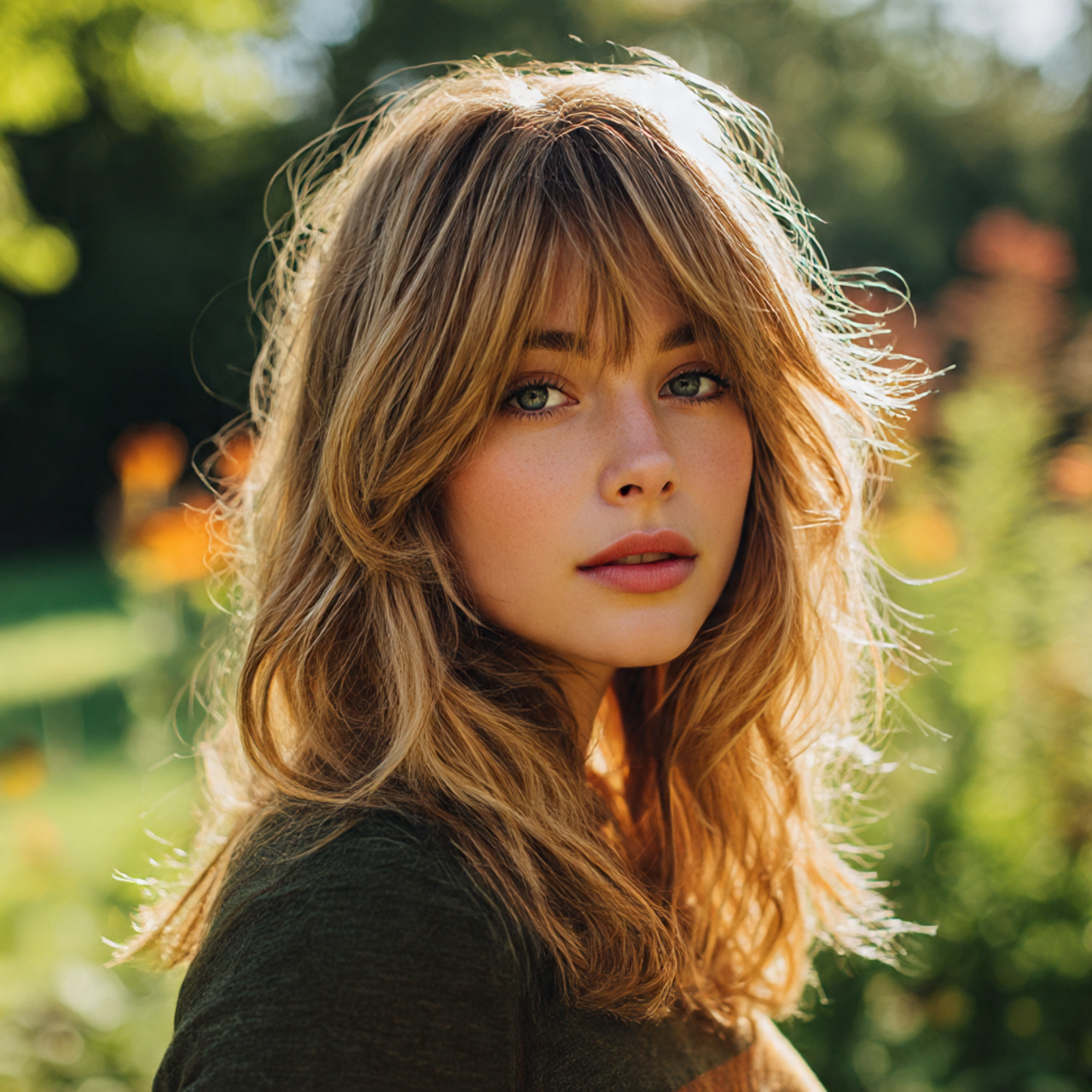
Color and the French shag work together in a very specific way. Soft, dimensional techniques like balayage and face-frame highlights naturally trace the layer pattern and make the cut look more three-dimensional. Solid block color and heavy highlights work against the soft movement the cut is built around.
Warm tones like honey blonde, caramel, and butterscotch read especially well with the textured shape. Joico K-PAK Color Therapy Shampoo protects color investment while keeping layers light.
Best for: French shag wearers who want their color technique to enhance the cut’s natural movement Product: Joico K-PAK Color Therapy Shampoo for color protection without stripping layer softness Pro tip: Ask your colorist to concentrate lighter tones on the top-layer pieces only so the color follows the natural light fall of the layers. Face shape: Face-frame highlights flatter all face shapes; placement is adjusted to lift or balance individual features Stylist language: “I want soft balayage that follows my French shag layers, with warmth concentrated on the top pieces and face-framing sections.”
Celebrity French shag inspiration
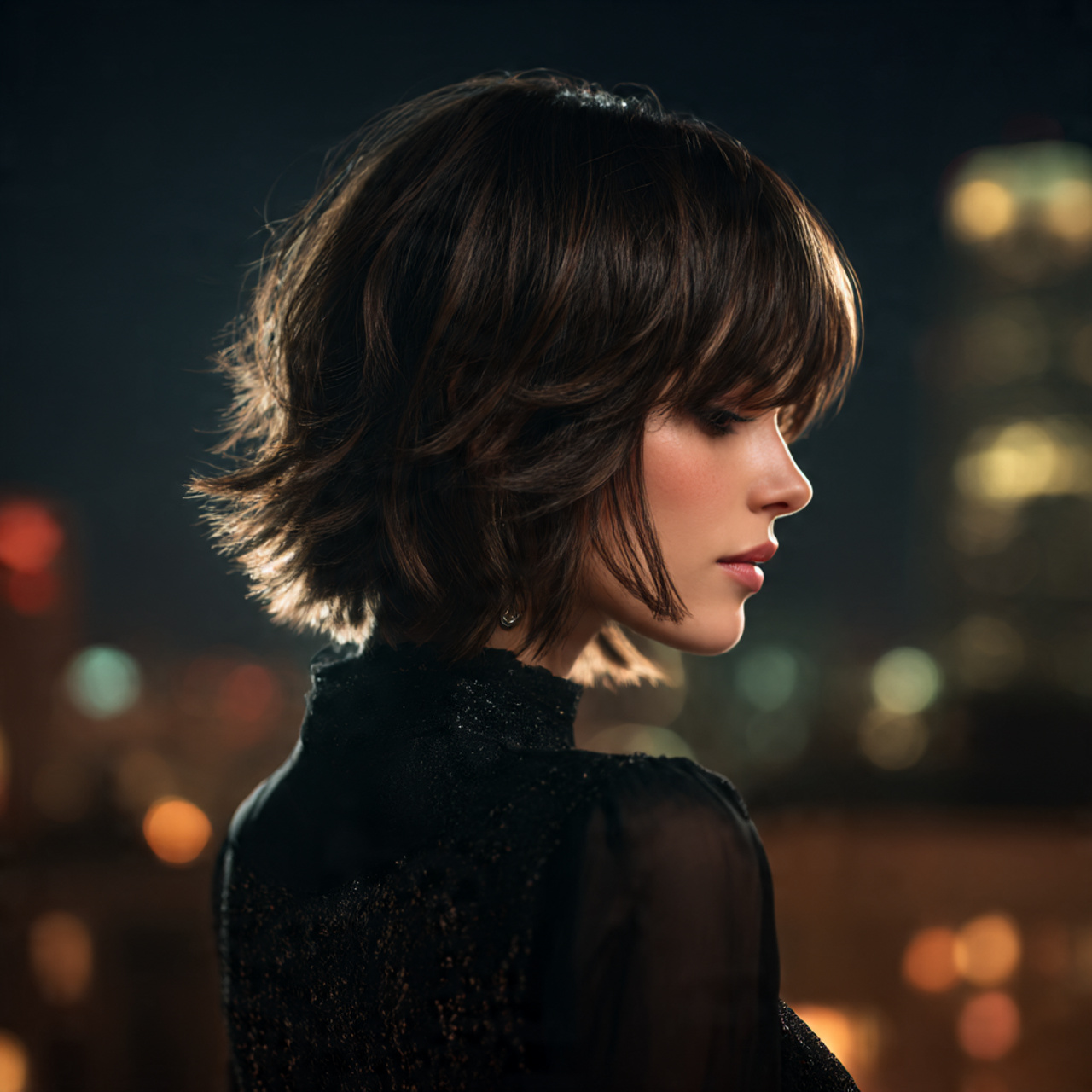
Many people in public life wear the French shag because it photographs well and looks intentional in formal and casual settings alike. The style translates across different hair types and lengths, which is why it appears consistently rather than belonging to one specific look.
When using celebrity photos as reference, focus on the layer length and fringe style rather than the color or finish. Schwarzkopf Osis+ Dust It Mattifying Powder recreates the matte, undone celebrity finish at home.
Best for: Anyone who relies on visual references to communicate with their stylist Product: Schwarzkopf Osis+ Dust It Mattifying Powder for recreating a matte, editorial finish at home Pro tip: Save multiple reference photos to a dedicated phone folder before your appointment so you can access them quickly during the consultation. Face shape: Choose celebrity references with a similar face shape to yours for the most accurate translation Stylist language: “Here are three photos of the French shag I want. Which elements would translate best to my specific hair type?”
Adding volume to a French shag
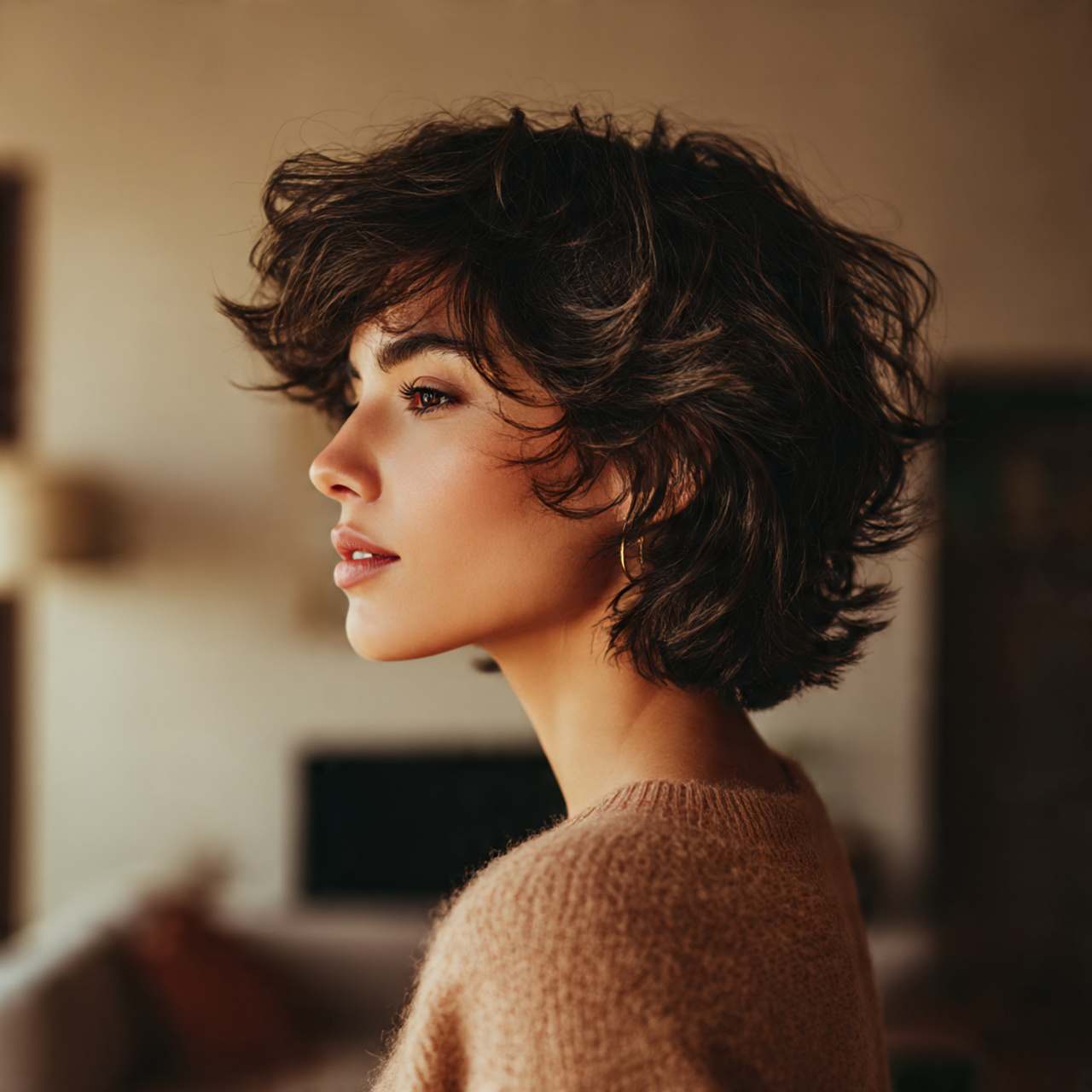
Volume is built into the French shag through the crown layers, but specific techniques push it further. Products set into the hair as it dries rather than lifting it after the fact, which means applying volumizing product to the root zone matters far more than most people realize. Applying it to the midlength is the most common home-styling mistake.
TRESemmé Root Rescue Spray works as both a root lifter and grip booster. Root clips at the crown while damp, removed once dry, give lift that holds for hours.
Best for: French shag wearers who want more volume, especially those with fine or flat hair Product: TRESemmé Root Rescue Spray as a dual-purpose root lifter and grip enhancer Pro tip: Place root clips at the very base of the crown section rather than the midlength for volume that starts at the scalp, not above it. Face shape: Extra crown volume helps round faces; avoid building width at the sides Stylist language: “What techniques can I use at home to boost root volume for my French shag between appointments?”
French shag shoulder length

Shoulder length is the most balanced version of this cut. At this length the layers have enough room to create real movement while the ends stay full and connected. The cut is not too short to show the layered structure and not too long to feel heavy.
This length transitions easily between casual, professional, and dressed-up settings. Verb Ghost Oil on the ends after drying gives a polished but natural finish that works in any context.
Best for: People who want the most versatile and popular version of the French shag Product: Verb Ghost Oil for a polished, lightweight finish on shoulder-length layers Pro tip: Once fully dry, scrunch from the ends upward once to separate the layers visually without disturbing root volume. Face shape: Works for every face shape; the stylist adjusts the layer angle to suit individual proportions Stylist language: “I want a French shag at shoulder length with balanced layers that give movement without making the ends look thin.”
Getting the perfect fringe with a French shag

The fringe is the most skill-dependent element of the French shag and the detail that makes or breaks the entire cut. It should never look straight, stiff, or heavy. The ideal fringe is soft, piecey, and slightly irregular at the tips, giving the impression that it fell there rather than being placed deliberately.
Sachajuan Hair Wax on dry fingertips run lightly through the fringe separates individual pieces without adding bulk. Never apply product to wet bangs and then air dry. That method creates flatness and removes all the texture that defines this fringe.
Best for: Anyone struggling to recreate the wispy fringe look seen in inspiration photos at home Product: Sachajuan Hair Wax for precise piece-by-piece fringe separation with a natural finish Pro tip: Divide your fringe into three sections when styling: middle, left, and right. Single-pass application creates the flat-panel look you want to avoid. Face shape: Wispy fringe suits all face shapes; length is adjusted shorter for round faces and longer for oblong Stylist language: “I want my fringe wispy, piecey, and soft at the tips. Please point-cut or razor-cut the ends so they stay light.”
Visit Also: Edgy Short Haircuts
Tools needed for French shag styling

The French shag requires fewer tools than most people expect. A ceramic diffuser attachment on your blow dryer does the most important work by distributing heat evenly and preventing frizz. A wide-tooth comb for detangling wet hair and a microfiber towel for gentle initial drying are the only other real essentials.
A one-inch curling iron is optional but useful for defining one or two face-framing pieces. The Dyson Supersonic with its diffuser attachment is worth the investment for regular heat users.
Best for: People building an efficient styling toolkit specifically for the French shag Product: Dyson Supersonic with diffuser attachment for fast, frizz-free drying with minimal heat damage Pro tip: Switch to the cool setting for the final 30 seconds of diffusing to lock in the layer shape and reduce frizz from finishing on heat. Face shape: Tool choice does not change by face shape, but diffusing direction can target or reduce volume in specific areas Stylist language: “What tools do you recommend for maintaining the texture and movement of this cut at home?”
French shag vs wolf cut

These two cuts are frequently confused and the difference matters for daily life. The wolf cut features heavy crown layering with a dramatic drop to longer lengths, creating a high-contrast silhouette. The French shag uses blended layers for a softer, more natural finish that hides its own construction.
Ouai Wave Spray captures the effortless quality of the French shag and distinguishes it from the wolf cut’s more sculpted result. If you love the wolf cut in photos but want something more practical every day, the French shag is the better choice.
Best for: People deciding between these two cuts who want to understand the real-life daily difference Product: Ouai Wave Spray for a relaxed, natural French shag finish Pro tip: If you love the wolf cut but want daily wearability, tell your stylist “blend it toward a French shag” for a practical middle ground. Face shape: Both suit similar face shapes, but the wolf cut adds crown drama that does not work for every face Stylist language: “I like the wolf cut in photos but want something more wearable every day. Can you blend it softer toward a French shag?”
The Parisian style haircut

The French shag earns its Parisian connection through philosophy rather than geography. It looks like you did not try too hard. The shape is clearly there but does not announce itself, and that balance between effortless and intentional is the defining quality of both classic Parisian style and this cut.
Knowing how to finish it correctly is what separates a Parisian result from a generic layered cut. The answer is almost always finishing with cool air and then not touching the hair again. L’Oreal Paris Elvive 8 Second Wonder Water works as a pre-style treatment: quick, effective, and never overdone.
Best for: Anyone drawn to a natural, understated aesthetic that still looks considered and intentional Product: L’Oreal Paris Elvive 8 Second Wonder Water for effortless smoothness and shine on styled layers Pro tip: The Parisian finish is set, not styled. Apply your product, dry the hair, then do not touch it again. Face shape: The understated French shag version flatters all face shapes and leans toward an oval-friendly silhouette Stylist language: “I want a French shag with a very natural, low-effort finish. Parisian in feel. Nothing sculpted or overdone.”
Consulting your stylist for a French shag

A thorough consultation is the most underused part of the haircut process. Most people spend thirty seconds showing a photo and then sit down. The French shag deserves at least five minutes of back-and-forth because the layer decisions are all made before the first cut.
Tell your stylist how much time you spend styling each morning, what products you use, and whether you prioritize volume or length. Redken All Soft Mega Curl Shampoo is worth mentioning if your hair is curly or coily.
Best for: First-time French shag clients who want to walk out with exactly what they pictured Product: Redken All Soft Mega Curl Shampoo as a texture-specific product worth mentioning in your consultation Pro tip: Record a short video of your hair on a typical unstyled morning and show it to your stylist. It tells them more than any photo. Face shape: The consultation is the right moment to discuss face shape adjustments. Bring a reference photo of your target outcome. Stylist language: “Before we start, can we talk through my hair type, face shape, and morning routine so you can customize the layers for me?”
DIY trim a French shag

The full French shag cut should always be done by a professional. The blending and angle of the crown layers require precision that is very hard to replicate at home. Attempting a full DIY cut almost always produces uneven layers that take multiple appointments to correct.
The exception is the fringe. If your bangs grow quickly and your next appointment is weeks away, trim them at home with small styling shears by cutting vertically into the tips rather than straight across. Tweezerman Professional Styling Shears are a reliable and affordable option for home fringe maintenance.
Best for: French shag wearers who need to maintain their fringe between professional appointments Product: Tweezerman Professional Styling Shears for precise at-home point cutting on bangs Pro tip: Always trim bangs completely dry and styled. Wet hair shrinks as it dries and you can easily cut far more than intended. Face shape: All face shapes can maintain their fringe at home as long as they stay at the length their stylist originally set Stylist language: “Can you show me exactly how to point-cut my fringe at home so I can maintain it between appointments without ruining the shape?”
Quick Comparison Table
| Style | Length | Hair Type | Maintenance | Bold Factor |
|---|---|---|---|---|
| Classic French shag | Shoulder | All | Low | ★★★☆☆ |
| French shag for fine hair | Shoulder | Fine | Low | ★★★☆☆ |
| French shag on short hair | Jaw/chin | All | Very low | ★★★★☆ |
| French shag long hair | Long | All | Low | ★★★☆☆ |
| French shag with bangs | Shoulder | All | Medium | ★★★★☆ |
| Curly French shag haircut | Shoulder | Curly/coily | Medium | ★★★★☆ |
| Wavy French shag styling | Shoulder | Wavy | Very low | ★★★☆☆ |
| Modern French shag vs traditional shag | Shoulder | All | Low | ★★★☆☆ |
| How to style a French shag | Any | All | Very low | ★★★☆☆ |
| French shag maintenance tips | Any | All | Low | ★★☆☆☆ |
| Best products for French shag | Any | All | Very low | ★★☆☆☆ |
| French shag on thick hair | Shoulder | Thick | Low | ★★★☆☆ |
| French shag face shape guide | Any | All | Low | ★★★☆☆ |
| Layering techniques for French shag | Shoulder | All | Low | ★★★☆☆ |
| Texturizing a French shag | Shoulder | All | Low | ★★★★☆ |
| French shag without bangs | Shoulder | All | Very low | ★★★☆☆ |
| Grow out phase of a French shag | Growing | All | Very low | ★★☆☆☆ |
| French shag color ideas | Any | All | Medium | ★★★★☆ |
| Celebrity French shag inspiration | Any | All | Low | ★★★★☆ |
| Adding volume to a French shag | Shoulder | Fine/all | Low | ★★★☆☆ |
| French shag shoulder length | Shoulder | All | Low | ★★★★☆ |
| Getting the perfect fringe with a French shag | Shoulder | All | Medium | ★★★★☆ |
| Tools needed for French shag styling | Any | All | Very low | ★★☆☆☆ |
| French shag vs wolf cut | Shoulder | All | Low | ★★★★★ |
| The Parisian style haircut | Shoulder | All | Very low | ★★★★☆ |
| Consulting your stylist for a French shag | Any | All | Low | ★★★☆☆ |
| DIY trim a French shag | Any | All | Low | ★★☆☆☆ |
Frequently Asked Questions
Q1. What exactly is the French shag haircut and how do I know if it will suit my hair type? The French shag haircut is a soft, layered style built on blended crown layers, light texture through the ends, and an optional wispy fringe. It can be adjusted for fine, thick, straight, wavy, or curly hair by changing layer density and starting point.
Q2. How often do I need to trim a French shag to keep it looking intentional? Most people need a trim every six to eight weeks to maintain the crown lift and layer balance. Bangs may need a light clean-up between full appointments.
Q3. What is the main difference between a French shag and a wolf cut? The wolf cut has heavy, high-contrast layers and a deliberately dramatic silhouette, while the French shag uses blended layers for a softer and more lived-in finish. The French shag grows out more cleanly and requires less effort to maintain day to day.
Q4. Can I air-dry a French shag or do I need heat tools every time? The cut is specifically designed to look good with air drying and a light texturizing product. A diffuser can add volume if wanted, but it is not a requirement.
Q5. What kinds of products should I avoid with a French shag? Avoid heavy creams, thick oils, and any product applied in excess near the roots. These flatten the layers and remove the movement the cut was designed to deliver.
Final Thoughts
The French shag haircut is not a trend waiting to expire. It is a well-constructed, practically designed style that stays relevant because it genuinely works across hair types, face shapes, and real daily routines. When the layers are matched correctly to your texture, the cut does most of the styling work for you.
If you have been on the fence, the most important step is a thorough consultation with a stylist who has cut this style before. Bring photos, explain your routine honestly, and take the time to find the right version rather than the first one you saw.
The detail that separates a truly great French shag from a decent one is almost always the interior work. Interior texturizing and blending change how the cut behaves in humidity and through the grow-out. That deeper level of care is what makes this cut feel like it was made specifically for you.
A great French shag does not show its best work the day you leave the salon. It shows up three weeks later when your hair still looks intentional without any effort, and that only happens when every layer was placed exactly where your specific texture needed it to be.
Save this guide to your Pinterest board and share it with your stylist before your next appointment.