27 Beanie Hairstyles That Will Completely Transform Your Winter Look
Every winter the same thing happens. You pull on your favorite beanie and immediately feel like your hair became an afterthought. Beanie hairstyles should amplify a look, not erase one, and that gap between what most people experience and what is actually possible is worth closing.
This is not a personal failure. Most people were never told that the hair peeking out from a hat is as deliberate a choice as any other part of the outfit.
The root cause is simple. Standard hat-hair advice stops at containment and never explains how face shape, texture contrast, or compression interact with the style underneath the hat.
Beanies flatten the crown by nearly a full inch. That means all the visual interest must shift to what falls around and below the hat’s edge, which is the exact opposite of where most people focus.
This article maps out 27 specific looks that turn the beanie into a creative launch point for a great winter style. Each one comes with the right product, exact appointment wording, and the face shape it flatters most.
By the time you finish reading, you will know exactly which beanie hairstyles match your texture, your face shape, and your real morning routine.
Beanie hairstyles are not about hiding hair. They are about deciding which part becomes the feature. In 2026, stylists have been treating the beanie as a frame rather than a cover, producing some of the most striking cold-weather looks in years. The rule governing every idea below: treat every strand that escapes the hat as a deliberate styling choice, not an accident.
Low Messy Bun Beanie

The low messy bun anchors the beanie at the nape without adding crown bulk, solving the most common beanie fit problem. Gathering hair loosely at the base of the skull gives the hat a natural resting point and stops it from sliding forward all day. Pull a few face-framing pieces loose after the hat settles for an effortlessly polished finish.
Slouchy beanies pair best with this look because the extra fabric at the back accommodates the bun without distorting the hat’s silhouette. Avoiding a high placement prevents the brim from tilting forward and pressing the crown completely flat.
Best for: Medium to long hair of any texture. Product: Ouai Hair Oil for flyaways around the bun. Pro tip: Use a Goody Spin Pin instead of an elastic so the beanie sits flat with no detectable bump beneath the knit. Face shape: Oval and square faces. Stylist language: “Loose, lived-in low bun with face-framing pieces left out at the temples.”
Face-Framing Waves Beanie

Waves placed at the temples and cheekbones redirect attention from the hat directly to the face. The contrast between a snug knit edge and a soft, defined wave creates depth that reads as intentional even when it takes twenty minutes to execute.
Style only the sections that will actually show and leave everything under the beanie untouched. Skipping heat on the hidden portion protects the ends from repeated unnecessary damage every single wear.
Best for: Medium-length hair, fine to medium thickness. Product: 1.25-inch Conair barrel or Dyson Airwrap for defined waves. Pro tip: Mist only the visible front sections with Kenra Platinum Silkening Mist to lock the wave without weighing it flat. Face shape: Round and heart-shaped faces. Stylist language: “Loose waves at the front from the temples only, everything behind left natural.”
Loose Double Braids Beanie

Two relaxed plaits over the shoulders balance the visual weight of a chunky knit and add texture that looks intentional rather than lazy. Starting the braids below the ear rather than at the scalp prevents tight tension that becomes uncomfortable under the hat’s edge within an hour.
Pull each braid apart gently after plaiting to widen the strands and give the style more visual presence below the beanie. Thicker sections read as modern and deliberate, which distinguishes this look from anything too casual.
Best for: Long hair of any texture. Product: Amika Fluxus Touchable Hairspray for braid hold without stiffness. Pro tip: Wide-tooth comb each section before plaiting so the braid stays smooth where the hat’s edge presses hardest. Face shape: Oblong and oval faces. Stylist language: “Two loose braids starting just below my ears, face-framing pieces left out.”
Voluminous Side Sweep Beanie

Sweeping all the hair dramatically to one side before placing the beanie creates a diagonal line that adds length and angularity to the face. Root lift is non-negotiable because the hat compresses the top third of the swept section immediately after it goes on.
Apply Living Proof Full Dry Volume and Texture Spray and backcomb lightly before the hat arrives. Building the volume before any compression begins is the professional approach that makes this look survive for hours instead of minutes.
Best for: Medium to long hair, fine to medium thickness. Product: Living Proof Full Dry Volume and Texture Spray. Pro tip: Backcomb the root of the swept section with a Denman D3 brush before placing the beanie so the lift survives the hat’s compression for hours. Face shape: Round and square faces. Stylist language: “Deep side sweep with maximum root lift on the heavy side before the hat goes on.”
Tucked-Under Ends Beanie
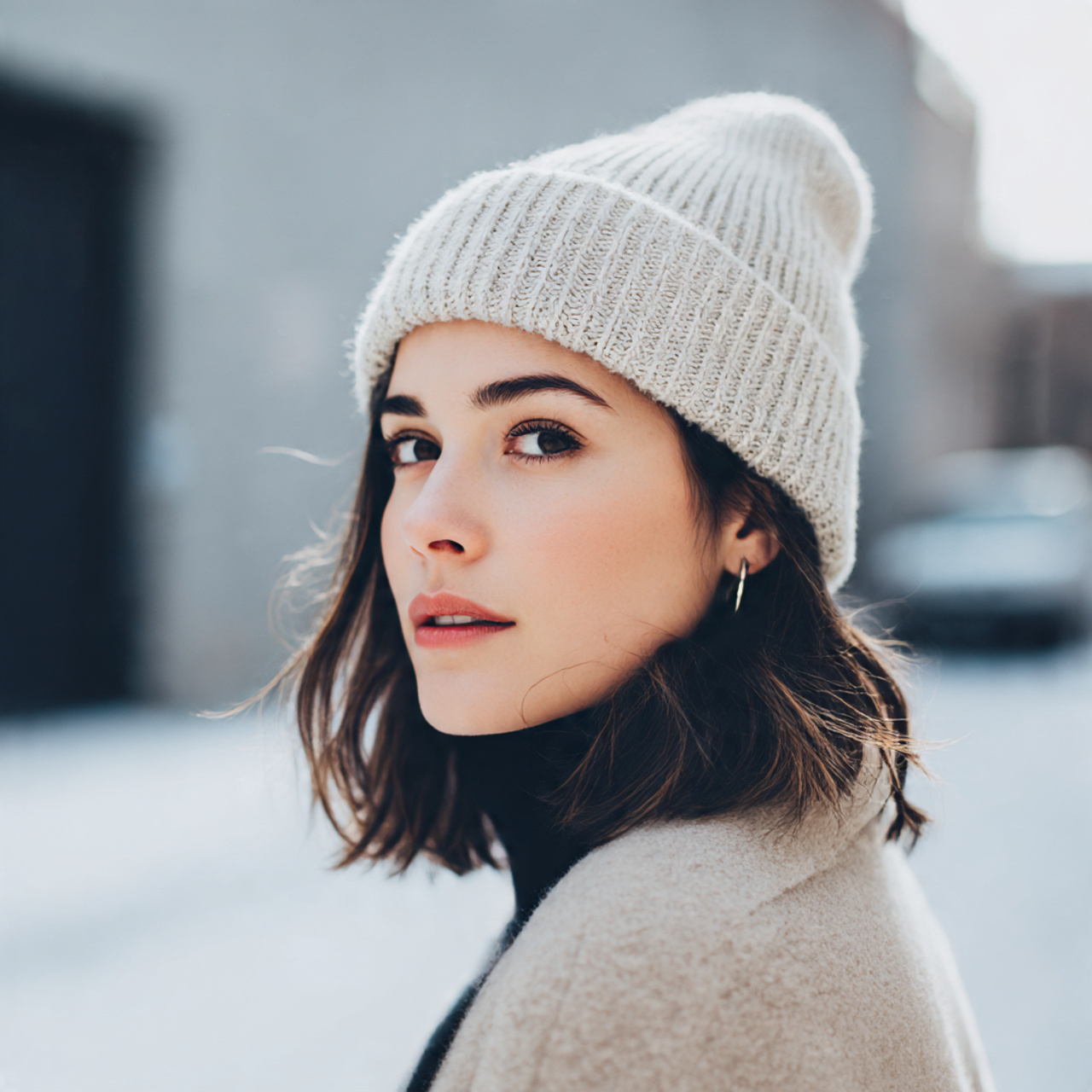
Rolling the length upward at the nape and pinning it flat creates a clean, professional look that works in offices where a braid or ponytail feels too casual. The ends stay protected from dry winter air all day, which makes this one of the most hair-friendly options in the list.
Thinner beanies work better here because chunky knits add visible bulk at the back and disrupt the clean, structured silhouette this style is built around. The slimmer the fabric, the more seamless the result.
Best for: Straight to slightly wavy hair, medium to long length. Product: Goody Secure Fit bobby pins and Garnier Fructis Sleek and Shine. Pro tip: Hold the rolled section for ten seconds after pinning so the shape sets into the pin instead of springing loose during the day. Face shape: All face shapes. Stylist language: “Smooth tuck where the ends roll under at the nape, nothing showing below the hat’s edge.”
Full Fringe Bangs Beanie

Positioning the beanie at least an inch behind the hairline exposes the full width of the bangs and makes them the visual centerpiece of the entire look. Bangs hitting between the brow and the lash line perform best because they stay fully visible without getting caught under the hat’s edge.
Anything longer tends to crease where the hat presses down, and no product fully removes that bend once it sets. Keeping the fringe at the right length is the one maintenance step that makes every beanie day effortless.
Best for: Any hair length with a full-cut fringe. Product: Bumble and Bumble Styling Wax to keep bang sections together without greasiness. Pro tip: Blow-dry the fringe with a round brush right before leaving so the shape is freshly set when the beanie compresses the surrounding hair. Face shape: Oval and heart-shaped faces. Stylist language: “Full, blunt bangs at brow level, cut cleanly without splitting in the center.”
Sleek Straight Look Beanie
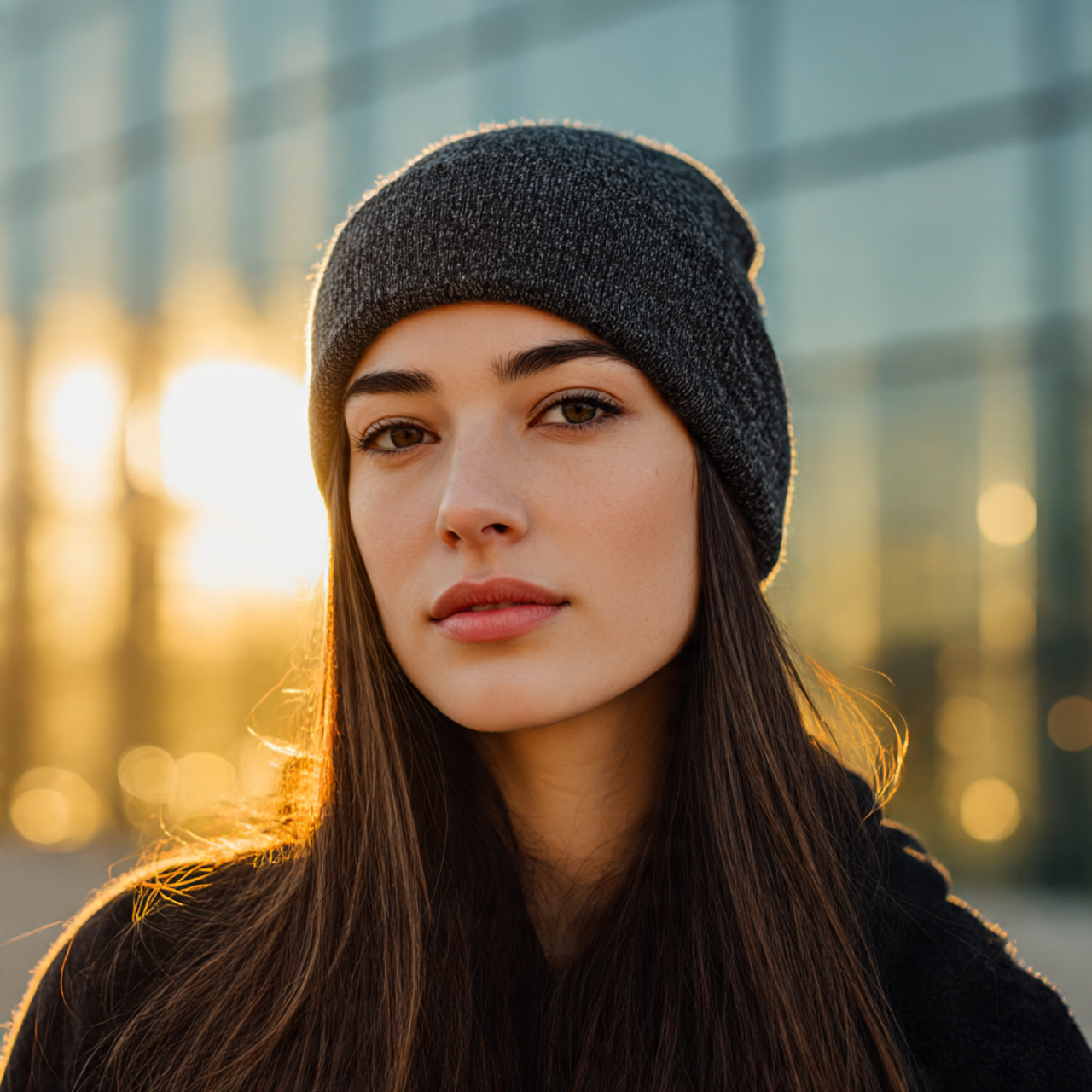
Pin-straight hair against a chunky beanie is one of the strongest texture contrasts in cold-weather styling. The graphic lines of straightened hair read as intentional and fashion-forward when they fall below fuzzy or ribbed knit. Any frizz or bend disrupts the contrast completely, so preparation matters more than any other step here.
A GHD Platinum Plus flat iron at 365 degrees delivers the smoothest result, with built-in sensors that prevent hot spots. This is the tool professionals reach for when a client needs a glass-like finish that holds through outdoor cold.
Best for: Straight to wavy hair, medium to long length. Product: GHD Platinum Plus flat iron with Moroccanoil Treatment Light as a finishing serum. Pro tip: Run a microfiber cloth over the lengths after flat ironing to neutralize static before the hat creates friction against the hair. Face shape: Oblong and oval faces. Stylist language: “Bone-straight finish with a glassy surface and zero texture whatsoever.”
Deep Side Part Beanie

A side part starting directly above the eyebrow arch and sweeping all the hair in one direction gives the look a cinematic quality a center part rarely achieves. The depth of the part adds instant sophistication and makes the hat feel like a deliberate accessory rather than a practical necessity.
Wearing the beanie slightly to the same side as the part reinforces the drama. Clipping the swept section for five minutes while getting ready trains the hair to hold the direction before any hat pressure lands on it.
Best for: Medium to long hair of any texture. Product: Tangle Teezer for a clean, consistent part line. Pro tip: Clip the swept section for five minutes while finishing your routine so the hair holds its direction before the hat applies any pressure. Face shape: Round faces. Stylist language: “Hard side part starting above my eyebrow arch with all hair swept completely to one side.”
Curly Volume Overflow
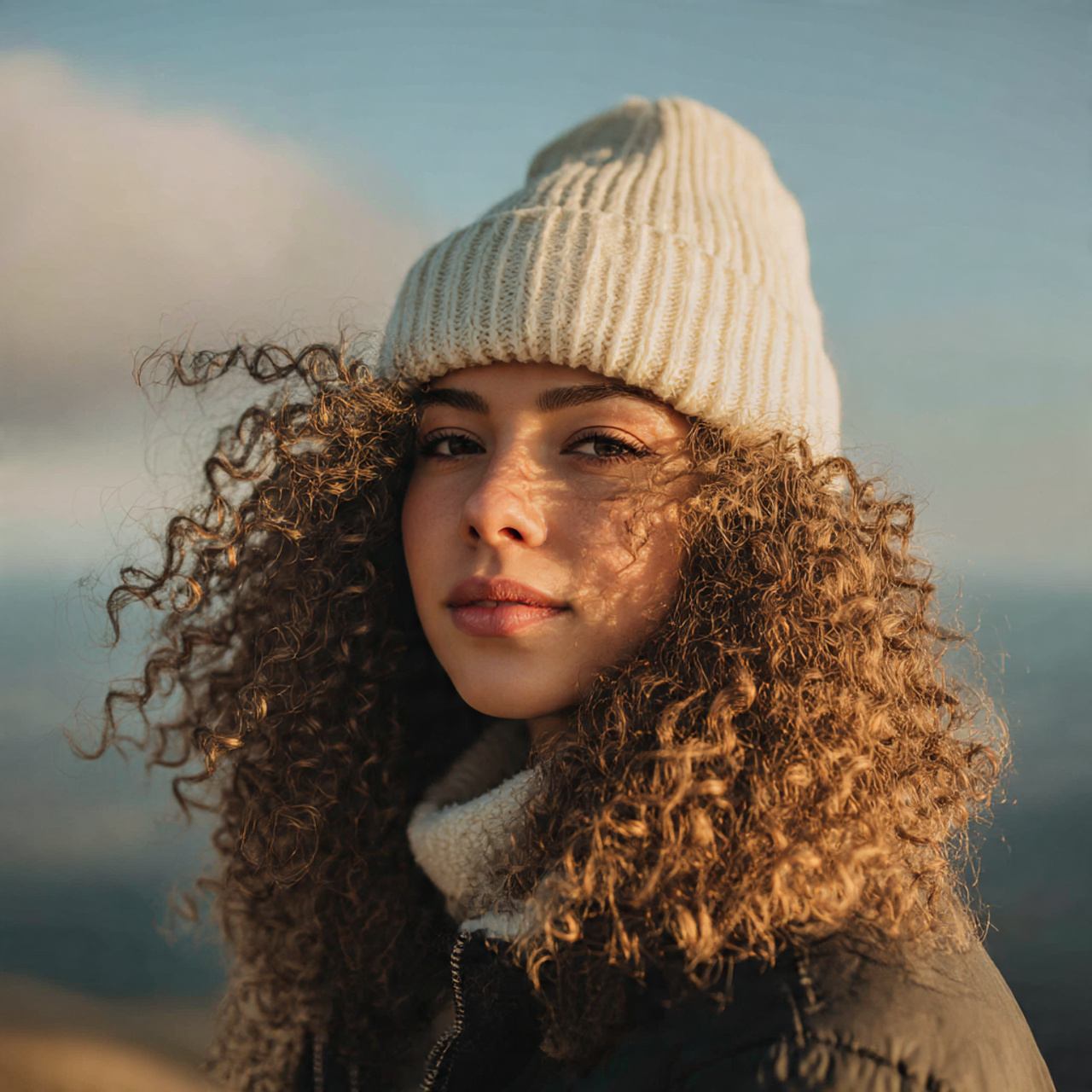
Natural curls are the ultimate beanie partner because the volume other styles spend thirty minutes building already exists in the hair. A beanie placed gently at the crown without pressing the sides allows the full curl circumference to frame the face with movement and energy.
Hydrated curls hold their shape under the hat far better than dry ones that flatten and frizz within the first hour of wear. Moisture is the single most important variable, and applying product before the hat goes on is always more effective than trying to revive the curls after.
Best for: Naturally curly or coily hair of any length. Product: SheaMoisture Jamaican Black Castor Oil Leave-In Conditioner for moisture and definition. Pro tip: Scrunch out any cast from your gel with an Aquis microfiber towel before placing the hat so the curls stay soft instead of crunchy under the brim. Face shape: All face shapes. Stylist language: “Natural curl pattern preserved with full shrinkage and volume at the sides.”
Chin-Length Bob Display

A bob and a beanie complement each other without requiring much effort once the cut itself is in good shape. The hat anchors the crown and the sharp ends do all the visual work below, creating a polished silhouette that reads as intentional and modern. Curl the ends slightly outward with a 1-inch iron for a classic C-curve that balances the hat’s edge above.
The weight of the hat helps keep the hair flat on top, which contrasts beautifully with the defined ends of the bob underneath.
Best for: Chin to shoulder-length hair with a blunt or layered bob cut. Product: Bed Head by TIGI Small Talk 3-in-1 Thickifier for root volume before placing the hat. Pro tip: Run a flat iron over only the bottom inch of the bob right before going out so the ends curve in one direction rather than flipping randomly. Face shape: Oval and square faces. Stylist language: “Clean, blunt chin-length bob with a slight outward curve at the ends.”
Asymmetrical Hair Tuck

Tucking hair behind one ear while leaving the other side completely free creates a bold imbalance that no symmetrical style achieves. The tucked side gets deliberately smoothed with product while the loose side carries a defined wave for maximum contrast. A small amount of Suave Professionals Smoothing Cream on the tucked side keeps it flat for hours without flaking or buildup.
The exposed side should have one defining element so the asymmetry reads as intentional. A random, unstyled loose side turns this from an editorial choice into an unfinished one.
Best for: Medium to long hair of any texture. Product: Suave Professionals Smoothing Cream for the tucked side and R+Co Badlands spray for the loose side. Pro tip: Tuck on the side where the beanie naturally dips lower so the hat’s angle and the hair’s asymmetry reinforce each other. Face shape: Oval and heart-shaped faces. Stylist language: “One side textured and free, the other cut to sit cleanly behind the ear.”
Boho Headband Braid

A thin braid following the very hairline before the beanie begins acts as a built-in decorative edge that stays fully visible regardless of how the hat shifts throughout the day. The placement must be right at the hairline rather than an inch back, so the braid is never obscured when the beanie slides slightly during outdoor wear.
A Dutch braid works better than a three-strand plait on thicker textures because the raised center ridge sits outside the hairline rather than being pressed flat by the hat’s edge.
Best for: Fine to medium hair with face-framing layers. Product: Schwarzkopf Professional got2b Glued Blasting Freeze Spray to hold the braid flat before placing the hat. Pro tip: Braid toward the ear on your less dominant side first so both sides carry equal tension and the beanie sits level across the forehead. Face shape: Square and diamond faces. Stylist language: “Thin Dutch braid along my actual hairline that acts as a headband before the rest is covered.”
Half-Up Pony Exit

Gathering only the top half of the hair into a low ponytail before the beanie goes on solves the two most common long-hair problems at once: crown compression and nape bulk. The hat covers the elastic completely and the lower half flows freely without any restriction or uncomfortable tension throughout the day.
Keep the holder right at the occipital bone so the exit point looks seamless beneath the hat’s edge. This positioning distributes the hair’s thickness evenly and prevents the lump at the back that most people deal with when they try to tuck everything in at once.
Best for: Long, thick hair of any texture. Product: Invisibobble Power hair ring to hold the top section without leaving a dent when released. Pro tip: Smooth the top section with a Mason Pearson brush before securing the ponytail so the visible portion at the hat’s edge is completely sleek. Face shape: All face shapes. Stylist language: “Top half only into a low ponytail at the occipital bone, everything below left completely down.”
Textured Beach Waves
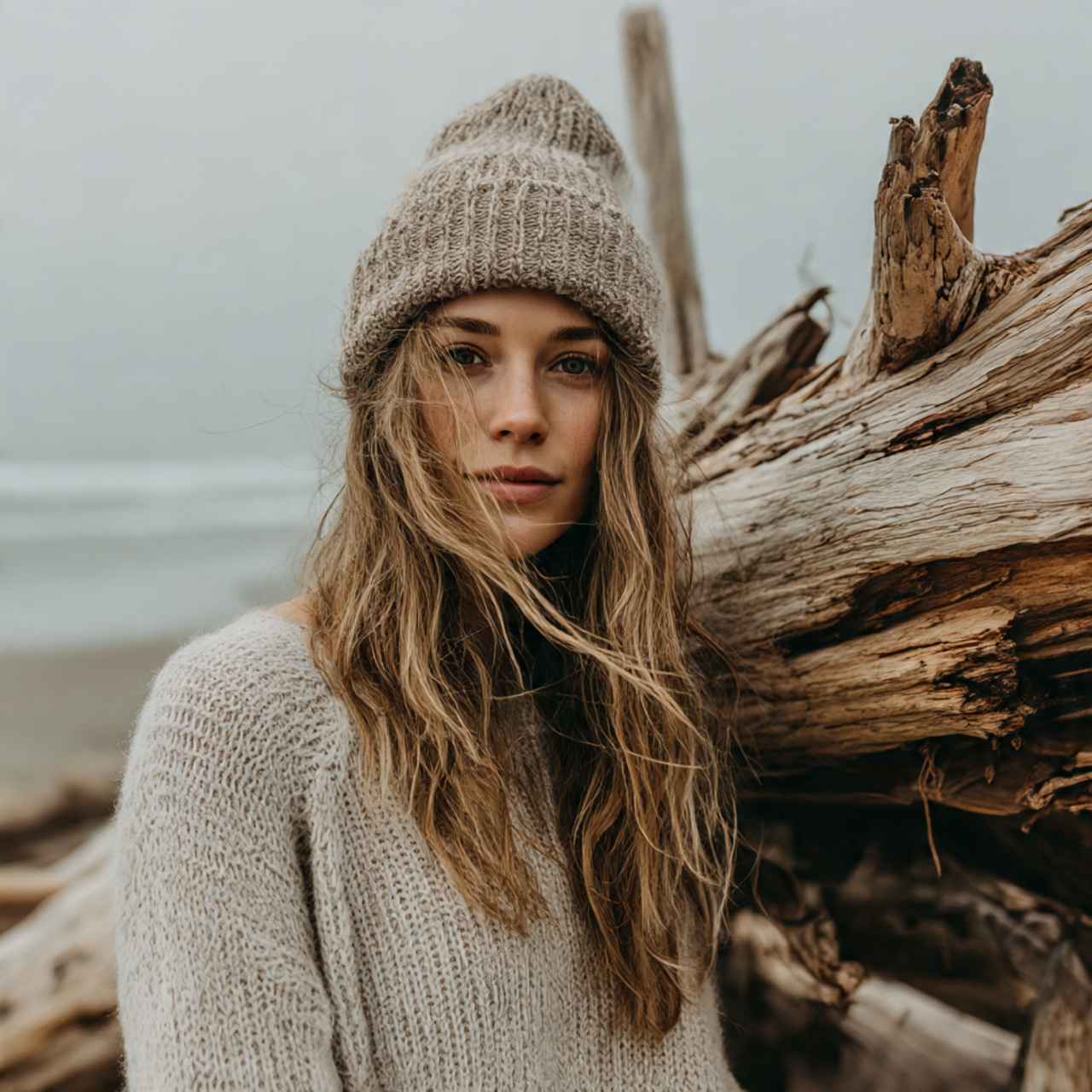
Loose, imperfect waves under a beanie work precisely because imperfection is the point. Slight inconsistency in wave size and a tousled finish look intentional when the hat anchors the crown. Salt spray is the most effective product here because it adds grip to the wave pattern so the hat cannot flatten it during wear.
Apply Bumble and Bumble Surf Spray to towel-dried hair and let it dry fully before the beanie goes on. Setting the wave completely before compression begins is what separates a look that holds all day from one that collapses within an hour.
Best for: Wavy to loosely curly hair from shoulder length down. Product: Bumble and Bumble Surf Spray. Pro tip: Flip the hair upside down and scrunch once after the beanie is on to re-expand any sections the hat has flattened at the sides. Face shape: Oval and oblong faces. Stylist language: “Undone beach waves with mixed texture. Lived-in movement with no polish.”
Hidden Tresses Beanie
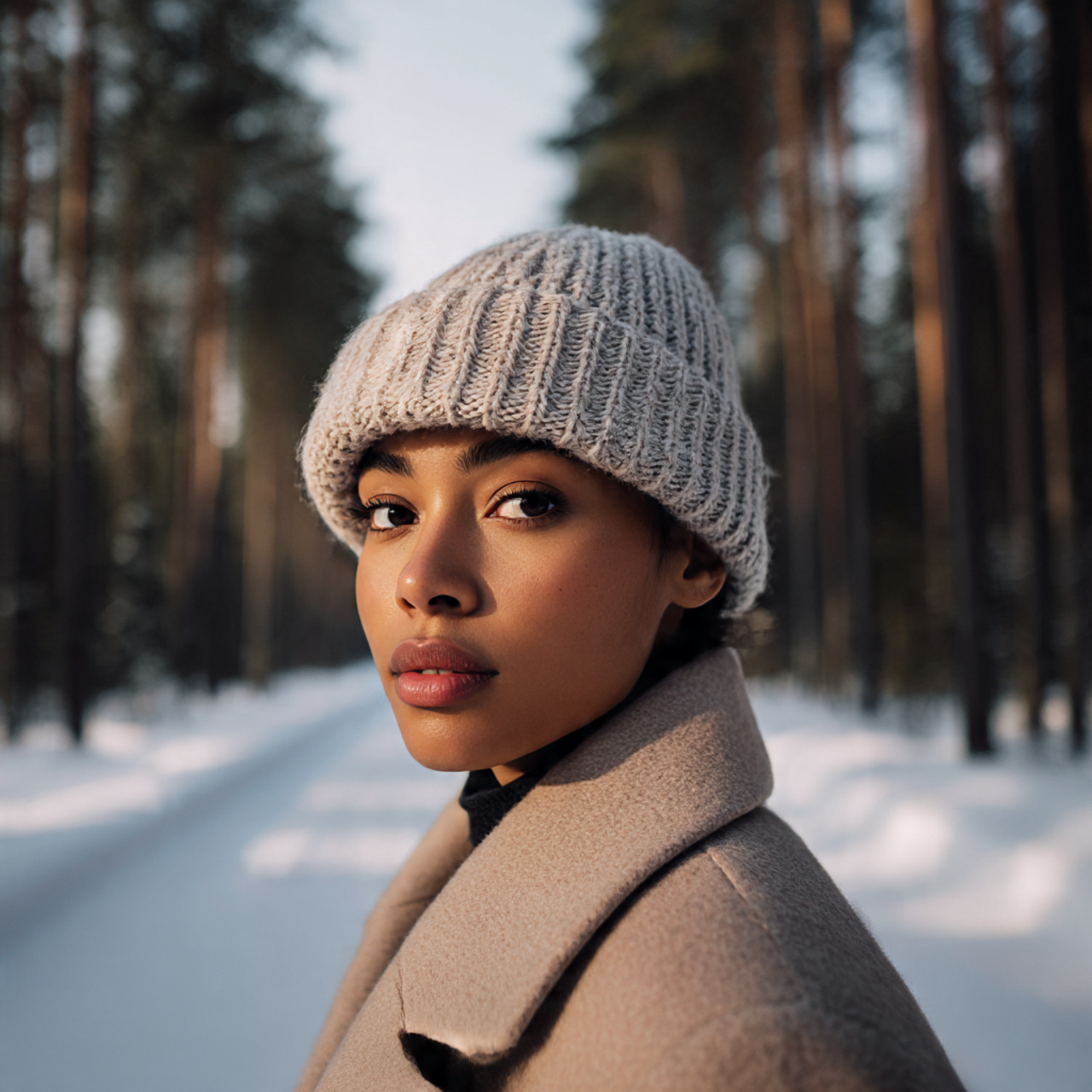
Tucking every strand inside the beanie turns the face into the entire focal point and gives the hat a sculptural quality that reads as high fashion. A fitted, non-slouchy beanie with enough interior depth is essential because a shallow or baggy hat cannot hold medium-length hair without visible lumping at the back.
Secure all hair in a flat bun at the nape and keep it close to the skull before pulling the hat down. A bun placed too loosely or too far from the head creates an obvious shape beneath the knit that disrupts the clean, contained look this style is built on.
Best for: Short to medium hair of any texture. Product: Conair Self-Grip rollers to press the bun flat against the nape before the beanie covers it. Pro tip: A satin-lined beanie from Kitsch dramatically reduces frizz and breakage at the hairline that a cotton-lined hat causes with every wear. Face shape: All face shapes. Stylist language: “Fully contained, flat bun at the nape that disappears completely beneath the hat.”
Pigtail Braids
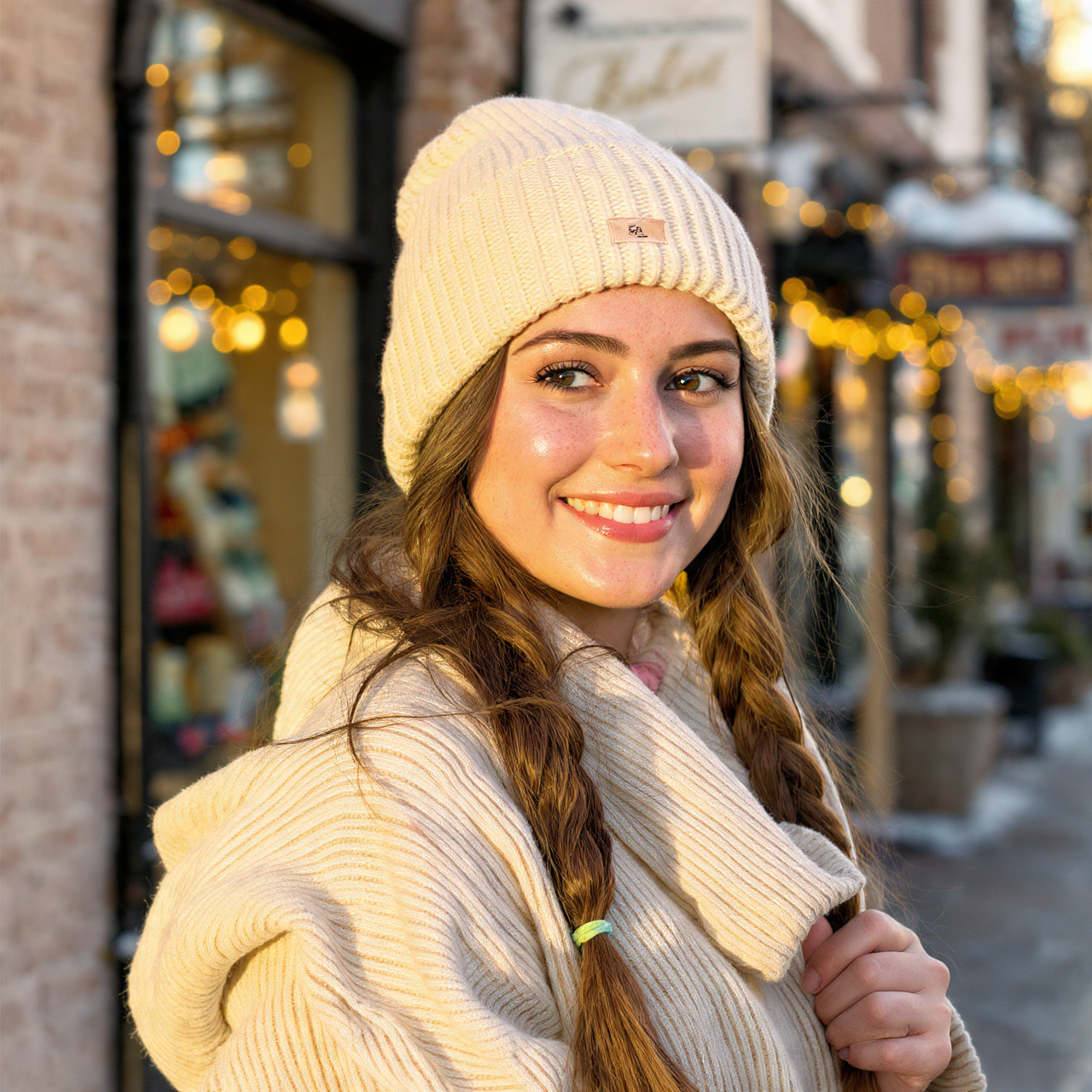
Two thick braids over the collarbone turn the beanie into a frame for one of the most recognizable silhouettes in hair. Starting the braids at the nape rather than the scalp prevents visible parting lines above the hat and keeps the crown smooth. Thick sections read as modern and deliberate, while thin pigtails starting high at the scalp read as juvenile regardless of any other styling choice.
Leave short face-framing pieces outside the hat so the forehead stays soft and the overall look does not feel completely pulled back.
Best for: Long hair of any texture. Product: Pattern Beauty Styling Cream for texture and definition throughout the braid length. Pro tip: Secure each braid with a clear Scunci elastic and loop a strand of hair over it for a clean, invisible finish at the ends. Face shape: Oblong and oval faces. Stylist language: “Two thick, loose braids starting at the nape, face-framing pieces left out in the front.”
Simple Low Ponytail
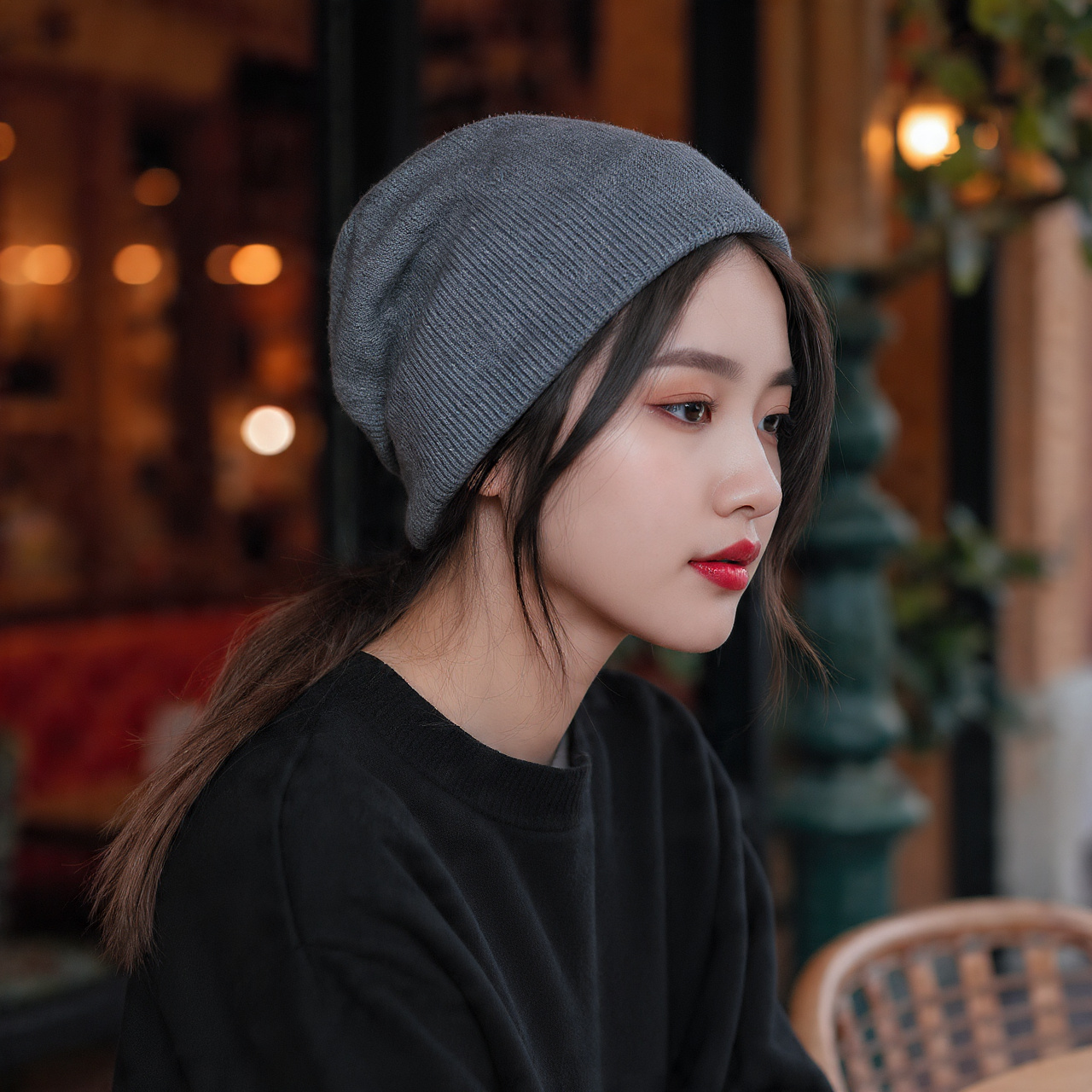
A low ponytail at the nape is the baseline against which every other beanie hairstyle can be measured. Done correctly with smooth hair, a covered elastic, and the beanie sitting just above the holder, the result works in a professional setting and on a weekend walk. The simplicity is intentional.
Place the holder one inch lower than feels natural because the hat shifts it upward once it settles into place. This single adjustment prevents the awkward gap between the beanie’s edge and the elastic that makes an otherwise clean style look unfinished.
Best for: Any hair length past the shoulder. Product: John Frieda Frizz Ease Extra Strength Serum for smoothing the top section before the hat goes on. Pro tip: Set the holder one inch lower than feels instinctive so after the beanie shifts it upward during wear, the position lands exactly where it should. Face shape: All face shapes. Stylist language: “Smooth, low ponytail at the nape with the elastic completely hidden under a wrapped strand.”
Visit Also: Y2K Black Hairstyles
Crimped Ends Beanie

Applying a crimping iron only to the lower half of the hair while leaving the top smooth creates a deliberate two-zone texture that is completely current heading into 2026. The smooth section disappears under the hat while the crimped portion emerges below the brim as a bold textural statement that contrasts sharply with the knit above.
The BaBylissPRO Nano Titanium Crimping Iron produces a tight, consistent pattern that holds through outdoor cold without needing a second pass. Thick hair holds this pattern far better than fine hair, which tends to lose the crimp in cold or humid conditions within a couple of hours.
Best for: Thick, straight to slightly wavy hair, medium to long length. Product: BaBylissPRO Nano Titanium Crimping Iron. Pro tip: Apply Eco Style Olive Oil Gel to sections before crimping so the pattern sets firmly and resists the hat’s compression at the smooth-to-crimped transition zone. Face shape: Oval and square faces. Stylist language: “Smooth roots to mid-shaft, crimped mid-shaft to ends only. Two zones, no blending.”
Half-Up Half-Down Beanie

Securing the top section under the hat while leaving the lower half completely free is the practical sweet spot for cold-weather styling. Crown frizz gets contained, length stays visible, and the overall look stays balanced rather than extreme in either direction. This approach suits more face shapes and hair textures than any other look in this list.
Style the lower half before placing the hat because reaching those sections afterward disturbs the crown arrangement every time. Pin the upper section flat first and then the hat can go on cleanly without disturbing the already-styled lower portion.
Best for: All hair lengths from chin to long. Product: Oribe Dry Texturizing Spray on the lower half for grip and natural movement. Pro tip: Cross two Conair bobby pins under the hat at the crown before placing the beanie so the upper section never bunches into a visible ridge beneath the knit. Face shape: All face shapes. Stylist language: “Top half under the beanie, lower half loose and styled straight or with loose waves.”
Loose Fishtail Braid

A fishtail braid pulled gently apart after plaiting produces a texture that looks handmade and intricate even though the technique itself is straightforward. The voluminous, expanded braid below a chunky beanie creates a striking proportion because the delicate weave contrasts directly with the heavy knit above.
The braid must start loosely from the very first strand because tight plaiting pulled apart afterward creates an uneven, messy expansion instead of a uniform, airy weave. Anchor it at the nape so the entire braid shows below the hat’s edge without any tension pulling against the hat above.
Best for: Medium to long hair, fine to medium thickness. Product: Aveda Smooth Infusion Style Prep Smoother applied before braiding to prevent frizz in the finished plait. Pro tip: Anchor the fishtail at the nape rather than the crown so the entire braid falls below the hat’s edge without tension pulling against the beanie. Face shape: Square and round faces. Stylist language: “Loose, pulled-apart fishtail starting at the nape so the whole braid shows below the hat.”
Piecey Bangs Show-Off

Separated, piece-worked bangs projecting from beneath the beanie carry more visual weight than a full fringe because each individual strand reads as deliberate. The spaces between the pieces add dimension to the forehead rather than covering it completely, creating a lighter, more textural look at the front of the face.
This works best with bangs that have been point-cut at the ends so they separate naturally. Too much product collapses the separation and produces a greasy blunt fringe instead of the intentional, rock-influenced piecey effect this style is built around.
Best for: Any hair length with textured or layered bangs. Product: R+Co Death Valley Dry Shampoo as a base and a fingertip of Kevin Murphy Night Rider matte paste for definition. Pro tip: Separate the bangs with fingertips rather than a comb so each piece holds its individual shape against the hat’s edge throughout the day. Face shape: Oval and oblong faces. Stylist language: “Point-cut bangs that fall in naturally separated pieces, not a uniform full fringe.”
Mohawk-Inspired Volume
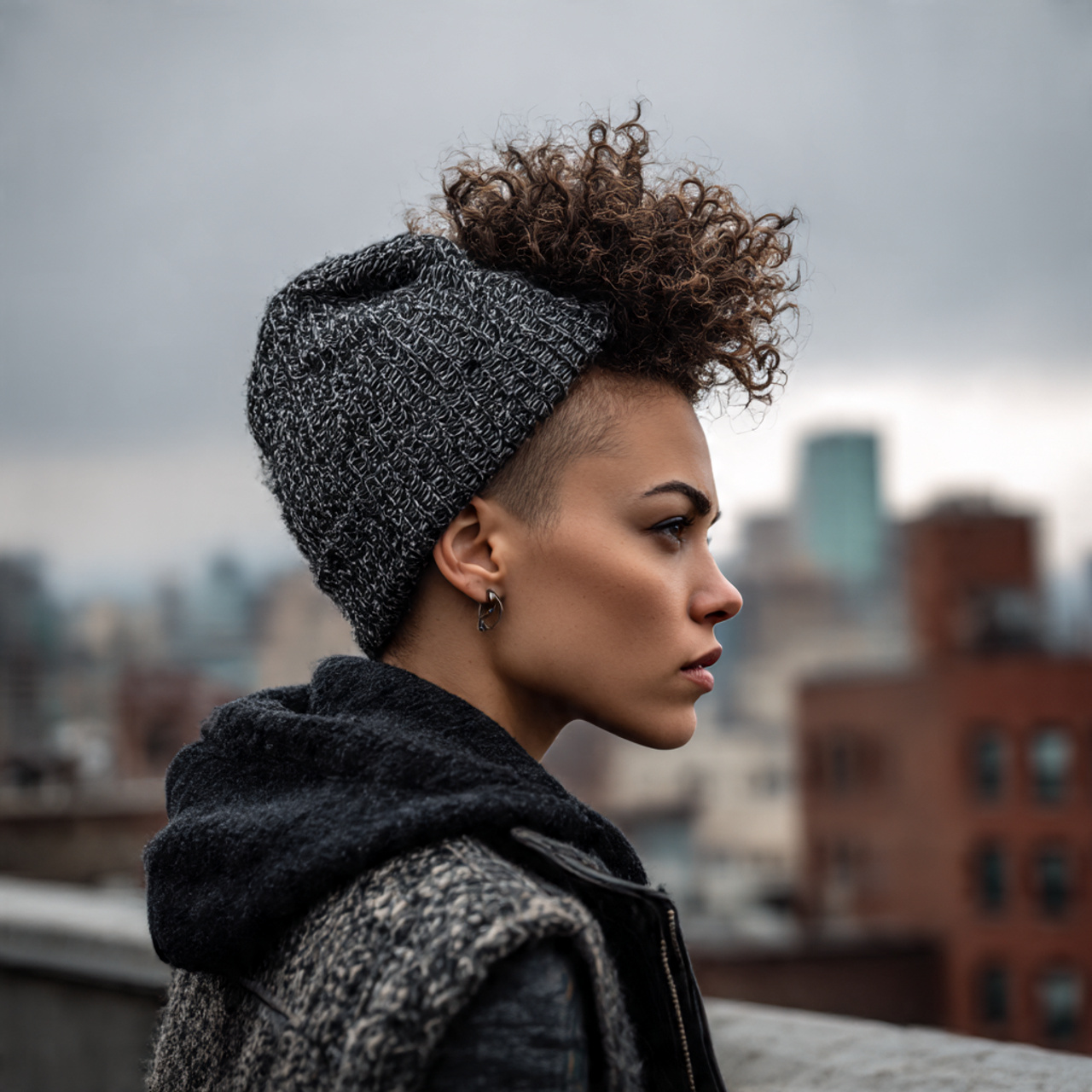
Using the beanie to flatten the sides while a strip of teased, lifted hair cascades down the center back creates a silhouette far more dramatic than any standard ponytail. The effect is subtle from the front and striking from every other angle, making this one of the best beanie hairstyles for events where photos will happen from behind or to the side.
Backcomb only the center section so the beanie can sit comfortably on the smooth sides. The sides must remain product-free and flat so the hat does not sit unevenly or tilt to one side during the event.
Best for: Medium to long hair with medium to thick density. Product: Kenra Platinum Silkening Foam before backcombing and L’Oreal Elnett Satin to set the lifted center section. Pro tip: Diffuse the backcombed center section on low heat for 60 seconds before the hat goes on so the lift is pre-set and the beanie cannot collapse it. Face shape: Round and square faces. Stylist language: “Maximum volume from crown to nape in a center strip, sides completely smooth and flat.”
Tilted Beanie Hair Reveal

Wearing the beanie at a deliberate angle exposes more hair on one side than the other and creates a dynamic, movement-forward look without any additional styling steps. The exposed side becomes the feature side, which means the texture or wave pattern that hair carries must be polished and intentional before the hat goes anywhere near the head.
A tilted hat over limp, unstyled hair on the exposed side defeats the entire approach. Whatever emerges from the lower side of the hat needs to earn the attention the angle directs toward it.
Best for: Medium to long hair of any texture. Product: Not Your Mother’s Curl Talk Frizz Control Sculpting Gel for defining the exposed side on wavy or curly hair. Pro tip: Clip the beanie in place with one bobby pin on the higher side in windy conditions so the angle holds throughout the day without shifting. Face shape: All face shapes. Stylist language: “Natural texture defined on one side so it reads as the focal point when my beanie sits at an angle.”
Wavy Layered Peek

Well-cut layers doing exactly what they were designed to do: stack, separate, and frame the body in motion. A beanie worn slightly loose over layered hair allows each tier to fall independently below the hat’s edge in a cascading effect that looks like movement frozen in place. Layers produce this result only when they are fresh and properly defined.
A dusting trim every eight weeks is not optional for this look to perform. Worn-out layers collapse into each other and lose the clear separation that makes the cascading effect work.
Best for: Medium to long layered hair with natural wave or movement. Product: Verb Ghost Oil to enhance shine between layers and prevent sections from frizzing in cold air. Pro tip: Diffuse on medium heat after washing to encourage each layer to dry separately and maintain the distinct tier effect for multiple days between washes. Face shape: Oval and heart-shaped faces. Stylist language: “Long layers with strong separation between each tier, cascading distinctly below the hat’s edge.”
Spiral Curls Beanie
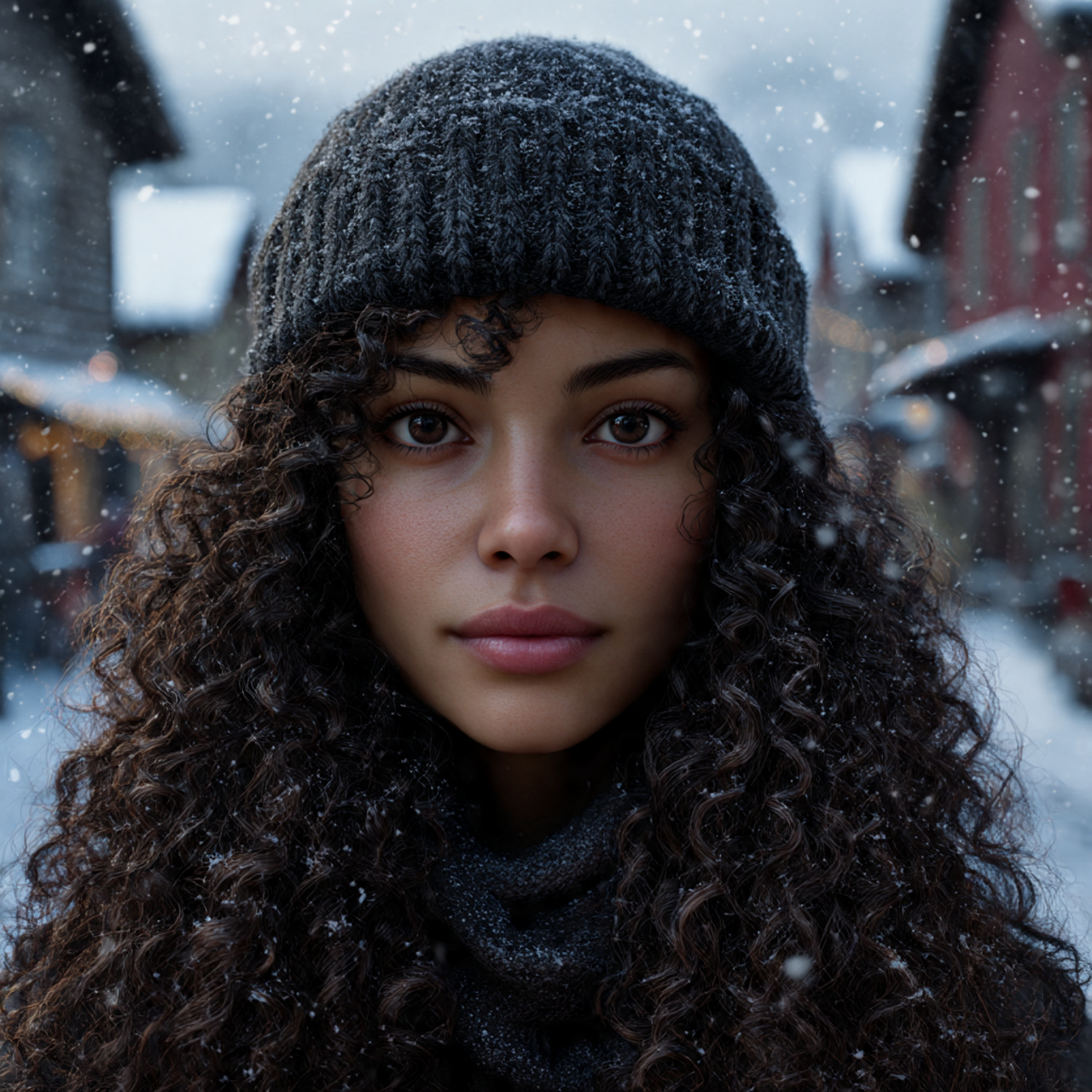
Tight, defined spiral curls emerging from under a hat create volume and personality no other texture can replicate. Even with the crown pressed flat by the hat, the circumference at the sides expands outward and downward, producing a full, bouncy halo of movement that frames the face and shoulders.
Apply Cantu Shea Butter Curl Activator Cream to soaking-wet hair, diffuse on low until fully dry, then place the beanie gently without touching the curl perimeter. Placing the hat on wet or damp curls compresses the pattern permanently and no amount of scrunching reverses it.
Best for: Naturally curly to coily hair of any length. Product: Cantu Shea Butter Curl Activator Cream and a diffuser attachment. Pro tip: Place the beanie with both hands simultaneously from the front hairline backward so the hat slides on without disrupting individual spirals at the sides and temples. Face shape: Oblong and heart-shaped faces. Stylist language: “Spirals defined and moisturized with maximum spring. No stretching or picking after they dry.”
Single Side Braid

One thick, relaxed braid swept entirely to one shoulder gives the look a quiet elegance that two braids cannot match. The single braid creates a continuous visual line from the crown to the chest that anchors the eye and lengthens the neck visually. The rest of the beanie situation stays minimal because the braid does the entire visual job on its own.
Part deeply on the side opposite the braid so the fullness of the gathered hair starts high and creates a smooth, unbroken sweep from the hat’s edge all the way down to the shoulder.
Best for: Long hair of any texture. Product: Olaplex No. 6 Bond Smoother to keep the braid smooth and prevent halo frizz that breaks the clean line. Pro tip: Braid before the beanie goes on so root tension is even and the plait sits correctly under the hat’s edge from the very start. Face shape: Round and square faces. Stylist language: “One thick, relaxed braid swept over a single shoulder with a deep part on the opposite side.”
Braided Crown Underneath
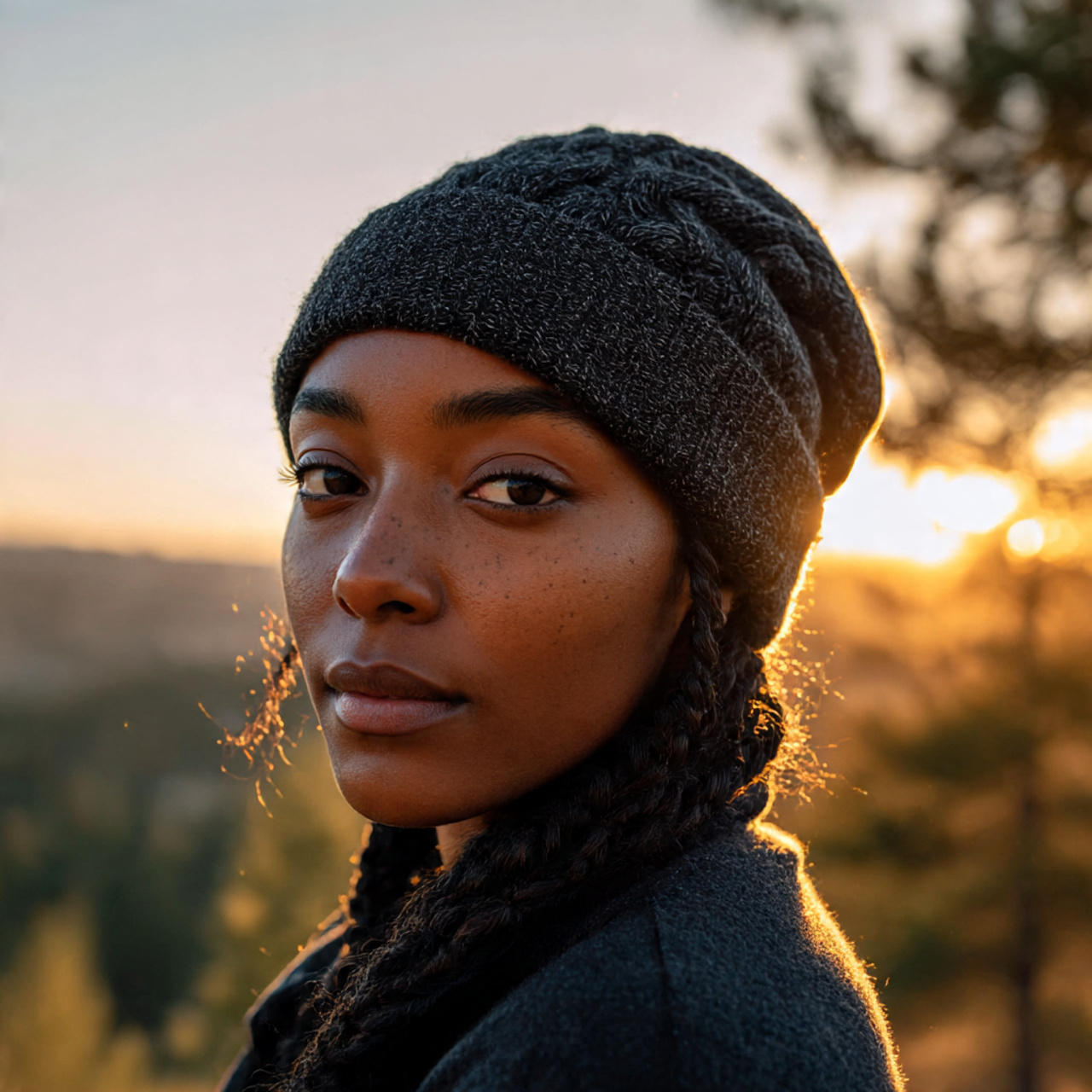
A Dutch braid woven flat to the scalp and secured at the nape before the hat goes on creates the smoothest, most secure foundation for any beanie look. The structured braid keeps every strand in place all day with no elastics showing and no strands escaping from the hat’s edge. What most guides never mention: the braid acts as a grip layer between the scalp and the hat’s interior, stopping the beanie from sliding forward all day without any pins required.
Tuck the tail under the previous braid row instead of securing it with an elastic so the hat lies perfectly flat over the hidden end.
Best for: Long, thick hair of any texture. Product: Garnier Fructis Invisible Dry Shampoo to refresh roots before braiding so the foundation looks full rather than limp. Pro tip: Tuck the braid’s tail under the previous row at the nape instead of using an elastic so the beanie lies completely flat with no bump beneath the hat. Face shape: All face shapes. Stylist language: “Dutch crown braid woven flat to the scalp from the front hairline to the nape, tail tucked under.”
Quick Comparison Table
| Style | Length | Hair Type | Maintenance | Bold Factor |
|---|---|---|---|---|
| Low Messy Bun | Medium to Long | Any | Low | ★★★☆☆ |
| Face-Framing Waves | Medium | Fine to Medium | Medium | ★★★★☆ |
| Loose Double Braids | Long | Any | Low | ★★★☆☆ |
| Voluminous Side Sweep | Medium to Long | Fine to Medium | Medium | ★★★★☆ |
| Tucked-Under Ends | Medium to Long | Straight | Low | ★★★☆☆ |
| Full Fringe Bangs | Any with Bangs | Any | Low | ★★★★☆ |
| Sleek Straight Look | Medium to Long | Straight | Medium | ★★★★☆ |
| Deep Side Part | Medium to Long | Any | Low | ★★★☆☆ |
| Curly Volume Overflow | Any | Curly/Coily | Low | ★★★★★ |
| Chin-Length Bob | Chin to Shoulder | Straight to Wavy | Low | ★★★☆☆ |
| Asymmetrical Tuck | Medium to Long | Any | Medium | ★★★★☆ |
| Boho Headband Braid | Any with Layers | Fine to Medium | Medium | ★★★★☆ |
| Half-Up Pony Exit | Long | Thick | Low | ★★★☆☆ |
| Textured Beach Waves | Shoulder to Long | Wavy | Low | ★★★★☆ |
| Hidden Tresses | Short to Medium | Any | Medium | ★★★☆☆ |
| Pigtail Braids | Long | Any | Low | ★★★★☆ |
| Simple Low Ponytail | Shoulder Plus | Any | Low | ★★☆☆☆ |
| Crimped Ends | Medium to Long | Thick/Straight | High | ★★★★★ |
| Half-Up Half-Down | Chin to Long | All | Low | ★★★☆☆ |
| Loose Fishtail Braid | Medium to Long | Fine to Medium | Medium | ★★★★☆ |
| Piecey Bangs | Any with Bangs | Any | Low | ★★★★☆ |
| Mohawk-Inspired Volume | Medium to Long | Medium to Thick | High | ★★★★★ |
| Tilted Beanie Reveal | Medium to Long | Any | Low | ★★★☆☆ |
| Wavy Layered Peek | Medium to Long | Layered/Wavy | Low | ★★★★☆ |
| Spiral Curls | Any | Curly/Coily | Low | ★★★★★ |
| Single Side Braid | Long | Any | Low | ★★★☆☆ |
| Braided Crown Under | Long | Thick | Medium | ★★★★☆ |
Frequently Asked Questions
What are the best beanie hairstyles for thick, long hair? The half-up pony exit and the braided crown underneath are the strongest options for thick, long hair because both distribute the hair’s weight evenly under the hat. Either approach eliminates the lump at the back that thick-haired people deal with when tucking everything in without a plan.
How do I keep my beanie from sliding forward when my hair is down? A light mist of dry shampoo on the crown before placing the hat gives the scalp enough texture to grip the beanie’s interior and prevent forward sliding. A Dutch braid foundation under the hat works even better because the raised braid rows create a permanent grip layer between the scalp and the knit.
Can I wear a beanie over a fresh blowout without ruining it? Yes, but wait until the hair has fully cooled before placing the hat. Warm hair sets to whatever shape it rests in, so a beanie placed over freshly blown-out hair creates a crown dent that no amount of brushing fully removes afterward.
What type of beanie suits curly hair best? A slouchy or oversized beanie works best with curly hair because it rests at the crown without pressing against the curl perimeter at the sides. Fitted ribbed beanies compress the circumference of the curl pattern and flatten exactly the volume that makes curly beanie looks their most striking.
How do I prevent static when taking my beanie off? Run a few drops of Moroccanoil Treatment through the mid-lengths and ends before putting the beanie on because the oil creates a barrier that reduces friction-generated static throughout the day. A dryer sheet lightly smoothed over the lengths immediately after removing the hat neutralizes any remaining static instantly.
Final Thoughts
Beanie hairstyles are not an afterthought. Every idea in this list proves that the hair showing around a hat deserves as much thought as the rest of the outfit. The right choice comes down to your texture, your face shape, and how much time you realistically have each morning before the door opens.
Start with one or two looks from this list this week rather than attempting all 27 at once. Real confidence with winter hair comes from repeating a few techniques until they feel automatic, not from trying something different every single day and never getting good at any of them.
The detail most people miss is the beanie’s lining. A cotton-lined hat pulls moisture from the hair shaft with every single wear, causing dryness, frizz, and breakage at the hairline over time. Switching to a satin-lined option eliminates most cold-weather hair damage before it starts, and that one change alone improves every style on this list.
Your best winter hair day ever is one beanie, one technique, and one good product away.
Save this to your Pinterest boards and share it with someone who needs a winter hair upgrade.