25 Flowy Haircut Techniques That Create Effortless Natural Movement
You finally find photos of the perfect flowy haircut, bring them to your appointment, explain exactly what you want, and leave the salon thinking this time it worked. Three days later, the hair is flat, stiff, and nothing like what you pictured. That cycle feels personal but it is not.
More people than you would think repeat that same experience every few months. The problem is never the hair itself. It is that most cuts are designed to look good in the salon chair, not to move naturally once the hair is washed, dried, and left alone in the real world.
The real reason most flowy cuts fail at home comes down to one issue: the structure was not built for movement from the inside. No styling product, no technique, and no amount of time with a round brush can replace a cut that was engineered to move before any tools ever touched it.
After years of studying what makes hair flow and what stops it, one pattern shows up in every successful case. Flow is a cutting decision, not a styling decision. A haircut built correctly does not need tools to look alive. It needs the scissors to have done the right things in the right places first.
This guide walks through every cutting and finishing technique that creates true natural movement. From the foundational weight removal that makes the whole thing work to the finishing details that separate a great result from a good one, every method in this list has a specific job in the final look.
If you have been searching for a flowy haircut that moves all day with little effort, this is the complete breakdown you need. By the end, you will know exactly what each technique does, which products support it, and the exact words to say to your stylist to get it right the first time.
The most important rule for a flowy haircut is that movement must be engineered into the structure of the cut before styling ever begins. In 2025, the surge toward wash and go results has pushed the best salons firmly toward structural cutting over product-reliant finishes. If morning heat tools are still required to create flow, the cut itself is the place to start over.
The Seamless Feathering Technique
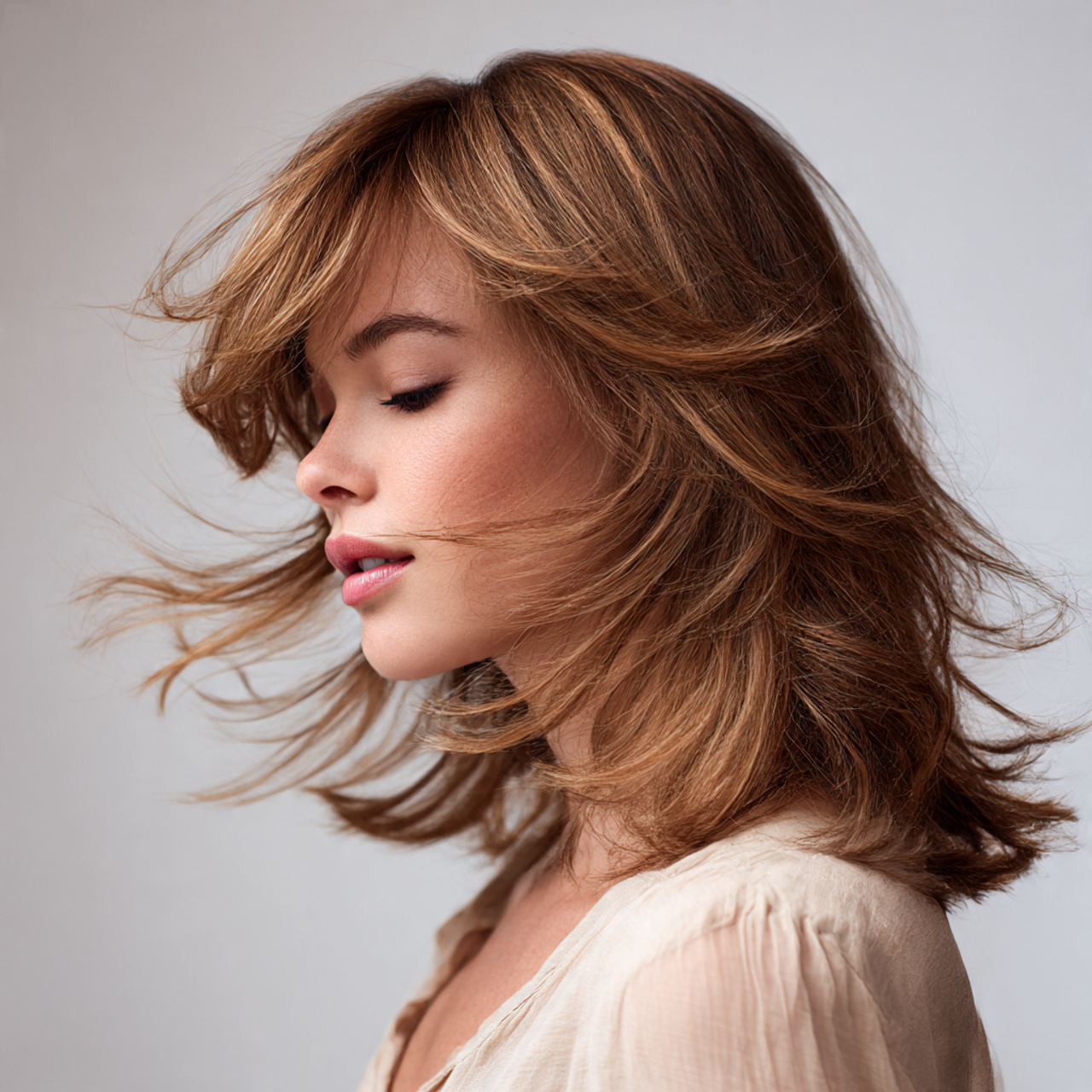
Feathered ends help the bottom of the haircut float outward rather than hanging in a heavy curtain of blunt weight. The ends are tapered lightly so each strand settles at a slightly different point, creating an airy, graduated finish that moves with every step. Stylists trained in the Vidal Sassoon cutting method use feathering specifically to remove bulk from the perimeter without losing visual length, which is why it remains one of the most trusted finishing techniques in professional cutting.
Best for: Thick to medium density hair that sits heavy and stiff at the ends Product: Redken All Soft Mega Curls Shampoo to reduce tension and soften the ends before the cut Pro tip: Let the ends air dry completely before applying any product after a feathering cut so the tapering stays light and visible. Face shape: Oval and heart Stylist language: “I want feathered ends through the perimeter to soften the bottom finish and add natural movement to the tips.”
Removing Hidden Weight Inside the Hair
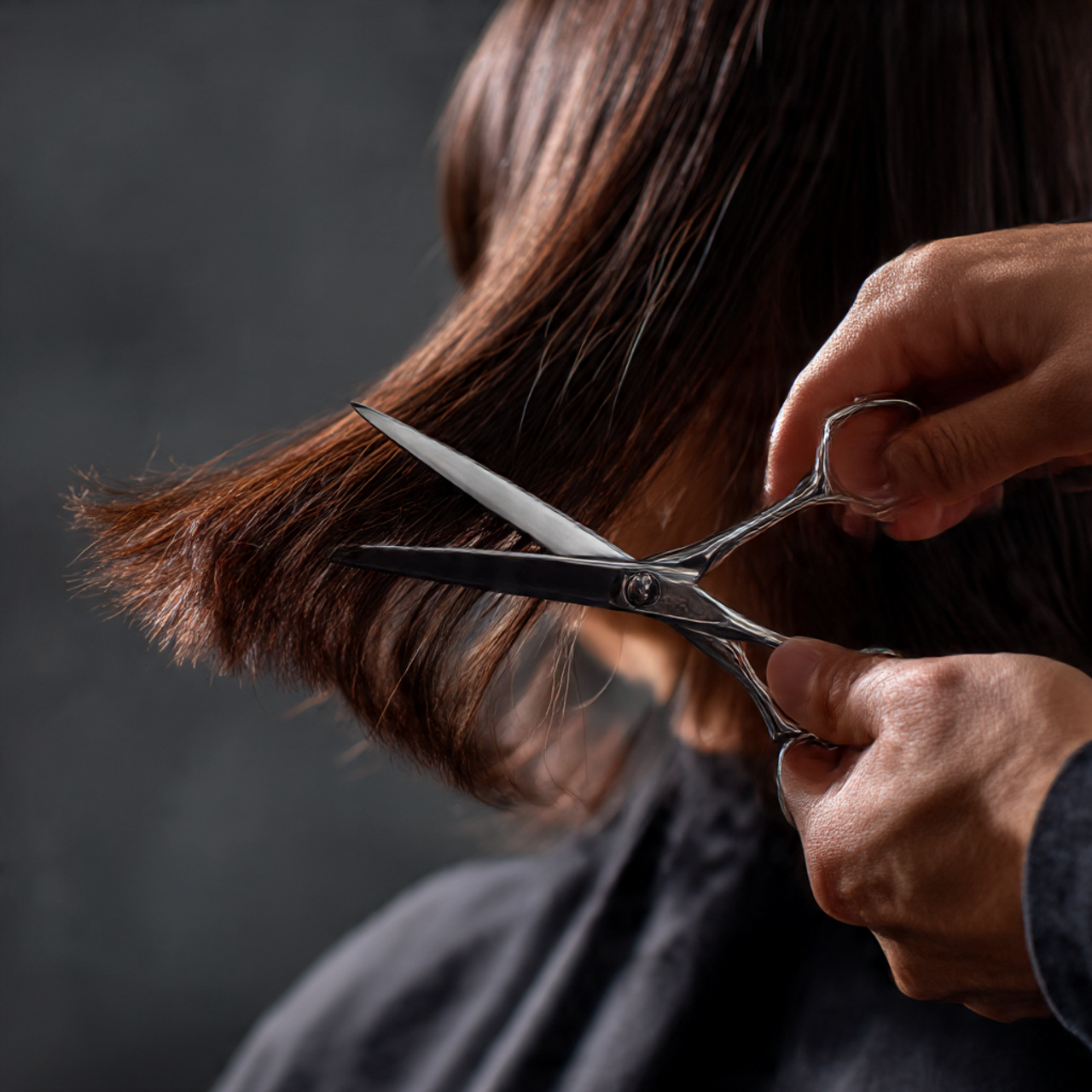
Hidden density is one of the most overlooked killers of movement. When the inside of the cut carries too much bulk, the hair refuses to swing or bounce regardless of what is applied to the surface. Session stylists who work on editorial print and commercial shoots rely on internal weight removal using scissors rather than thinning shears because it releases density while keeping the outside layer completely smooth and undamaged.
Best for: Long or medium hair that looks full but feels weighed down and moves poorly Product: Kevin Murphy Young.Again Wash and Rinse Set to help the hair feel lighter before the appointment Pro tip: Ask specifically for internal weight removal using scissors only, not thinning shears, so the surface stays smooth throughout. Face shape: Square and round Stylist language: “I need the inside of the cut lightened without touching the surface layer. Please no thinning shears on the top section.”
Soft Face-Framing for Natural Flow
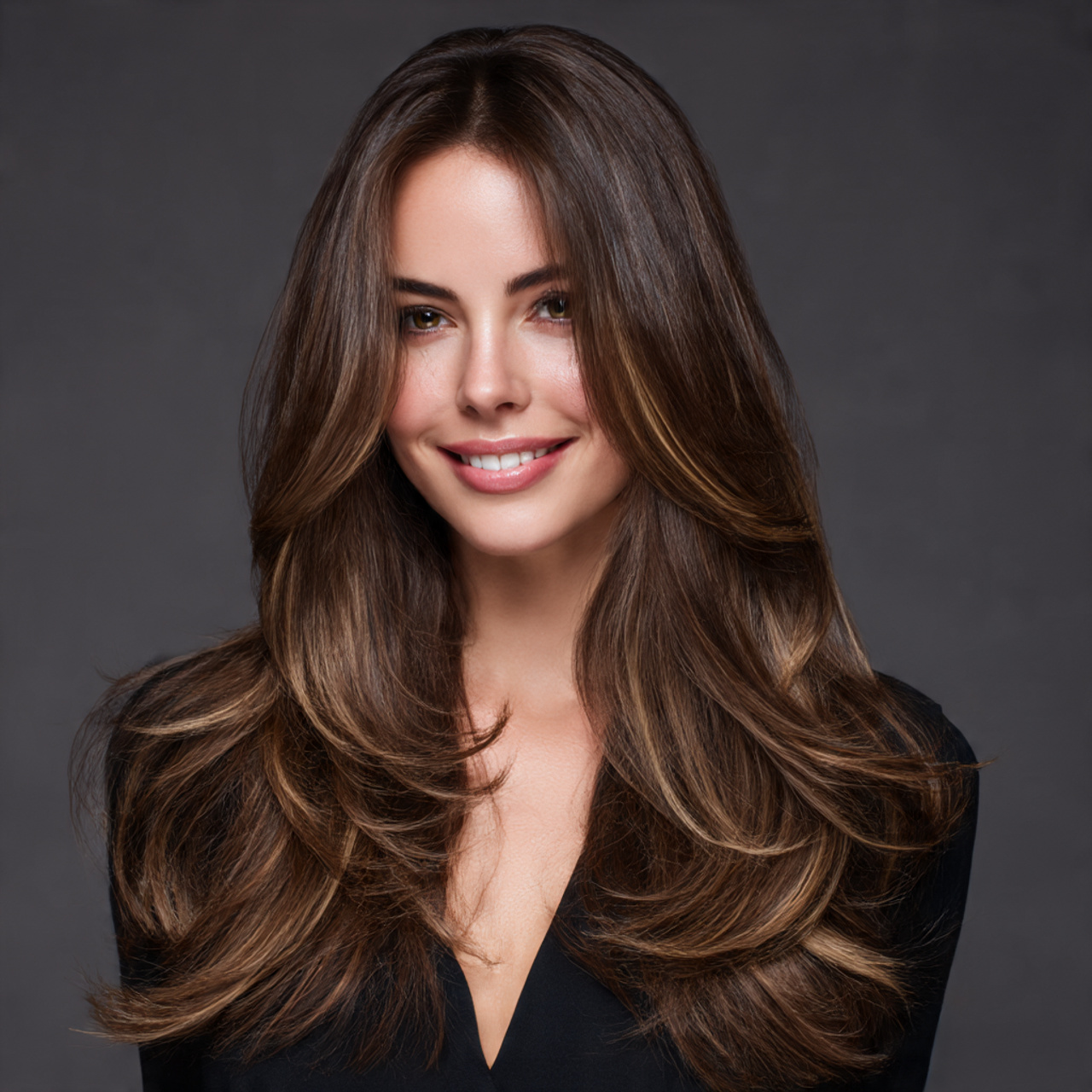
The pieces around the face control the visual direction of the entire style. When face-framing is too heavy or too sharp, it drags the whole look downward and makes the hair appear stiffer than it is. When it is cut at a gentle angle that mirrors the cheekbone and jawline, the rest of the hair follows naturally, creating the impression of a cut that settles perfectly into place without any intervention from tools.
Best for: Anyone who wears their hair down, half up, or in relaxed loose styles regularly Product: Oribe Grandiose Hair Plumping Mousse on face-framing pieces before blow-drying to support the soft angle Pro tip: Ask for your face-framing cut at a slight angle rather than straight across to create a more natural and flattering fall. Face shape: Heart and oval especially, though it visually lifts all shapes Stylist language: “Please soften my face-framing and cut it at an angle that mirrors my jawline for a more natural fall through the front.”
Point Cutting for Soft Edges
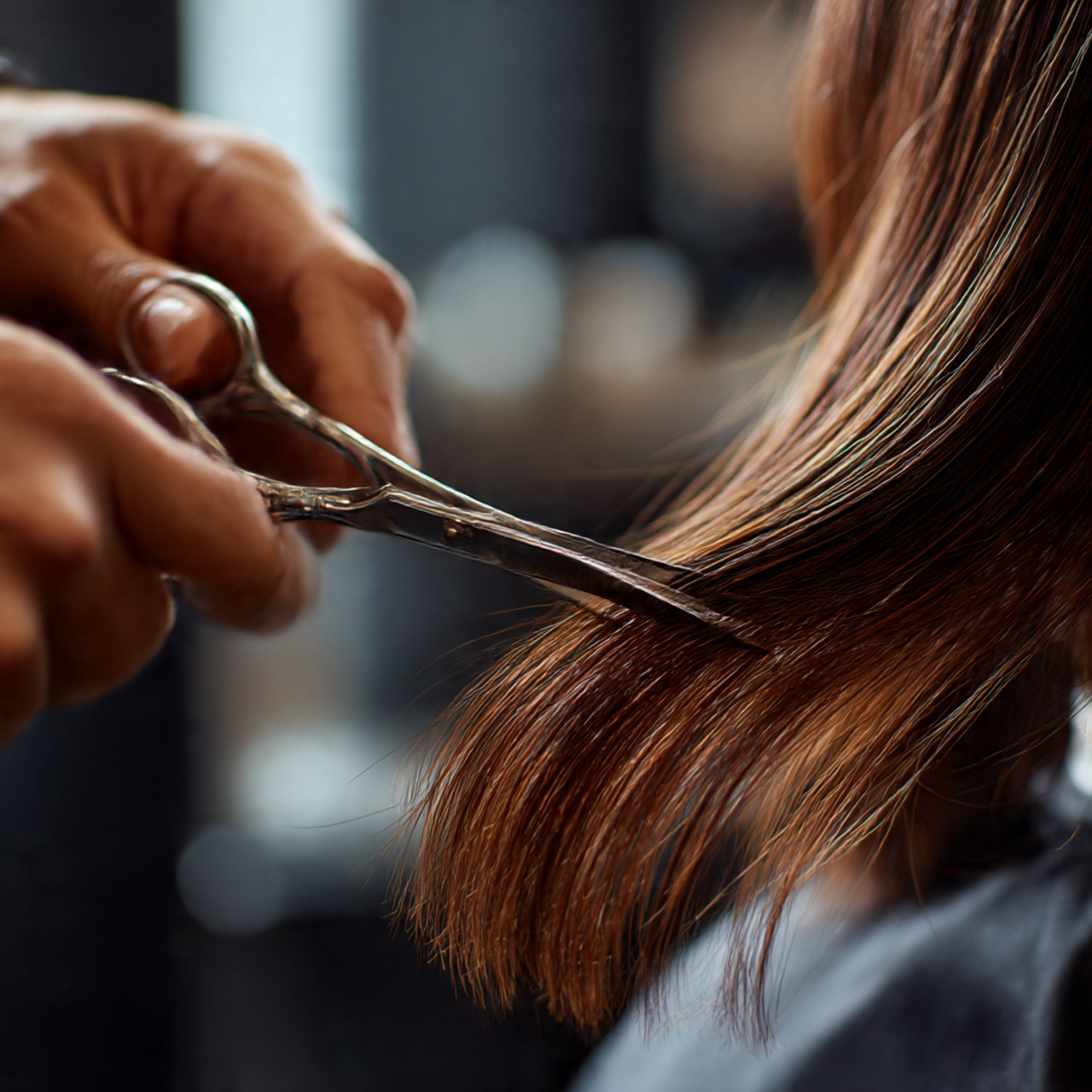
A blunt finish at the end of a cut is the fastest way to make hair look and feel heavy. Point cutting breaks the straight perimeter line by snipping into the ends at a downward angle, which allows each strand to settle at a slightly different level and move independently of the ones beside it. The difference between a blunt perimeter and a point-cut finish is visible immediately, and the effect stays through multiple washes when the depth of the cuts is calibrated correctly.
Best for: Fine to medium hair that clumps at the ends or holds a visible, stiff perimeter line Product: Bumble and bumble Texture Spray to enhance the separated, natural finish after point cutting Pro tip: Ask your stylist to cut deeper than usual into the ends so the softness lasts through several washes before needing a refresh. Face shape: Oval and long Stylist language: “Please point cut throughout the ends, not only at the very bottom, so the whole perimeter has soft movement.”
Gradual Layers That Stay Hidden
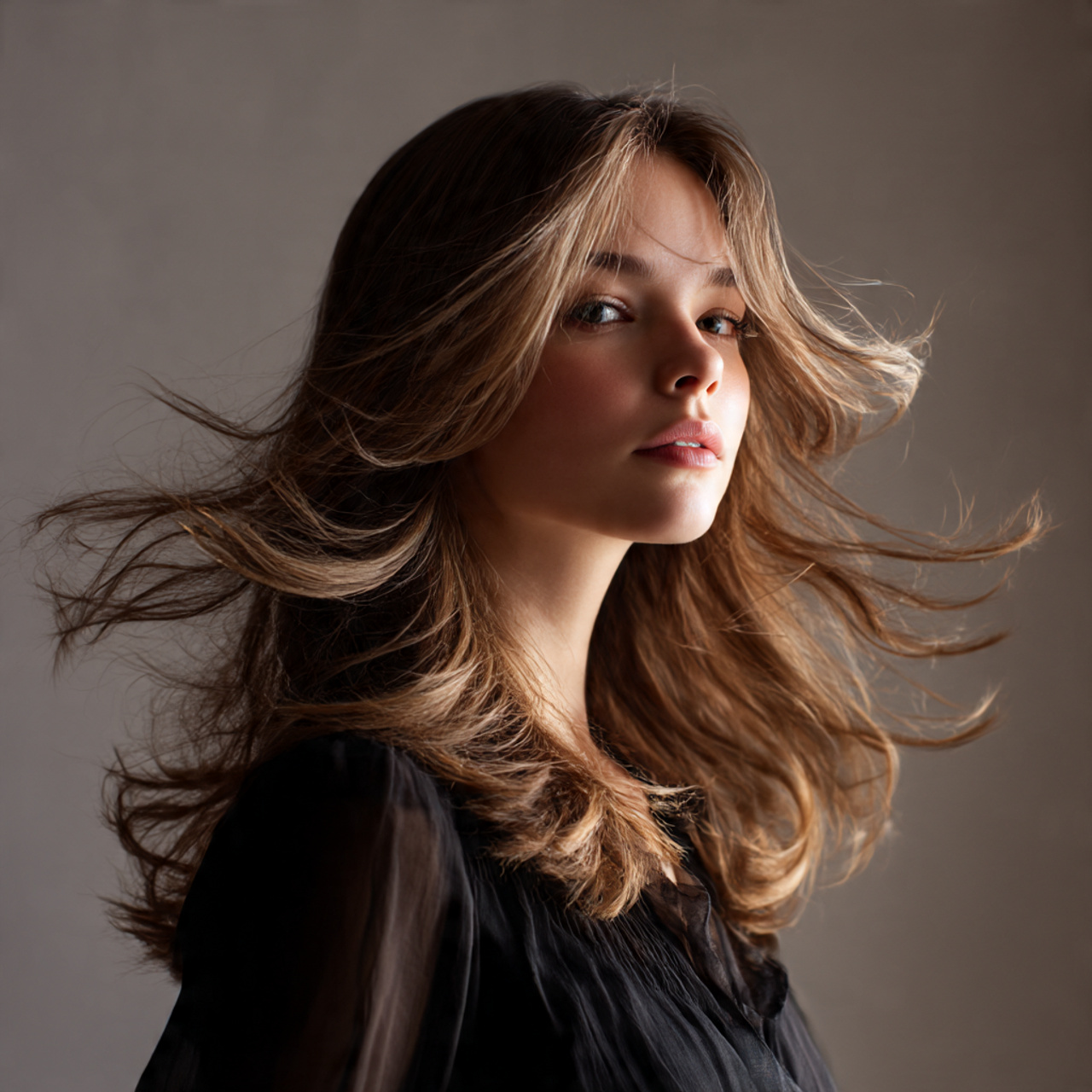
The gold standard for flowy haircuts is a layer system that delivers movement without ever looking choppy or disconnected at the surface. Gradual layers start long near the top and blend slowly downward without creating a visible line between each length. The result feels like one unified shape that moves in every direction simultaneously, which is the defining quality of a truly well-built flowy haircut.
Best for: Long hair that wants movement and body without losing visual density Product: DevaCurl Melt Into Moisture Butter Cream for extra slip when detangling freshly layered hair Pro tip: Use your fingers to comb through the layers while drying instead of a brush so the gradual blend stays intact and natural. Face shape: Long and oval Stylist language: “I want gradual layers blended so invisibly that I feel the movement but cannot see any hard line between lengths.”
Tapered Mid-Length for Shoulder Movement

Shoulder-length hair has a well-known tendency to collect at the shoulder and resist falling past it. The shoulder acts as a weight point, and when there is too much density at that level the hair flips outward or clumps into a boxy shape the client never asked for. A light taper through the mid length section releases this tension and lets the hair curve inward or fall cleanly past the collarbone the way a flowy cut is supposed to behave.
Best for: Shoulder-length and collarbone-length cuts that flip outward or box at the ends Product: Redken One United All-In-One Multi-Benefit Leave-In Treatment applied to mid lengths before drying Pro tip: Ask for the taper specifically at the point where your hair meets your shoulder for the most targeted and effective movement improvement. Face shape: Square and oval Stylist language: “Please add a slight taper at the mid length where the hair sits on my shoulder so it falls past cleanly instead of flipping outward.”
Slide Cutting for Smooth Flow
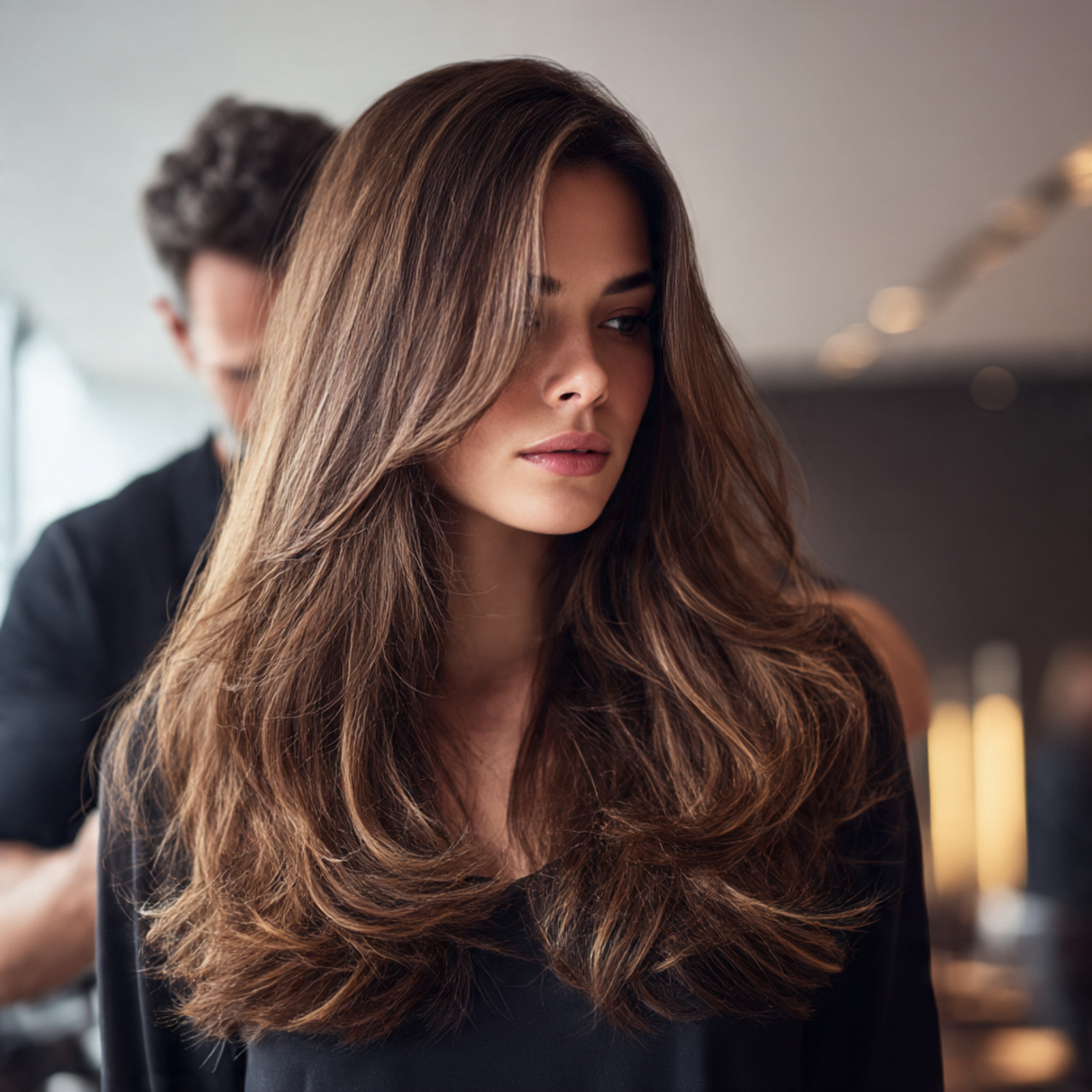
Slide cutting is a technique where the scissors are opened slightly and moved down the strand rather than staying stationary for each cut, creating a smooth and continuous taper along the full length of the hair. This changes how the hair moves past itself and refines the texture from the interior of each section outward. Japanese steel shears from brands like Hikari or Kasho are required for this technique because dull blades will damage the strand during the gliding motion rather than refine it.
Best for: Dense or resistant straight hair that feels stiff even after regular professional cuts Product: Olaplex No. 6 Bond Smoother as a leave-in after the appointment to calm any surface frizz created by the new texture Pro tip: Ask your stylist whether they use slide cutting in their finishing work and request it specifically for your mid lengths and ends. Face shape: Round and heart Stylist language: “I want slide cutting through my mid lengths and ends to smooth the flow without removing bulk or volume.”
Soft Razor Ends for Straight Hair
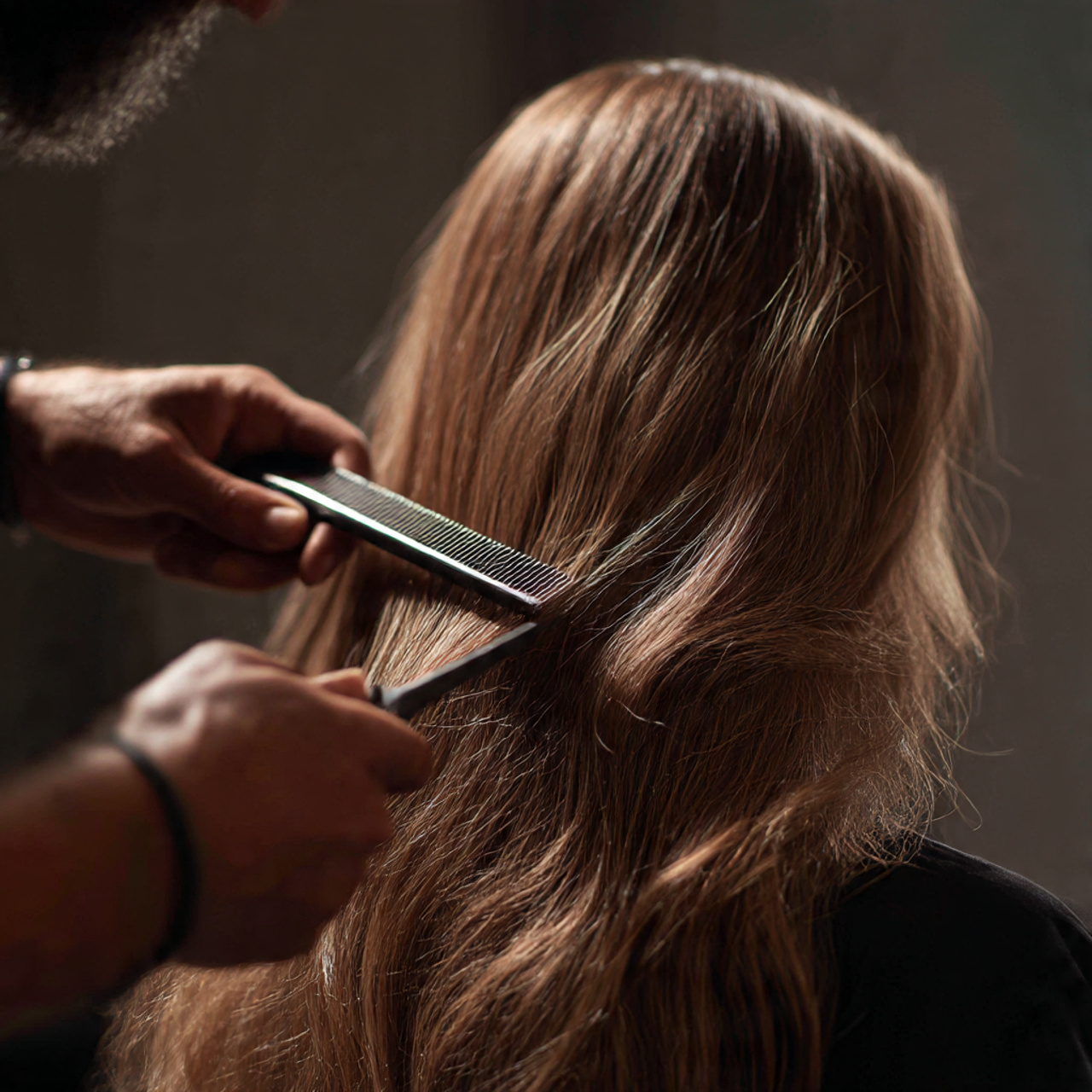
Thick straight hair often ends in a heavy visual block that no amount of product can soften once you leave the salon. A razor used carefully on just the very tips creates a natural, slightly frayed finish where each strand settles independently instead of clumping together at the bottom. Stylists at editorial houses like Warren Tricomi use this finishing approach on straight-haired clients specifically because it produces a result that photographs naturally and effortlessly without any product.
Best for: Thick or coarse straight hair that hangs in a visually heavy, unmoving block Product: Bumble and bumble Surf Spray to activate the separated texture after the razor-cut finish Pro tip: After styling, scrunch the ends upward once with your palm to activate the razor-cut separation for a more natural and effortless look. Face shape: Oval and square Stylist language: “Please use a razor lightly on the very ends only, not the mid shaft, to soften the bottom finish without thinning the length.”
Weight Balance Through Cutting Angle
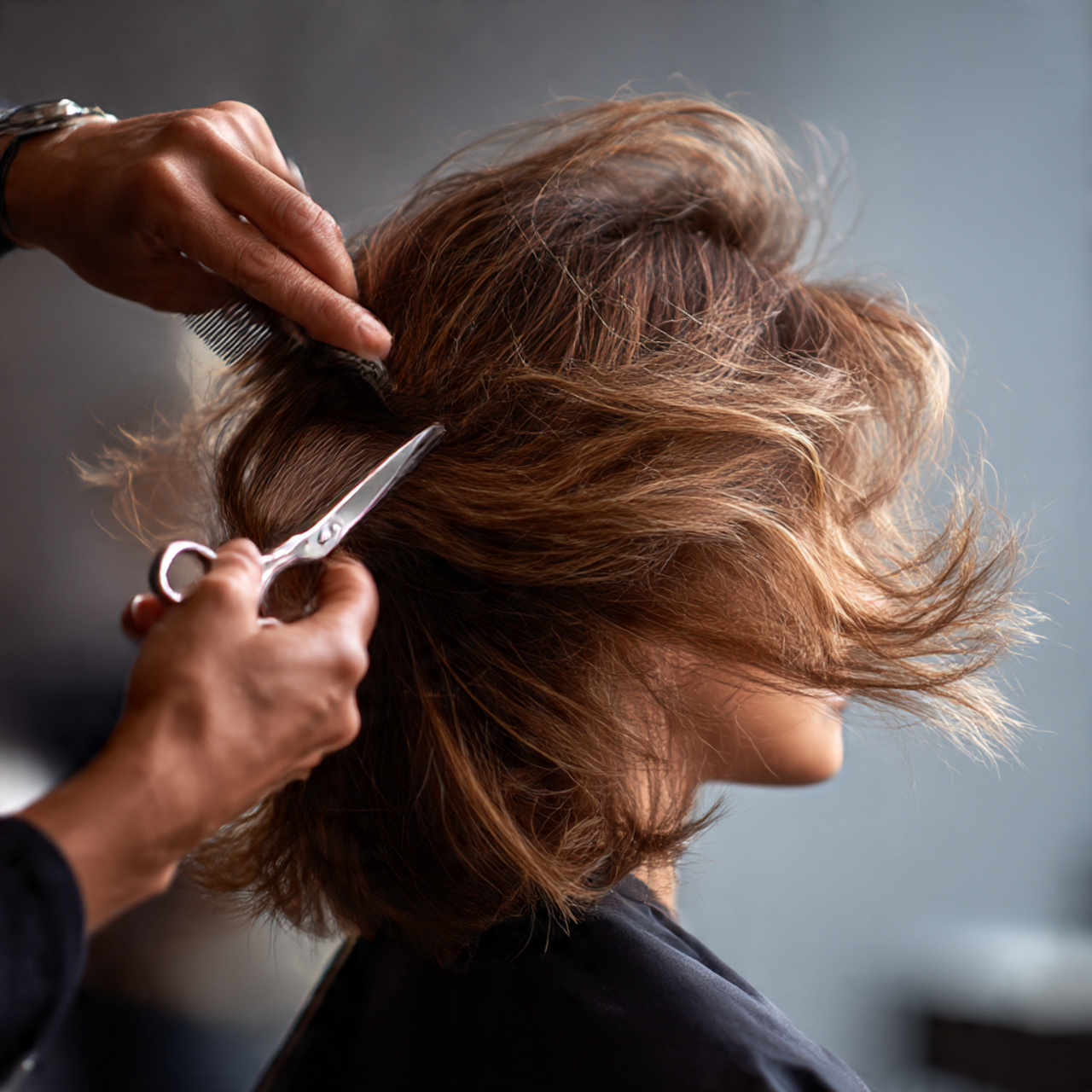
The elevation angle the stylist holds during each cut determines where the hair will ultimately sit and how it behaves when it dries. High elevation removes interior weight and lifts the top section. Low elevation preserves fullness and keeps the shape round and dense at the perimeter. Understanding this one variable means you can walk into any appointment, from a local booking to a cutting program through Wella Academy, and communicate exactly what the cut needs to do.
Best for: Anyone correcting a triangle-shaped or pyramid-shaped haircut they have been living with too long Product: Kenra Platinum Silkening Mist on freshly blow-dried hair to reveal how the new angle performs naturally Pro tip: Before the cut begins, tell your stylist whether you want lift at the crown or fullness at the ends and ask them to describe the angle they will use for each zone. Face shape: Square especially, as higher elevation through the crown softens the jaw Stylist language: “I want higher elevation through the crown to remove inside weight and lower elevation through the perimeter to keep the shape full.”
Working With Natural Waves

Cutting wavy hair the same way as straight hair is a structural mismatch that consistently ends in puffiness, frizz, or a total loss of wave definition. Each wave has a direction and a curl point, and layers placed to follow that pattern allow every wave to form, move, and settle on its own. Stylists trained in the DevaCurl cutting method or the Ouidad Carve and Slice technique are specifically taught to read the wave pattern before the scissors ever touch the hair, which is what separates wave-specialized cutting from standard layering.
Best for: Wavy hair that puffs rather than flows or loses its definition by midday Product: DevaCurl Arc Angel Defining Gel to scrunch in and seal the wave pattern after the cut Pro tip: Arrive at your appointment with your natural wave pattern fully formed so your stylist can cut each wave as it naturally sits and moves. Face shape: Round and heart Stylist language: “Please cut my waves while they are dry and in their natural pattern so you can work with each individual wave.”
Invisible Layers for Hidden Lift
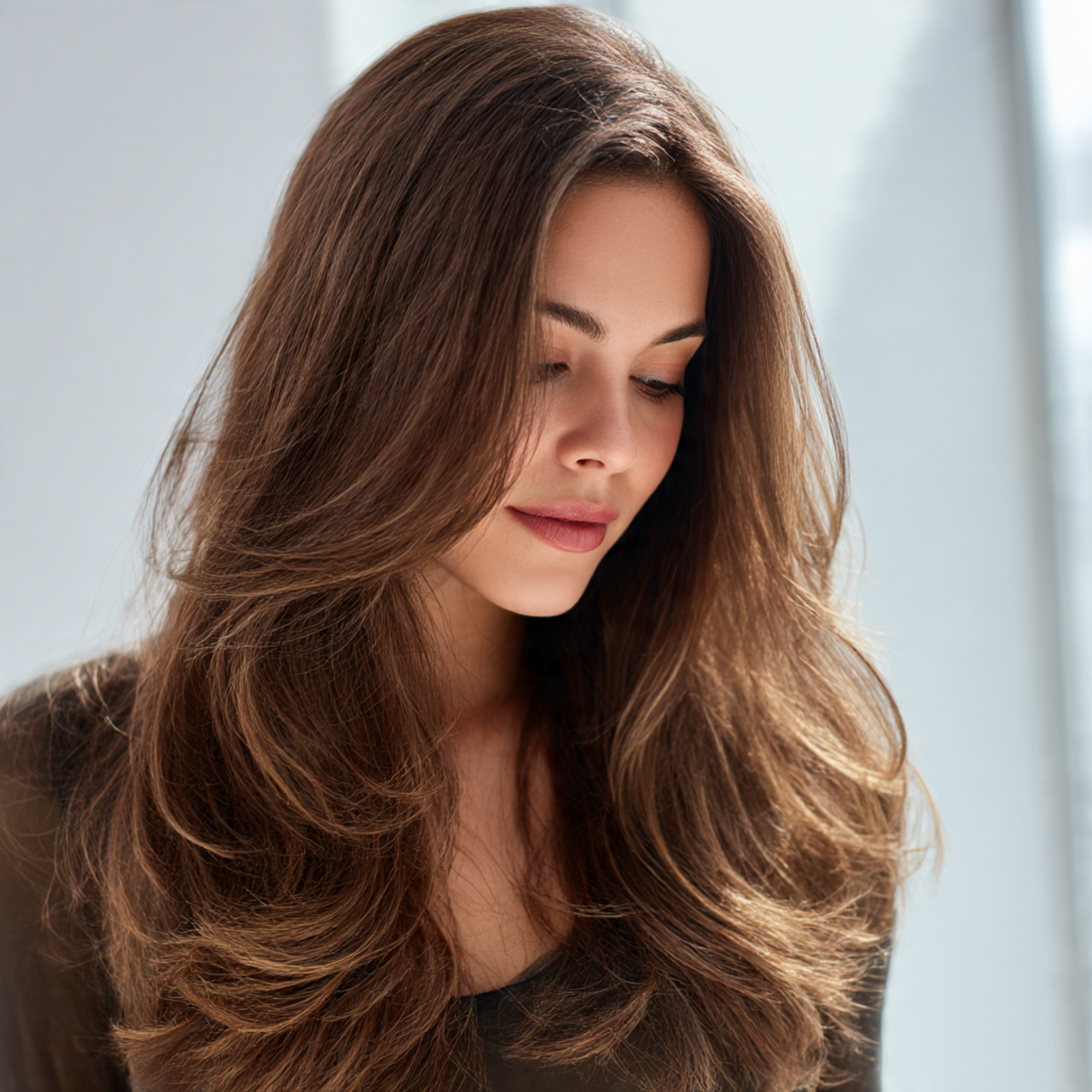
Invisible layers are placed high near the crown and blended with such precision that the surface of the hair looks completely smooth while the structure underneath creates lift and movement the density alone would never allow. This advanced technique is used regularly at high-end salons in New York and Los Angeles where clients with long, heavy hair want a finish that feels weightless and moves freely. The Oribe product line was built in part around maintaining exactly this kind of airy, lifted result at home between appointments.
Best for: Long hair that goes flat at the crown despite having good overall density and length Product: Oribe Maximista Thickening Spray applied to the roots before blow-drying to hold the crown lift created by invisible layers Pro tip: Ask your stylist to check the invisible layers while your hair is still wet to confirm the blend is seamless before the dryer touches it. Face shape: Long and oval Stylist language: “I want invisible layers at the crown for lift only. Please keep the surface completely smooth with no visible layering anywhere.”
Root Support Layers for Flat Hair
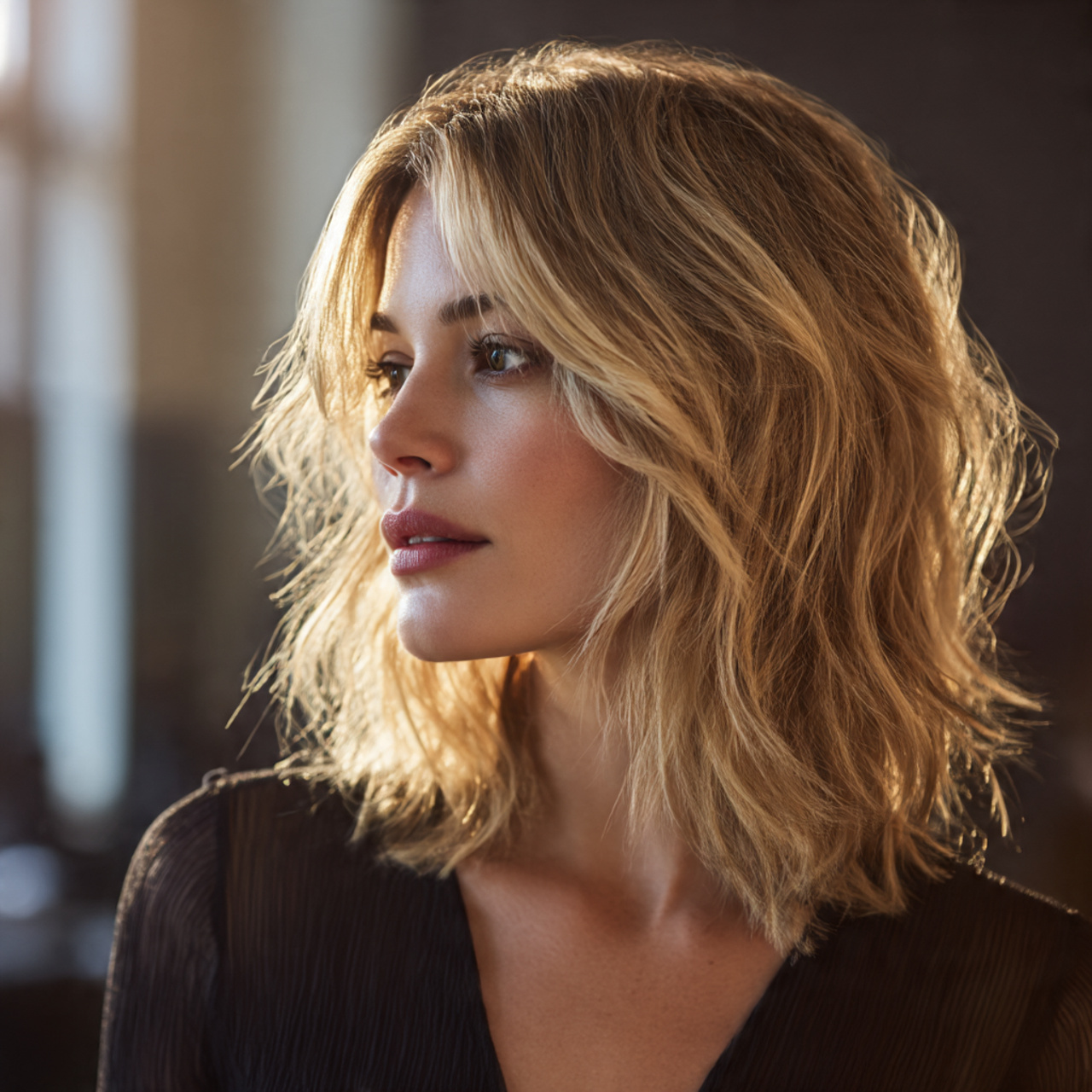
Some hair lies flat against the scalp regardless of how much product or heat is applied to lift it. Root support layers address this directly by placing slightly shorter pieces at the very top of the crown section, which creates airspace under the top layer and produces a natural lift that holds through the day without any tools. This technique is covered in Redken Education advanced cutting workshops as one of the primary structural solutions for resistant, stick straight hair that no amount of product volume can fix.
Best for: Fine or stick straight hair that falls completely flat against the scalp by midmorning Product: Redken Triple Take 32 Extreme High Hold Hairspray at the roots to lock in the lift created by root support layers Pro tip: After blow-drying, flip your head upside down for 30 seconds and then set the root zone only with a light hold spray to lock in the lift. Face shape: Round, as root lift creates the visual illusion of added vertical length Stylist language: “I need root support layers at the crown only, blended completely so they are invisible from the surface.”
Deep Point Cutting for Thick Hair
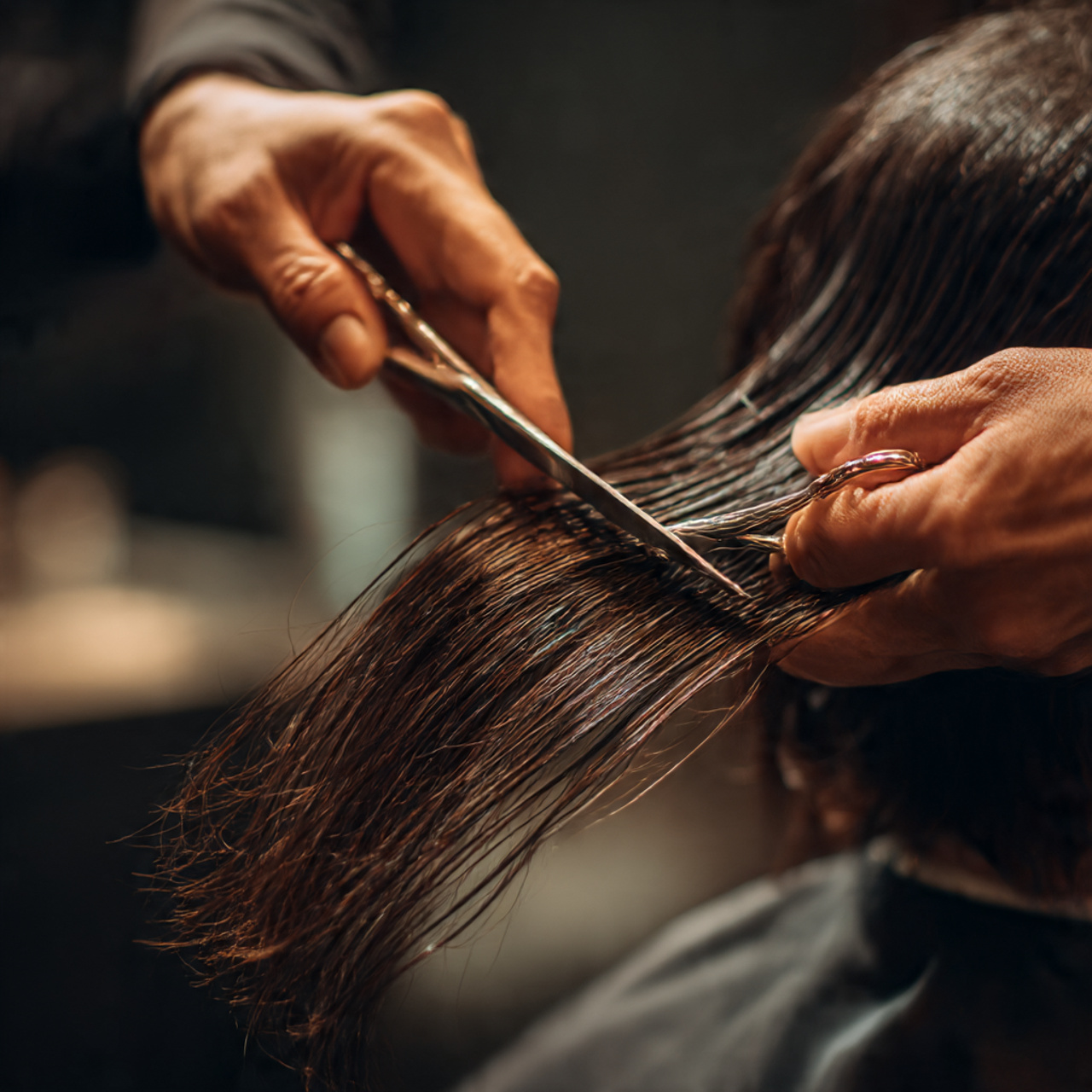
Standard point cutting barely penetrates a thick section, which means the effect fades quickly and the hair returns to its dense, clumped behavior within days of the appointment. Deep point cutting goes further into each cluster before snipping, removing bulk from the interior of the section and creating natural separation that allows the hair to move past itself freely. Session stylists working on commercial and editorial productions rely on this technique specifically when thick hair needs to flow and separate realistically in front of a camera.
Best for: Very thick hair that refuses to separate or move with standard cutting techniques Product: Kevin Murphy Body.Builder Volumising Shampoo to reduce buildup before the cut so the deep point work achieves its full effect Pro tip: Ask your stylist to go twice as deep through the ends as they normally would for results that stay visibly active much longer between appointments. Face shape: Square and oval Stylist language: “My hair is very thick. I need deep point cutting through the ends and into the layers to break up the density properly.”
Fine Shear Work for Extra Texture
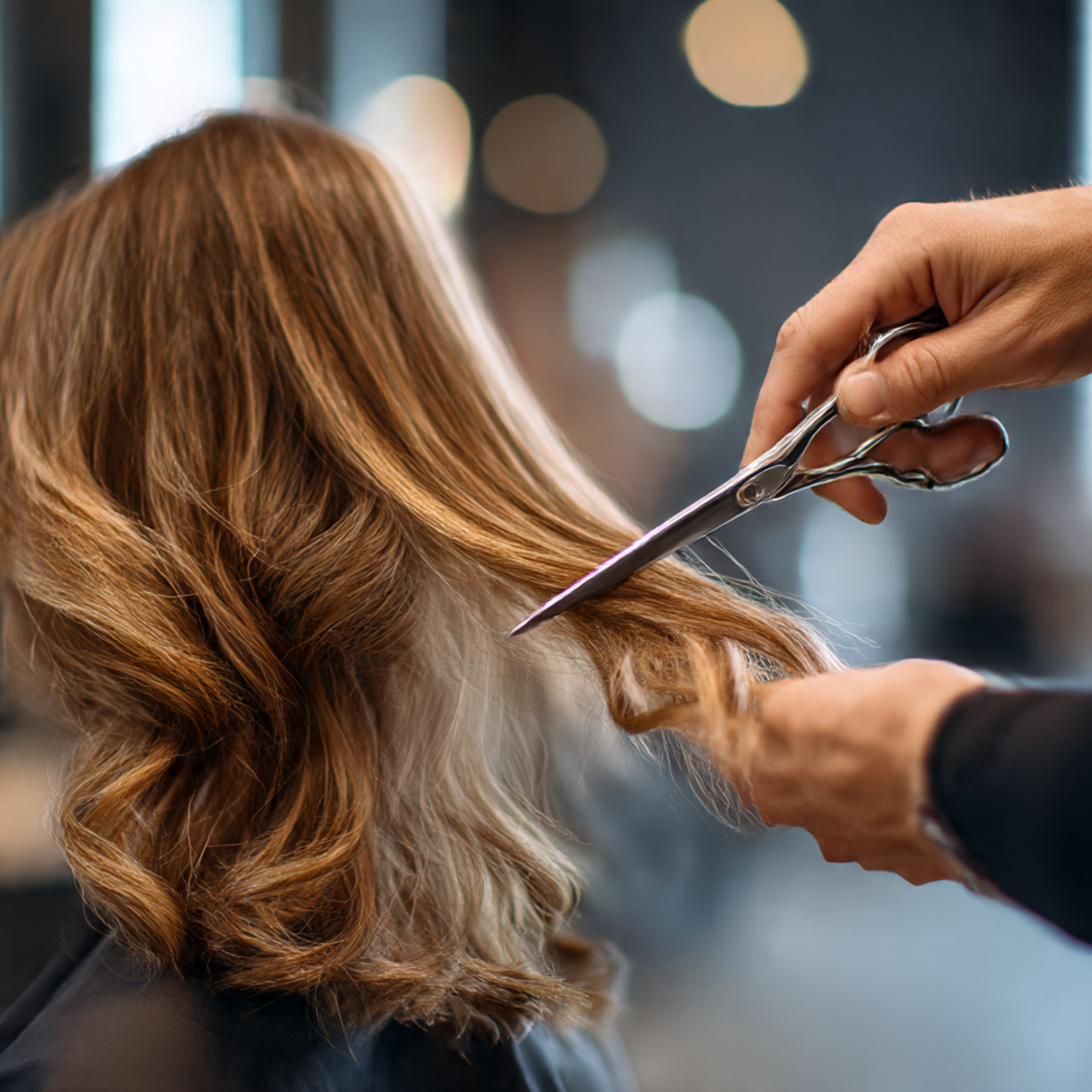
Fine shear work is the detail pass that separates a great cut from a technically sound but unremarkable one. After the main structural cutting is complete, this step uses precise scissors to make small cuts across the surface that create micro-texture, which helps the hair catch light better, move more freely, and feel noticeably softer to the touch. Professional shears from brands like Kasho and Jaguar perform this step with the precision that lower-quality tools simply cannot replicate, which is why tool selection at the finishing stage matters.
Best for: Medium-density hair that looks flat or dull even immediately after styling Product: Oribe Dry Texturizing Spray to activate the fine texture and give the finish a soft, natural movement Pro tip: Ask your stylist to make a fine shear pass over the surface layer after the main cut is complete but before blow-drying begins. Face shape: Oval and heart Stylist language: “Can you do a fine shear finish on the surface layer after you are done cutting to add micro-texture to the top?”
Soft Graduation at the Bottom
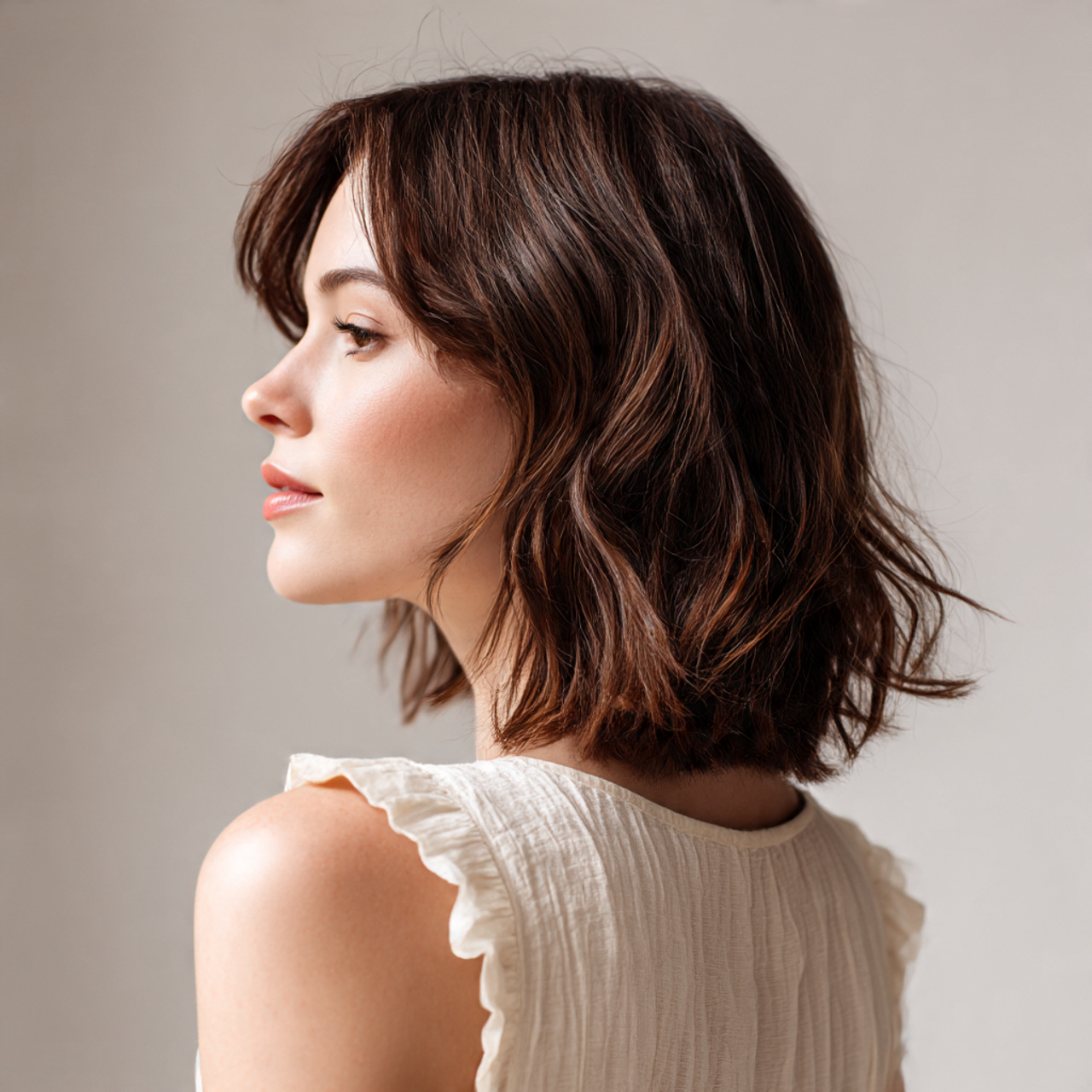
A soft graduation means the back of the haircut is slightly shorter than the front, which introduces a forward momentum to the entire shape. Rather than hanging straight down with no direction, the hair swings gently toward the face with every movement. This effect is subtle enough to stay invisible in most finished styles but strong enough to completely change the energy of the cut from static to alive.
Best for: Long hair that hangs straight with no directionality, swing, or intentional movement Product: Bumble and bumble Hairdresser’s Invisible Oil Heat/UV Protective Primer before blow-drying to maintain the forward movement the graduation creates Pro tip: When blow-drying, direct the brush and airflow toward your face to reinforce the graduation angle already built into the cut. Face shape: Square, as the forward movement softens the jaw visually Stylist language: “Please cut a soft graduation so the back sits slightly shorter than the front and the whole shape swings forward naturally.”
Blending Layers with Slicing
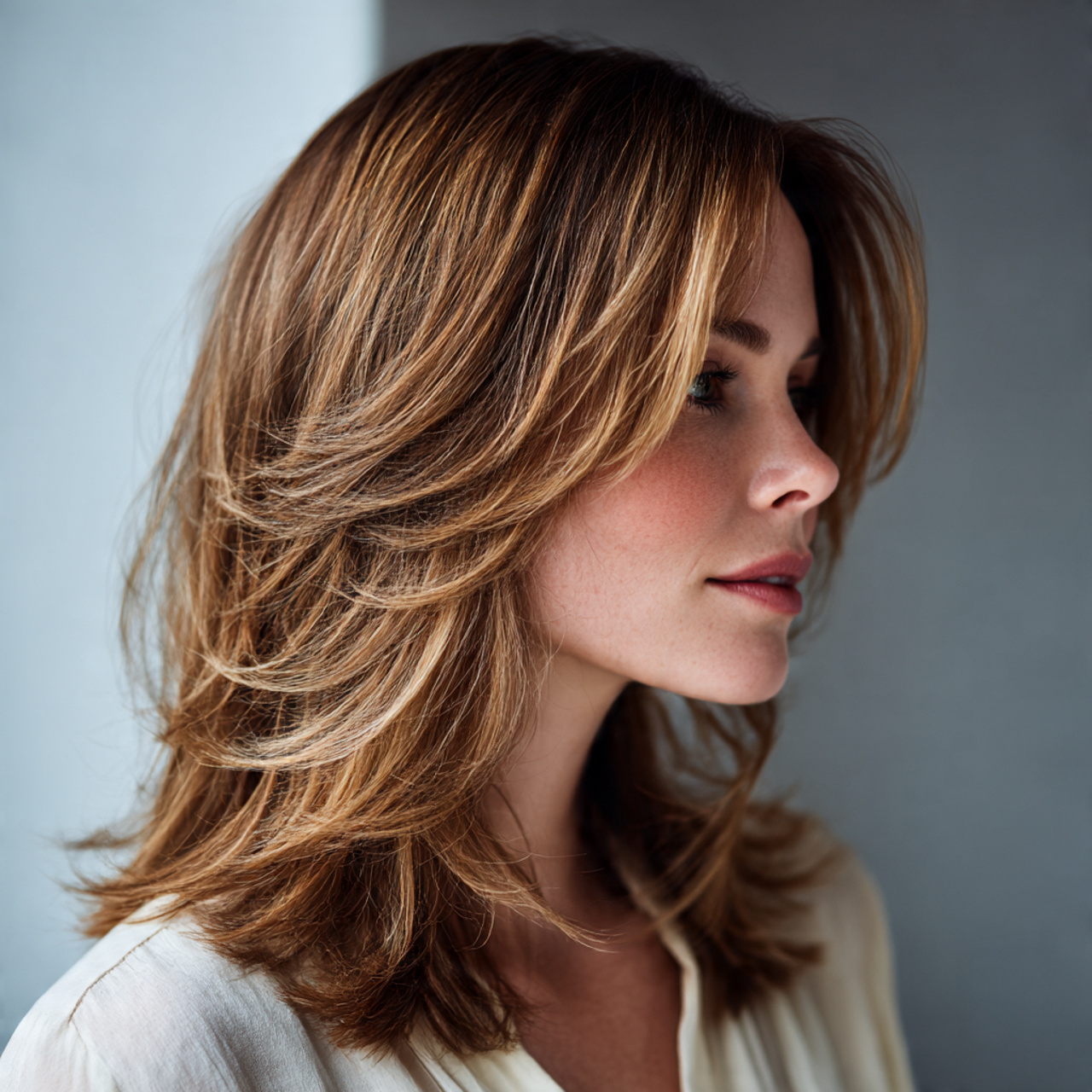
Visible lines between lengths are the clearest sign that a layered haircut was not finished properly. Slicing connects each length to the next by removing the hard edge between them through a downward gliding scissor motion at an angle, turning a choppy, disconnected cut into one that reads as a single flowing shape. Bumble and bumble University teaches blending with slicing as a foundational competency early in scissor training because it is exactly what makes layered cuts look expensive and intentional rather than obvious and dated.
Best for: Layered haircuts that look choppy or disconnected with visible lines between lengths Product: Aveda Smooth Infusion Style-Prep Smoother to prep the hair before blow-drying so the blended layers fall correctly Pro tip: If your current cut looks choppy, ask for a dedicated blending appointment before a full restyle to connect the lengths without removing more hair. Face shape: Long and oval Stylist language: “My layers look disconnected. Please use slicing to blend the transitions between lengths so the whole cut flows as one shape.”
Crown Cutting for Lift and Shape
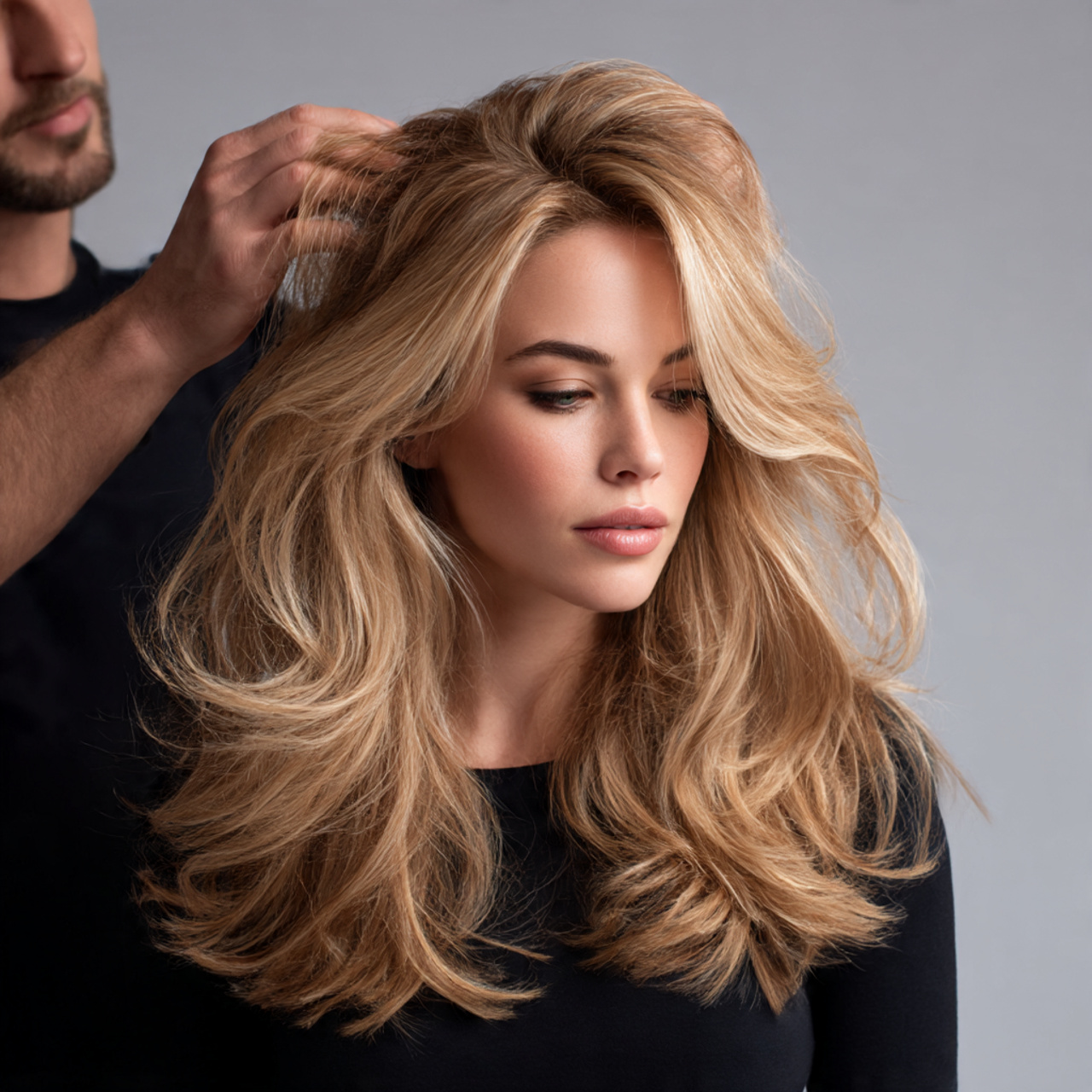
The crown is the control center of every haircut. How it is cut determines whether the rest of the hair looks balanced, lifted, and intentional or flat and shapeless regardless of how well the layers and perimeter underneath are built. Cutting at higher elevation through the crown creates roundness and a built-in lift that acts as the structural foundation every other part of the style depends on to look correct and proportional.
Best for: Anyone whose haircut goes flat at the top regardless of product amount or styling technique Product: L’Oreal Professionnel Tecni.Art Full Volume Extra applied at the crown while blow-drying to hold the lift the crown cut creates Pro tip: Ask your stylist what elevation angle they plan to use at the crown and specifically request at least 90 degrees if lift and roundness are the goal. Face shape: Round, as crown lift adds the vertical length that elongates round face shapes visually Stylist language: “Please cut the crown at 90 degrees or above so I get real lift and visible roundness at the top of the cut.”
Visit Also: Haircuts and Styles for Blonde
Diffuser Drying for Soft Finish
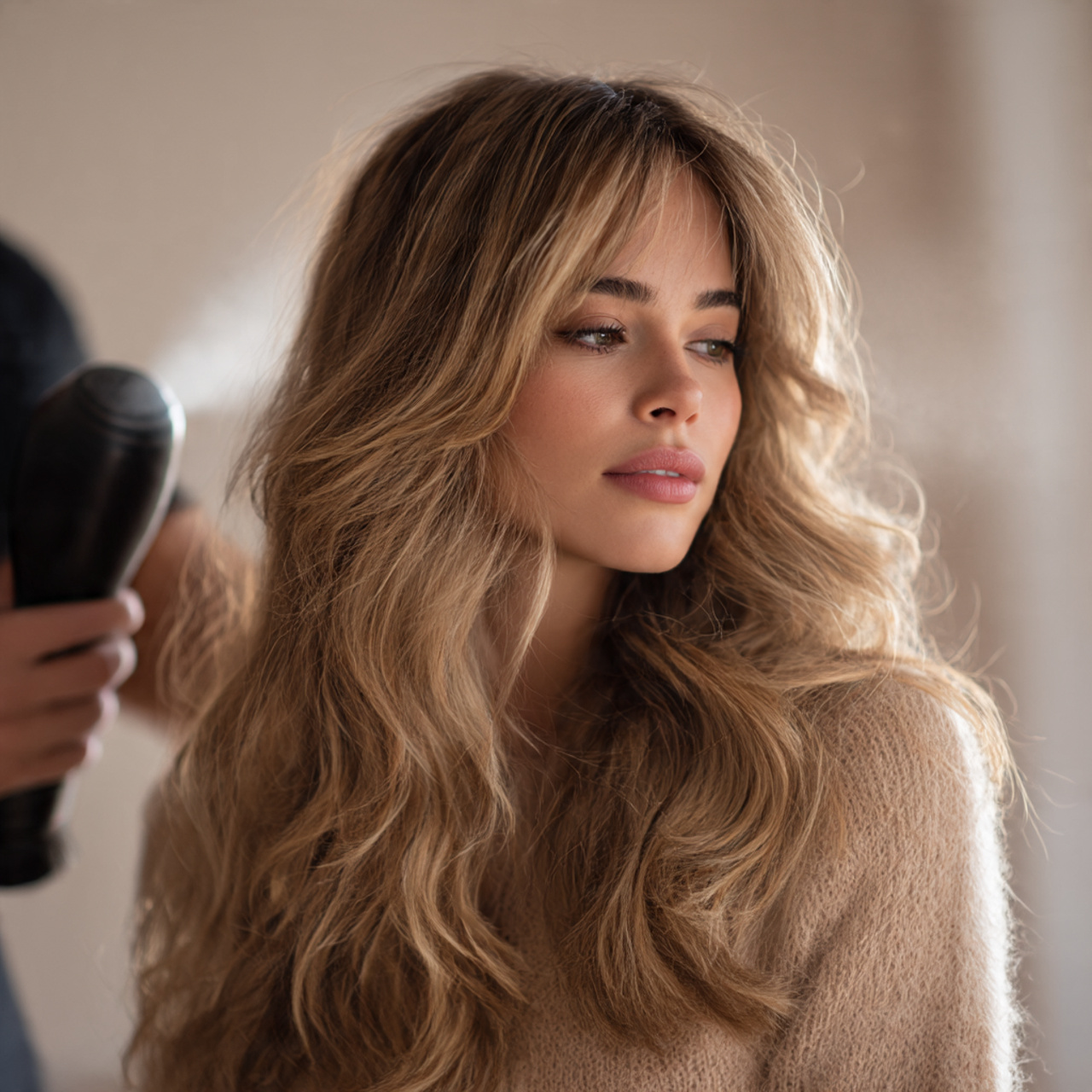
A diffuser is not exclusively a curly hair tool. Any hair with wave potential, natural texture, or moisture-based movement benefits from diffusing because the attachment distributes airflow broadly instead of concentrating it into a single stream. Concentrated heat from a standard nozzle forces the hair into a shape and compresses the movement the cut creates. The Dyson Supersonic with its diffuser attachment is specifically calibrated for this use because the motor allows precise heat control at levels low enough to dry without generating frizz.
Best for: Wavy, textured, or lightly curly hair that wants a natural, movement-based finish Product: Dyson Supersonic with Diffuser Attachment for controlled, even drying at adjustable temperatures Pro tip: Use the diffuser on the lowest heat setting and hover above each section without pressing the hair against the attachment for the softest and most natural finish. Face shape: Round and oval Stylist language: “Can you diffuse dry my hair after the cut so I can see exactly how it moves naturally before I leave the salon?”
Using Light Styling Products
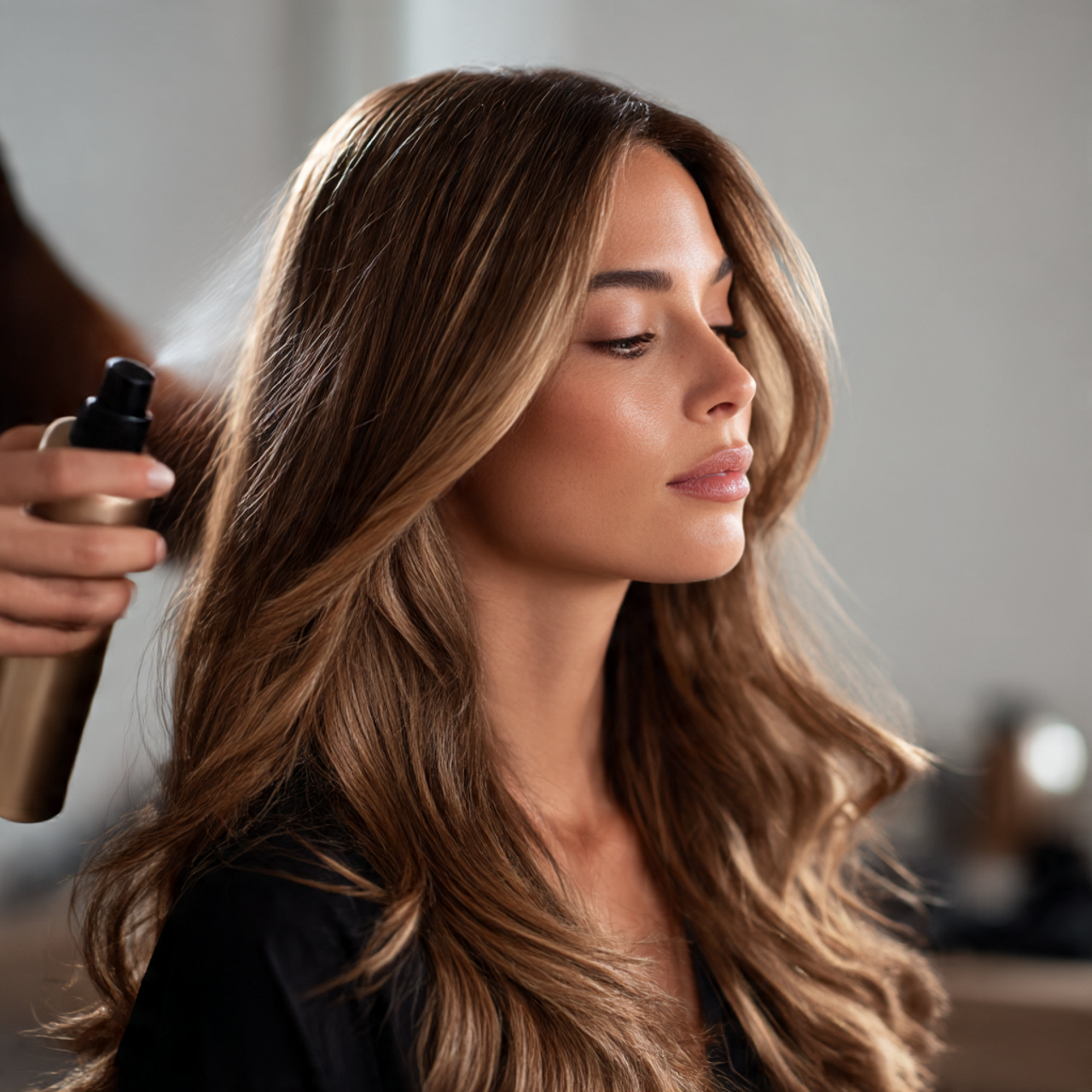
Product weight is one of the most overlooked enemies of a flowy haircut. Heavy creams, butters, and thick serums coat the hair and press the movement down before it has a chance to express itself. A rule used backstage at major fashion events by professional styling teams is simple: if you can feel the product between your fingers before applying it, it is too heavy for this style. Brands like Kenra Professional and Alterna Haircare have built flexible hold lines specifically around supporting movement without adding weight.
Best for: All hair types, especially fine or thin hair that compresses easily under product weight Product: Kenra Platinum Silkening Mist as a daily light hold base or Alterna Haircare Caviar Anti-Aging Replenishing Moisture Shampoo as a foundation wash Pro tip: Apply product only from mid shaft to ends and keep the roots completely product-free so the crown stays light and lifted all day. Face shape: All face shapes Stylist language: “Can you recommend a specific light hold product for my hair type that will support this cut without weighing it down?”
Shine for Better Movement Look
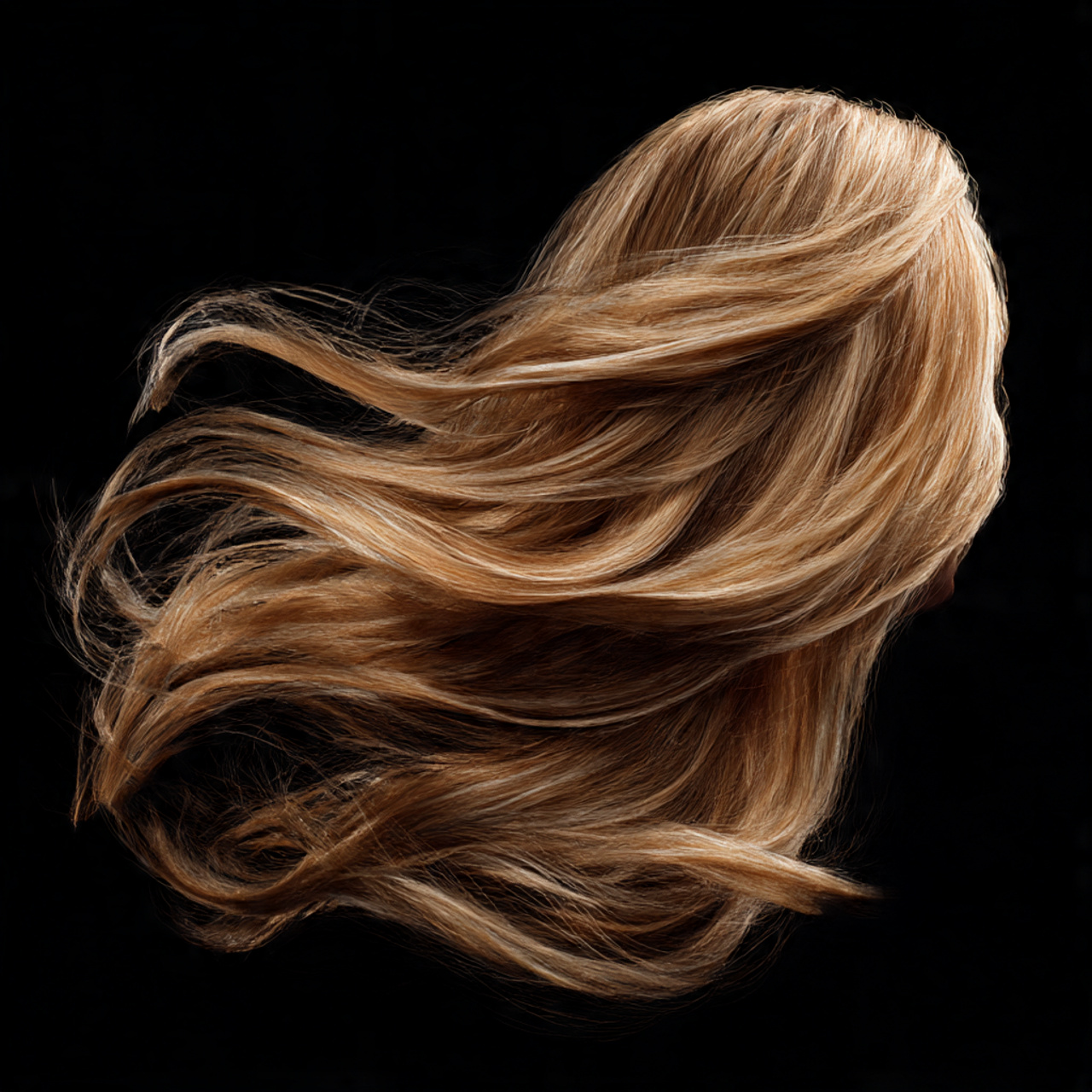
Shiny hair appears to move more than dull hair because light reflecting off the cuticle creates a visual impression of motion even when the hair is completely still. A rough, dull cuticle absorbs light and makes even a perfectly built flowy cut look dense and heavy from across the room. A cold water rinse after conditioning and a weekly application of Olaplex No. 8 Bond Intense Moisture Mask are among the most reliable ways to build and maintain the smooth cuticle that produces this effect consistently.
Best for: All hair types, especially color treated hair that loses shine and cuticle integrity between appointments Product: Olaplex No. 8 Bond Intense Moisture Mask used weekly for cuticle restoration and lasting surface shine Pro tip: After blow-drying, finish with a 30-second burst of cool air from the dryer to seal the cuticle and add immediate visible shine. Face shape: All face shapes Stylist language: “Please add a glossing treatment to my appointment today to improve the shine and make the movement read better visually.”
Deep Side Part for Instant Flow
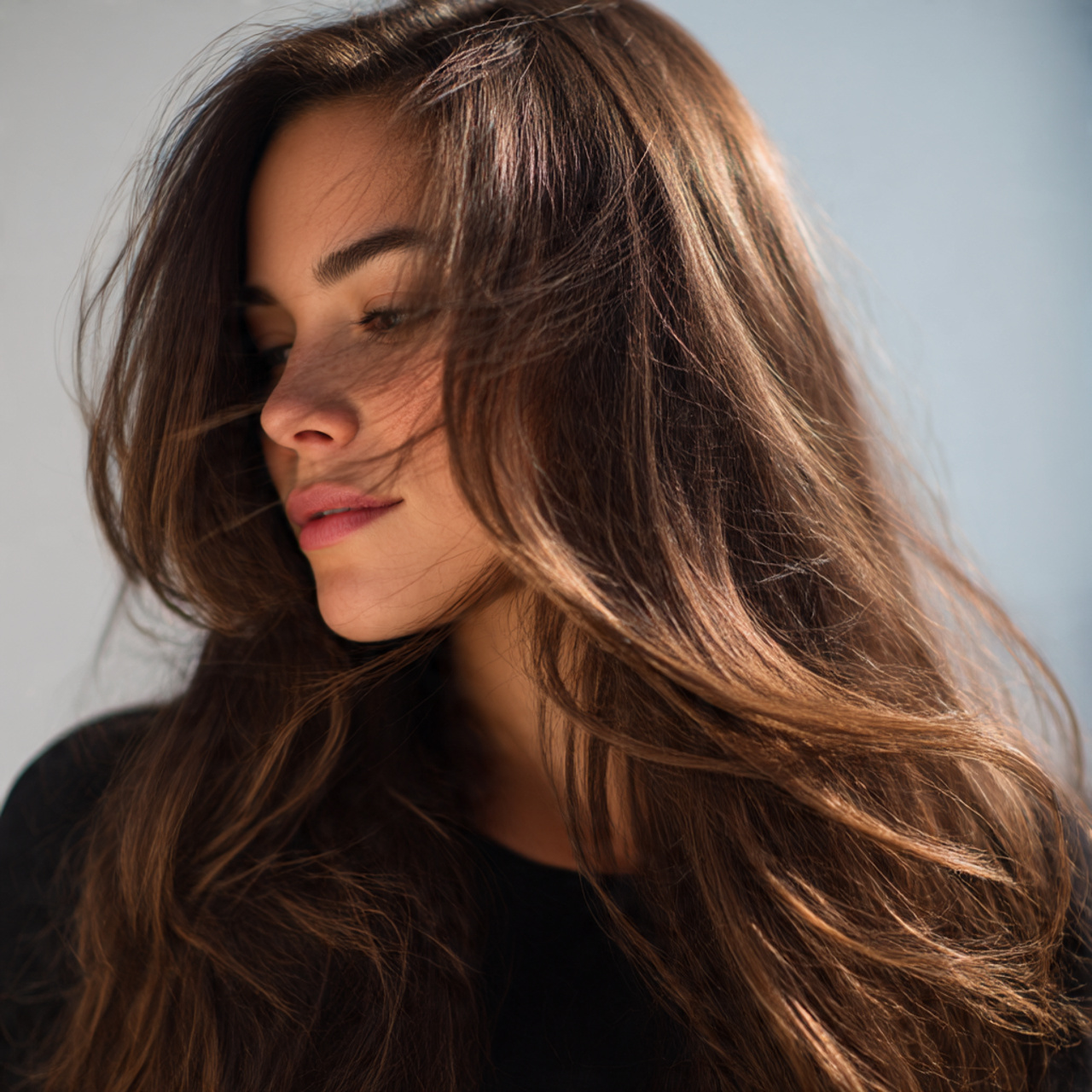
A center part distributes hair evenly on both sides, which keeps the look balanced but also keeps it static and predictable. Moving to a deep side part changes the angle of fall completely, pushes more volume to one side, and creates an asymmetry the eye reads as natural movement even when the hair is completely still. Harry Josh Pro Tools round brushes are designed for exactly this kind of directional blow-dry work, built to hold volume and side-part shape while styling at home.
Best for: Straight or mildly wavy hair wanting immediate visual movement without committing to a new cut Product: Harry Josh Pro Tools Round Brush for building and locking the deep side part while blow-drying Pro tip: Draw the part with a fine tooth comb before blow-drying and hold it with a flexible hold spray so the direction stays through the entire day. Face shape: Round and square, as the asymmetry adds visual length and softens the perimeter Stylist language: “I want a deep side part cut into my haircut so it falls naturally to one side without needing to be restyled each morning.”
Scissor-Over-Comb for Short Hair
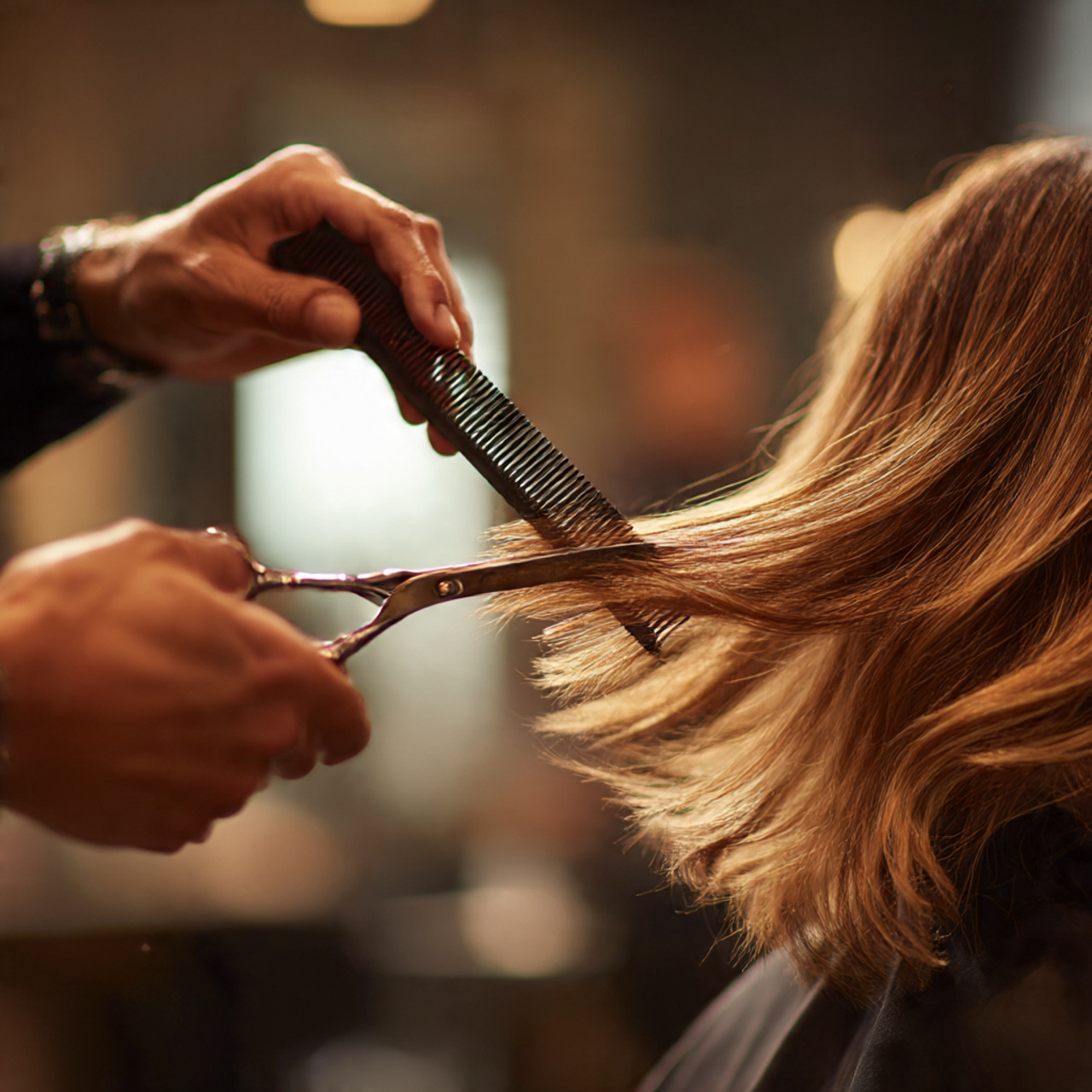
Short hair often feels rigid because it is cut in thick sections where each piece clumps rather than moves on its own. Scissor-over-comb breaks this up by using a comb to lift tiny amounts of hair at a time while the scissors cut across the top, creating a light, textured finish where each small section can move independently. Barbering programs at institutions like the Sassoon Academy teach this technique as a core competency because it is what separates a hand-cut, textured finish from one that looks machine-trimmed and heavy.
Best for: Short cuts, pixie styles, and the nape sections of any length hair Product: American Crew Fiber for short textured men’s styles or Redken Rough Paste 12 Working Material for a matte, separated finish on women’s cuts Pro tip: Ask your stylist to use scissor-over-comb at the nape even if you have long hair for a cleaner and lighter base that improves the overall movement of the cut. Face shape: Oval and heart Stylist language: “Please use scissor-over-comb at the nape and perimeter to keep the finish light and textured instead of a blunt, heavy line.”
Lightening the Nape Area
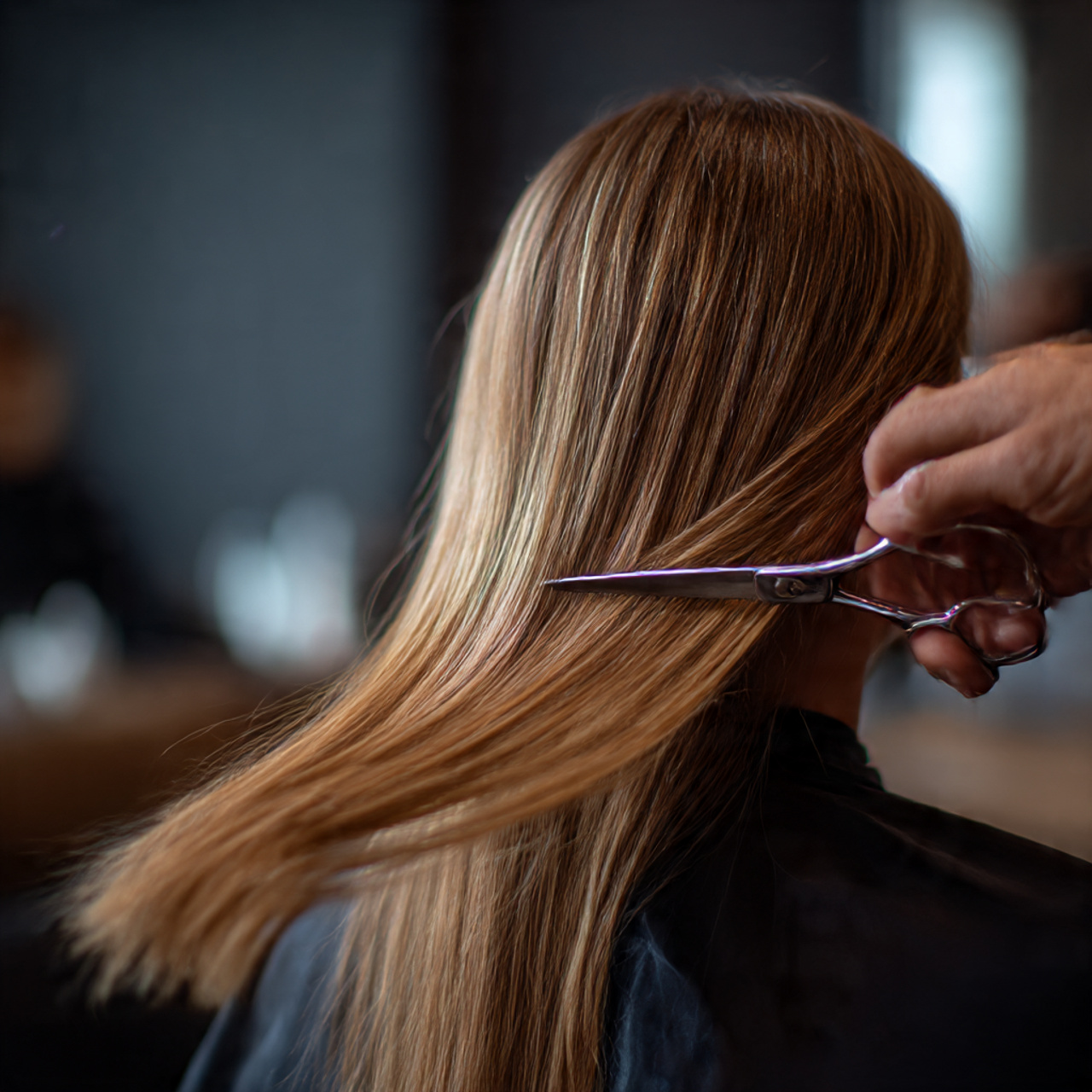
The nape of the neck is the heaviest and most underconsidered part of a long haircut. All the density collected at the base acts as an anchor that holds the upper sections down and prevents them from lifting or swinging freely. Removing weight from the nape through hidden interior cuts, rather than the exterior shape, changes the entire feel of the haircut with zero visible change to the length or silhouette, which is why Goldwell Kerasilk Reconstruct is often paired with this service to reduce fiber tension before the scissors begin.
Best for: Long-haired clients whose hair feels heavy at the back and resists lift in the upper sections Product: Goldwell Kerasilk Reconstruct Damaged Hair Shampoo to reduce tension in dense hair before the nape lightening session Pro tip: Ask for the nape to be lightened with interior cuts that stay covered by the outer layer so the adjustment is always felt but never visible from any angle. Face shape: Oval and long Stylist language: “Please remove hidden weight from the nape specifically without changing the outer shape or the visible exterior length.”
Forward Angle for Natural Swing
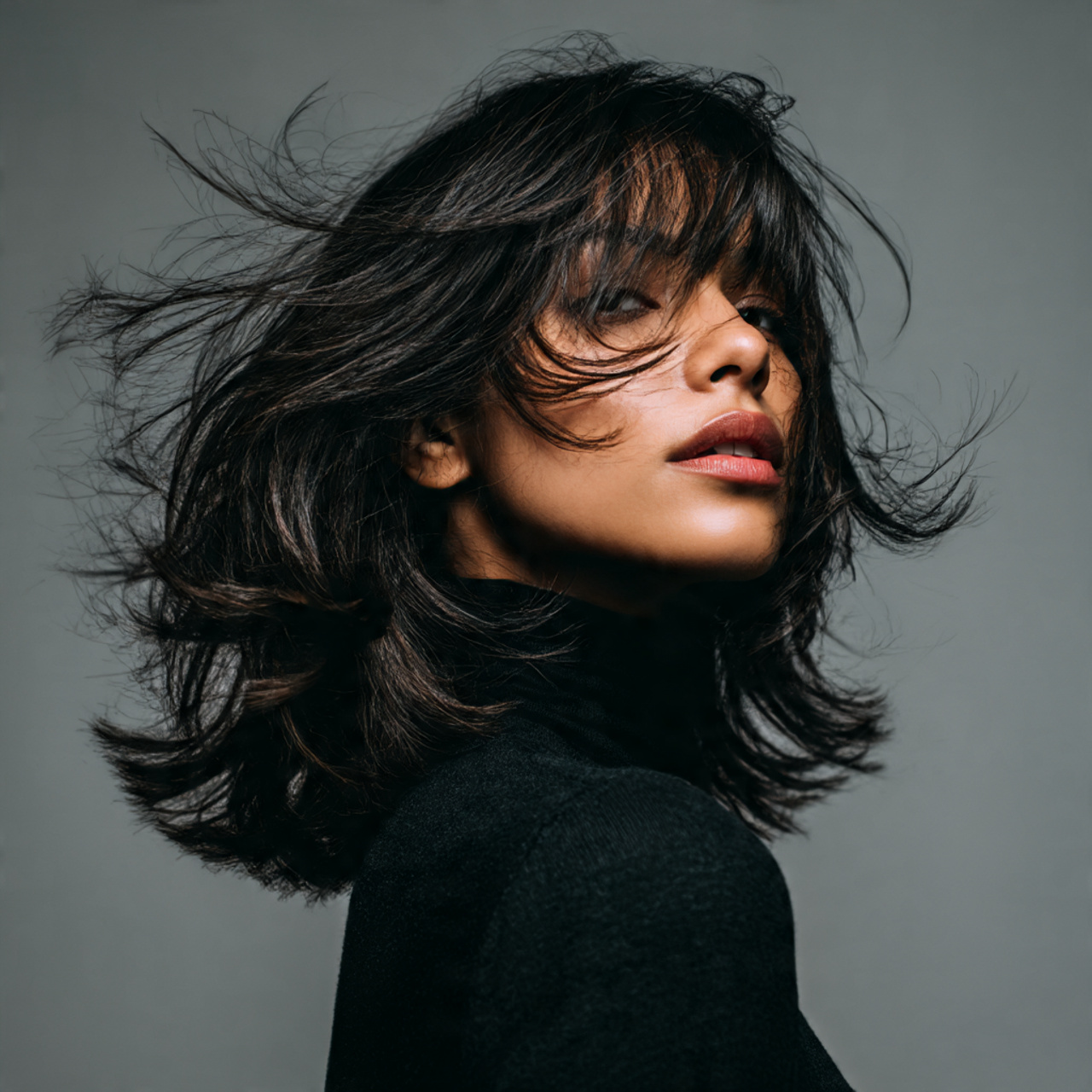
When the front of the haircut is cut slightly longer than the back, the entire shape pitches forward. Walking, turning, or simply moving the head creates a swing toward the face that looks natural and cinematic in a way no product can replicate. Stylists trained in the Nick Arrojo or Sam McKnight session-styling approach use forward angle consistently because it produces movement that reads beautifully in real life and in photographs, making it a staple of high-end editorial work.
Best for: Medium to long hair that moves straight down with no swing, direction, or animation Product: Oribe Dry Texturizing Spray to enhance the forward swing and add separation to the ends as the hair moves Pro tip: When blow-drying a forward angle cut, always direct the brush and airflow toward your face to reinforce the structural direction built into the cut. Face shape: Square and round, as forward movement softens and elongates angular features Stylist language: “I want the front cut slightly longer than the back so the whole shape pitches forward and swings naturally when I move.”
Keeping the Ends Healthy
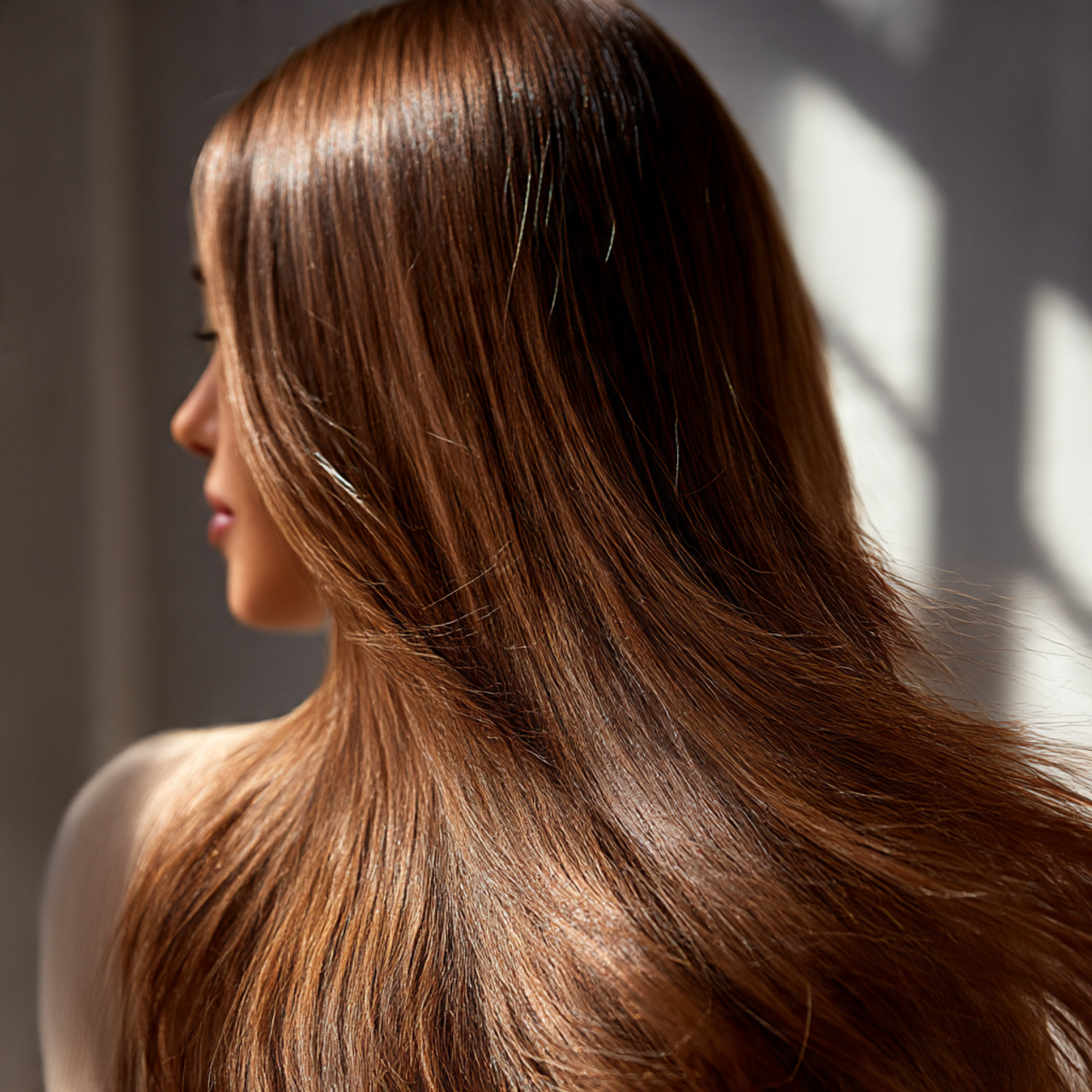
No cutting technique delivers lasting movement on damaged ends. Dry, splitting ends feel rough, stick together, and absorb light instead of reflecting it, which destroys both the visual and physical softness a flowy haircut is built to create. Regular trims every 8 to 10 weeks are the baseline maintenance requirement, but how the ends are treated daily between those visits matters just as much as the appointments themselves.
Best for: All hair types, especially those dealing with color damage, heat exposure, or chemical processing Product: Moroccanoil Treatment Light for fine hair or standard Moroccanoil Treatment for medium to thick hair as a nightly end conditioner Pro tip: Apply a pea-sized amount of Moroccanoil Treatment to the bottom two inches of hair before bed and comb through gently for overnight end conditioning without buildup. Face shape: All face shapes Stylist language: “My ends are dry and may need treatment before the next trim. Please assess them and recommend the best in-salon repair option.”
Quick Comparison Table
| Style | Length | Hair Type | Maintenance | Bold Factor |
|---|---|---|---|---|
| The Seamless Feathering Technique | Medium to Long | Thick | Low | ★★★★ |
| Removing Hidden Weight Inside the Hair | Medium to Long | Thick | Medium | ★★★★ |
| Soft Face-Framing for Natural Flow | Any | All types | Low | ★★★ |
| Point Cutting for Soft Edges | Short to Long | Fine to Medium | Low | ★★★ |
| Gradual Layers That Stay Hidden | Long | All types | Low | ★★★★ |
| Tapered Mid-Length for Shoulder Movement | Medium | All types | Low | ★★★ |
| Slide Cutting for Smooth Flow | Medium to Long | Dense, Straight | Medium | ★★★★ |
| Soft Razor Ends for Straight Hair | Any | Thick, Straight | Low | ★★★★ |
| Weight Balance Through Cutting Angle | Any | All types | Medium | ★★★★ |
| Working With Natural Waves | Medium to Long | Wavy | Medium | ★★★★ |
| Invisible Layers for Hidden Lift | Long | All types | Low | ★★★★★ |
| Root Support Layers for Flat Hair | Any | Fine, Straight | Low | ★★★★ |
| Deep Point Cutting for Thick Hair | Medium to Long | Very Thick | Medium | ★★★★★ |
| Fine Shear Work for Extra Texture | Any | Medium | Low | ★★★ |
| Soft Graduation at the Bottom | Long | All types | Low | ★★★★ |
| Blending Layers with Slicing | Medium to Long | Layered | Medium | ★★★★ |
| Crown Cutting for Lift and Shape | Any | All types | Low | ★★★★★ |
| Diffuser Drying for Soft Finish | Medium to Long | Wavy, Curly | Low | ★★★★ |
| Using Light Styling Products | Any | All types | Low | ★★★ |
| Shine for Better Movement Look | Any | All types | Low | ★★★ |
| Deep Side Part for Instant Flow | Medium to Long | Straight, Wavy | Low | ★★★ |
| Scissor-Over-Comb for Short Hair | Short | All types | Low | ★★★★ |
| Lightening the Nape Area | Long | Thick | Low | ★★★★ |
| Forward Angle for Natural Swing | Medium to Long | All types | Low | ★★★★ |
| Keeping the Ends Healthy | Any | All types | Medium | ★★★ |
Frequently Asked Questions
What makes a flowy haircut different from a standard layered cut? A flowy haircut is built specifically around weight removal, angle control, and seamless blending to produce natural movement, not simply added volume or visual fullness. A standard layered cut may introduce some lift but does not always address the structural decisions that allow the hair to swing and flow freely on its own.
How often should I trim my hair to maintain a flowy result? Trimming every 8 to 10 weeks keeps the ends smooth, light, and free of the damage that compresses movement over time. Waiting longer than 12 weeks allows dryness and splitting to accumulate at the perimeter, which gradually cancels out the structural benefits of the cut.
What products should I avoid with a flowy haircut? Thick creams, heavy serums, and oil-rich styling butters add weight that presses the movement down before it can express itself naturally. Stick to lightweight sprays and flexible hold options from brands like Kenra Professional or Alterna Haircare for the best daily results.
Can fine hair achieve a truly flowy result? Fine hair can look beautifully flowy when cut with long seamless layers and point cut ends that prevent clumping at the perimeter. Keeping the product load extremely light and using a volumizing shampoo like Redken Extreme Length Sealer helps the movement stay active and visible through the entire day.
How do I explain what I want to my stylist at the appointment? Tell your stylist you want movement built into the cut structure itself, not created afterward through tools or product. Mentioning weight removal, gradual blending, and point cut ends gives them a structural brief rather than a vague style request they cannot execute consistently.
Final Thoughts
A flowy haircut is not a trend you chase each season. It is a result built once with the right techniques and maintained with intelligent habits over time. When the structure is correct, the hair asks almost nothing from you each morning, and that effortlessness is the entire point of committing to this style in the first place.
Every technique in this list exists because movement does not happen by accident. Each feathered end, each blended layer, and every angle adjustment is a deliberate decision that contributes to how the hair behaves every single day between appointments. Knowing what those decisions are puts you in complete control of every stylist conversation you will ever have.
The truest measure of a great flowy haircut is what your morning routine looks like after you leave the salon. If heavy product, daily heat, and a long styling session are still required to create the movement you want, the structure was not built correctly. That understanding is where real, lasting improvement begins.
Find a stylist who builds movement into the cut rather than relying on styling to create it afterward, and ask them to rebuild your haircut from the inside out. That one appointment has the power to change how your hair looks and behaves every single day for months.
Save this to your Pinterest boards now and share it with anyone who has ever left the salon wishing their hair actually moved.