20 Shag Cut Ideas That Will Completely Transform Your Hair
You have been staring at your hair in the mirror wondering why nothing feels right. It is flat, heavy, or stuck in a style that stopped feeling like you a long time ago. Every search you do sends you down a rabbit hole of photos that look nothing like your real life.
This is one of the most common frustrations clients bring into the salon. They come in with saved photos that look beautiful online but feel impossible to recreate at home. That gap between inspiration and reality is not a personal failure. It is a style-fit problem.
The real issue is that most people choose a haircut based on how it looks on someone else. They do not factor in their own hair texture, face shape, or how much time they actually have each morning. That disconnect is where the frustration starts.
After years of watching clients leave the salon chair with fresh shag cuts and genuine relief on their faces, I can tell you this cut changes everything. The shag is not just a trend. It is a tool. When it is matched correctly to your hair type and face shape, it does most of the work for you.
This article covers 20 shag cut ideas chosen for real, wearable results. Not for a photoshoot. For actual mornings, actual textures, and people with real routines to keep.
By the end, you will know exactly which shag cut fits your hair, your face, and your life. Whether you want a shag cut that grows out gracefully or one that packs maximum visual impact right away, this guide is your clear starting point.
The biggest shift in hair right now is the move toward low-effort cuts that still look intentional. The shag cut leads that shift, and it has for decades. Before you read through the list, remember the single most important rule: the right shag cut is the one that works with your natural texture, not against it.
Shag Cut Ideas
Shag Cut With Bangs

Adding bangs to a shag cut is one of the fastest ways to refresh your face frame without losing length. Soft, wispy bangs blend into the layers and sit lightly on the forehead. They keep the whole look relaxed and natural rather than heavy or structured.
This style works especially well for hiding a high forehead and adding softness to angular features. Bangs shift the focal point of the face without requiring a dramatic change to the overall cut.
Best for: Anyone wanting a fresh update without a big length change Product: Oribe Dry Texturizing Spray to keep bangs light and piece-y through the day Pro tip: Ask your stylist to point-cut the tips of your bangs rather than blunt-cutting them so they blend into the surrounding layers without a visible line. Barber language: “I want a shag with wispy bangs that blend into the layers. Please point-cut the ends so they do not look heavy or blunt.” Face shape: Oval, round, and square faces all work here. Oval gets the most flexibility with bang length.
Long Shag Cut
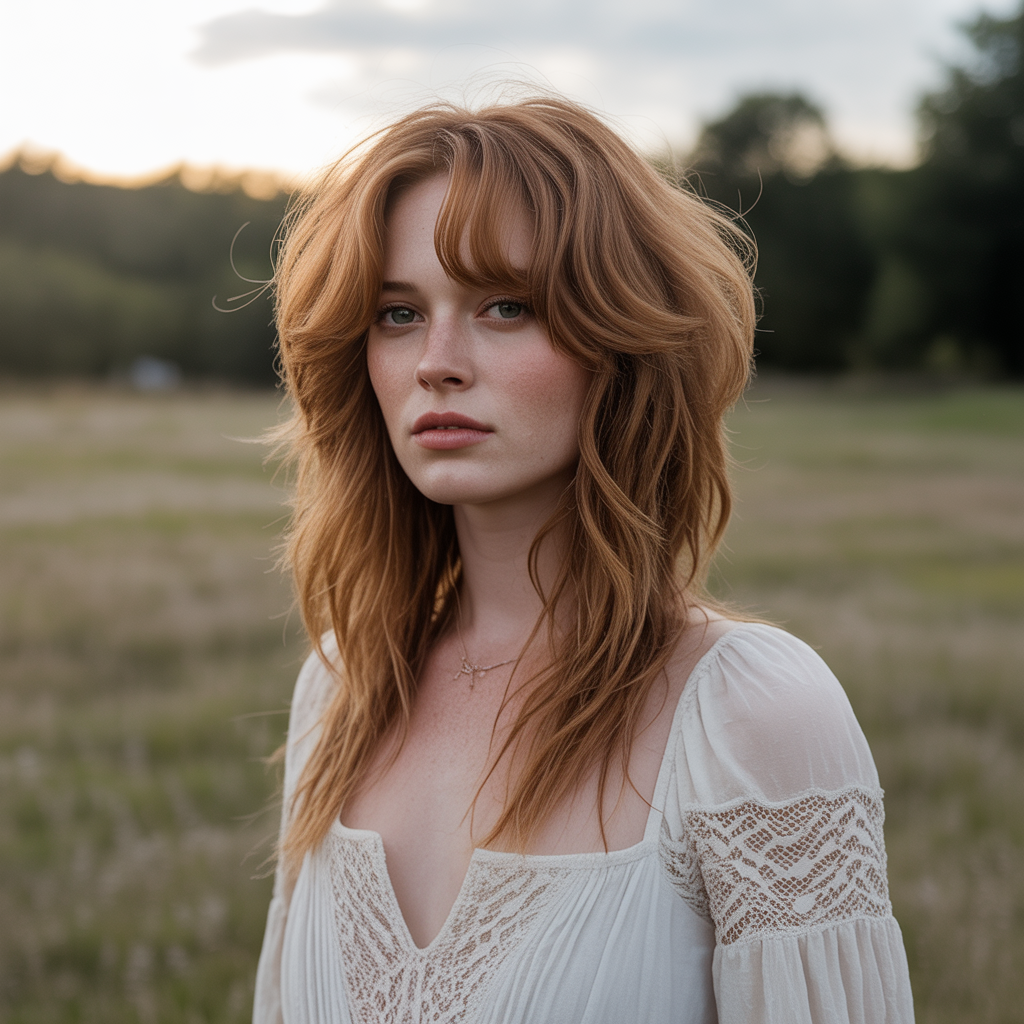
The long shag cut is built for people who want volume and movement without sacrificing their length. Without layers, long hair falls flat and lifeless under its own weight. The shag layers break that pattern and let the hair breathe.
This version shines on wavy and curly hair because the layers give each wave room to form naturally. Straight hair gets the lifted texture and body it would not otherwise have.
Best for: Long hair that feels heavy or lacks life and shape Product: Ouai Wave Spray applied after air drying to enhance natural movement Pro tip: Ask for shorter layers only at the crown that get progressively longer through the length so the weight removal stays controlled and balanced. Barber language: “I want a long shag with shorter layers starting at the crown and blending down. I want to keep as much length as possible while gaining movement.” Face shape: Best on long and oval faces. The length and layers add strong visual balance to longer face structures.
Short Shag Cut
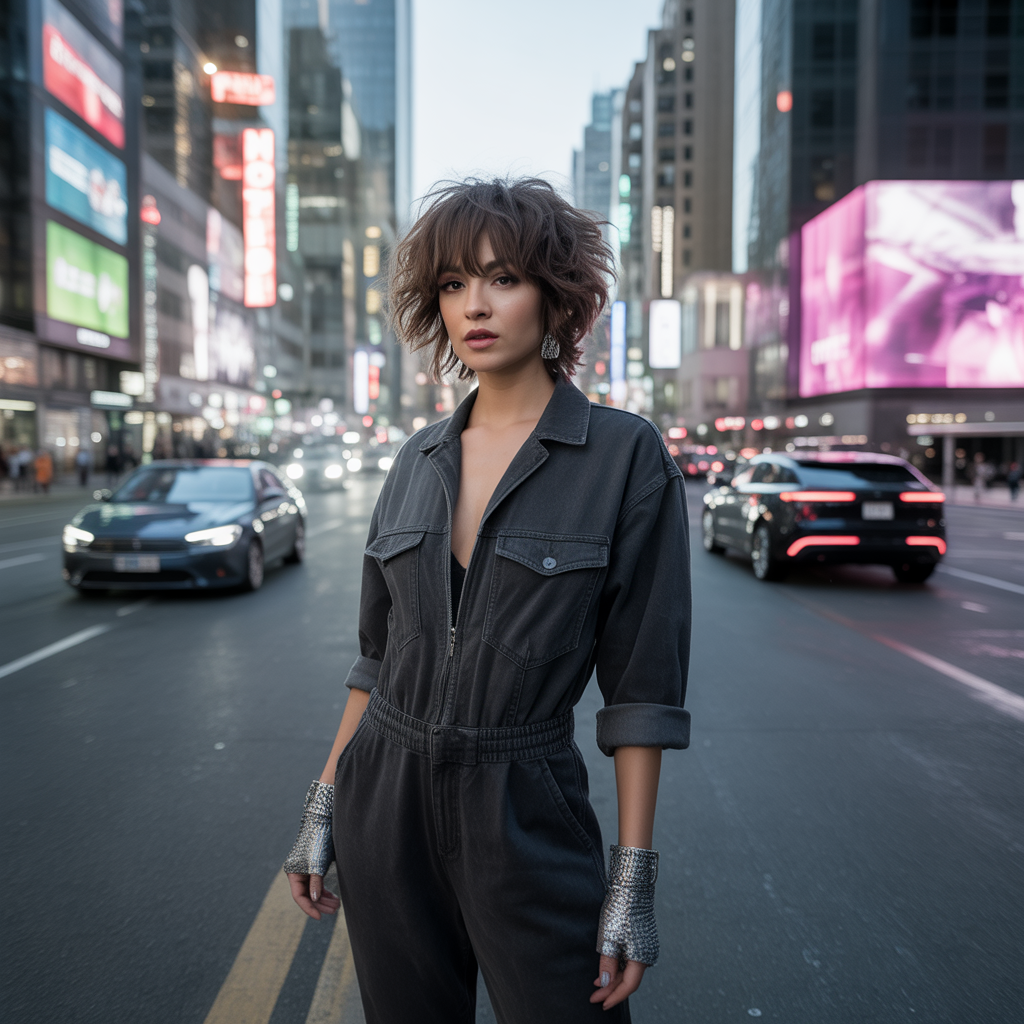
Short shags carry a lot of personality in a small amount of hair. The choppy, textured layers create a bold shape that looks effortless but deliberate. It is one of the most character-rich cuts available for shorter lengths.
Fine hair especially benefits here. The layers build the illusion of fullness and the choppy ends keep the style looking fresh and modern rather than thin.
Best for: Bold personalities wanting easy, fast morning styling Product: Bumble and Bumble Texture Hair (Un)Dressing Creme for shape with a naturally soft finish Pro tip: Blow-dry the roots upward with a small round brush first to build lift before scrunching the ends to set the shape. Barber language: “I want a short shag with choppy, textured layers. I want it messy and full of movement, not polished or neat.” Face shape: Heart and oval face shapes wear this particularly well. The shorter length draws attention upward and suits both shapes.
Medium Shag Cut
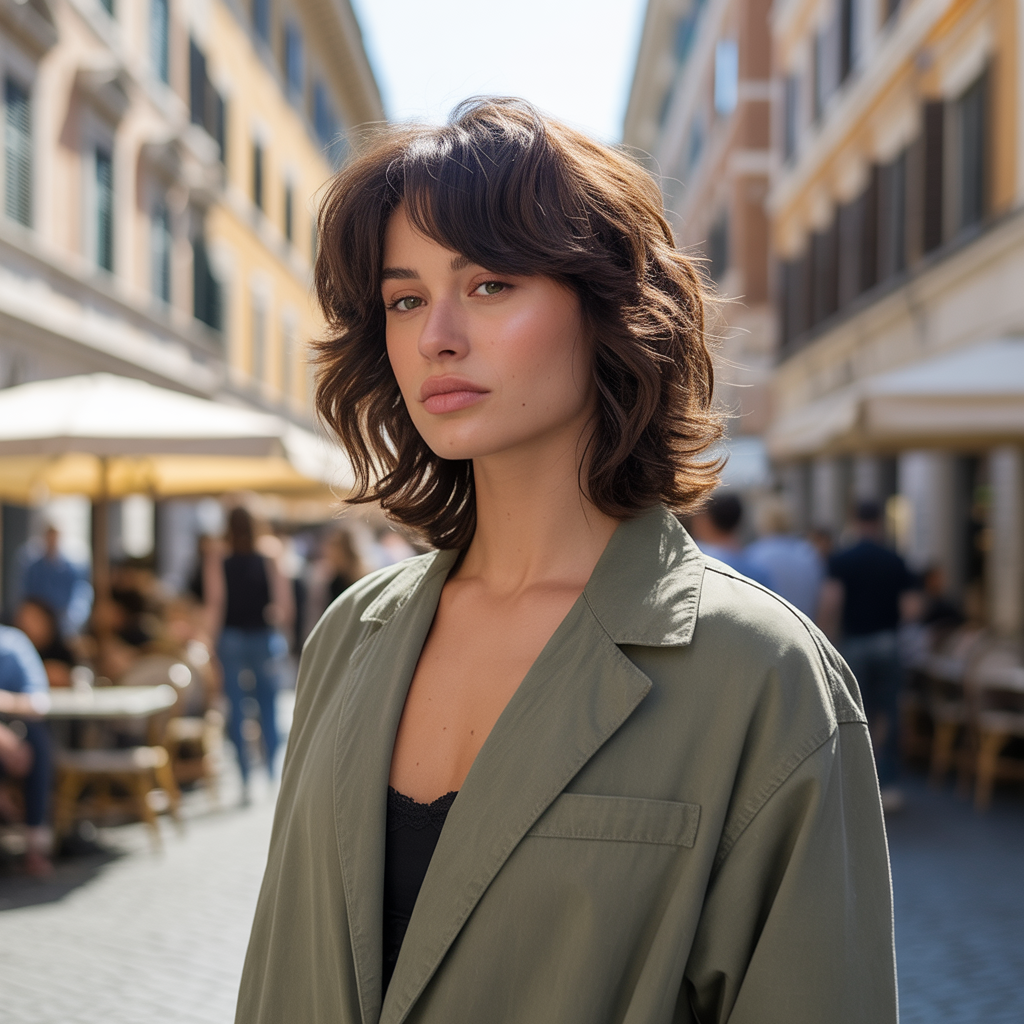
The medium shag cut is the most universally flattering option on this entire list. It sits between the jaw and the collarbone, a length that works for nearly every face shape. The layers fall naturally around the cheeks and chin, which creates a frame the face actually benefits from.
It can be worn loose, lightly waved, or tucked back when needed. That flexibility is exactly why this length wins consistently at the salon.
Best for: First-time shag wearers who want the most versatile result Product: Living Proof No Frizz Wave Shaping Cream for soft, defined movement without stiffness Pro tip: Flip your head upside down while scrunching product through wet hair to build root volume before you flip back and let it set. Barber language: “I want a medium shag that hits between my jaw and collarbone with layers that frame my face and blend smoothly through the length.” Face shape: Suits all face shapes. Particularly strong on round and square faces where the vertical layer movement adds balance.
Shag Cut With Layers
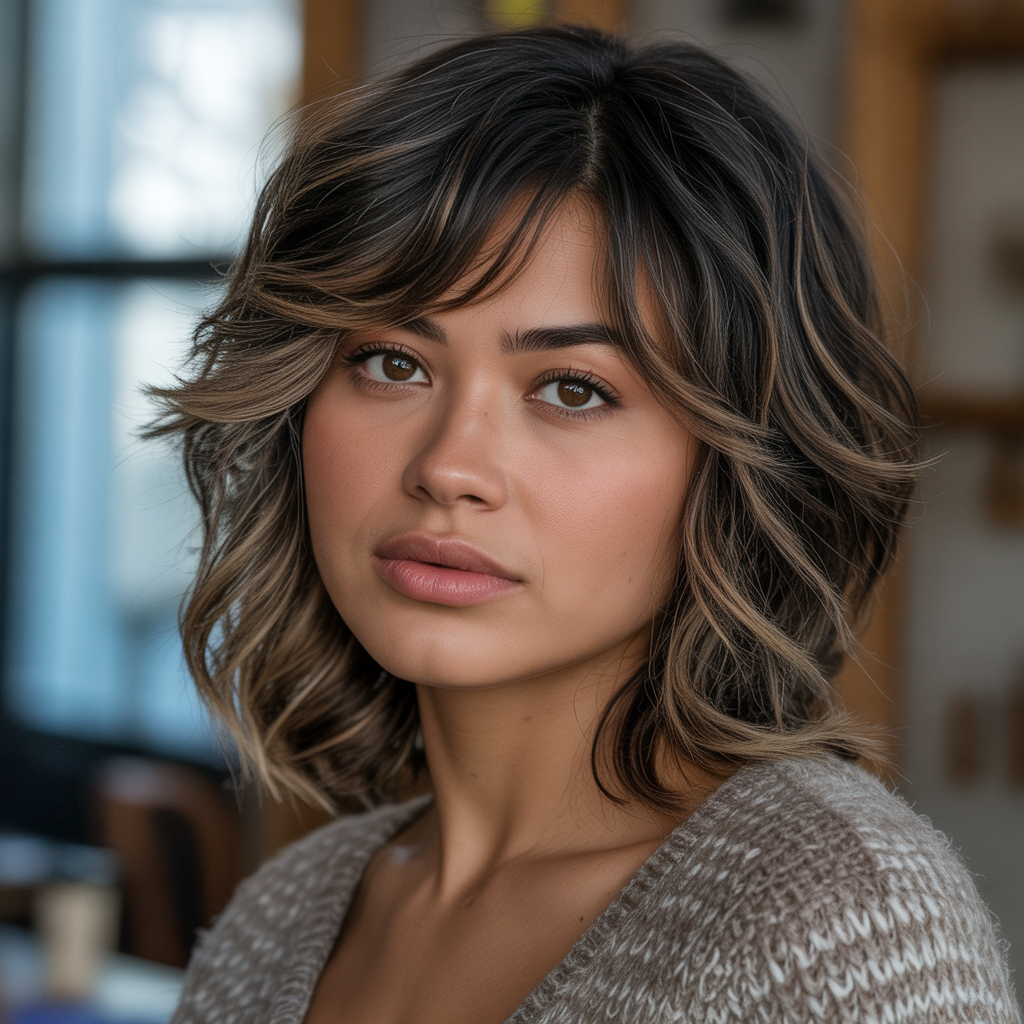
Layers are the engine of every shag cut, but a cut focused specifically on intentional layering takes the style further. Each layer is placed to create flow rather than just remove weight. The result feels more dynamic from every angle.
For fine hair, shorter crown layers create the illusion of density. For thick hair, longer graduated layers pull out bulk without leaving the hair feeling thin. This is a trade detail worth knowing before you sit in the chair.
Best for: Flat roots, uneven texture, or hair that lacks shape Product: Davines This is a Sea Salt Spray to amplify texture and extend the look between wash days Pro tip: Ask your stylist to use a razor instead of scissors on the mid-lengths if you want layers that look softer and more blended at the ends. Barber language: “I want a layered shag where layers are specifically placed for movement. Can you use a razor on the mid-lengths for softer blending?” Face shape: Works across all face shapes. The layer placement can be adjusted to elongate or add width depending on what the face shape needs.
Curly Shag Cut

Curls and shag cuts are a natural match because the cut removes weight and lets curls do exactly what they want to do naturally. A curly shag is not about forcing shape. It is about getting out of the curl’s way.
One key detail that only a stylist working with curls would know: always cut curly hair dry. Curls shrink significantly when wet, and cutting them wet means guessing where they will actually land once dry. Dry cutting gives real accuracy and far better results.
Best for: Natural curls that feel heavy, undefined, or lacking bounce Product: SheaMoisture Coconut and Hibiscus Curl Enhancing Smoothie for moisture-rich hold Pro tip: Ask specifically for a dry cut so your stylist places each layer based on where the curl actually sits at its natural length. Barber language: “I have curly hair and I want a shag done dry so the layers land correctly. Please do not thin the crown too aggressively.” Face shape: All curl patterns suit this cut. Round faces should avoid very short crown layers that add extra width at the top.
Wavy Shag Cut

Wavy hair has natural movement but without the right cut it goes limp or frizzy halfway through the day. The shag gives waves a structure to follow and fall into, which means they hold their shape far longer.
This is the cut that thrives with air drying. Apply a small amount of product, scrunch gently, and let the wave pattern form without interference. The layers do the rest.
Best for: Wavy hair that loses its shape before lunchtime Product: Not Your Mother’s Curl Talk Defining Cream for waves that need light, flexible hold Pro tip: Apply your styling product to soaking wet hair before touching it at all so you do not break up the wave clumps before they can set. Barber language: “I have wavy hair and I want a shag where the layers help my waves form naturally. I want to air dry and have it still look intentional.” Face shape: Oval and heart faces benefit most. The soft wave width adds ideal balance to narrower foreheads.
Shag Cut With Curtain Bangs

Curtain bangs have moved from trend to long-term staple, and paired with a shag cut they create one of the most flattering combinations available. The bangs part at the center and sweep gently to each side, creating a natural soft arch that frames the face without covering it.
Unlike heavier fringe styles, curtain bangs do not require precise daily styling. They fall naturally with minimal effort and grow out gracefully, which makes them one of the most practical bang options you can add.
Best for: People who want bangs but worry about high daily maintenance Product: A Dyson Airwrap or small round brush with low heat sets the sweeping shape in under two minutes Pro tip: Blow-dry curtain bangs by directing airflow from the center outward on each side rather than straight down so the sweep sets into the hair naturally. Barber language: “I want a shag with curtain bangs that part in the center and blend into my layers. Please keep them long enough to tuck behind my ears.” Face shape: Best on oval and long faces. The horizontal softness adds balance and beautifully shortens longer face structures.
Shag Cut For Fine Hair
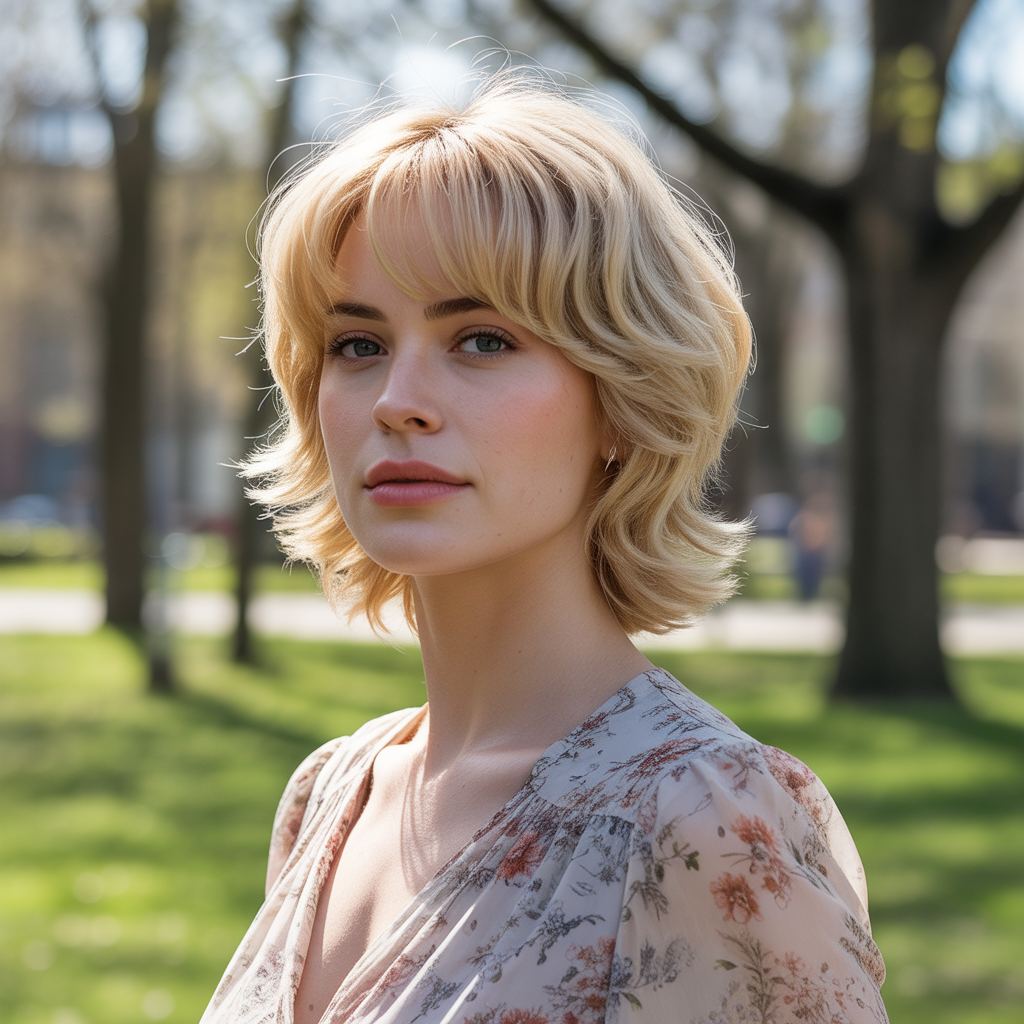
Fine hair is one of the most common reasons clients walk into the salon feeling stuck. It sits flat, loses volume by noon, and refuses to hold any style. The shag cut is one of the most reliable answers to this problem.
The choppy layers at the crown create actual volume by removing the weight that pulls fine strands downward. Blunt cuts work against fine hair. The shag works with it.
Best for: Fine hair that falls flat regardless of how much product you use Product: Redken Guts 10 Volumizing Spray Mousse applied to roots before blow-drying Pro tip: Blow-dry fine hair with your head flipped upside down for the first two minutes so root lift is locked in before the style sets. Barber language: “My hair is fine and falls flat easily. I want a shag with choppy layers at the crown for volume. Please do not take too much length.” Face shape: All face shapes benefit. Square faces should request softer, blended layers at the jaw to avoid adding visual heaviness at that line.
Shag Cut For Thick Hair

Thick hair is heavy, hot, hard to dry, and difficult to manage in humidity. A shag cut removes the bulk that causes all of those problems without leaving the hair thin or shapeless.
Unlike thinning shears, which can create frizz and uneven texture, the layering in a shag cut creates intentional lightness. The hair still has presence and body but moves freely and dries noticeably faster.
Best for: Thick hair that feels unmanageable or takes forever to dry Product: Kenra Platinum Silkening Mist as a lightweight finisher that reduces frizz without adding weight Pro tip: Tell your stylist to avoid thinning shears entirely and rely only on point-cutting for texture removal so you do not end up with fly-aways through the outer layer. Barber language: “I have very thick hair and want a shag to remove bulk. Please skip thinning shears and use point-cutting only. I want it lighter but not flat.” Face shape: Square and strong jaw face shapes benefit most. The movement adds softness to defined structural features.
Shag Cut With Face Framing
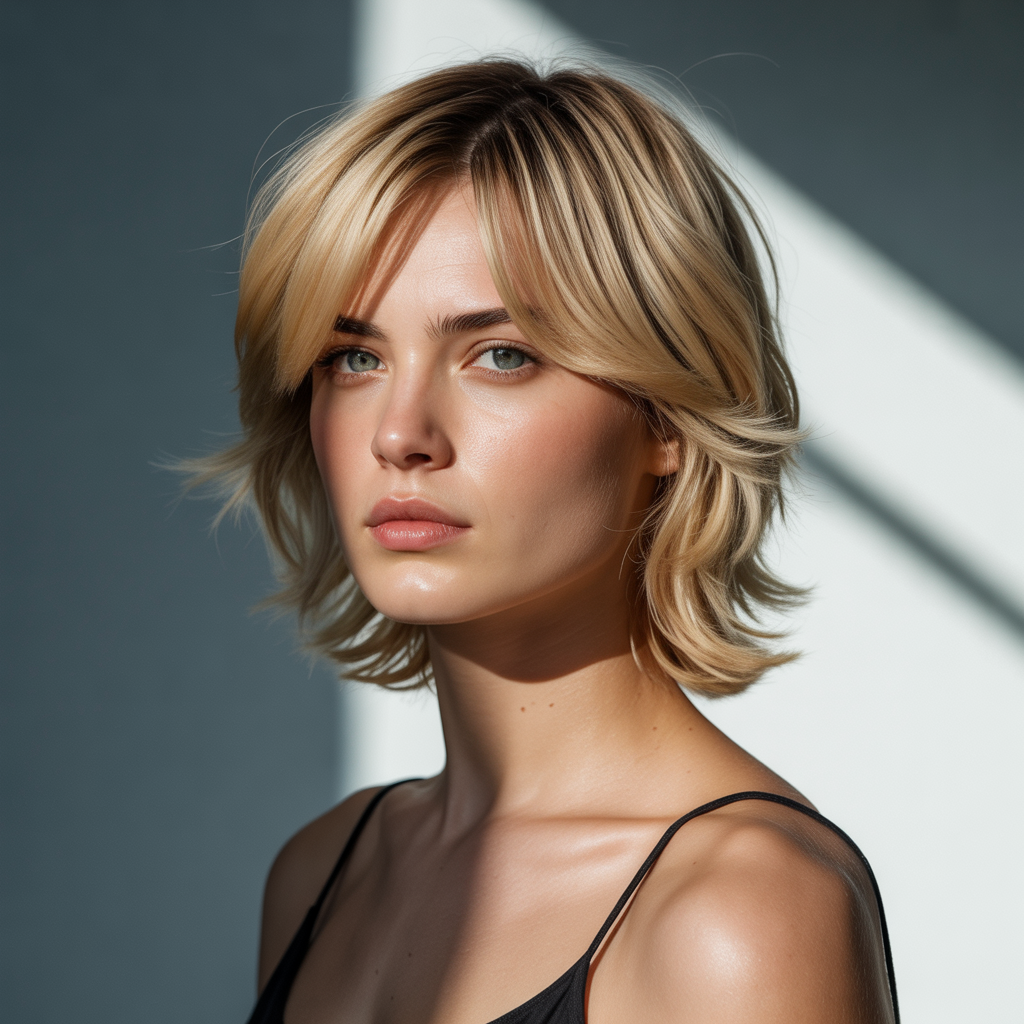
Face-framing layers are placed specifically to highlight your features. They curve from the cheekbone toward the jaw, directing attention toward the center of the face. This is different from standard layering, which focuses on the back and mid-lengths.
Short face-framing pieces add more boldness. Longer, blended ones create subtle softness. Either option works within the shag shape and can be adjusted at every trim appointment.
Best for: Anyone who wants their features to stand out more clearly Product: Moroccanoil Treatment Light to smooth face-framing pieces without weighing them down Pro tip: Ask for face-framing layers that start at cheekbone level rather than the chin if you want an effect that reads as bold rather than subtle. Barber language: “I want a shag with face-framing layers placed specifically at the cheekbone. I want them shorter and noticeable, not just slightly blended in.” Face shape: Suits all face shapes. Round faces should avoid very short face-framing pieces that add width at the sides.
Textured Shag Cut
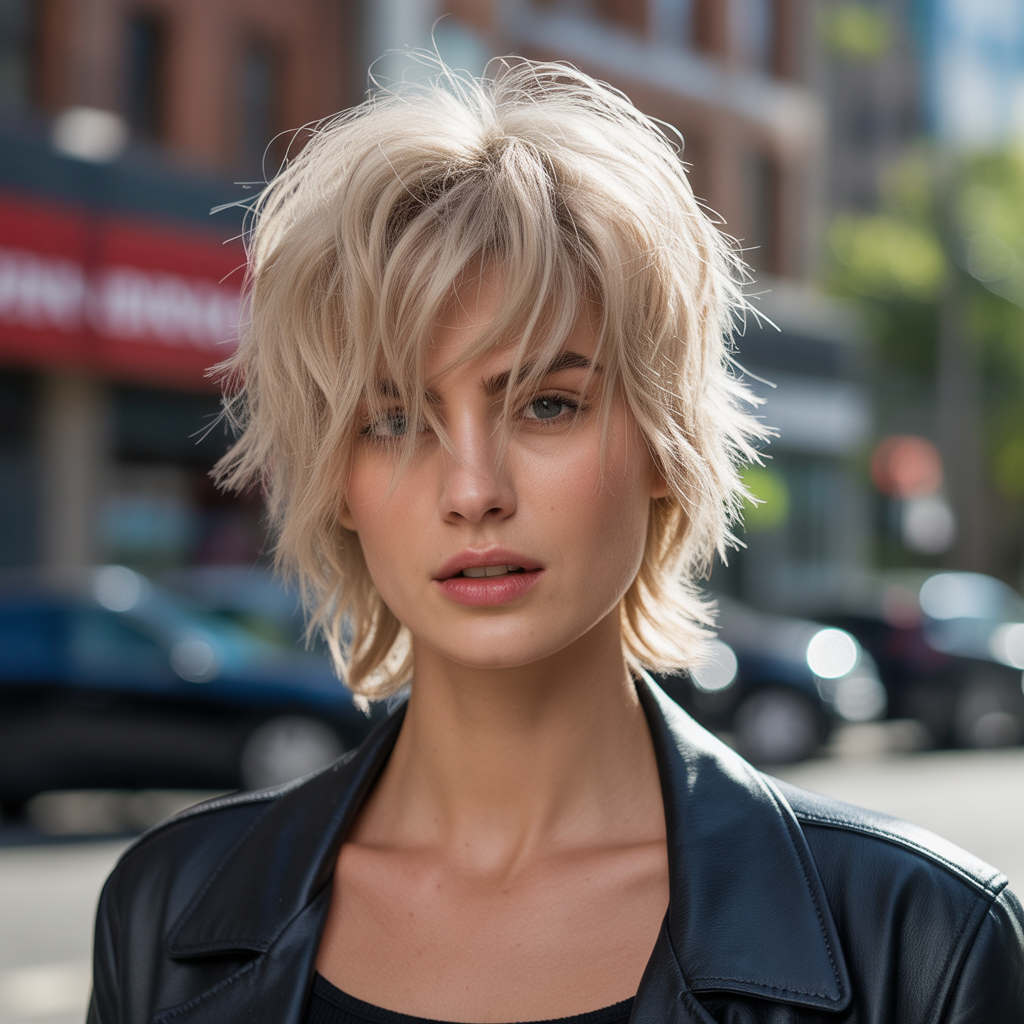
Texture is what separates a great shag cut from a basic layered cut. Real texture comes from uneven, slightly unpredictable ends that catch light differently across the full length of the hair. That is what creates the effortless, lived-in quality people love.
This version is particularly effective on straight hair, which naturally lacks the movement that wavy or curly hair provides. The cut builds it in structurally so you do not have to recreate it with tools every single day.
Best for: Straight hair that always looks too polished or flat Product: Ouai Texturizing Hair Spray to refresh texture on day two and three without washing Pro tip: Let hair air dry at least 80 percent of the way before using a diffuser because pushing heat through wet textured hair too early breaks up the natural pattern. Barber language: “I want a textured shag where the ends are point-cut and slightly uneven on purpose. I want real texture, not just smooth blended layers.” Face shape: Suits oval and heart faces especially well. The added texture width benefits narrower face shapes.
Choppy Shag Cut
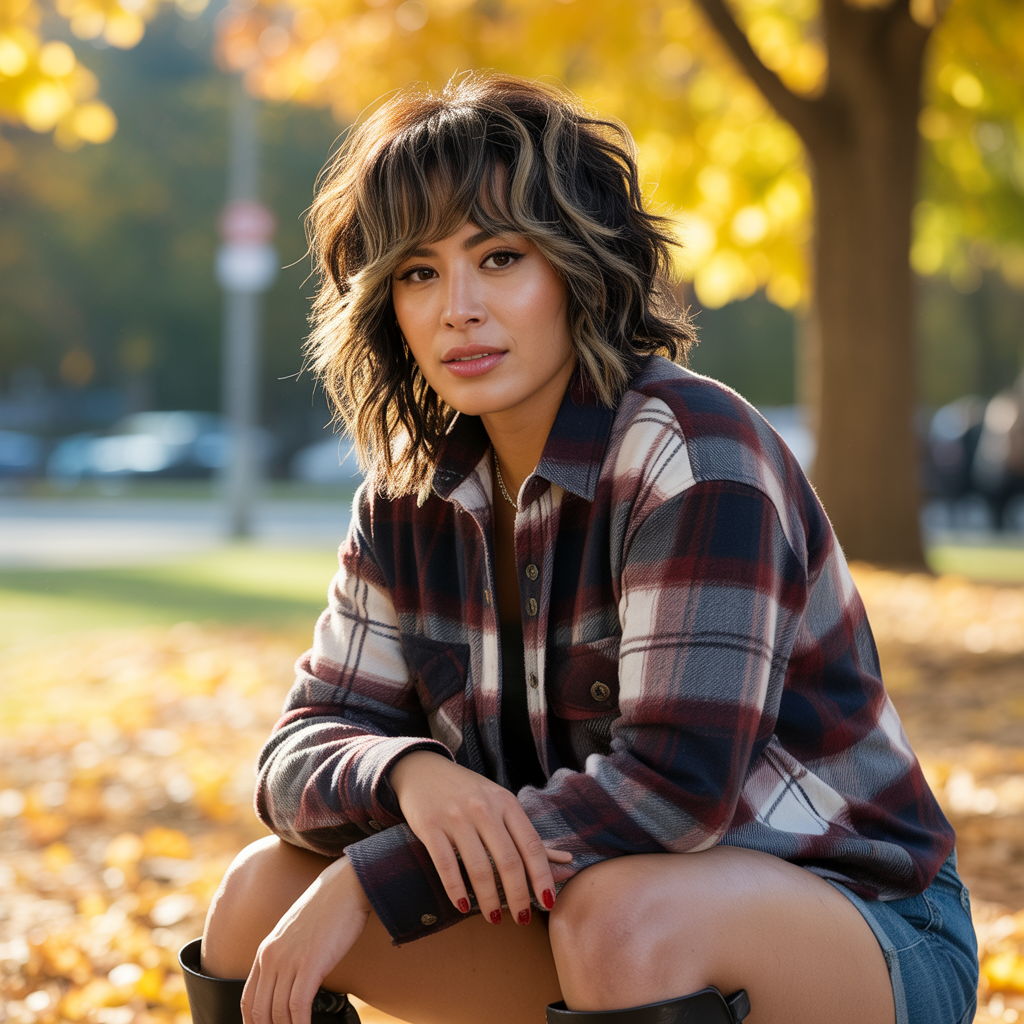
The choppy shag cut is the most editorial version of this style. The layers are deliberately disconnected and strong, creating bold contrast between the lengths. This is not a soft or subtle look.
The level of choppiness can range from light to extreme depending on how much contrast you want. A skilled stylist adjusts the degree of disconnection to match your comfort level and personal style.
Best for: Strong personal style and bold fashion choices Product: American Crew Fiber for a matte, piece-y finish that shows off every deliberate layer Pro tip: Skip washing your choppy shag every day because second-day hair shows texture and separation far better than freshly washed hair, which goes too soft. Barber language: “I want a choppy shag with deliberately disconnected layers. I want visible contrast between the lengths, not smooth blending.” Face shape: Works best on oval and long face shapes. The strong horizontal disconnection adds width that suits narrower faces well.
Modern Shag Cut
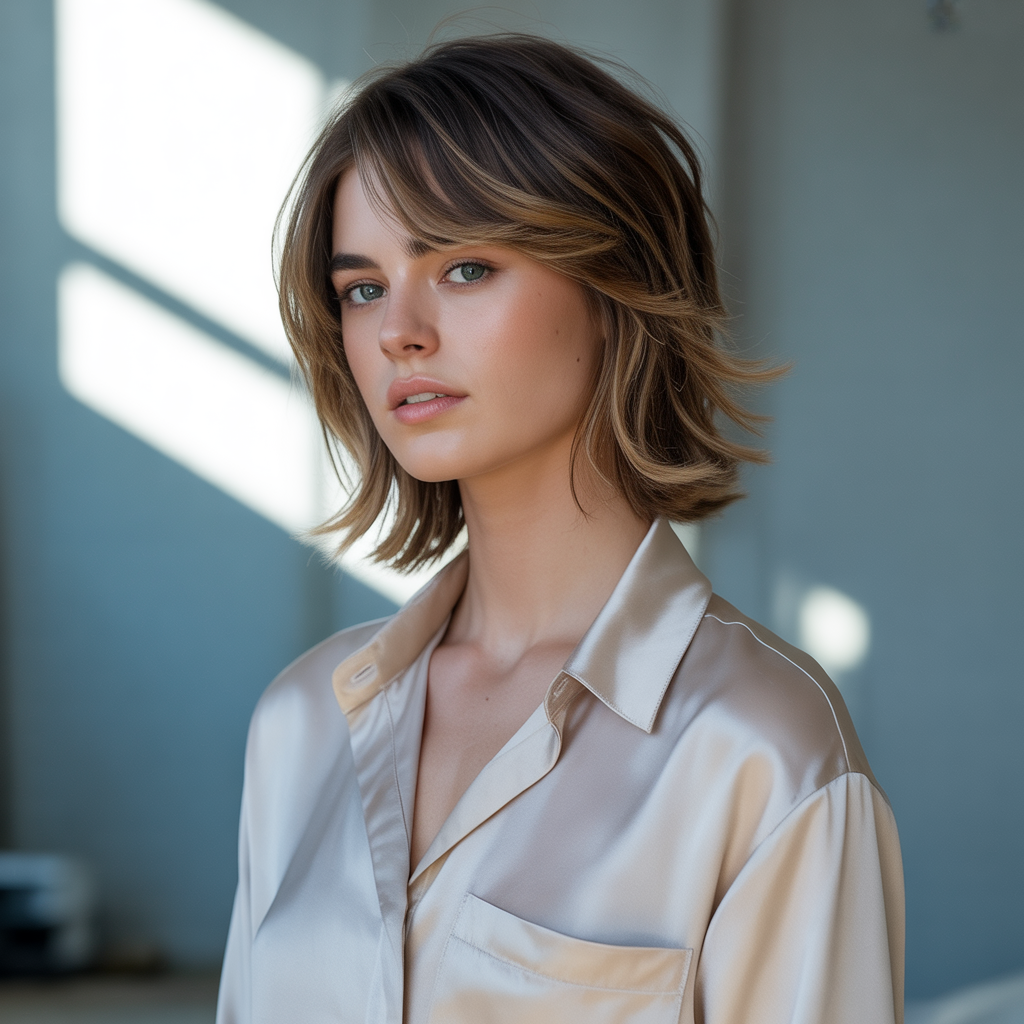
The modern shag keeps the layered shape but smooths out the transitions between layers. Instead of a deliberately rough, lived-in feel, this version uses cleaner blending and softer edges for a more refined result.
It reads as polished in professional settings without losing the movement that makes the shag worth wearing. This is the version that bridges casual and put-together most effectively.
Best for: Professional environments where a very undone look is not appropriate Product: Kérastase Discipline Oleo-Curl for a smooth, flowing finish with natural movement intact Pro tip: Add a few soft babylights before your cut so the color adds depth to the cleaner layer transitions and prevents the modern shag from looking too uniform. Barber language: “I want a modern shag with smooth, blended layers. Not choppy or rough. I want movement and shape but a polished overall result.” Face shape: Suits all face shapes equally. The clean blending flatters without skewing toward any particular structure.
Visit Also: Short Wolf Cut
Layered Shag Cut

A specifically layered shag builds movement in a cascading pattern from crown to ends. Each layer is a visible step in a flowing sequence rather than a blended transition. The result is a full, dynamic shape that looks intentional from every angle.
This version works best on medium to long hair where the layers have room to fall and interact with each other. The longer the hair, the more visible and dramatic the layered effect becomes.
Best for: Medium to long hair with good density wanting visible shape Product: John Frieda Frizz Ease Dream Curls Spray to define movement between each layer on damp hair Pro tip: Ask for a graduation in layer length from front to back rather than uniform layers throughout because front-to-back graduation creates much more visual flow. Barber language: “I want a layered shag where each layer is clearly defined, not blended. Can you graduate the layers shorter in front and longer toward the back?” Face shape: Oval and long faces benefit most. The cascading movement adds beautiful vertical flow that complements longer structures.
Shag Cut With Volume

This version is built specifically around lift. The layers are placed at the crown and through the mid-lengths to push hair outward and upward rather than letting it fall flat. The result is bold, noticeable fullness.
For fine hair, this is a reliable way to appear to have far more hair than you actually do. For thick hair, it channels existing density into a clean, full shape that does not look uncontrolled.
Best for: Anyone who wants maximum visual impact and fullness Product: Kenra Volume Spray 25 as a firm-hold finishing spray that supports volume all day without stiffness Pro tip: Use a diffuser on low speed and high heat to dry the roots first, then move to the mid-lengths, so volume is locked in at the base before you touch the ends. Barber language: “I want a shag focused on volume at the crown. Please cut the top layers short enough to push the hair upward and outward.” Face shape: Best on long and narrow face shapes. The added width at the top and sides creates a more balanced, rounded appearance.
Shag Cut With Fringe

A fringe sits straight across the forehead and creates a clear horizontal line. This gives the shag a more structured front section and a stronger overall silhouette than bangs that sweep to the side.
Soft fringe blends slightly with the layers for a relaxed feel. A blunt, heavier fringe creates harder contrast and a more editorial look. Both options work well depending on how much boldness you want.
Best for: Anyone who wants a clear focal point and a defined front section Product: Aveda Be Curly Curl Enhancer on the fringe to smooth and define without any stiffness Pro tip: Trim your fringe at home between salon visits using nail scissors in very small sections cut straight across so you never remove too much at once. Barber language: “I want a shag with a fringe that sits straight across my forehead. Not curtain bangs. A proper fringe, just above my eyebrows.” Face shape: Best on long and oval faces. The horizontal fringe line adds width and shortens the appearance of longer face shapes.
Shag Cut For Round Face
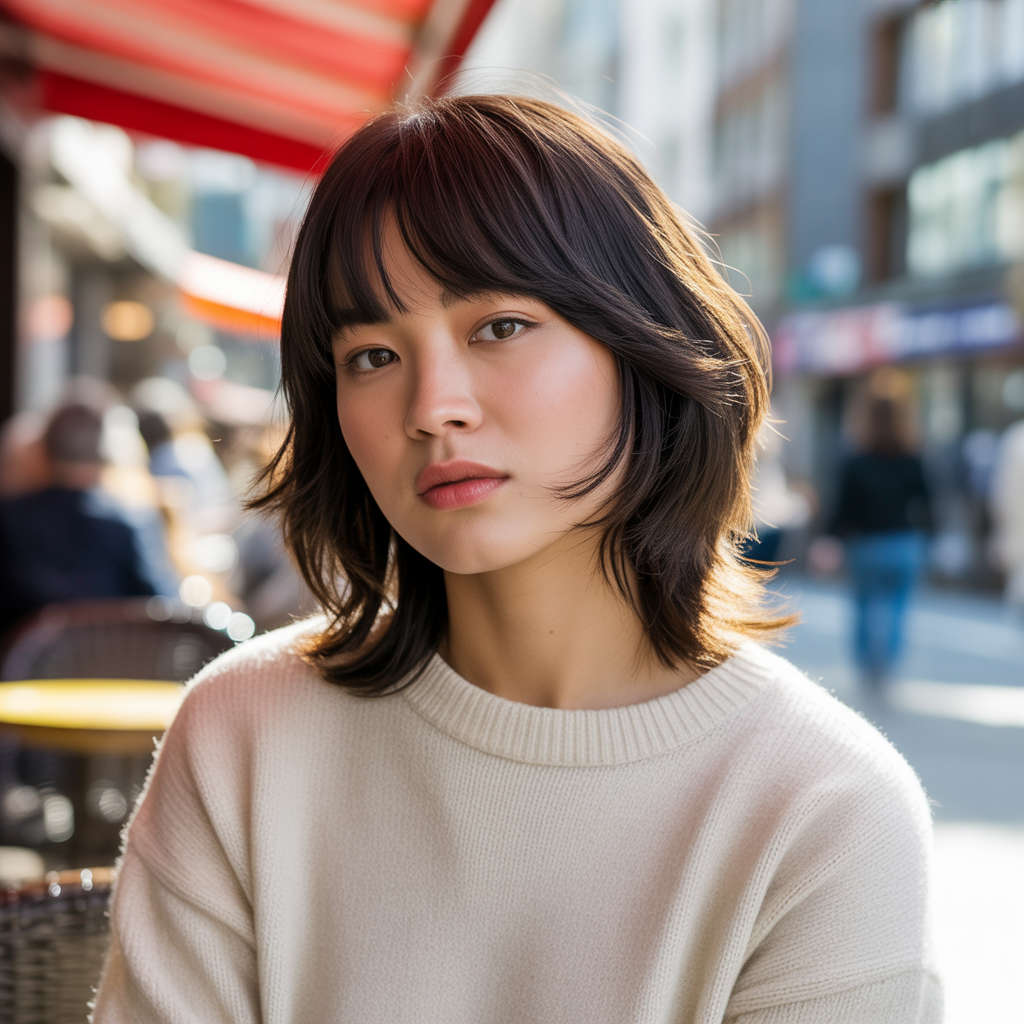
Round faces have even width and height, and the most flattering shag for this shape uses length and layers to create the illusion of more vertical structure. Layers that fall past the cheeks and draw the eye downward are the key detail here.
Side-swept or curtain bangs work much better than straight-across fringe on round faces because they add diagonal movement rather than a horizontal line. This creates angles the face naturally lacks.
Best for: Round faces wanting a longer, more defined overall appearance Product: Bed Head by TIGI Masterpiece Shine Hair Spray to keep long face-framing layers smooth and directional Pro tip: Ask for face-framing layers that stop past the chin rather than at cheekbone level because that extra length makes a major difference in how elongated the face looks. Barber language: “I have a round face and I want a shag where the layers elongate my face. Please keep the face-framing layers long, past my chin, not stopping at the cheeks.” Face shape: Specifically designed for round face shapes. Oval faces can also wear this version with excellent results.
Shag Cut For Square Face

Square faces have strong, defined jawlines. The shag handles this beautifully by introducing movement and softness exactly where a square face tends to look rigid. The layers at the jaw and cheekbones curve the eye around rather than stopping at the corners.
Wispy or curtain bangs soften the forehead without hiding it entirely. Together with flowing mid-length layers, this combination gives the face curves without hiding its natural strength.
Best for: Strong jaw and square face shapes wanting softness and movement Product: Bumble and Bumble Hairdresser’s Invisible Oil for a soft, flowing finish that keeps layers light and separated Pro tip: Ask for extra texture specifically at jaw level so the layers at that point have enough movement to visually curve away from the sharp jaw corner. Barber language: “I have a square face and I want the shag layers to soften my jawline. Can you add extra texture and movement specifically at the jaw level?” Face shape: Designed for square face shapes. Heart face shapes with a strong chin also benefit from this exact approach.
Shag Cut With Highlights
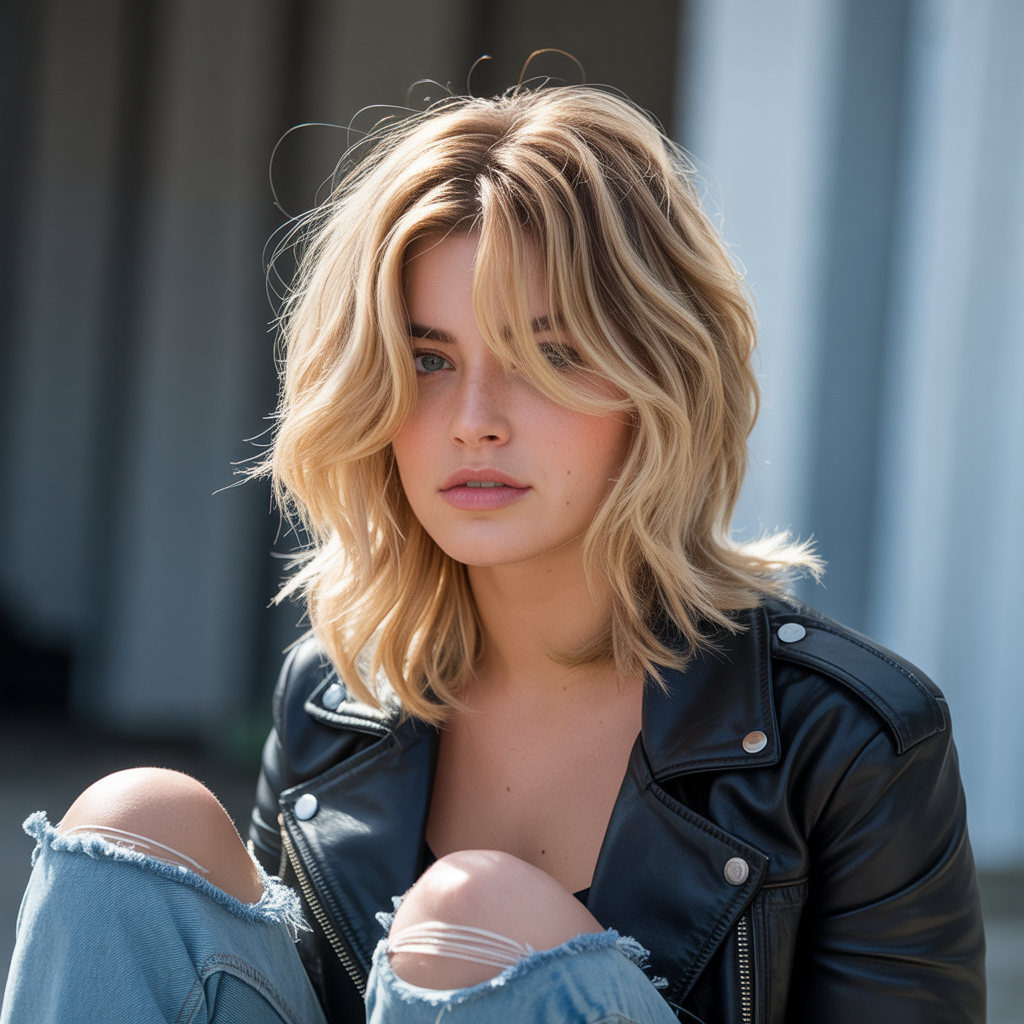
Color and the shag cut are genuinely made for each other. Highlights trace the path of each layer and make the movement of the cut visible even when the hair is completely still. Without color, layers can blend together and texture becomes far less visible.
Soft babylights give a sun-touched natural effect. Bolder highlights add high contrast and draw more attention to the structural movement in the cut. The most important detail is to have color applied after the cut is shaped so the colorist can place it exactly where the layers fall.
Best for: Anyone wanting to maximize the visual impact of their shag cut Product: Redken Color Extend Magnetics Shampoo to preserve highlight tone between salon visits Pro tip: Book your color in the same appointment as your cut and ask for color to be applied after the shag shape is set so placement follows the actual layer lines. Barber language: “I want a shag cut with highlights placed on the layers to show off the movement. Can we do the color after the cut is shaped, not before?” Face shape: All face shapes benefit equally. Highlight placement can be directed toward wherever the face needs the most light and attention.
Quick Comparison Table
| Style | Length | Hair Type | Maintenance | Bold Factor |
|---|---|---|---|---|
| Shag Cut With Bangs | Any | All types | Low | ★★ |
| Long Shag Cut | Long | Wavy, Curly, Straight | Low | ★★ |
| Short Shag Cut | Short | Fine, Thick | Very Low | ★★★ |
| Medium Shag Cut | Medium | All types | Low | ★★ |
| Shag Cut With Layers | Any | Fine, Thick | Low | ★★ |
| Curly Shag Cut | Medium to Long | Curly | Low | ★★★ |
| Wavy Shag Cut | Any | Wavy | Very Low | ★★ |
| Shag Cut With Curtain Bangs | Medium to Long | All types | Low | ★★ |
| Shag Cut For Fine Hair | Any | Fine | Low | ★★ |
| Shag Cut For Thick Hair | Medium to Long | Thick | Low | ★★ |
| Shag Cut With Face Framing | Medium to Long | All types | Low | ★★ |
| Textured Shag Cut | Any | Straight | Very Low | ★★ |
| Choppy Shag Cut | Short to Medium | All types | Very Low | ★★★ |
| Modern Shag Cut | Medium to Long | All types | Low | ★★ |
| Layered Shag Cut | Medium to Long | Medium to Thick | Low | ★★ |
| Shag Cut With Volume | Any | Fine to Medium | Low | ★★★ |
| Shag Cut With Fringe | Short to Medium | All types | Medium | ★★★ |
| Shag Cut For Round Face | Medium to Long | All types | Low | ★★ |
| Shag Cut For Square Face | Medium to Long | All types | Low | ★★ |
| Shag Cut With Highlights | Any | All types | Medium | ★★★ |
Frequently Asked Questions
What is a shag cut and who does it suit best? A shag cut is a layered haircut built on texture and movement that works across most hair types, lengths, and face shapes. It suits anyone who wants a natural, low-effort look that still has shape and personality.
How often should I trim a shag cut to keep it looking good? Every six to eight weeks is the ideal trim schedule. This keeps the layers clean, the ends fresh, and the overall shape working the way it should.
Can very fine hair wear a shag cut without looking flat? Fine hair is actually one of the best hair types for a shag cut. The choppy crown layers build volume and body that blunt cuts simply cannot create.
What products work best for styling a shag cut at home? Lightweight texturizing sprays, wave creams, and mousse work best. Heavy gels and thick serums weigh the layers down and kill the movement the cut is built around.
Does a shag cut work on naturally straight hair? Straight hair benefits from a shag cut as much as any other texture. The layers build in movement and texture structurally so you do not need heat tools to recreate it every day.
Final Thoughts
The right haircut changes more than just how your hair looks. It changes how long your morning takes, how confident you feel walking out the door, and how often you actually like what you see in the mirror. The shag cut does all of that without asking much from you in return.
It suits teenagers, working professionals, and women over fifty. It works on pin-straight hair and tight curls. It adapts to bold personalities and people who just want something easy. There is a version of this cut for almost everyone.
If you have been waiting for permission to try something new, this is it. Pick the version that matches your texture and your face shape, save this list, and walk into your next appointment with a clear ask.
The most valuable thing you can bring to a salon appointment is not a photo. It is the exact words to describe what you want. Every barber language line in this guide gives you exactly that.
Save this pin before you scroll away and share it with someone who has been thinking about a change.