20 Long Angled Bob Hairstyles That Will Completely Transform Your Look
You have been scrolling through hair inspiration for days, saving image after image of the perfect long angled bob, and somehow you still leave the salon feeling like something got lost between the photo and the chair. That gap between what you wanted and what you got is one of the most frustrating experiences a person can have with their hair.
That disconnect happens more often than most stylists will admit. With so many variations of this cut available, from sharp and stacked to soft and layered, feeling overwhelmed before a single strand is cut is completely understandable. The problem is not your taste or your ability to communicate.
The real issue is that most people choose a style based on how it looks on someone else rather than understanding the structural elements that make it work. Without knowing how the graduation angle, weight line placement, and perimeter finish each change the silhouette, you end up guessing every single time.
Understanding the mechanics of a precision haircut, specifically how the degree of back stacking changes the silhouette on different hair types and face shapes, is what separates a bob that flatters from one that simply shortens. That structural knowledge is what this guide is built on.
This article breaks down 20 long angled bob variations and explains exactly what makes each one work. More importantly, it gives you the precise language to use in the salon so your stylist understands your brief from the very first sentence.
By the end, you will know exactly which long angled bob suits your face shape, your hair type, and your lifestyle. No more guessing, no more disappointment, and no more walking out of the salon with the wrong version of what you actually wanted.
The long angled bob is experiencing a quiet reinvention in 2025, with softer back graduation and more surface movement replacing the aggressive geometric versions of previous years. Before anything else, understand this: the front length is the single most important decision in this cut, because it determines how the entire shape frames your face. Get that right and everything else falls into place.
Long Angled Bob Hairstyle Ideas
Classic Long Angled Bob
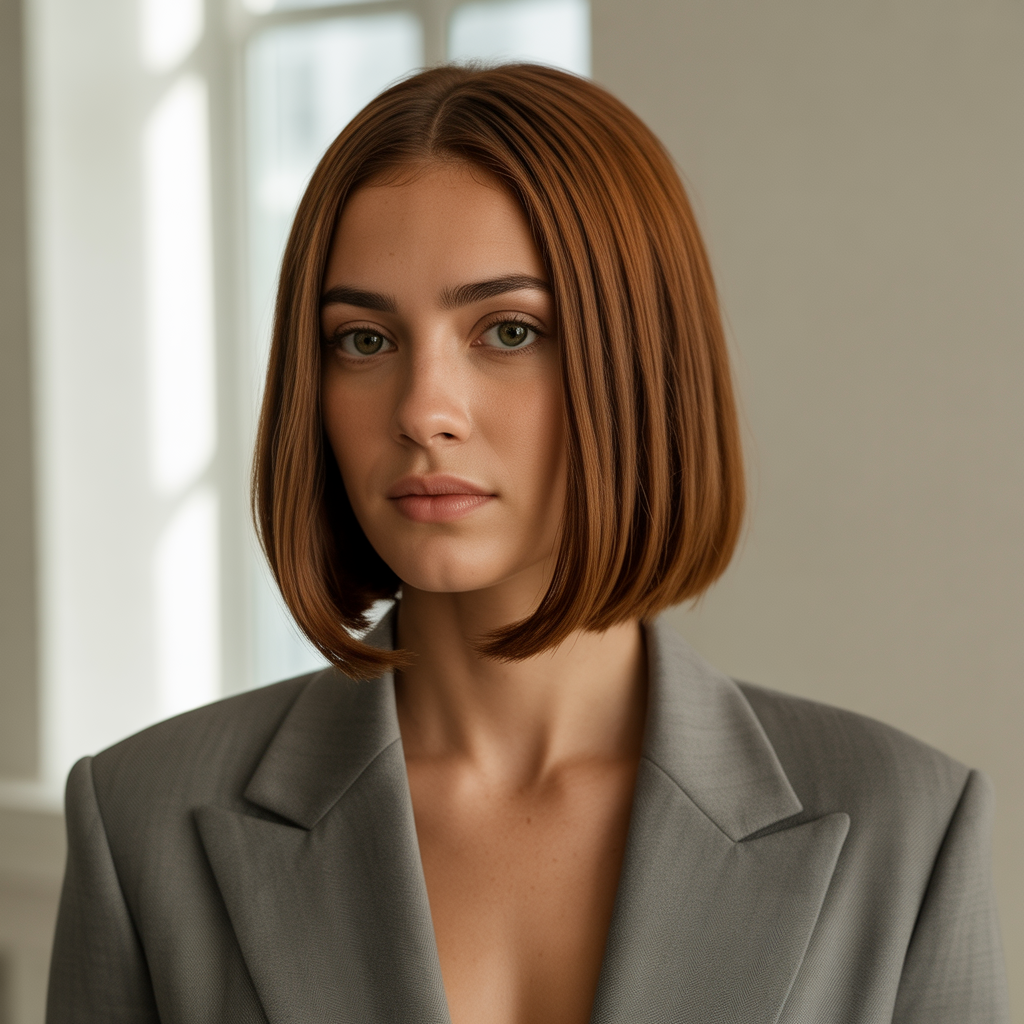
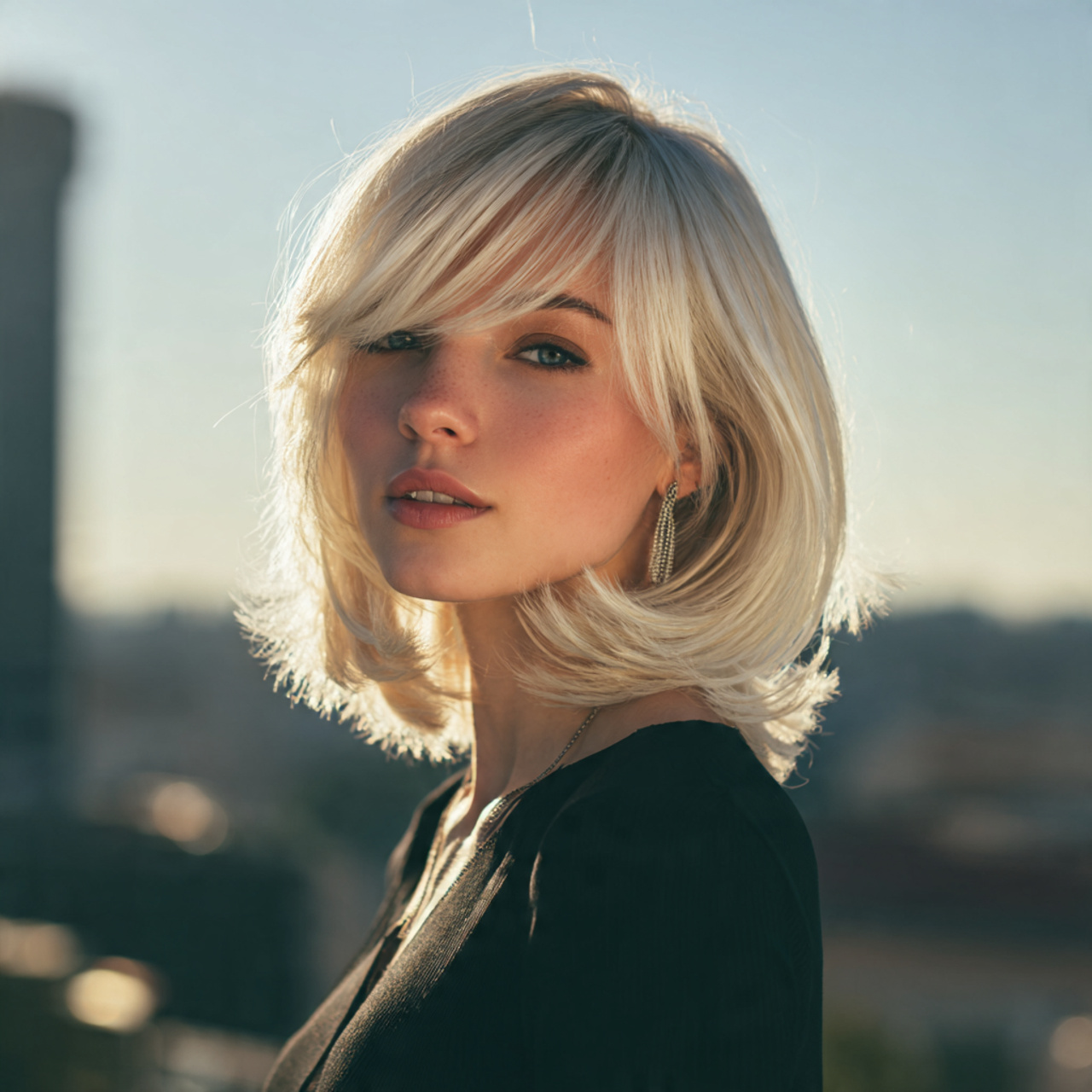
The classic version is defined by clean lines, a smooth surface finish, and a clear drop from back to front with nothing competing for attention. The perimeter sits in an unbroken, intentional line and the back graduation is visible and deliberate from every angle.
This is the best starting point for anyone trying the long angled bob for the first time. It grows out cleanly, suits a wide range of settings, and works as a foundation if you want to add texture or layers further down the line.
Best for: First-time bob clients and anyone who prefers a polished, unfussy appearance Product: Kenra Platinum Silkening Mist for a smooth, refined finish that shows the shape clearly Pro tip: Ask for point cutting at the ends rather than blunt scissor work to prevent the perimeter from sitting too heavy once dry. Barber language: Say: “I want a classic long angled bob, clean lines, minimal layering, with point-cut ends.” Face shape: Suits oval and heart face shapes
Textured Long Angled Bob
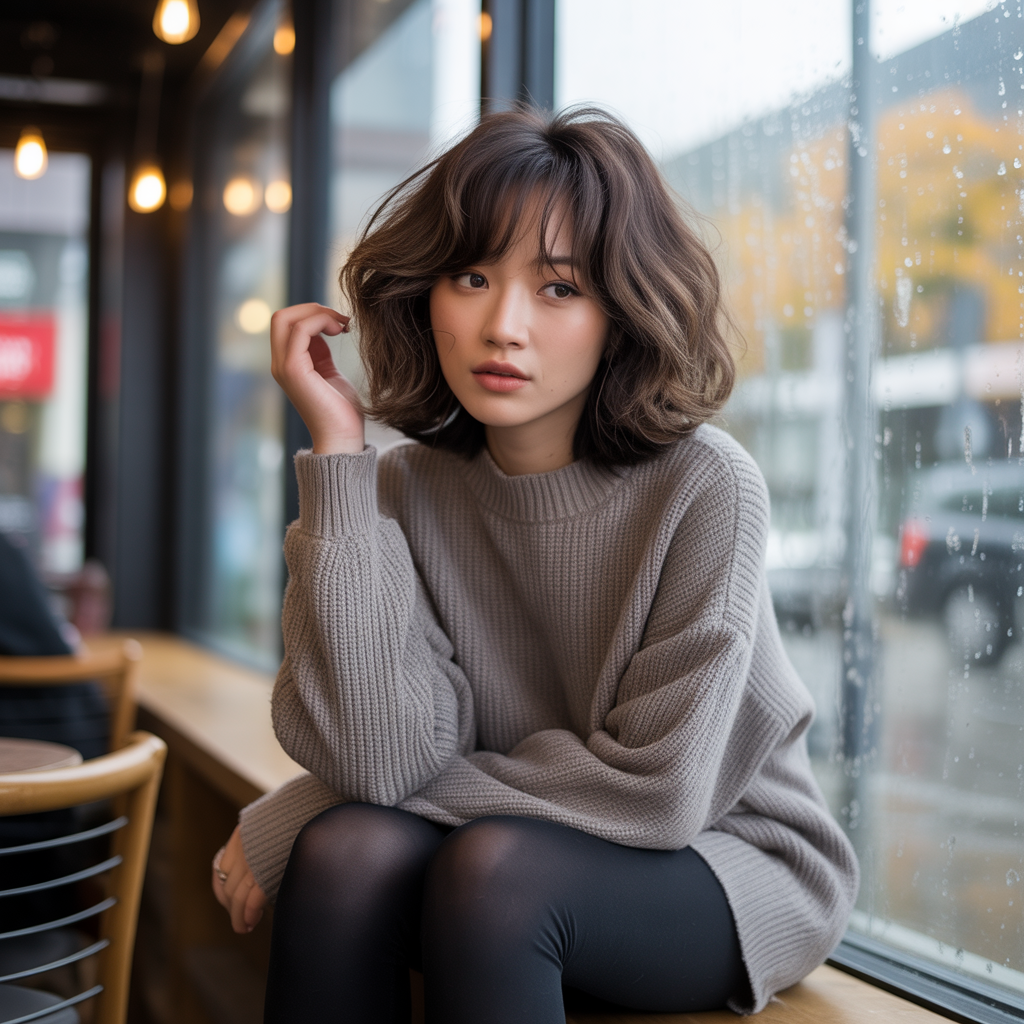
Texture gives this cut a relaxed, effortless quality that the classic version cannot replicate. The ends feel slightly disconnected, the surface carries natural movement, and the whole style looks intentional even on days when very little effort was made.
Stylists achieve this finish using slide cutting or razor work rather than standard scissors, which is why the result behaves so differently from a layered bob. Fine to medium hair benefits most because the technique creates visual body without adding product weight.
Best for: Busy routines, fine to medium hair, anyone wanting a genuine wash and go finish Product: R+Co Badlands Dry Shampoo Paste for grip and texture without stiffness Pro tip: Request razor-finished ends specifically, because thinning shears create a different and less natural texture than a razor delivers. Barber language: Say: “I want a long angled bob with razor-finished ends and lived-in texture through the surface.” Face shape: Works on all face shapes; especially flattering on round faces
Sleek Straight Long Angled Bob
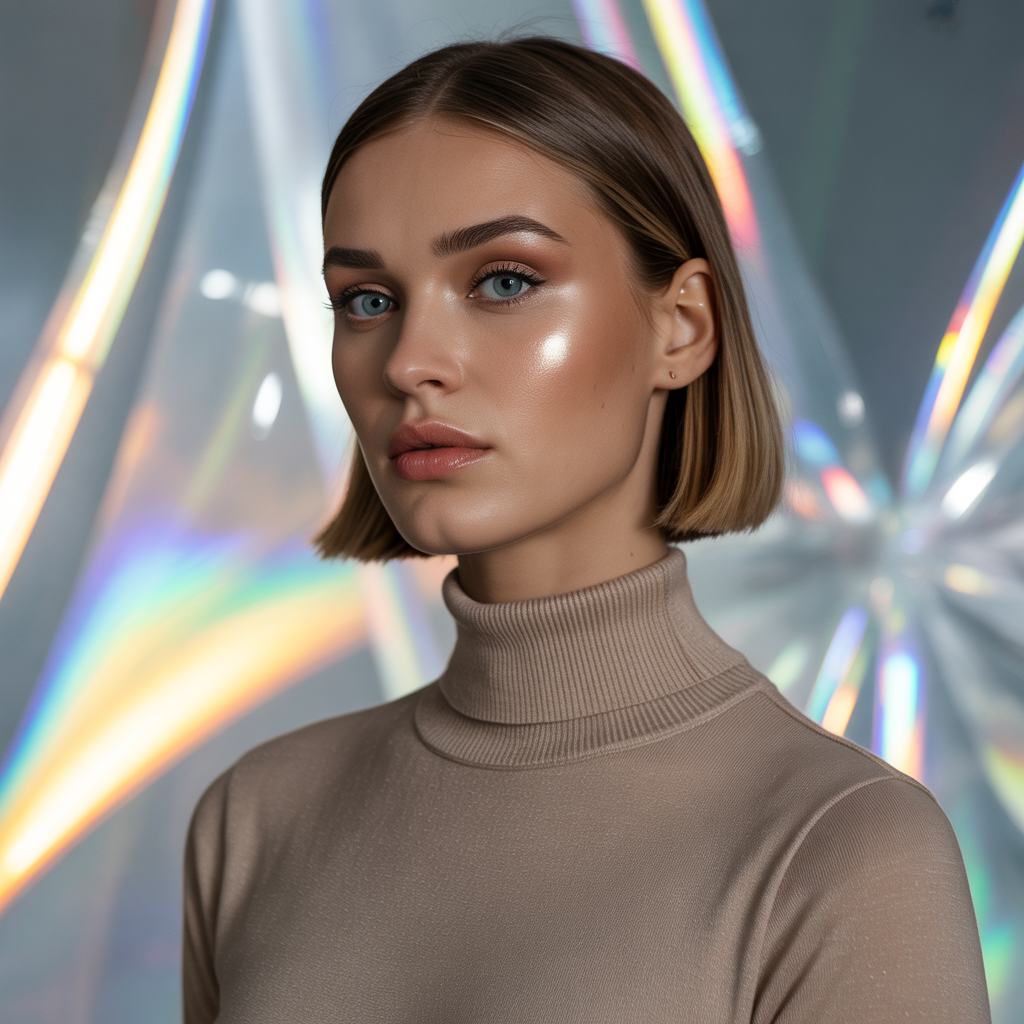
Nowhere is the angle of this cut more visible than in the sleek straight version. Every line reads sharply, the perimeter is graphic and deliberate, and the surface reflects light in a way that signals a considered, expensive finish.
This style requires consistent heat protection and a precise blow-dry or flat iron finish to maintain its impact. It works best on straight or fine hair that lies flat naturally, because any wave or frizz will interrupt the clean line.
Best for: Professional settings, formal occasions, and anyone who wants a high-impact daily look Product: GHD Platinum+ Styler paired with GHD Heat Protect Spray for a flawless, protected finish Pro tip: Use the cool-shot button when blow-drying to lock the surface flat before touching it with a flat iron, or the iron will fight natural lift. Barber language: Say: “I want a sleek long angled bob with a blunt perimeter, designed to be worn straight.” Face shape: Best for oval, oblong, and heart face shapes
Wavy Long Angled Bob
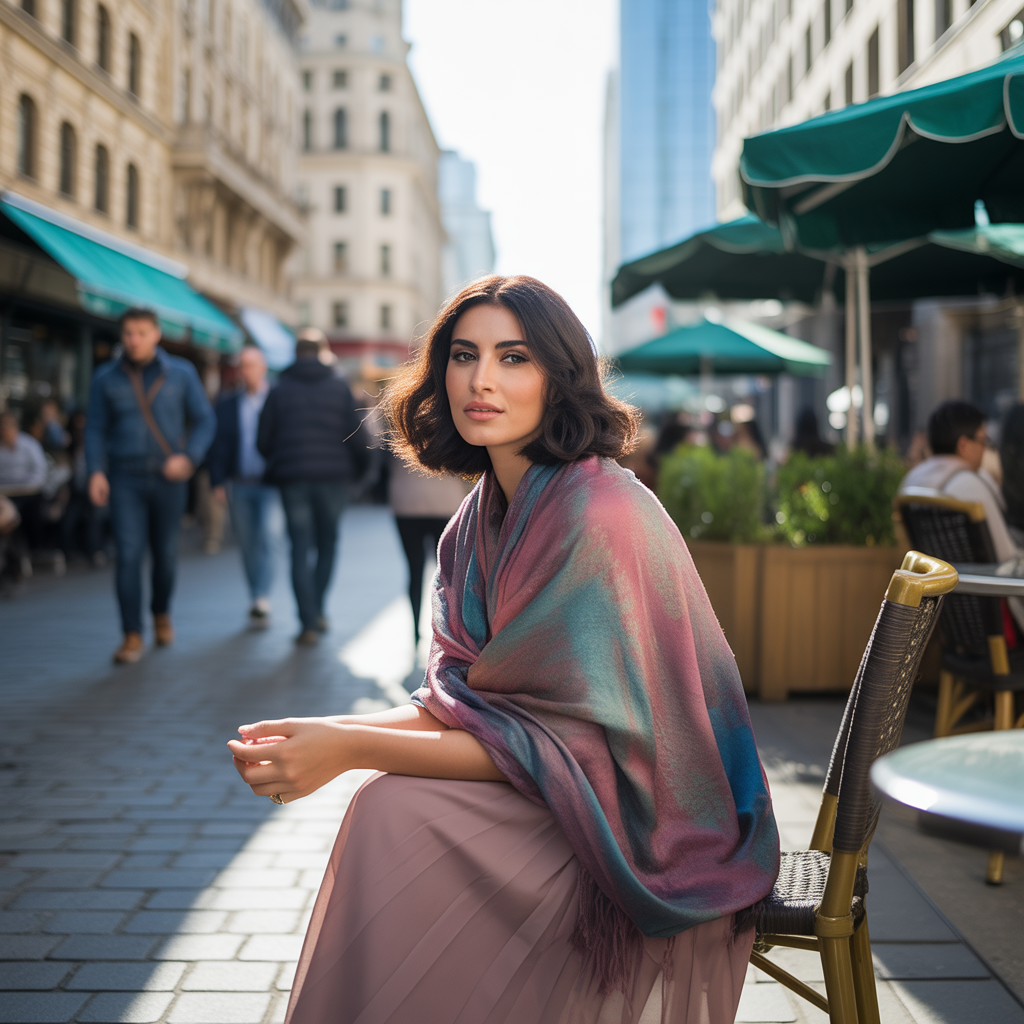
Waves soften the structure of this cut and make the overall shape feel lighter and more approachable without removing any of the face-framing effect. The movement works with the angle rather than against it and translates well on almost any face shape.
Fine hair benefits most from this version because the wave creates visual bulk and dimension where there was none before. A 25mm curling wand or overnight braids on damp hair both deliver the result with no heat damage.
Best for: Fine hair, warm weather styling, everyday relaxed wear Product: Ouai Wave Spray for buildable waves with zero crunch Pro tip: Wrap sections away from the face rather than toward it so the waves open outward and frame the jaw as the cut is designed to do. Barber language: Say: “I want a long angled bob cut to wear with soft waves, leave weight in the interior for movement.” Face shape: Suits all face shapes; adds useful visual width for long and oblong faces
Curly Long Angled Bob
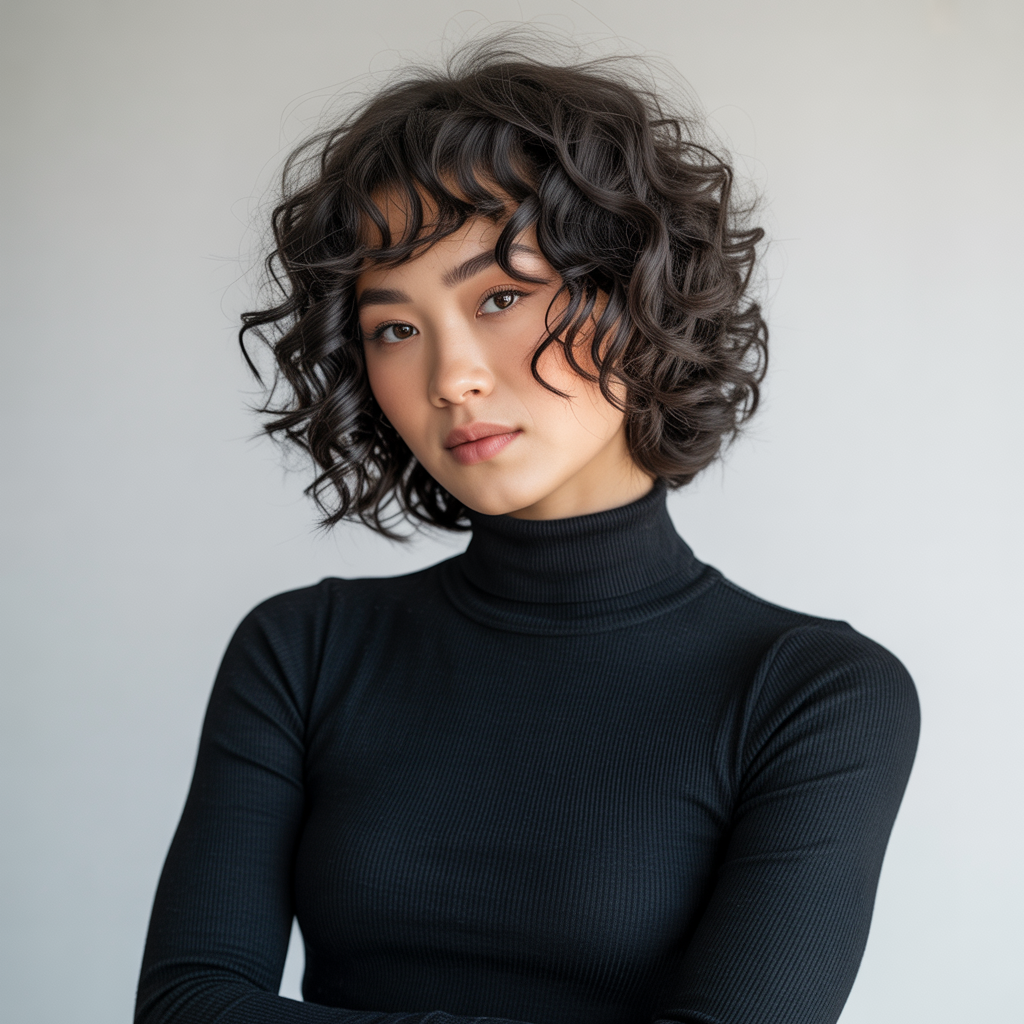
Curls and the long angled bob work together naturally when the cut is done correctly. The graduation at the back reduces bulk where curls tend to cluster most, while the longer front keeps the shape defined even as the curls expand outward. The result looks considered rather than accidental.
This cut must be done on dry, fully formed natural curls. Wet cutting on curly hair almost always causes the back to spring up shorter than intended, throwing off the entire front-to-back proportion.
Best for: Natural curls, type 2c to 4a hair, anyone wanting shape without losing curl definition Product: SheaMoisture Jamaican Black Castor Oil Leave-In Conditioner for curl definition and frizz control Pro tip: Insist on a dry cut from the very beginning, not a wet cut with promises of adjustments made afterward. Barber language: Say: “I want a long angled bob cut dry on natural curls, longer front, shorter back, no thinning shears.” Face shape: Suits round and oval face shapes especially well
Long Angled Bob with Bangs
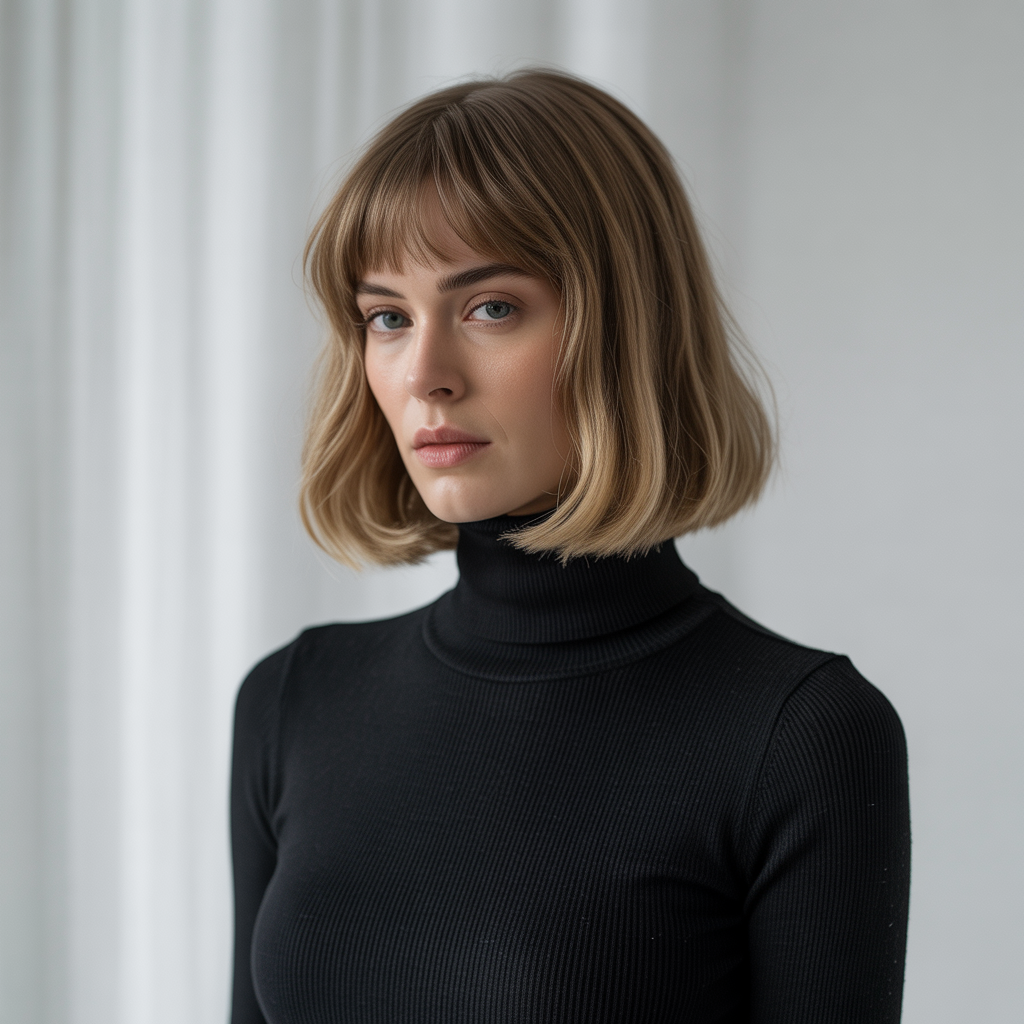
Bangs shift the entire personality of this cut the moment they are added. Curtain bangs create a soft, face-framing effect, blunt bangs add bold structure, and wispy bangs keep the overall look light and approachable. Each option produces a different result on the same foundation cut.
The key thing to understand is that bangs narrow the forehead and reduce visible face length, which makes them excellent for longer faces but something to approach carefully on faces that are already short or wide.
Best for: Long faces, high foreheads, and anyone wanting to visually rebalance facial proportions Product: Bumble and bumble Invisible Oil Heat and UV Protective Primer to keep bangs smooth and frizz-free between styling sessions Pro tip: Ask for bangs cut slightly longer than you think you want because they spring up after drying, often by half an inch or more. Barber language: Say: “I want a long angled bob with curtain bangs from the hairline falling to the cheekbone, blended softly into the front panels.” Face shape: Best for long, oblong, and high-forehead face shapes
Layered Long Angled Bob
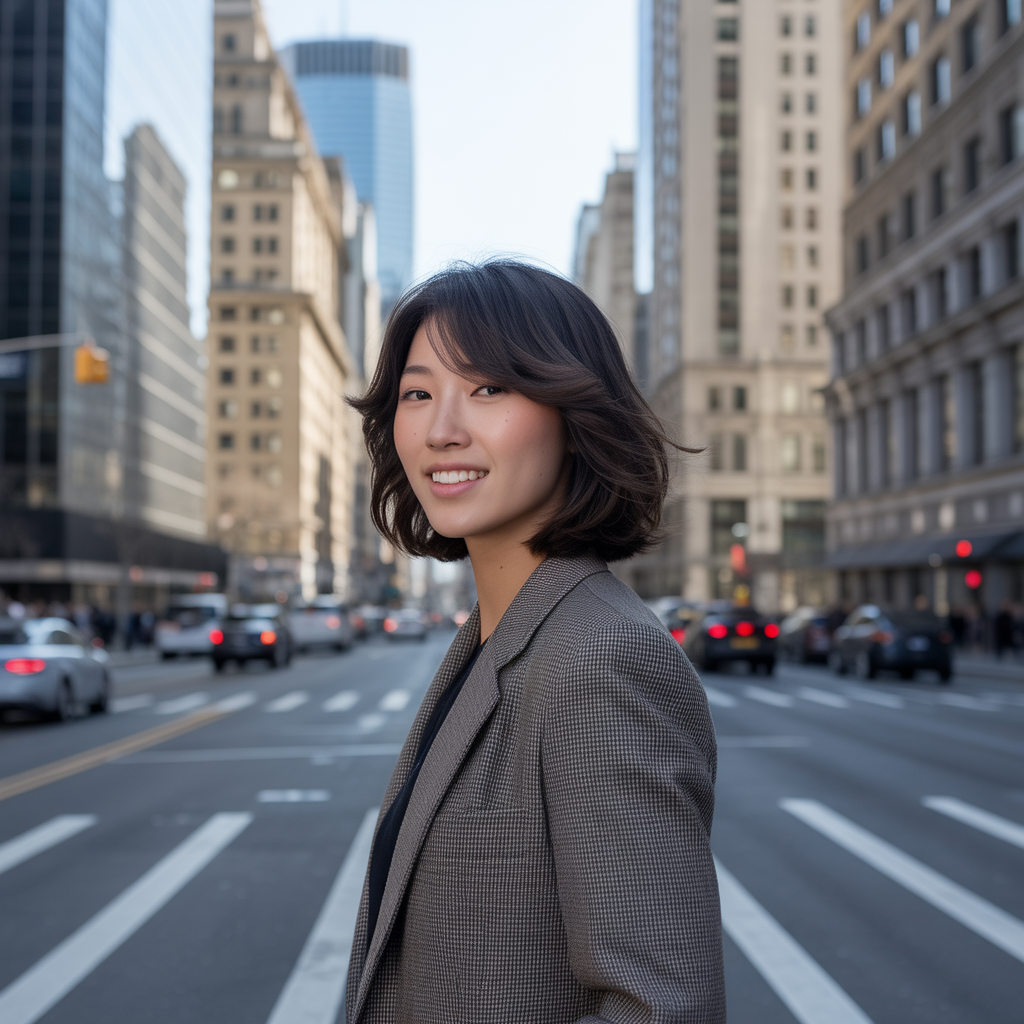
Layers placed inside a long angled bob change how the hair moves without altering the outer perimeter that defines the silhouette. The shape stays intact while the hair gains bounce, flexibility, and a natural swing that the uncut version simply cannot produce.
Placement matters as much as the layers themselves. Keeping them from mid-shaft to ends avoids volume in the wrong zones and preserves the flattering weight around the face where this cut needs it most.
Best for: Thick hair, fine hair that falls flat, anyone wanting more movement day to day Product: Living Proof Full Dry Volume and Texture Spray to amplify internal layers without adding weight Pro tip: Ask for layers from mid-shaft to ends only, never above the ear, to keep the bob silhouette visible and clean from the front. Barber language: Say: “I want a long angled bob with interior layers from mid-length down to add movement. Keep the perimeter solid.” Face shape: Flatters all face shapes; particularly good for round faces needing added visual length
Choppy Long Angled Bob
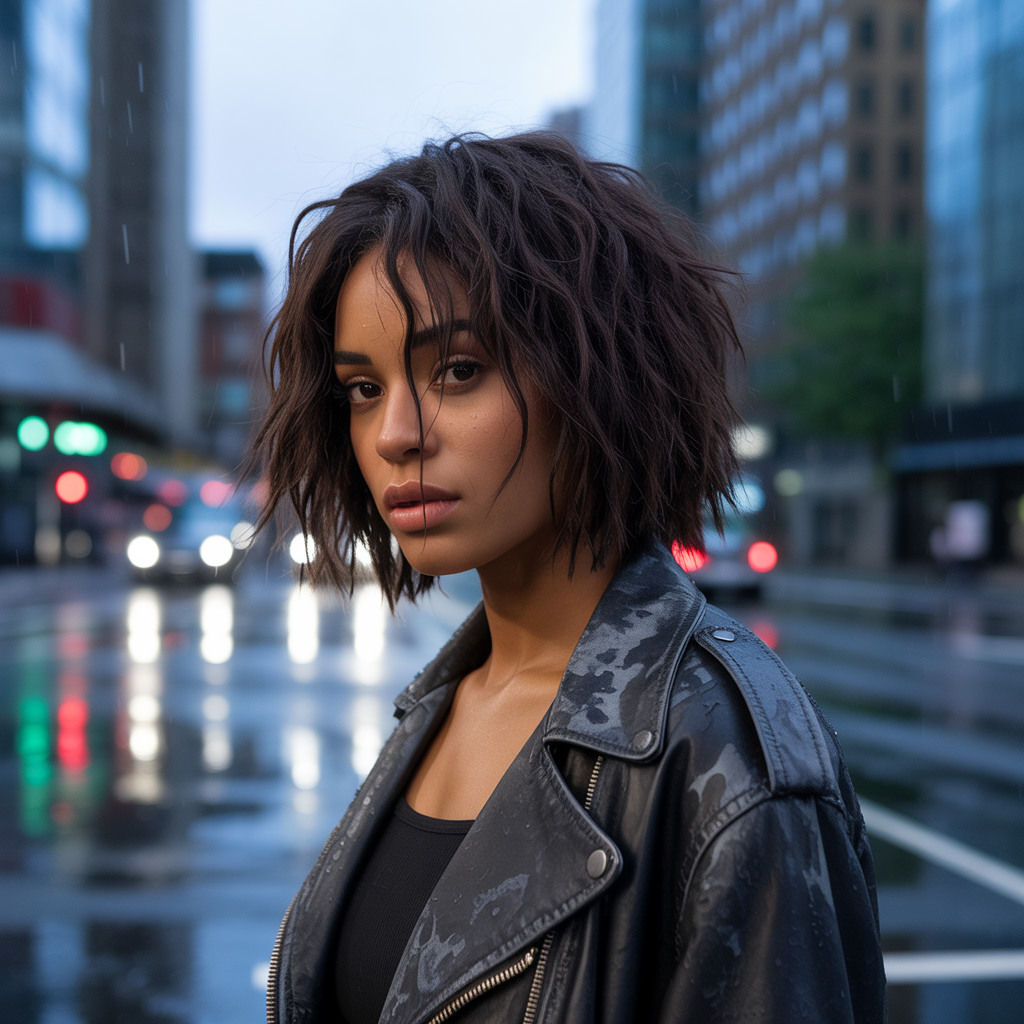
Disconnected ends replace the smooth perimeter in this version, creating a raw and modern edge that feels editorial rather than polished. The cut does not need to be perfect, and that is part of what makes it work so well as an everyday style.
Straight to wavy hair shows the choppy finish most clearly because the pieces separate and catch light independently. Applying the right product amplifies the effect and keeps the look from reading as unfinished.
Best for: Creative professionals, fashion-forward clients, and anyone wanting bold, textured impact Product: Wella Professionals EIMI Texture Touch Reworkable Putty for piece-by-piece definition Pro tip: Scrunch a small amount of putty into the ends while the hair is still slightly damp, then air-dry completely for the most natural choppy result. Barber language: Say: “I want a long angled bob with choppy disconnected ends. No blunt line. I want the pieces to separate.” Face shape: Works best on oval and oblong face shapes
Long Angled Bob with Highlights
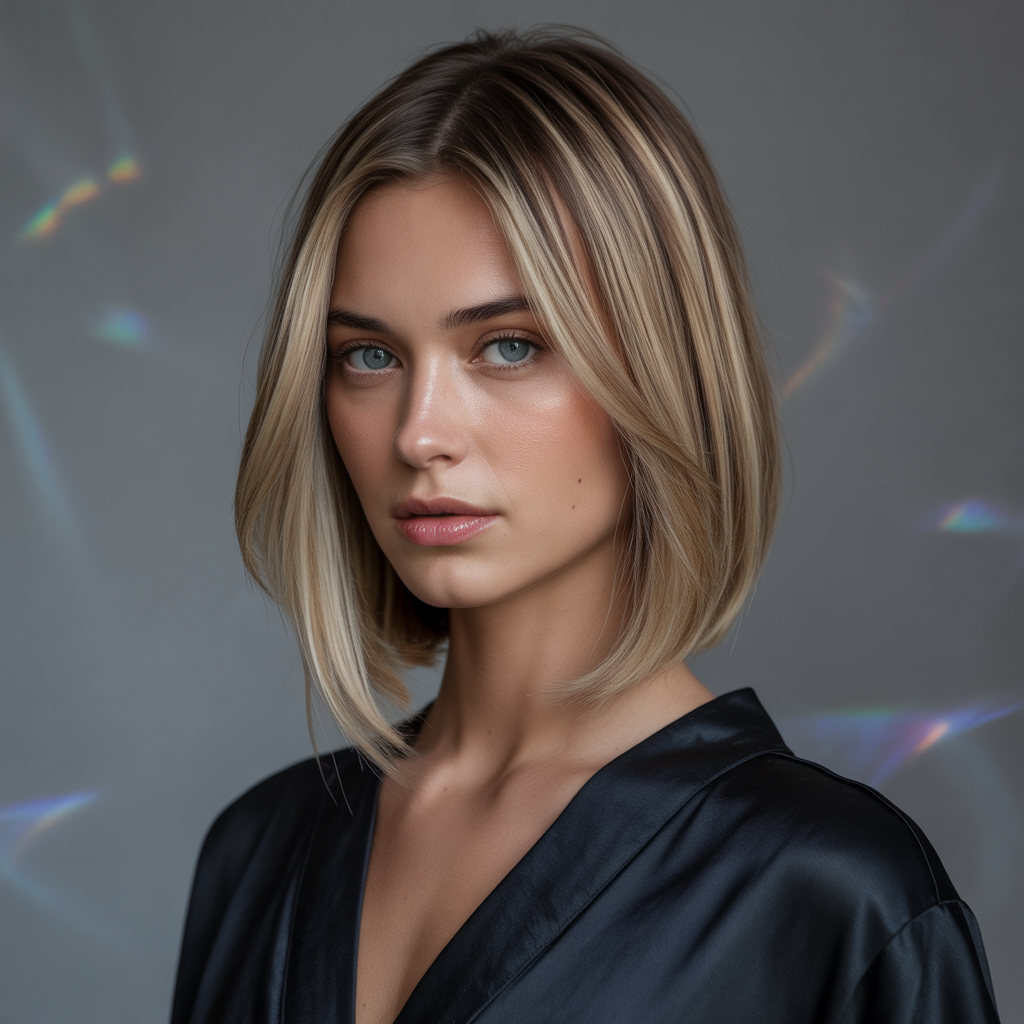
Highlights on this cut do two things at once. They add color dimension and they make the structural angle of the bob easier to read, because face-framing pieces in a lighter shade draw the eye directly to where the drop in length falls.
Balayage-painted highlights suit this cut better than foil highlights in most cases because the soft color graduation mirrors the graduated angle of the cut itself. The color and structure reinforce each other rather than competing.
Best for: Anyone wanting to add visual interest without committing to a full color change Product: Joico Color Balance Blue Shampoo to keep highlighted sections bright and prevent brassiness between salon visits Pro tip: Ask your colorist to concentrate the lightest pieces in the front panels only so the highlights draw the eye along the angle of the bob rather than distributing evenly. Barber language: Say: “I want a long angled bob with balayage highlights at the front panels and face frame, blending naturally into the base toward the back.” Face shape: Suits all face shapes; lifts and brightens any facial structure
Long Angled Bob with Ombre
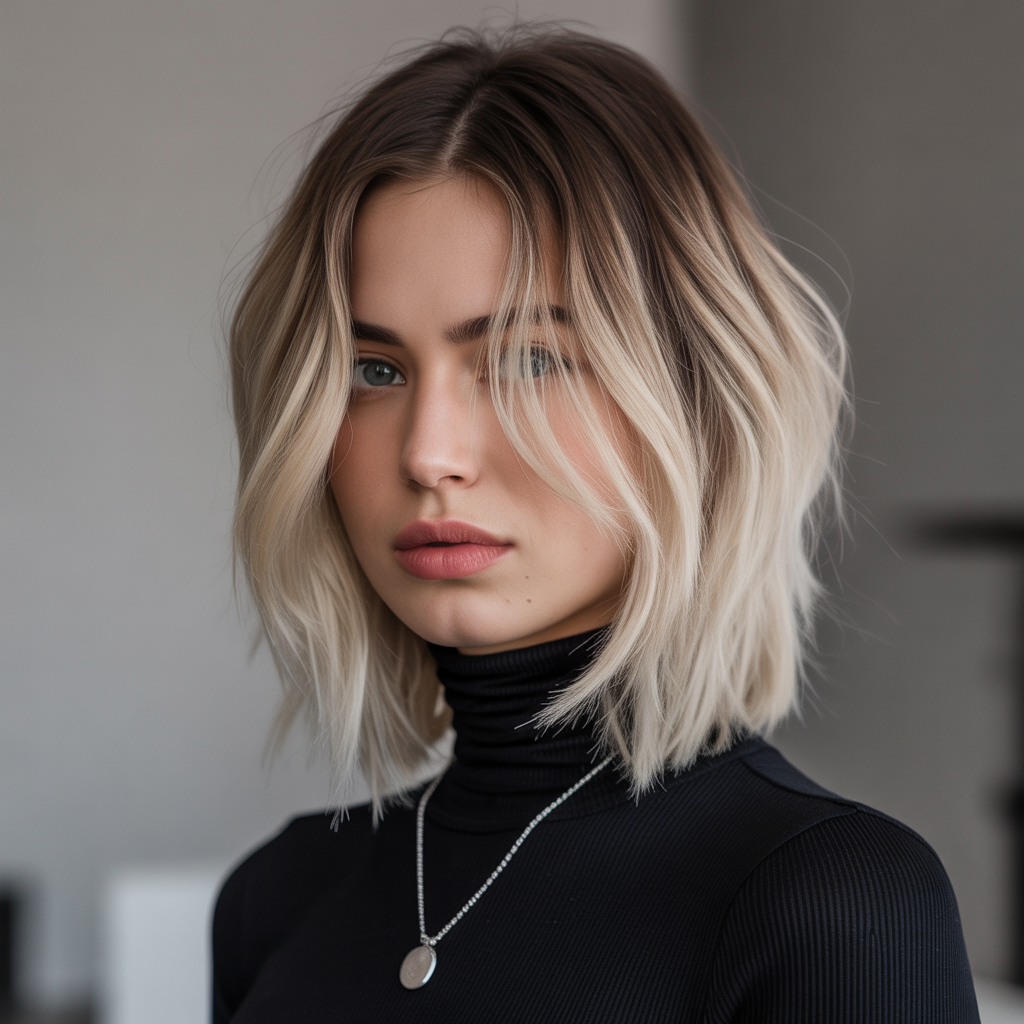
Ombre creates a natural color gradient that follows the slope of the cut directly. Darker roots melt into lighter ends, and because the front panels are longer, the lightest color sits exactly where it frames the face with the greatest impact.
The biggest practical advantage is low maintenance. Root regrowth blends rather than contrasts sharply, allowing eight to twelve weeks between appointments without the color looking neglected or overdue.
Best for: Anyone wanting a low-maintenance color option that grows out gracefully Product: Pureology Strength Cure Best Blonde Shampoo and Conditioner for preserving lighter ends Pro tip: Go two to three shades lighter than your natural base color for ombre that reads as deliberate rather than simply grown out. Barber language: Say: “I want a long angled bob with soft ombre, dark at the roots and lighter toward the ends, with no hard line of demarcation.” Face shape: Suits medium to long face shapes; the gradient adds visual length
Long Angled Bob for Fine Hair

Fine hair and the long angled bob are one of the most reliably successful combinations in hairdressing. The perimeter weight at the front creates the appearance of thickness, and the graduated back lifts the silhouette so the hair does not fall flat against the sides of the head.
The most important rule is to avoid over-layering. Removing too much interior density from fine hair produces thin, wispy ends that undermine the entire structure of the cut and make the hair look sparser than it actually is.
Best for: Fine and thin hair types wanting the genuine appearance of fullness and density Product: Kérastase Resistance Bain Extentioniste Shampoo to strengthen strands and reduce breakage at the ends Pro tip: Ask for a stronger blunt perimeter than seems necessary because the weight line is the primary tool that creates the illusion of thickness in fine hair. Barber language: Say: “I want a long angled bob for fine hair. Solid perimeter, minimal layers, absolutely no thinning shears.” Face shape: Works beautifully on oval and long face shapes
Long Angled Bob for Thick Hair
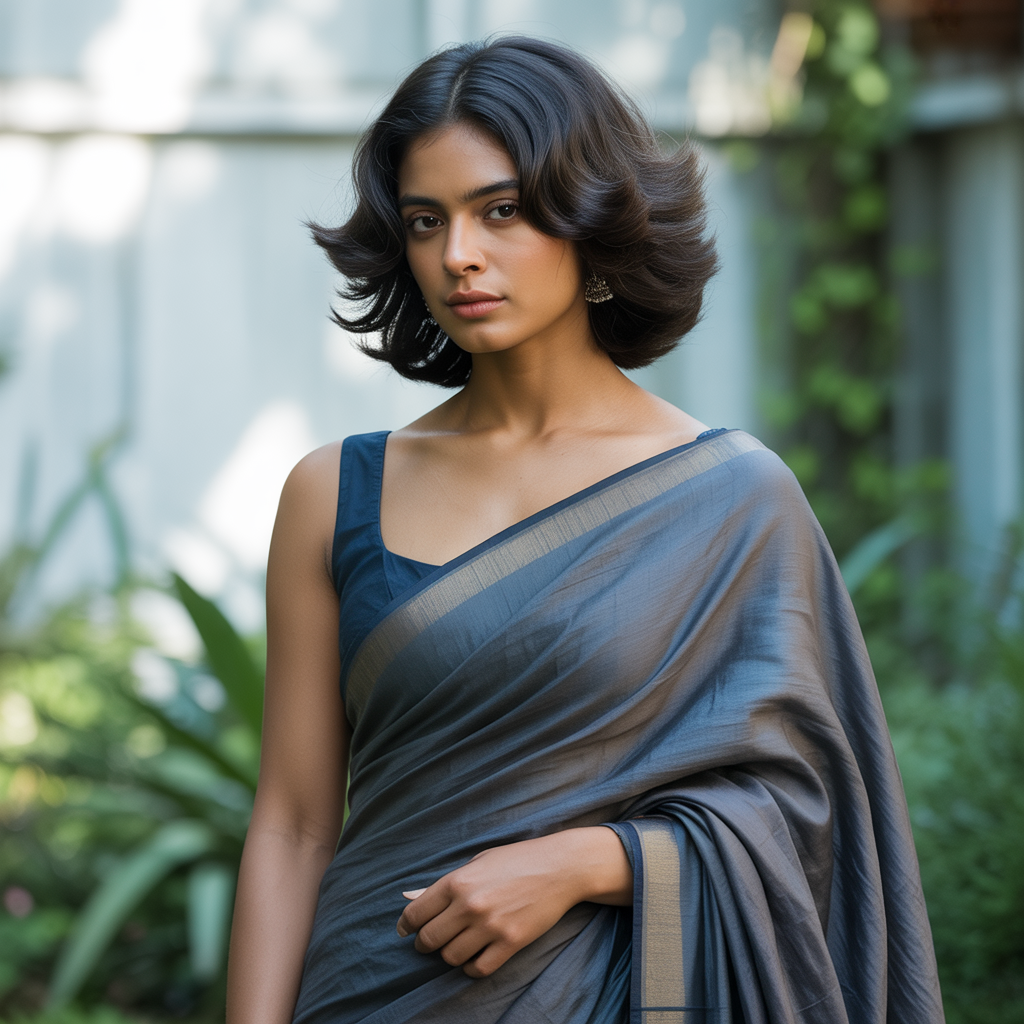
Thick hair that is not properly managed in a bob will triangle, meaning it spreads progressively wider as it grows toward the ends and loses all sense of intentional shape. The long angled bob solves this through stacking at the back and precise interior weight removal.
The technique matters enormously here. Channel cutting through the interior removes bulk without disrupting the surface, whereas thinning shears on dense hair almost always leave a frizzy surface texture that is difficult to manage.
Best for: Thick and heavy hair types needing structural weight management to stay controlled Product: Redken Extreme Bleach Recovery Cica Leave-In Treatment for manageability and smoothness in dense hair Pro tip: Specifically ask for channel cutting on the interior rather than thinning shears, and explain that thinning shears cause surface frizz on your hair type. Barber language: Say: “I want a long angled bob for thick hair with interior channel cutting for weight removal, not thinning shears.” Face shape: Especially flattering on oval and square face shapes
Long Angled Bob with Middle Part
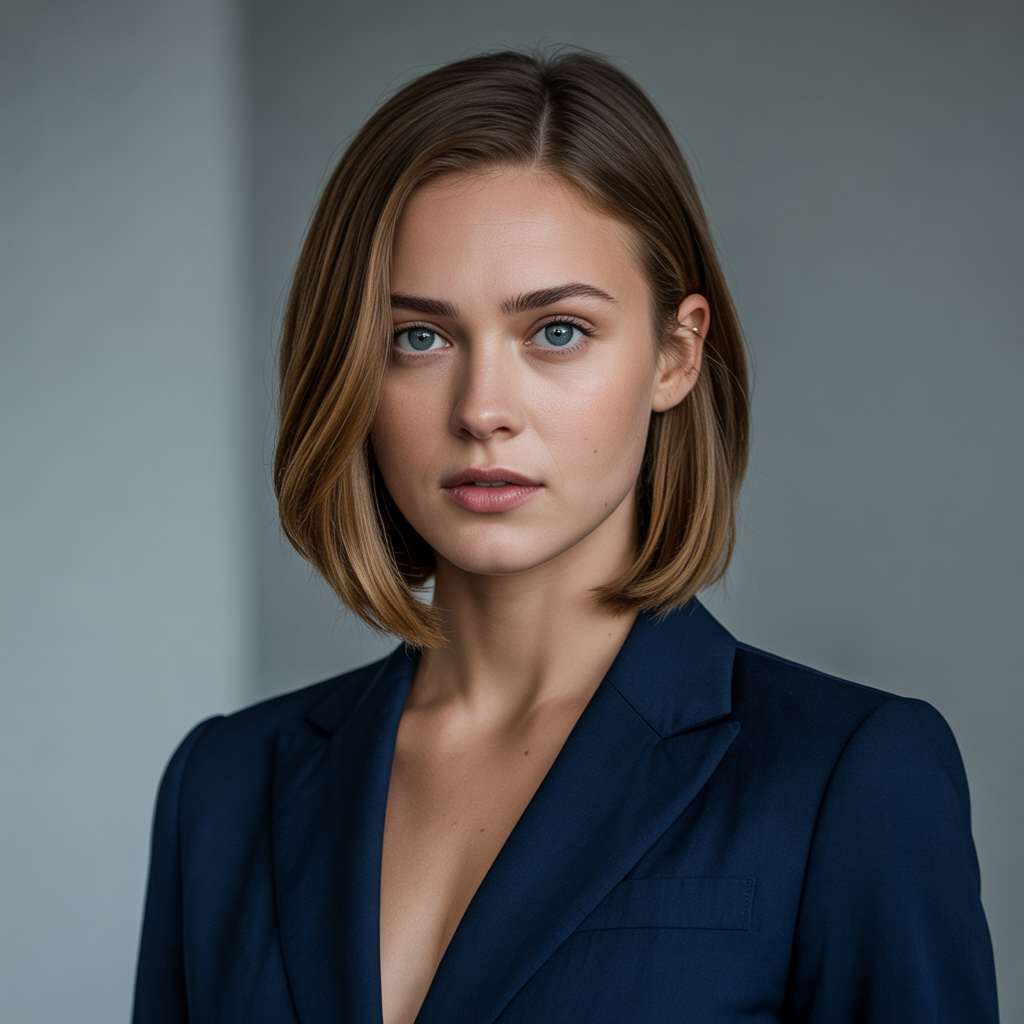
A middle part creates perfect symmetry and a contemporary, editorial finish that reads as confident rather than casual. The equal division of the front panels makes the face appear longer and more open, which suits structured face shapes well.
The one thing to confirm before committing to this look is that the front panels are balanced on both sides of the cut. A middle part highlights asymmetry rather than hiding it, so ask your stylist to check the panel balance carefully before you leave the chair.
Best for: Balanced face shapes, clean aesthetic preferences, and modern editorial styling Product: Olaplex No.7 Bonding Oil for a frizz-free finish that holds the part in place throughout the day Pro tip: Use the tail of a fine-tooth comb rather than your fingers to draw the part, then press it flat with a flat iron for a precise and lasting result. Barber language: Say: “I want a long angled bob with balanced front panels, cut to be worn with a middle part.” Face shape: Best for oval and long face shapes
Long Angled Bob with Side Part
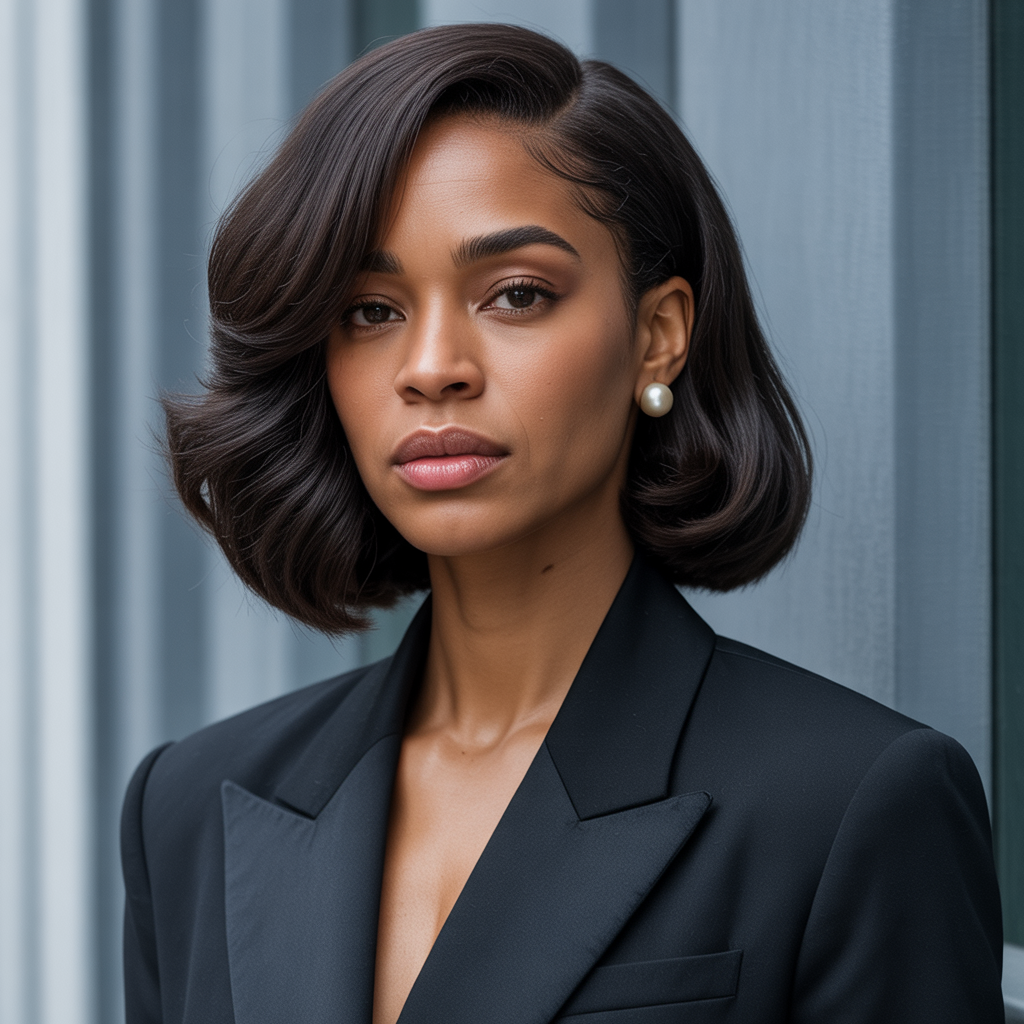
Shifting the part to one side immediately adds lift and volume on the higher side and creates asymmetry that softens strong jaw lines while making wide faces appear more narrow. In this cut, the side part also adds a swept quality to the front panel that sits between romantic and polished.
A 70/30 split works well for everyday wear. A deeper 80/20 split produces a more dramatic, film-noir silhouette that translates beautifully to formal settings.
Best for: Round and square face shapes wanting softness, asymmetry, and visual narrowing Product: Kenra Platinum Silkening Serum to keep the heavier front panel smooth and correctly weighted Pro tip: Blow-dry the heavier front panel in the opposite direction first, then sweep it back, for maximum lift and hold that lasts all day without extra product. Barber language: Say: “I want a long angled bob with a side part, cut so the front panels fall with slight asymmetry toward the heavier side.” Face shape: Best for round, square, and wide face shapes.
Long Angled Bob with Asymmetry
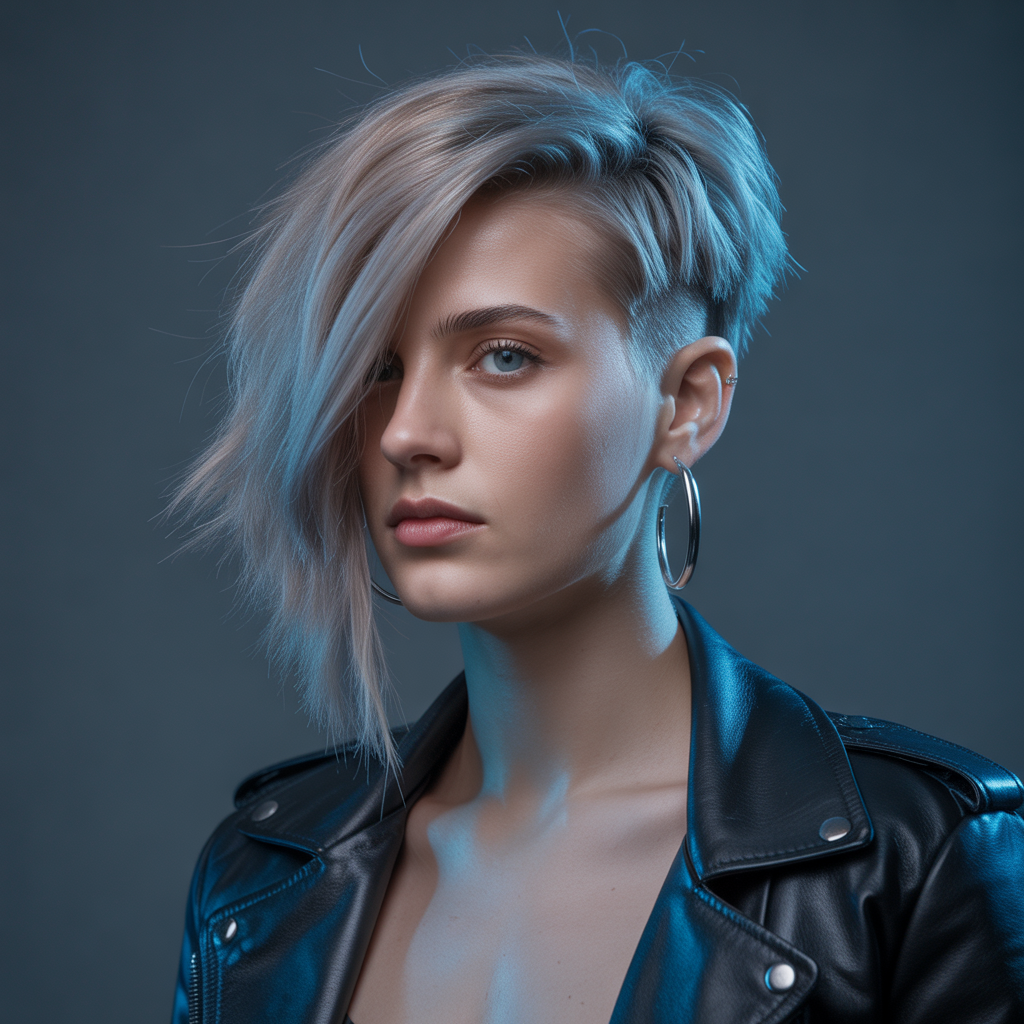
Intentional asymmetry pushes this cut into pure fashion territory. One front panel sits noticeably longer than the other, creating a bold diagonal that dominates the silhouette and demands clean, controlled styling to let the shape speak without competition.
Texture or volume competes with the asymmetry rather than enhancing it. The more deliberate the shape, the simpler and sleeker the styling approach needs to be to make the cut look purposeful.
Best for: Fashion-forward clients who want a distinctive, editorial look that no one else in the room has Product: Sedu Revolution 4D Ionic Styler for precise, sleek straightening that highlights the asymmetric line clearly Pro tip: Loosely pin the longer panel before sleeping to prevent it from losing shape overnight and requiring a full restyle the next morning. Barber language: Say: “I want an asymmetric long angled bob with one side at least two centimeters longer than the other. Keep the back clean.” Face shape: Works best on oval and oblong face shapes.
Long Angled Bob with Blunt Ends
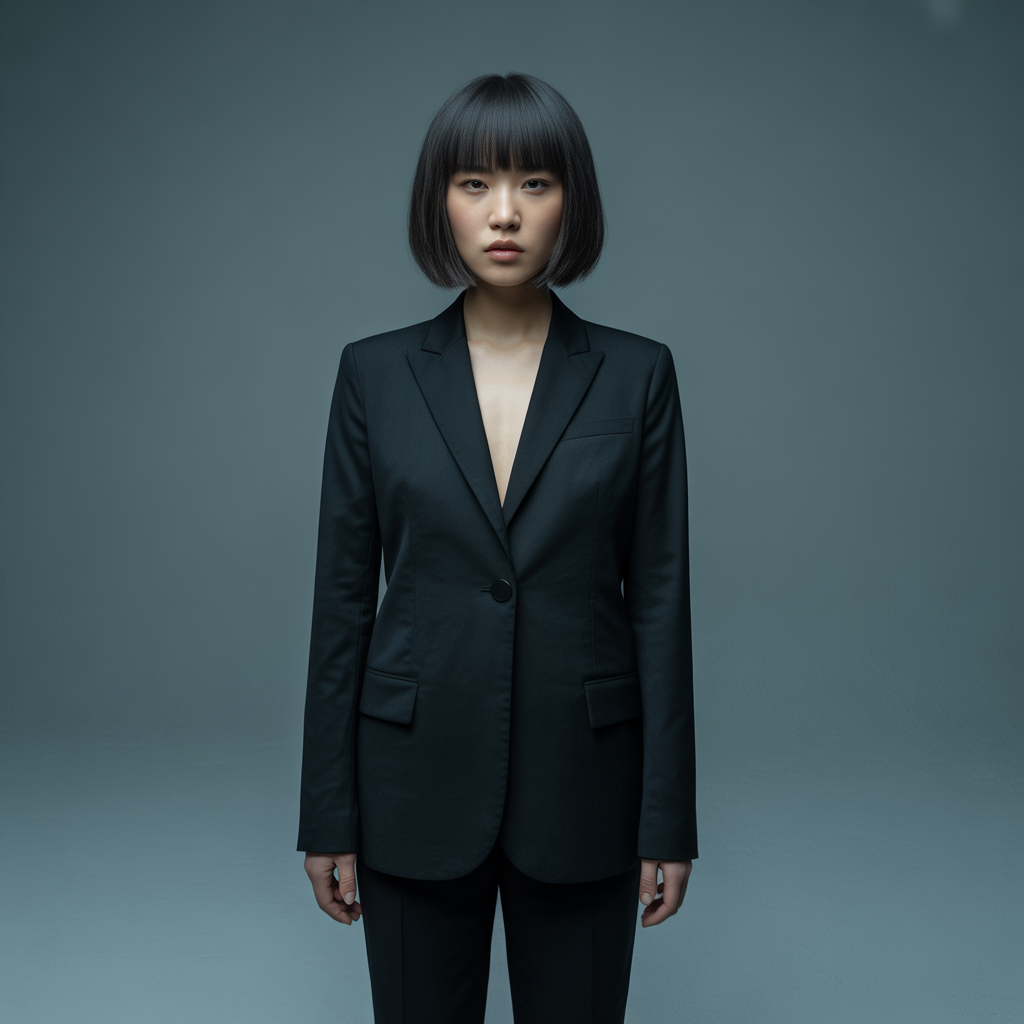
Blunt ends cut in an unbroken perimeter line produce the most structural and high-impact finish in this style. The weight sits heavy at the ends, the angle reads strongly from back to front, and the overall effect communicates confidence and intention with no effort required.
On fine hair, a solid blunt perimeter is one of the most effective tools a hairdresser has for creating the illusion of density. On thick hair, internal layers are essential to prevent the blunt ends from becoming too heavy to manage.
Best for: Anyone wanting maximum shape definition and an authoritative, fashion-strong finish Product: Bumble and bumble Hairdresser’s Invisible Oil Heat and UV Protective Primer for a chip-free finish on the perimeter line Pro tip: Schedule a trim every five weeks rather than eight when wearing blunt ends because unevenness and splits are far more visible on a solid, unbroken perimeter. Barber language: Say: “I want a long angled bob with a blunt cut perimeter, no point cutting, no feathering, keep the line solid.” Face shape: Best for oval and heart face shapes.
Visit Also: Fancy Dip Dye Hair Color
Long Angled Bob with Soft Waves
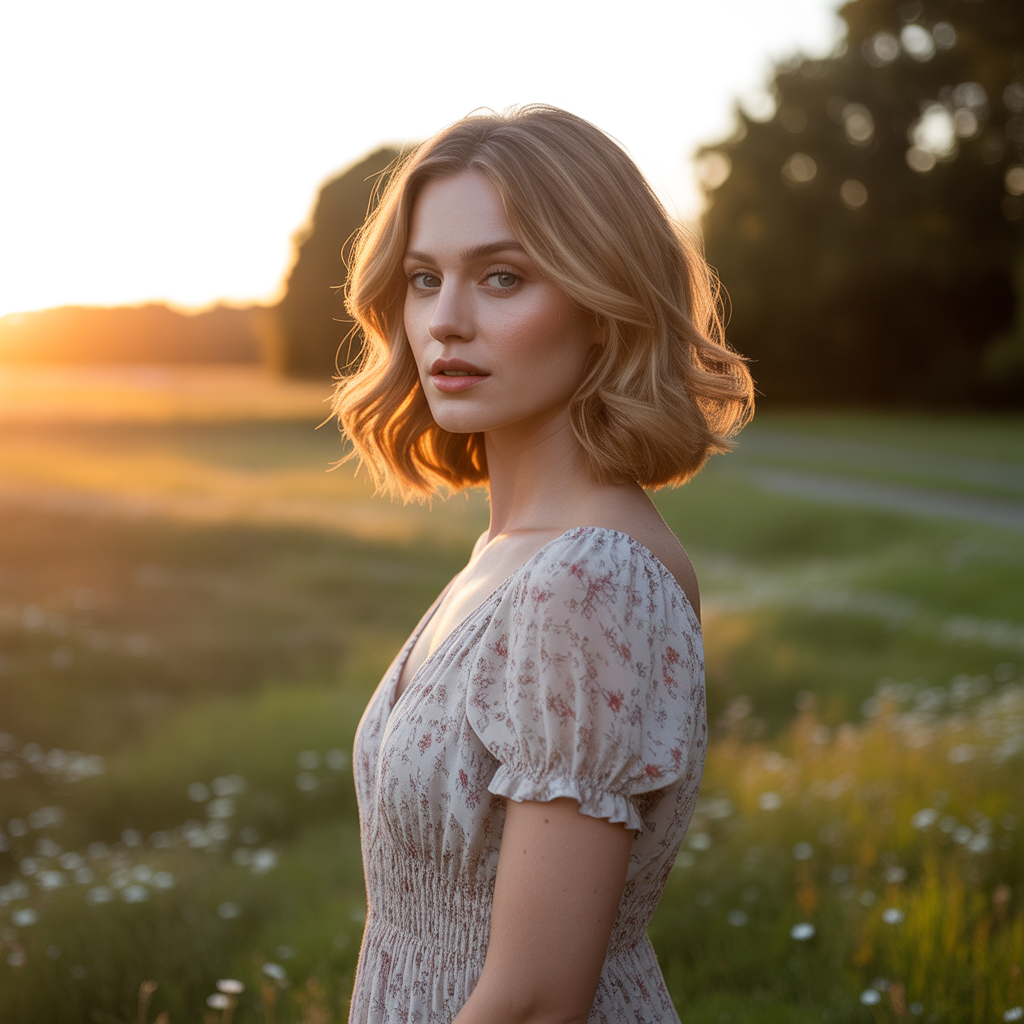
Soft waves are arguably the most universally flattering way to wear this cut. They reduce the severity of the angle, add movement to the surface, and produce a result that suits nearly every face shape and hair type without requiring daily effort to recreate.
The difference between soft waves and ordinary curls comes down to barrel size and technique. A 38mm barrel wrapped loosely and brushed through immediately after releasing creates a wave rather than a curl, and that specific distinction determines everything about the final result.
Best for: All hair types, daily wear, anyone wanting the bob to look effortlessly styled Product: Drybar The Wrap Party Smooth and Shine Spray for brushable soft waves with frizz control Pro tip: Use a 38mm barrel rather than a 25mm one for genuine soft waves, because the larger diameter creates movement and not curl definition. Barber language: Say: “I want a long angled bob built to carry soft waves naturally, with interior weight kept for movement.” Face shape: Flatters all face shapes.
Long Angled Bob for Round Faces

A round face needs visual length, and the longer front panels of this cut deliver it with precision. The forward-falling length draws the eye downward and elongates the face, while the graduated back keeps volume away from the widest points of the head shape.
The most important styling rule is to avoid volume at the sides entirely. Keeping the sides flat and directing fullness upward at the crown creates the narrow, elongated silhouette that complements a round face most effectively.
Best for: Round face shapes wanting a cut that creates visible length and reduces apparent width Product: John Frieda Frizz Ease Extra Strength Serum to keep the sides smooth and flat throughout the day Pro tip: Part the hair slightly off-center rather than directly in the middle to add an asymmetry that interrupts the roundness and creates a more convincing impression of length. Barber language: Say: “I want a long angled bob for a round face. Flat at the sides, no volume below the ears, maximize length in the front panels.” Face shape: Designed specifically for round face shapes.
Long Angled Bob for Square Faces
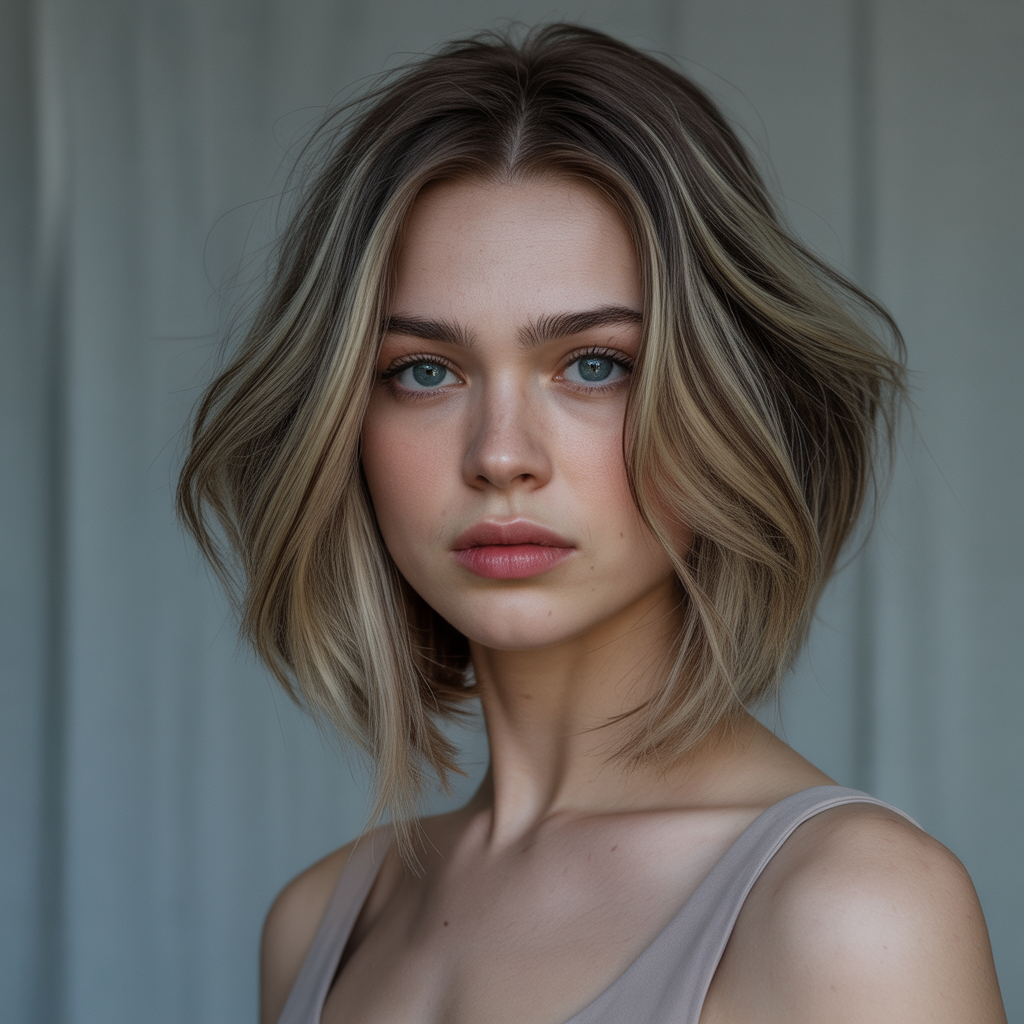
Strong angular jaw lines need softening rather than competing with, and this cut provides that through front panel movement, interior layering, and a styling approach that avoids anything horizontal. The angle redirects attention away from the jaw and toward the length of the face.
Blunt ends and sleek straight styling are the two things to avoid with a square face shape. Both emphasize horizontal lines, which draw attention directly to the jaw line where you most want to pull the eye away from.
Best for: Square and angular face shapes wanting softness, movement, and visual balance Product: Moroccanoil Treatment Light for natural movement and softness without adding weight Pro tip: Add face-framing highlights to the front panels to visually break up the jaw line and introduce depth that softens the overall shape. Barber language: Say: “I want a long angled bob for a square face. Movement at the front, soft layering, no blunt perimeter.” Face shape: Designed specifically for square and angular face shapes.
Long Angled Bob with Color Pop
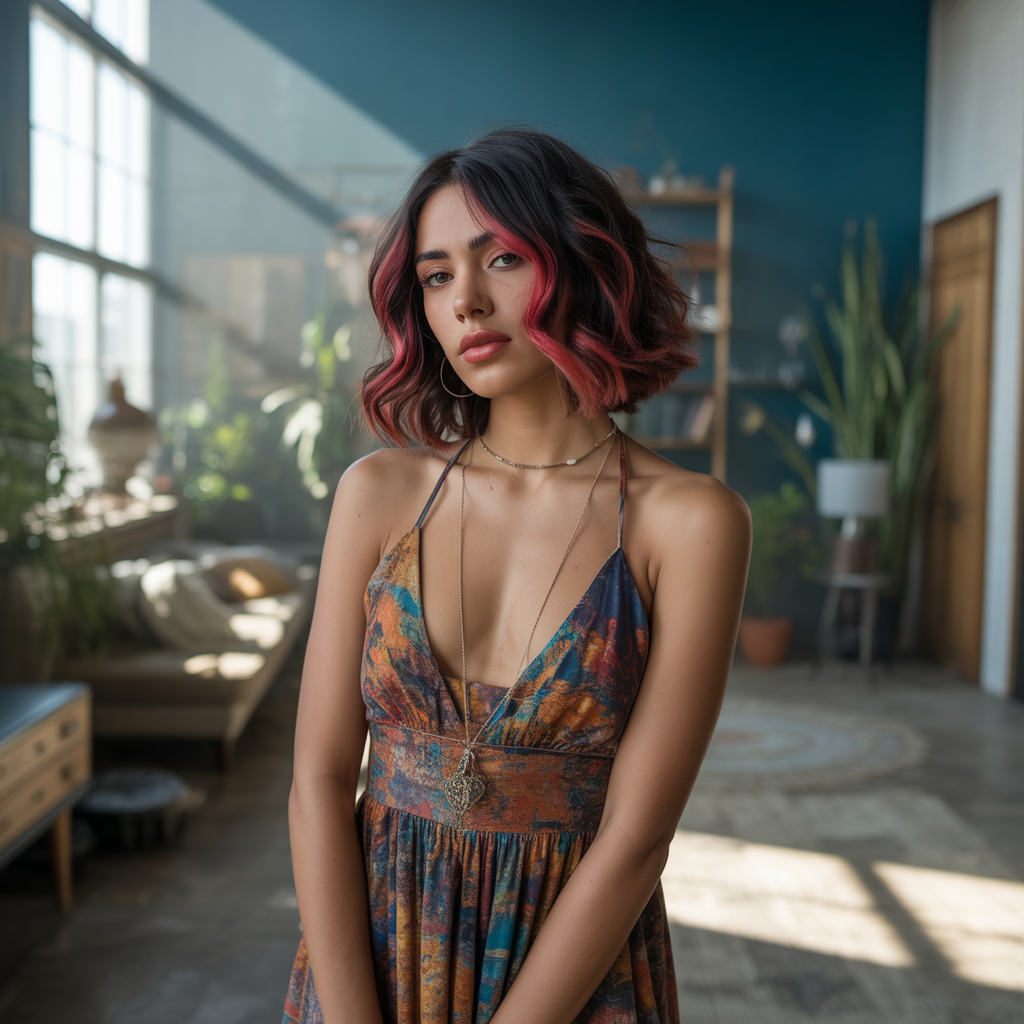
A vivid color panel on a long angled bob turns an already-strong cut into something completely singular. Red, cobalt blue, or vivid violet placed within the front layers catches light with every movement and creates a reveal as the hair falls forward. The angle of the cut frames the color perfectly.
The most effective placement is two layers deep from the surface so the color appears with movement rather than sitting exposed on top where it fades fastest. A semi-permanent shade keeps the option open if you decide to change it later.
Best for: Creative personalities wanting the look to evolve without committing to full-head color Product: Celeb Luxury Viral Colorwash in the matching vivid shade to refresh color at home between salon visits Pro tip: Ask for the bold section placed two layers deep from the surface specifically so it reveals with movement rather than fading from constant surface exposure. Barber language: Say: “I want a hidden color panel in the front section of my long angled bob, two layers in from the surface, in a vivid shade.” Face shape: Works on all face shapes; the color draws the eye to the movement rather than the structure.
Quick Comparison Table
| Style | Hair Type | Maintenance | Bold Factor |
|---|---|---|---|
| Classic Long Angled Bob | All | Low | ★★ |
| Textured Long Angled Bob | Fine to medium | Low | ★★ |
| Sleek Straight Long Angled Bob | Straight, fine | Medium | ★★★ |
| Wavy Long Angled Bob | Fine to medium | Low | ★★ |
| Curly Long Angled Bob | Curly, coily | Medium | ★★★ |
| Long Angled Bob with Bangs | All | Medium | ★★★ |
| Layered Long Angled Bob | Thick, fine | Low | ★★ |
| Choppy Long Angled Bob | Straight to wavy | Low | ★★★ |
| Long Angled Bob with Highlights | All | Medium | ★★★ |
| Long Angled Bob with Ombre | All | Low | ★★ |
| Long Angled Bob for Fine Hair | Fine, thin | Low | ★★ |
| Long Angled Bob for Thick Hair | Thick, dense | Medium | ★★ |
| Long Angled Bob with Middle Part | Straight to wavy | Low | ★★ |
| Long Angled Bob with Side Part | All | Low | ★★ |
| Long Angled Bob with Asymmetry | Straight | Medium | ★★★ |
| Long Angled Bob with Blunt Ends | Fine to medium | Medium | ★★★ |
| Long Angled Bob with Soft Waves | All | Low | ★ |
| Long Angled Bob for Round Faces | All | Low | ★★ |
| Long Angled Bob for Square Faces | All | Low | ★★ |
| Long Angled Bob with Color Pop | Straight to wavy | High | ★★★ |
Frequently Asked Questions
What is the best long angled bob for my face shape? Round faces benefit from longer front panels and flat sides, while square faces need waves and soft layering to reduce the impact of a strong jaw line. A brief consultation with your stylist before cutting is the most reliable way to find the right version for your specific structure.
How often do I need to trim a long angled bob? Every six to eight weeks keeps the back graduation clean and the perimeter defined. Waiting longer causes the shape to soften at the back first, and once the angle loses its structure the whole style reads as grown out rather than styled.
Can fine hair carry a long angled bob? Fine hair is one of the best types for this cut because the perimeter weight creates the illusion of thickness where there is none. A solid blunt perimeter with minimal internal layering gives fine hair the structure and apparent density it needs to look full.
What is the difference between a long angled bob and a regular bob? A standard bob has a level perimeter running consistently around the head, while the long angled bob carries a front-to-back graduation with a longer front and shorter back. That drop in length is what generates the face-framing effect and the additional visual interest.
How do I tell my hairdresser exactly what I want? Bring three reference photos from different angles showing the specific elements you want, then describe your hair type, daily routine, and how your hair behaves when dry. The more specific your brief, the more accurately your stylist can deliver what you are actually asking for.
Final Thoughts
The long angled bob is not just a haircut. It is one of the most structurally considered choices you can make for your hair, and that is precisely why it has outlasted so many other styles that arrived and disappeared within a single season. Whether you choose the clean classic version, a curly dry-cut adaptation, or a bold asymmetric shape, the graduation at the back is what gives this cut its defining character.
Choosing the right version for your face shape and hair type turns an ordinary appointment into something that actually changes how you feel walking out of the salon. That feeling is worth taking the time to get right, and it starts with understanding what you are actually looking for before the conversation even begins.
The long angled bob remains one of the most adaptable and reliably flattering cuts in the hairdresser’s toolkit. Not because it suits everyone by default, but because it can be made to suit almost anyone when the person holding the scissors truly understands the brief.
The real difference between a good long angled bob and a transformative one is not the angle itself. It is the weight distribution. Place the weight line in exactly the right zone for your face shape and hair type, and every other element of the cut will follow.
Save this guide to your Pinterest boards and share it with anyone who has been putting off their next salon visit.