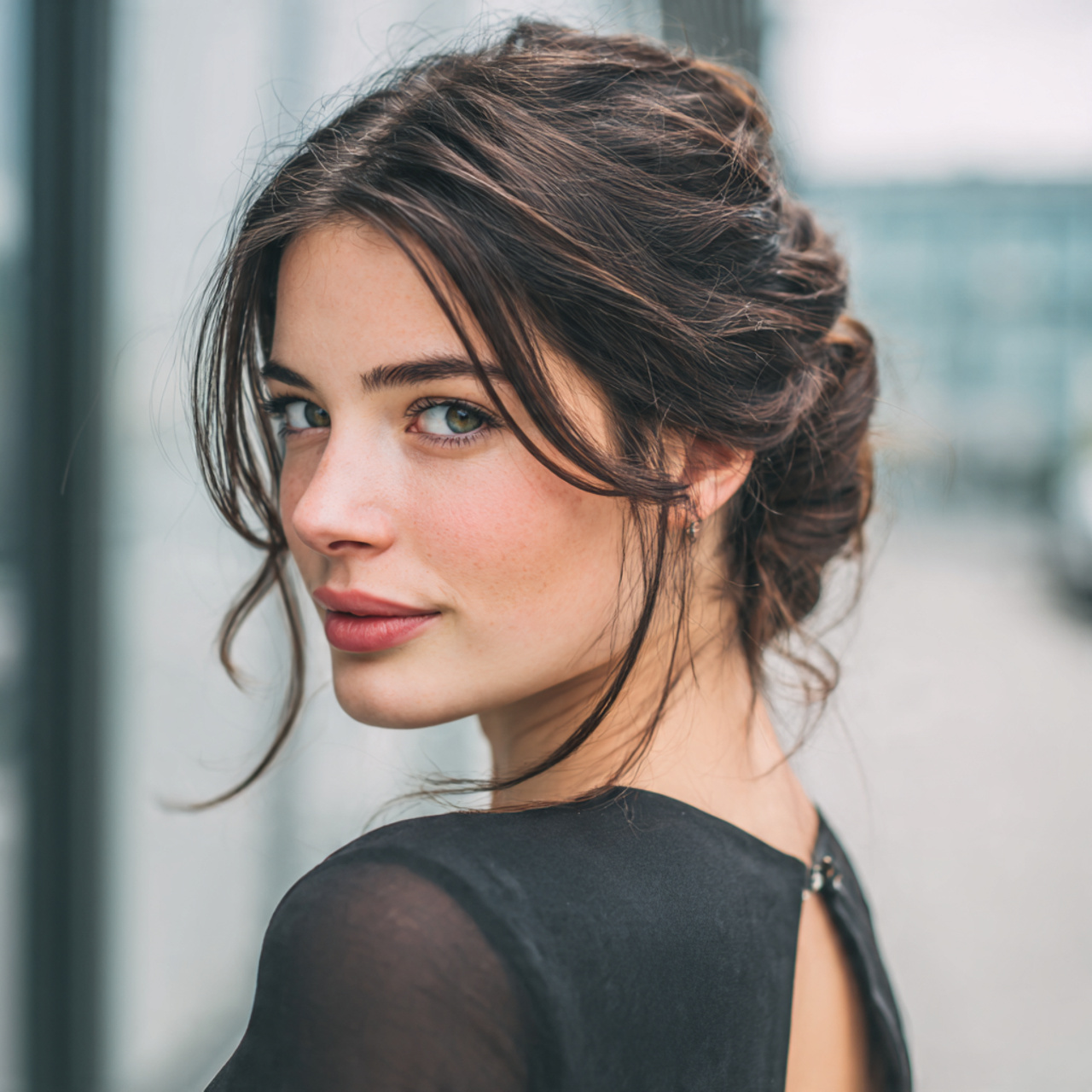
20 Scene Hairstyles for a Throwback That Will Make Every Head Turn in the Room
You probably remember exactly what made scene hairstyles for a throwback so magnetic. The razor-sharp layers, the electric color streaks, the teased crown sitting high above a flat sweeping bang. At some point, you packed that version of yourself away because the world suggested it was time to grow up.
That loss is more common than people admit. A lot of people who genuinely loved the scene aesthetic quietly abandoned it when mainstream culture shifted. The problem is that creative, expressive hair does not expire. The audience just changed, and now it is shifting back.
The real reason most people struggle to revive this look is that they try to copy old photos directly. They find a 2006 image, take it to a salon, and wonder why the result feels dated rather than intentional. Hair technology, color formulas, and cutting techniques have all evolved since then. Using the old approach without updating it is what creates the problem.
Hairstylists who specialize in textured cuts know the scene silhouette requires point cutting rather than blunt shears. It requires color placement that accounts for how sections fall when dry. The difference between a technically executed scene cut and a rough imitation lives almost entirely in those details.
This article breaks down every major scene style variation from the classics to the modern updates that most people have not found yet. Each entry includes real product recommendations, the exact language to use with your stylist, and the specific details that make each look work.
By the end, you will know which scene hairstyles for a throwback fit your face shape, hair type, and daily routine. Whether you are going fully throwback or blending the aesthetic with something more current, you will leave here with everything you need to move forward with confidence.
Scene hairstyles for a throwback are experiencing a genuine revival in 2025, pushed forward by the nostalgia wave sweeping fashion and beauty culture across every major platform. Before you choose a look, the single most important rule is this: match the cut to your hair texture first and the reference photo second. A style built for fine straight hair can fall completely flat on thick or wavy hair without the right structural adjustments.
Scene Hairstyles Ideas
Layered scene hairstyles for a throwback
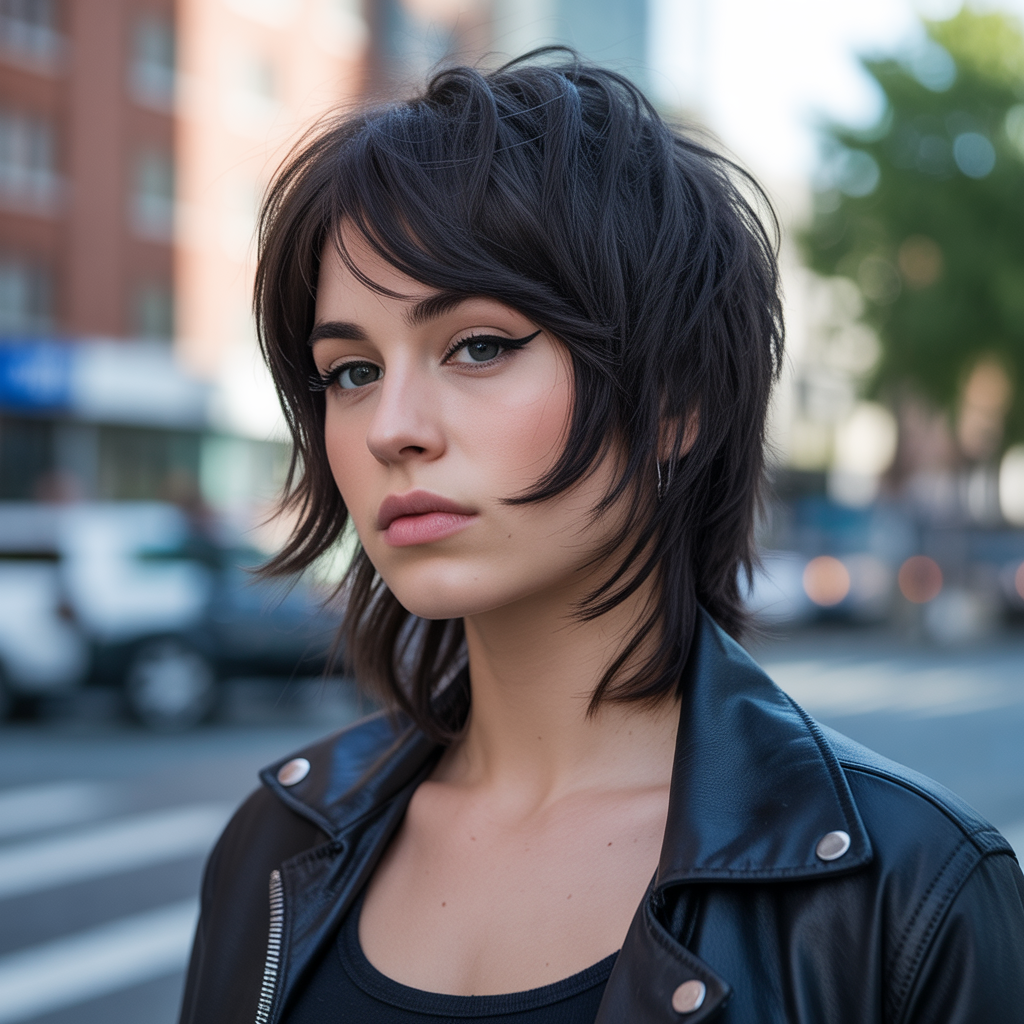
Sharp, choppy layers are the structural foundation of the entire scene aesthetic. When executed with point-cutting technique rather than blunt scissors, each layer moves independently and creates the effortless textured silhouette that defines the look. The crown holds volume while the ends stay light and feathered.
Hair density determines how the layering should be built. Fine hair needs longer, fewer layers to avoid becoming see-through at the ends. Thick hair benefits from aggressive internal layering to remove weight and let the shape breathe.
Best for: All hair lengths, particularly shoulder length and longer Product: Kenra Platinum Silkening Mist for defined, frizz-free layer separation Face shape: Best on oval and oblong faces. Adds visual width where those shapes need it. Barber language: “I want choppy point-cut layers with disconnected ends. No blunt lines anywhere. Keep the top shorter and feather the ends out.” Pro tip: Ask your stylist to cut your layers while your hair is dry so you can see exactly where each section falls before any product is applied.
Side swept bangs scene hairstyles for a throwback
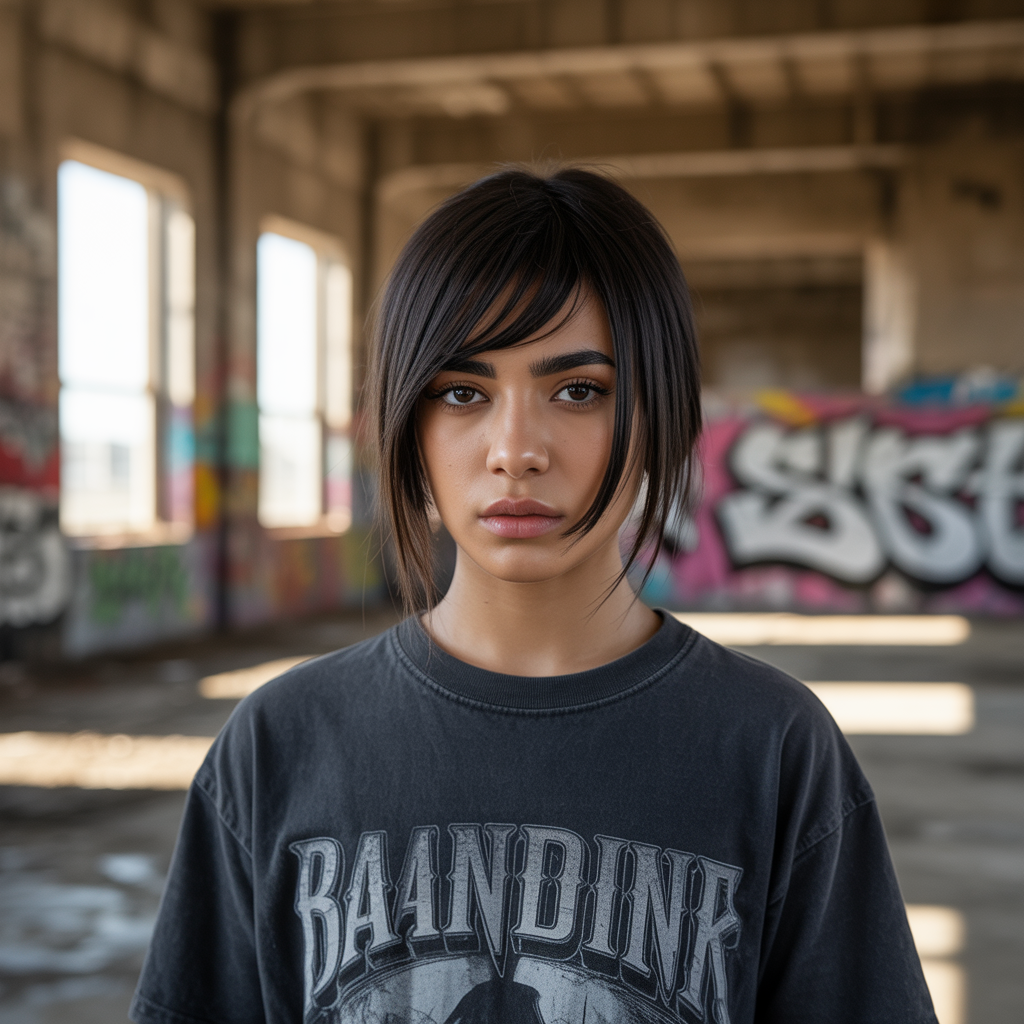
A long side bang that sweeps across the forehead and grazes the cheekbone is one of the most recognizable details of the scene look. The asymmetry pulls focus toward the eyes and breaks the face in a way a blunt fringe never achieves. The weight and length of the bang both determine how often it needs trimming to stay precise.
CHI Silk Infusion applied to a paddle brush before blow-drying gives the bang the smoothness needed to lie flat against the face. A heavier bang loses its downward angle faster, so visiting your stylist every three to four weeks keeps the sweep intentional.
Best for: Daily wear and routines with minimal styling time Product: CHI Silk Infusion for smooth, controlled bang direction Face shape: Ideal for round and heart-shaped faces. Breaks forehead width and draws the eye downward. Barber language: “I want a long side bang hitting just below my cheekbone. Heavy enough to stay flat but light enough to move with the rest of the cut.” Pro tip: Blow dry the bang over a paddle brush first to set the direction, then run a flat iron through once for the final pass. This prevents the classic puffy bang problem.
Teased crown scene hairstyles for a throwback
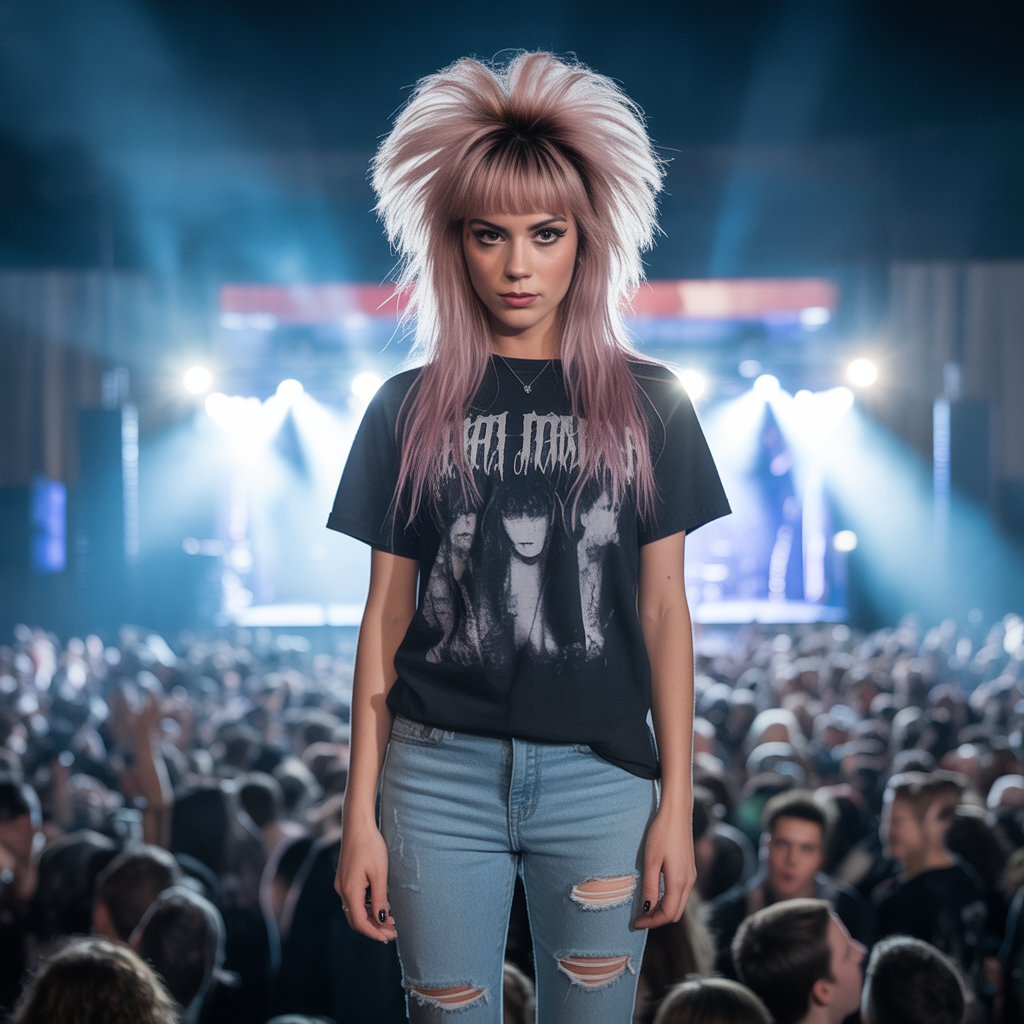
Height at the crown creates the contrast that defines the scene silhouette. The top section is elevated through backcombing while the front bang stays flat, and that opposition between high and flat is what makes the shape read as intentional. Without the front staying down, the height loses its entire impact.
Using a fine-tooth comb in short controlled strokes rather than long sweeping ones gives far more structural hold. Tigi Bed Head Hard Head Hairspray locks sections before and during backcombing to maintain height without the heavy buildup that comes from spraying the whole crown at once.
Best for: Statement occasions or anyone building a full scene look Product: Tigi Bed Head Hard Head Hairspray for all-day crown structure Face shape: Elongates round faces significantly. Avoid this style if you already have a long or narrow face shape. Barber language: “Cut the crown section shorter than everything else so I have room to tease it up without the length collapsing the height. I need at least two inches of lift clearance.” Pro tip: Spray each individual section before teasing rather than spraying the entire crown afterward. You get far more lasting hold and much more control over the finished shape.
Colored streaks scene hairstyles for a throwback
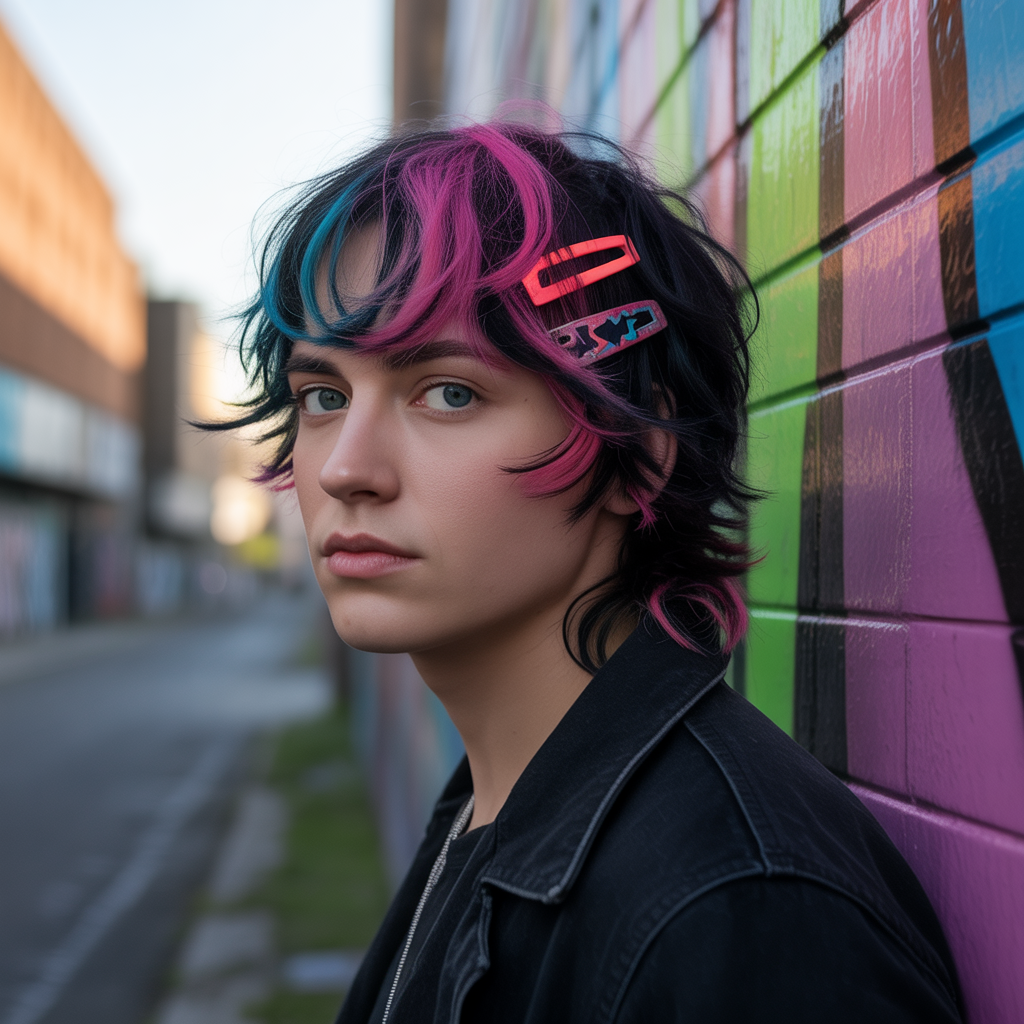
Chunky color streaks placed at the face frame are the single fastest way to make a scene hairstyle identifiable. Blue, teal, electric green, and hot pink were the dominant shades of the original era, and they are back now with semi-permanent formulas that deliver far more saturation with significantly less damage than older dye chemistry.
Placement matters more than shade choice. Streaks that frame the eyes create a focal point that reads as intentional. Arctic Fox Hair Color in Phantom Green or Poseidon gives intense saturation at a fraction of the damage cost of permanent dye.
Best for: Anyone who wants maximum visual impact without coloring the full head Product: Arctic Fox Hair Color in Phantom Green or Poseidon for vivid, low-damage streaks Face shape: Face-frame placement near the temples flatters most face shapes by drawing the eye upward and outward. Barber language: “I want chunky face-framing streaks, not highlights. Sections at least half an inch wide, placed at the front sections closest to my part.” Pro tip: Pre-lighten streak sections to a level 9 before applying any vivid color. This single step is the biggest factor separating a saturated result from a muddy one.
Black dye Scene hairstyles for a throwback

Deep black hair creates the high-contrast, graphic quality that made the scene aesthetic so visually striking. Against bright color streaks or choppy layers in a lighter shade, a true black base acts as a frame that makes everything else pop. L’Oreal Excellence Creme in Natural Black delivers a blue-black depth that resists fading to brown through multiple washes.
Shine is what keeps black hair visually powerful. A cold water rinse after each wash seals the cuticle and reflects light. Smoothing serum on dry mid-lengths prevents the dull, flat finish that kills the contrast effect entirely.
Best for: Building a color-contrast base or creating a strong single-tone look Product: L’Oreal Excellence Creme in Natural Black for deep, fade-resistant color Face shape: Works on all face shapes. The skin-tone contrast adds definition regardless of facial structure. Barber language: “I need a level 1 or 2 with no warmth at all. No brown or red undertones. I want a cool, pure black that contrasts cleanly with color I am adding on top.” Pro tip: Wait 72 hours after coloring before your first wash. Pigment continues to oxidize in the first three days, and early washing shortens how long the depth lasts noticeably.
Asymmetrical cuts scene hairstyles for a throwback
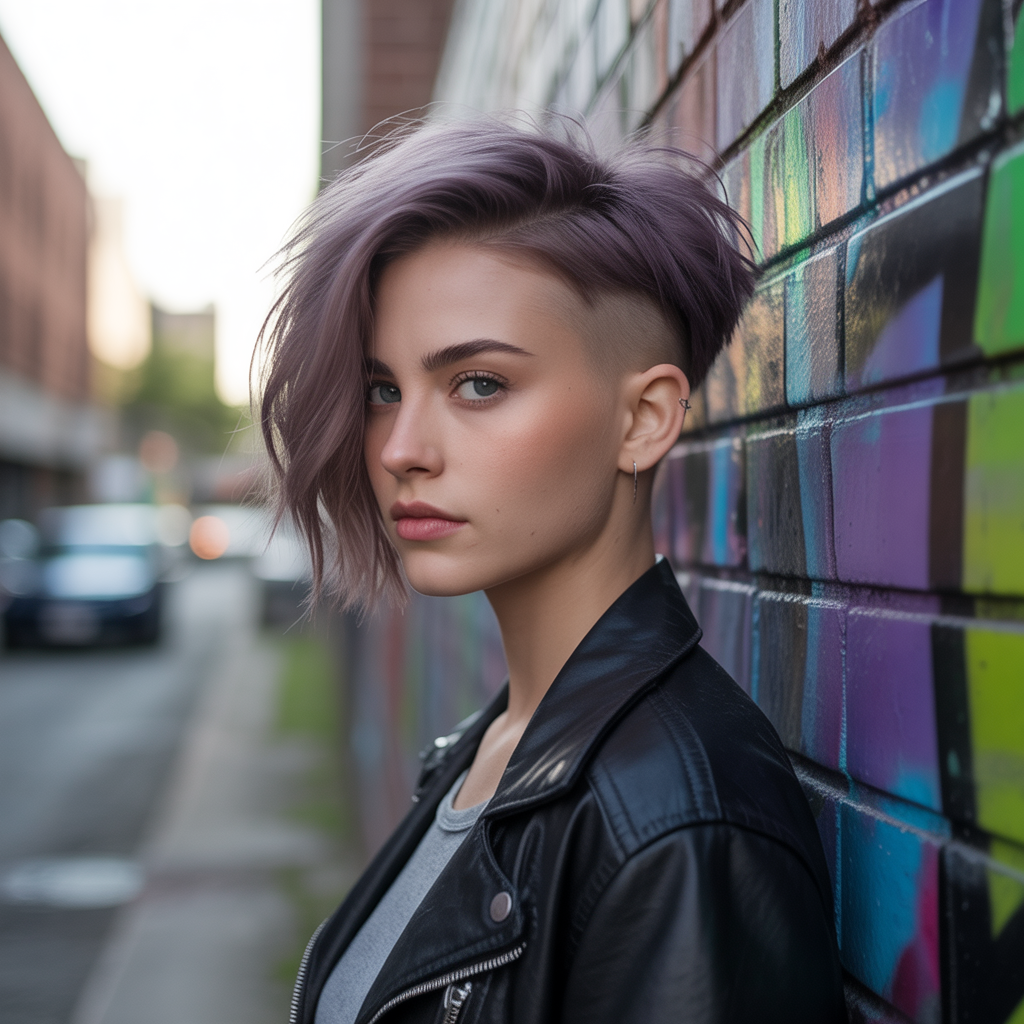
One side dramatically shorter than the other brings a structural boldness that no color or product can replicate. The length difference creates movement as the longer side falls forward and the shorter side exposes the ear and neck. The visual result is angular, deliberate, and impossible to ignore.
This cut requires more frequent salon visits than most styles because the shorter side grows out and loses its clean line faster. Joico K-Pak Reconstructor used weekly protects the integrity of the shorter section, which is more likely to have been bleached or heavily styled.
Best for: Those ready for a structural commitment with maximum visual payoff Product: Joico K-Pak Reconstructor for bond repair in heavily treated hair Face shape: Softens square jawlines by breaking symmetry. Round faces should keep the shorter side above the chin. Barber language: “I want a disconnected asymmetrical cut. Right side above the ear, left side to my collarbone. Do not blend the two sides. I want a clear contrast in length.” Pro tip: Photograph both sides of your head before your appointment so your stylist can see exactly how your hair falls naturally on each side before any structural decisions are made.
Multicolored scene hairstyles for a throwback
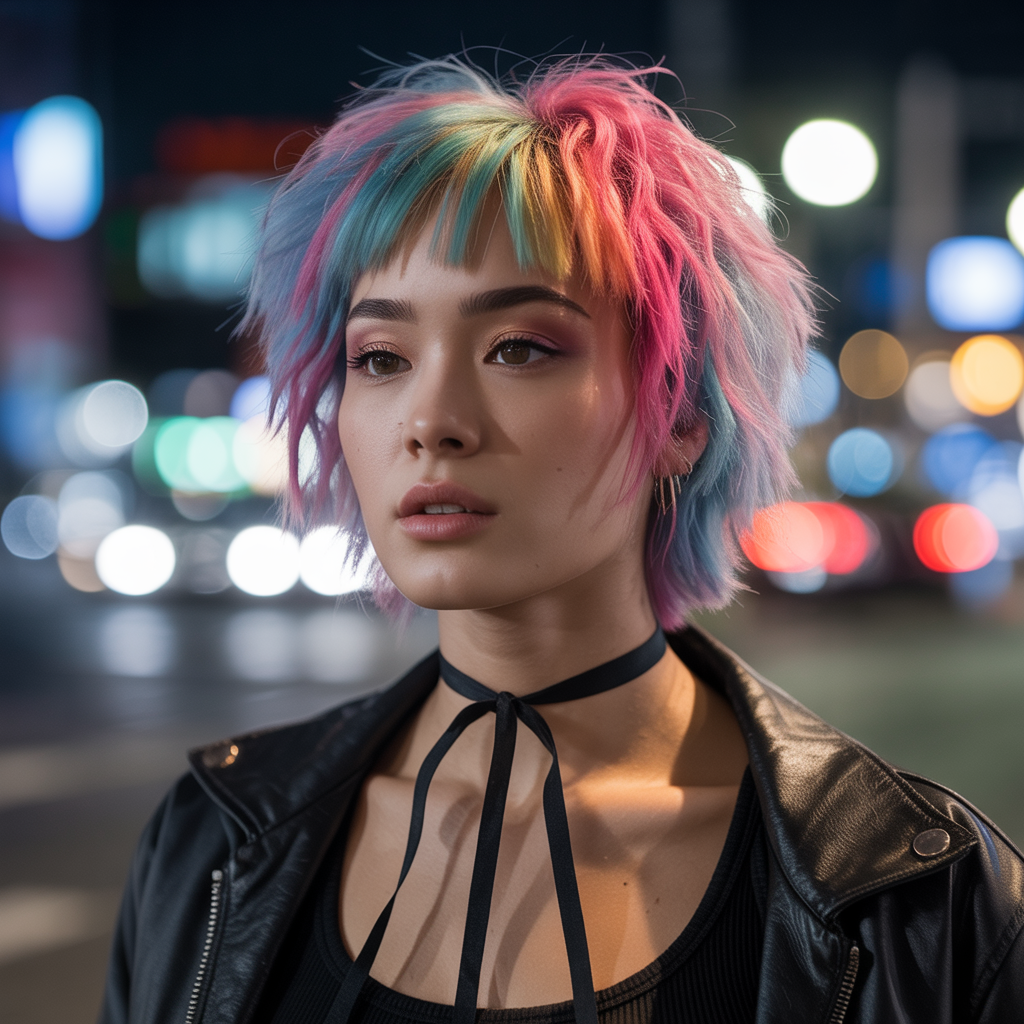
Combining teal, purple, red, and blonde in a single head of hair looks like wearable art when the sectioning is done correctly and chaotic when it is not. The difference lies in treating each color as its own contained panel and using foil or plastic film between sections during processing to prevent tones from bleeding.
Pulp Riot Neon is a professional-grade semi-permanent line built for the intensity that multicolor scene looks require. The pigment density is high enough that colors stay visually distinct even as they fade, which matters enormously for a look where contrast is the entire point.
Best for: Creative individuals comfortable with color maintenance who want maximum visual impact Product: Pulp Riot Neon collection for vivid, cleanly separated multicolor results Face shape: Heavy color near the face suits oval and round faces. Use neutral tones at the face frame on long or narrow face shapes. Barber language: “I want each color in its own panel with no blending at the edges. Foil between sections while processing. I want them to meet cleanly at the parting, not bleed into each other.” Pro tip: Apply the lightest shades first and the darkest last during a multicolor session. Dark pigment contaminating a lighter section is a far harder problem to fix than the reverse.
Short choppy scene hairstyles for a throwback
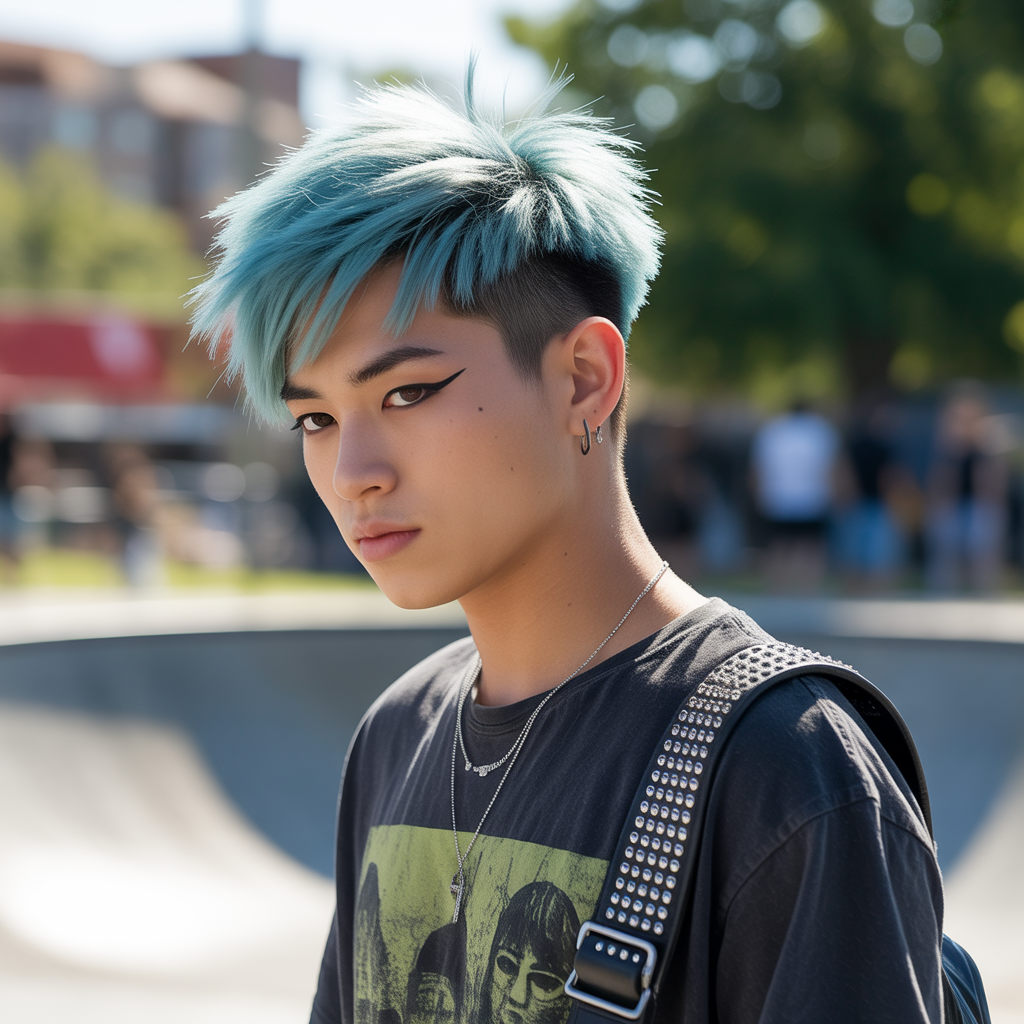
Texture is the entire story of a short choppy scene cut. The jagged, uneven ends are the intended result of deliberate point-cutting technique, not an accident, and they deliver maximum visual interest with minimal daily styling time. This is one of the most practical entries in the full style range.
Redken Rough Paste 12 applied to dry hair with fingertips separates sections and defines texture without a stiff or crunchy finish. Work a small amount through the tips first and build from there rather than applying product to the roots at the start.
Best for: Low-maintenance routines or fine hair that needs structural texture Product: Redken Rough Paste 12 for piece-separation and natural hold Face shape: Works best on oval and square faces. The shortened length can overwhelm long or narrow face shapes. Barber language: “I want a short textured cut with point-cut ends throughout. No blunt lines anywhere. The tips should look deliberately uneven when dry, not rounded or polished.” Pro tip: Style this cut on second-day hair instead of freshly washed. Natural oils give product something to grip, which makes the texture look far more defined and intentional.
Long layered Scene hairstyles for a throwback
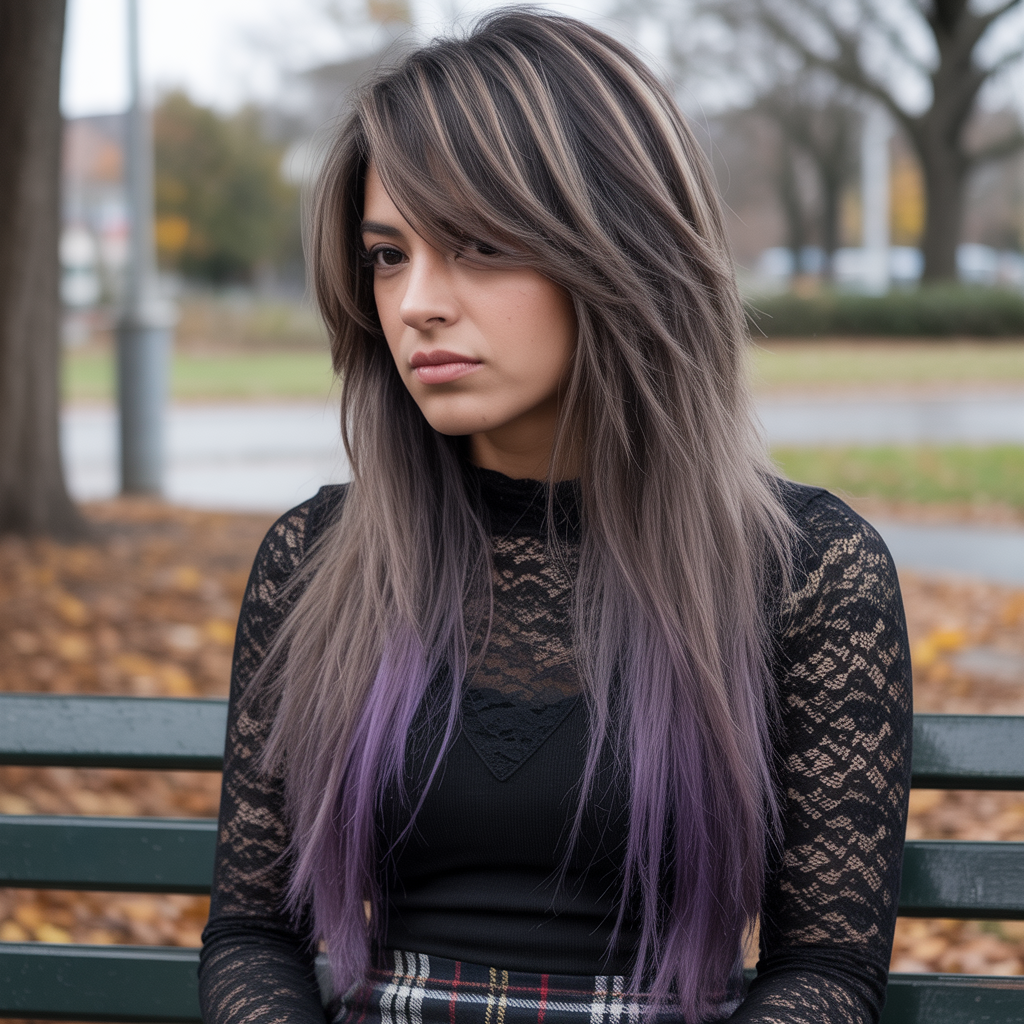
Length and scene styling work together when the internal layering is executed correctly. Multiple layers built through the mid-shaft catch light at different angles as the hair moves, preventing the flat, heavy wall of length that un-layered long hair creates. This is how you carry the scene aesthetic past the shoulder without losing the textured quality that defines it.
Olaplex No.3 used weekly is non-negotiable for maintaining long layered hair that has also been colored. The longer the hair, the older the ends, and older ends break down faster when color chemistry is involved on a regular basis.
Best for: Those who want scene texture and attitude without losing their length Product: Olaplex No.3 Hair Perfector for bond health in long, colored hair Face shape: Layers at and below the chin add width to narrow and oblong faces. The movement also breaks the visual length of elongated face shapes effectively. Barber language: “I want internal layers starting at my chin and graduating down. Do not take any length off the bottom. Build the layers inside the hair and point-cut the very ends only.” Pro tip: Sleep in a loose braid after applying a leave-in conditioner at night. Long layered scene hair develops natural texture overnight that styles in under five minutes the next morning.
Bleach blonde Scene hairstyles for a throwback
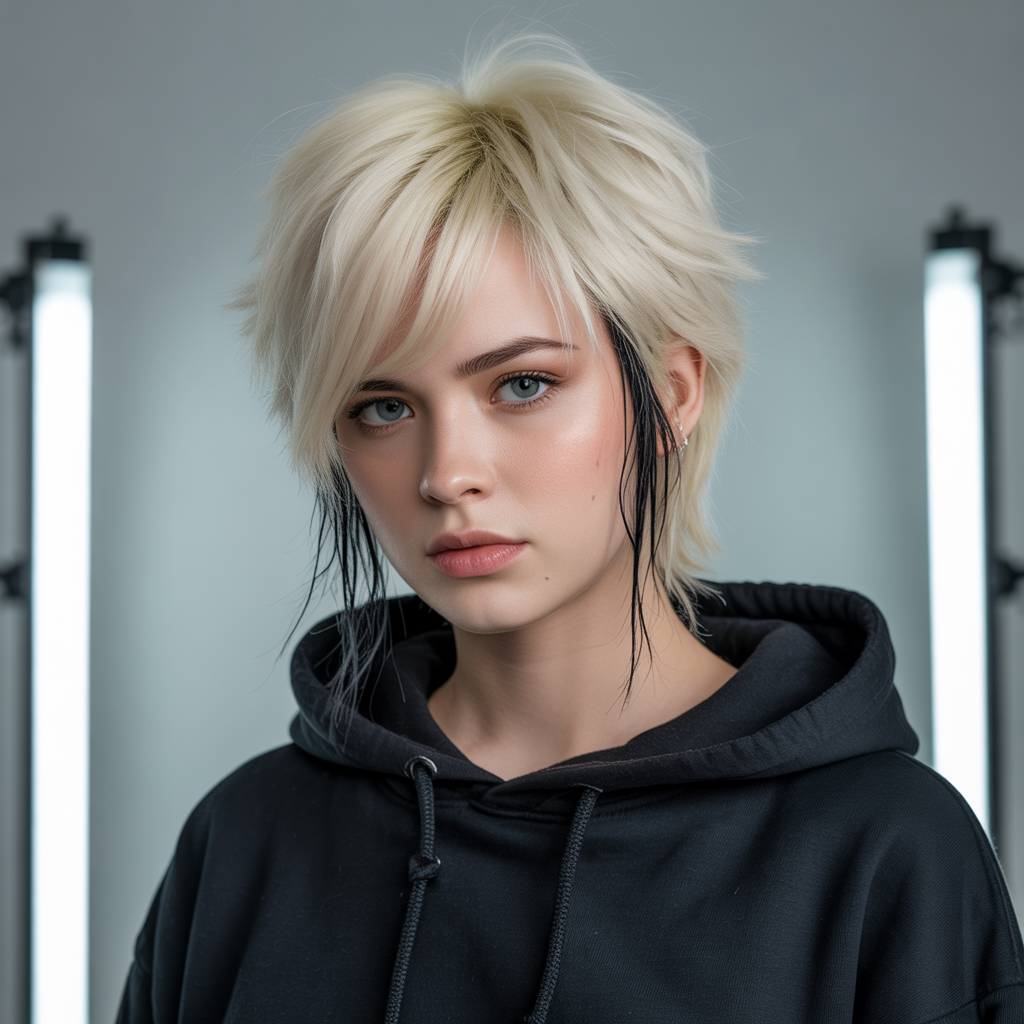
Blonde sections against a dark base produce the strongest contrast in the entire scene color toolkit. Placement is a technical decision, not an aesthetic one. Strategic positioning near the face draws attention to the eyes and cheekbones. Random placement throughout the length without a focal point loses that graphic quality entirely.
Clairol Shimmer Lights Purple Shampoo is the standard for toning brass out of blonde scene sections between appointments. Applied once weekly and left for five full minutes before rinsing, it delivers noticeably cooler, cleaner results than a quick lather and immediate rinse.
Best for: High-contrast color seekers committed to regular toning between appointments Product: Clairol Shimmer Lights Purple Shampoo for consistent brass control Face shape: Face-frame blonde brightens the complexion on all face shapes. Avoid placing heavy blonde at the back if you have a narrow face. Barber language: “I need bleached sections at level 9 or above, placed at the front near my face. Do not blend them into the dark base. I want clean, graphic contrast between the two tones.” Pro tip: Always use a bond protector like Olaplex No.1 or Wellaplex mixed into the bleach when lifting over previously colored hair. This step prevents the mid-shaft breakage that is most common at the point of maximum lift.
Extensions scene hairstyles for a throwback
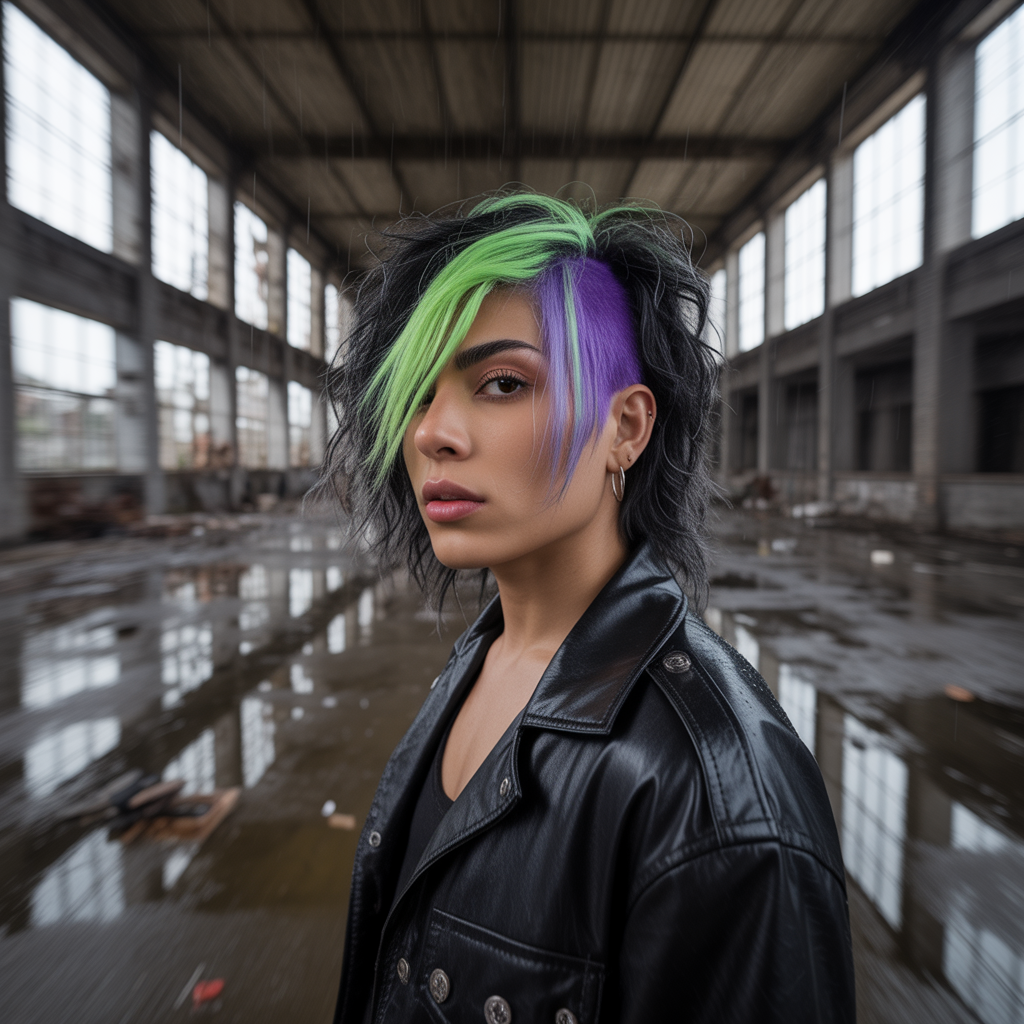
Clip-in extensions open the scene aesthetic to anyone whose natural hair does not yet have the length or density to support heavy layering and bold color. They add volume, length, and streak color in minutes with zero commitment, which makes them the safest entry point for anyone still deciding how far they want to go.
Luxy Hair clip-ins come in over 30 shades and can be customized with semi-permanent color to add the panels the scene look requires. Always blowdry your natural hair fully before clipping in because even small amounts of moisture cause matting at the weft attachment points over time.
Best for: Short hair, beginners, or anyone who wants reversible bold results Product: Luxy Hair clip-in extensions for seamless volume and color blending Face shape: Color placed in clip-ins near the temples can be positioned to flatter any face shape regardless of natural hair length. Barber language: “Can you trim my clip-ins to match my natural layers? I want the extension ends to have the same choppy texture as my own hair so they do not look like a separate piece.” Pro tip: Hang clip-ins on a hook between uses rather than folding them in a bag. Creases in the weft are difficult to smooth before wearing and make blending with your natural hair significantly harder.
Half up half down scene hairstyles for a throwback
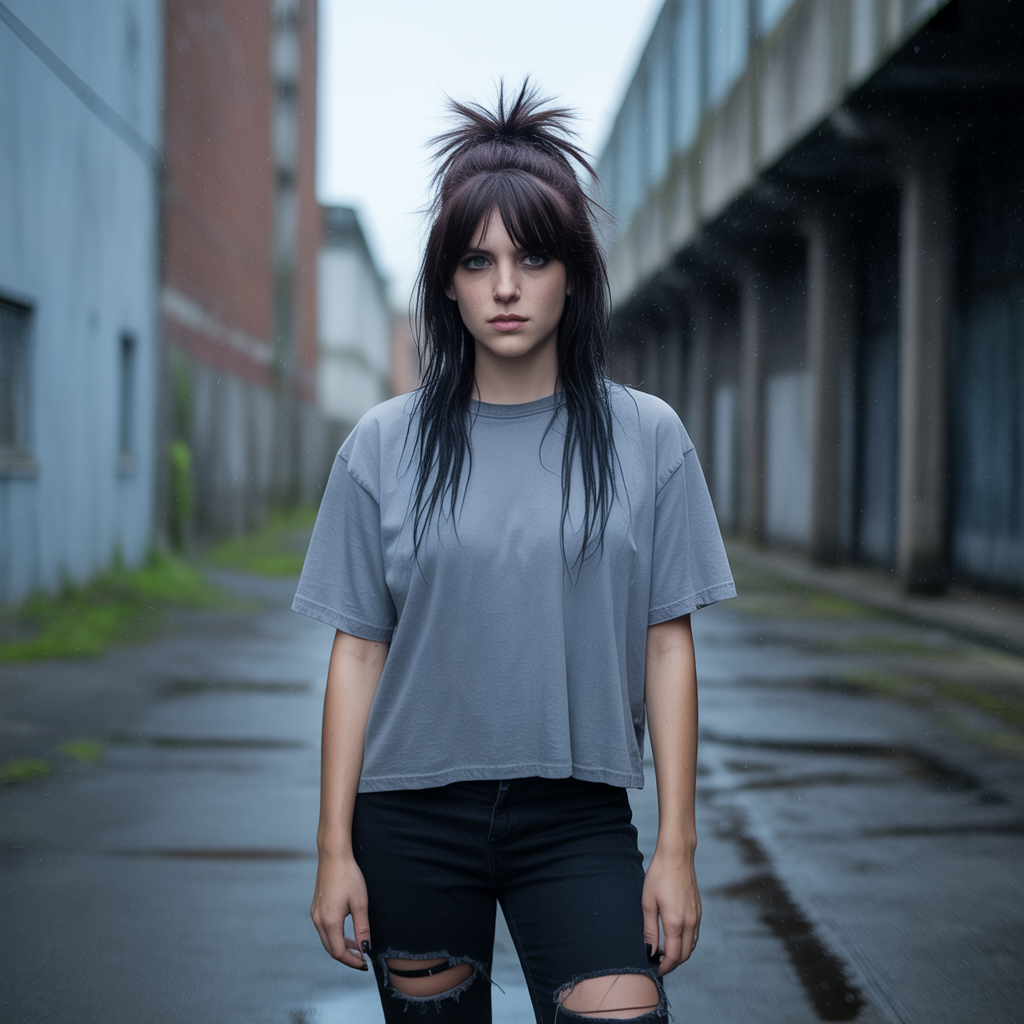
Pulling the crown section upward while leaving the rest down lets a scene cut show off both its volume and its layered length at the same time. This is one of the most versatile variations in the entire range because it works across dress codes from school to casual events to creative workplaces without changing the underlying style.
Light backcombing in the elevated section before securing it adds height without stiffness. Not Your Mother’s Curl Talk Frizz Control Gel on the lower loose section controls flyaways while preserving the movement the layers are meant to show.
Best for: Everyday wear and anyone who wants scene styling without full preparation time Product: Not Your Mother’s Curl Talk Frizz Control Gel for the loose lower section Face shape: Works best on oval and oblong faces. Crown height can make round faces appear longer vertically. Barber language: “When you build my layers, make sure the top section is long enough to be pulled back without creating holes or gaps in the half-up style. I need at least four inches in that section.” Pro tip: Tease the entire crown section first, then smooth only the very surface before tying it up. The volume hides underneath and the outside looks polished rather than deliberately backcombed.
Braided scene hairstyles for a throwback
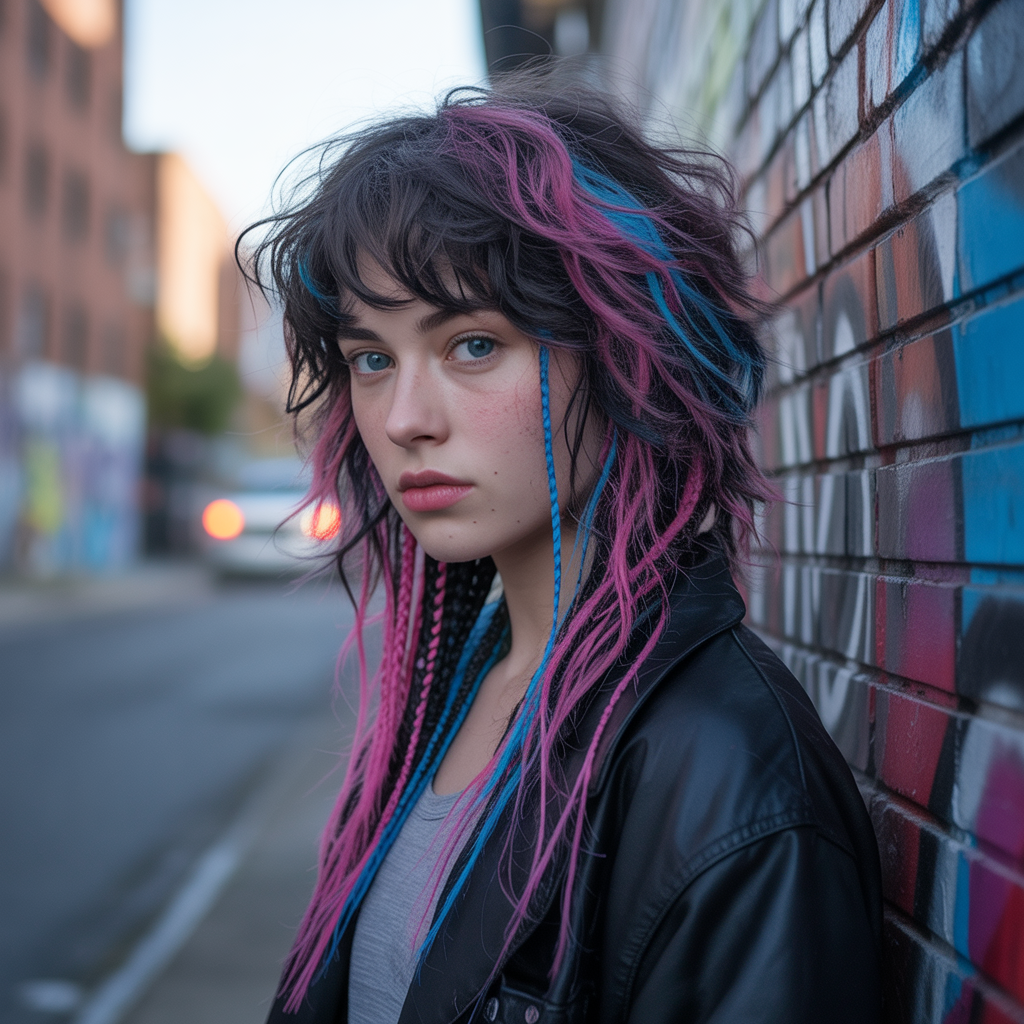
Tiny braids woven into layered scene hair were a specific signature of the early community, often accented with colored embroidery thread, small beads, or thin extensions in a contrasting shade. The detail is small in scale but immediately specific to the aesthetic. Even one or two thin face-framing braids signal the reference clearly without requiring a full transformation.
Keeping braids in layered hair for extended periods causes tangling where the braid meets loose strands. Removing and redoing them every four to five days prevents matting. Mane ‘n Tail Original Shampoo washes gently around small braids without disturbing the weave.
Best for: Creative enthusiasts who want textural detail without changing the cut Product: Mane ‘n Tail Original Shampoo for gentle washing around braided sections Face shape: Braids near the temples particularly suit round faces by drawing the eye upward toward the upper third of the face. Barber language: “Leave a few thin face-framing sections about a quarter inch wide when you layer my hair. I want to braid those sections at home and need enough length to support a small braid.” Pro tip: Apply a small amount of argan oil to sections before braiding. The added slip makes the finished braid tighter, cleaner, and significantly faster to complete.
Side ponytail scene hairstyles for a throwback
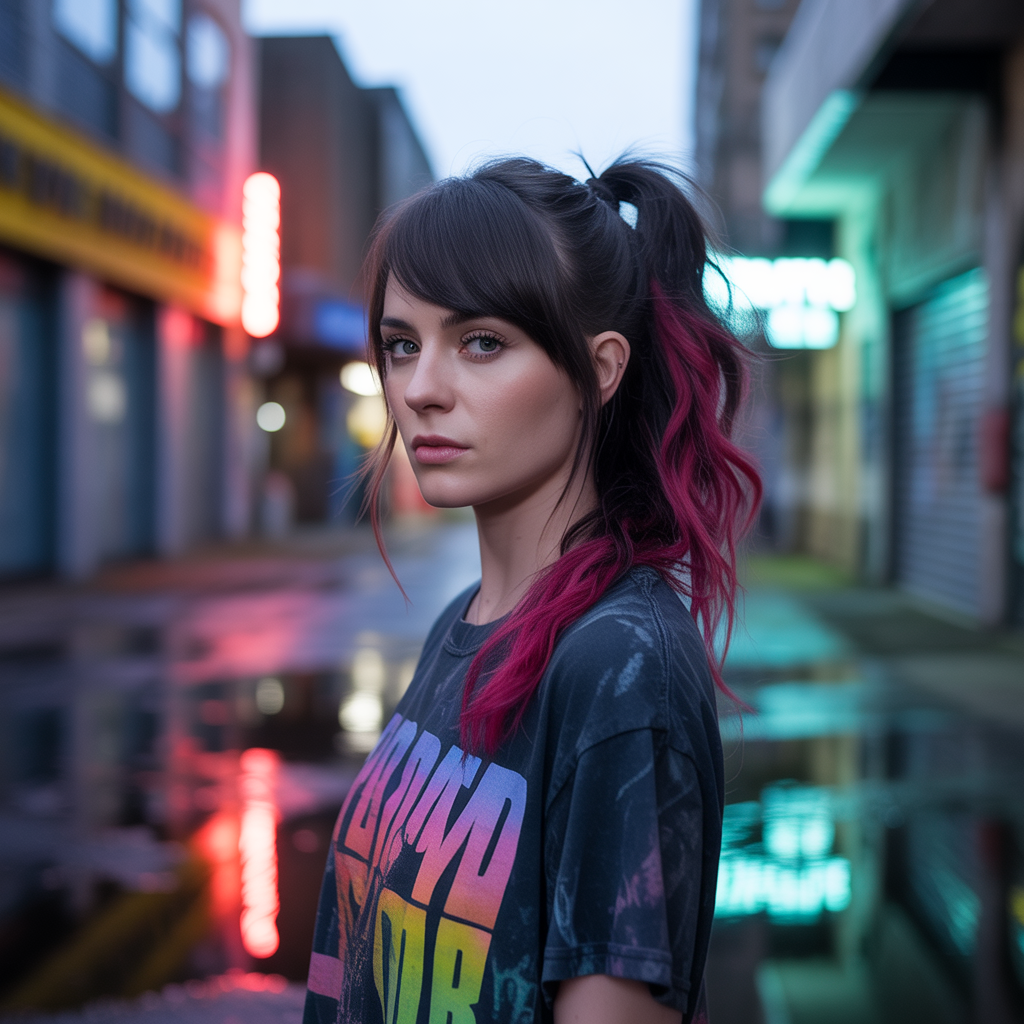
A side ponytail reads as deliberate and scene-specific because of two precise details: the side placement itself and the loose face-framing bang left out in front. A centered ponytail with everything pulled back is a completely different style. The asymmetry is the signal that places this look in context.
Got2B Glued Blasting Freeze Spray applied along the hairline before smoothing back controls flyaways without stiffening the rest of the style. Keeping the tail slightly loose rather than pulled taut adds movement and avoids the sleek tension that belongs to a different aesthetic entirely.
Best for: Busy days, school, or quick scene styling without any tools Product: Got2B Glued Blasting Freeze Spray for hairline control before tying Face shape: Side placement balances asymmetry naturally on oval faces. Round faces should wear it higher to create vertical length in the overall silhouette. Barber language: “Keep the face-framing sections long enough to fall forward out of a side ponytail. I need at least two inches at the front that will not reach the elastic when everything else is pulled to the side.” Pro tip: Wrap a small piece of your own hair around the elastic and pin it underneath to hide the band completely. It takes thirty seconds and makes the result look significantly more polished.
Colored tips scene hairstyles for a throwback
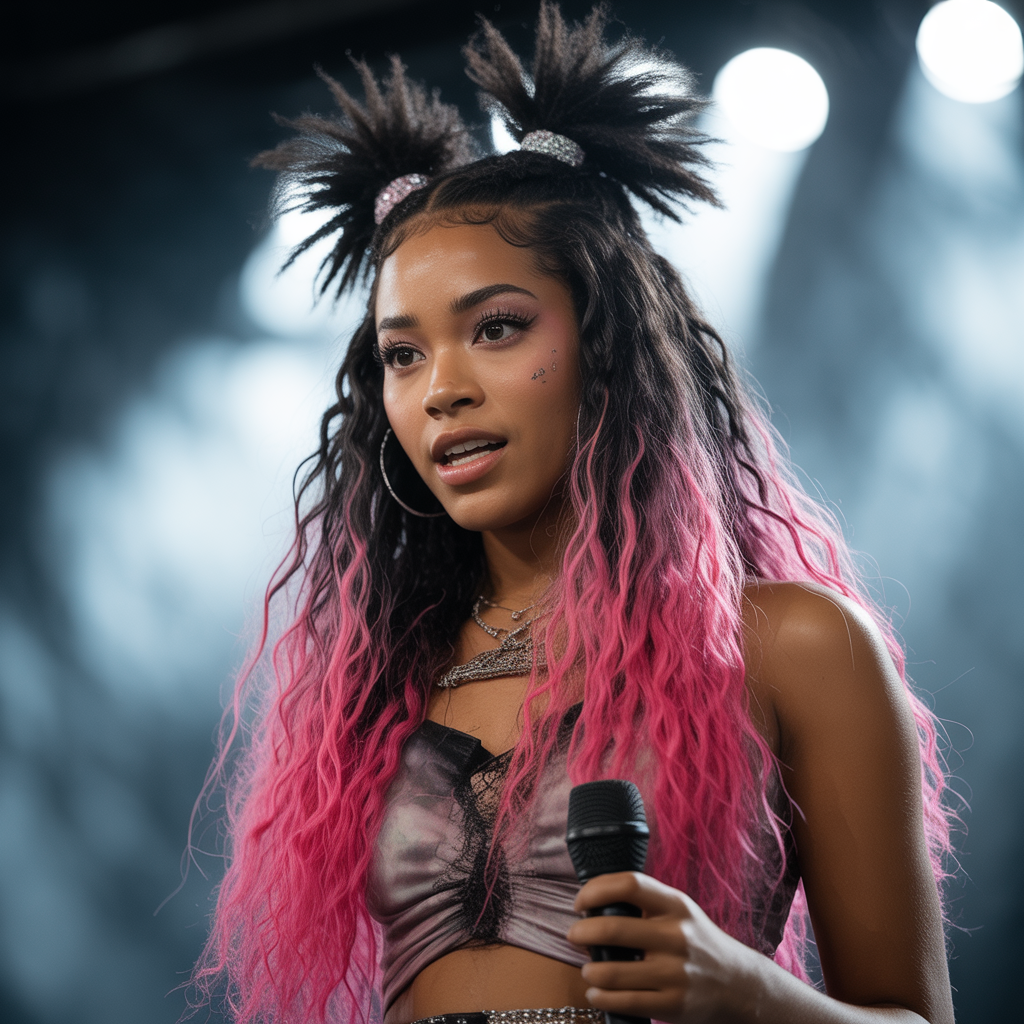
Dip-dyed ends bring scene-specific color to the look without the commitment of a full application. The color begins at the mid-shaft and fades into the natural base, which means grown-out roots never look accidental. This is one of the most graceful ways to enter scene color territory without taking on high maintenance.
Overtone Vibrant Red Daily Conditioner refreshes fading tips between appointments. Substituting it for regular conditioner two or three times weekly extends the saturation noticeably, which reduces the frequency of full appointments and the cumulative damage that comes with them.
Best for: Color beginners and those who want low-commitment scene styling Product: Overtone Vibrant Red Daily Conditioner for color maintenance between appointments Face shape: Colored tips draw the eye downward toward the ends, which suits round and square faces by adding visual length. Avoid very short colored sections on long or narrow faces. Barber language: “I want the color starting at my mid-shaft and fading into my natural base. Keep the transition painterly and organic, not a straight horizontal line across the ends.” Pro tip: Loosely braid tips before applying color. Development along the strand is more even this way, giving a cleaner, more consistent finish than applying to loose hair.
Volume heavy scene hairstyles for a throwback
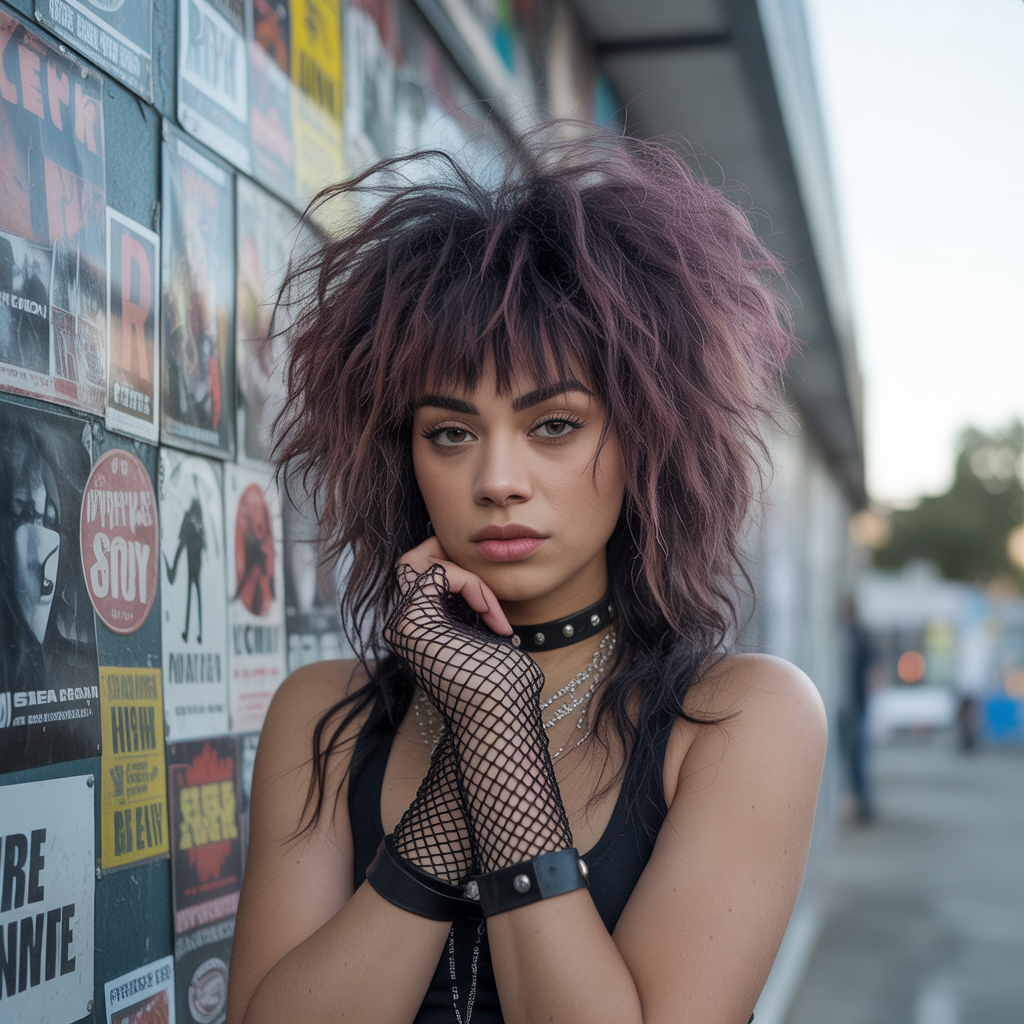
Maximum volume through layering and crown teasing is the most dramatic expression of the scene silhouette, and it requires the right root preparation to hold through the day. Product buildup at the root collapses height faster than anything else. Starting with a clean, oil-free base is the structural prerequisite for this entire look.
L’Oreal Paris Elvive Extraordinary Clay Rebalancing Shampoo removes oil at the root without stripping the mid-lengths and ends. That balance keeps the crown light enough to hold teasing for hours while the longer sections stay manageable.
Best for: Fine hair needing maximum lift or anyone recreating the full throwback silhouette Product: L’Oreal Paris Elvive Extraordinary Clay Rebalancing Shampoo for oil-free root lift Face shape: Adds instant width to round faces. Avoid additional crown height on already long or narrow face shapes. Barber language: “Cut the crown section shorter than everything else so I have room to tease it upward. Leave the sides and back longer to balance the height I will be adding at the top.” Pro tip: Tease from the underside of each section rather than the surface. The top layer of cuticle stays smooth while the underneath holds all the structural volume.
Curly scene hairstyles for a throwback
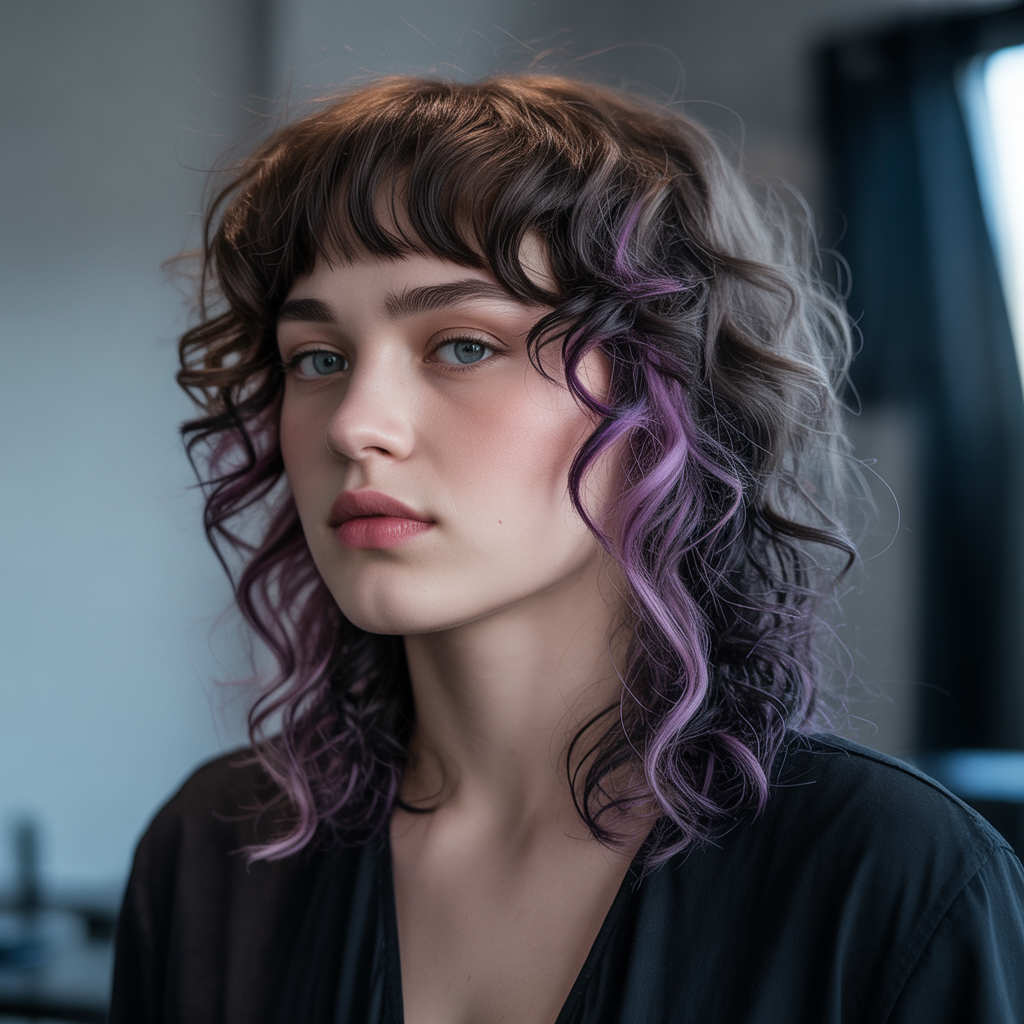
Naturally curly hair brings a texture to the scene aesthetic that straight hair requires tools and time to manufacture. The contrast between defined curls on the body of the hair and a flat-ironed side bang creates a visual split between control and freedom that reads as intentional rather than accidental. This is one of the most underused variations in the entire style range.
DevaCurl SuperCream Coconut Curl Styler keeps curls bouncy and defined without converting to frizz as the day progresses. Apply it by section on soaking wet hair, scrunching upward rather than downward, and allow to air dry completely without disturbing the curl.
Best for: Naturally curly and coily textures who want scene styling without full straightening Product: DevaCurl SuperCream Coconut Curl Styler for defined, frizz-controlled curls Face shape: Curly volume adds width on narrow and long faces. Reduce bulk at the sides on round faces to avoid adding horizontal mass. Barber language: “I need a dry curl cut. Cut each curl in its natural coiled state, not stretched. The shape needs to work when the curl springs back, not when the hair is pulled straight.” Pro tip: Only flat-iron the bang section and leave every other part of the hair completely heat-free. The contrast between the straight bang and the natural curl body is the entire visual concept of this variation.
Visit Also: Stylish Short Blonde Hair
Pigtails scene hairstyles for a throwback
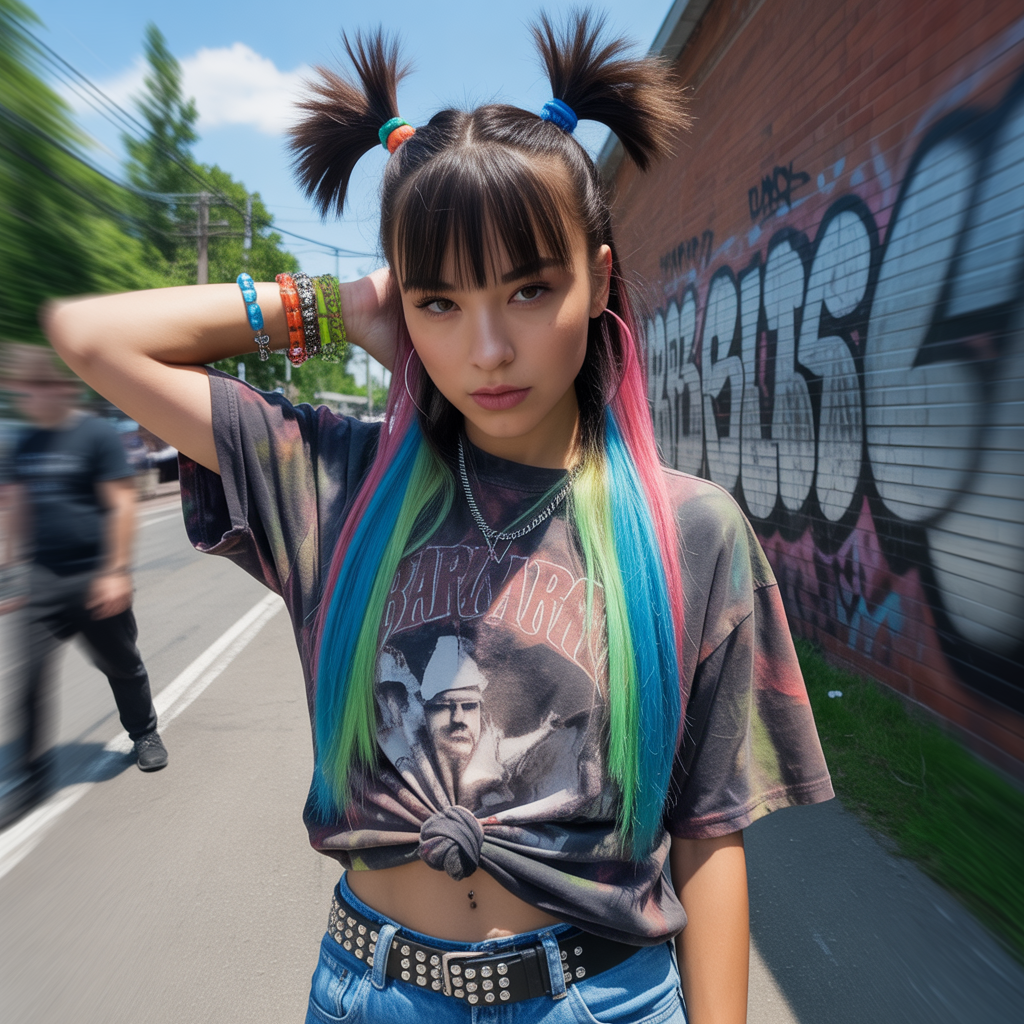
High or low pigtails with deliberate texture at the roots are one of the most recognizable signatures of the early scene community. The difference between a basic pigtail and a scene pigtail lives almost entirely in the root preparation. Teasing before tying changes the silhouette completely and signals the reference immediately.
Andrew Fitzsimons Texture Spray builds grip at the roots before sectioning. Adding small jaw clips or colored alligator clips directly near the elastic is a detail that was specific to the original scene community and immediately contextualizes the style.
Best for: Casual days, younger wearers, or building a complete scene-inspired look Product: Andrew Fitzsimons Texture Spray for root grip and body before tying Face shape: High pigtails elongate round faces. Low pigtails suit square and oval faces by keeping proportion balanced near the jaw. Barber language: “When you layer my hair, keep it long enough to pull everything back into pigtails without the shortest sections falling out or creating visible gaps at the part.” Pro tip: Part the hair slightly off-center before dividing into pigtails. The asymmetric part adds an intentional edge that a perfectly centered part simply will not deliver.
Scene hairstyles for a throwback with accessories
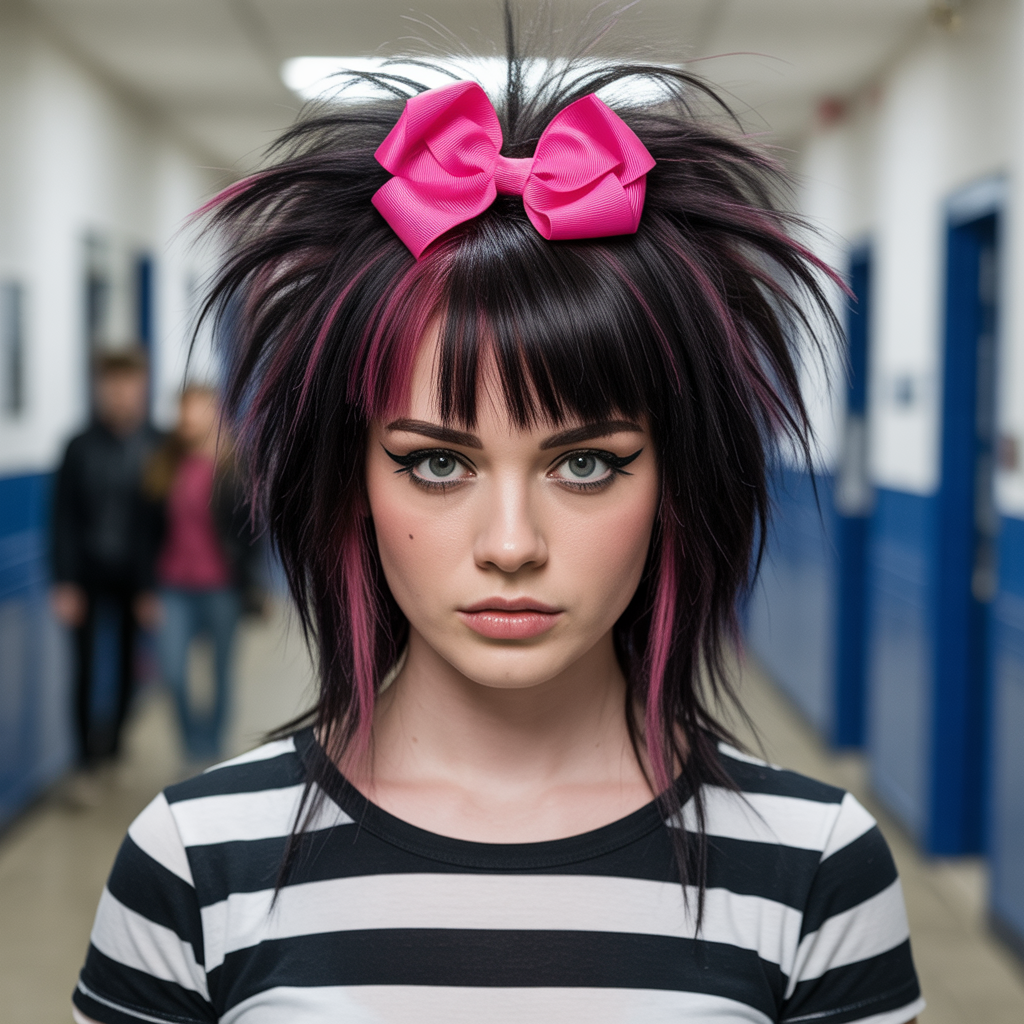
Accessories in the original scene aesthetic were never additions to a finished style. They were part of the hairstyle itself. Large bows, wide headbands worn low across the forehead, oversized jaw clips, and colored alligator clips were considered structural elements of the look. One strong accessory always outperformed several small ones competing for attention simultaneously.
Urban Outfitters currently carries a strong range of large bows and retro-styled clips that align with the original scene accessory language without reading as costume pieces. Placing one accessory near the crown or at the temple draws attention to the eyes rather than competing with the rest of the silhouette.
Best for: Completing a scene look quickly without changing cut or color Product: Urban Outfitters retro bow and clip collection for on-trend scene-specific accessories Face shape: Crown accessories elongate round faces. Temple placement flatters oval and heart-shaped faces by focusing attention on the upper third of the face. Barber language: “Keep the top section voluminous enough that a large bow or claw clip does not flatten everything when I wear it. I need the hair to hold its shape around the accessory, not under it.” Pro tip: Tease the section underneath the accessory before placing it. The backcombed hair gives the clip something to grip and prevents it from sliding forward throughout the day.
Modernized scene hairstyles for a throwback
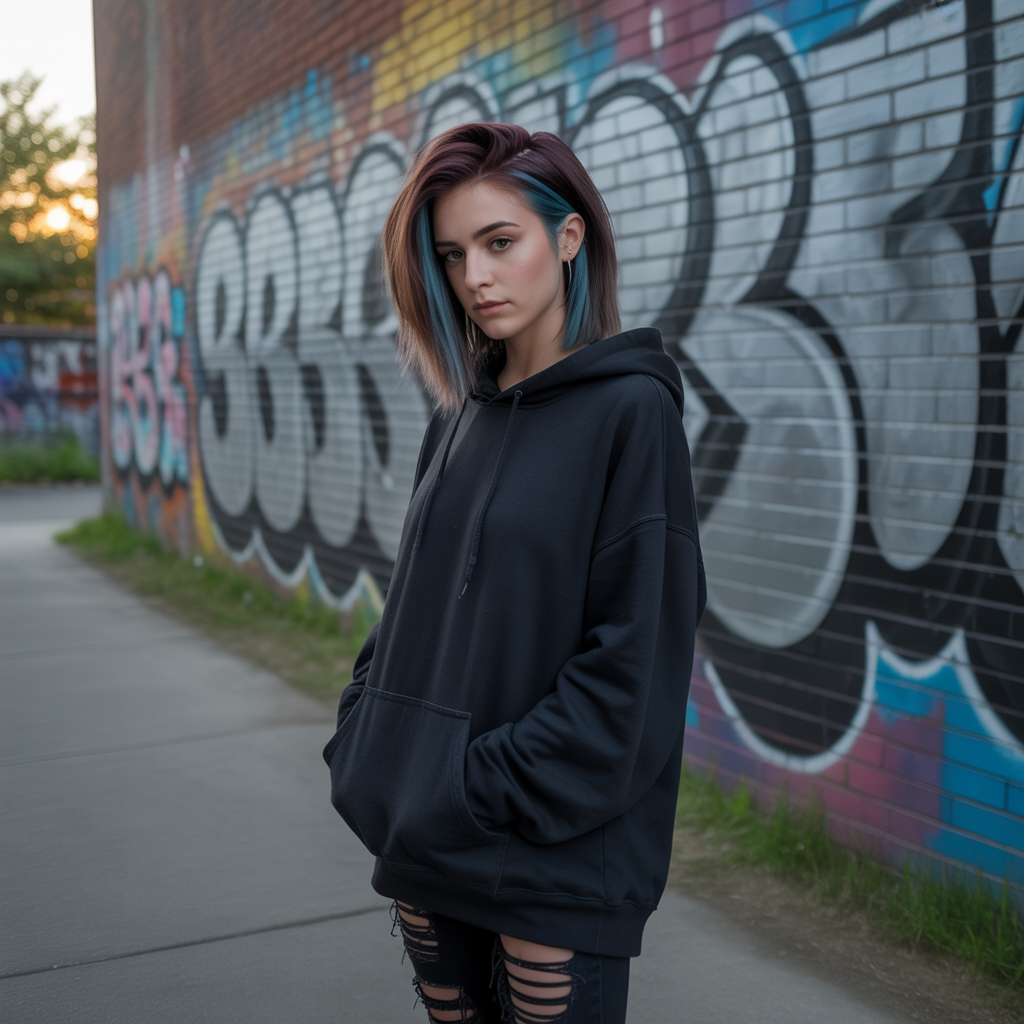
The modern version of the scene aesthetic keeps the structural attitude of the original while updating the execution. Cleaner blending at the layer ends, more deliberate color placement, and better finishing products mean the look translates to settings where the original version never could. The core energy remains fully intact.
Moroccanoil Treatment is the standard finishing product for modernizing any scene cut. A small amount smoothed over the top layer removes the rough edges that occasionally made original scene hair look unkempt and replaces them with a controlled finish that still carries all the shape underneath.
Best for: Adults, professional environments, or anyone updating the scene aesthetic for 2025 Product: Moroccanoil Treatment for polished finishing on modern scene cuts Face shape: The softer execution of a modern scene cut allows precise adjustment to individual proportions. It works across all face shapes. Barber language: “I want the scene structure and choppy layers but blend the ends slightly more than a classic scene cut would. I want it to look current and intentional, not like a throwback that was never updated.” Pro tip: Book a short consultation before your appointment specifically to discuss which original scene elements to keep and which to modernize. This single conversation separates a great result from a generic one.
Quick Comparison Table
| Style | Length | Hair Type | Maintenance | Bold Factor |
|---|---|---|---|---|
| Layered | Any | All types | Low | ★★ |
| Side swept bangs | Medium/Long | Straight, wavy | Medium | ★★ |
| Teased crown | Medium | Fine, straight | High | ★★★ |
| Colored streaks | Any | All types | Medium | ★★★ |
| Black dye | Any | All types | Low | ★★ |
| Asymmetrical cuts | Short/Medium | Straight, wavy | Medium | ★★★ |
| Multicolored | Any | All types | High | ★★★ |
| Short choppy | Short | Fine, medium | Low | ★★ |
| Long layered | Long | Thick, wavy | Medium | ★★ |
| Bleach blonde | Any | All types | High | ★★★ |
| Extensions | Any | All types | Low | ★★ |
| Half up half down | Medium/Long | All types | Low | ★ |
| Braided | Any | All types | Medium | ★★ |
| Side ponytail | Medium/Long | All types | Low | ★ |
| Colored tips | Any | All types | Low | ★★ |
| Volume heavy | Medium | Fine | High | ★★★ |
| Curly | Medium/Long | Curly, coily | Low | ★★ |
| Pigtails | Medium/Long | All types | Low | ★ |
| With accessories | Any | All types | Low | ★★ |
| Modernized | Any | All types | Medium | ★★ |
Frequently Asked Questions
What are the best scene hairstyles for a throwback if I have fine hair? Fine hair benefits most from short choppy cuts and teased crown styles because both build structural height without requiring density. Avoid heavy clip-in wefts on fine hair without thinning them first, as the weight difference becomes visible at the attachment point.
How do I maintain colored scene hair without causing ongoing damage? Use a sulfate-free shampoo and wash no more than two to three times per week to preserve color saturation. Bond-repair treatments like Olaplex No.3 used weekly prevent structural breakdown in chemically processed hair between appointments.
Can a standard salon execute a proper scene cut? Most stylists can handle basic layering, but point-cutting technique and intentional disconnection require experience with textured and editorial cuts. Ask specifically whether your stylist has worked with disconnected or asymmetrical cuts before booking, and bring multiple reference photos from multiple angles.
How long does a teased crown hold through the day? With correct preparation it holds six to eight hours reliably. The key is spraying each individual section of hair before teasing rather than spraying the entire finished crown at once after styling.
What is the most low-commitment option in this list? Colored tips require the least ongoing maintenance. They grow out intentionally rather than awkwardly, and Overtone color-depositing conditioner refreshes them between appointments without requiring a return to the salon.
Final Thoughts
The scene aesthetic was never really about a specific era. It was about refusing to look like everyone else at a time when conformity felt inevitable. That core intention has not aged, and the tools available to execute it are better now than they were in 2006.
Choosing scene hairstyles for a throwback does not mean copying an old photo. It means taking the structure and attitude of that aesthetic and applying them with everything the industry has learned since then. The result looks intentional because it is.
Start with one element. Add a side-swept bang. Try a semi-permanent streak. Tease the crown once and see how it feels. The scene aesthetic rewards gradual commitment just as well as a full overnight transformation.
Here is what most people never discuss about this style: the cut itself is the least negotiable element. Color fades, accessories change, products evolve. But a technically executed disconnected layer structure remains striking years after the color has been redone three times. The cut is the investment. Everything else is maintenance.
Invest in the cut first, and everything else will fall into place.
Save this to your Pinterest board and share it with anyone who has been thinking about returning to their bold era.